

Impact of Birthing Room Design on Maternal Childbirth Experience: Results From the Room4Birth Randomized Trial
Open accessThe DOI matches its Crossref record; 48 of the 49 references it cites were found in a registry or an index.
Abstract
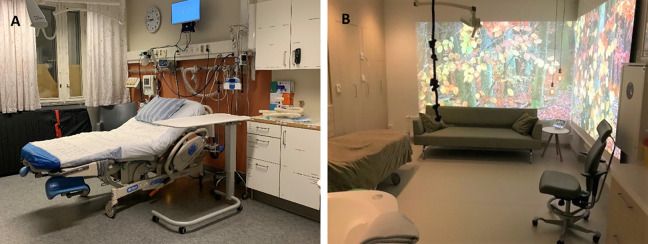
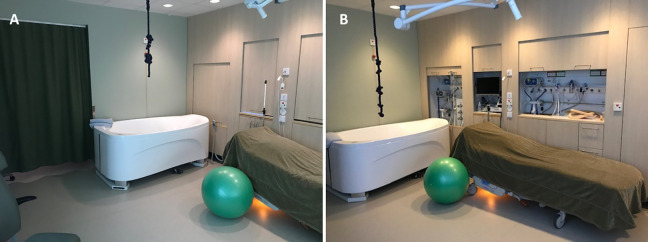
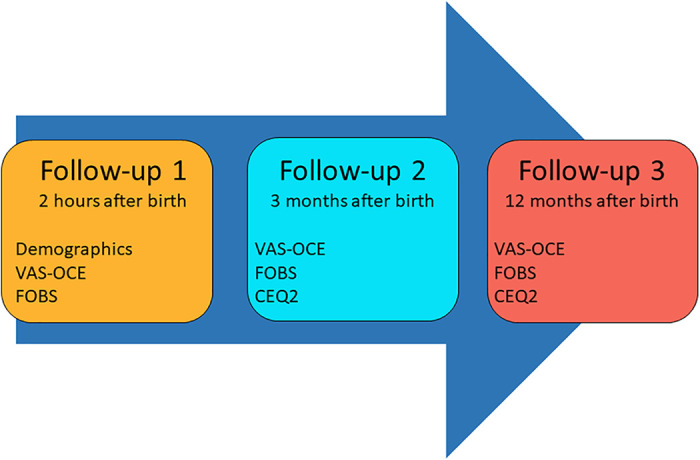
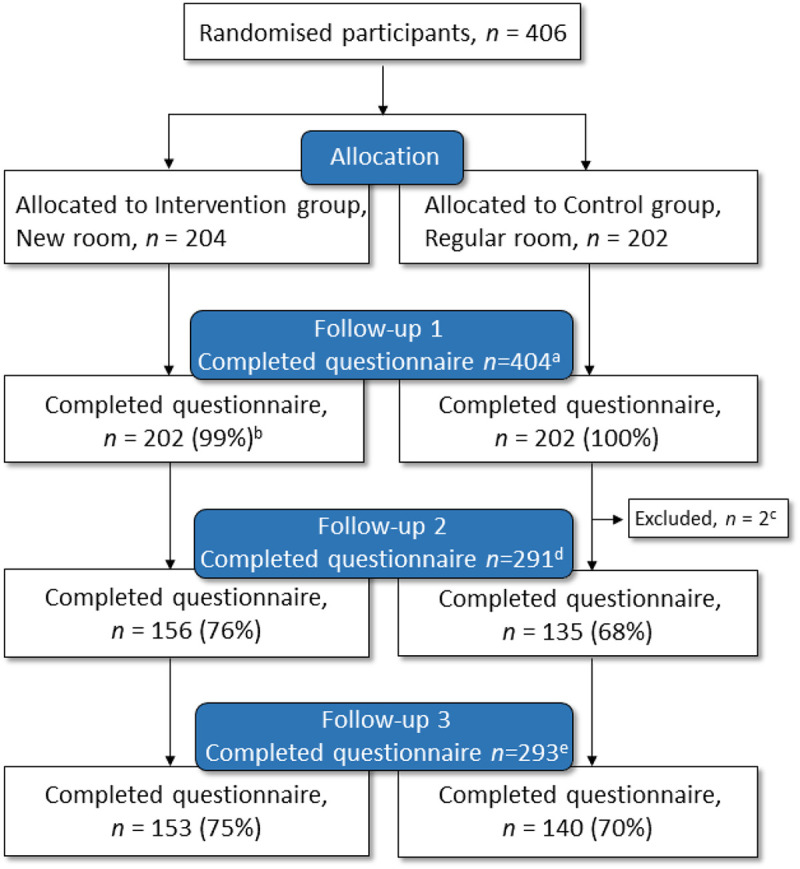
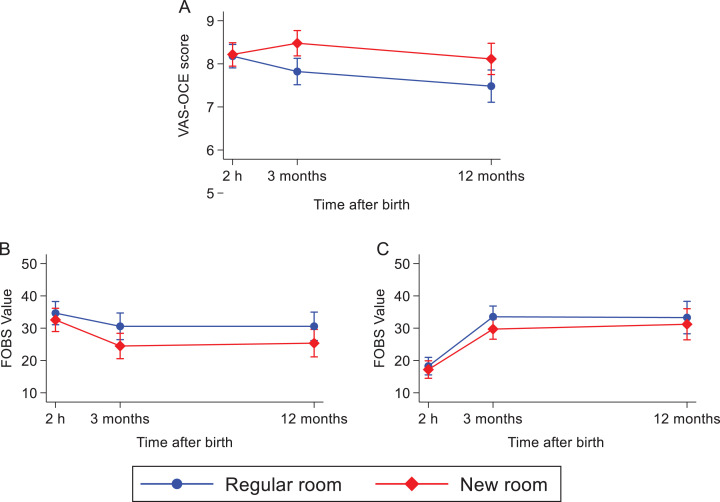
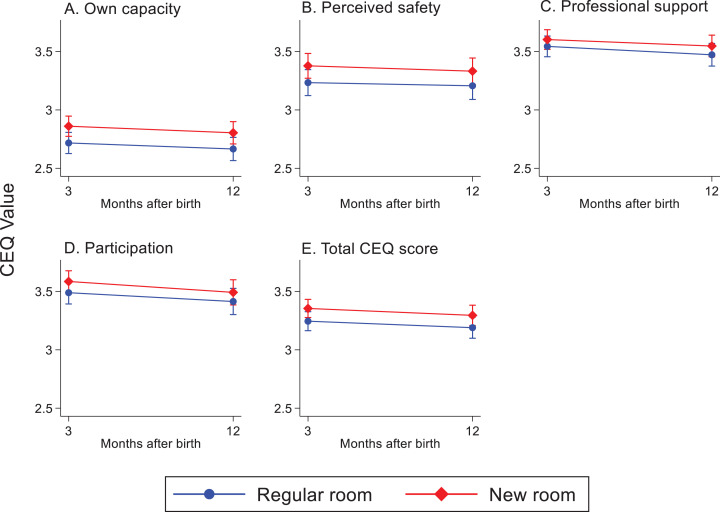
Objective: To study the effect of the birthing room design on nulliparous women’s childbirth experience up to 1 year after birth. Background: Although it is known that the birth environment can support or hinder birth processes, the impact of the birthing room design on maternal childbirth experience over time is insufficiently studied. Methods: The Room4Birth randomized controlled trial was conducted at a labor ward in Sweden. Nulliparous women in active stage of spontaneous labor were randomized ( n = 406) to either a regular birthing room ( n = 202) or a new birthing room designed with more person-centered considerations ( n = 204). Childbirth experiences were measured 2 hr, 3 months, and 12 months after birth by using a Visual Analogue Scale of Overall Childbirth Experience (VAS-OCE), the Fear of Birth Scale (FOBS), and the Childbirth Experience Questionnaire (CEQ2). Results: Women randomized to the new room had a more positive childbirth experience reported on the VAS-OCE 3 months ( p = .002) and 12 months ( p = .021) after birth compared to women randomized to a regular room. Women in the new room also scored higher in the total CEQ2 score ( p = .039) and within the CEQ2 subdomain own capacity after 3 months ( p = .028). The remaining CEQ2 domains and the FOBS scores did not differ between the groups. Conclusions: These findings show that a birthing room offering more possibilities to change features and functions in the room according to personal needs and requirements, positively affects the childbirth experience of nulliparous women 3 and 12 months after they have given birth.
Overview
The claims and statistics of this paper haven’t been checked yet.
Free: it reads the open-access text and checks the first 5 claims that cite a source we can check. Create a free account to check every claim.
Integrity signals
Registry
Cites
Statistics
Figures
Verification
Claims the paper makes
The claims and statistics of this paper haven’t been checked yet.
Free: it reads the open-access text and checks the first 5 claims that cite a source we can check. Create a free account to check every claim.
Self-check
Percentages, sums and reported differences re-computed from the paper’s own numbers.
The self-check needs the paper’s full text.
Citations
Cites
Statistical Power Analysis for the Behavioral Sciences
Muller, K. (1989) · Technometrics · doi:10.1080/00401706.1989.10488618 · Cited by 99,167
Effect size estimates: Current use, calculations, and interpretation.
Fritz, C. O., Morris, P. E., & Richler, J. J. (2012) · Journal of Experimental Psychology: General · doi:10.1037/a0024338 · Cited by 5,199 · cited 1×
“We also estimated effect sizes r, as proposed by Cohen (1988) to examine the degree of variance between the groups, where r > .1 is considered a small effect, r > .3 medium effect, and r > .5 large effect (Fritz et al., 2012).”
MethodA Review of the Research Literature on Evidence-Based Healthcare Design
Ulrich, R. S., Zimring, C., Zhu, X., DuBose, J., Seo, H.-B., Choi, Y.-S., Quan, X., & Joseph, A. (2008) · HERD: Health Environments Research & Design Journal · doi:10.1177/193758670800100306 · Cited by 1,421 · cited 1×
“Having less clinical-like indoor hospital environments with controllable sensory stimuli, aromas, sounds, lights, comfortable furniture, Goldkuhl et al. 201 and views of nature are beneficial for the health of persons admitted to hospitals (Ulrich et al., 2008).”
BackgroundShort-term and long-term effects of caesarean section on the health of women and children
Sandall, J., Tribe, R. M., Avery, L., Mola, G., Visser, G. H., Homer, C. S., Gibbons, D., Kelly, N. M., Kennedy, H. P., Kidanto, H., et al. (2018) · The Lancet · doi:10.1016/s0140-6736(18)31930-5 · Cited by 1,394
Midwife-led continuity models versus other models of care for childbearing women
Sandall, J., Soltani, H., Gates, S., Shennan, A., & Devane, D. (2013) · Cochrane Database of Systematic Reviews · doi:10.1002/14651858.cd004667.pub3 · Cited by 1,226
Continuous support for women during childbirth
Hodnett, E. D., Gates, S., Hofmeyr, G. J., & Sakala, C. (2012) · Cochrane Database of Systematic Reviews · doi:10.1002/14651858.cd003766.pub4 · Cited by 1,155
Continuous support for women during childbirth
Bohren, M. A., Hofmeyr, G. J., Sakala, C., Fukuzawa, R. K., & Cuthbert, A. (2017) · Cochrane Database of Systematic Reviews · doi:10.1002/14651858.cd003766.pub6 · Cited by 1,100
Midwife-led continuity models versus other models of care for childbearing women
Sandall, J., Soltani, H., Gates, S., Shennan, A., & Devane, D. (2016) · Cochrane Database of Systematic Reviews · doi:10.1002/14651858.cd004667.pub5 · Cited by 906
Robson, M., Murphy, M., & Byrne, F. (2015) · International Journal of Gynecology & Obstetrics · doi:10.1016/j.ijgo.2015.04.026 · Cited by 508 · cited 2×
“Eligible participants for randomization were women aged 18 or more, classified as Robson 1 202 Health Environments Research & Design Journal 16(1) (Robson et al., 2015); nulliparous with a single, live, cephalic fetus at term and with spontaneous onset of labor.”
Background
Research works printed but not linked: 2
- Lefebvre H. (1991). The production of space. Oxford, UK: Basil Blackwell.
- World Health Organization. (2018). WHO recommendations: Intrapartum care for a positive childbirth experience. Switzerland: World Health Organization. 30070803
Cited by
Viirman, F., Hesselman, S., Poromaa, I. S., Svanberg, A. S., & Wikman, A. (2023) · BMC Pregnancy and Childbirth · doi:10.1186/s12884-023-05498-5 · Cited by 29
Implementing a new birthing room design: a qualitative study with a care provider perspective
Goldkuhl, L., Tistad, M., Gyllensten, H., & Berg, M. (2023) · BMC Health Services Research · doi:10.1186/s12913-023-10051-3 · Cited by 10
“Being supported with emotional presence may have contributed to women randomised to the new room reporting more positive long-term childbirth experiences, as observed in the Room4Birth RCT [21], compared to women in standard rooms.”
BackgroundResultInfluentialSelf-citationProsen, M., & Ličen, S. (2025) · Journal of Public Health · doi:10.1007/s10389-025-02591-1 · Cited by 7
Sula, D., Athanasiadou, C. R., Metallinou, D., Gourounti, K., & Sarantaki, A. (2024) · PubMed Central · doi:10.34763/jmotherandchild.20242801.d-24-00038 · Cited by 4
“Technological innovations that facilitate communication and information sharing can also enhance the overall care experience for women with sensory disabilities (23).”
Healing Architecture in Birthing Rooms: A Scoping Review
Eidhammer, A., Glavind, J., Skrubbeltrang, C., & Melgaard, D. (2024) · HERD Health Environments Research & Design Journal · doi:10.1177/19375867241238439 · Cited by 6
“…document a positive effect of nature images or multisensory birthing rooms to give better physical comfort and reduce anxiety (Aburas et al., 2017; Goldkuhl et al., 2023; Hauck et al., 2008; Momeni et al., 2020; Murray-Davis et al., 2023; Nielsen & Overgaard, 2020; Skog-stro¨m et al., 2022).”
Influential
Metadata
- Authors
- Goldkuhl, L., Gyllensten, H., Begley, C., Nilsson, C., Wijk, H., Lindahl, G., Uvnäs-Moberg, K., & Berg, M.
- Affiliations
- Sahlgrenska University Hospital (SE)
- University of Gothenburg (SE)
- Trinity College Dublin (IE)
- Region Västra Götaland (SE)
- Chalmers University of Technology (SE)
- University of Agriculture (SLU), Uppsala University, Sweden
- Université Evangélique en Afrique (CD)
- Corresponding author
- Goldkuhl, Lisa
- ORCID
- Venue
- HERD: Health Environments Research & Design Journal
- Publisher
- SAGE Publications
- Published
- 2022-10-14
- Volume
- 16
- Issue
- 1
- Pages
- 200-218
- ISSN
- 1937-5867 (ISSN-L)
- 2167-5112
- PMC
- PMC9755691
- OpenAlex
- W4306174822
- Cited by
- 18
- References
- 49
- Citations by year
- 2026: 6 · 2025: 5 · 2024: 4 · 2023: 3
- FWCI
- 3.01
- Type
- journal article
- Language
- en
- Update notices
- correction (2023-12-11)
- Open access
- hybrid
- doi.org
- Licence
- cc-by
- creativecommons.org/licenses/by/4.0/ (vor)
- journals.sagepub.com/page/policies/text-and-data-mining-license (tdm)
- Locations
- HERD Health Environments Research & Design Journal (publishedVersion, cc-by)
- PubMed Central (publishedVersion, cc-by)
- PubMed (publishedVersion)
- Chalmers Research (Chalmers University of Technology) (submittedVersion)
- Epsilon Open Archive (Sveriges lantbruksuniversitet biblioteket (Swedish University of Agricultural Sciences)) (submittedVersion)
- Funders
- Vetenskapsrȩdet (2018-02406)
- Topics
- Health Sciences › Medicine › Obstetrics and Gynecology › Maternal and Perinatal Health Interventions
- Health Sciences › Medicine › Public Health, Environmental and Occupational Health › Maternal Mental Health During Pregnancy and Postpartum
- Health Sciences › Medicine › Obstetrics and Gynecology › Pregnancy-related medical research
- Keywords
- childbirth experience, nulliparous women, person-centred care, birth environment, labour ward
- MeSH terms
- Delivery Rooms, Female, Humans, Infant, Newborn, Labor, Obstetric, Midwifery, Pregnancy, Parturition, Delivery, Obstetric
About these checks
Registry, retraction, Cites and statistics results are computed, not judged, with one exception: a printed reference that no index lists is read once by a model before it counts as a citation error. Claims are extracted by a model and kept only when their quote appears verbatim in the text; each cited source is then checked, with a model’s help, for whether it says what the claim relies on. Those verdicts can be wrong — read the claim’s quote and the cited source before relying on one.
Statistics and arithmetic are recomputed, not judged.
Confidence bands are shown only for fields calibrated on our annotated test set. None is calibrated yet, so no band is shown.
What counts as a claim ›How we measure confidence ›How we check this ›
Are you an author, or do you see a problem with this page? Request a review
How to cite
Cite CoChat for the checks on this page, and the paper for its own findings.
- This page
- CoChat. (2026). Citation check: Impact of Birthing Room Design on Maternal Childbirth Experience: Results From the Room4Birth Randomized Trial. https://app.cochat.ai/papers/10.1177/19375867221124232
- The paper
- Goldkuhl, L., Gyllensten, H., Begley, C., Nilsson, C., Wijk, H., Lindahl, G., Uvnäs-Moberg, K., & Berg, M. (2023). Impact of Birthing Room Design on Maternal Childbirth Experience: Results From the Room4Birth Randomized Trial. HERD: Health Environments Research & Design Journal. https://doi.org/10.1177/19375867221124232
Data sources
Bibliographic data: Semantic Scholar, OpenAlex, Crossref.
Contains information from the Semantic Scholar Academic Graph Datasets, made available under the ODC Attribution License (ODC-BY 1.0).
Semantic Scholar’s data is described in: Kinney, R., et al. (2023). The Semantic Scholar Open Data Platform. arXiv:2301.10140.
