

The DOI matches its Crossref record; 38 of the 38 references it cites were found in a registry or an index; none of the 64 sources its claims cite is checked for support yet.
The role of eHealth, telehealth, and telemedicine for chronic disease patients during COVID-19 pandemic: A rapid systematic review
Open accessAbstract
Objective: To summarize the current status of, and the current expert opinions, recommendation and evidence associated with the use and implementation of electronic health (eHealth), telemedicine, and/or telehealth to provide healthcare services for chronic disease patients during the COVID-19 pandemic. Materials and methods: We searched four electronic databases (PubMed, Google Scholar, Science Direct, and Web of Science Core Collection) to identify relevant articles published between 2019 and 2020. Searches were restricted to English language articles only. Two independent reviewers screened the titles, abstracts, and keywords for relevance. The potential eligible articles, papers with no abstract, and those that fall into the uncertain category were read in full text independently. The reviewers met and discussed which articles to include in the final review and reached a consensus. Results: We identified 51 articles of which 25 articles met the inclusion criteria. All included articles indicated the promising potential of eHealth, telehealth, and/or telemedicine solutions in delivering healthcare services to patients living with chronic diseases/conditions during the COVID-19 pandemic. We synthesized the main findings into ten usages and eight recommendations concerning the different activities for delivering healthcare services remotely for those living with chronic diseases/conditions in the era of COVID-19. Discussion and conclusions: There is limited evidence available about the effectiveness of such solutions. Further research is required during this pandemic to improve the credibility of evidence on telemedicine, telehealth, and/or eHealth-related outcomes for those living with chronic diseases.
Overview
AI snapshot
Written from the paper’s full text.
TL;DR
This rapid systematic review synthesized 25 included articles on eHealth, telehealth, and/or telemedicine for chronic disease patients during the COVID-19 pandemic. All included articles indicated promising potential for remote care, but the authors report limited evidence on effectiveness and call for further rigorous research.
Key findings
- Of 51 retrieved articles, 25 met inclusion criteria; all included articles indicated the promising potential of eHealth, telehealth, and/or telemedicine for delivering healthcare services to chronic disease patients during COVID-19.
- Most articles used the term telemedicine (n = 17; 68%), followed by telehealth (n = 15; 53.8%), while two used eHealth (7.7%); some articles used more than one term.
- The review synthesized main findings into eight recommendations for remote healthcare delivery; most included articles concentrated on continuity of care, ten on remote outpatient care, four on system integration, three on standardized transition, two on cost-effectiveness, two on privacy/data sharing, one on billing reimbursement, and one on simplicity.
- The abstract reports ten usages and eight recommendations, while the results section describes six usages: follow-up visits, training, consultations, medications, communication, and caregiver support.
Methods
- Rapid systematic review searching PubMed, Google Scholar, Science Direct, and Web of Science Core Collection on April 20, 2020, and again on May 15, 2020; searches were restricted to English-language articles using keywords “eHealth,” OR “telemedicine,” OR “telehealth,” AND “COVID-19,” OR “coronavirus,” AND “chronic disease.”
- Inclusion criteria required focus on any chronic disease/condition, relation to COVID-19, use of eHealth/telemedicine/telehealth, and completion between December 1, 2019, and May 15, 2020; all study designs were included, such as preprints, commentary, and opinion papers.
- Two independent reviewers screened titles, abstracts, and keywords; eligible, no-abstract, and uncertain articles were read in full text independently, then reviewers reached consensus; data extracted included author, year, paper type, country, population/chronic disease, technology type, current status, and outcomes.
Limitations
- Stated: the review is not comprehensive because it was limited to English-language articles; the quality of included articles is not known; there is limited evidence on effectiveness, with no experimental design studies found; some chronic diseases were limited or under-represented; only “chronic disease” was used as a diagnosis-specific search keyword; 12 included articles (46.1%) had no specified country; the rapid timeframe means more articles were rapidly emerging; and the review was not registered on PROSPERO.
- Evident from the text: the abstract reports “ten usages” while the results section reports “six usages,” indicating an internal inconsistency in the synthesis.
- Evident from the text: most included articles were reviews and expert opinions, and quality of evidence was not assessed due to the absence of included trials, limiting the strength of conclusions about effectiveness.
Model-written summary. Check it against the paper before relying on it.
Integrity signals
Registry
Cites
Statistics
Figures
Verification
Claims the paper makes
25 Not checked yet · 15 Own result · 10 Own method · 8 No basis given · 3 Own interpretation
None of the sources cited for this claim have been checked yet.
In the paper
“Most of the articles used the term telemedicine (n = 17; 68%) to describe the used technology or recommended to use in providing healthcare services needed for chronic disease patients.14–30”
§ The role of eHealth, telehealth, and telemedicine for chronic disease patients during COVID-19 pandemic: A rapid systematic review > Results > Overview
What the sources say
- Not checked yetcites [14] Omboni S. Telemedicine during the COVID-19 in Italy: a missed opportunity? Telemed J E Health 2020; 26: 973– 975. 32324109 PMC7415870 source
- Not checked yetcites [15] Ryczek R Krzesiński P. Cardiac patients and COVID-19: What the general practitioner should know. Pediatr Med Rodz 2019; 15: C6– C9. source
- Not checked yetcites [16] Compton M Soper M Reilly B, et al. A feasibility study of urgent implementation of cystic fibrosis multidisciplinary telemedicine clinic in the face of COVID-19 pandemic: single-center experience. Telemed J E Health 2020; 26: 978– 984. 32357084 source
- Not checked yetcites [17] Lewis GD Hatch SS Wiederhold LR, et al. Long-term institutional experience with telemedicine services for radiation oncology: a potential model for long-term utilization. Adv Radiat Oncol 2020; 5: 780– 782. 32391444 PMC7205717 source
- Not checked yetcites [18] Desideri I Pilleron S Battisti NML, et al. Caring for older patients with cancer during the COVID-19 pandemic: a young international society of geriatric oncology (SIOG) global perspective. J Geriatr Oncol 2020; 11: 1175– 1181. 32402764 PMC7252080 source
- Not checked yetcites [19] Shanthanna H Strand N Provenzano D, et al. Caring for patients with pain during the COVID‐19 pandemic: consensus recommendations from an international expert panel. Anaesthesia 2020; 75: 935– 944. 32259288 PMC7262200 source
- Not checked yetcites [20] Al Kasab S Almallouhi E Holmstedt CA. Optimizing the use of teleneurology during the COVID-19 pandemic. Telemed J E Health 2020; 26: 1197– 1198. 32329661 source
- Not checked yetcites [21] Kadir MA. Role of telemedicine in healthcare during COVID-19 pandemic in developing countries. Telehealth Med Today 2020; source
- Not checked yetcites [22] Boehm K Ziewers S Brandt MP, et al. Telemedicine online visits in urology during the COVID-19 pandemic – potential, risk factors, and patients’ perspective. Eur Urol 2020; 78: 16– 20. 32362498 PMC7183955 source
- Not checked yetcites [23] Brough HA Kalayci O Sediva A, et al. Managing childhood allergies and immunodeficiencies during respiratory virus epidemics – the 2020 COVID‐19 pandemic: a statement from the EAACI‐section on pediatrics. Pediatr Allergy Immunol 2020; 31: 442– 448. 32319129 PMC7264548 source
plainn = 17- Asserted: passes — The authors put it forward as true.
- Checkable: passes — It can be checked against evidence.
- Load-bearing: unclear — It is unclear whether the paper’s conclusions depend on it.
- Based: passes — The paper gives a reason why it holds.
A result the paper reports from its own data — it cites no other source for it, so there is none to check. The quote shows it is in the paper.
In the paper
“All included articles indicated the promising potential of eHealth, telehealth, and/or telemedicine solutions in delivering healthcare services to patients living with chronic diseases/conditions during the COVID-19 pandemic.”
§ The role of eHealth, telehealth, and telemedicine for chronic disease patients during COVID-19 pandemic: A rapid systematic review > Abstract > Results
hedged- Asserted: passes — The authors put it forward as true.
- Checkable: passes — It can be checked against evidence.
- Load-bearing: passes — The paper’s conclusions depend on it.
- Based: passes — The paper gives a reason why it holds.
A result the paper reports from its own data — it cites no other source for it, so there is none to check. The quote shows it is in the paper.
In the paper
“The majority of the included articles were reviews and experts’ opinions; thus, the quality of evidence was not assessed due to the absence of included trails.”
§ The role of eHealth, telehealth, and telemedicine for chronic disease patients during COVID-19 pandemic: A rapid systematic review > Results > Overview
plain- Asserted: passes — The authors put it forward as true.
- Checkable: passes — It can be checked against evidence.
- Load-bearing: passes — The paper’s conclusions depend on it.
- Based: passes — The paper gives a reason why it holds.
In the paper
“one noted the utilization of video calls to help provide caregiver support virtually;18”
§ The role of eHealth, telehealth, and telemedicine for chronic disease patients during COVID-19 pandemic: A rapid systematic review > Results > The current status of eHealth, telemedicine, and/or telehealth solutions
What the sources say
- Not checked yetcites [18] Desideri I Pilleron S Battisti NML, et al. Caring for older patients with cancer during the COVID-19 pandemic: a young international society of geriatric oncology (SIOG) global perspective. J Geriatr Oncol 2020; 11: 1175– 1181. 32402764 PMC7252080 source
plain- Asserted: passes — The authors put it forward as true.
- Checkable: passes — It can be checked against evidence.
- Load-bearing: unclear — It is unclear whether the paper’s conclusions depend on it.
- Based: passes — The paper gives a reason why it holds.
None of the sources cited for this claim have been checked yet.
In the paper
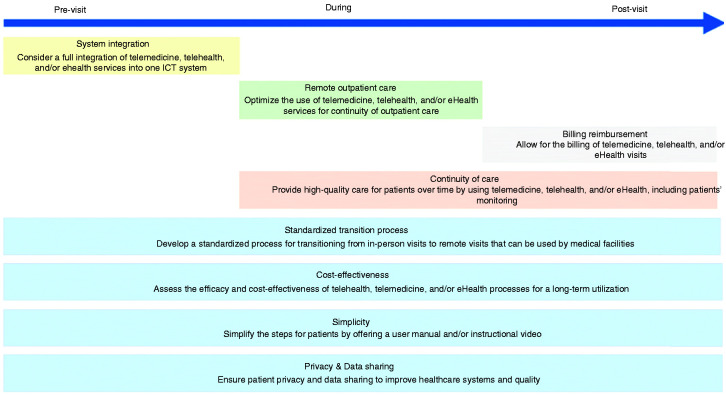
“Most of the included articles concentrated on the provision of continuity of care due to the nature of the diseases and conditions that were examined in this research.14,15,17,19–22,26–28,30–34,37”
§ The role of eHealth, telehealth, and telemedicine for chronic disease patients during COVID-19 pandemic: A rapid systematic review > Results > The top recommendations of eHealth, telemedicine, and/or telehealth solutions
What the sources say
- Not checked yetcites [14] Omboni S. Telemedicine during the COVID-19 in Italy: a missed opportunity? Telemed J E Health 2020; 26: 973– 975. 32324109 PMC7415870 source
- Not checked yetcites [15] Ryczek R Krzesiński P. Cardiac patients and COVID-19: What the general practitioner should know. Pediatr Med Rodz 2019; 15: C6– C9. source
- Not checked yetcites [17] Lewis GD Hatch SS Wiederhold LR, et al. Long-term institutional experience with telemedicine services for radiation oncology: a potential model for long-term utilization. Adv Radiat Oncol 2020; 5: 780– 782. 32391444 PMC7205717 source
plain- Asserted: passes — The authors put it forward as true.
- Checkable: passes — It can be checked against evidence.
- Load-bearing: unclear — It is unclear whether the paper’s conclusions depend on it.
- Based: passes — The paper gives a reason why it holds.
A result the paper reports from its own data — it cites no other source for it, so there is none to check. The quote shows it is in the paper.
In the paper
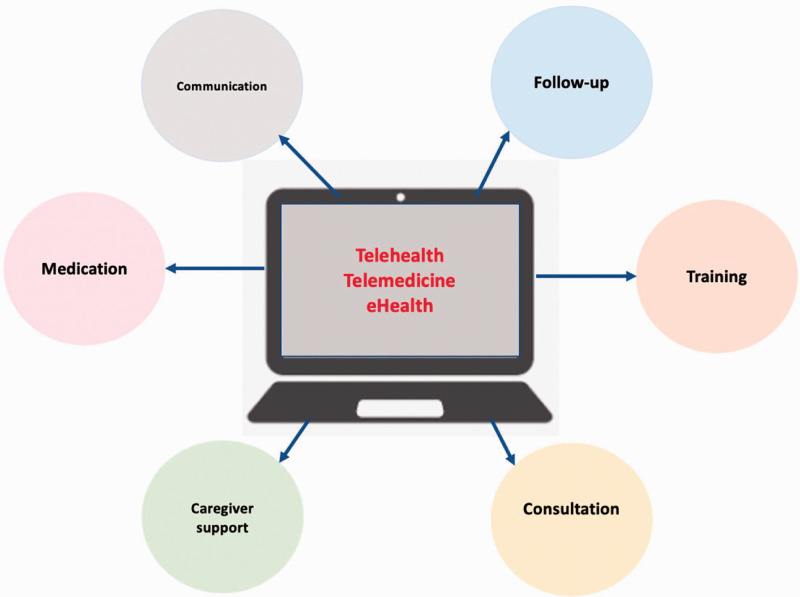
“We summarized these services into six usages of eHealth, telemedicine, and/or telehealth as reported in the included articles (see Figure 2).”
- Also stated in: § The current status of eHealth, telemedicine, and/or telehealth solutions · plain
“The following items outline the usages of such technological solutions, which are: follow-up visits, training, consultations, medications, communication, and caregiver support.”
§ The role of eHealth, telehealth, and telemedicine for chronic disease patients during COVID-19 pandemic: A rapid systematic review > Results > The current status of eHealth, telemedicine, and/or telehealth solutions
plain- Asserted: passes — The authors put it forward as true.
- Checkable: passes — It can be checked against evidence.
- Load-bearing: unclear — It is unclear whether the paper’s conclusions depend on it.
- Based: passes — The paper gives a reason why it holds.
- Also stated in: § The current status of eHealth, telemedicine, and/or telehealth solutions · plain
None of the sources cited for this claim have been checked yet.
In the paper
“four of the included research articles reported system integration,13,15,32,33”
§ The role of eHealth, telehealth, and telemedicine for chronic disease patients during COVID-19 pandemic: A rapid systematic review > Results > The top recommendations of eHealth, telemedicine, and/or telehealth solutions
What the sources say
- Not checked yetcites [13] Khangura S Konnyu K Cushman R, et al. Evidence summaries: the evolution of a rapid review approach. Syst Rev 2012; 1: 10. 22587960 PMC3351736 source
- Not checked yetcites [15] Ryczek R Krzesiński P. Cardiac patients and COVID-19: What the general practitioner should know. Pediatr Med Rodz 2019; 15: C6– C9. source
- Not checked yetcites [32] Nicholls SJ Nelson M Astley C, et al. Optimising secondary prevention and cardiac rehabilitation for atherosclerotic cardiovascular disease during the COVID-19 pandemic: a position statement from the cardiac society of Australia and New Zealand (CSANZ). Heart Lung Circ 2020; 29: e99– e104. 32473781 PMC7192068 source
plain- Asserted: passes — The authors put it forward as true.
- Checkable: passes — It can be checked against evidence.
- Load-bearing: unclear — It is unclear whether the paper’s conclusions depend on it.
- Based: passes — The paper gives a reason why it holds.
None of the sources cited for this claim have been checked yet.
In the paper
“Five articles reported the use of virtual visits for patient’s follow-up appointments;17,18,34,37,38”
§ The role of eHealth, telehealth, and telemedicine for chronic disease patients during COVID-19 pandemic: A rapid systematic review > Results > The current status of eHealth, telemedicine, and/or telehealth solutions
What the sources say
- Not checked yetcites [17] Lewis GD Hatch SS Wiederhold LR, et al. Long-term institutional experience with telemedicine services for radiation oncology: a potential model for long-term utilization. Adv Radiat Oncol 2020; 5: 780– 782. 32391444 PMC7205717 source
- Not checked yetcites [18] Desideri I Pilleron S Battisti NML, et al. Caring for older patients with cancer during the COVID-19 pandemic: a young international society of geriatric oncology (SIOG) global perspective. J Geriatr Oncol 2020; 11: 1175– 1181. 32402764 PMC7252080 source
- Not checked yetcites [34] Myers US Birks A Grubaugh AL, et al. Flattening the curve by getting ahead of it: how the VA healthcare system is leveraging telehealth to provide continued access to care for rural veterans. J Rural Health 2021; 37: 194– 196. 32282955 PMC7262401 source
plain- Asserted: passes — The authors put it forward as true.
- Checkable: passes — It can be checked against evidence.
- Load-bearing: unclear — It is unclear whether the paper’s conclusions depend on it.
- Based: passes — The paper gives a reason why it holds.
None of the sources cited for this claim have been checked yet.
In the paper
“three stated the use of virtual communication tools (e.g., chatbot) to communicate health information,23,28,38”
§ The role of eHealth, telehealth, and telemedicine for chronic disease patients during COVID-19 pandemic: A rapid systematic review > Results > The current status of eHealth, telemedicine, and/or telehealth solutions
What the sources say
- Not checked yetcites [23] Brough HA Kalayci O Sediva A, et al. Managing childhood allergies and immunodeficiencies during respiratory virus epidemics – the 2020 COVID‐19 pandemic: a statement from the EAACI‐section on pediatrics. Pediatr Allergy Immunol 2020; 31: 442– 448. 32319129 PMC7264548 source
- Not checked yetcites [28] Płońska-Gościniak E Suwalski P Bartuś S, et al. Valvular and structural heart disease management during the COVID-19 pandemic. Expert opinion of the working group on valvular heart diseases, the working group on cardiac surgery, and the association of cardiovascular interventions of the polish cardiac society. Kardiologia Polska 2020; 78: 498–507. 32415767
- Not checked yetcites [38] Bini SA Schilling PL Patel SP, et al. Digital orthopaedics. A glimpse into the future in the midst of a pandemic. J Arthroplasty 2020; 35: 3056. PMC7175889 32416956 source
plain- Asserted: passes — The authors put it forward as true.
- Checkable: passes — It can be checked against evidence.
- Load-bearing: unclear — It is unclear whether the paper’s conclusions depend on it.
- Based: passes — The paper gives a reason why it holds.
None of the sources cited for this claim have been checked yet.
In the paper
“The majority of the included articles reported that they use such technological solutions as a medium vehicle to consult their patients18,20,28,32,34,37,38 using videoconferencing or telephone.”
§ The role of eHealth, telehealth, and telemedicine for chronic disease patients during COVID-19 pandemic: A rapid systematic review > Results > The current status of eHealth, telemedicine, and/or telehealth solutions
What the sources say
- Not checked yetcites [18] Desideri I Pilleron S Battisti NML, et al. Caring for older patients with cancer during the COVID-19 pandemic: a young international society of geriatric oncology (SIOG) global perspective. J Geriatr Oncol 2020; 11: 1175– 1181. 32402764 PMC7252080 source
- Not checked yetcites [20] Al Kasab S Almallouhi E Holmstedt CA. Optimizing the use of teleneurology during the COVID-19 pandemic. Telemed J E Health 2020; 26: 1197– 1198. 32329661 source
- Not checked yetcites [28] Płońska-Gościniak E Suwalski P Bartuś S, et al. Valvular and structural heart disease management during the COVID-19 pandemic. Expert opinion of the working group on valvular heart diseases, the working group on cardiac surgery, and the association of cardiovascular interventions of the polish cardiac society. Kardiologia Polska 2020; 78: 498–507. 32415767
plain- Asserted: passes — The authors put it forward as true.
- Checkable: passes — It can be checked against evidence.
- Load-bearing: unclear — It is unclear whether the paper’s conclusions depend on it.
- Based: passes — The paper gives a reason why it holds.
- Probably not a substantial claim. 31
- It may state two separate claims as one. 12
A result the paper reports from its own data — it cites no other source for it, so there is none to check. The quote shows it is in the paper.
In the paper
“We synthesized the main findings into ten usages and eight recommendations concerning the different activities for delivering healthcare services remotely for those living with chronic diseases/conditions in the era of COVID-19.”
§ The role of eHealth, telehealth, and telemedicine for chronic disease patients during COVID-19 pandemic: A rapid systematic review > Abstract > Results
plain- Asserted: passes — The authors put it forward as true.
- Checkable: passes — It can be checked against evidence.
- Load-bearing: passes — The paper’s conclusions depend on it.
- Based: passes — The paper gives a reason why it holds.
Probably not a substantial claim.
A result the paper reports from its own data — it cites no other source for it, so there is none to check. The quote shows it is in the paper.
In the paper
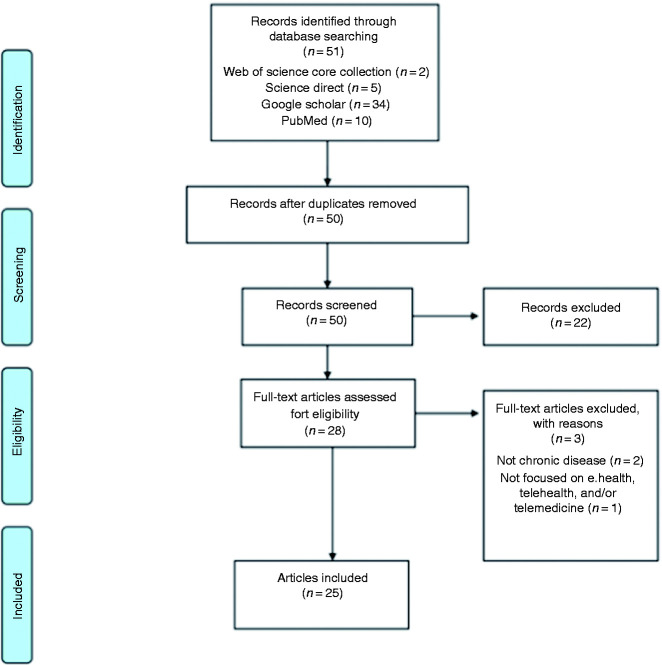
“We identified 51 articles of which 25 articles met the inclusion criteria.”
- Also stated in: § Overview · plain
“Of the 51 retrieved articles, 25 met the inclusion criteria.”
§ The role of eHealth, telehealth, and telemedicine for chronic disease patients during COVID-19 pandemic: A rapid systematic review > Abstract > Results
plain- Asserted: passes — The authors put it forward as true.
- Checkable: passes — It can be checked against evidence.
- Load-bearing: unclear — It is unclear whether the paper’s conclusions depend on it.
- Based: passes — The paper gives a reason why it holds.
It may state two separate claims as one.
- Also stated in: § Overview · plain
None of the sources cited for this claim have been checked yet.
In the paper
“Fifteen articles used the term telehealth (53.8%),15–17,27–38”
§ The role of eHealth, telehealth, and telemedicine for chronic disease patients during COVID-19 pandemic: A rapid systematic review > Results > Overview
What the sources say
- Not checked yetcites [15] Ryczek R Krzesiński P. Cardiac patients and COVID-19: What the general practitioner should know. Pediatr Med Rodz 2019; 15: C6– C9. source
- Not checked yetcites [16] Compton M Soper M Reilly B, et al. A feasibility study of urgent implementation of cystic fibrosis multidisciplinary telemedicine clinic in the face of COVID-19 pandemic: single-center experience. Telemed J E Health 2020; 26: 978– 984. 32357084 source
- Not checked yetcites [17] Lewis GD Hatch SS Wiederhold LR, et al. Long-term institutional experience with telemedicine services for radiation oncology: a potential model for long-term utilization. Adv Radiat Oncol 2020; 5: 780– 782. 32391444 PMC7205717 source
- Not checked yetcites [27] Bloem BR Dorsey ER Okun MS. The coronavirus disease 2019 crisis as catalyst for telemedicine for chronic neurological disorders. JAMA Neurol 2020; 77: 927. 32329796 source
- Not checked yetcites [28] Płońska-Gościniak E Suwalski P Bartuś S, et al. Valvular and structural heart disease management during the COVID-19 pandemic. Expert opinion of the working group on valvular heart diseases, the working group on cardiac surgery, and the association of cardiovascular interventions of the polish cardiac society. Kardiologia Polska 2020; 78: 498–507. 32415767
- Not checked yetcites [29] Sarsak H. Telerehabilitation services: a successful paradigm for occupational therapy clinical services. Int Phys Med Rehabil J 2020; 5: 93– 98.
- Not checked yetcites [30] Khera A Baum SJ Gluckman TJ, et al. Continuity of care and outpatient management for patients with and at high risk for cardiovascular disease during the COVID-19 pandemic: a scientific statement from the American Society for Preventive Cardiology. Am J Prev Cardiol 2020; 1: 100009. 32835347 PMC7194073 source
- Not checked yetcites [31] Parisien RL Shin M Constant M, et al. Telehealth utilization in response to the novel coronavirus (COVID-19) pandemic in orthopaedic surgery. J Am Acad Orthop Surg 2020; 28: e487– e492. 32459409 PMC7197336 source
- Not checked yetcites [32] Nicholls SJ Nelson M Astley C, et al. Optimising secondary prevention and cardiac rehabilitation for atherosclerotic cardiovascular disease during the COVID-19 pandemic: a position statement from the cardiac society of Australia and New Zealand (CSANZ). Heart Lung Circ 2020; 29: e99– e104. 32473781 PMC7192068 source
- Not checked yetcites [33] Neubeck L Hansen T Jaarsma T, et al. Delivering healthcare remotely to cardiovascular patients during COVID-19: a rapid review of the evidence. Eur J Cardiovasc Nurs 2020; 19: 486– 494. 32380858 PMC7717235 source
plain- Asserted: passes — The authors put it forward as true.
- Checkable: passes — It can be checked against evidence.
- Load-bearing: fails — The paper’s conclusions may not depend on it.
- Based: passes — The paper gives a reason why it holds.
Probably not a substantial claim. The paper’s conclusions may not depend on it.
In the paper
“Furthermore, one reported the use of virtual reality to provide surgical training for surgeons as well as to remotely deliver physical activity sessions to patients at home.38”
§ The role of eHealth, telehealth, and telemedicine for chronic disease patients during COVID-19 pandemic: A rapid systematic review > Results > The current status of eHealth, telemedicine, and/or telehealth solutions
What the sources say
- Not checked yetcites [38] Bini SA Schilling PL Patel SP, et al. Digital orthopaedics. A glimpse into the future in the midst of a pandemic. J Arthroplasty 2020; 35: 3056. PMC7175889 32416956 source
plain- Asserted: passes — The authors put it forward as true.
- Checkable: passes — It can be checked against evidence.
- Load-bearing: fails — The paper’s conclusions may not depend on it.
- Based: passes — The paper gives a reason why it holds.
Probably not a substantial claim. The paper’s conclusions may not depend on it. It may state two separate claims as one.
A result the paper reports from its own data — it cites no other source for it, so there is none to check. The quote shows it is in the paper.
In the paper
“Twelves articles had no defined setting.19,22–24,26–29,33,35,36,38”
§ The role of eHealth, telehealth, and telemedicine for chronic disease patients during COVID-19 pandemic: A rapid systematic review > Results > Overview
plain- Asserted: passes — The authors put it forward as true.
- Checkable: passes — It can be checked against evidence.
- Load-bearing: fails — The paper’s conclusions may not depend on it.
- Based: passes — The paper gives a reason why it holds.
Probably not a substantial claim. The paper’s conclusions may not depend on it.
A result the paper reports from its own data — it cites no other source for it, so there is none to check. The quote shows it is in the paper.
In the paper
“The settings included the United States,16,17,20,30,31,34,37,38 Western China,25 developing countries,21 Europe,14,15,18 Australia,32 Canada,18 Mexico,18 and Asia.18”
§ The role of eHealth, telehealth, and telemedicine for chronic disease patients during COVID-19 pandemic: A rapid systematic review > Results > Overview
plain- Asserted: passes — The authors put it forward as true.
- Checkable: passes — It can be checked against evidence.
- Load-bearing: fails — The paper’s conclusions may not depend on it.
- Based: passes — The paper gives a reason why it holds.
Probably not a substantial claim. The paper’s conclusions may not depend on it. It may state two separate claims as one.
None of the sources cited for this claim have been checked yet.
In the paper
“two referenced the importance of ensuring access to medications as well as tracking the prescription of medication electronically.18,32”
§ The role of eHealth, telehealth, and telemedicine for chronic disease patients during COVID-19 pandemic: A rapid systematic review > Results > The current status of eHealth, telemedicine, and/or telehealth solutions
What the sources say
- Not checked yetcites [18] Desideri I Pilleron S Battisti NML, et al. Caring for older patients with cancer during the COVID-19 pandemic: a young international society of geriatric oncology (SIOG) global perspective. J Geriatr Oncol 2020; 11: 1175– 1181. 32402764 PMC7252080 source
- Not checked yetcites [32] Nicholls SJ Nelson M Astley C, et al. Optimising secondary prevention and cardiac rehabilitation for atherosclerotic cardiovascular disease during the COVID-19 pandemic: a position statement from the cardiac society of Australia and New Zealand (CSANZ). Heart Lung Circ 2020; 29: e99– e104. 32473781 PMC7192068 source
plain- Asserted: passes — The authors put it forward as true.
- Checkable: passes — It can be checked against evidence.
- Load-bearing: fails — The paper’s conclusions may not depend on it.
- Based: passes — The paper gives a reason why it holds.
Probably not a substantial claim. The paper’s conclusions may not depend on it.
In the paper
“For instance, training patients on how to use a home blood pressure cuff become important for pregnant women with hypertensive disorders receiving telehealth care; thus, such training can facilitate the provision of virtual prenatal care.37”
§ The role of eHealth, telehealth, and telemedicine for chronic disease patients during COVID-19 pandemic: A rapid systematic review > Results > The current status of eHealth, telemedicine, and/or telehealth solutions
What the sources say
- Not checked yetcites [37] Aziz A Zork N Aubey JJ, et al. Telehealth for high-risk pregnancies in the setting of the COVID-19 pandemic. Am J Perinatol 2020; 37: 800–808. PMC7356069 32396948
plaindirect- Asserted: passes — The authors put it forward as true.
- Checkable: passes — It can be checked against evidence.
- Load-bearing: unclear — It is unclear whether the paper’s conclusions depend on it.
- Based: passes — The paper gives a reason why it holds.
It may state two separate claims as one.
A result the paper reports from its own data — it cites no other source for it, so there is none to check. The quote shows it is in the paper.
In the paper
“We synthesized the main findings of this rapid review into eight recommendations in accordance with the remote healthcare delivery life cycle for chronic disease patients during the pandemic (see Figure 3).”
§ The role of eHealth, telehealth, and telemedicine for chronic disease patients during COVID-19 pandemic: A rapid systematic review > Results > The top recommendations of eHealth, telemedicine, and/or telehealth solutions
plain- Asserted: passes — The authors put it forward as true.
- Checkable: passes — It can be checked against evidence.
- Load-bearing: passes — The paper’s conclusions depend on it.
- Based: passes — The paper gives a reason why it holds.
Probably not a substantial claim.
In the paper
“However, some of these articles used more than one term (e.g.,17).”
§ The role of eHealth, telehealth, and telemedicine for chronic disease patients during COVID-19 pandemic: A rapid systematic review > Results > Overview
What the sources say
- Not checked yetcites [17] Lewis GD Hatch SS Wiederhold LR, et al. Long-term institutional experience with telemedicine services for radiation oncology: a potential model for long-term utilization. Adv Radiat Oncol 2020; 5: 780– 782. 32391444 PMC7205717 source
plain- Asserted: passes — The authors put it forward as true.
- Checkable: passes — It can be checked against evidence.
- Load-bearing: fails — The paper’s conclusions may not depend on it.
- Based: passes — The paper gives a reason why it holds.
Probably not a substantial claim. The paper’s conclusions may not depend on it.
None of the sources cited for this claim have been checked yet.
In the paper
“while two articles used the term eHealth (7.7%).18,32”
§ The role of eHealth, telehealth, and telemedicine for chronic disease patients during COVID-19 pandemic: A rapid systematic review > Results > Overview
What the sources say
- Not checked yetcites [18] Desideri I Pilleron S Battisti NML, et al. Caring for older patients with cancer during the COVID-19 pandemic: a young international society of geriatric oncology (SIOG) global perspective. J Geriatr Oncol 2020; 11: 1175– 1181. 32402764 PMC7252080 source
- Not checked yetcites [32] Nicholls SJ Nelson M Astley C, et al. Optimising secondary prevention and cardiac rehabilitation for atherosclerotic cardiovascular disease during the COVID-19 pandemic: a position statement from the cardiac society of Australia and New Zealand (CSANZ). Heart Lung Circ 2020; 29: e99– e104. 32473781 PMC7192068 source
plain- Asserted: passes — The authors put it forward as true.
- Checkable: passes — It can be checked against evidence.
- Load-bearing: fails — The paper’s conclusions may not depend on it.
- Based: passes — The paper gives a reason why it holds.
Probably not a substantial claim. The paper’s conclusions may not depend on it.
None of the sources cited for this claim have been checked yet.
In the paper
“three articles stated the standardized transition process,13,15,18”
§ The role of eHealth, telehealth, and telemedicine for chronic disease patients during COVID-19 pandemic: A rapid systematic review > Results > The top recommendations of eHealth, telemedicine, and/or telehealth solutions
What the sources say
- Not checked yetcites [13] Khangura S Konnyu K Cushman R, et al. Evidence summaries: the evolution of a rapid review approach. Syst Rev 2012; 1: 10. 22587960 PMC3351736 source
- Not checked yetcites [15] Ryczek R Krzesiński P. Cardiac patients and COVID-19: What the general practitioner should know. Pediatr Med Rodz 2019; 15: C6– C9. source
- Not checked yetcites [18] Desideri I Pilleron S Battisti NML, et al. Caring for older patients with cancer during the COVID-19 pandemic: a young international society of geriatric oncology (SIOG) global perspective. J Geriatr Oncol 2020; 11: 1175– 1181. 32402764 PMC7252080 source
plain- Asserted: passes — The authors put it forward as true.
- Checkable: passes — It can be checked against evidence.
- Load-bearing: fails — The paper’s conclusions may not depend on it.
- Based: passes — The paper gives a reason why it holds.
Probably not a substantial claim. The paper’s conclusions may not depend on it.
None of the sources cited for this claim have been checked yet.
In the paper
“Ten articles recommended focusing on remote outpatient care activity;17,23,24,28,32,33,35–38”
§ The role of eHealth, telehealth, and telemedicine for chronic disease patients during COVID-19 pandemic: A rapid systematic review > Results > The top recommendations of eHealth, telemedicine, and/or telehealth solutions
What the sources say
- Not checked yetcites [17] Lewis GD Hatch SS Wiederhold LR, et al. Long-term institutional experience with telemedicine services for radiation oncology: a potential model for long-term utilization. Adv Radiat Oncol 2020; 5: 780– 782. 32391444 PMC7205717 source
- Not checked yetcites [23] Brough HA Kalayci O Sediva A, et al. Managing childhood allergies and immunodeficiencies during respiratory virus epidemics – the 2020 COVID‐19 pandemic: a statement from the EAACI‐section on pediatrics. Pediatr Allergy Immunol 2020; 31: 442– 448. 32319129 PMC7264548 source
- Not checked yetcites [24] Boettler T Newsome PN Mondelli MU, et al. Care of patients with liver disease during the COVID-19 pandemic: EASL-ESCMID position paper. JHEP Rep 2020; 2: 100113. 32289115 PMC7128473 source
plain- Asserted: passes — The authors put it forward as true.
- Checkable: passes — It can be checked against evidence.
- Load-bearing: fails — The paper’s conclusions may not depend on it.
- Based: passes — The paper gives a reason why it holds.
Probably not a substantial claim. The paper’s conclusions may not depend on it.
A result the paper reports from its own data — it cites no other source for it, so there is none to check. The quote shows it is in the paper.
In the paper
“Six articles focused on cardiovascular disease (CVD),15,28,30,32,33,36 two on cancer,17,18 two on chronic orthopedic conditions,31,38 two on chronic neurological disorders,20,27 one on chronic pain,19 one on cystic fibrosis,16 one on urologic chronic conditions,22 one on mental health disorders,34 one on chronic diseases requiring occupational therapy,29 one on allergies, asthma, and ImmunoDeficIe”
§ The role of eHealth, telehealth, and telemedicine for chronic disease patients during COVID-19 pandemic: A rapid systematic review > Results > Overview
plain- Asserted: passes — The authors put it forward as true.
- Checkable: passes — It can be checked against evidence.
- Load-bearing: fails — The paper’s conclusions may not depend on it.
- Based: passes — The paper gives a reason why it holds.
Probably not a substantial claim. The paper’s conclusions may not depend on it. It may state two separate claims as one.
None of the sources cited for this claim have been checked yet.
In the paper
“two articles highlighted the need to conduct more cost-effectiveness studies,16,31”
§ The role of eHealth, telehealth, and telemedicine for chronic disease patients during COVID-19 pandemic: A rapid systematic review > Results > The top recommendations of eHealth, telemedicine, and/or telehealth solutions
What the sources say
- Not checked yetcites [16] Compton M Soper M Reilly B, et al. A feasibility study of urgent implementation of cystic fibrosis multidisciplinary telemedicine clinic in the face of COVID-19 pandemic: single-center experience. Telemed J E Health 2020; 26: 978– 984. 32357084 source
- Not checked yetcites [31] Parisien RL Shin M Constant M, et al. Telehealth utilization in response to the novel coronavirus (COVID-19) pandemic in orthopaedic surgery. J Am Acad Orthop Surg 2020; 28: e487– e492. 32459409 PMC7197336 source
plain- Asserted: passes — The authors put it forward as true.
- Checkable: passes — It can be checked against evidence.
- Load-bearing: fails — The paper’s conclusions may not depend on it.
- Based: passes — The paper gives a reason why it holds.
Probably not a substantial claim. The paper’s conclusions may not depend on it.
In the paper
“while another article stated the importance of simplicity in the technology.32”
§ The role of eHealth, telehealth, and telemedicine for chronic disease patients during COVID-19 pandemic: A rapid systematic review > Results > The top recommendations of eHealth, telemedicine, and/or telehealth solutions
What the sources say
- Not checked yetcites [32] Nicholls SJ Nelson M Astley C, et al. Optimising secondary prevention and cardiac rehabilitation for atherosclerotic cardiovascular disease during the COVID-19 pandemic: a position statement from the cardiac society of Australia and New Zealand (CSANZ). Heart Lung Circ 2020; 29: e99– e104. 32473781 PMC7192068 source
plain- Asserted: passes — The authors put it forward as true.
- Checkable: passes — It can be checked against evidence.
- Load-bearing: fails — The paper’s conclusions may not depend on it.
- Based: passes — The paper gives a reason why it holds.
Probably not a substantial claim. The paper’s conclusions may not depend on it.
The paper states this without a source or data behind it here, so there is nothing to check it against. The quote shows it is in the paper.
In the paper
“To our knowledge, this is the first review that explores the role of eHealth, telehealth, and telemedicine technology in the delivery of healthcare services to patients living with chronic diseases/conditions during the COVID-19 crisis.”
§ The role of eHealth, telehealth, and telemedicine for chronic disease patients during COVID-19 pandemic: A rapid systematic review > Discussion
hedged- Asserted: passes — The authors put it forward as true.
- Checkable: passes — It can be checked against evidence.
- Load-bearing: passes — The paper’s conclusions depend on it.
- Based: fails — The paper may give no reason why it holds.
Probably not a substantial claim. The paper may give no reason why it holds.
The paper states this without a source or data behind it here, so there is nothing to check it against. The quote shows it is in the paper.
In the paper
“Most of the included articles used the term telemedicine, followed by telehealth, whereas few articles used the term eHealth.”
§ The role of eHealth, telehealth, and telemedicine for chronic disease patients during COVID-19 pandemic: A rapid systematic review > Discussion
plain- Asserted: passes — The authors put it forward as true.
- Checkable: passes — It can be checked against evidence.
- Load-bearing: fails — The paper’s conclusions may not depend on it.
- Based: passes — The paper gives a reason why it holds.
Probably not a substantial claim. The paper’s conclusions may not depend on it. It may state two separate claims as one.
A result the paper reports from its own data — it cites no other source for it, so there is none to check. The quote shows it is in the paper.
In the paper
“In fact, there were variations in using these terms in which some seemed to use them interchangeably while others distinguish between them.”
§ The role of eHealth, telehealth, and telemedicine for chronic disease patients during COVID-19 pandemic: A rapid systematic review > Discussion
plain- Asserted: passes — The authors put it forward as true.
- Checkable: passes — It can be checked against evidence.
- Load-bearing: fails — The paper’s conclusions may not depend on it.
- Based: passes — The paper gives a reason why it holds.
Probably not a substantial claim. The paper’s conclusions may not depend on it.
In the paper
“one article also emphasized billing reimbursement,15”
§ The role of eHealth, telehealth, and telemedicine for chronic disease patients during COVID-19 pandemic: A rapid systematic review > Results > The top recommendations of eHealth, telemedicine, and/or telehealth solutions
What the sources say
- Not checked yetcites [15] Ryczek R Krzesiński P. Cardiac patients and COVID-19: What the general practitioner should know. Pediatr Med Rodz 2019; 15: C6– C9. source
plain- Asserted: passes — The authors put it forward as true.
- Checkable: passes — It can be checked against evidence.
- Load-bearing: fails — The paper’s conclusions may not depend on it.
- Based: passes — The paper gives a reason why it holds.
Probably not a substantial claim. The paper’s conclusions may not depend on it.
None of the sources cited for this claim have been checked yet.
In the paper
“and studies on privacy and data sharing.14,32”
§ The role of eHealth, telehealth, and telemedicine for chronic disease patients during COVID-19 pandemic: A rapid systematic review > Results > The top recommendations of eHealth, telemedicine, and/or telehealth solutions
What the sources say
- Not checked yetcites [14] Omboni S. Telemedicine during the COVID-19 in Italy: a missed opportunity? Telemed J E Health 2020; 26: 973– 975. 32324109 PMC7415870 source
- Not checked yetcites [32] Nicholls SJ Nelson M Astley C, et al. Optimising secondary prevention and cardiac rehabilitation for atherosclerotic cardiovascular disease during the COVID-19 pandemic: a position statement from the cardiac society of Australia and New Zealand (CSANZ). Heart Lung Circ 2020; 29: e99– e104. 32473781 PMC7192068 source
plain- Asserted: passes — The authors put it forward as true.
- Checkable: passes — It can be checked against evidence.
- Load-bearing: fails — The paper’s conclusions may not depend on it.
- Based: passes — The paper gives a reason why it holds.
Probably not a substantial claim. The paper’s conclusions may not depend on it.
The paper states this without a source or data behind it here, so there is nothing to check it against. The quote shows it is in the paper.
In the paper
“This rapid review confirms that researchers from several specialties across the world have made a huge effort to improve healthcare services for chronic disease patients.”
§ The role of eHealth, telehealth, and telemedicine for chronic disease patients during COVID-19 pandemic: A rapid systematic review > Discussion
boosted- Asserted: passes — The authors put it forward as true.
- Checkable: fails — It may be too vague to check against evidence.
- Load-bearing: fails — The paper’s conclusions may not depend on it.
- Based: passes — The paper gives a reason why it holds.
Probably not a substantial claim. It may be too vague to check against evidence. The paper’s conclusions may not depend on it.
The paper states this without a source or data behind it here, so there is nothing to check it against. The quote shows it is in the paper.
In the paper
“Some of these articles also support and encourage the continuity of using such technological solutions in the future when the COVID-19 crisis is over.”
§ The role of eHealth, telehealth, and telemedicine for chronic disease patients during COVID-19 pandemic: A rapid systematic review > Discussion
plain- Asserted: passes — The authors put it forward as true.
- Checkable: passes — It can be checked against evidence.
- Load-bearing: fails — The paper’s conclusions may not depend on it.
- Based: passes — The paper gives a reason why it holds.
Probably not a substantial claim. The paper’s conclusions may not depend on it.
What the paper did — it cites no source for this, so there is none to check. The quote shows it is in the paper.
In the paper
“Initial screening for articles was performed by two independent reviewers (HB and SA) based on titles, abstracts, and keywords for relevance.”
§ The role of eHealth, telehealth, and telemedicine for chronic disease patients during COVID-19 pandemic: A rapid systematic review > Materials and methods > Selection of articles for reviews
plain- Asserted: passes — The authors put it forward as true.
- Checkable: passes — It can be checked against evidence.
- Load-bearing: fails — The paper’s conclusions may not depend on it.
- Based: passes — The paper gives a reason why it holds.
Probably not a substantial claim. The paper’s conclusions may not depend on it.
In the paper
“Patients with chronic disease conditions, such as patients living with diabetes and/or heart condition, may be vulnerable to the COVID-19 pandemic, which means that they are a high-risk population.4”
§ The role of eHealth, telehealth, and telemedicine for chronic disease patients during COVID-19 pandemic: A rapid systematic review > Introduction
What the sources say
- Not checked yetcites [4] Centers for Disease Control and Prevention. People who are at higher risk for severe illness, www.cdc.gov/coronavirus/2019-ncov/need-extra-precautions/people-at-higher-risk.html (2020, accessed 29 March 2021).
hedgedconditional- Asserted: passes — The authors put it forward as true.
- Checkable: passes — It can be checked against evidence.
- Load-bearing: passes — The paper’s conclusions depend on it.
- Based: passes — The paper gives a reason why it holds.
It may state two separate claims as one.
What the paper did — it cites no source for this, so there is none to check. The quote shows it is in the paper.
In the paper
“Then, the reviewers met and discussed which articles to include in the final review and reached a consensus.”
§ The role of eHealth, telehealth, and telemedicine for chronic disease patients during COVID-19 pandemic: A rapid systematic review > Materials and methods > Selection of articles for reviews
plain- Asserted: passes — The authors put it forward as true.
- Checkable: passes — It can be checked against evidence.
- Load-bearing: fails — The paper’s conclusions may not depend on it.
- Based: passes — The paper gives a reason why it holds.
Probably not a substantial claim. The paper’s conclusions may not depend on it. It may state two separate claims as one.
In the paper
“This has disrupted the way health care services are delivered and prioritized the urgency of preventing community transmission.1”
§ The role of eHealth, telehealth, and telemedicine for chronic disease patients during COVID-19 pandemic: A rapid systematic review > Introduction
What the sources say
- Not checked yetcites [1] Zheng S-q Yang L Zhou P-x, et al. Recommendations and guidance for providing pharmaceutical care services during COVID-19 pandemic: a China perspective. Res Social Adm Pharm 2021; 17: 1819– 1824. 32249102 PMC7102520 source
plaindirect- Asserted: passes — The authors put it forward as true.
- Checkable: passes — It can be checked against evidence.
- Load-bearing: passes — The paper’s conclusions depend on it.
- Based: passes — The paper gives a reason why it holds.
Probably not a substantial claim. It may state two separate claims as one.
What the paper did — it cites no source for this, so there is none to check. The quote shows it is in the paper.
In the paper
“Since this is a rapid systematic review and due to the urgent nature of the pandemic and time constraints, this review was not registered on PROSPERO.”
§ The role of eHealth, telehealth, and telemedicine for chronic disease patients during COVID-19 pandemic: A rapid systematic review > Materials and methods
plain- Asserted: passes — The authors put it forward as true.
- Checkable: passes — It can be checked against evidence.
- Load-bearing: fails — The paper’s conclusions may not depend on it.
- Based: passes — The paper gives a reason why it holds.
Probably not a substantial claim. The paper’s conclusions may not depend on it.
What the paper did — it cites no source for this, so there is none to check. The quote shows it is in the paper.
In the paper
“To confirm eligibility, the potential eligible articles, papers with no available abstract, and those falling into the uncertain category were read in full text independently.”
§ The role of eHealth, telehealth, and telemedicine for chronic disease patients during COVID-19 pandemic: A rapid systematic review > Materials and methods > Selection of articles for reviews
plain- Asserted: passes — The authors put it forward as true.
- Checkable: passes — It can be checked against evidence.
- Load-bearing: fails — The paper’s conclusions may not depend on it.
- Based: passes — The paper gives a reason why it holds.
Probably not a substantial claim. The paper’s conclusions may not depend on it.
None of the sources cited for this claim have been checked yet.
In the paper
“A lack of infrastructure in addition to other factors (e.g., less educated patients41) would affect the quality of health care delivered to these patients—it could be more harmful than beneficial.42”
§ The role of eHealth, telehealth, and telemedicine for chronic disease patients during COVID-19 pandemic: A rapid systematic review > Discussion
What the sources say
- Not checked yetcites [41] Anwar S Prasad R. Framework for future telemedicine planning and infrastructure using 5G technology. Wireless Pers Commun 2018; 100: 193– 208. source
- Not checked yetcites [42] Electronic Health Reporter. Dividing e-health, telehealth and telemedicine, https://electronichealthreporter.com/dividing-e-health-telehealth-and-telemedicine/ (2018, accessed 29 March 2021).
hedgeddirect- Asserted: passes — The authors put it forward as true.
- Checkable: passes — It can be checked against evidence.
- Load-bearing: unclear — It is unclear whether the paper’s conclusions depend on it.
- Based: passes — The paper gives a reason why it holds.
It may state two separate claims as one.
What the paper did — it cites no source for this, so there is none to check. The quote shows it is in the paper.
In the paper
“Furthermore, the quality of the included articles is not known; hence, we should exercise caution when interpreting this evidence.”
§ The role of eHealth, telehealth, and telemedicine for chronic disease patients during COVID-19 pandemic: A rapid systematic review > Discussion
plain- Asserted: passes — The authors put it forward as true.
- Checkable: passes — It can be checked against evidence.
- Load-bearing: passes — The paper’s conclusions depend on it.
- Based: passes — The paper gives a reason why it holds.
Probably not a substantial claim. It may state two separate claims as one.
A conclusion the paper draws from its own results — it cites no other source for it, so there is none to check. The quote shows it is in the paper.
In the paper
“Evidence on the role or effect of using such technological solutions to deliver healthcare services to patients during the pandemic may vary based on the type of chronic disease/condition.”
§ The role of eHealth, telehealth, and telemedicine for chronic disease patients during COVID-19 pandemic: A rapid systematic review > Discussion
hedgedconditional- Asserted: passes — The authors put it forward as true.
- Checkable: passes — It can be checked against evidence.
- Load-bearing: passes — The paper’s conclusions depend on it.
- Based: passes — The paper gives a reason why it holds.
Probably not a substantial claim.
A conclusion the paper draws from its own results — it cites no other source for it, so there is none to check. The quote shows it is in the paper.
In the paper
“However, experts concur that the use of such technologies is likely to offer an opportunity to warrant the continuity of delivering the needed healthcare services to patients living with chronic health diseases or conditions during and after this pandemic.”
§ The role of eHealth, telehealth, and telemedicine for chronic disease patients during COVID-19 pandemic: A rapid systematic review > Conclusion
hedgedconditional- Asserted: passes — The authors put it forward as true.
- Checkable: passes — It can be checked against evidence.
- Load-bearing: passes — The paper’s conclusions depend on it.
- Based: passes — The paper gives a reason why it holds.
Probably not a substantial claim.
What the paper did — it cites no source for this, so there is none to check. The quote shows it is in the paper.
In the paper
“However, this rapid review was conducted in a short timeframe, and more articles are rapidly emerging daily.”
§ The role of eHealth, telehealth, and telemedicine for chronic disease patients during COVID-19 pandemic: A rapid systematic review > Discussion
plain- Asserted: passes — The authors put it forward as true.
- Checkable: passes — It can be checked against evidence.
- Load-bearing: passes — The paper’s conclusions depend on it.
- Based: passes — The paper gives a reason why it holds.
Probably not a substantial claim.
What the paper did — it cites no source for this, so there is none to check. The quote shows it is in the paper.
In the paper
“It is important to note that the term “chronic disease” was the only diagnosis specific search keyword used to search in the databases, which may result in excluding articles that only use the exact diagnosis term (e.g., diabetes) in their papers.”
§ The role of eHealth, telehealth, and telemedicine for chronic disease patients during COVID-19 pandemic: A rapid systematic review > Discussion
hedgedconditional- Asserted: passes — The authors put it forward as true.
- Checkable: passes — It can be checked against evidence.
- Load-bearing: passes — The paper’s conclusions depend on it.
- Based: passes — The paper gives a reason why it holds.
It may state two separate claims as one.
In the paper
“It may be the case that these variations can infer the ambiguity and the lack of clarity in the terms’ definitions and their concepts.10”
§ The role of eHealth, telehealth, and telemedicine for chronic disease patients during COVID-19 pandemic: A rapid systematic review > Discussion
What the sources say
- Not checked yetcites [10] Fatehi F Wootton R. Telemedicine, telehealth or e-health? A bibliometric analysis of the trends in the use of these terms. J Telemed Telecare 2012; 18: 460– 464. 23209265 source
hedgedconditional- Asserted: passes — The authors put it forward as true.
- Checkable: fails — It may be too vague to check against evidence.
- Load-bearing: fails — The paper’s conclusions may not depend on it.
- Based: passes — The paper gives a reason why it holds.
Probably not a substantial claim. It may be too vague to check against evidence. The paper’s conclusions may not depend on it.
The paper relies on this without support.
Social distancing is a key factor to slow the spread of COVID-19.
“In response to the existential health threat of a global pandemic, social distancing is a key factor to slow the spread of COVID-19, with the result that medical visits have been changed from in-person to remote medical appointments.”
The authors state this as an assumption.
The spread of the COVID-19 pandemic creates the need to rapidly assess and synthesize the evidence that has been generated.
“The justification of the present paper is that the spread of the pandemic creates the need to rapidly assess and synthesize the evidence that has been generated.”
Claims other papers make about this one
Each is checked against this paper’s own text: does it say what the citing paper says it does?
The source backs part of the claim, not all of it — or backs it for a different population, condition or comparison.
In the citing paper
“In general, studies on the satisfactory level of use of telehealth services during the COVID-19 pandemic suggested it was above average by patients and health professional users and often they showed their willingness to continue with the use of telecare even after the pandemic [56,57,58,59,60,61,62].”
From Telehealth and COVID-19 Pandemic: An Overview of the Telehealth Use, Advantages, Challenges, and Opportunities during COVID-19 Pandemic (2022) · cites this paper as [57]
Experimental — accuracy not yet measuredIn the citing paper
“In Australia, a national study suggests that the COVID-19 pandemic considerably encouraged and promoted the use of telehealth and thanks to this window of opportunity, a lot of progress was made in the domain that, without that progress, telehealth use would have remained infrequent [50,51,52,53,54,55,56,57,58].”
From Telehealth and COVID-19 Pandemic: An Overview of the Telehealth Use, Advantages, Challenges, and Opportunities during COVID-19 Pandemic (2022) · cites this paper as [57]
In the citing paper
“Globally, studies have shown that during the COVID-19 pandemic, females used telecare facilities two times more than males and suggested that young adult patients were represented as the most frequent telecare service consumers, from 20 to 44 years of age [53,54,55,56,57].”
From Telehealth and COVID-19 Pandemic: An Overview of the Telehealth Use, Advantages, Challenges, and Opportunities during COVID-19 Pandemic (2022) · cites this paper as [57]
Self-check
Percentages, sums and reported differences re-computed from the paper’s own numbers.
Each contradiction between two passages listed here was confirmed by an independent check.
Rated minor: it would not touch a result — a value no result rests on, a p-value that stays on the same side of the significance level, or a conflict that is clerical, resolved elsewhere in the paper, or outside its own findings.
In the paper
§ The role of eHealth, telehealth, and telemedicine for chronic disease patients during COVID-19 pandemic: A rapid systematic review > Abstract > Results
“We synthesized the main findings into ten usages and eight recommendations concerning the different activities for delivering healthcare services remotely for those living with chronic diseases/conditions in the era of COVID-19.”
§ The role of eHealth, telehealth, and telemedicine for chronic disease patients during COVID-19 pandemic: A rapid systematic review > Results > The current status of eHealth, telemedicine, and/or telehealth solutions
“We summarized these services into six usages of eHealth, telemedicine, and/or telehealth as reported in the included articles (see Figure 2).”
Rated minor: it would not touch a result — a value no result rests on, a p-value that stays on the same side of the significance level, or a conflict that is clerical, resolved elsewhere in the paper, or outside its own findings.
In the paper
§ The role of eHealth, telehealth, and telemedicine for chronic disease patients during COVID-19 pandemic: A rapid systematic review > Results > Overview
“The types of paper were varied including six review paper,22,23,28,32,35,37 three articles,13,14,36”
§ The role of eHealth, telehealth, and telemedicine for chronic disease patients during COVID-19 pandemic: A rapid systematic review > References
“13. Khangura S Konnyu K Cushman R, et al. Evidence summaries: the evolution of a rapid review approach. Syst Rev 2012; 1: 10.”
Rated minor: it would not touch a result — a value no result rests on, a p-value that stays on the same side of the significance level, or a conflict that is clerical, resolved elsewhere in the paper, or outside its own findings.
In the paper
§ The role of eHealth, telehealth, and telemedicine for chronic disease patients during COVID-19 pandemic: A rapid systematic review > Results > Overview
“Twelves articles had no defined setting.19,22–24,26–29,33,35,36,38”
§ The role of eHealth, telehealth, and telemedicine for chronic disease patients during COVID-19 pandemic: A rapid systematic review > Results > Overview
“| Bini et al.38 | Review | United States |”
Rated minor: it would not touch a result — a value no result rests on, a p-value that stays on the same side of the significance level, or a conflict that is clerical, resolved elsewhere in the paper, or outside its own findings.
In the paper
§ The role of eHealth, telehealth, and telemedicine for chronic disease patients during COVID-19 pandemic: A rapid systematic review > Results > Overview
“six review paper,22,23,28,32,35,37”
§ The role of eHealth, telehealth, and telemedicine for chronic disease patients during COVID-19 pandemic: A rapid systematic review > Results > Overview
“| Boehm et al.22 | Brief correspondence | Not specified |”
Rated minor: it would not touch a result — a value no result rests on, a p-value that stays on the same side of the significance level, or a conflict that is clerical, resolved elsewhere in the paper, or outside its own findings.
In the paper
“two articles used the term eHealth (7.7%)”
§ The role of eHealth, telehealth, and telemedicine for chronic disease patients during COVID-19 pandemic: A rapid systematic review > Results > Overview
Reported 7.7 · recomputed 8
Rated minor: it would not touch a result — a value no result rests on, a p-value that stays on the same side of the significance level, or a conflict that is clerical, resolved elsewhere in the paper, or outside its own findings.
In the paper
§ The role of eHealth, telehealth, and telemedicine for chronic disease patients during COVID-19 pandemic: A rapid systematic review > Results > Overview
“one position statement,31”
§ The role of eHealth, telehealth, and telemedicine for chronic disease patients during COVID-19 pandemic: A rapid systematic review > Results > Overview
“| Parisien et al.31 | Quantitative study | United States |”
Rated minor: it would not touch a result — a value no result rests on, a p-value that stays on the same side of the significance level, or a conflict that is clerical, resolved elsewhere in the paper, or outside its own findings.
In the paper
“Fifteen articles used the term telehealth (53.8%)”
§ The role of eHealth, telehealth, and telemedicine for chronic disease patients during COVID-19 pandemic: A rapid systematic review > Results > Overview
Reported 53.8 · recomputed 60
Rated minor: it would not touch a result — a value no result rests on, a p-value that stays on the same side of the significance level, or a conflict that is clerical, resolved elsewhere in the paper, or outside its own findings.
In the paper
§ The role of eHealth, telehealth, and telemedicine for chronic disease patients during COVID-19 pandemic: A rapid systematic review > Results > Overview
“one quantitative study,30”
§ The role of eHealth, telehealth, and telemedicine for chronic disease patients during COVID-19 pandemic: A rapid systematic review > Results > Overview
“| Khera et al.30 | Clinical practice statement | United States |”
Citations
Cites
Virtually perfect? Telemedicine for COVID-19
Hollander, J. E., & Carr, B. G. (2020) · New England Journal of Medicine · doi:10.1056/nejmp2003539 · Cited by 2,970
Evidence summaries: the evolution of a rapid review approach
Khangura, S., Konnyu, K., Cushman, R., Grimshaw, J., & Moher, D. (2012) · Systematic Reviews · doi:10.1186/2046-4053-1-10 · Cited by 1,232
Care of patients with liver disease during the COVID-19 pandemic: EASL-ESCMID position paper
Boettler, T., Newsome, P. N., Mondelli, M. U., Maticic, M., Cordero, E., Cornberg, M., & Berg, T. (2020) · JHEP Reports · doi:10.1016/j.jhepr.2020.100113 · Cited by 477
The Role of Telehealth in the Medical Response to Disasters
Lurie, N., & Carr, B. G. (2018) · JAMA Internal Medicine · doi:10.1001/jamainternmed.2018.1314 · Cited by 428
Hamel, C., Michaud, A., Thuku, M., Skidmore, B., Stevens, A., Nussbaumer-Streit, B., & Garritty, C. (2021) · Journal of Clinical Epidemiology · doi:10.1016/j.jclinepi.2020.09.041 · Cited by 384
Telemedicine During the COVID-19 Pandemic: Experiences From Western China
Hong, Z., Li, N., Li, D., Jun-hua, L., Li, B., Xiong, W., Lu, L., Li, W., & Zhou, D. (2020) · Journal of Medical Internet Research · doi:10.2196/19577 · Cited by 344
Zheng, S.-Q., Yang, L., Zhou, P.-X., Li, H.-B., Liu, F., & Zhao, R.-S. (2021) · Research in Social and Administrative Pharmacy · doi:10.1016/j.sapharm.2020.03.012 · Cited by 333
Telehealth for High-Risk Pregnancies in the Setting of the COVID-19 Pandemic
Aziz, A., Zork, N. M., Aubey, J. J., Baptiste, C. D., D’Alton, M. E., Emeruwa, U. N., Fuchs, K. M., Goffman, D., Gyamfi‐Bannerman, C., Haythe, J. H., et al. (2020) · American Journal of Perinatology · doi:10.1055/s-0040-1712121 · Cited by 287
Telemedicine for Developing Countries
Combi, C., Pozzani, G., & Pozzi, G. (2016) · Applied Clinical Informatics · doi:10.4338/aci-2016-06-r-0089 · Cited by 286
The Coronavirus Disease 2019 Crisis as Catalyst for Telemedicine for Chronic Neurological Disorders
Bloem, B. R., Dorsey, E. R., & Okun, M. S. (2020) · JAMA Neurology · doi:10.1001/jamaneurol.2020.1452 · Cited by 224
Research works printed but not linked: 5
- Tricco AC, 2017, Rapid reviews to strengthen health policy and systems: a practical guide
- Płońska-Gościniak E, 2020, Kardiologia Polska
- Sarsak H., 2020, Int Phys Med Rehabil J, 5, 93
- Aziz A, 2020, Am J Perinatol
- Yusif S, 2014, J Health Inform Develop Countries, 8
Cited by
Sorted by citations
Items 201–300 of 338
Share of the population aged 65 and over, 1 January 1960 to 2021
(2022) · Health at a glance. Europe · doi:10.1787/495a63df-en
Breast cancer screening and outcomes
OECD, & Union, E. (2022) · Health at a glance. Europe · doi:10.1787/e116b61d-en
Symptoms of depression were double those of pre‑pandemic levels in a number of European countries
(2022) · Health at a glance. Europe · doi:10.1787/51a3f5a3-en
Breast cancer stage distribution, women diagnosed during 2010‑14
(2022) · Health at a glance. Europe · doi:10.1787/4c31f226-en
COVID‑19 mortality and excess mortality, March 2020 to June 2022
(2022) · Health at a glance. Europe · doi:10.1787/fa4ec04c-en
Change in premature deaths due to air pollution (PM2.5) from 2009‑19
(2022) · Health at a glance. Europe · doi:10.1787/fcd2466c-en
Key facts and figures (infographic)
OECD, & Union, E. (2022) · Health at a glance. Europe · doi:10.1787/61a4d6a9-en
Illicit drug consumption among adults
OECD, & Union, E. (2022) · Health at a glance. Europe · doi:10.1787/69f16bd4-en
OECD, & Union, E. (2022) · Health at a glance. Europe · doi:10.1787/d1e5fec3-en
Use of inpatient mental health services has been disrupted in most countries
(2022) · Health at a glance. Europe · doi:10.1787/06c2e6aa-en
Adult intensive care beds, 2019 and 2020
(2022) · Health at a glance. Europe · doi:10.1787/f46ca81e-en
Share of households with catastrophic health spending by consumption quintile, latest year
(2022) · Health at a glance. Europe · doi:10.1787/3ad2e08b-en
Mortality from circulatory diseases
OECD, & Union, E. (2022) · Health at a glance. Europe · doi:10.1787/0d0bdc83-en
In-person consultations and teleconsultations with doctors, 2019 and 2020
(2022) · Health at a glance. Europe · doi:10.1787/99a80f9a-en
Private health insurance coverage, 2020 (or nearest year)
(2022) · Health at a glance. Europe · doi:10.1787/a1f4c32e-en
Cervical cancer screening rates decreased in most countries in 2020
(2022) · Health at a glance. Europe · doi:10.1787/568d80f3-en
OECD, & Union, E. (2022) · Health at a glance. Europe · doi:10.1787/c3ce8219-en
Financial hardship and out-of-pocket expenditure
OECD, & Union, E. (2022) · Health at a glance. Europe · doi:10.1787/cf40210d-en
Limitations in daily activities among people aged 65 and over, by gender, 2020
(2022) · Health at a glance. Europe · doi:10.1787/0363d115-en
The pandemic accelerated a growth in eating disorders amongst young people in Belgium
(2022) · Health at a glance. Europe · doi:10.1787/655e6c2a-en
Main causes of mortality by country, 2019 (or nearest year)
(2022) · Health at a glance. Europe · doi:10.1787/491fa0b9-en
OECD, & Union, E. (2022) · Health at a glance. Europe · doi:10.1787/68cf8742-en
OECD, & Union, E. (2022) · Health at a glance. Europe · doi:10.1787/49330565-en
OECD, & Union, E. (2022) · Health at a glance. Europe · doi:10.1787/7c0f0dff-en
Hospital discharges per 1 000 population, 2019 and 2020
(2022) · Health at a glance. Europe · doi:10.1787/e8426d33-en
OECD, & Union, E. (2022) · Health at a glance. Europe · doi:10.1787/3a19c8cc-en
Remuneration of hospital nurses, EUR PPP, 2020 (or nearest year)
(2022) · Health at a glance. Europe · doi:10.1787/91956a6b-en
Remuneration of hospital nurses, ratio to average wage, 2020 (or nearest year)
(2022) · Health at a glance. Europe · doi:10.1787/2b17a127-en
Teleconsultations with doctors during the first year of the pandemic
(2022) · Health at a glance. Europe · doi:10.1787/f0124f0f-en
OECD, & Union, E. (2022) · Health at a glance. Europe · doi:10.1787/dd30abef-en
Overall alcohol consumption among adults, 2010 and 2020 (or nearest year)
(2022) · Health at a glance. Europe · doi:10.1787/ff093b6b-en
(2022) · Health at a glance. Europe · doi:10.1787/d9a60194-en
Unmet needs for dental examination due to financial, geographic or waiting time reasons, 2020
(2022) · Health at a glance. Europe · doi:10.1787/3ab32fbf-en
Waiting times for knee replacement, 2019 and 2020
(2022) · Health at a glance. Europe · doi:10.1787/bb1a80fe-en
Trends in remuneration of hospital nurses (in real terms), selected EU countries, 2010‑20
(2022) · Health at a glance. Europe · doi:10.1787/64805bc1-en
Main causes of mortality in EU countries, 2019 (or nearest year)
(2022) · Health at a glance. Europe · doi:10.1787/da6bd7b8-en
Trends in heavy episodic drinking among 15‑16 year‑olds, 2015‑19
(2022) · Health at a glance. Europe · doi:10.1787/f7929aef-en
Cancer mortality by gender, 2019 (or nearest year)
(2022) · Health at a glance. Europe · doi:10.1787/fc653620-en
Improvement in patient-reported knee replacement outcomes, 2020 (or nearest year)
(2022) · Health at a glance. Europe · doi:10.1787/f5e681f5-en
Health expenditure by type of financing, 2020 (or nearest year)
(2022) · Health at a glance. Europe · doi:10.1787/91656686-en
(2022) · Health at a glance. Europe · doi:10.1787/6f10ed73-en
Overweight (including obesity) rates among adults, by gender, 2019
(2022) · Health at a glance. Europe · doi:10.1787/3cf3cd82-en
Overweight (including obesity) rates among adults, by educational level, 2019
(2022) · Health at a glance. Europe · doi:10.1787/fdcbce93-en
Surgical activities rebounded in 2021 in Portugal and Norway
(2022) · Health at a glance. Europe · doi:10.1787/34cd4f6f-en
Health expenditure per capita, 2020 (or nearest year)
(2022) · Health at a glance. Europe · doi:10.1787/ce1aeca0-en
Tobacco smoking rates among 15‑16 year‑olds, 2011, 2015 and 2019
(2022) · Health at a glance. Europe · doi:10.1787/fd4b5559-en
Proportion of adults who reported heavy episodic drinking, by gender, 2019
(2022) · Health at a glance. Europe · doi:10.1787/8a555364-en
(2022) · Health at a glance. Europe · doi:10.1787/2743ea0a-en
Spending on primary health care services as share of current health expenditure, 2020
(2022) · Health at a glance. Europe · doi:10.1787/9c97d03e-en
Practising doctors per 1 000 population, 2010 and 2020 (or nearest year)
(2022) · Health at a glance. Europe · doi:10.1787/9118f346-en
OECD, & Union, E. (2022) · Health at a glance. Europe · doi:10.1787/7724cd6e-en
Public expenditure projections for health and long-term care
OECD, & Union, E. (2022) · Health at a glance. Europe · doi:10.1787/5b352bdf-en
Trends in benzodiazepine use in adults aged 65 and over, 2009‑20
(2022) · Health at a glance. Europe · doi:10.1787/aea7f113-en
Expenditure on retail pharmaceuticals* by type of financing, 2020 (or nearest year)
(2022) · Health at a glance. Europe · doi:10.1787/ff29e384-en
Overall volume of opioids prescribed in the adult population, 2019 (or nearest year)
(2022) · Health at a glance. Europe · doi:10.1787/24061ec4-en
Remuneration of doctors, ratio to average wage, 2020 (or nearest year)
(2022) · Health at a glance. Europe · doi:10.1787/d0efe063-en
Health expenditure as a share of GDP, EU27 and selected countries, 2013‑20
(2022) · Health at a glance. Europe · doi:10.1787/ea3438db-en
Trends in remuneration of GPs and specialists (in real terms), 2010‑20 (or nearest years)
(2022) · Health at a glance. Europe · doi:10.1787/4a98e7e6-en
Practising nurses per 1 000 population, 2010 and 2020 (or nearest year)
(2022) · Health at a glance. Europe · doi:10.1787/22bb41c3-en
(2022) · Health at a glance. Europe · doi:10.1787/1d318b16-en
OECD, & Union, E. (2022) · Health at a glance. Europe · doi:10.1787/f49cef1c-en
Colorectal cancer screening, 2019 (or nearest year) and 2020
(2022) · Health at a glance. Europe · doi:10.1787/32bf3da0-en
Initial COVID‑19 vaccination course completion among people aged 60 and over, 2021
(2022) · Health at a glance. Europe · doi:10.1787/11be94a4-en
Ratio of nurses to doctors, 2020 (or nearest year)
(2022) · Health at a glance. Europe · doi:10.1787/26e3012a-en
Improvement in patient-reported hip replacement outcomes, 2020 (or nearest year)
(2022) · Health at a glance. Europe · doi:10.1787/96de7ce3-en
Prevalence of asthma, by education level, 2019
(2022) · Health at a glance. Europe · doi:10.1787/23992ca2-en
Multiple chronic diseases among people aged 65 and over, by gender, 2020
(2022) · Health at a glance. Europe · doi:10.1787/41a5eb0a-en
(2022) · Health at a glance. Europe · doi:10.1787/b961c126-en
(2022) · Health at a glance. Europe · doi:10.1787/78b625e2-en
Life expectancy and healthy life years at birth, by gender, 2020 (or nearest year)
(2022) · Health at a glance. Europe · doi:10.1787/f83196ec-en
Out-of-pocket spending on health, by type of services, 2020 (or nearest year)
(2022) · Health at a glance. Europe · doi:10.1787/0f946707-en
Sustainably Driven Telemedicine for Chronic Illness Patient Satisfaction: Pre and Post Pandemic
Nassi, M., Riza, E., & Bouziani, E. (2022) · Implementing the UN sustainable development goals - regional perspectives · doi:10.1007/978-3-030-91261-1_99-1 · Cited by 1
Megawati, S., Amin, M. N. F. A., & Yusriadi, Y. (2023) · Journal of Namibian Studies History Politics Culture · doi:10.59670/jns.v34i.1144
de Jesus, T. C. B., Merhy, A. M. B., Costa, C. H. M. D., SILVA, K. L. M. M. D., Roehrs, H., da Silva, C. R. L., & da Silva, R. C. L. (2023) · RECISATEC - REVISTA CIENTÍFICA SAÚDE E TECNOLOGIA · doi:10.53612/recisatec.v3i7.297
Motivational Interviewing in e-Health and Telehealth
Hovis, E., & Latronica, J. R. (2023) · Oxford University Press eBooks · doi:10.1093/med/9780197583876.003.0021
Composing Telehealth: Drawing Actors Together to Enact New Relations
Nickelsen, N. C. M., & Duguid, P. (2023) · Springer eBooks · doi:10.1007/978-3-031-44119-6_4
SYSTEMATIC REVIEW OF THE EFFICIENCY OF TELEMEDICINE DURING THE COVID-19 PANDEMIC
Yuniasih, D., Mansur, A. A., Dewantari, A. N., Dewantari, A. N., Annisa, I. N., & Susilawati, O. (2022) · Muhammadiyah International Public Health and Medicine Proceeding · doi:10.61811/miphmp.v1i2.287
Health, Technology And Built Environment Nexus: A Systematic Literature ReviewPreprint
Ndimako, O. O., & Sholanke, A. B. (2024) · Preprints.org · doi:10.20944/preprints202404.0088.v1
Coping with Non-COVID-19 Health Problems Through Communicative Action in Cyberspace
Kim, N., Lee, S. H., Perez, L. A., Pitluk, A., & Kim, J. (2024) · Journal of Health Communication · doi:10.1080/10810730.2024.2365777
Exploring Views on Digital Inclusion Policies and Impacts on Barriers to Healthcare Access
Sathyanath, G. (2024) · Advances in logistics, operations, and management science book series · doi:10.4018/979-8-3693-4288-6.ch015 · Cited by 3
Ismail, S., Sutan, R., Ibrahim, R., & Rathi, F. Z. M. (2024) · Cureus · doi:10.7759/cureus.63064
Figueroa, R. E. P. (2024) · Elsevier eBooks · doi:10.1016/b978-0-443-18529-8.00019-6
Cervical and colorectal cancer screening
OECD, & Union, E. (2022) · Health at a glance. Europe · doi:10.1787/43b89137-en
OECD, & Union, E. (2022) · Health at a glance. Europe · doi:10.1787/9cf8b666-bg
Strengthening resilience in long‑term care
Rocard, E. (2023) · OECD health policy studies · doi:10.1787/d66c8846-en
OECD (2023) · OECD health policy studies · doi:10.1787/154a9f6e-en
Social Media and Vaccine Intention: The Case of Kuwait
Al-Hasan, A. (2024) · المجلة العربية للعلوم الإدارية. · doi:10.34120/ajas.v30i3.261
Mofty, H. K., Abouammoh, M. A., Al-Muqbil, H. A., Alzahrani, K., ALGHASHAM, T. M., Assiri, A. A., Almnaizel, A. T., Mushcab, H., Bokhary, K. A., & Hogg, R. E. (2024) · Digital Health · doi:10.1177/20552076241290405
Reid, C. J., & Church, C. (2025) · Journal of Patient Experience · doi:10.1177/23743735241311716
Sharma, P. K., & Krishnarth, N. (2025) · Wiley eBooks · doi:10.1002/9781394302444.ch9
Metadata
- Authors
- Bitar, H., & Alismail, S.
- Affiliations
- King Abdulaziz University (SA)
- Claremont Graduate University (US)
- Corresponding author
- Bitar, Hind
- Venue
- DIGITAL HEALTH
- Publisher
- SAGE Publications
- Published
- 2021-01
- Volume
- 7
- Pages
- 20552076211009396-20552076211009396
- ISSN
- 2055-2076 (ISSN-L)
- PMC
- PMC8060773
- OpenAlex
- W3152586041
- Cited by
- 325
- References
- 38
- Citations by year
- 2026: 26 · 2025: 38 · 2024: 33 · 2023: 44 · 2022: 171 · 2021: 12
- FWCI
- 11.58
- Type
- journal article
- Language
- en
- Open access
- gold
- doi.org
- Licence
- Locations
- Digital Health (publishedVersion, cc-by-nc)
- PubMed Central (publishedVersion, cc-by-nc)
- PubMed (publishedVersion)
- DOAJ (DOAJ: Directory of Open Access Journals) (submittedVersion, cc-by-sa)
- Topics
- Health Sciences › Medicine › Public Health, Environmental and Occupational Health › Telemedicine and Telehealth Implementation
- Health Sciences › Dentistry › General Dentistry › Dental Research and COVID-19
- Health Sciences › Health Professions › General Health Professions › Mobile Health and mHealth Applications
- Keywords
- e-health, telemedicine, chronic disease, COVID-19 pandemic, remote healthcare delivery, telehealth implementation, healthcare access during pandemic
About these checks
Registry, retraction, Cites and statistics results are computed, not judged, with one exception: a printed reference that no index lists is read once by a model before it counts as a citation error. Claims are extracted by a model and kept only when their quote appears verbatim in the text; each cited source is then checked, with a model’s help, for whether it says what the claim relies on. Those verdicts can be wrong — read the claim’s quote and the cited source before relying on one.
A language model drew the claims from the paper on 2026-10-07, under version 3 of the claim definition (model deepseek-v4.1-flash, prompt extract-v3).
A second model labelled each claim on 2026-10-07 (model jev-1.13-20260917, definition revision gold-guideline-v0.2).
Statistics and arithmetic are recomputed, not judged.
Confidence bands are shown only for fields calibrated on our annotated test set. None is calibrated yet, so no band is shown.
What counts as a claim ›How we measure confidence ›How we check this ›
Are you an author, or do you see a problem with this page? Request a review
