

Emotions in Learning, Teaching, and Leadership: A Bibliometric Review of Asian Literature (1990–2018)
Open accessThe DOI matches its Crossref record; 86 of the 86 references it cites were found in a registry or an index.
Abstract
This study aims to map the Asian literature on emotions in learning, teaching, and leadership through a review of published research in Web of Science Core Collection. In all, 862 articles published between 1990 and 2018 were retrieved and analyzed. Bibliographic coupling of the countries, bibliographic coupling of the authors, co-occurrences of author keywords, bibliographic coupling of the journals, and bibliographic coupling of the institutions were extracted through bibliographic visualization methods. All the h-classics publications were also reviewed and categorized according to their topics. People’s Republic of China (Hong Kong), Israel, Turkey, and Cyprus are the countries with most relevant evidence. The top authors are found to be D.W Chan and M. Zembylas, while emotional intelligence, empathy, burnout, emotion, and self-efficacy have been the most frequently studied concepts. Teaching and Teacher Education and Journal of Educational Psychology are the journals with prominent pertinent influence. Education University of Hong Kong, Chinese University of Hong Kong, and Ben-Gurion University of the Negev are the institutions with the most notable influence. The current situation and research trends are discussed in the article.
Overview
The claims and statistics of this paper haven’t been checked yet.
Free: it reads the open-access text and checks the first 5 claims that cite a source we can check. Create a free account to check every claim.
Integrity signals
Registry
Cites
Statistics
Figures

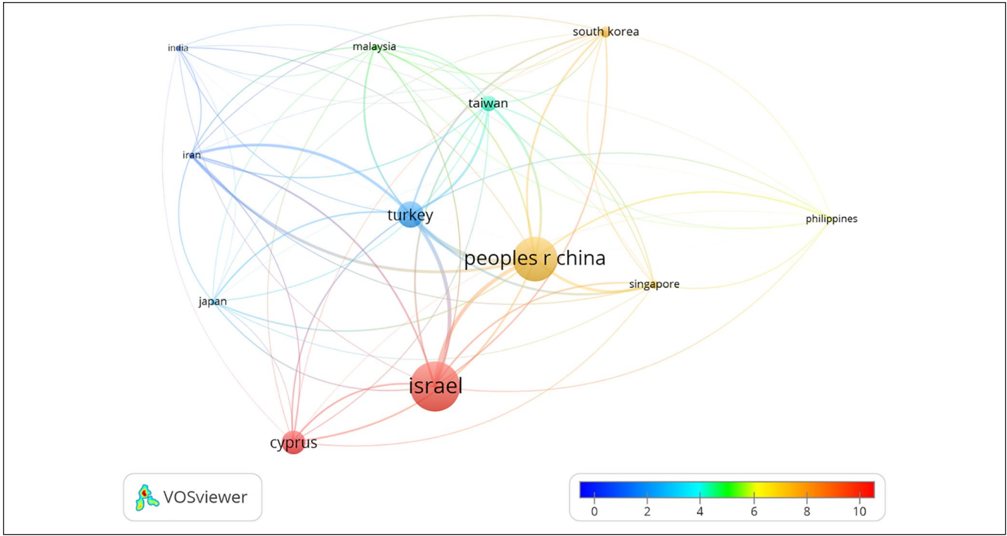
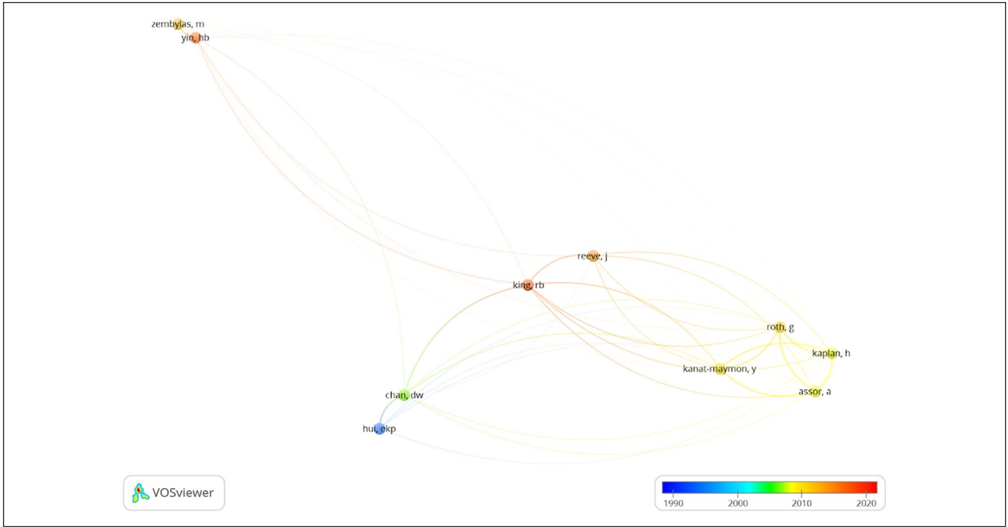
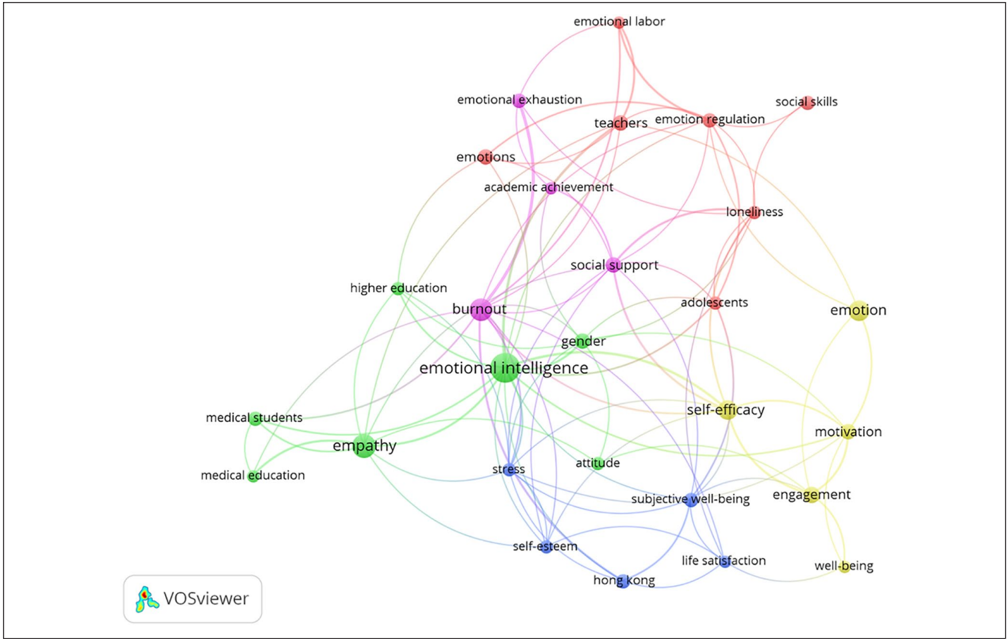
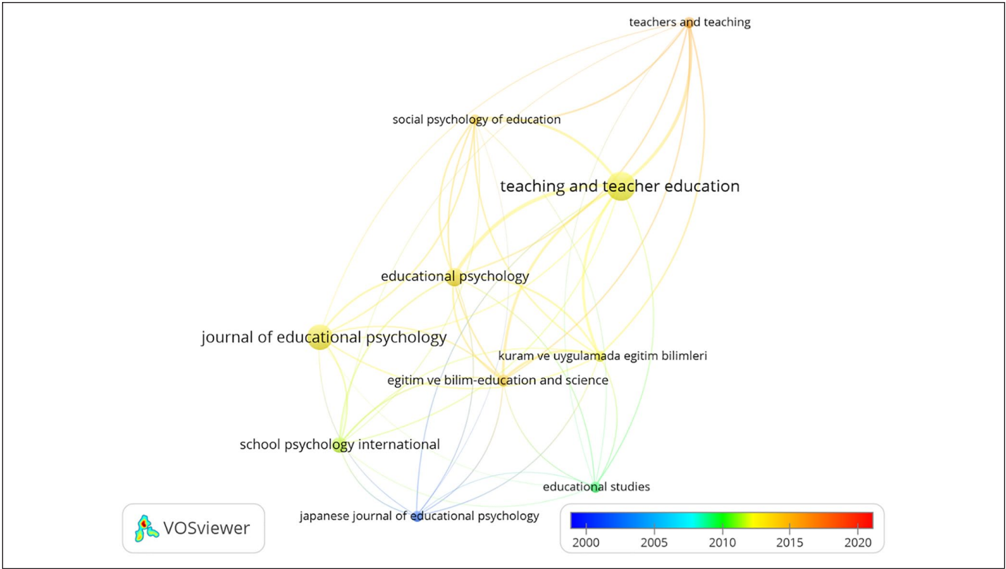
Verification
Claims the paper makes
The claims and statistics of this paper haven’t been checked yet.
Free: it reads the open-access text and checks the first 5 claims that cite a source we can check. Create a free account to check every claim.
Claims other papers make about this one
Each is checked against this paper’s own text: does it say what the citing paper says it does?
The source backs part of the claim, not all of it — or backs it for a different population, condition or comparison.
In the citing paper
“Karakus et al. (2021) argue that EI's impacts remain context-dependent, resisting universal generalizations.”
From The Direct and Cascading Impacts of School Leaders’ Emotional Intelligence on Teachers and Students: A Systematic Review (2025) · cites this paper as Karakus et al. (2021)
Experimental — accuracy not yet measured
Self-check
Percentages, sums and reported differences re-computed from the paper’s own numbers.
The self-check needs the paper’s full text.
Citations
Cites
Culture and the self: Implications for cognition, emotion, and motivation.
Markus, H. R., & Kitayama, S. (1991) · Psychological Review · doi:10.1037/0033-295x.98.2.224 · Cited by 21,995
Software survey: VOSviewer, a computer program for bibliometric mapping
van Eck, N. J., & Waltman, L. (2010) · Scientometrics · doi:10.1007/s11192-009-0146-3 · Cited by 21,484
An index to quantify an individual’s scientific research output
Hirsch, J. E. (2005) · Proceedings of the National Academy of Sciences · doi:10.1073/pnas.0507655102 · Cited by 11,669
Statistical bibliography or bibliometrics
Pritchard, A. E. (1969) · Journal of Documentation · Cited by 6,140
Rethinking individualism and collectivism: Evaluation of theoretical assumptions and meta-analyses.
Oyserman, D., Coon, H. M., & Kemmelmeier, M. (2002) · Psychological Bulletin · doi:10.1037/0033-2909.128.1.3 · Cited by 5,758 · cited 1×
“On the contrary, in collectivistic cultures in Asian countries, attending to others is strongly emphasized, and individuals are expected to regulate their emotions and to be more sensi tive to others’ feelings to maintain cooperation and fellow ship (Oyserman et al., 2002; Qu & Zhang, 2005).”
BackgroundNot by Genes Alone: How Culture Transformed Human Evolution
Levinson, M. H. (2006) · ETC.: A Review of General Semantics · doi:10.66774/etc_6303_351 · Cited by 3,553
Not By Genes Alone: How Culture Transformed Human Evolution
Richerson, P. J., & Boyd, R. (2004) · doi:10.7208/chicago/9780226712130.001.0001 · Cited by 2,793
Citation-based clustering of publications using CitNetExplorer and VOSviewer
van Eck, N. J., & Waltman, L. (2017) · Scientometrics · doi:10.1007/s11192-017-2300-7 · Cited by 2,664
Robinson, V. M. J., Lloyd, C. A., & Rowe, K. J. (2008) · Educational Administration Quarterly · doi:10.1177/0013161x08321509 · Cited by 2,549 · cited 1×
“…this spe cific area, there is a lack of research on the relation between leader emotions and student outcomes, although there are studies on the impact of leader emotions on teacher outcomes and the effect of teacher emotions on student outcomes (Leithwood et al., 2020; Robinson et al., 2008).”
BackgroundThe Influences of Emotion on Learning and Memory
Tyng, C. M., Amin, H. U., Saad, M. N. M., & Malik, A. S. (2017) · Frontiers in Psychology · doi:10.3389/fpsyg.2017.01454 · Cited by 1,530
Research works printed but not linked: 5
- Goleman, D., Boyatzis, R. E., & McKee, A. (2013). Primal leader ship: Unleashing the power of emotional intelligence . Harvard Business Press.
- Moskowitz, S., & Dewaele, J. M. (2019). Is teacher happiness contagious? A study of the link between perceptions of lan guage teacher happiness and student attitudes. Innovation in Language Learning and Teaching , 65 (1), 1-8. https://doi.org/1 0.1080/87567555.2016.1189390 · DOI
- Qu, R., & Zhang, Z. (2005). Work group emotions in Chinese cul ture settings. Singapore Management Review , 27 , 69-86.
- Rodrigo-Ruiz, D. (2016). Effect of teachers' emotions on their stu dents: Some evidence. Journal of Education & Social Policy , 3 (4), 73-79.
- White, H. D., & McCain, K. W. (1989). Bibliometrics. In M. E. Williams (Ed.), Annual review of information science and technology (pp. 119-186). Elsevier Science Publishers.
Cited by
The emotional intensity of educational leadership: a scoping review
McKay, A., MacDonald, K., & Longmuir, F. (2022) · International Journal of Leadership in Education · doi:10.1080/13603124.2022.2042856 · Cited by 117
A bibliometric mapping of shadow education research: achievements, limitations, and the future
Hajar, A., & Karakuş, M. (2022) · Asia Pacific Education Review · doi:10.1007/s12564-022-09759-4 · Cited by 92
Emotions in service research: evolutionary analysis and empirical review
Arıcı, H. E., Köseoğlu, M. A., & Arıcı, N. Ç. (2022) · Service Industries Journal · doi:10.1080/02642069.2022.2101638 · Cited by 35
Martinho, V. J. P. D. (2022) · Environments · doi:10.3390/environments9020028 · Cited by 36
Science mapping the knowledge base on microlearning: using Scopus database between 2002 and 2021
Pham, H., Nguyen, N.-T. N., Luong, D., Nguyen, T., & Nguyen, V. A. L. (2024) · Journal of Research in Innovative Teaching & Learning · doi:10.1108/jrit-09-2023-0132 · Cited by 34
“Teachers' Emotional Labor” Publications in Web of Science: A Bibliometric Analysis
Wu, A., & Wei, R. (2022) · Frontiers in Psychology · doi:10.3389/fpsyg.2022.899261 · Cited by 30
An Inevitable Phenomenon: A Bibliometric Analysis of Shadow Education Research (1982–2022)
Hajar, A., & Karakuş, M. (2023) · International perspectives on education and society · doi:10.1108/s1479-36792023000046a014 · Cited by 13
Olivera, P. C., Grájeda, A., Córdova, J. P., Vargas-Sánchez, A., Burgos, J., & Sanjinés, A. (2024) · Cogent Education · doi:10.1080/2331186x.2024.2431885 · Cited by 30
“The Statistical Analysis of Compositional Data” by John Aitchison (1986): A Bibliometric Overview
Navarro-Lopez, C., Linares‐Mustarós, S., & Mulet-Forteza, C. (2022) · SAGE Open · doi:10.1177/21582440221093366 · Cited by 14
Sasere, O. B., & Matashu, M. (2025) · Education Sciences · doi:10.3390/educsci15091168 · Cited by 9
“Consequently, Karakus et al. (2021) argue that EI’s impacts remain context-dependent, resisting universal generalizations.”
InfluentialHCI Research in the Middle East and North Africa: A Bibliometric and Socioeconomic Overview
Mubin, O., Alnajjar, F., & Arsalan, M. H. (2021) · International Journal of Human-Computer Interaction · doi:10.1080/10447318.2021.2004701 · Cited by 11
Nikolova, S., & Mancheva, R. (2022) · Psychological Thought · doi:10.37708/psyct.v15i1.678 · Cited by 3
Abdulrahman, A. A. J. (2023) · International Journal of Professional Business Review · doi:10.26668/businessreview/2023.v8i7.2561 · Cited by 4
Emotional Exhaustion in University Teachers: Contributing Aspects and Mediating Mechanisms
Trillo, A., Jiménez, D. O., Ocampo-Vásquez, K., Zhindón, M. D. R. R., ROJAS, T. C. M., & Bretones, F. D. (2025) · SAGE Open · doi:10.1177/21582440251359784 · Cited by 3
Deserción en la educación superior y salud mental: Estudio bibliométrico
Velíz, J., Bernal, P. M. P., & Sandoval, M. I. (2024) · Contabilidad y Negocios · doi:10.18800/contabilidad.202401.002 · Cited by 5
Bibliometric analysis on global citizenship education in higher education
Erlande, R., Lubis, B. S., Taufika, R., & Juri, J. (2025) · Globalisation Societies and Education · doi:10.1080/14767724.2025.2513639 · Cited by 8
Bibliometric analysis of the world scientific production on emotional intelligence (2000-2021)
Ramos-Quispe, T., Arias-Chávez, D., Salvatierra, W. V., & Castillo, N. A. V. (2022) · International Journal of Health Sciences · doi:10.53730/ijhs.v6ns2.8461 · Cited by 3
Habilidades y competencias socioemocionales de los docentes: Una meta-revisión
Munilla, M. S., Domingo, M. B. G., García-Pérez, D., & Muñoz, I. A. (2026) · Revista Complutense de Educación · doi:10.5209/rced.100387 · Cited by 3
The Development of Facial Expressions Dataset for Teaching Context: Preliminary Research
Utami, P., Hartanto, R., & Soesanti, I. (2022) · International Conference of Computer and Informatics Engineering (IC2IE) · doi:10.1109/ic2ie56416.2022.9970043 · Cited by 2
Sustainable Development of Children and Character Education: Bibliometric Analysis Using Vosviewer
Shinta, S., Partino, P., & Suud, F. M. (2024) · Revista de Gestão Social e Ambiental · doi:10.24857/rgsa.v18n5-059 · Cited by 1
Obituary for Zoltán Dörnyei (1960–2022): a bibliometric mapping of his publications
Hajar, A., & Karakuş, M. (2023) · Journal of Multilingual and Multicultural Development · doi:10.1080/01434632.2023.2230962 · Cited by 2
BONDAD, E. N. M., & Quisido, P. Q. (2022) · International Journal of Research Publications · doi:10.47119/ijrp1001061820223728
Assessing Emotional Intelligence Influence on Students in Private Higher Education, London, UK
Masud, M., & Khawaja, S. (2023) · International Journal of Private Higher Education · doi:10.60166/hbmx9286 · Cited by 2
A Bibliometric Analysis of Scientific Literature on Adverse Childhood ExperiencesPreprint
Sindhura, B. S., & Ganesh Kumar, J. (2024) · SSRN Electronic Journal · doi:10.2139/ssrn.4841947
She, J. (2024) · International Conference on Digital Society and Artificial Intelligence (DSAI) · doi:10.1145/3677892.3677933
Leader Emotional Capital Matters in The Automotive Manufacturing Industry
Tshabalala, N. A., Martins, A., & Tefera, O. (2024) · European Conference on Management, Leadership and Governance (ECMLG) · doi:10.34190/ecmlg.20.1.3011
Metadata
- Authors
- Karakus, M., Usak, M., & Ersozlu, A.
- Affiliations
- Coventry University, UK
- Kazan Federal University, Russia
- The University of Western Australia, Perth, Australia
- ORCID
- Usak, Muhammet
- Venue
- Sage Open
- Publisher
- SAGE Publications
- Published
- 2021-01
- Volume
- 11
- Issue
- 1
- ISSN
- 2158-2440 (ISSN-L)
- OpenAlex
- W3125876908
- Cited by
- 27
- References
- 86
- Citations by year
- 2026: 2 · 2025: 3 · 2024: 7 · 2023: 4 · 2022: 10 · 2021: 1
- FWCI
- 9.67
- Type
- journal article
- Language
- en
- Open access
- gold
- doi.org
- Locations
- SAGE Open (publishedVersion, cc-by)
- UWA Profiles and Research Repository (UWA) (publishedVersion, cc-by)
- RePEc: Research Papers in Economics (submittedVersion)
- DOAJ (DOAJ: Directory of Open Access Journals) (submittedVersion, cc-by-sa)
- Pure (Coventry University) (submittedVersion, cc-by)
- Topics
- Social Sciences › Education › Teacher Education and Leadership Studies
- Social Sciences › Psychology › Developmental and Educational Psychology › Education, Achievement, and Giftedness
- Social Sciences › Education › Educational Research and Methods
- Keywords
- affective learning, teacher emotions, emotions in leadership, emotional intelligence, empathy, teacher burnout, self-efficacy, teacher professional development, research trends, Asia
About these checks
Registry, retraction, Cites and statistics results are computed, not judged, with one exception: a printed reference that no index lists is read once by a model before it counts as a citation error. Claims are extracted by a model and kept only when their quote appears verbatim in the text; each cited source is then checked, with a model’s help, for whether it says what the claim relies on. Those verdicts can be wrong — read the claim’s quote and the cited source before relying on one.
Statistics and arithmetic are recomputed, not judged.
Confidence bands are shown only for fields calibrated on our annotated test set. None is calibrated yet, so no band is shown.
What counts as a claim ›How we measure confidence ›How we check this ›
Are you an author, or do you see a problem with this page? Request a review
Data sources
Bibliographic data: Semantic Scholar, OpenAlex, Crossref.
Contains information from the Semantic Scholar Academic Graph Datasets, made available under the ODC Attribution License (ODC-BY 1.0).
Semantic Scholar’s data is described in: Kinney, R., et al. (2023). The Semantic Scholar Open Data Platform. arXiv:2301.10140.
