

A Shared Medical Appointment on the Benefits and Risks of Opioids Is Associated With Improved Patient Confidence in Managing Chronic Pain
Open accessThe DOI matches its Crossref record; 26 of the 27 references it cites were found in a registry or an index.
Abstract
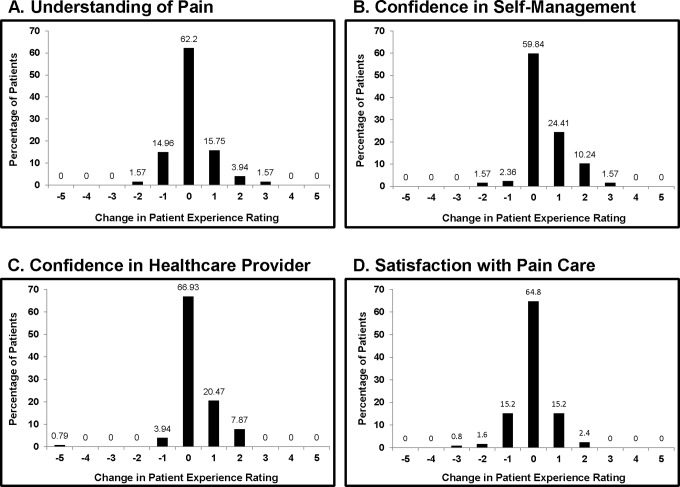
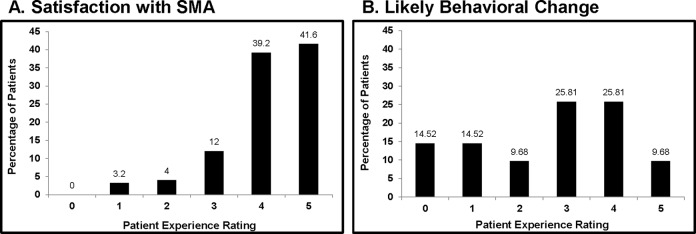
Objectives: To evaluate a shared medical appointment (SMA) on opioids in the treatment of chronic pain. Research design: This prospective study was conducted at an ambulatory clinic within a health-care delivery system. The SMA is a single 90-minute encounter, led by a physician. We included adult patients who attended the SMA and completed an immediate pre–post survey. Survey items were measured on a scale from 0 (worst) to 5 (best). Mean differences in pre–post responses were assessed by a paired t test. Results: A total of 130 patients were included in the analysis. Patients showed improvements in confidence in self-managing pain (+0.44; 95% confidence interval [CI]: 0.29-0.59; P < .001) and their providers’ ability to help manage pain (+0.28; 95% CI: 0.14-0.43; P < .001). Most patients (81%) were very/extremely satisfied with the SMA. Conclusions: An SMA on the benefits and risks of opioids was associated with prompt improvements in patients’ confidence in self-managing pain and in their health-care providers’ ability to help manage pain. Such confidence can lay the foundation for increased patient engagement and activation in pain management.
Overview
The claims and statistics of this paper haven’t been checked yet.
Free: it reads the open-access text and checks the first 5 claims that cite a source we can check. Create a free account to check every claim.
Integrity signals
Registry
Cites
Statistics
Figures
Verification
Claims the paper makes
The claims and statistics of this paper haven’t been checked yet.
Free: it reads the open-access text and checks the first 5 claims that cite a source we can check. Create a free account to check every claim.
Claims other papers make about this one
Each is checked against this paper’s own text: does it say what the citing paper says it does?
The source backs part of the claim, not all of it — or backs it for a different population, condition or comparison.
In the citing paper
“Group medical appointment is proven to be efficient and effective for delivering care to veteran populations, improving clinical outcomes 15 and decreasing physician workload 16 and health care utilization.17”
From A complementary and integrative health group-based program pilot demonstrates positive health outcomes with female Veterans. (2020) · cites this paper as [15]
Experimental — accuracy not yet measured
Self-check
Percentages, sums and reported differences re-computed from the paper’s own numbers.
The self-check needs the paper’s full text.
Citations
Cites
(1985) · Medical Entomology and Zoology · Cited by 19,180
CDC Guideline for Prescribing Opioids for Chronic Pain—United States, 2016
Dowell, D., Haegerich, T. M., & Chou, R. (2016) · JAMA · doi:10.1001/jama.2016.1464 · Cited by 5,161
Self-management approaches for people with chronic conditions: a review
Barlow, J., Wright, C., Sheasby, J., Turner, A., & Hainsworth, J. (2002) · Patient Education and Counseling · doi:10.1016/s0738-3991(02)00032-0 · Cited by 2,800 · cited 1×
“Through selfmanagement, patients can effectively monitor their symptoms and take steps to control or reduce the impact of their condition on quality of life (24).”
BackgroundEstimates of Pain Prevalence and Severity in Adults: United States, 2012
Nahin, R. L. (2015) · The Journal of Pain · doi:10.1016/j.jpain.2015.05.002 · Cited by 918
Linking primary care performance to outcomes of care.
Safran, D. G., Taira, D. A., Rogers, W. H., Kosinski, M. R., Ware, J. E., & Tarlov, A. R. (1998) · PubMed · Cited by 877
Krebs, E. E., Lorenz, K. A., Bair, M. J., Damush, T. M., Wu, J., Sutherland, J. M., Asch, S. M., & Kroenke, K. (2009) · Journal of General Internal Medicine · doi:10.1007/s11606-009-0981-1 · Cited by 782 · cited 1×
“Data were also collected on patient-reported pain intensity and functional interference, which was measured using the validated PEG 3-item questionnaire (19).”
MethodPatients’ trust in physicians: Many theories, few measures, and little data
Pearson, S. D., & Raeke, L. H. (2000) · Journal of General Internal Medicine · doi:10.1046/j.1525-1497.2000.11002.x · Cited by 695 · cited 1×
“Patients’ confidence in their health-care providers can foster trust and improved communication, which has been shown to positively influence follow-through with treatment regimens (25,26).”
BackgroundThe effects of gender and age on health related behaviors
Deeks, A., Lombard, C., Michelmore, J., & Teede, H. (2009) · BMC Public Health · doi:10.1186/1471-2458-9-213 · Cited by 367
Prescription opioid analgesic use among adults: United States, 1999-2012.
Frenk, S. M., Porter, K. S., & Paulozzi, L. J. (2015) · PubMed · Cited by 205
A population-based study of age and gender differences in patterns of health-related behaviors
Liang, W., Shediac-Rizkallah, M. C., Celentano, D. D., & Rohde, C. (1999) · American Journal of Preventive Medicine · doi:10.1016/s0749-3797(99)00040-9 · Cited by 156
Kirsh, S., Watts, S., Pascuzzi, K., O'Day, M. E., Davidson, D., Strauss, G., Kern, E. O., & Aron, D. C. (2007) · Quality and Safety in Health Care · doi:10.1136/qshc.2006.019158 · Cited by 149
Efficacy of a Self-Management Group Intervention for Elderly Persons With Chronic Pain
Ersek, M., Turner, J. A., McCurry, S. M., Gibbons, L., & Kraybill, B. M. (2003) · The Clinical Journal of Pain · doi:10.1097/00002508-200305000-00003 · Cited by 107
Gender Differences in Health‐Promoting Lifestyles of African Americans
Johnson, R. L. (2005) · Public Health Nursing · doi:10.1111/j.0737-1209.2005.220206.x · Cited by 80
Gardiner, P., Dresner, D., Barnett, K. G., Sadikova, E., & Saper, R. (2014) · Global Advances in Health and Medicine · doi:10.7453/gahmj.2014.011 · Cited by 67 · cited 1×
“Group encounters for pain disorders—not necessarily involving the SMA framework— have been associated with improvements in pain severity (14–17), depressive symptoms (14,15), and quality of life (15).”
BackgroundBauer Bartley, K., & Haney, R. (2010) · Journal of Cardiovascular Nursing · doi:10.1097/jcn.0b013e3181b8e82e · Cited by 60 · cited 1×
“appointment within a health-care practice and integrated with a patient’s routine medical care (5).”
BackgroundImpact of a Group‐Based Model of Disease Management for Headache
Maizels, M., Saenz, V., & Wirjo, J. (2003) · Headache: The Journal of Head and Face Pain · doi:10.1046/j.1526-4610.2003.03104.x · Cited by 38
Ayoub, W. T., Newman, E. D., Blosky, M. A., Stewart, W. F., & Wood, G. C. (2008) · Osteoporosis International · doi:10.1007/s00198-008-0635-x · Cited by 38 · cited 1×
“Shared medical appointments have been developed for numerous chronic conditions and have been associated with patient satisfaction (6–8), achievement of treatment goals (9–11), and receipt of recommended prescription medications or follow-up care (12,13).”
BackgroundChao, M. T., ABERCROMBIE, P. D., Santana, T., & Duncan, L. G. (2015) · Pain Management Nursing · doi:10.1016/j.pmn.2015.07.007 · Cited by 36
Shared medical appointments for patients with diabetes: Glycemic reduction in high-risk patients
Watts, S. A., Strauss, G. J., Pascuzzi, K., O’Day, M. E., Young, K. R., Aron, D. C., & Kirsh, S. R. (2015) · Journal of the American Association of Nurse Practitioners · doi:10.1002/2327-6924.12200 · Cited by 32
Geller, J. S., Kulla, J., & Shoemaker, A. (2015) · Global Advances in Health and Medicine · doi:10.7453/gahmj.2015.057 · Cited by 32
Shared medical appointments improve QOL in neuromuscular patients: A randomized controlled trial
Seesing, F., Drost, G., Groenewoud, J. M. M., van der Wilt, G. J., & van Engelen, B. G. M. (2014) · Neurology · doi:10.1212/wnl.0000000000000588 · Cited by 30
Shared medical appointments - an adjunct for chronic disease management in Australia?
Egger, G. J., Binns, A., Cole, M.-A., Ewald, D. P., Davies, L., Meldrum, H., Stevens, J., & Noffsinger, E. (2014) · PubMed · Cited by 29
Prescott, L. S., Dickens, A. S., Guerra, S. L., Tanha, J., Phillips, D. G., Patel, K. T., Umberson, K. M., Lozano, M. A., Lowe, K. B., Brown, A. J., et al. (2015) · Gynecologic Oncology · doi:10.1016/j.ygyno.2015.11.006 · Cited by 25
Meehan, K. R., Hill, J. M., Root, L. D., Kimtis, E. A., Patchett, L. J., & Noffsinger, E. B. (2006) · Supportive Cancer Therapy · doi:10.3816/sct.2006.n.003 · Cited by 24
Guthrie, G. E., & Bogue, R. J. (2015) · Journal of the American College of Nutrition · doi:10.1080/07315724.2014.933454 · Cited by 20
Fu, Y., Yu, G., McNichol, E., Marczewski, K., & Closs, S. J. (2016) · International Journal of Nursing Studies · doi:10.1016/j.ijnurstu.2016.04.009 · Cited by 18 · cited 1×
“Group encounters can supplement one-on-one encounters, encourage selfmanagement skills, and empower patients to take an active role in their care (4).”
Background
Cited by
Gardiner, P., Luo, M., D’Amico, S., Gergen-Barnett, K., White, L. F., Saper, R., Mitchell, S., & Liebschutz, J. M. (2019) · PLoS ONE · doi:10.1371/journal.pone.0225540 · Cited by 55
“Other MGVS studies have found showed a reduction in pain medication use [71,84].”
Integrative Group Medical Visits: A National Scoping Survey of Safety-Net Clinics
Thompson‐Lastad, A., Gardiner, P. M., & Chao, M. T. (2019) · Health Equity · doi:10.1089/heq.2018.0081 · Cited by 45
Parikh, M., Rajendran, I., D'Amico, S., Luo, M., & Gardiner, P. M. (2019) · The Journal of Alternative and Complementary Medicine · doi:10.1089/acm.2018.0524 · Cited by 38
“Living Well with Chronic Pain”: Integrative Pain Management via Shared Medical Appointments
Znidarsic, J., Kirksey, K. N., Dombrowski, S. M., Tang, A., Lopez, R., Blonsky, H., Todorov, I., Schneeberger, D., Doyle, J., Libertini, L., et al. (2021) · Pain Medicine · doi:10.1093/pm/pnaa418 · Cited by 33
Haun, J. N., Paykel, J., Alman, A. C., Patel, N., & Melillo, C. (2020) · EXPLORE · doi:10.1016/j.explore.2019.08.001 · Cited by 17
Metadata
- Authors
- Romanelli, R. J., Dolginsky, M., Byakina, Y., Bronstein, D., & Wilson, S.
- Affiliations
- Palo Alto Medical Foundation (US)
- Corresponding author
- Romanelli, Robert J
- Venue
- Journal of Patient Experience
- Publisher
- SAGE Publications
- Published
- 2017-05-08
- Volume
- 4
- Issue
- 3
- Pages
- 144-151
- ISSN
- 2374-3735 (ISSN-L)
- 2374-3743
- PMC
- PMC5593266
- OpenAlex
- W2612492362
- Cited by
- 17
- References
- 27
- Citations by year
- 2026: 1 · 2025: 1 · 2024: 3 · 2023: 1 · 2021: 4 · 2020: 3 · 2019: 4
- FWCI
- 1.80
- Type
- journal article
- Language
- en
- Open access
- gold
- doi.org
- Licence
- cc-by-nc
- journals.sagepub.com/page/policies/text-and-data-mining-license (tdm)
- Locations
- Journal of Patient Experience (publishedVersion, cc-by-nc)
- Europe PMC (PubMed Central) (publishedVersion, cc-by-nc)
- PubMed Central (publishedVersion, cc-by-nc)
- PubMed (publishedVersion)
- DOAJ (DOAJ: Directory of Open Access Journals) (submittedVersion, cc-by-sa)
- Topics
- Health Sciences › Medicine › Public Health, Environmental and Occupational Health › Opioid Use Disorder Treatment
- Health Sciences › Medicine › Anesthesiology and Pain Medicine › Pain Management and Opioid Use
- Health Sciences › Health Professions › General Health Professions › Patient-Provider Communication in Healthcare
- Keywords
- shared medical appointments, opioids, chronic pain, patient confidence, self-management, patient-provider communication, patient satisfaction, patient engagement, pain management
About these checks
Registry, retraction, Cites and statistics results are computed, not judged, with one exception: a printed reference that no index lists is read once by a model before it counts as a citation error. Claims are extracted by a model and kept only when their quote appears verbatim in the text; each cited source is then checked, with a model’s help, for whether it says what the claim relies on. Those verdicts can be wrong — read the claim’s quote and the cited source before relying on one.
Statistics and arithmetic are recomputed, not judged.
Confidence bands are shown only for fields calibrated on our annotated test set. None is calibrated yet, so no band is shown.
What counts as a claim ›How we measure confidence ›How we check this ›
Are you an author, or do you see a problem with this page? Request a review
Data sources
Bibliographic data: Semantic Scholar, OpenAlex, Crossref.
Contains information from the Semantic Scholar Academic Graph Datasets, made available under the ODC Attribution License (ODC-BY 1.0).
Semantic Scholar’s data is described in: Kinney, R., et al. (2023). The Semantic Scholar Open Data Platform. arXiv:2301.10140.
