

YBX1 as an oncogenic factor in T-cell acute lymphoblastic leukemia
Open accessThe DOI matches its Crossref record; 44 of the 44 references it cites were found in a registry or an index.
Abstract
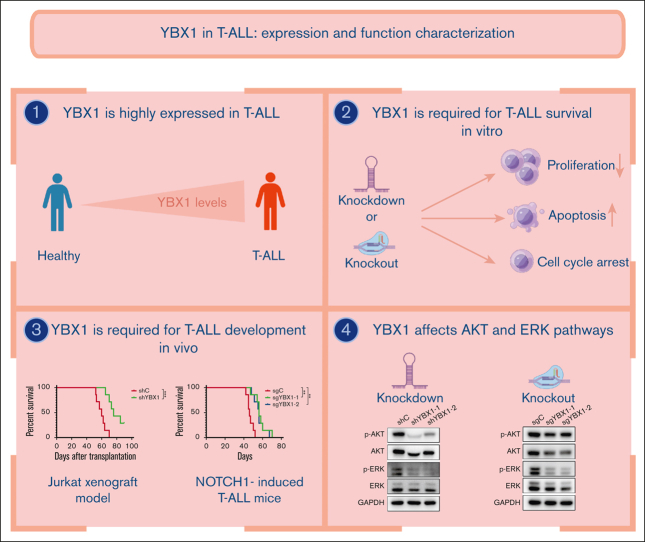
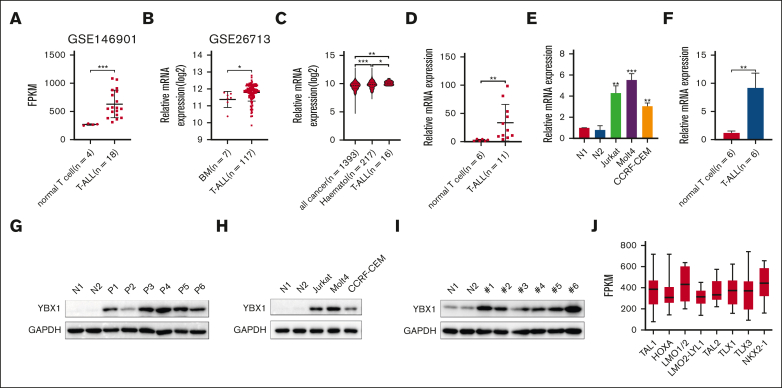
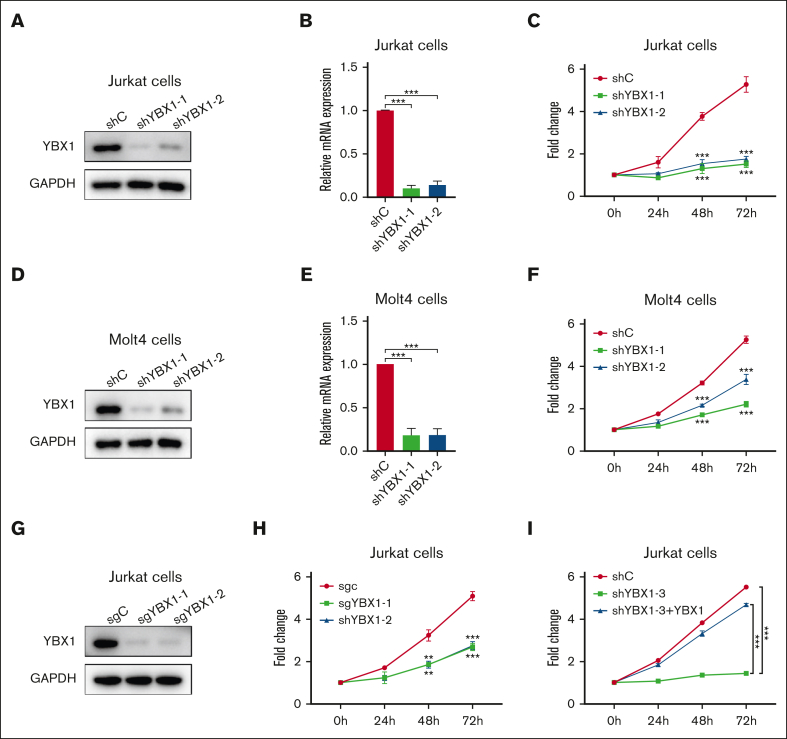
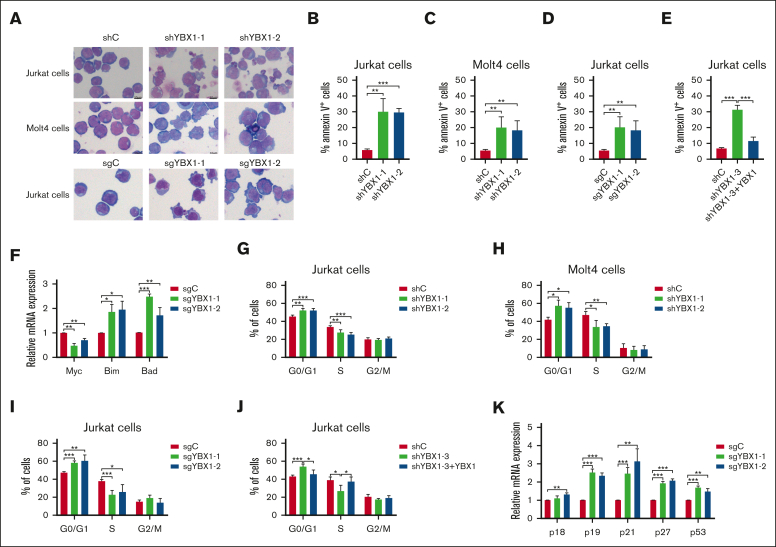
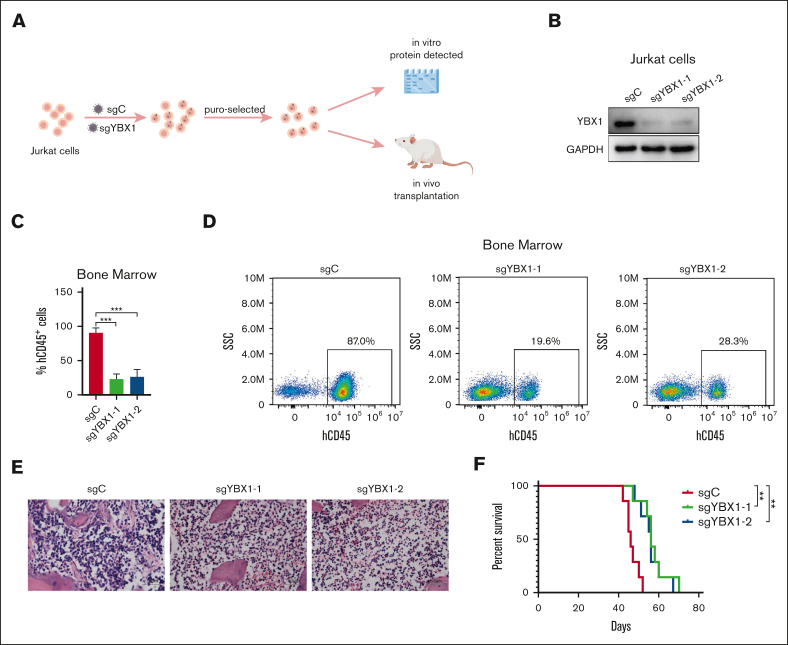
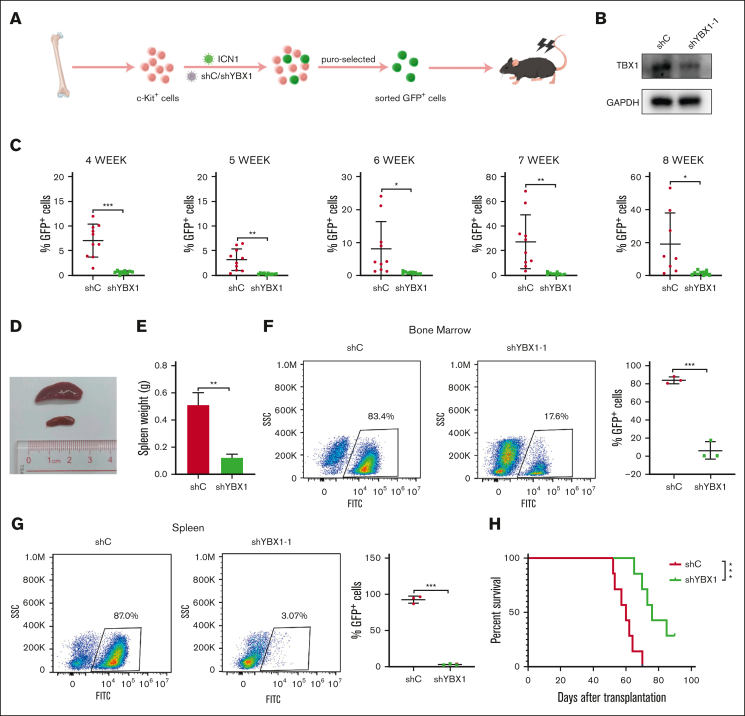
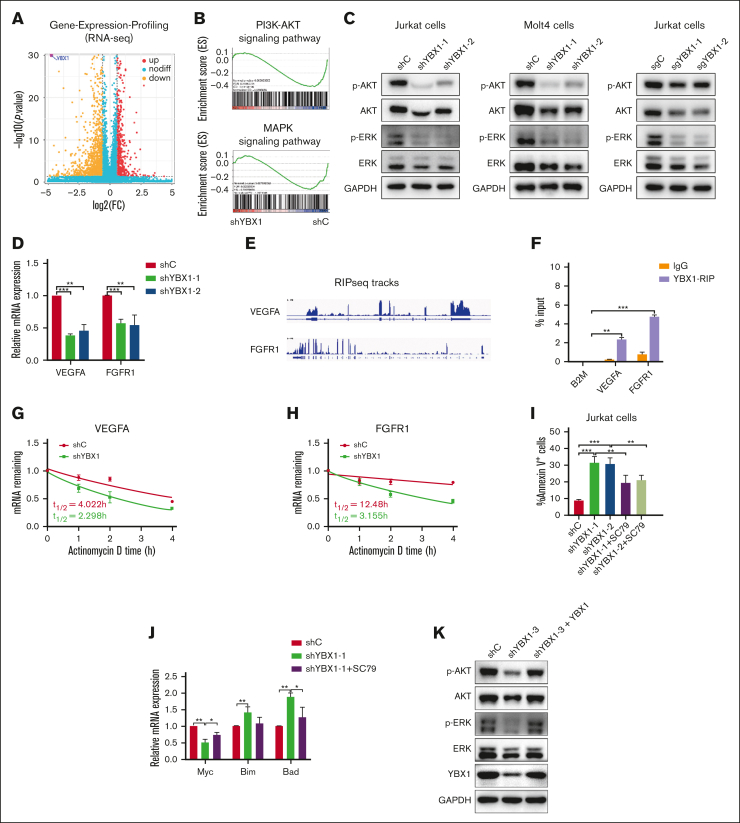
Y-box-binding protein 1 (YBX1), a member of the RNA-binding protein family, is a critical regulator of cell survival in various solid tumors and acute myeloid leukemia. However, the function of YBX1 in T-cell acute lymphoblastic leukemia (T-ALL) remains elusive. Here, we found that YBX1 was upregulated in patients with T-ALL, T-ALL cell lines, and NOTCH1-induced T-ALL mice. Furthermore, depletion of YBX1 dramatically reduced cell proliferation, induced cell apoptosis, and induced G0/G1 phase arrest in vitro. Moreover, YBX1 depletion significantly decreased the leukemia burden in the human T-ALL xenograft and NOTCH1-induced T-ALL mice model in vivo. Mechanistically, downregulation of YBX1 markedly inhibited the expression of total AKT serine/threonine kinase (AKT), p-AKT, total extracellular signal-regulated kinase (ERK), and p-ERK in T-ALL cells. Taken together, our results uncovered a critical role of YBX1 in the leukemogenesis of T-ALL, which may have great potential as a biomarker and therapeutic target in T-ALL.
Overview
The claims and statistics of this paper haven’t been checked yet.
Free: it reads the open-access text and checks the first 5 claims that cite a source we can check. Create a free account to check every claim.
Integrity signals
Registry
Cites
Statistics
Figures
Verification
Claims the paper makes
The claims and statistics of this paper haven’t been checked yet.
Free: it reads the open-access text and checks the first 5 claims that cite a source we can check. Create a free account to check every claim.
Claims other papers make about this one
Each is checked against this paper’s own text: does it say what the citing paper says it does?
The cited source says what the claim attributes to it.
In the citing paper
“YBX1 is an oncogenic pro-survival factor in leukemia”
From Integrated drug profiling and CRISPR screening identify BCR::ABL1-independent vulnerabilities in chronic myeloid leukemia (2024) · cites this paper as [54]
Self-check
Percentages, sums and reported differences re-computed from the paper’s own numbers.
The self-check needs the paper’s full text.
Citations
Cites
1 retracted
Su, H., Fan, G., Huang, J., & Qiu, X. (2021) · Cellular Signalling · doi:10.1016/j.cellsig.2021.110049 · Cited by 31 · cited 2×
“12 SEPTEMBER 2023 • VOLUME 7, NUMBER 17 synovial sarcoma, and ovarian cancer.(12,17-22,27-29) YBX1 is also involved in leukemogenesis in hematologic malignancies.”
BackgroundRetractedEndogenous tRNA-Derived Fragments Suppress Breast Cancer Progression via YBX1 Displacement
Goodarzi, H., Liu, X., Nguyen, H. C. B., Zhang, S., Fish, L., & Tavazoie, S. F. (2015) · Cell · doi:10.1016/j.cell.2015.02.053 · Cited by 949 · cited 3×
“12 SEPTEMBER 2023 • VOLUME 7, NUMBER 17 synovial sarcoma, and ovarian cancer.(12,17-22,27-29) YBX1 is also involved in leukemogenesis in hematologic malignancies.”
BackgroundThe genomic landscape of pediatric and young adult T-lineage acute lymphoblastic leukemia
Liu, Y., Easton, J., Shao, Y., Maciaszek, J., Wang, Z., Wilkinson, M. R., McCastlain, K., Edmonson, M., Pounds, S. B., Shi, L., et al. (2017) · Nature Genetics · doi:10.1038/ng.3909 · Cited by 918 · cited 1×
“A total of 264 primary T-ALL samples were analyzed to determine YBX1 expression in different subtypes of T-ALL based on unique gene expression signatures that reflect different stages of arrest.(24) Interestingly, YBX1 mRNA levels varied, with the highest expression in the LMO1/2 and NKX2-1 subtypes (Figure 1J).”
BackgroundSelf-citationClaesson‐Welsh, L., & Welsh, M. (2013) · Journal of Internal Medicine · doi:10.1111/joim.12019 · Cited by 868 · cited 1×
“Differential gene expression analysis revealed that silencing of YBX1 significantly downregulated the mRNA expression of VEGFA and FGFR1, which have been reported to regulate the AKT and ERK signaling pathways.(25,26) Furthermore, we showed that FGFR1 and VEGFA were the binding targets of YBX1.”
Background5-methylcytosine promotes pathogenesis of bladder cancer through stabilizing mRNAs
Chen, X., Li, A., Sun, B.-F., Yang, Y., Han, Y.-N., Yuan, X., Chen, R.-X., Wei, W.-S., Liu, Y., Gao, C.-C., et al. (2019) · Nature Cell Biology · doi:10.1038/s41556-019-0361-y · Cited by 801
Self-citationFGF Receptors: Cancer Biology and Therapeutics: CANCER BIOLOGY AND THERAPEUTICS ON FGF RECEPTORS
Katoh, M., & Nakagama, H. (2014) · Medicinal Research Reviews · doi:10.1002/med.21288 · Cited by 610 · cited 1×
“Differential gene expression analysis revealed that silencing of YBX1 significantly downregulated the mRNA expression of VEGFA and FGFR1, which have been reported to regulate the AKT and ERK signaling pathways.(25,26) Furthermore, we showed that FGFR1 and VEGFA were the binding targets of YBX1.”
BackgroundThe pleiotropic functions of the Y‐box‐binding protein, YB‐1
Kohno, K., Izumi, H., Uchiumi, T., Ashizuka, M., & Kuwano, M. (2003) · BioEssays · doi:10.1002/bies.10300 · Cited by 502 · cited 2×
“domain.(11) YBX1 specifically binds to DNA and RNA to regulate many biological processes, including DNA replication, transcription, repair, chromatin remodeling, messenger RNA (mRNA) translation, and pre-mRNA splicing.”
BackgroundCircRNA-SORE mediates sorafenib resistance in hepatocellular carcinoma by stabilizing YBX1
Xu, J., Ji, L., Liang, Y., Wan, Z., Zheng, W., Song, X., Gorshkov, K., Sun, Q., Lin, H., Zheng, X., et al. (2020) · Signal Transduction and Targeted Therapy · doi:10.1038/s41392-020-00375-5 · Cited by 495 · cited 1×
“12 SEPTEMBER 2023 • VOLUME 7, NUMBER 17 synovial sarcoma, and ovarian cancer.(12,17-22,27-29) YBX1 is also involved in leukemogenesis in hematologic malignancies.”
BackgroundMöricke, A., Zimmermann, M., Valsecchi, M. G., Stanulla, M., Biondi, A., Mann, G., Locatelli, F., Cazzaniga, G., Niggli, F., Aricò, M., et al. (2016) · Blood · doi:10.1182/blood-2015-09-670729 · Cited by 283
Translational Activation of HIF1α by YB-1 Promotes Sarcoma Metastasis
El-Naggar, A. M., Veinotte, C. J., Cheng, H., Grunewald, T. G. P., Negri, G. L., Somasekharan, S. P., Corkery, D. P., Tirode, F., Mathers, J., Khan, D., et al. (2015) · Cancer Cell · doi:10.1016/j.ccell.2015.04.003 · Cited by 283 · cited 4×
“12 SEPTEMBER 2023 • VOLUME 7, NUMBER 17 synovial sarcoma, and ovarian cancer.(12,17-22,27-29) YBX1 is also involved in leukemogenesis in hematologic malignancies.”
BackgroundInfluentialYB-1 regulates stress granule formation and tumor progression by translationally activating G3BP1
Somasekharan, S. P., El-Naggar, A., Leprivier, G., Cheng, H., Hajee, S., Grunewald, T. G. P., Zhang, F., Ng, T., Delattre, O., Evdokimova, V., et al. (2015) · Journal of Cell Biology · doi:10.1083/jcb.201411047 · Cited by 278 · cited 3×
“12 SEPTEMBER 2023 • VOLUME 7, NUMBER 17 synovial sarcoma, and ovarian cancer.(12,17-22,27-29) YBX1 is also involved in leukemogenesis in hematologic malignancies.”
BackgroundFeng, M., Xie, X., Han, G., Zhang, T., Li, Y., Li, Y., Yin, R., Wang, Q., Zhang, T., Wang, P., et al. (2021) · Blood · doi:10.1182/blood.2020009676 · Cited by 213 · cited 10×
“As shown in Figure 5B, YBX1 protein was significantly decreased compared with those cells transduced with the control shRNA.”
BackgroundMethodInfluentialStickeler, E. (2001) · The EMBO Journal · doi:10.1093/emboj/20.14.3821 · Cited by 196 · cited 1×
“YBX1 specifically binds to DNA and RNA to regulate many biological processes, including DNA replication, transcription, repair, chromatin remodeling, messenger RNA (mRNA) translation, and pre-mRNA splicing.(12-17) YBX1 recognizes the consensus sequence 5′-CTGATTGG-3′ to regulate transcriptional activation of genes imp…”
BackgroundCold shock proteins: from cellular mechanisms to pathophysiology and disease
Lindquist, J. A., & Mertens, P. R. (2018) · Cell Communication and Signaling · doi:10.1186/s12964-018-0274-6 · Cited by 173 · cited 2×
“YBX1 recognizes the consensus sequence 5′-CTGATTGG-3′ to regulate transcriptional activation of genes implicated in cell proliferation, differentiation, migration, epithelial-mesenchymal transition, and chemoresistance.(11,13,14,17) YBX1 has been identified as an oncogene that regulates tumorigenesis, recurrence, and…”
BackgroundTo, K., Fotovati, A., Reipas, K. M., Law, J. H., Hu, K., Wang, J., Astanehe, A., Davies, A. H., Lee, L., Stratford, A. L., et al. (2010) · Cancer Research · doi:10.1158/0008-5472.can-09-3155 · Cited by 168 · cited 2×
“It can modulate the expression of a large number of genes with a variety of functions, such as important YBX1 IS REQUIRED FOR SURVIVAL IN T-ALL 4883 components of growth factor–mediated pathways (EGFR, HER2/ ErbB2, and HDGF),32-34 oncogenic factors (Myc and HOXC8),24,35,36 cell cycle- and apoptosis-related genes (cycl…”
BackgroundManagement of adults with T-cell lymphoblastic leukemia
Marks, D. I., & Rowntree, C. (2017) · Blood · doi:10.1182/blood-2016-07-692608 · Cited by 167 · cited 1×
“Although many treatment strategies, including intensive combination chemotherapy regimens and allogeneic hematopoietic cell transplantation, are currently available, T-ALL remains an important cause of morbidity in both children and adults.(1,2) Resistance to multidrug therapy and relapse remain significant clinical p…”
BackgroundGocho, Y., Liu, J., Hu, J., Yang, W., Dharia, N. V., Zhang, J., Shi, H., Du, G., John, A., Lin, T.-N., et al. (2021) · Nature Cancer · doi:10.1038/s43018-020-00167-4 · Cited by 153 · cited 1×
“Numerous genes associated with survival are thought to be the main cause of drug resistance and relapse.(7-10) Identifying the genes involved in leukemogenesis is of great value in the development of targeted therapies.”
BackgroundSelf-citationPediatric T‐cell acute lymphoblastic leukemia
Karrman, K., & Johansson, B. (2016) · Genes Chromosomes and Cancer · doi:10.1002/gcc.22416 · Cited by 153 · cited 1×
“Although many treatment strategies, including intensive combination chemotherapy regimens and allogeneic hematopoietic cell transplantation, are currently available, T-ALL remains an important cause of morbidity in both children and adults.(1,2) Resistance to multidrug therapy and relapse remain significant clinical p…”
BackgroundRaffetseder, U., Frye, B., Rauen, T., Jürchott, K., Royer, H.-D., Jansen, P. L., & Mertens, P. R. (2003) · Journal of Biological Chemistry · doi:10.1074/jbc.m212518200 · Cited by 121 · cited 1×
“YBX1 specifically binds to DNA and RNA to regulate many biological processes, including DNA replication, transcription, repair, chromatin remodeling, messenger RNA (mRNA) translation, and pre-mRNA splicing.(12-17) YBX1 recognizes the consensus sequence 5′-CTGATTGG-3′ to regulate transcriptional activation of genes imp…”
BackgroundY-box factor YB1 controls p53 apoptotic function
Homer, C. R., Knight, D. A., Hananeia, L., Sheard, P. W., Risk, J. M., Lasham, A., Royds, J. A., & Braithwaite, A. W. (2005) · Oncogene · doi:10.1038/sj.onc.1208998 · Cited by 118
Chatterjee, M., Rancso, C., Stühmer, T., Eckstein, N., Andrulis, M., Gerecke, C., Lorentz, H., Royer, H.-D., & Bargou, R. C. (2008) · Blood · doi:10.1182/blood-2007-05-089151 · Cited by 109 · cited 1×
“12 SEPTEMBER 2023 • VOLUME 7, NUMBER 17 synovial sarcoma, and ovarian cancer.(12,17-22,27-29) YBX1 is also involved in leukemogenesis in hematologic malignancies.”
BackgroundThe RNA-binding protein YBX1 regulates epidermal progenitors at a posttranscriptional level
Kwon, E., Todorova, K., Wang, J., Horos, R., Lee, K. K., Neel, V. A., Negri, G. L., Sorensen, P. H., Lee, S. W., Hentze, M. W., et al. (2018) · Nature Communications · doi:10.1038/s41467-018-04092-0 · Cited by 99 · cited 2×
“YBX1 recognizes the consensus sequence 5′-CTGATTGG-3′ to regulate transcriptional activation of genes implicated in cell proliferation, differentiation, migration, epithelial-mesenchymal transition, and chemoresistance.(11,13,14,17) YBX1 has been identified as an oncogene that regulates tumorigenesis, recurrence, and…”
BackgroundmiR-382 Inhibits Osteosarcoma Metastasis and Relapse by Targeting Y Box-Binding Protein 1
Xu, M., Jin, H., Xu, C., Sun, B., Song, Z., Bi, W., & Wang, Y. (2014) · Molecular Therapy · doi:10.1038/mt.2014.197 · Cited by 99
MYC-Activated LncRNA MNX1-AS1 Promotes the Progression of Colorectal Cancer by Stabilizing YB1
Wu, Q., Luo, X.-J., Liu, J., Lu, Y., Wang, Y., Qi, J., Liu, Z., Huang, Q., Liu, Z.-K., Lu, J.-B., et al. (2021) · Cancer Research · doi:10.1158/0008-5472.can-20-3747 · Cited by 97 · cited 1×
“12 SEPTEMBER 2023 • VOLUME 7, NUMBER 17 synovial sarcoma, and ovarian cancer.(12,17-22,27-29) YBX1 is also involved in leukemogenesis in hematologic malignancies.”
BackgroundRelapsed T Cell ALL: Current Approaches and New Directions
McMahon, C. M., & Luger, S. M. (2019) · Current Hematologic Malignancy Reports · doi:10.1007/s11899-019-00501-3 · Cited by 92 · cited 1×
“Resistance to multidrug therapy and relapse remain significant clinical problems.(3-6) Numerous genes associated with survival are thought to be the main cause of drug resistance and relapse.”
BackgroundRole of post-translational modification of the Y box binding protein 1 in human cancers
Prabhu, L., Hartley, A.-V., Martin, M., Warsame, F., Sun, E., & Lu, T. (2015) · Genes & Diseases · doi:10.1016/j.gendis.2015.05.001 · Cited by 92 · cited 2×
“It can modulate the expression of a large number of genes with a variety of functions, such as important YBX1 IS REQUIRED FOR SURVIVAL IN T-ALL 4883 components of growth factor–mediated pathways (EGFR, HER2/ ErbB2, and HDGF),32-34 oncogenic factors (Myc and HOXC8),24,35,36 cell cycle- and apoptosis-related genes (cycl…”
BackgroundShen, H., Xu, W., Luo, W., Zhou, L., Wei, Y. Q., Chen, F., Wu, C., Chen, Q., & Han, X. (2011) · Experimental Hematology · doi:10.1016/j.exphem.2011.01.013 · Cited by 85 · cited 2×
“It can modulate the expression of a large number of genes with a variety of functions, such as important YBX1 IS REQUIRED FOR SURVIVAL IN T-ALL 4883 components of growth factor–mediated pathways (EGFR, HER2/ ErbB2, and HDGF),32-34 oncogenic factors (Myc and HOXC8),24,35,36 cell cycle- and apoptosis-related genes (cycl…”
BackgroundSelf-citationYBX1 mediates translation of oncogenic transcripts to control cell competition in AML
Perner, F., Schnoeder, T. M., Xiong, Y., Jayavelu, A. K., Mashamba, N., Santamaría, N. T., Huber, N., Todorova, K. A., Hatton, C., Perner, B., et al. (2021) · Leukemia · doi:10.1038/s41375-021-01393-0 · Cited by 64 · cited 7×
“As shown in Figure 5B, YBX1 protein was significantly decreased compared with those cells transduced with the control shRNA.”
BackgroundInfluentialY box binding protein 1 inhibition as a targeted therapy for ovarian cancer
Tailor, D., Resendez, A., Garcia-Marques, F. J., Pandrala, M., Going, C. C., Bermudez, A., Kumar, V., Rafat, M., Nambiar, D. K., Honkala, A. T., et al. (2021) · Cell chemical biology · doi:10.1016/j.chembiol.2021.02.014 · Cited by 61 · cited 3×
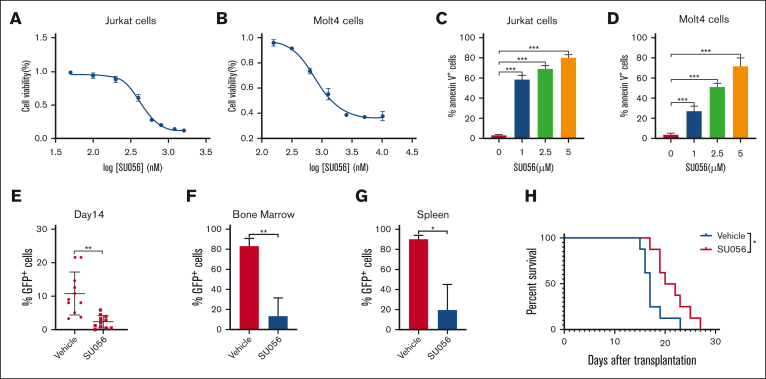
“Recently, an inhibitor of YBX1 activity (SU056) was reported to inhibit ovarian cancer cell survival.(22) Our results demonstrated that treatment with SU056”
BackgroundResultKashihara, M., Azuma, K., Kawahara, A., Basaki, Y., Hattori, S., Yanagawa, T., Terazaki, Y., Takamori, S., Shirouzu, K., Aizawa, H., et al. (2009) · Journal of Thoracic Oncology · doi:10.1097/jto.0b013e3181ae2828 · Cited by 59
YB ‐1 promotes transcription of cyclin D1 in human non‐small‐cell lung cancers
Harada, M., Kotake, Y., Ohhata, T., Kitagawa, K., Niida, H., Matsuura, S., Funai, K., Sugimura, H., Suda, T., & Kitagawa, M. (2014) · Genes to Cells · doi:10.1111/gtc.12150 · Cited by 58
Su, H., Fan, G., Huang, J., & Qiu, X. (2022) · Cell Death and Disease · doi:10.1038/s41419-022-04723-x · Cited by 57
The evolution of relapse of adult T cell acute lymphoblastic leukemia
Sentís, I., González, S., Genescà, E., García‐Hernández, V., Muiños, F., González‐Gil, C., López‐Arribillaga, E., González, J., Fernández‐Ibarrondo, L., Mularoni, L., et al. (2020) · Genome biology · doi:10.1186/s13059-020-02192-z · Cited by 38 · cited 1×
“Numerous genes associated with survival are thought to be the main cause of drug resistance and relapse.(7-10) Identifying the genes involved in leukemogenesis is of great value in the development of targeted therapies.”
BackgroundZhou, H., Liu, W., Zhou, Y., Hong, Z., Ni, J., Zhang, X., Li, Z., Li, M., He, W., Zhang, D., et al. (2021) · Journal of Experimental & Clinical Cancer Research · doi:10.1186/s13046-021-02145-9 · Cited by 37
Self-citationHeterogeneity in mechanisms of emergent resistance in pediatric T-cell acute lymphoblastic leukemia
Yadav, B. D., Samuels, A. L., Wells, J. E., Sutton, R., Venn, N. C., Bendak, K., Anderson, D. R., Marshall, G. M., Cole, C., Beesley, A. H., et al. (2016) · Oncotarget · doi:10.18632/oncotarget.11233 · Cited by 33 · cited 1×
“Resistance to multidrug therapy and relapse remain significant clinical problems.(3-6) Numerous genes associated with survival are thought to be the main cause of drug resistance and relapse.”
BackgroundPTEN/PI3K/Akt pathway alters sensitivity of T-cell acute lymphoblastic leukemia to l-asparaginase
Hložková, K., Heřmanová, I., Safrhansova, L., Alquézar-Artieda, N., Kužílková, D., Vávrová, A., Šperková, K., Zaliova, M. K., Starý, J., Trka, J., et al. (2022) · Scientific Reports · doi:10.1038/s41598-022-08049-8 · Cited by 31 · cited 1×
“Numerous genes associated with survival are thought to be the main cause of drug resistance and relapse.(7-10) Identifying the genes involved in leukemogenesis is of great value in the development of targeted therapies.”
BackgroundYB 1 binds to and represses the p16 tumor suppressor gene
Kotake, Y., Ozawa, Y., Harada, M., Kitagawa, K., Niida, H., Morita, Y., Tanaka, K., Suda, T., & Kitagawa, M. (2013) · Genes to Cells · doi:10.1111/gtc.12093 · Cited by 29
Xiang, J., Wang, G., Xia, T., & Chen, Z. (2018) · Biomedicine & Pharmacotherapy · doi:10.1016/j.biopha.2018.11.083 · Cited by 24 · cited 1×
“Numerous genes associated with survival are thought to be the main cause of drug resistance and relapse.(7-10) Identifying the genes involved in leukemogenesis is of great value in the development of targeted therapies.”
BackgroundZhao, P., Ji, M.-M., Fang, Y., Li, X., Yi, H., Yan, Z., Cheng, S., Xu, P., Janin, A., Wang, C.-F., et al. (2021) · Cell Death and Disease · doi:10.1038/s41419-021-03594-y · Cited by 22 · cited 1×
“Recently, Zhao et al showed that heterogeneous nuclear ribonucleoprotein D and YBX1 are required for T-cell lymphoma–associated lncRNA1 (TCLlnc1)-mediated regulation of the transforming growth factor–β signaling pathway as well as T–lymphoma cell proliferation and migration in peripheral T-cell lymphoma.(31) However,…”
BackgroundUncoupling of EGFR–RAS signaling and nuclear localization of YBX1 in colorectal cancer
Roßner, F., Gieseler, C., Morkel, M., Royer, H.-D., Rivera, M., Bläker, H., Dietel, M., Schäfer, R., & Sers, C. (2016) · Oncogenesis · doi:10.1038/oncsis.2015.51 · Cited by 20
Yu, X., Ye, Z., Hou, L., Zhang, X., Liu, Z., Wu, R., Huang, F., Wang, G., Geng, X., & Zhao, H. (2021) · Journal of Cell Communication and Signaling · doi:10.1007/s12079-021-00645-z · Cited by 12
Self-citationМоисеева, Н. И., Susova, O. Y., Mitrofanov, A. A., Panteleev, D. Y., Павлова, Г. В., Pustogarov, N., Stavrovskaya, A. A., & Rybalkina, E. Y. (2016) · Biochemistry (Moscow) · doi:10.1134/s0006297916060109 · Cited by 12 · cited 2×
“It can modulate the expression of a large number of genes with a variety of functions, such as important YBX1 IS REQUIRED FOR SURVIVAL IN T-ALL 4883 components of growth factor–mediated pathways (EGFR, HER2/ ErbB2, and HDGF),32-34 oncogenic factors (Myc and HOXC8),24,35,36 cell cycle- and apoptosis-related genes (cycl…”
BackgroundValidated prognostic significance of YB-1 genetic variation in metastatic prostate cancer
Shiota, M., Narita, S., Habuchi, T., & Eto, M. (2020) · The Pharmacogenomics Journal · doi:10.1038/s41397-020-00188-3 · Cited by 8 · cited 2×
“12 SEPTEMBER 2023 • VOLUME 7, NUMBER 17 synovial sarcoma, and ovarian cancer.(12,17-22,27-29) YBX1 is also involved in leukemogenesis in hematologic malignancies.”
BackgroundRelapsed acute lymphoblastic leukemia
Chen, J. L., Vatanatham, C. C., & Tsui, E. Y. K. (2021) · American Journal of Ophthalmology · doi:10.1016/j.ajo.2021.08.020 · Cited by 1
Cited by
Dinh, N. T. M., Nguyen, T. M., Park, M. K., & Lee, C. H. (2024) · International Journal of Molecular Sciences · doi:10.3390/ijms25020717 · Cited by 63
“Its depletion T-ALL progression by reducing proliferation, increasing Its depletion impedes T-ALL progression by reducing proliferation, increasing apoptosis, and altering key signaling pathways [55]. apoptosis, and altering key signaling pathways [55].”
Backgroundo8G-modified circKIAA1797 promotes lung cancer development by inhibiting cuproptosis
Xu, H., Zhao, Q., Cai, D., Chen, X., Zhou, X., Gao, Y., Wu, J., Yuan, S., Li, D., Zhang, R., et al. (2025) · Journal of Experimental & Clinical Cancer Research · doi:10.1186/s13046-025-03365-z · Cited by 29
“YBX1 contains a nuclear localisation signal (NLS) and a nuclear export signal (NES) [78, 79], which are signal sequences that enable YBX1 to be dynamically regulated and transported between the nucleus and cyto-plasm according to cellular needs.”
Self-citationDevelopment of an efficient, effective, and economical technology for proteome analysis
Martin, K. R., Le, H. T., Abdelgawad, A., Yang, C., Lu, G., Keffer, J. L., Zhang, X., Zhuang, Z., Asare‐Okai, P. N., Chan, C. S., et al. (2024) · Cell Reports Methods · doi:10.1016/j.crmeth.2024.100796 · Cited by 31
“41 In our experiment using colorectal cancer cells, we performed simultaneous RNA imaging and immunofluorescence to validate the interaction be-tween circNFIX and YBX1.”
Self-citationYBX1: an RNA/DNA-binding protein that affects disease progression
Zheng, X., Zeng, F., Lei, Y., Li, Y., Deng, J., Luo, G., He, Q., & Zhou, Y. (2025) · Frontiers in Oncology · doi:10.3389/fonc.2025.1635209 · Cited by 22
Adnan Awad, S., Dufva, O., Klievink, J., Karjalainen, E., Ianevski, A., Pietarinen, P., Kim, D., Potdar, S., Wolf, M., Lotfi, K., et al. (2024) · Cell Reports Medicine · doi:10.1016/j.xcrm.2024.101521 · Cited by 14
“…the TKI-sensitization ef-fectof IGF1R KO, IGF1R inhibitors werereportedtoovercomeTKI resistance in CML. 52 YBX1 is an oncogenic pro-survival factor in leukemia, 53,54 and therefore, YBX1 depletion is expected to enhance dasatinib killing through impairment of the DNA damage response in CML cells.”
Metadata
- Authors
- Li, H., Zhang, D., Fu, Q., Wang, S., Wang, Z., Zhang, X., Chen, X., Zhu, X., An, N., Chen, Y., Zhou, L., Lu, D., & Zhao, N.
- Affiliations
- Shenzhen University (CN)
- Chongqing Medical University (CN)
- University of Science and Technology of China (CN)
- Nanjing Medical University (CN)
- Corresponding author
- Zhao, Na
- ORCID
- Venue
- Blood Advances
- Publisher
- American Society of Hematology
- Published
- 2023-08-24
- Volume
- 7
- Issue
- 17
- Pages
- 4874-4885
- ISSN
- 2473-9529 (ISSN-L)
- 2473-9537
- PMC
- PMC10469076
- OpenAlex
- W4381432683
- Cited by
- 21
- References
- 44
- Citations by year
- 2026: 3 · 2025: 10 · 2024: 7 · 2023: 1
- FWCI
- 5.38
- Type
- journal article
- Language
- en
- Open access
- gold
- doi.org
- Licence
- cc-by-nc-nd
- Locations
- Blood Advances (publishedVersion, cc-by-nc-nd)
- PubMed Central (publishedVersion, cc-by-nc-nd)
- PubMed (publishedVersion)
- Funders
- National Natural Science Foundation of China (31970739)
- Topics
- Health Sciences › Medicine › Hematology › Acute Lymphoblastic Leukemia research
- Life Sciences › Immunology and Microbiology › Immunology › T-cell and Retrovirus Studies
- Health Sciences › Medicine › Pathology and Forensic Medicine › Lymphoma Diagnosis and Treatment
- Keywords
- YB-1, T-cell acute lymphoblastic leukemia, RNA-binding proteins, oncogenic factor, Notch1, Akt signaling, ERK signaling, cell proliferation, apoptosis, G0/G1 cell cycle arrest, leukemogenesis, therapeutic target, biomarkers
- MeSH terms
- Animals, Humans, T-Lymphocytes, Signal Transduction, Cell Line, Tumor, Proto-Oncogene Proteins c-akt, Mice, Y-Box-Binding Protein 1, Precursor T-Cell Lymphoblastic Leukemia-Lymphoma
About these checks
Registry, retraction, Cites and statistics results are computed, not judged, with one exception: a printed reference that no index lists is read once by a model before it counts as a citation error. Claims are extracted by a model and kept only when their quote appears verbatim in the text; each cited source is then checked, with a model’s help, for whether it says what the claim relies on. Those verdicts can be wrong — read the claim’s quote and the cited source before relying on one.
Statistics and arithmetic are recomputed, not judged.
Confidence bands are shown only for fields calibrated on our annotated test set. None is calibrated yet, so no band is shown.
What counts as a claim ›How we measure confidence ›How we check this ›
Are you an author, or do you see a problem with this page? Request a review
Data sources
Bibliographic data: Semantic Scholar, OpenAlex, Crossref.
Contains information from the Semantic Scholar Academic Graph Datasets, made available under the ODC Attribution License (ODC-BY 1.0).
Semantic Scholar’s data is described in: Kinney, R., et al. (2023). The Semantic Scholar Open Data Platform. arXiv:2301.10140.
