

The DOI matches its Crossref record; 97 of the 97 references it cites were found in a registry or an index.
Improving physical activity in COPD: towards a new paradigm
Open accessAbstract
Chronic obstructive pulmonary disease (COPD) is a debilitating disease affecting patients in daily life, both physically and emotionally. Symptoms such as dyspnea and muscle fatigue, lead to exercise intolerance, which, together with behavioral issues, trigger physical inactivity, a key feature of COPD. Physical inactivity is associated with adverse clinical outcomes, including hospitalization and all-cause mortality. Increasing activity levels is crucial for effective management strategies and could lead to improved long-term outcomes. In this review we summarize objective and subjective instruments for evaluating physical activity and focus on interventions such as pulmonary rehabilitation or bronchodilators aimed at increasing activity levels. To date, only limited evidence exists to support the effectiveness of these interventions. We suggest that a multimodal approach comprising pulmonary rehabilitation, pharmacotherapy, and counselling programs aimed at addressing emotional and behavioural aspects of COPD may be an effective way to increase physical activity and improve health status in the long term.
Overview
The claims and statistics of this paper haven’t been checked yet.
Run the check — free, no account needed. It reads the open-access text and checks the sources it cites.
Integrity signals
Registry
Cites
Statistics
Figures
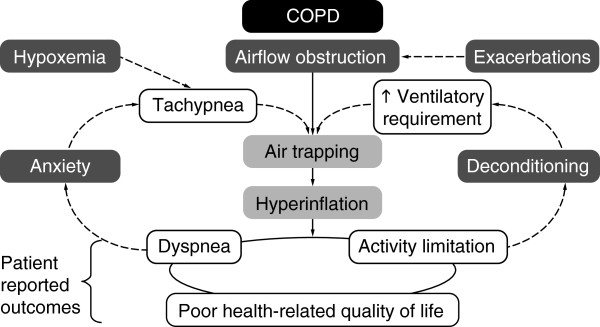
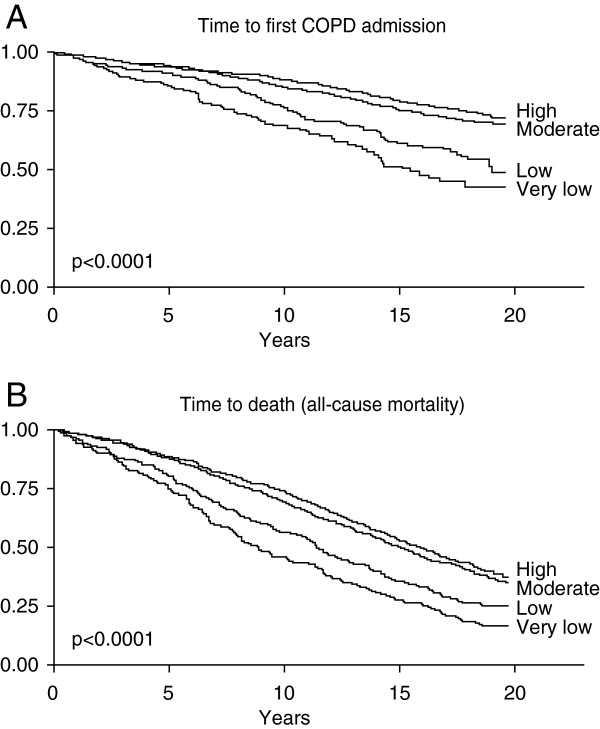
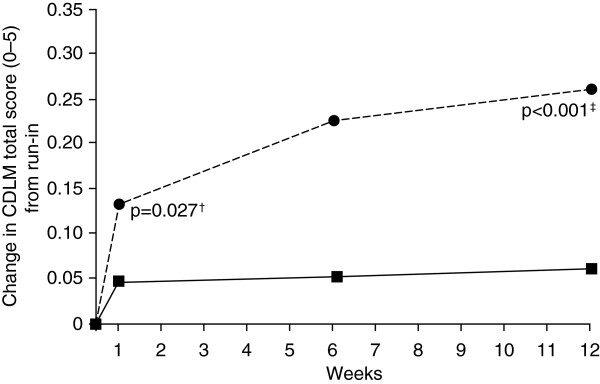
Verification
Claims the paper makes
The claims and statistics of this paper haven’t been checked yet.
Run the check — free, no account needed. It reads the open-access text and checks the sources it cites.
Claims other papers make about this one
Each is checked against this paper’s own text: does it say what the citing paper says it does?
In the citing paper
“There is limited and inconsistent evidence on the effectiveness of interventions for improving physical activity (45, 46).”
From Health Coaching and Chronic Obstructive Pulmonary Disease Rehospitalization: A Randomized Study (2016) · cites this paper as [46]
In the citing paper
“there is a knowledge gap on how to improve physical activity in COPD.”
From Health Coaching and Chronic Obstructive Pulmonary Disease Rehospitalization: A Randomized Study (2016) · cites this paper as [46]
Self-check
Percentages, sums and reported differences re-computed from the paper’s own numbers.
The self-check needs the paper’s full text.
Citations
Cites
Reduction in the incidence of type 2 diabetes with lifestyle intervention or metformin
(2002) · New England Journal of Medicine · doi:10.1056/nejmoa012512 · Cited by 19,011
Vestbo, J., Hurd, S. S., Agustí, A. G., Jones, P. W., Vogelmeier, C., Anzueto, A., Barnes, P. J., Fabbri, L. M., Martinez, F. J., Nishimura, M., et al. (2013) · American Journal of Respiratory and Critical Care Medicine · doi:10.1164/rccm.201204-0596pp · Cited by 15,983
(1985) · Europe PMC (PubMed Central) · Cited by 9,143
Rabe, K. F., Hurd, S., Anzueto, A., Barnes, P. J., Buist, S. A., Calverley, P., Fukuchi, Y., Jenkins, C., Rodriguez-Roisin, R., van Weel, C., et al. (2007) · American Journal of Respiratory and Critical Care Medicine · doi:10.1164/rccm.200703-456so · Cited by 4,925
Correlates of physical activity: why are some people physically active and others not?
Bauman, A. E., Reis, R. S., Sallis, J. F., Wells, J. C., Loos, R. J., & Martin, B. W. (2012) · The Lancet · doi:10.1016/s0140-6736(12)60735-1 · Cited by 4,151
A short questionnaire for the measurement of habitual physical activity in epidemiological studies
Baecke, J. A. H., BUREMA, J., & Frijters, J. E. R. (1982) · American Journal of Clinical Nutrition · doi:10.1093/ajcn/36.5.936 · Cited by 3,950
The physical activity scale for the elderly (PASE): Development and evaluation
Washburn, R. A., Smith, K. W., Jette, A. M., & Janney, C. A. (1993) · Journal of Clinical Epidemiology · doi:10.1016/0895-4356(93)90053-4 · Cited by 3,256
Pulmonary rehabilitation for chronic obstructive pulmonary disease
McCarthy, B., Casey, D., Devane, D., Murphy, K., Murphy, E., & Lacasse, Y. (2015) · Cochrane Database of Systematic Reviews · doi:10.1002/14651858.cd003793.pub3 · Cited by 2,643
American Thoracic Society/European Respiratory Society statement on pulmonary rehabilitation
Nici, L., Donner, C., Wouters, E., Zuwallack, R., Ambrosino, N., Bourbeau, J., Carone, M., Celli, B., Engelen, M., Fahy, B., et al. (2006) · American Journal of Respiratory and Critical Care Medicine · doi:10.1164/rccm.200508-1211st · Cited by 1,966
Self-citationA questionnaire for the assessment of leisure time physical activities
Taylor, H. L., Jacobs, D. R., Schucker, B., Knudsen, J., Leon, A. S., & Debacker, G. (1978) · Journal of Chronic Diseases · doi:10.1016/0021-9681(78)90058-9 · Cited by 1,848
Cited by
Sorted by citations
Understanding the impact of symptoms on the burden of COPD
Miravitlles, M., & Ribera, A. (2017) · Respiratory Research · doi:10.1186/s12931-017-0548-3 · Cited by 465
Vasilopoulou, M., Papaioannou, A. Ι., Kaltsakas, G., Louvaris, Z., Chynkiamis, N., Spetsioti, S., Kortianou, E. A., Gennimata, S. A., Palamidas, A. F., Κostikas, Κ., et al. (2017) · European Respiratory Journal · doi:10.1183/13993003.02129-2016 · Cited by 233
Self-citationHealth Coaching and Chronic Obstructive Pulmonary Disease Rehospitalization: A Randomized Study
Benzo, R., Vickers, K., Novotny, P. J., Tucker, S., Hoult, J., Neuenfeldt, P., Connett, J., Lorig, K., & McEvoy, C. (2016) · American Journal of Respiratory and Critical Care Medicine · doi:10.1164/rccm.201512-2503oc · Cited by 176
Pulmonary Rehabilitation in Individuals With Non–Cystic Fibrosis Bronchiectasis: A Systematic Review
Lee, A. L., Hill, C. J., McDonald, C. F., & Holland, A. E. (2016) · Archives of Physical Medicine and Rehabilitation · doi:10.1016/j.apmr.2016.05.017 · Cited by 151
Hanania, N. A., & O’Donnell, D. E. (2019) · International Journal of COPD · doi:10.2147/copd.s188141 · Cited by 156
Metadata
- Authors
- Troosters, T., van der Molen, T., Polkey, M., Rabinovich, R. A., Vogiatzis, I., Weisman, I., & Kulich, K.
- Affiliations
- Universitair Ziekenhuis Leuven (BE)
- Royal Brompton Hospital (GB)
- Centre for Inflammation Research (GB)
- National and Kapodistrian University of Athens (GR)
- Corresponding author
- Troosters, Thierry
- Venue
- Respiratory Research
- Published
- 2013
- Volume
- 14
- Issue
- 1
- Pages
- 115
- ISSN
- 1465-9921 (ISSN-L)
- PMC
- PMC4176094
- OpenAlex
- W2111189556
- Cited by
- 158
- References
- 96
- Citations by year
- 2026: 6 · 2025: 4 · 2024: 7 · 2023: 10 · 2022: 8 · 2021: 16 · 2020: 10 · 2019: 18 · 2018: 14 · 2017: 22 · 2016: 13 · 2015: 15 · 2014: 14 · 2013: 1
- FWCI
- 2.23
- Type
- journal article
- Language
- en
- Open access
- gold
- doi.org
- Locations
- Respiratory Research (publishedVersion)
- Europe PMC (PubMed Central) (publishedVersion, cc-by)
- PubMed Central (publishedVersion, cc-by)
- PubMed (publishedVersion)
- Lirias (submittedVersion, other-oa)
- Edinburgh Research Explorer (University of Edinburgh) (submittedVersion, cc-by)
- University of Groningen research database (University of Groningen / Centre for Information Technology) (submittedVersion, cc-by)
- Spiral (Imperial College London) (submittedVersion, other-oa)
- Funders
- Royal Brompton and Harefield NHS Foundation Trust
- National Institute for Health and Care Research
- Imperial College London
- Novartis Pharma
- Topics
- Health Sciences › Medicine › Pulmonary and Respiratory Medicine › Chronic Obstructive Pulmonary Disease (COPD) Research
- Health Sciences › Medicine › Public Health, Environmental and Occupational Health › Physical Activity and Health
- Health Sciences › Medicine › Physiology (medical) › Cardiovascular and exercise physiology
- Keywords
- chronic obstructive pulmonary disease, physical activity, physical inactivity, exercise intolerance, pulmonary rehabilitation, bronchodilators, physical activity measurement, multimodal intervention, behavioral interventions, health status
- MeSH terms
- Counseling, Drug Therapy, Health Status, Humans, Motor Activity, Exercise Tolerance, Pulmonary Disease, Chronic Obstructive
About these checks
Registry, retraction, Cites and statistics results are computed, not judged, with one exception: a printed reference that no index lists is read once by a model before it counts as a citation error. Claims are extracted by a model and kept only when their quote appears verbatim in the text; each cited source is then checked, with a model’s help, for whether it says what the claim relies on. Those verdicts can be wrong — read the claim’s quote and the cited source before relying on one.
Statistics and arithmetic are recomputed, not judged.
Confidence bands are shown only for fields calibrated on our annotated test set. None is calibrated yet, so no band is shown.
What counts as a claim ›How we measure confidence ›How we check this ›
Are you an author, or do you see a problem with this page? Request a review
