

The DOI matches its Crossref record; 39 of the 39 references it cites were found in a registry or an index.
Genomics of an extreme psychrophile, Psychromonas ingrahamii
Open accessAbstract
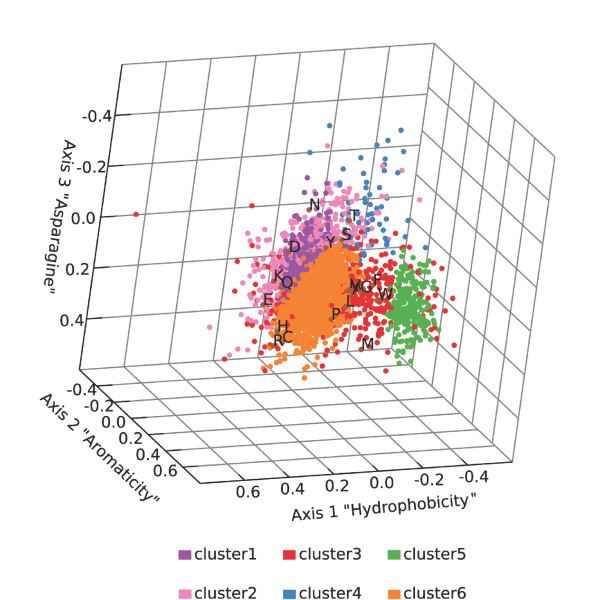
BACKGROUND: The genome sequence of the sea-ice bacterium Psychromonas ingrahamii 37, which grows exponentially at -12C, may reveal features that help to explain how this extreme psychrophile is able to grow at such low temperatures. Determination of the whole genome sequence allows comparison with genes of other psychrophiles and mesophiles. RESULTS: Correspondence analysis of the composition of all P. ingrahamii proteins showed that (1) there are 6 classes of proteins, at least one more than other bacteria, (2) integral inner membrane proteins are not sharply separated from bulk proteins suggesting that, overall, they may have a lower hydrophobic character, and (3) there is strong opposition between asparagine and the oxygen-sensitive amino acids methionine, arginine, cysteine and histidine and (4) one of the previously unseen clusters of proteins has a high proportion of "orphan" hypothetical proteins, raising the possibility these are cold-specific proteins. Based on annotation of proteins by sequence similarity, (1) P. ingrahamii has a large number (61) of regulators of cyclic GDP, suggesting that this bacterium produces an extracellular polysaccharide that may help sequester water or lower the freezing point in the vicinity of the cell. (2) P. ingrahamii has genes for production of the osmolyte, betaine choline, which may balance the osmotic pressure as sea ice freezes. (3) P. ingrahamii has a large number (11) of three-subunit TRAP systems that may play an important role in the transport of nutrients into the cell at low temperatures. (4) Chaperones and stress proteins may play a critical role in transforming nascent polypeptides into 3-dimensional configurations that permit low temperature growth. (5) Metabolic properties of P. ingrahamii were deduced. Finally, a few small sets of proteins of unknown function which may play a role in psychrophily have been singled out as worthy of future study. CONCLUSION: The results of this genomic analysis provide a springboard for further investigations into mechanisms of psychrophily. Focus on the role of asparagine excess in proteins, targeted phenotypic characterizations and gene expression investigations are needed to ascertain if and how the organism regulates various proteins in response to growth at lower temperatures.
Overview
The claims and statistics of this paper haven’t been checked yet.
Run the check — free, no account needed. It reads the open-access text and checks the sources it cites.
Integrity signals
Registry
Cites
Statistics
Figures
Verification
Claims the paper makes
The claims and statistics of this paper haven’t been checked yet.
Run the check — free, no account needed. It reads the open-access text and checks the sources it cites.
Self-check
Percentages, sums and reported differences re-computed from the paper’s own numbers.
The self-check needs the paper’s full text.
Citations
Cites
Base-Calling of Automated Sequencer Traces Using Phred. I. Accuracy AssessmentPreprint
Ewing, B., Hillier, L., Wendl, M. C., & Green, P. (1998) · Genome Research · doi:10.1101/gr.8.3.175 · Cited by 6,993
Base-Calling of Automated Sequencer Traces Using Phred. II. Error Probabilities
Ewing, B., & Green, P. (1998) · Genome Research · doi:10.1101/gr.8.3.186 · Cited by 5,439
Atlas of protein sequence and structure
Chang, M.-Y., Dayhoff, M. O., Eck, R. V., & Sochard, M. R. (1965) · NASA Technical Reports Server (NASA) · Cited by 4,383
Consed: a graphical tool for sequence finishing.Preprint
Gordon, D., Abajian, C., & Green, P. (1998) · Genome Research · doi:10.1101/gr.8.3.195 · Cited by 3,706
National Center for Biotechnology Information
Gressner, A. M., & Arndt, T. (2019) · Springer Reference Medizin · doi:10.1007/978-3-662-48986-4_301184 · Cited by 1,412
rRNA Operon Copy Number Reflects Ecological Strategies of Bacteria
Klappenbach, J. A., Dunbar, J., & Schmidt, T. M. (2000) · Applied and Environmental Microbiology · doi:10.1128/aem.66.4.1328-1333.2000 · Cited by 1,140
Siddiqui, K. S., & Cavicchioli, R. (2006) · Annual Review of Biochemistry · doi:10.1146/annurev.biochem.75.103004.142723 · Cited by 899
Quorum sensing controls biofilm formation in Vibrio cholerae
Hammer, B. K., & Bassler, B. L. (2003) · Molecular Microbiology · doi:10.1046/j.1365-2958.2003.03688.x · Cited by 888
Correspondence Analysis: A Neglected Multivariate Method
Hill, M. O. (1974) · Journal of the Royal Statistical Society Series C (Applied Statistics) · doi:10.2307/2347127 · Cited by 830
Amino acid substitution matrices from an information theoretic perspective
Altschul, S. F. (1991) · Journal of Molecular Biology · doi:10.1016/0022-2836(91)90193-a · Cited by 630
Cited by
Sorted by citations
Items 101–126 of 126
Advances in the In-Field Detection of Microorganisms in Ice
Barnett, M. J., Pearce, D. A., & Cullen, D. C. (2012) · Advances in applied microbiology · doi:10.1016/b978-0-12-394382-8.00004-6 · Cited by 5
Psychrophilic Microorganisms as Important Source for Biotechnological Processes
Fendrihan, S., & Negoiţă, T. G. (2017) · Springer eBooks · doi:10.1007/978-3-319-48327-6_7 · Cited by 4
Singh, P., Kapse, N. G., Roy, U., Singh, S. M., & Dhakephalkar, P. K. (2017) · Genome Announcements · doi:10.1128/genomea.00133-17 · Cited by 4
Diversity of Psychrophilic Bacteria from Sea Ice - and Glacial Ice Communities
(2012) · Springer eBooks · doi:10.1007/springerreference_205768 · Cited by 4
Functional Genomics of the Extremophilic Bacteria and Archaea
Mehta, D., & Satyanarayana, T. (2016) · Elsevier eBooks · doi:10.1016/b978-0-444-63667-6.00003-1 · Cited by 3
Life in the Cold: Proteomics of the Antarctic Bacterium Pseudoalteromonas haloplanktis
Piette, F., Struvay, C., Godin, A., Cipolla, A., & Feller, G. (2012) · InTech eBooks · doi:10.5772/28966 · Cited by 3
Lee, K., Choi, H.-J., & Im, H. (2009) · Current Microbiology · doi:10.1007/s00284-009-9412-0 · Cited by 3
FRUSTRATION: PHYSICO-CHEMICAL PREREQUISITES FOR THE CONSTRUCTION OF A SYNTHETIC CELL
Danchin, A., & Sekowska, A. (2008) · PhilPapers (PhilPapers Foundation) · Cited by 3
Self-citationDehalogenase producing bacteria from extreme environment: A review
Ismail, S. N. F., Shah, A., Edbeib, M. F., Adamu, A., Allyu, F., Wahab, R. A., & Huyop, F. (2018) · Malaysian Journal of Microbiology · doi:10.21161/mjm.113217 · Cited by 2
Propionibacterium acnes and its phages
Lood, R. (2011) · Cited by 2
Bhatt, S. (2021) · Advances in environmental engineering and green technologies book series · doi:10.4018/978-1-7998-9144-4.ch005 · Cited by 1
Kaur, M. P., Singla, D., Kapoor, K., Chhabra, G., Erċışlı, S., Bozhüyük, M. R., Yadav, S. K., & Choudhary, R. (2024) · Springer eBooks · doi:10.1007/978-3-031-70203-7_16 · Cited by 1
Diaz-Mateus, M. A., Smilovitis, A., Salgar-Chaparro, S. J., & Grice, K. (2026) · Frontiers in Microbiology · doi:10.3389/fmicb.2026.1783163 · Cited by 1
Bartlett, D. H., & Kerman, I. (2010) · Springer eBooks · doi:10.1007/978-4-431-53898-1_33 · Cited by 1
Molecular Mechanisms of Cold-Adapted Microorganisms
Singh, A. K., Rai, A. K., Sinha, N., & Bhargava, P. (2021) · Springer eBooks · doi:10.1007/978-981-16-2625-8_10 · Cited by 2
DOE Joint Genome Institute 2008 Progress Report
Gilbert, D. (2009) · doi:10.2172/949770 · Cited by 1
Charakterystyka molekularna białek SSB mikroorganizmów psychrofilnych
Nowak, M., Kur, J., & Olszewski, M. (2013)
Functional and comparative studies of haemoproteins from polar fishes
Riccio, A. (2011) · Università degli Studi di Napoli Federico II · doi:10.6092/unina/fedoa/8865
Paired repeats in the structure of the bacterial genome and recombination activity in cells
Ilatovskiy, A. V., & Lanzov, V. A. (2012) · Russian Journal of Genetics Applied Research · doi:10.1134/s2079059712020049
DNA Repeats in Bacterial Genome and Intracellular Activity of Homologous Recombinase
Ilatovskiy, A. V., & Lanzov, V. A. (2011) · Ecological genetics · doi:10.17816/ecogen9162-69
Secretome of Microbiota in Extreme Conditions
Mishra, M. S., Singh, R. K., Chauhan, S., & Gupta, P. (2020) · Springer eBooks · doi:10.1007/978-981-15-3028-9_6
Extremophiles and Extreme Environments
Rampelotto, P. H. (2016) · MDPI eBooks · doi:10.3390/books978-3-03842-178-8
Coker, J. (2019) · Faculty Opinions – Post-Publication Peer Review of the Biomedical Literature · doi:10.3410/f.727503986.793567045
Physiological Basis for Growth in Extreme Environments
Barton, L. L. (2025) · Springer eBooks · doi:10.1007/978-3-031-91320-4_8
Microbial molecular behavior from cardinal to extreme thermal conditions
Verma, A., Krishnatra, S., Negi, A., & Rana, A. S. (2026) · Elsevier eBooks · doi:10.1016/b978-0-443-41696-5.00014-5
Leone, L., Papale, M., Appolloni, L., Cattaneo, A., Abbamondi, G. R., Tommonaro, G., Giudice, A. L., Chianese, E., Poli, A., Finore, I., et al. (2026) · Microbiological Research · doi:10.1016/j.micres.2026.128811
Metadata
- Authors
- Riley, M., Staley, J. T., Danchin, A., Wang, T. Z., Brettin, T. S., Hauser, L. J., Land, M. L., & Thompson, L. S.
- Affiliations
- Marine Biological Laboratory (US)
- University of Washington (US)
- Centre National de la Recherche Scientifique (FR)
- Los Alamos National Laboratory (US)
- Oak Ridge National Laboratory (US)
- Corresponding author
- Riley, Monica
- Venue
- BMC Genomics
- Published
- 2008
- Volume
- 9
- Issue
- 1
- Pages
- 210
- ISSN
- 1471-2164 (ISSN-L)
- PMC
- PMC2405808
- OpenAlex
- W1970019238
- Cited by
- 126
- References
- 39
- Citations by year
- 2026: 2 · 2025: 3 · 2024: 2 · 2023: 3 · 2022: 7 · 2021: 8 · 2020: 2 · 2019: 5 · 2018: 9 · 2017: 12 · 2016: 7 · 2015: 6 · 2014: 10 · 2013: 12 · 2012: 11
- FWCI
- 7.79
- Type
- journal article
- Language
- en
- Open access
- gold
- doi.org
- Licence
- cc-by
- Locations
- BMC Genomics (publishedVersion, cc-by)
- PubMed Central (publishedVersion, cc-by)
- PubMed (publishedVersion)
- Open Access Server of the Woods Hole Scientific Community (Woods Hole Scientific Community) (submittedVersion, cc-by)
- DOAJ (DOAJ: Directory of Open Access Journals) (submittedVersion)
- Funders
- National Science Foundation (DEAC02-05CH11231, DEAC05- 00OR22725, 00OR22725, W-7405-ENG-36)
- U.S. Department of Energy (-AC02-05CH11231, AC05-00OR22725, W-7405, Contract No. DE-AC02-05-CH11231, DE--AC05--00OR22725, DE‐FG02‐, DE-AC05?, Contract No. DE-AC05-00OR22725, 05CH11231, FG02-04ER63940, No. DE-AC02-05-CH11231, DE AC02 05CH11231, -7405-ENG-48, W‐7405‐ENG‐48, No. DE-AC05-00OR22725, W-7405-ENG-36, 00OR22725, DE-AC02-)
- National Aeronautics and Space Administration (DE-AC02-05CH11231, DE-AC05-00OR22725)
- University of Washington
- European Commission (DE-AC05-00OR22725, DE-AC02-05CH11231)
- Office of Science (DEAC05- 00OR22725, No. DE-AC02- 05-CH11231, No. DE-AC05-00OR22725, DEAC02–05CH11231, AC02-05CH11231, DE-AC02, 05CH11231, Contract No. DE-AC02-05CH11231, AC05-00OR22725)
- Biological and Environmental Research (W-7405-Eng-48, 05CH11231, No. DE-AC02-05CH11231, DE-AC02 − 05CH11231, 00OR22725, Contract No. DE-AC02-05CH11231, DE‐AC05–00OR22725, AC02-05CH11231)
- Lawrence Livermore National Laboratory (W-7405-ENG 48, -7405-Eng-48, DE-AC05-00OR22725, W-7405-ENG-36, W-7405-ENG, DE-AC02-05CH11231)
- Oak Ridge National Laboratory (AC05-00OR22725, Contract No. DE-AC05-00OR22725, DE-AC0205CH11231, DE-AC05-00OR22725)
- Lawrence Berkeley National Laboratory (AC02‐05CH11231, DE-AC02-05CH11231, No. DE-AC02-05CH11231, DE-AC05-00OR22725, Contract No. DE-AC02-05CH11231, 05CH11231)
- Los Alamos National Laboratory (W‐7405‐ENG‐36, DE-AC05-00OR22725, W-7405-Eng-48, DE-AC02-05CH11231)
- Topics
- Physical Sciences › Environmental Science › Ecology › Polar Research and Ecology
- Life Sciences › Biochemistry, Genetics and Molecular Biology › Genetics › Bacterial Genetics and Biotechnology
- Life Sciences › Biochemistry, Genetics and Molecular Biology › Molecular Biology › Genomics and Phylogenetic Studies
- Keywords
- sea ice bacteria, cold adaptation, protein composition, exopolysaccharides, osmolytes, nutrient transport, molecular chaperones, stress proteins, genome annotation
- MeSH terms
- Amino Acids, Bacterial Proteins, Base Composition, Cold Climate, DNA, Bacterial, Energy Metabolism, Fatty Acids, Genes, Bacterial, Multigene Family, Glucose, Heat-Shock Proteins, Ice, Molecular Weight, Seawater, Genome, Bacterial, Molecular Chaperones, Gammaproteobacteria, GC Rich Sequence, Genomics
About these checks
Registry, retraction, Cites and statistics results are computed, not judged, with one exception: a printed reference that no index lists is read once by a model before it counts as a citation error. Claims are extracted by a model and kept only when their quote appears verbatim in the text; each cited source is then checked, with a model’s help, for whether it says what the claim relies on. Those verdicts can be wrong — read the claim’s quote and the cited source before relying on one.
Statistics and arithmetic are recomputed, not judged.
Confidence bands are shown only for fields calibrated on our annotated test set. None is calibrated yet, so no band is shown.
What counts as a claim ›How we measure confidence ›How we check this ›
Are you an author, or do you see a problem with this page? Request a review
