

The DOI matches its Crossref record; 31 of the 31 references it cites were found in a registry or an index.
The statistical interpretation of pilot trials: should significance thresholds be reconsidered?
Open accessAbstract
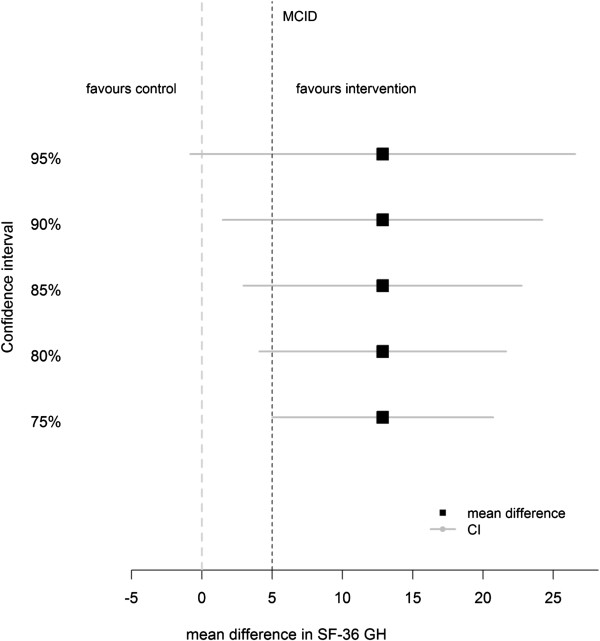
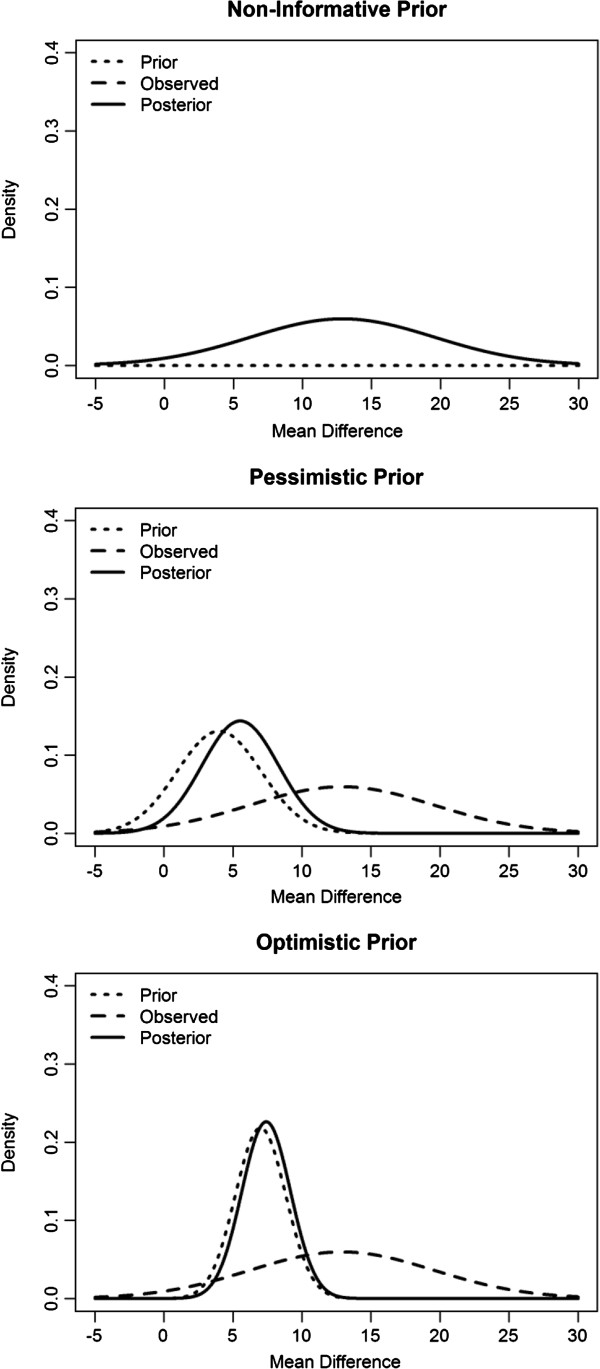
BACKGROUND: In an evaluation of a new health technology, a pilot trial may be undertaken prior to a trial that makes a definitive assessment of benefit. The objective of pilot studies is to provide sufficient evidence that a larger definitive trial can be undertaken and, at times, to provide a preliminary assessment of benefit. METHODS: We describe significance thresholds, confidence intervals and surrogate markers in the context of pilot studies and how Bayesian methods can be used in pilot trials. We use a worked example to illustrate the issues raised. RESULTS: We show how significance levels other than the traditional 5% should be considered to provide preliminary evidence for efficacy and how estimation and confidence intervals should be the focus to provide an estimated range of possible treatment effects. We also illustrate how Bayesian methods could also assist in the early assessment of a health technology. CONCLUSIONS: We recommend that in pilot trials the focus should be on descriptive statistics and estimation, using confidence intervals, rather than formal hypothesis testing and that confidence intervals other than 95% confidence intervals, such as 85% or 75%, be used for the estimation. The confidence interval should then be interpreted with regards to the minimum clinically important difference. We also recommend that Bayesian methods be used to assist in the interpretation of pilot trials. Surrogate endpoints can also be used in pilot trials but they must reliably predict the overall effect on the clinical outcome.
Overview
The claims and statistics of this paper haven’t been checked yet.
Run the check — free, no account needed. It reads the open-access text and checks the sources it cites.
Integrity signals
Registry
Cites
Statistics
Figures
Verification
Claims the paper makes
The claims and statistics of this paper haven’t been checked yet.
Run the check — free, no account needed. It reads the open-access text and checks the sources it cites.
Claims other papers make about this one
Each is checked against this paper’s own text: does it say what the citing paper says it does?
The cited source says what the claim attributes to it.
In the citing paper
“Lee et al. [14] also reported how type 1 error levels other than the traditional 5% could be considered to provide preliminary evidence for efficacy, although they did stop short of recommending doing this by concluding that a confidence interval approach is preferable.”
From Determining sample size for progression criteria for pragmatic pilot RCTs: the hypothesis test strikes back! (2021) · cites this paper as [14]
The cited source says what the claim attributes to it.
In the citing paper
“such pilot trials are underpowered to produce effects significant at conventional levels (Lee, Whitehead, Jacques, & Julious, 2014).”
From The role of sleep dysfunction in the occurrence of delusions and hallucinations: A systematic review (2015) · cites this paper as Lee, Whitehead, Jacques, & Julious, 2014
The cited source says what the claim attributes to it.
In the citing paper
“This pilot RCT aimed to enroll 60 participants. As a pilot study, it was understood to be underpowered (54).”
From EMPOWER: A Multi-Site Pilot Trial to Reduce Distress in Surrogate Decision-Makers in the ICU (2024) · cites this paper as [54]
Self-check
Percentages, sums and reported differences re-computed from the paper’s own numbers.
The self-check needs the paper’s full text.
Citations
Cites
Biomarkers and surrogate endpoints: Preferred definitions and conceptual framework
Biomarkers Definitions Working Group (2001) · Clinical Pharmacology & Therapeutics · doi:10.1067/mcp.2001.113989 · Cited by 6,771
A tutorial on pilot studies: the what, why and how
Thabane, L., Ma, J., Chu, R., Cheng, J., Ismaila, A., Rios, L. P., Robson, R., Thabane, M., Giangregorio, L., & Goldsmith, C. H. (2010) · BMC Medical Research Methodology · doi:10.1186/1471-2288-10-1 · Cited by 3,384
Design and analysis of pilot studies: recommendations for good practice
Lancaster, G. A., Dodd, S., & Williamson, P. R. (2004) · Journal of Evaluation in Clinical Practice · doi:10.1111/j..2002.384.doc.x · Cited by 2,572
Surrogate endpoints in clinical trials: Definition and operational criteria
Prentice, R. L. (1989) · Statistics in Medicine · doi:10.1002/sim.4780080407 · Cited by 2,057
Bayesian Approaches to Clinical Trials and Health‐Care Evaluation
Spiegelhalter, D. J., Abrams, K. R., & Myles, J. P. (2003) · Wiley eBooks · doi:10.1002/0470092602 · Cited by 1,687
Surrogate End Points in Clinical Trials: Are We Being Misled?
Fleming, T. R., & DeMets, D. L. (1996) · Annals of Internal Medicine · doi:10.7326/0003-4819-125-7-199610010-00011 · Cited by 1,651
What is a pilot or feasibility study? A review of current practice and editorial policy
Arain, M., Campbell, M. J., Cooper, C. L., & Lancaster, G. A. (2010) · BMC Medical Research Methodology · doi:10.1186/1471-2288-10-67 · Cited by 1,483
Bayesian Statistics: An Introduction
Ziegel, E. R., & Lee, P. M. (1998) · Technometrics · doi:10.2307/1270551 · Cited by 1,191
Multiple Imputation and its Application
Carpenter, J. R., & Kenward, M. G. (2013) · doi:10.1002/9781119942283 · Cited by 913
Considerations in the Evaluation of Surrogate Endpoints in Clinical Trials
Gruttola, V. D., Clax, P. A., DeMets, D. L., Downing, G. J., Ellenberg, S. S., Friedman, L., Gail, M. H., Prentice, R. L., Wittes, J., & Zeger, S. L. (2001) · Controlled Clinical Trials · doi:10.1016/s0197-2456(01)00153-2 · Cited by 428
Research works printed but not linked: 1
- International Conference on Harmonisation: ICH E9 statistical principals for clinical trials. 1998, http://www.ich.org/fileadmin/Public_Web_Site/ICH_Products/Guidelines/Efficacy/E9/Step4/E9_Guideline.pdf,
Cited by
Sorted by citations
Items 401–426 of 426
Taylor, P. J., Duxbury, P., Moorhouse, J., Russell, C., Pratt, D., Parker, S., Sutton, C., Lobban, F. A., Drake, R., Eccles, S., et al. (2023) · Figshare · doi:10.6084/m9.figshare.22617221
Teles, S., Ferreira, A., & Paúl, C. (2022) · Figshare · doi:10.6084/m9.figshare.19289926
Chynoweth, J., Sorrell, L., Neilens, H., MacCormick, A. P., Allgar, V. L., Aspinall, P., Parkin, T., Murphy, P., Takhar, A. S., Fenwick, S. W., et al. (2026) · European Journal of Surgical Oncology · doi:10.1016/j.ejso.2026.111504
Frank, L. R., Galinsky, V. L., Zhang, H., Hall, J. D., Bondi, M. W., & Chou, Y. (2026) · Frontiers in Human Neuroscience · doi:10.3389/fnhum.2026.1741133
Jutkowitz, E., Brown, D. L., Koeuth, S., Piersol, C. V., Cook, A., & Gitlin, L. N. (2026) · Journal of the American Medical Directors Association · doi:10.1016/j.jamda.2026.106186
Boarini, M., Banchelli, F., Scognamiglio, D., Farella, G. M., Platano, D., Rizzo, S., Cavina, U., Rogati, G., Amadasi, R. R., Villa, G., et al. (2026) · BMJ Open · doi:10.1136/bmjopen-2025-114628
Wynia, Z., Gasienica, J., Amondson, R., Heil, J., Nolan, C., Cox, L., Truesdell, V., Frank, J. W., & Ashar, Y. K. (2026) · Journal of Pain · doi:10.1016/j.jpain.2026.106322
Pagán, A. F., Dequina, N. G., Pagán, A. L., Loveland, K. A., & Acierno, R. (2026) · Advances in Neurodevelopmental Disorders · doi:10.1007/s41252-026-00502-3
Neziraj, M., Kumlien, C., & Axelsson, M. (2026) · BMJ Open · doi:10.1136/bmjopen-2026-118018
Anan, K., Kataoka, Y., Taguri, M., Ichikado, K., Tachikawa, R., Tobino, K., Kawamura, K., Shirakawa, C., Kawabata, T., & Yamamoto, Y. (2026) · BMJ Open Respiratory Research · doi:10.1136/bmjresp-2025-003818
Alvarado‐Omenat, J. J., Fonseca‐Sánchez, E., Llamas‐Ramos, R., García-García, D., Correyero‐León, M., & Llamas‐Ramos, I. (2026) · Biomedicines · doi:10.3390/biomedicines14071504
Ajayi, A. A., Zhao, C., Schachter, J., Wade, B., & Bonilla, G. G. S. (2026) · Journal of American College Health · doi:10.1080/07448481.2026.2692541
Mansoubi, M., Fadavi, H., Massey, G. J., Chapman, K., Norouzi, K., Lamb, S. E., & Dawes, H. (2026) · doi:10.2196/preprints.106921
Gregg, L., Sutton, C., Allott, R., howarth, Z., Smith, D. M., Calam, R. M., Elliott, R. A., Su, F., Millard-Brewer, L. A., & Wittkowski, A. (2026) · NIHR Open Research · doi:10.3310/nihropenres.14333.1
Electrodermal Activity as a Potential Diagnostic Biomarker for Alzheimer’s Disease: A Pilot Study
Pandian, S. S. R., Díaz, L. R. M., Ruiz-Triviño, J., Aguillon, D. F., & Posada-Quintero, H. F. (2026) · Sensors · doi:10.3390/s26175407
Candeias, A., & Félix, A. S. (2026) · International Journal of Environmental Research and Public Health · doi:10.3390/ijerph23091156
Joseph, N., Ajanthan, S., Jeyakumaran, N., Rathnayake, W., Jayawickrema, P., Fernandopulle, P., Iqbal, A., Malinda, Y., Bandusena, M., Gamage, A., et al. (2026) · Clinical Oncology · doi:10.1016/j.clon.2026.104327
Parry, S. L., Carr, S., Carter, L., Kirk, S. A., Petrussa, C., Malpass, F., Shields, G., Thompson, A., Morrision, A., & Varese, F. (2026) · BMJ Open · doi:10.1136/bmjopen-2026-119727
Soonhuae, C., Lapierre, S., Mariani, V. M., Ferreira, L. F., Kim, J.-S., Handberg, E. M., Ruzieh, M., Pepine, C. J., & Christou, D. D. (2026) · Experimental Gerontology · doi:10.1016/j.exger.2026.113343
Yao, L., Li, M., Liu, Y., Cao, J., Lian, Z., Hong-nan, Z., Huang, H., Zhong, Z., & Wang, H. (2026) · Journal of Integrative Neuroscience · doi:10.31083/jin52929
Mercer, A., Meakins, A., Martin, R. S., Trummer, G., Geoghagan, L. A., Muscha, K., & Washmuth, N. B. (2026) · Frontiers in Rehabilitation Sciences · doi:10.3389/fresc.2026.1719743
Studerus, D., Zeitz, J., Dürr, V., Bosbach, N., Maggio, E. M., Clack, L., & Scharl, M. M. (2026) · Research Square · doi:10.21203/rs.3.rs-10874600/v1
Raudhoh, S., Setyowibowo, H., Struijs, S. Y., & Iskandarsyah, A. (2026) · medRxiv · doi:10.64898/2026.10.27.26364572
Adaptive Compared With Persistent Fatigue in Allogeneic Hematopoietic Cell Transplantation Survivors
Hacker, E. D., Sipes-Fears, D., Richards, R. L., Wierenga, K. L., Tlusty, G. C., & Pressler, S. J. (2026) · Western Journal of Nursing Research · doi:10.1177/01939459261493696
Rad, H. S., Rahimi, S., Kamyab, J., Abdollahi-Chirani, E., Goodarzi, H., & Bakhtiari, M. (2026) · Body Image · doi:10.1016/j.bodyim.2026.102217
Metadata
- Authors
- Lee, E. C., Whitehead, A. L., Jacques, R. M., & Julious, S. A.
- Affiliations
- University of Sheffield (GB)
- Corresponding author
- Julious, Steven A
- Venue
- BMC Medical Research Methodology
- Published
- 2014-03-20
- Volume
- 14
- Issue
- 1
- Pages
- 41-41
- ISSN
- 1471-2288 (ISSN-L)
- PMC
- PMC3994566
- OpenAlex
- W2108052506
- Cited by
- 423
- References
- 31
- Citations by year
- 2026: 26 · 2025: 60 · 2024: 50 · 2023: 59 · 2022: 52 · 2021: 40 · 2020: 34 · 2019: 30 · 2018: 31 · 2017: 16 · 2016: 14 · 2015: 9 · 2014: 2
- FWCI
- 14.45
- Type
- journal article
- Language
- en
- Open access
- gold
- doi.org
- Licence
- Locations
- BMC Medical Research Methodology (publishedVersion, cc-by)
- Europe PMC (PubMed Central) (publishedVersion, cc-by)
- PubMed Central (publishedVersion, cc-by)
- PubMed (publishedVersion)
- White Rose Research Online (University of Leeds, The University of Sheffield, University of York) (acceptedVersion)
- ePrints Soton (University of Southampton) (acceptedVersion)
- Topics
- Physical Sciences › Mathematics › Statistics and Probability › Statistical Methods in Clinical Trials
- Physical Sciences › Mathematics › Statistics and Probability › Statistical Methods and Bayesian Inference
- Physical Sciences › Mathematics › Statistics and Probability › Statistical Methods in Epidemiology
- Keywords
- pilot trial, significance threshold, confidence intervals, Bayesian analysis, surrogate endpoints, minimal clinically important difference, health technology assessment, treatment effect estimation, hypothesis testing
- MeSH terms
- Bayes Theorem, Data Interpretation, Statistical, Humans, Leg Ulcer, Pilot Projects, Research Design, Biomarkers, Confidence Intervals, Treatment Outcome
About these checks
Registry, retraction, Cites and statistics results are computed, not judged, with one exception: a printed reference that no index lists is read once by a model before it counts as a citation error. Claims are extracted by a model and kept only when their quote appears verbatim in the text; each cited source is then checked, with a model’s help, for whether it says what the claim relies on. Those verdicts can be wrong — read the claim’s quote and the cited source before relying on one.
Statistics and arithmetic are recomputed, not judged.
Confidence bands are shown only for fields calibrated on our annotated test set. None is calibrated yet, so no band is shown.
What counts as a claim ›How we measure confidence ›How we check this ›
Are you an author, or do you see a problem with this page? Request a review
