

Ecological, biological and social dimensions of dengue vector breeding in five urban settings of Latin America: a multi-country study
Open accessThe DOI matches its Crossref record; 32 of the 32 references it cites were found in a registry or an index.
Abstract
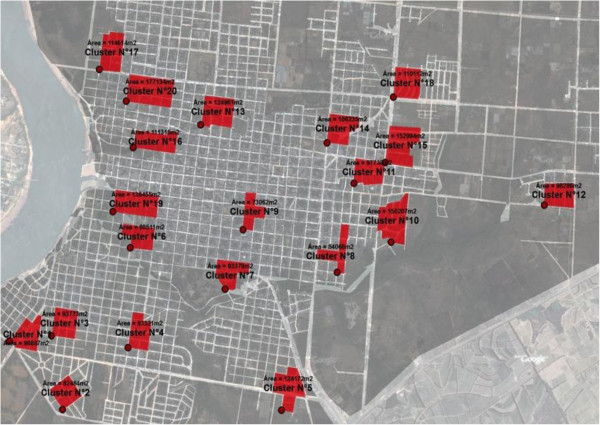
BACKGROUND: Dengue is an increasingly important public health problem in most Latin American countries and more cost-effective ways of reducing dengue vector densities to prevent transmission are in demand by vector control programs. This multi-centre study attempted to identify key factors associated with vector breeding and development as a basis for improving targeted intervention strategies. METHODS: In each of 5 participant cities in Mexico, Colombia, Ecuador, Brazil and Uruguay, 20 clusters were randomly selected by grid sampling to incorporate 100 contiguous households, non-residential private buildings (businesses) and public spaces. Standardized household surveys, cluster background surveys and entomological surveys specifically targeted to obtain pupal indices for Aedes aegypti, were conducted in the dry and wet seasons. RESULTS: The study clusters included mainly urban low-middle class populations with satisfactory infrastructure and -except for Uruguay- favourable climatic conditions for dengue vector development. Household knowledge about dengue and "dengue mosquitoes" was widespread, mainly through mass media, but there was less awareness around interventions to reduce vector densities. Vector production (measured through pupal indices) was favoured when water containers were outdoor, uncovered, unused (even in Colombia and Ecuador where the large tanks used for household water storage and washing were predominantly productive) and -particularly during the dry season- rainwater filled. Larval infestation did not reflect productive container types. All productive container types, including those important in the dry season, were identified by pupal surveys executed during the rainy season. CONCLUSIONS: A number of findings are relevant for improving vector control: 1) there is a need for complementing larval surveys with occasional pupal surveys (to be conducted during the wet season) for identifying and subsequently targeting productive container types; 2) the need to raise public awareness about useful and effective interventions in productive container types specific to their area; and 3) the motivation for control services that-according to this and similar studies in Asia- dedicated, targeted vector management can make a difference in terms of reducing vector abundance.
Overview
The claims and statistics of this paper haven’t been checked yet.
Free: it reads the open-access text and checks the first 5 claims that cite a source we can check. Create a free account to check every claim.
Integrity signals
Registry
Cites
Statistics
Figures
Verification
Claims the paper makes
The claims and statistics of this paper haven’t been checked yet.
Free: it reads the open-access text and checks the first 5 claims that cite a source we can check. Create a free account to check every claim.
Claims other papers make about this one
Each is checked against this paper’s own text: does it say what the citing paper says it does?
The source backs part of the claim, not all of it — or backs it for a different population, condition or comparison.
In the citing paper
“because these are most productive containers [32]”
From A cross-sectional survey of Aedes aegypti immature abundance in urban and rural household containers in central Colombia (2017) · cites this paper as [32]
Experimental — accuracy not yet measuredThe cited source says what the claim attributes to it.
In the citing paper
“The most productive and permanent containers are ground tanks and concrete washbasins for laundry (albercas), whereas other containers, such as bottles, cans, tires, etc., are only productive during the rainy season and produce low numbers of pupae [21, 32, 33].”
From A cross-sectional survey of Aedes aegypti immature abundance in urban and rural household containers in central Colombia (2017) · cites this paper as [32]
Self-check
Percentages, sums and reported differences re-computed from the paper’s own numbers.
The self-check needs the paper’s full text.
Citations
Cites
Simple sample size calculation for cluster-randomized trials
Hayes, R. J., & Bennett, S. (1999) · International Journal of Epidemiology · doi:10.1093/ije/28.2.319 · Cited by 822
Ecology of invasive mosquitoes: effects on resident species and on human health
Juliano, S. A., & Philip Lounibos, L. (2005) · Ecology Letters · doi:10.1111/j.1461-0248.2005.00755.x · Cited by 629
The Epidemiology of Dengue in the Americas Over the Last Three Decades: A Worrisome Reality
San Martín, J. L., Brathwaite, O., Zambrano, B., Solórzano, J. O., Bouckenooghe, A., Dayan, G. H., & Guzmán, M. G. (2010) · The American Society of Tropical Medicine and Hygiene · doi:10.4269/ajtmh.2010.09-0346 · Cited by 546
Focks, D. A., Brenner, R. J., Hayes, J., & Daniels, E. (2000) · The American journal of tropical medicine and hygiene · doi:10.4269/ajtmh.2000.62.11 · Cited by 399
Focks, D. A., & Chadee, D. D. (1997) · The American Journal of Tropical Medicine and Hygiene · doi:10.4269/ajtmh.1997.56.159 · Cited by 350
Aedes aegypti survival and dispersal estimated by mark-release-recapture in northern Australia.
Muir, L. E., & Kay, B. H. (1998) · The American journal of tropical medicine and hygiene · doi:10.4269/ajtmh.1998.58.277 · Cited by 306
Kroeger, A., Lenhart, A., Ochoa, M., Villegas, E., Levy, M., Alexander, N., & McCall, P. J. (2006) · BMJ · doi:10.1136/bmj.332.7552.1247 · Cited by 255 · cited 1×
“3, respectively, based on previous studies [10,19].”
Self-citationArunachalam, N., Tana, S., Espino, F., Kittayapong, P., Abeyewickreme, W., Wai, K. T., Tyagi, B. K., Kroeger, A., Sommerfeld, J., & Petzold, M. (2010) · Bulletin of the World Health Organization · doi:10.2471/blt.09.067892 · Cited by 245 · cited 8×
“Two common instruments, a cluster characterization survey and a structured questionnaire for household interviews (both based on the lessons learned in the previous multicentre study in Asia [10]) were developed after the first meeting of Principal Investigators in Antigua, Guatemala, in July 2009.”
BackgroundMethodResultInfluentialSelf-citationReiter, P. (2007) · Vector-Borne and Zoonotic Diseases · doi:10.1089/vbz.2006.0630 · Cited by 242
Ecology of invasive mosquitoes: effects on resident species and on human health.
Juliano, S. A., & Lounibos, L. P. (2005) · PubMed · doi:10.1111/j.1461-0248.2005.00755 · Cited by 217
Research works printed but not linked: 6
- Tana S Abeyewickreme W Arunachalam N Espino F Kittayapong P Wai KT Horstick O Sommerfeld J International Development Research Centre Eco biosocial research on dengue in Asia: General principles and a Case study from Indonesian Ecohealth Research in Practice Insight and Innovation in International Development. Volume 1 2012 Ottawa, Ontario, Canada: Springer 173 184
- Kroeger A Sommerfeld J Dengue Special issue: Ecobiosocial approach to dengue in urban and periurban areas of South and South East Asia Path Glob Hlth 2012 14 427 488
- Focks D Alexander N Multicountry study of Aedes aegypti pupal productivity survey methodology: findings and recommendations. (TDR/IDE/Den/06.1) 2006 Geneva: World Health Organization Press
- World Health Organization (WHO) and Special Programme for Research and training in Tropical Disease (TDR) Dengue: Guidelines for Diagnosis, Treatment, Prevention and Control 2009 Geneva: World Health Organization Press
- World Health Organization (WHO) WHO Integrated Vector Management (IVM) Working Group Meeting Reports. WHO/HTM/NTD/VEM/2009.2 2009 Geneva: World Health Organization Press 1 29
- World Health Organization (WHO) WHO Development of a Global Action Plan for Integrated Vector Management (IVM) Report of a WHO Consultation. WHO/HTM/NTD/VEM/2009.1 2009 Geneva: World Health Organization Press 1 20
Cited by
The ecological foundations of transmission potential and vector‐borne disease in urban landscapes
LaDeau, S. L., Allan, B. F., Leisnham, P. T., & Levy, M. Z. (2015) · Functional Ecology · doi:10.1111/1365-2435.12487 · Cited by 230
“Immature development occurs in artificial water-filled containers (e.g. trash receptacles, garden pots) or ephemeral pools (e.g. drainage ditches, bioswales) associated with human activities (Bartlett-Healy et al. 2012; Quintero et al. 2014; Townroe & Callaghan 2014).”
BackgroundCongenital Zika syndrome: A systematic review
Freitas, D. A., Souza-Santos, R., Carvalho, L. M. A., Barros, W. B., Neves, L. M., Brasil, P., & Wakimoto, M. D. (2020) · PLOS ONE · doi:10.1371/journal.pone.0242367 · Cited by 211
Climate services for health: predicting the evolution of the 2016 dengue season in Machala, Ecuador
Lowe, R., Ibarra, A. M. S., Petrova, D., García‐Díez, M., Borbor-Cordova, M. J., Mejía, R., Regato, M., & Rodó, X. (2017) · The Lancet Planetary Health · doi:10.1016/s2542-5196(17)30064-5 · Cited by 177
Zellweger, R. M., Cano, J., Mangeas, M., Taglioni, F., Mercier, A., Despinoy, M., Menkès, C., Dupont‐Rouzeyrol, M., Nikolay, B., & Teurlai, M. (2017) · PLoS neglected tropical diseases · doi:10.1371/journal.pntd.0005471 · Cited by 170
Ibarra, A. M. S., Muñoz, Á. G., Ryan, S. J., Ayala, E. B., Borbor-Cordova, M. J., Finkelstein, J. L., Mejía, R., Ordoñez, T., Recalde-Coronel, G. C., & Rivero, K. (2014) · BMC Infectious Diseases · doi:10.1186/s12879-014-0610-4 · Cited by 154
Urban climate versus global climate change—what makes the difference for dengue?
Misslin, R., Telle, O., Daudé, É., Vaguet, A., & Paul, R. E. L. (2016) · Annals of the New York Academy of Sciences · doi:10.1111/nyas.13084 · Cited by 122
Parselia, E., Kontoes, C., Tsouni, A., Hadjichristodoulou, C. S., Kioutsioukis, I., Magiorkinis, G., & Stilianakis, N. I. (2019) · Remote Sensing · doi:10.3390/rs11161862 · Cited by 116
Jones, R., Kulkarni, M. A., Davidson, T. M. V., & Talbot, B. (2020) · PLoS ONE · doi:10.1371/journal.pone.0220753 · Cited by 108
Ibarra, A. M. S., Luzadis, V. A., Borbor-Cordova, M. J., Silva, M., Ordoñez, T., Ayala, E. B., & Ryan, S. J. (2014) · BMC Public Health · doi:10.1186/1471-2458-14-1135 · Cited by 102
Overgaard, H. J., Olano, V. A., Jaramillo, J. F., Matiz, M. I., Sarmiento, D., Stenström, T. A., & Alexander, N. (2017) · Parasites & Vectors · doi:10.1186/s13071-017-2295-1 · Cited by 95
Dengue Epidemics Prediction: A Survey of the State-of-the-Art Based on Data Science Processes
Siriyasatien, P., Chadsuthi, S., Jampachaisri, K., & Kesorn, K. (2018) · IEEE Access · doi:10.1109/access.2018.2871241 · Cited by 96
García-Betancourt, T., Higuera-Mendieta, D. R., González-Uribe, C., Cortés, S., & Quintero, J. (2015) · PLoS ONE · doi:10.1371/journal.pone.0129054 · Cited by 87
Self-citationPérez-Castro, R., Castellanos, J. E., Olano, V. A., Matiz, M. I., Jaramillo, J. F., Vargas, S. L., Sarmiento, D. M., Stenström, T. A., & Overgaard, H. J. (2016) · Memórias do Instituto Oswaldo Cruz · doi:10.1590/0074-02760150363 · Cited by 86
“aegypti (Quintero et al., 2014; Romero-Vivas et al., 2006).”
BackgroundHeydari, N., Larsen, D. A., Neira, M., Ayala, E. B., Fernandez, P., Adrian, J., Rochford, R. A., & Ibarra, A. M. S. (2017) · International Journal of Environmental Research and Public Health · doi:10.3390/ijerph14020196 · Cited by 86
Vector-borne diseases in waste pickers in Brasilia, Brazil
Cruvinel, V. R. N., Zolnikov, T. R., Obara, M. T., de Oliveira, V. T. L., Vianna, E. N., Ganem, F., de Oliveira, K. C., & Scott, J. A. (2020) · Waste Management · doi:10.1016/j.wasman.2020.02.001 · Cited by 89
Badolo, A., Sombié, A., Yameogo, F., Wangrawa, D. W., Sanon, A., Pignatelli, P. M., Sanon, A., Viana, M., Kanuka, H., Weetman, D., et al. (2022) · PLoS neglected tropical diseases · doi:10.1371/journal.pntd.0010059 · Cited by 81
Olliaro, P., Fouque, F., Kroeger, A., Bowman, L., Velayudhan, R., Santelli, A. C. F. S., Garcia, D., Skewes-Ramm, R., Sulaiman, L. H., Tejeda, G. S., et al. (2018) · PLoS neglected tropical diseases · doi:10.1371/journal.pntd.0005967 · Cited by 80
Self-citationUse of Insecticide-Treated House Screens to Reduce Infestations of Dengue Virus Vectors, Mexico
Manrique-Saide, P. C., Che‐Mendoza, A., Barrera-Pérez, M. A., Guillermo-May, G., Herrera‐Bojórquez, J., Dzul-Manzanilla, F., Gutiérrez-Castro, C., Lenhart, A. E., Vazquez‐Prokopec, G. M., Sommerfeld, J., et al. (2015) · Emerging infectious diseases · doi:10.3201/eid2102.140533 · Cited by 79
Self-citationVannavong, N., Seidu, R., Stenström, T., Dada, N., & Overgaard, H. J. (2017) · Parasites & Vectors · doi:10.1186/s13071-017-2107-7 · Cited by 77
Spatial and temporal patterns of dengue infections in Timor-Leste, 2005–2013
Wangdi, K., Clements, A. C. A., Du, T., & Nery, S. V. (2018) · Parasites & Vectors · doi:10.1186/s13071-017-2588-4 · Cited by 70
Mitchell‐Foster, K., Ayala, E. B., Breilh, J., Spiegel, J., Wilches, A. A., Leon, T. O., & Delgado, J. A. (2015) · Transactions of the Royal Society of Tropical Medicine and Hygiene · doi:10.1093/trstmh/tru209 · Cited by 67
Self-citationLi, Y., Zhou, G., Zhong, D., Wang, X., Hemming‐Schroeder, E., David, R. E., Lee, M., Zhong, S., Yi, G., Liu, Z., et al. (2021) · Pest Management Science · doi:10.1002/ps.6222 · Cited by 66
Che‐Mendoza, A., Guillermo-May, G., Herrera‐Bojórquez, J., Barrera-Pérez, M. A., Dzul-Manzanilla, F., Gutiérrez-Castro, C., Arredondo‐Jiménez, J. I., Sánchez-Tejeda, G., Vazquez‐Prokopec, G. M., Ranson, H., et al. (2015) · Transactions of the Royal Society of Tropical Medicine and Hygiene · doi:10.1093/trstmh/tru189 · Cited by 65
Self-citationIbarra, A. M. S., Ryan, S. J., Kenneson, A., King, C. A., Abbott, M., Barbachano-Guerrero, A., Beltrán‐Ayala, E., Borbor-Cordova, M. J., Cardenas, W. B., Cueva, C., et al. (2018) · American Journal of Tropical Medicine and Hygiene · doi:10.4269/ajtmh.17-0762 · Cited by 64
Self-citationCross-sectional study to measure household water insecurity and its health outcomes in urban Mexico
Jepson, W. E., Stoler, J. B., Baek, J., Morán‐Martínez, J., Uribe-Salas, F. J., & Carrillo, G. (2021) · BMJ Open · doi:10.1136/bmjopen-2020-040825 · Cited by 59
Wilke, A. B. B., Vasquez, C., Mauriello, P. J., & Beier, J. C. (2018) · Parasites & Vectors · doi:10.1186/s13071-018-2866-9 · Cited by 56
Quintero, J., Garcia-Betancourt, T., Cortes, S., Garcia, D., Alcala, L., Gonzalez-Uribe, C., Brochero, H., & Carrasquilla, G. (2015) · Transactions of the Royal Society of Tropical Medicine and Hygiene · doi:10.1093/trstmh/tru208 · Cited by 55
Self-citationGarcía-Sánchez, D., Agudelo, G. A. P., & Quintero, J. (2017) · Journal of Vector Ecology · doi:10.1111/jvec.12269 · Cited by 54
Self-citationChe‐Mendoza, A., Medina‐Barreiro, A., Koyoc-Cardeña, E., Uc-Puc, V., Contreras‐Perera, Y., Herrera‐Bojórquez, J., Dzul-Manzanilla, F., Morales, F. C., Ranson, H., Lenhart, A. E., et al. (2018) · PLoS neglected tropical diseases · doi:10.1371/journal.pntd.0006283 · Cited by 51
Self-citationSarfraz, M. S., Tripathi, N. K., Faruque, F., Bajwa, U. I., Kitamoto, A., & Souris, M. (2014) · Geospatial health · doi:10.4081/gh.2014.297 · Cited by 50
Donnelly, M. A. P., Kluh, S., Snyder, R. E., & Barker, C. M. (2020) · PLoS neglected tropical diseases · doi:10.1371/journal.pntd.0008408 · Cited by 49
Basso, C., da Rosa, E. G., Romero, S., Gonzalez, C., Lairihoy, R., Roche, I., Caffera, R. M., da Rosa, R., Calfani, M., Alfonso-Sierra, E., et al. (2015) · Transactions of the Royal Society of Tropical Medicine and Hygiene · doi:10.1093/trstmh/tru183 · Cited by 47
Self-citationPost-earthquake Zika virus surge: Disaster and public health threat amid climatic conduciveness
Ortiz, M. R., Le, N. K., Sharma, V., Hoare, I., Quizhpe, E., Terán, E., Naik, E., Salihu, H. M., & Izurieta, R. (2017) · Scientific Reports · doi:10.1038/s41598-017-15706-w · Cited by 47
Khan, J., Khan, I., & Amin, I. (2016) · PLoS ONE · doi:10.1371/journal.pone.0147416 · Cited by 46
Kamal, A. S. M. M., Montakim, M. N. A., Hasan, M. A., Mitu, M. M. P., Gazi, M. Y., Uddin, M. M., & Mia, M. B. (2023) · International Journal of Environmental Research and Public Health · doi:10.3390/ijerph20053858 · Cited by 47
Husnina, Z., Clements, A., & Wangdi, K. (2019) · Tropical Medicine & International Health · doi:10.1111/tmi.13248 · Cited by 48
Water with larvae : Hydrological fertility, inequality, and mosquito urbanism
Acevedo-Guerrero, T. (2022) · Environment and Planning E Nature and Space · doi:10.1177/25148486221099801 · Cited by 44
Equihua, M., Ibáñez‐Bernal, S., Benítez, G., Estrada‐Contreras, I., Sandoval-Ruiz, C. A., & Mendoza, F. (2016) · Acta Tropica · doi:10.1016/j.actatropica.2016.11.014 · Cited by 44
Kajeguka, D. C., Desrochers, R. E., Mwangi, R., Mgabo, M. R., Alifrangis, M., Kavishe, R. A., Mosha, F. W., & Kulkarni, M. A. (2017) · Tropical Medicine & International Health · doi:10.1111/tmi.12863 · Cited by 44
Temperature, traveling, slums, and housing drive dengue transmission in a non-endemic metropolis
Morales, J. M., Antman, J., Laneri, K., & Morales, J. M. (2021) · PLoS neglected tropical diseases · doi:10.1371/journal.pntd.0009465 · Cited by 43
Space-time dynamics of the dengue epidemic in Brazil, 2024: an insight for decision making
de Souza, C. D. F., Nascimento, R. P. D. S., Santos, M. B., Armstrong, A. D. C., Gomes, O. V., Nicácio, J. M., Júnior, J. V. J. S., & do Carmo, R. F. (2024) · BMC Infectious Diseases · doi:10.1186/s12879-024-09813-z · Cited by 43
Sommerfeld, J., & Kroeger, A. (2015) · Transactions of the Royal Society of Tropical Medicine and Hygiene · doi:10.1093/trstmh/tru176 · Cited by 42
Self-citationKrystosik, A., Curtis, A., Buritica, P., Ajayakumar, J., Squires, R., Dávalos, D., Pacheco, R., Bhatta, M. P., & James, M. A. (2017) · PLoS ONE · doi:10.1371/journal.pone.0181208 · Cited by 42
Martin, J. L., Lippi, C. A., Ibarra, A. M. S., Ayala, E. B., Mordecai, E. A., Sippy, R. J., Heras, F., Blackburn, J. K., & Ryan, S. J. (2021) · PLoS neglected tropical diseases · doi:10.1371/journal.pntd.0009931 · Cited by 38
Dickin, S., & Schuster‐Wallace, C. J. (2014) · Global Environmental Change · doi:10.1016/j.gloenvcha.2014.09.007 · Cited by 37
Conocimiento sobre dengue en una región endémica de Perú. Estudio de base poblacional
Gutiérrez, C. A., & Montenegro-Idrogo, J. J. (2018) · ACTA MEDICA PERUANA · doi:10.35663/amp.2017.344.458 · Cited by 36
Magnitude of Neglected Tropical Diseases in Indonesia at Postmillennium Development Goals Era
Wibawa, T., & Satoto, T. B. T. (2016) · Journal of Tropical Medicine · doi:10.1155/2016/5716785 · Cited by 34
Akter, R., Hu, W., Gatton, M. L., Bambrick, H., Cheng, J., & Tong, S. (2020) · Environmental Research · doi:10.1016/j.envres.2020.110285 · Cited by 33
Pinchoff, J., Serino, A., Merritt, A. P., Hunter, G. C., Silva, M., Parikh, P., & Hewett, P. (2019) · Global Health Science and Practice · doi:10.9745/ghsp-d-19-00188 · Cited by 33
de Macêdo, S. F., Silva, K. A., de Vasconcelos, R. B., de Sousa, I. V., Mesquita, L. P. S., Barakat, R. D. M., Fernandes, H. M. C., Queiroz, A. C. M., Santos, G. P. G., Filho, V. C. B., et al. (2021) · International Journal of Environmental Research and Public Health · doi:10.3390/ijerph18031278 · Cited by 29
Self-citationInvestigating the recent outbreak of dengue fever in Iran: a systematic review
Jamal, M. K., Sanaei, B., Naderi, M., Past, V., Abadi, S. H. A., Khazaei, R., Esmaeili, A., Sadrizadeh, S., Moghimi, S., & Ghiyasi, Z. (2025) · The Egyptian Journal of Internal Medicine · doi:10.1186/s43162-025-00411-2 · Cited by 29
Curtis, A., Quinn, M., Obenauer, J., & Renk, B. M. (2017) · Applied Geography · doi:10.1016/j.apgeog.2017.08.008 · Cited by 29
Fuentes-Vallejo, M., Higuera-Mendieta, D. R., García-Betancourt, T., Alcala, L., García-Sánchez, D., Munévar-Cagigas, D. A., Brochero, H., González-Uribe, C., & Quintero, J. (2015) · Cadernos de Saúde Pública · doi:10.1590/0102-311x00057214 · Cited by 29
Self-citationNeto, A. S. L., do Nascimento, O. J., & de Sousa, G. D. S. (2016) · Revista Brasileira em Promoção da saúde · doi:10.5020/18061230.2016.p305 · Cited by 29
Wing variation in Culex nigripalpus (Diptera: Culicidae) in urban parks
de Carvalho, G. C., Vendrami, D. P., Marrelli, M. T., & Wilke, A. B. B. (2017) · Parasites & Vectors · doi:10.1186/s13071-017-2348-5 · Cited by 27
Vitale, M., Lupone, C. D., Kenneson, A., Ochoa, R. J., Ordoñez, T., Beltrán‐Ayala, E., Endy, T. P., Rosenbaum, P. F., & Ibarra, A. M. S. (2020) · BMC Public Health · doi:10.1186/s12889-020-09168-5 · Cited by 27
Self-citationControl de criaderos de Aedes aegypti con el programa Recicla por tu bienestar en Mérida, México
Barrera-Pérez, M. A., Ruz, N. P., Mézquita, J. E. M., Arcila, N. T., Hernández, R. H., Gamboa, F. C., Geded-Moreno, E., Cohuo-Rodríguez, A., Medina‐Barreiro, A., Koyoc-Cardeña, E., et al. (2015) · Salud Pública de México · doi:10.21149/spm.v57i3.7556 · Cited by 27
Self-citationAlcalá, L. A., Quintero, J., González, C., & Brochero, H. (2015) · Biomédica · doi:10.7705/biomedica.v35i2.2567 · Cited by 26
Self-citationQuintero, J., Pulido, N. R., Logan, J. G., Ant, T. H., Bruce, J., & Carrasquilla, G. (2020) · PLoS ONE · doi:10.1371/journal.pone.0230486 · Cited by 28
Self-citationInnovative dengue vector control interventions in Latin America: what do they cost?
Alfonso-Sierra, E., Basso, C., Beltrán‐Ayala, E., Mitchell‐Foster, K., Quintero, J., Cortés, S., Manrique-Saide, P. C., Guillermo-May, G., Caprara, A., de Lima, E. C., et al. (2016) · Pathogens and Global Health · doi:10.1080/20477724.2016.1142057 · Cited by 26
Self-citationLippi, C. A., Ibarra, A. M. S., Endy, T. P., Abbott, M., Cueva, C., Heras, F., Polhemus, M. E., Beltrán‐Ayala, E., & Ryan, S. J. (2021) · PLoS neglected tropical diseases · doi:10.1371/journal.pntd.0009257 · Cited by 24
Self-citationManrique-Saide, P. C., Herrera‐Bojórquez, J., Villegas‐Chim, J., Puerta-Guardo, H. N., Ayora‐Talavera, G., Parra‐Cardeña, M., Medina‐Barreiro, A., Ramírez‐Medina, M., Chi‐Ku, A., Trujillo‐Peña, E., et al. (2021) · Tropical Medicine & International Health · doi:10.1111/tmi.13680 · Cited by 23
Self-citationAedes aegypti en el área rural: implicaciones en salud pública
Olano, V. A. (2016) · Biomédica · doi:10.7705/biomedica.v36i2.3374 · Cited by 23
Future Challenges for Vaccinologists
Thomas, S., Dilbarova, R., & Rappuoli, R. (2016) · Methods in molecular biology · doi:10.1007/978-1-4939-3387-7_2 · Cited by 20
Ayettey, J., Ablorde, A., Amlalo, G., Mensah, B. A., & Kudom, A. A. (2023) · PLoS neglected tropical diseases · doi:10.1371/journal.pntd.0011397 · Cited by 18
Oliveira-Christe, R., Wilke, A. B. B., & Marrelli, M. T. (2020) · Insects · doi:10.3390/insects11120862 · Cited by 17
Héry, L., Boullis, A., & Vega-Rúa, A. (2021) · BASE · doi:10.25518/1780-4507.18886 · Cited by 15
García-Betancourt, T., González-Uribe, C., Quintero, J., & Carrasquilla, G. (2014) · EcoHealth · doi:10.1007/s10393-014-0953-8 · Cited by 15
Self-citationDengue in Latin America: A Persistent and Growing Public Health Challenge
López‐Gatell, H., Hernández‐Ávila, M., Hernández‐Ávila, J. E., & Alpuche-Aranda, C. M. (2015) · Neglected tropical diseases · doi:10.1007/978-3-7091-1422-3_11 · Cited by 15
Enfermedades transmitidas por vectores y cambio climático
Ochoa, S. A., Chacón-Vargas, K. F., Rivera-Chavira, B. E., & Torres, L. E. S. (2017) · Investigación y Ciencia de la Universidad Autónoma de Aguascalientes · doi:10.33064/iycuaa201772229 · Cited by 15
Locating Zika: Social Change and Governance in an Age of Mosquito Pandemics
Bardosh, K. (2019) · Routledge eBooks · doi:10.4324/9780429456558 · Cited by 15
Stewart-Ibarra, A. M., Ryan, S. J., Kenneson, A., King, C. A., Abbott, M., Barbachano-Guerrero, A., Beltrán-Ayala, E., Borbor-Cordova, M. J., Cardenas, W. B., Cueva, C., et al. (2017) · bioRxiv (Cold Spring Harbor Laboratory) · doi:10.1101/102004 · Cited by 14
Self-citationArantes, K. M., & Pereira, B. B. (2017) · Journal of Health & Biological Sciences · doi:10.12662/2317-3076jhbs.v5i1.1104.p86-94.2017 · Cited by 14
Skin manifestations of arthropod-borne infection in Latin America
Bolívar-Mejía, A., Alarcón-Olave, C., & Rodriguez-Morales, A. J. (2014) · Current Opinion in Infectious Diseases · doi:10.1097/qco.0000000000000060 · Cited by 13
Applied Research for Better Disease Prevention and Control
Sommerfeld, J., Ramsay, A., Pagnoni, F., Terry, R. F., Guth, J. A., & Reeder, J. C. (2015) · PLoS neglected tropical diseases · doi:10.1371/journal.pntd.0003378 · Cited by 13
Self-citationMolina, N. F., Rodríguez-Barrios, J., & León, S. A. I. (2018) · Acta Biológica Colombiana · doi:10.15446/abc.v23n1.62342 · Cited by 14
Mitchell‐Foster, K., Ayala, E. B., Breilh, J., Spiegel, J., Wilches, A. A., Leon, T. O., & Delgado, J. A. (2015) · Transactions of the Royal Society of Tropical Medicine and Hygiene · doi:10.1093/trstmh/trv028 · Cited by 13
Self-citationPuerta-Guardo, H. N., & Manrique-Saide, P. C. (2022) · IntechOpen eBooks · doi:10.5772/intechopen.98177 · Cited by 12
Self-citationA Realist Synthesis of Community-Based Interventions in Vector-Borne Diseases
Pérez, D., Robert, É., Pérez, E. J., Vanlerberghe, V., Lefèvre, P., & Ridde, V. (2021) · American Journal of Tropical Medicine and Hygiene · doi:10.4269/ajtmh.20-0944 · Cited by 12
Krystosik, A., Curtis, A., LaBeaud, A. D., Dávalos, D., Pacheco, R., Buritica, P., Álvarez, Á., Bhatta, M. P., PALACIOS, J. H. R., & James, M. A. (2018) · International Journal of Environmental Research and Public Health · doi:10.3390/ijerph15102144 · Cited by 11
What Is the Value of Different Zika Vaccination Strategies to Prevent and Mitigate Zika Outbreaks?
Bartsch, S. M., Asti, L., Cox, S. N., Durham, D. P., Randall, S. L., Hotez, P. J., Galvani, A. P., & Lee, B. Y. (2018) · The Journal of Infectious Diseases · doi:10.1093/infdis/jiy688 · Cited by 11
Dengue incidence forecasting model in Magalang, Pampanga using time series analysis
Mendoza, A. P. (2023) · Informatics in Medicine Unlocked · doi:10.1016/j.imu.2023.101439 · Cited by 11
Dengue Fever Resurgence in Iran: An Integrative Review of Causative Factors and Control Strategies
Nikookar, S. H., Hoseini, S., Dehghan, O., Fazeli‐Dinan, M., & Enayati, A. (2025) · Tropical Medicine and Infectious Disease · doi:10.3390/tropicalmed10110309 · Cited by 10
Low-cost DIY thermal upgrades for overheating mitigation in slum houses in Latin America & Caribbean
Bonaccorso, N., & da Graça, G. C. (2022) · Energy and Buildings · doi:10.1016/j.enbuild.2022.112319 · Cited by 10
Neto, A. S. L., do Nascimento, O. J., de Sousa, G. D. S., & Lima, J. W. D. O. (2016) · Revista Brasileira em Promoção da saúde · doi:10.5020/18061230.2016.p463 · Cited by 10
dos Anjos, R. S., Nóbrega, R. S., Ferreira, H. D. S., de Lacerda, A. P., & Neves, N. (2020) · Revista da Sociedade Brasileira de Medicina Tropical · doi:10.1590/0037-8682-0027-2020 · Cited by 10
Barkhad, A., Santos, G. D. A., Campos, S. R. D. S. L. D. C., Braz, L. M. A., Freitas, L. P., Zinszer, K., de Souza, R. J., Waldron, I. R. G., Loeb, M. B., Luna, E. J. D. A., et al. (2025) · Tropical Medicine & International Health · doi:10.1111/tmi.70050 · Cited by 9
Rosero-García, D., Bickersmith, S. A., Suaza-Vasco, J., Porter, C. H., Correa, M. M., Conn, J. E., & Uribe, S. (2017) · Zootaxa · doi:10.11646/zootaxa.4277.3.3 · Cited by 9
Trend Analysis of Three Major Mosquito Borne Diseases in Punjab, India
Grover, G. S., Takkar, J., Kaura, T., Devi, S., Pervaiz, N., Kaur, U., & Sehgal, R. (2020) · Journal of Biosciences and Medicines · doi:10.4236/jbm.2020.85001 · Cited by 9
Ryan, S. J., Lippi, C. A., & Ibarra, A. M. S. (2024) · PLOS Climate · doi:10.1371/journal.pclm.0000312 · Cited by 8
Gómez-Vargas, W., & Zapata-Úsuga, G. (2023) · IntechOpen eBooks · doi:10.5772/intechopen.105026 · Cited by 8
Mendes, M. S., & de Moraes, J. (2014) · Acta Tropica · doi:10.1016/j.actatropica.2014.07.008 · Cited by 8
Ikhsan, M., Hadi, U. K., & Soviana, S. (2020) · Biodiversitas Journal of Biological Diversity · doi:10.13057/biodiv/d210810 · Cited by 7
Toledo, Y. M., & Velásquez, L. M. (2017) · Revista de Comunicación y Salud · doi:10.35669/revistadecomunicacionysalud.2017.7(1).103-117 · Cited by 7
Gunning, C. E., Morrison, A. C., Okamoto, K. W., Scott, T. W., Astete, H., Vásquez, G. M., Gould, F. L., & Lloyd, A. L. (2022) · PLoS neglected tropical diseases · doi:10.1371/journal.pntd.0010863 · Cited by 6
Allman, M. J., Slack, A. J., Abello, N. P., Lin, Y.-H., O’Neill, S. L., Robinson, A. J., Flores, H. A., & Joubert, D. A. (2022) · Pathogens · doi:10.3390/pathogens11030373 · Cited by 6
A brief description of the epidemiology of dengue in Dili, Timor-Leste, 2018–2022
Machado, F. D. N., Draper, A. D. K., dos Santos, F. B. A., Mali, M. A., Tilman, A. J. P., da Silva, E. S., Soares, N. G., Sarmento, N., Niva, M. A., Soares, A. F., et al. (2024) · Communicable Diseases Intelligence · doi:10.33321/cdi.2024.48.16 · Cited by 6
Spatio-Temporal Characteristics of Dengue Outbreaks
Reis, S. D. S., Böttcher, L., Nogueira, J. P. D. C., de Sousa, G. D. S., Neto, A. S. L., Herrmann, H. J., & Andrade, J. S. (2022) · Frontiers in Physics · doi:10.3389/fphy.2022.923099 · Cited by 6
Characterization of Sites with Mosquito1 Larvae in the Metropolitan Region of Puebla, Mexico
Díaz-Osorio, A. C., & Sandoval-Ruiz, C. A. (2021) · Southwestern Entomologist · doi:10.3958/059.046.0117 · Cited by 6
Thommes, E. W., Coudeville, L., Muhammad, R. D., Martin, M., Nelson, C. B., & Chit, A. (2022) · Vaccine · doi:10.1016/j.vaccine.2022.10.071 · Cited by 6
Metadata
- Authors
- Quintero, J., Brochero, H., Manrique-Saide, P., Barrera-Pérez, M., Basso, C., Romero, S., Caprara, A., De Lima Cunha, J. C., Beltrán - Ayala, E., Mitchell-Foster, K., Kroeger, A., Sommerfeld, J., & Petzold, M.
- Affiliations
- Fundación Santa Fe de Bogotá (CO)
- Universidad Nacional de Colombia (CO)
- Autonomous University of Yucatán (MX)
- Universidad de la República de Uruguay (UY)
- Liverpool School of Tropical Medicine (GB)
- World Health Organization (CH)
- University of Gothenburg (SE)
- Corresponding author
- Quintero, Juliana
- Venue
- BMC Infectious Diseases
- Published
- 2014-01-21
- Volume
- 14
- Issue
- 1
- Pages
- 38-38
- ISSN
- 1471-2334 (ISSN-L)
- PMC
- PMC3904013
- OpenAlex
- W2106069784
- Cited by
- 140
- References
- 31
- Citations by year
- 2026: 7 · 2025: 9 · 2024: 5 · 2023: 5 · 2022: 13 · 2021: 13 · 2020: 20 · 2019: 4 · 2018: 10 · 2017: 19 · 2016: 10 · 2015: 16 · 2014: 9
- FWCI
- 17.84
- Type
- journal article
- Language
- en
- Open access
- gold
- doi.org
- Licence
- cc-by
- creativecommons.org/licenses/by/2.0 (tdm)
- Locations
- BMC Infectious Diseases (publishedVersion, cc-by)
- Europe PMC (PubMed Central) (publishedVersion, cc-by)
- PubMed Central (publishedVersion, cc-by)
- PubMed (publishedVersion)
- LSTM Online Archive (Liverpool School of Tropical Medicine) (acceptedVersion)
- Greater South Information System
- Funders
- World Health Organization
- International Development Research Centre
- Pan American Health Organization
- Topics
- Health Sciences › Medicine › Public Health, Environmental and Occupational Health › Mosquito-borne diseases and control
- Health Sciences › Medicine › Public Health, Environmental and Occupational Health › Dengue and Mosquito Control Research
- Health Sciences › Medicine › Public Health, Environmental and Occupational Health › Malaria Research and Control
- Keywords
- dengue, Aedes aegypti, mosquito breeding sites, larval infestation, vector control, household water storage, seasonal variation, public awareness, urban dengue, Latin America
- MeSH terms
- Adult, Aedes, Animals, Breeding, Cities, Dengue, Environment, Female, Housing, Humans, Insect Vectors, Health Knowledge, Attitudes, Practice, Larva, Latin America, Male, Middle Aged, Mosquito Control, Pupa, Rain, Sanitation, Seasons, Urban Health, Uruguay, Water Supply
About these checks
Registry, retraction, Cites and statistics results are computed, not judged, with one exception: a printed reference that no index lists is read once by a model before it counts as a citation error. Claims are extracted by a model and kept only when their quote appears verbatim in the text; each cited source is then checked, with a model’s help, for whether it says what the claim relies on. Those verdicts can be wrong — read the claim’s quote and the cited source before relying on one.
Statistics and arithmetic are recomputed, not judged.
Confidence bands are shown only for fields calibrated on our annotated test set. None is calibrated yet, so no band is shown.
What counts as a claim ›How we measure confidence ›How we check this ›
Are you an author, or do you see a problem with this page? Request a review
Data sources
Bibliographic data: Semantic Scholar, OpenAlex, Crossref.
Contains information from the Semantic Scholar Academic Graph Datasets, made available under the ODC Attribution License (ODC-BY 1.0).
Semantic Scholar’s data is described in: Kinney, R., et al. (2023). The Semantic Scholar Open Data Platform. arXiv:2301.10140.
