

The association between parity, infant gender, higher level of paternal education and preterm birth in Pakistan: a cohort study
Open accessThe DOI matches its Crossref record; 59 of the 60 references it cites were found in a registry or an index; 11 of the 41 sources its claims cite were checked for support.
Abstract
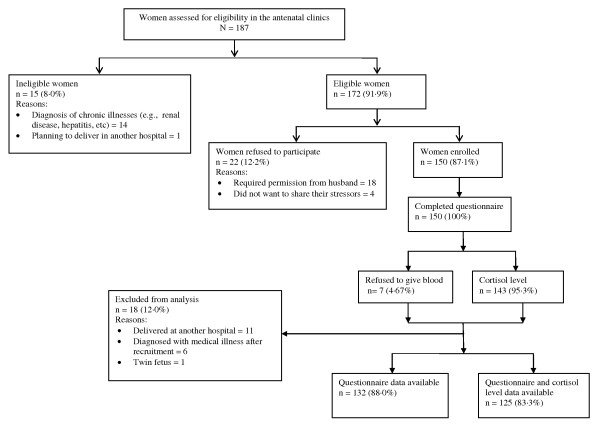
Background: High rates of antenatal depression and preterm birth have been reported in Pakistan. Self reported maternal stress and depression have been associated with preterm birth; however findings are inconsistent. Cortisol is a biological marker of stress and depression, and its measurement may assist in understanding the influence of self reported maternal stress and depression on preterm birth. Methods: In a prospective cohort study pregnant women between 28 to 30 weeks of gestation from the Aga Khan Hospital for Women and Children completed the A-Z Stress Scale and the Centre for Epidemiology Studies Depression Scale to assess stress and depression respectively, and had a blood cortisol level drawn. Women were followed up after delivery to determine birth outcomes. Correlation coefficients and Wilcoxon rank sum test was used to assess relationship between preterm birth, stress, depression and cortisol. Logistic regression analysis was used to determine the key factors predictive of preterm birth. Results: 132 pregnant women participated of whom 125 pregnant women had both questionnaire and cortisol level data and an additional seven had questionnaire data only. Almost 20% of pregnant women (19·7%, 95% CI 13·3-27·5) experienced a high level of stress and nearly twice as many (40·9%, 95% CI 32·4-49·8%) experienced depressive symptoms. The median of cortisol level was 27·40 ug/dl (IQR 22·5-34·2). The preterm birth rate was 11·4% (95% CI 6·5-18). There was no relationship between cortisol values and stress scale or depression. There was a significant positive relationship between maternal depression and stress. Preterm birth was associated with higher parity, past delivery of a male infant, and higher levels of paternal education. Insufficient numbers of preterm births were available to warrant the development of a multivariable logistic regression model. Conclusions: Preterm birth was associated with higher parity, past delivery of a male infant, and higher levels of paternal education. There was no relationship between stress, and depression, cortisol and preterm birth. There were high rates of stress and depression among this sample suggesting that there are missed opportunities to address mental health needs in the prenatal period. Improved methods of measurement are required to better understand the psychobiological basis of preterm birth.
Overview
CoChat Summary
TL;DR
In a prospective cohort of 132 pregnant women in Karachi, Pakistan, high stress and depressive symptoms were common, but stress, depression, and serum cortisol measured at 28–30 weeks were not associated with preterm birth. Preterm birth was associated with higher parity, past delivery of a male infant, and higher levels of paternal education.
Key findings
- Among 132 participants, 26 women (19.7%, 95% CI 13.3–27.5) had high stress and 54 (40.9%, 95% CI 32.4–49.8) reported antenatal depression; median cortisol was 27.40 ug/dl (IQR 22.5–34.2), and 15 births were preterm (11.4%, 95% CI 6.5–18.0).
- There was no evidence of a relationship between stress and cortisol (Spearman’s rho = 0.021, p = 0.81) or depression and cortisol (rho = 0.13, p = 0.14), and no significant difference in cortisol between preterm and term mothers (z = −0.41, p = 0.68).
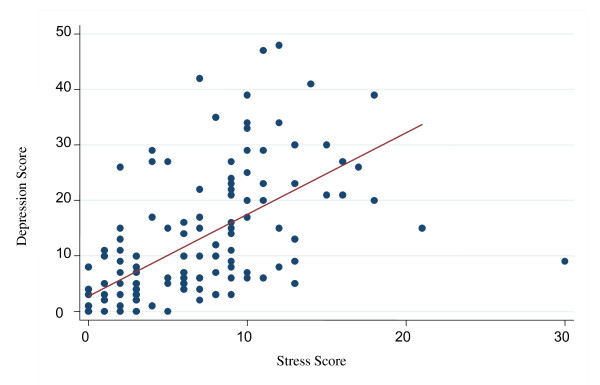
- Maternal stress and depression were significantly positively related (r = 0.54, p < 0.001), but neither stress (z = −0.69, p = 0.49) nor depression (z = −0.70, p = 0.48) was significantly associated with preterm birth.
- In univariable logistic regression, preterm birth was associated with higher parity, past delivery of a male infant, and higher levels of paternal education; a multivariable model was not developed because only 15 preterm births occurred.
Methods
- Prospective cohort study recruiting pregnant women at 28–30 weeks gestation from two Aga Khan Hospital for Women and Children centres in Karachi, Pakistan, between April and May 2010; women were 18–40 years old, planned to deliver at the same hospital, and were excluded for self-reported medical illnesses, psychotropic drug use, or delivery elsewhere.
- Participants completed the A-Z Stress Scale and the Centre for Epidemiology Studies Depression Scale and had a blood cortisol level drawn; they were followed after delivery to determine preterm birth, defined as birth before 37 completed weeks.
- Analysis used Fisher’s exact test, Mann Whitney U test, Spearman’s correlation, Wilcoxon rank sum test, Pearson’s correlation, and univariable logistic regression; a multivariable model was not developed because the number of preterm births was insufficient.
Limitations
- The paper states that recruitment from private clinics meant the sample was not completely representative of women in Karachi, impacting external validity; stress, depression, and cortisol were measured at a single point in time within a two-week frame; and only 15 women experienced preterm birth.
- The paper also states that women with medical or obstetrical histories were excluded and preterm birth subtypes could not be classified due to limitations in medical records and poor health literacy; data on gestational age of the male child at home were not collected.
- Evident from the text: the small number of preterm births increases the likelihood of type II error, and the cross-sectional measurement at 28–30 weeks may miss relationships detectable earlier in gestation.
Model-written summary. Check it against the paper before relying on it.
Integrity signals
Registry
Cites
Statistics
Figures
Verification
Claims the paper makes
8 Valid · 1 Not valid · 17 Not checked · 23 Own results and interpretations
The cited sources support only part of this claim — read each source’s verdict below.
In the paper
“The risk of preterm birth in the next pregnancy is about 15% to more than 50% [2].”
§ The association between parity, infant gender, higher level of paternal education and preterm birth in Pakistan: a cohort study > Discussion
What the sources say
- Partly supportedcites [2] Goldenberg RL Culhane JF Iams JD Romero R Epidemiology and causes of preterm birth Lancet 2008 371 75 84 10.1016/S0140-6736(08)60074-4 18177778 PMC7134569 sourceExperimental — accuracy not yet measured
The Pregnancy history section gives a recurrence risk of 15% to more than 50% in the next pregnancy, but only for women with a previous preterm delivery. The citing sentence omits that condition and reads as though the range applies to pregnancies generally. (LLM, conf=0.90)
plain- Asserted: passes — The authors put it forward as true.
- Checkable: passes — It can be checked against evidence.
- Load-bearing: passes — The paper’s conclusions depend on it.
- Based: passes — The paper gives a reason why it holds.
- Partly supported
The cited sources that could be checked couldn’t confirm or dispute this claim.
In the paper
“However, none of these studies have considered maternal stress or cortisol in relation to preterm birth.”
§ The association between parity, infant gender, higher level of paternal education and preterm birth in Pakistan: a cohort study > Background
What the sources say
- Could not verifycites [22] Badshah S Mason L McKelvie K McKelvie Payne R Lisboa PJG Risk factors for low birthweight in the public-hospitals at Peshawar, NWFP-Pakistan BMC Public Health 2008 8 1 10 10.1186/1471-2458-8-1 18533023 PMC2435119 sourceExperimental — accuracy not yet measured
The Background says this study focuses on risk factors for small-for-gestational-age birth, while the Discussion’s ‘Afghan refugee status’ section speculates about mental health and adverse pregnancy outcomes. Neither section assesses whether South Asian studies considered maternal stress or cortisol in relation to preterm birth; searches for those terms found no such assessment in our copy. (LLM, conf=0.73)
- Not matchedcites [23] Ismail M Zaidi K Maqbool S Premature and low birth weight neonates and their management at neonatology unit of Shaikh Zayed Hospital Lahore Pakistan J Med Res 2003 42 54 57
We searched by its title and found no matching paper.
- Not checked — no full text of the sourcecites [24] Kousar T Memon Y Sheikh S Memon S Sehto R Risk factors and causes of death in neonates RMJ 2010 35 205 208
plain- Asserted: passes — The authors put it forward as true.
- Checkable: passes — It can be checked against evidence.
- Load-bearing: passes — The paper’s conclusions depend on it.
- Based: passes — The paper gives a reason why it holds.
- Could not verify
A result the paper reports from its own data — it cites no other source for it, so there is none to check. The quote shows it is in the paper.
In the paper
“Preterm birth was associated with higher parity, past delivery of a male infant, and higher levels of paternal education.”
§ The association between parity, infant gender, higher level of paternal education and preterm birth in Pakistan: a cohort study > Abstract > Results
plainstates an association- Asserted: passes — The authors put it forward as true.
- Checkable: passes — It can be checked against evidence.
- Load-bearing: passes — The paper’s conclusions depend on it.
- Based: passes — The paper gives a reason why it holds.
A result the paper reports from its own data — it cites no other source for it, so there is none to check. The quote shows it is in the paper.
In the paper
“There was no significant difference between maternal stress during pregnancy and preterm birth (z = -0·69, p = 0·49)”
§ The association between parity, infant gender, higher level of paternal education and preterm birth in Pakistan: a cohort study > Results
plain- Asserted: passes — The authors put it forward as true.
- Checkable: passes — It can be checked against evidence.
- Load-bearing: unclear — It is unclear whether the paper’s conclusions depend on it.
- Based: passes — The paper gives a reason why it holds.
A result the paper reports from its own data — it cites no other source for it, so there is none to check. The quote shows it is in the paper.
In the paper
“or between maternal depression during pregnancy and preterm birth (z = -0·70, p = 0·48).”
§ The association between parity, infant gender, higher level of paternal education and preterm birth in Pakistan: a cohort study > Results
plain- Asserted: passes — The authors put it forward as true.
- Checkable: passes — It can be checked against evidence.
- Load-bearing: unclear — It is unclear whether the paper’s conclusions depend on it.
- Based: passes — The paper gives a reason why it holds.
14 more claims
Create a free account to see all 49 claims and to verify the 4 references still open.
- Probably not a substantial claim. 24
- It may state two separate claims as one. 16
Self-check
Percentages, sums and reported differences re-computed from the paper’s own numbers.
Each contradiction between two passages listed here was confirmed by an independent check.
Rated minor: it would not touch a result — a value no result rests on, a p-value that stays on the same side of the significance level, or a conflict that is clerical, resolved elsewhere in the paper, or outside its own findings.
In the paper
“Of the 187 women, 81 (54%) had an ultrasound done in the first trimester and 55 (36·7%) had an ultrasound in the second trimester”
§ The association between parity, infant gender, higher level of paternal education and preterm birth in Pakistan: a cohort study > Discussion
Reported 36.7 · recomputed 29.411765
Rated minor: it would not touch a result — a value no result rests on, a p-value that stays on the same side of the significance level, or a conflict that is clerical, resolved elsewhere in the paper, or outside its own findings.
In the paper
§ The association between parity, infant gender, higher level of paternal education and preterm birth in Pakistan: a cohort study > Results
“mothers with preterm infants (n = 14, median = 26.4, IQR = 23·1-33·5) and those with full term infants (n = 110, median = 27·8, IQR = 22·4-34·2)”
§ The association between parity, infant gender, higher level of paternal education and preterm birth in Pakistan: a cohort study > Results
“Hence, data from 125 pregnant women contributed to the analysis when relationships included cortisol”
Rated minor: it would not touch a result — a value no result rests on, a p-value that stays on the same side of the significance level, or a conflict that is clerical, resolved elsewhere in the paper, or outside its own findings.
In the paper
§ The association between parity, infant gender, higher level of paternal education and preterm birth in Pakistan: a cohort study > Discussion
“Our findings are consistent with a rate of 39·4% among Pakistani women residing in Karachi [31] but lower than the rate of 18% reported by others [32].”
§ The association between parity, infant gender, higher level of paternal education and preterm birth in Pakistan: a cohort study > Results
“54 (40·9%, 95% CI 32·4-49·8) reported antenatal depression.”
Rated minor: it would not touch a result — a value no result rests on, a p-value that stays on the same side of the significance level, or a conflict that is clerical, resolved elsewhere in the paper, or outside its own findings.
In the paper
“Of the 187 women, 81 (54%) had an ultrasound done in the first trimester”
§ The association between parity, infant gender, higher level of paternal education and preterm birth in Pakistan: a cohort study > Discussion
Reported 54 · recomputed 43.315508
Citations
Cites
The CES-D Scale: A Self-Report Depression Scale for Research in the General Population
Radloff, L. S. (1977) · Applied Psychological Measurement · doi:10.1177/014662167700100306 · Cited by 53,267 · cited 1×
“The scale has adequate test/retest reliability (0·51 to 0·67 over several weeks) and high internal consistency (Cronbach’s alpha 0·85 to 0·90) [26].”
BackgroundA simulation study of the number of events per variable in logistic regression analysis
Peduzzi, P., Concato, J., Kemper, E., Holford, T. R., & Feinstein, A. R. (1996) · Journal of Clinical Epidemiology · doi:10.1016/s0895-4356(96)00236-3 · Cited by 9,655 · cited 1×
“, at least 10 preterm births for every significant variable identified in the univariable logistic regression analysis) [30].”
Epidemiology and causes of preterm birth
Goldenberg, R. L., Culhane, J. F., Iams, J. D., & Romero, R. (2008) · The Lancet · doi:10.1016/s0140-6736(08)60074-4 · Cited by 7,801 · cited 3×
“In our study women with medical or obstetrical histories were excluded from this study, and limitations in medical records and poor health literacy of the mothers precluded classification into the other two subtypes of preterm birth - spontaneous preterm labour without premature rupture of chorioamniotic membranes (PR…”
BackgroundMethodThe concept of allostasis in biology and biomedicine
McEwen, B. S., & Wingfield, J. C. (2003) · Hormones and Behavior · doi:10.1016/s0018-506x(02)00024-7 · Cited by 3,302 · cited 1×
“The findings of this study may be explained by allostatic load which distinguishes between acute and chronic stress and suggests how chronic stress affects the hormonal, immune, and physiologic response in the body [38].”
Prevalence of Depression During Pregnancy: Systematic Review
Bennett, H. A., Einarson, A., Taddio, A., Koren, G., & Einarson, T. R. (2004) · Obstetrics & Gynecology · doi:10.1097/01.aog.0000116689.75396.5f · Cited by 1,725 · cited 2×
“Antenatal depression is common during the second and third trimesters with a systematic review showing point estimates and 95% confidence intervals of 12·8% (10·714·8) and 12·0% (7·4-16·7), respectively [6].”
BackgroundThe Worldwide Incidence of Preterm Birth: A Systematic Review of Maternal Mortality and Morbidity
Beck, S., Wojdyla, D., Say, L., Pilar Bertran, A., Meraldi, M., Harris Requejo, J., Rubens, C., Menon, R., & Van Look, P. (2010) · Bulletin of the World Health Organization · doi:10.2471/blt.08.062554 · Cited by 1,523
Maternal Stress and Preterm Birth
Dole, N. (2003) · American Journal of Epidemiology · doi:10.1093/aje/kwf176 · Cited by 848 · cited 1×
“Studies [34-36] examining the relationship between stress and pregnancy outcomes, and/or depression, and pregnancy outcomes have asserted that there is an independent relationship to pregnancy outcomes.”
Backgroundthe GAPPS Review Group, Lawn, J. E., Gravett, M. G., Nunes, T. M., Rubens, C. E., & Stanton, C. (2010) · BMC Pregnancy and Childbirth · doi:10.1186/1471-2393-10-s1-s1 · Cited by 784
Prenatal depression effects on the fetus and newborn: a review
Field, T., Diego, M., & Hernandez-Reif, M. (2006) · Infant Behavior and Development · doi:10.1016/j.infbeh.2006.03.003 · Cited by 592
Estimating the causes of 4 million neonatal deaths in the year 2000
Lawn, J. E., Wilczynska-Ketende, K., & Cousens, S. N. (2006) · International Journal of Epidemiology · doi:10.1093/ije/dyl043 · Cited by 515
Research works printed but not linked: 2
- Ismail M Zaidi K Maqbool S Premature and low birth weight neonates and their management at neonatology unit of Shaikh Zayed Hospital Lahore Pakistan J Med Res 2003 42 54 57
- Klebanoff MA Conceptualizing categories of preterm birth Neonatal Med 1998 3 13 15
Cited by
Prenatal Depression and Adverse Birth Outcomes: An Updated Systematic Review
Accortt, E. E., Cheadle, A. C. D., & Dunkel Schetter, C. (2015) · Maternal and Child Health Journal · doi:10.1007/s10995-014-1637-2 · Cited by 318
The Effect of Paternal Age on Fetal Birth Outcomes
Alio, A. P., Salihu, H. M., McIntosh, C., August, E. M., Weldeselasse, H. E., Sánchez, E., & Mbah, A. K. (2012) · American Journal of Men s Health · doi:10.1177/1557988312440718 · Cited by 141
“…& Muglia, 2007), education (Blumenshine, Egerter, Libet, & Braveman, 2011; Bray, Gunnell, & Smith, 2006; Chen et al., 2008; Kiernan, 1997; Saikh et al., 2011), support and involvement (Alio et al., 2011; Alio, Kornosky, Mbah, Marty, & Salihu, 2010; Ghosh, Wilhelm, Dunkel-Schetter,…”
Atif, N., Lovell, K., Husain, N., Sikander, S., Patel, V., & Rahman, A. (2016) · International Journal of Mental Health Systems · doi:10.1186/s13033-016-0055-9 · Cited by 96
“In Pakistan, these rates are even higher than most LMICs, reported to range between 25 and 38 % [3, 4].”
BackgroundPerinatal depression in Pakistan: A systematic review and meta‐analysis
Atif, M., Halaki, M., Raynes‐Greenow, C. H., & Chow, C. M. (2021) · Birth · doi:10.1111/birt.12535 · Cited by 101
Premji, S. (2014) · Maternal and Child Health Journal · doi:10.1007/s10995-014-1479-y · Cited by 68
“In our pilot study [55] the odds of preterm birth were 1.”
BackgroundSelf-citationVlenterie, R., van Gelder, M. M. H. J., Anderson, H. R., Andersson, L., Broekman, B. F. P., Dubnov‐Raz, G., Marroun, H. E., Ferreira, E., Fransson, E., der Heijden, F. M. M. A. V., et al. (2021) · Obstetrics and Gynecology · doi:10.1097/aog.0000000000004538 · Cited by 90
Self-citationThe association between maternal cortisol and depression during pregnancy, a systematic review
Orta, O. R., Gelaye, B., Bain, P. A., & Williams, M. A. (2017) · Archives of Women s Mental Health · doi:10.1007/s00737-017-0777-y · Cited by 67
“…Glynn and Sandman 2014; Goedhart et al. 2010; Hellgren et al. 2013; Iliadis et al. 2015; Kaasen et al. 2012; Katz et al. 2012; Luiza et al. 2015; Monk et al. 2011; Pluess et al. 2010; Rouse and Goodman 2014; Salacz et al. 2012; Shaikh et al. 2011; Wikenius et al. 2016; Deligiannidis et al. 2016).”
BackgroundRahman, M. A., Khan, M. N., & Rahman, M. M. (2020) · Public Health in Practice · doi:10.1016/j.puhip.2020.100021 · Cited by 85
Dolatian, M., Mirabzadeh, A., Forouzan, A. S., Sajjadi, H., Alavi Majd, H., & Moafi, F. (2012) · Global Journal of Health Science · doi:10.5539/gjhs.v5n1p52 · Cited by 54
Buffa, G., Dahan, S., Sinclair, I., St-Pierre, M., Roofigari, N., Mutran, D., Rondeau, J.-J., & Dancause, K. N. (2018) · PLoS ONE · doi:10.1371/journal.pone.0207235 · Cited by 64
“Similarly, studies of 600 women from Pakistan [43] showed that prevalence of “emotional stress” based on the Edinburgh Postnatal Depression Scale was 69% among cases who delivered preterm and 55% among controls (p 0.01), but the cutoffs were not well described, and stress did not predict PTB in logistic regressions in…”
BackgroundMethodInfluentialAntenatal depression: an artefact of sleep disturbance?
Mellor, R., Chua, S. C., & Boyce, P. M. (2014) · Archives of Women s Mental Health · doi:10.1007/s00737-014-0427-6 · Cited by 52
“2006), though a Pakistani study found no relationship (Shaikh et al. 2011).”
BackgroundPaternal factors and adverse birth outcomes in Lanzhou, China
Li, J., Qiu, J., Lv, L., Mao, B., Huang, L., Yang, T., Wang, C., & Liu, Q. (2021) · BMC Pregnancy and Childbirth · doi:10.1186/s12884-020-03492-9 · Cited by 29
“associated with higher rates of PTB [8] and SGA [9, 10].”
BackgroundAbedin, S., & Arunachalam, D. (2020) · BMC Pregnancy and Childbirth · doi:10.1186/s12884-020-03260-9 · Cited by 28
“Our study mimics the exposition of previous research that caesarean deliveries, preterm birth and stillbirths are likely to be more prevalent for grand multiparous (more than three children) women [19, 33].”
ResultPsychobiobehavioral Model for Preterm Birth in Pregnant Women in Low- and Middle-Income Countries
Premji, S., Yim, I. S., Dosani, A., Kanji, Z., Sulaiman, S., Musana, J. W., Samia, P., Shaikh, K., Letourneau, N. L., & MiGHT Group (2015) · BioMed Research International · doi:10.1155/2015/450309 · Cited by 35
“9% in a secondary hospital based sample [11] and 25% in a community-based sample [12]).”
BackgroundSelf-citationThe role of stress in perinatal depression and anxiety – A systematic review
Schalla, M. A., & Stengel, A. (2024) · Frontiers in Neuroendocrinology · doi:10.1016/j.yfrne.2023.101117 · Cited by 37
Padhani, Z. A., Salam, R. A., Rahim, K. A., Naz, S., Zulfiqar, A., Memon, Z., Meherali, S. M., Atif, M., & Lassi, Z. S. (2024) · Health Psychology and Behavioral Medicine · doi:10.1080/21642850.2024.2383468 · Cited by 38
“…2020; Rabia et al., 2017; Rahman et al., 2003 Rahman & Creed, 2007;; Sabir et al., 2019; Sadaf et al., 2011; Saeed et al., 2016; Shah et al., 2011; Shaikh et al., 2011; Waqas et al., 2015; Zahidie et al., 2011; Zareen et al., 2009; Zu et al., 2016) reported on the prevalence of maternal antenatal…”
BackgroundInfluentialThe Relationship between Prenatal Stress, Depression, Cortisol and Preterm Birth: A Review
Shaikh, K., Premji, S., Khowaja, K., Tough, S., Kazi, A., & Khowaj, S. (2013) · Open Journal of Depression · doi:10.4236/ojd.2013.23006 · Cited by 23
“The studies that examine the relationship between maternal stress, cortisol and preterm birth together at the same time have inconsistent findings (see Table 1) (Erickson et al., 2001; Hobel et al., 1999; Kramer et al., 2009; Ruiz et al., 2001; Shaikh et al., 2011).”
BackgroundMethodResultInfluentialSelf-citationLalani, S. B., Premji, S., Shaikh, K., Sulaiman, S., Yim, I. S., Forcheh, N., Babar, N., Nausheen, S., & Letourneau, N. L. (2023) · PLoS ONE · doi:10.1371/journal.pone.0282582 · Cited by 17
“44), the degree to which antenatal anxiety predicts preterm birth in this population is unknown [31].”
BackgroundSelf-citationUgwuja, E. I., Nnabu, R., Ezeonu, P., & Uro-Chukwu, H. C. (2015) · African Health Sciences · doi:10.4314/ahs.v15i3.37 · Cited by 19
Mental Health Care in Pakistan
Noorullah, A., Asad, N., Pirani, S., Iqbal, S., & Khan, M. M. (2024) · Springer eBooks · doi:10.1007/978-981-99-9153-2_7 · Cited by 30
Prevalence of Preterm Birth in Pakistan: A Systematic Review and Meta-Analysis
Hanif, A., Ashraf, T., Waheed, K., Sajid, M. R., Güler, N., & Pervaiz, M. K. (2017) · Annals of King Edward Medical University · doi:10.21649/akemu.v23i2.1615 · Cited by 28
Shaikh, K., Premji, S., Lalani, S. B., Forcheh, N., Dosani, A., Yim, I. S., Samia, P., Naugler, C. T., & Letourneau, N. L. (2020) · Journal of Affective Disorders · doi:10.1016/j.jad.2020.01.180 · Cited by 14
Self-citationZakar, R., Zakar, M. Z., Aqil, N., & Nasrullah, M. (2015) · Maternal and Child Health Journal · doi:10.1007/s10995-015-1674-5 · Cited by 15
“Similarly, paternal education was found to be associated with preterm births in Karachi, Pakistan [54], though the sample was relatively small and respondents were taken from a hospital setting.”
BackgroundPremji, S., Lalani, S. B., Ghani, F., Nausheen, S., Forcheh, N., Omuse, G., Letourneau, N. L., Babar, N., Sulaiman, S., Wangira, M., et al. (2024) · Psychopathology · doi:10.1159/000540579 · Cited by 10
Self-citationBrenner, M., Côté, S. M., Boivin, M., & Tremblay, R. E. (2015) · Child Care Health and Development · doi:10.1111/cch.12269 · Cited by 8
Postpartum Depression and its Risk Factors: A Cross-Sectional Exploratory Study
Rahaney, V., Faye, A. D., Tadke, R., Gawande, S., Bhave, S. H., & Kirpekar, V. (2021) · Annals of Indian Psychiatry · doi:10.4103/aip.aip_3_21 · Cited by 5
Danti, L., Zonca, M., Barbetti, L., Lojacono, A., Marini, S., Cappello, N., Bianchi, U., & Benedetto, C. (2014) · Acta Obstetricia Et Gynecologica Scandinavica · doi:10.1111/aogs.12405 · Cited by 5
“reported an association between parity and preterm birth (23), while Kristensen et al.”
BackgroundSherazi, Q. U. A., Waqas, S., Tariq, M., et al. (2023) · Pakistan Journal of Medical and Health Sciences · doi:10.53350/pjmhs202317522 · Cited by 3
RISK FACTORS ASSOCIATED WITH PRETERM BIRTH IN THE UNITED STATES
Kaewluang, N. (2015) · OhioLink ETD Center (Ohio Library and Information Network) · Cited by 4
Frequency of short interpregnancy interval in preterm birth.
Ara, J., Badshah, M. K., Israr, S., Gul, H., Fida, S., & Khan, M. K. (2021) · The Professional Medical Journal · doi:10.29309/tpmj/2021.28.04.4742 · Cited by 2
Zewdu, D., & Tantu, T. (2023) · International Journal of Women s Health · doi:10.2147/ijwh.s398830 · Cited by 2
Herman, S., Santoso, B. I., Joewono, H. T., Sulistyono, A., & Usman, A. N. (2020) · Enfermería Clínica · doi:10.1016/j.enfcli.2019.07.156 · Cited by 2
Akram, N., Suleman, Nadeem, G., et al. (2026) · Pakistan Journal of Health Sciences · doi:10.54393/pjhs.v7i8.3896
Tahir, A., Rizvi, N., Abbas, K., Dars, J. A., & Sher, Z. (2024) · SSRN Electronic Journal · doi:10.2139/ssrn.4814971
Saleem, F., Yasin, F., Anwar, Z., et al. (2023) · Pakistan Armed Forces Medical Journal · doi:10.51253/pafmj.v73i5.7324
Abedin, S., & Arunachalam, D. (2020) · Research Square · doi:10.21203/rs.2.15977/v3
Abedin, S., & Arunachalam, D. (2020) · Research Square · doi:10.21203/rs.2.15977/v2
Determinants of High-Risk Childbearing and High-Risk Pregnancy in Bangladesh
Abedin, S., & Arunachalam, D. (2020) · Springer eBooks · doi:10.1007/978-981-15-3045-6_5
HASSAN, M. A., Kadir, I. T. A. A., & MOHAMMED, N. H. (2019) · Asian Journal of Pharmaceutical and Clinical Research · doi:10.22159/ajpcr.2019.v12i4.32053
Human β-hCG In Cervicovaginal Secretions As A Predictor Of Preterm Delivery
Alakananda, & Hazarika, N. K. (2016) · IOSR Journal of Dental and Medical Sciences · doi:10.9790/0853-1510010103
Serudin, N., Yaakub, R., Abiola, O., Anak, P., Rashidah, P., & Darussalam, B. (2014)
Metadata
- Authors
- Shaikh, K., Premji, S. S., Rose, M. S., Kazi, A., Khowaja, S., & Tough, S.
- Affiliations
- Aga Khan University (PK)
- University of Calgary (CA)
- Alberta Health Services (CA)
- Aga Khan University Hospital (PK)
- Corresponding author
- Premji, Shahirose S
- Venue
- BMC Pregnancy and Childbirth
- Published
- 2011-11-02
- Volume
- 11
- Issue
- 1
- Pages
- 88-88
- ISSN
- 1471-2393 (ISSN-L)
- PMC
- PMC3239291
- OpenAlex
- W2003803140
- Cited by
- 42
- References
- 60
- Citations by year
- 2026: 2 · 2024: 5 · 2023: 4 · 2021: 6 · 2020: 5 · 2019: 1 · 2018: 1 · 2017: 2 · 2016: 2 · 2015: 5 · 2014: 6 · 2013: 1 · 2012: 2
- FWCI
- 2.82
- Type
- journal article
- Language
- en
- Open access
- gold
- doi.org
- Licence
- Locations
- BMC Pregnancy and Childbirth (publishedVersion, cc-by)
- Europe PMC (PubMed Central) (publishedVersion, cc-by)
- PubMed Central (publishedVersion, cc-by)
- PubMed (publishedVersion)
- eCommons - AKU (Aga Khan University) (submittedVersion, cc-by)
- DOAJ (DOAJ: Directory of Open Access Journals) (submittedVersion)
- Libraries and Cultural Resources (University of Calgary) (submittedVersion)
- Topics
- Health Sciences › Medicine › Public Health, Environmental and Occupational Health › Maternal Mental Health During Pregnancy and Postpartum
- Health Sciences › Medicine › Pediatrics, Perinatology and Child Health › Infant Development and Preterm Care
- Health Sciences › Medicine › Pediatrics, Perinatology and Child Health › Maternal and Neonatal Healthcare
- Keywords
- preterm birth, maternal depression, maternal stress, cortisol, parity, infant gender, paternal education, prenatal mental health, antenatal depression, preterm birth risk factors, Pakistan
- MeSH terms
- Adolescent, Adult, Educational Status, Female, Gestational Age, Humans, Infant, Newborn, Infant, Premature, Male, Pakistan, Parents, Parity, Pregnancy, Prospective Studies, Psychometrics, Surveys and Questionnaires, Sex Factors, Cohort Studies, Depression, Postpartum, Premature Birth, Young Adult
About these checks
Registry, retraction, Cites and statistics results are computed, not judged, with one exception: a printed reference that no index lists is read once by a model before it counts as a citation error. Claims are extracted by a model and kept only when their quote appears verbatim in the text; each cited source is then checked, with a model’s help, for whether it says what the claim relies on. Those verdicts can be wrong — read the claim’s quote and the cited source before relying on one.
The claim verdicts this report counts are experimental: their accuracy is not yet measured.
A language model drew the claims from the paper on 2026-09-29, under version 3 of the claim definition (model deepseek-v4.1-flash, prompt extract-v3).
A second model labelled each claim on 2026-09-29 (model jev-1.13-20260917, definition revision gold-guideline-v0.2).
Cited sources are checked with a language model’s help (gpt-6-sol).
Statistics and arithmetic are recomputed, not judged.
Confidence bands are shown only for fields calibrated on our annotated test set. None is calibrated yet, so no band is shown.
What counts as a claim ›How we measure confidence ›How we check this ›
Are you an author, or do you see a problem with this page? Request a review
Data sources
Bibliographic data: Semantic Scholar, OpenAlex, Crossref.
Contains information from the Semantic Scholar Academic Graph Datasets, made available under the ODC Attribution License (ODC-BY 1.0).
Semantic Scholar’s data is described in: Kinney, R., et al. (2023). The Semantic Scholar Open Data Platform. arXiv:2301.10140.
