

Perceptions of antenatal iron-folic acid supplements in urban and rural Pakistan: a qualitative study
Open accessThe DOI matches its Crossref record; 27 of the 31 references it cites were found in a registry or an index.
Abstract
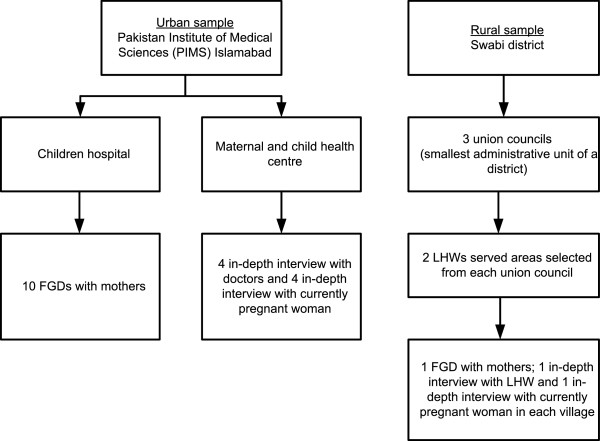
BACKGROUND: In Pakistan, 51% of women are anaemic in pregnancy yet only 44% of women use antenatal iron-folic acid (IFA) supplements. Little information exits on the perception and barriers to the use of IFA supplements during pregnancy in Pakistan. The aim of the study was to understand women and healthcare providers' perceptions, and to investigate the cultural and behavioural factors influencing the use of antenatal IFA supplements in rural and urban settings of Pakistan. METHODS: We conducted 10 focus group discussions with mothers, 10 in-depth interviews with currently pregnant women, 6 in-depth interviews with Lady Health Workers and 4 in-depth interviews with doctors providing antenatal care services. The study was conducted in two districts of Pakistan--district Swabi and Islamabad for rural and urban samples, respectively. Data was collected between August and November 2012. RESULTS: The majority of women were aware of the perceived benefits of antenatal IFA supplements. However, the rural women had more limited information about the benefits of IFA supplements than the urban women. The facilitating factors for the women's use of supplements were: they had knowledge of benefits; they had trust in the healthcare providers; the supplements were available; they had the financial capacity to buy them; they felt better after taking these supplements; and they received support from family members. The barriers to the women's use of supplements were: they forgot to take them; the non-availability of supplements; their limited financial capacity to buy them; the lack of antenatal care services; family members not allowing use of the supplements; not knowing about the benefits or no education; fear or experience of side effects; considering them as contraceptives; and felt better thus stopped. CONCLUSION: The coverage of antenatal IFA supplementation can be improved by reducing the barriers related to the use of antenatal IFA supplementation in Pakistan. Interventions focused on providing adequate awareness, good quality counselling, reminder messages, availability of free supplements throughout pregnancy and reducing the side effects should be developed and implemented.
Overview
The claims and statistics of this paper haven’t been checked yet.
Free: it reads the open-access text and checks the first 5 claims that cite a source we can check. Create a free account to check every claim.
Integrity signals
Registry
Cites
Statistics
Figures
Verification
Claims the paper makes
The claims and statistics of this paper haven’t been checked yet.
Free: it reads the open-access text and checks the first 5 claims that cite a source we can check. Create a free account to check every claim.
Self-check
Percentages, sums and reported differences re-computed from the paper’s own numbers.
The self-check needs the paper’s full text.
Citations
Cites
Nepal Demographic And Health Survey 2006
Mohp, P., & Nepal (2007) · Cited by 1,312
BANGLADESH DEMOGRAPHIC AND HEALTH SURVEY 2014
Dhaka, B. (2015) · Cited by 896
Haider, B. A., Olofin, I., Wang, M., Spiegelman, D., Ezzati, M., Fawzi, W. W., & on behalf of Nutrition Impact Model Study Group (anaemia) (2013) · BMJ · doi:10.1136/bmj.f3443 · Cited by 871
Guidelines for the use of iron supplements to prevent and treat iron deficiency anemia
Stoltzfus, R. J., & Dreyfuss, M. L. (1998) · Cited by 625
RELATION OF HAEMOGLOBIN LEVELS IN FIRST AND SECOND TRIMESTERS TO OUTCOME OF PREGNANCY
Murphy, J. F., Newcombe, R. G., O'Riordan, J., Coles, E. C., & Pearson, J. F. (1986) · The Lancet · doi:10.1016/s0140-6736(86)91269-9 · Cited by 500 · cited 1×
“It has been observed that anaemia during pregnancy is associated with an increased risk of maternal mortality [5], low birth weight [6-8] and prematurity [6,8,9].”
BackgroundGuideline: Daily iron and folic acid supplementation in pregnant women
Who, W. (2012) · Cited by 381
Galloway, R., Dusch, E., Elder, L., Achadi, E., Grajeda, R., Hurtado, E., Favin, M., Kanani, S., Marsaban, J., Meda, N., et al. (2002) · Social Science & Medicine · doi:10.1016/s0277-9536(01)00185-x · Cited by 290 · cited 9×
“As with other studies [18,24,31], we found the lack of awareness of the benefits of IFA supplements, lack of knowledge to continue the supplements or feeling better and stopping the supplementation were also considered as barriers to the use of IFA supplements.”
BackgroundResultInfluentialDeterminants of compliance with iron supplementation: Supplies, side effects, or psychology?
Galloway, R., & McGuire, J. (1994) · Social Science & Medicine · doi:10.1016/0277-9536(94)90135-x · Cited by 277 · cited 3×
“As with other studies [18,24,31], we found the lack of awareness of the benefits of IFA supplements, lack of knowledge to continue the supplements or feeling better and stopping the supplementation were also considered as barriers to the use of IFA supplements.”
BackgroundResultA review of the impact of pregnancy on memory function
Henry, J. D., & Rendell, P. G. (2007) · Journal of Clinical and Experimental Neuropsychology · doi:10.1080/13803390701612209 · Cited by 232 · cited 1×
“Women have reduced short-term memory during pregnancy and a recently published systematic review has found that pregnant women performed more poorly than non-pregnant women on memory and other cognitive tests [29].”
BackgroundZhou, L.-M., Yang, W.-W., Hua, J.-Z., Deng, C.-Q., Tao, X., & Stoltzfus, R. J. (1998) · American Journal of Epidemiology · doi:10.1093/oxfordjournals.aje.a009577 · Cited by 210 · cited 1×
“It has been observed that anaemia during pregnancy is associated with an increased risk of maternal mortality [5], low birth weight [6-8] and prematurity [6,8,9].”
Background
Research works printed but not linked: 9
- World Health Organization, Centers for Disease Control and Prevention de Benoist B McLean E Egli I Cogswell M Worldwide prevalence of anaemia 1993–2005 WHO Global Database on Anaemia 2008 Geneva World Health Organization
- UNICEF, Nutrition Wing Planning Commission Government of Pakistan, Aga Khan University National Nutrition Survey Pakistan 2011 Islamabad UNICEF
- National Institute of Population Studies (NIPS) [Pakistan] and Macro International Inc Pakistan Demographic and Health Survey 2006–07 2008 Islamabad, Pakistan NIPS and Macro International Inc
- International Institute for Population Sciences (IIPS), Macro International National Family Health Survey (NFHS-3), 2005–06: India 2007 Mumbai IIPS
- Ministry of Health and Population (MOHP) [Nepal], New ERA, ICF International Inc Nepal Demographic and Health Survey 2011 2012 Kathmandu, Nepal and Calverton, Maryland MOHP, New ERA, and ICF International
- Nisar YB Ashraf M Baseline Household Survey: Swabi District 2010 Islamabad Population Council
- National Institute of Population Studies (NIPS) [Pakistan], Macro International Inc Pakistan Demographic and Health Survey 2012–13 2013 Islamabad, Pakistan NIPS, Macro International Inc
- Pai N Supe P Kore SJ Nandanwar YS Hegde A Thies W Automated Voice Calls to Improve Adherence to Iron Supplementation during Pregnancy: A Pilot Study in Urban India 2012 Washington, DC 4th Annual mHealth Summit
- Pokharel RK Maharjan MR Mathema P Harvey PWJ Success in delivering interventions to reduce maternal anemia in Nepal: a case study of the intensification of maternal and neonatal Micronutrient Program 2011 Washington, DC 20009: United States Agency for International Development (USAID)
Cited by
Desta, M., Kassie, B., Chanie, H., Mulugeta, H., Yirga, T., Temesgen, H., Leshargie, C. T., & Merkeb, Y. (2019) · Reproductive Health · doi:10.1186/s12978-019-0848-9 · Cited by 89
“This is supported by studies done in Iran [69] and Pakistan [70], forgetfulness and absence of family support are the common barriers of adherence.”
ResultGebreamlak, B., Dadi, A. F., & Atnafu, A. (2017) · PLOS ONE · doi:10.1371/journal.pone.0169415 · Cited by 80
Lyoba, W. B., Mwakatoga, J. D., Festo, C., Mrema, J., & Elisaria, E. (2020) · International Journal of Reproductive Medicine · doi:10.1155/2020/3127245 · Cited by 66
“Regarding forgetfulness, the study was consistent with various studies conducted in various regions including Kenya, Vietnam, Pakistan, Ethiopia, and Iran [23, 32, 43, 45, 46].”
BackgroundResultIron deficiency anemia in pregnancy in Nigeria—A systematic review
Ugwu, N. I., & Uneke, C. J. (2020) · Nigerian Journal of Clinical Practice · doi:10.4103/njcp.njcp_197_19 · Cited by 88
Kamau, M. W., Mirie, W., Kimani, S. T., & Mugoya, I. (2019) · PLoS ONE · doi:10.1371/journal.pone.0224361 · Cited by 60
“Counselling offered at health facilities was found to be inadequate similar to what was found by Nisar and Titaley [35, 36] in their studies.”
BackgroundResultNisar, Y. B., Dibley, M. J., & Aguayo, V. M. (2016) · Nutrients · doi:10.3390/nu8020067 · Cited by 66
“Recent studies have identified factors associated with non-use of IFA supplements and barriers to IFA supplementation during pregnancy [37,38].”
BackgroundSelf-citationNisar, Y. B., Aurangzeb, B., Dibley, M. J., & Alam, A. (2016) · BMC Pregnancy and Childbirth · doi:10.1186/s12884-016-0829-8 · Cited by 57
“The detailed methodology has been presented in another publication, in which we reported the findings on the perceptions and practices relating to iron/folic acid supplementation during pregnancy [14].”
MethodSelf-citationTriharini, M., Nursalam, N., Sulistyono, A., Adriani, M., Armini, N. K. A., & Nastiti, A. A. (2018) · International Journal of Nursing Sciences · doi:10.1016/j.ijnss.2018.07.002 · Cited by 70
“Boredom can be caused by the lack of understanding of the benefits, as shown by related research [21].”
BackgroundKavle, J. A., & Landry, M. (2017) · Public Health Nutrition · doi:10.1017/s1368980017002828 · Cited by 50
“on a daily basis was reported as a primary reason for noncompliance in settings such as India, Mali, Pakistan, the Philippines and Senegal((19,21,25,28)).”
BackgroundResultInfluentialNisar, Y. B., Aguayo, V. M., Billah, S. M., & Dibley, M. J. (2020) · Nutrients · doi:10.3390/nu12092632 · Cited by 58
“Recent studies from Pakistan have identified that the main factors for non-use of IFA were: forgetting to take the supplements; non-availability of IFA supplements; limited financial capacity; lack of antenatal care services; family members not allowing supplement use; not knowing the benefits or no education; fear or…”
BackgroundSelf-citationTinago, C. B., Ingram, L. A., Blake, C. E., & Frongillo, E. A. (2016) · Maternal and Child Nutrition · doi:10.1111/mcn.12350 · Cited by 38
Williams-Piehota, P. A., Poehlman, J. A., Moran, K., Siddiqui, M., Kataria, I., Rego, A. M., Mehrotra, P., & Saldanha, N. A. (2020) · Public Health Nutrition · doi:10.1017/s1368980019003938 · Cited by 40
“increase baby size and complicate delivery(33).”
Kamau, M. W., Kimani, S. T., Mirie, W., & Mugoya, I. (2020) · PLoS ONE · doi:10.1371/journal.pone.0227351 · Cited by 37
“Educating pregnant women on how to mitigate the side effects of IFAS often leads to higher compliance [3, 21, 46].”
BackgroundMartin, S., Omotayo, M. O., Pelto, G. H., Chapleau, G. M., Stoltzfus, R. J., & Dickin, K. L. (2017) · Journal of Nutrition · doi:10.3945/jn.116.242503 · Cited by 30
Clermont, A., Kodish, S. R., Seck, A. M., Salifou, A., Rosen, J. G., Grais, R. F., & Isanaka, S. (2018) · Nutrients · doi:10.3390/nu10081073 · Cited by 30
“In addition, few previous studies have examined social and familial factors influencing women’s supplementation practices [17,22], and no study was identified that interviewed husbands and mothers-in-law to directly gather their perceptions.”
BackgroundSingh, A., Srivastava, R., Kant, S., Saxena, R., Yadav, K., & Pandav, C. (2019) · Journal of Family Medicine and Primary Care · doi:10.4103/jfmpc.jfmpc_339_18 · Cited by 26
We Won’t Go There: Barriers to Accessing Maternal and Newborn Care in District Thatta, Pakistan
Asim, M., Saleem, S., Ahmed, Z. H., Abbasi, I. N., Abrejo, F. G., Fatmi, Z., & Siddiqi, S. (2021) · Healthcare · doi:10.3390/healthcare9101314 · Cited by 20
“Moreover, pregnant women in rural Pakistan ignore obstetric care, [7] avoid consuming micronutrients, [8] and refuse vaccination against neonatal tetanus [9,10].”
BackgroundMamo, T. T., Ashenafi, E., Gube, A. A., & Bekele, T. (2021) · Medicine Access Point of Care · doi:10.1177/23992026211008805 · Cited by 25
Yamashita, T., Roces, R. E. D., Llave, C., Tuliao, M. T. R., Kamau, M. W., Yamada, C., Tanaka, Y., Shimazawa, K., Iwamoto, S., & Matsuo, H. (2021) · Patient Preference and Adherence · doi:10.2147/ppa.s291939 · Cited by 20
“Moreover, these findings necessitate counseling on specific IFAS aspects concerning pregnant women and are supported by studies conducted in Ethiopia,(51,52) Iran,(53) and Pakistan.(54) When aggregated by source, the majority of women in this study reported their source of information was the health care provider.”
Nisar, Y. B., & Dibley, M. J. (2016) · Global Health Action · doi:10.3402/gha.v9.29621 · Cited by 17
Self-citationAnato, A., & Reshid, M. (2025) · Scientific Reports · doi:10.1038/s41598-025-87957-x · Cited by 44
Mekonnen, B. A., Dessie, Y., Baraki, N., Oumer, A., & Gebru, M. (2020) · International Journal of Public Health Science (IJPHS) · doi:10.11591/ijphs.v9i1.20385 · Cited by 24
“The finding is consistent with studies done in Kenya [20], Pakistan [22] and Ethiopia [28, 29].”
ResultInfluentialThe Challenges in Eradication of Iron Deficiency Anemia in Developing Countries
(2020) · Systematic Reviews in Pharmacy · doi:10.31838/srp.2020.5.55 · Cited by 20
“Their diets consist mostly of ready-to-eat food, such as instant noodles, sardines, and fast food in Pakistan (86).”
BackgroundInfluentialPregnant women's perceptions of anemia and iron supplement consumption
Muthoharoh, B. L., Kartini, F., & Fitriahadi, E. (2022) · International journal of health & medical sciences · doi:10.21744/ijhms.v5n2.1902 · Cited by 17
“Mengganti darah yang hilang 5 Nisar et al. (2014)/ Perceptions of antenatal iron-folic acid supplements in urban and rural Pakistan: a qualitative study untuk memahami persepsi wanita dan penyedia layanan kesehatan, dan untuk menyelidiki faktor budaya dan perilaku yang mempengaruhi penggunaan…”
BackgroundKamau, M. W., Kimani, S. T., & Mirie, W. (2018) · AAS Open Research · doi:10.12688/aasopenres.12891.1 · Cited by 18
Sharma, S., Smitha, M. V., & Balakrishnan, D. (2023) · European Journal of Obstetrics & Gynecology and Reproductive Biology X · doi:10.1016/j.eurox.2023.100235 · Cited by 24
“Healthcare professionals provided conflicting information about oral IFAS to pregnant women, and it was inconsistent and omitted many details, such as the description and mitigation of side effects [24].”
BackgroundKamau, M. W. (2020) · PLoS ONE · doi:10.1371/journal.pone.0227332 · Cited by 16
“Nisar et al (2014) recommended development of interventions that provide sufficient information and quality counselling to increase IFAS coverage, and communitybased approach for IFAS is one of such [57].”
BackgroundTackling Anemia in Pregnant Women in India: Reviewing the Obstacles and Charting a Path Forward
Dutta, R. R., Chhabra, P., Kumar, T., & Joshi, A. (2023) · Cureus · doi:10.7759/cureus.43123 · Cited by 23
“In a behavioral study about perceptions of antenatal iron-folic acid supplements conducted in 2014, it was found that in nuclear families, husbands assist their wives by contributing around the house and encouraging them to eat healthily [18].”
BackgroundAli, S. A., Feroz, A. S., Abbasi, Z., Ali, S. A., Allana, A., Hambidge, K. M., Krebs, N. F., Westcott, J., McClure, E. M., Goldenberg, R. L., et al. (2021) · PLoS ONE · doi:10.1371/journal.pone.0249360 · Cited by 12
Quality of life in children operated for spina bifida; low- and middle-income country perspective
Khalil, M., Bakhshi, S. K., Shah, Z., Urooj, F., Golani, S., Musood, H., Zahid, N., Dewan, M. C., & Shamim, M. S. (2023) · Child s Nervous System · doi:10.1007/s00381-023-05993-2 · Cited by 8
Konlan, K. D., Amoah, R. M., Saah, J. A., Doat, A. R., Konlan, K. D., Japiong, M., & Abdulai, J. A. (2020) · International Journal of Reproduction Contraception Obstetrics and Gynecology · doi:10.18203/2320-1770.ijrcog20202316 · Cited by 6
“In a study of 400 primary school students, 49% of sexually active girls were reported to have had forced sex.(17) The high sexual violence, lack of access to and low utilization of family planning services in developing countries contribute to the high rate of unintended pregnancies.”
BackgroundYasmin, S., Siddiqa, A., Rockliffe, L., & Miyan, J. A. (2022) · International Journal of Women s Health · doi:10.2147/ijwh.s347887 · Cited by 13
“Conclusion: These findings highlight extremely low levels of knowledge about NTDs and folic acid use of women in Pakistan.”
BackgroundResultInfluentialYasmin, S., Siddiqa, A., Rockliffe, L., & Miyan, J. A. (2022) · DOAJ (DOAJ: Directory of Open Access Journals) · Cited by 7
Obiekwu, A. L., Mbadugha, C. J., Anetekhai, C. J., Isife, N., & Kotoye, C. (2020) · European Journal of Midwifery · doi:10.18332/ejm/130595 · Cited by 11
Mishra, R. K., & Tiwari, K. (2020) · Journal of Advanced Academic Research · doi:10.3126/jaar.v7i1.35468 · Cited by 7
“This research supports the study conducted by medical student Rai et al., 2014 conducted at Paropkar maternity hospital which concluded 73% have Iron and folic acid compliance level.”
Adherence rate to iron folic acid supplementation among pregnant womenPreprint
Asmare, W. N. (2019) · bioRxiv (Cold Spring Harbor Laboratory) · doi:10.1101/535534 · Cited by 7
Rakanita, Y., Syamsunarno, M. R. A. A., Sinuraya, R. K., Suradji, E. W., Abdulah, R., & Suwantika, A. A. (2021) · Therapeutics and Clinical Risk Management · doi:10.2147/tcrm.s328226 · Cited by 5
Mbowe, F., Darboe, K. S., Sanyang, A. M., & Barrow, A. (2025) · Women s Health · doi:10.1177/17455057251338380 · Cited by 5
“52”
Slagman, A. C., Harriss, L. R., Campbell, S., Müller, R., & McDermott, R. A. (2019) · Biomarkers · doi:10.1080/1354750x.2019.1652346 · Cited by 5
“Additionally, poor health literacy has been identified as an influencing factor on poor nutrition and folic acid deficiency in remote communities (Bower et al. 2004, Nisar et al. 2014).”
BackgroundThe Awareness And The Use Of Folic Acid During Pregnancy At Civil Hospital, Hyderabad
VICTORIA, S. (2018) · i-manager’s Journal on Nursing · doi:10.26634/jnur.8.3.14393 · Cited by 4
Verbunt, E., Corona, M. V., Tunçalp, Ö., Rogers, L. M., Prang, K.-H., Vaughan, C., & Bohren, M. A. (2025) · PLOS Global Public Health · doi:10.1371/journal.pgph.0005158 · Cited by 8
“…pregnant women over non-anaemic pregnant women, providing women with an inadequate quantity of supplements, or referring women to other facilities to purchase supplements out-of-pocket (e.g., private drug stores) (moderate confidence) [35,41,45,46,49,55,59,60,62,64,69,71,73,75,77,85,86,91,93].”
Empowerment Model of Pregnant Women in Stunting Prevention Efforts
(2023) · Journal of Population Therapeutics and Clinical Pharmacology · doi:10.47750/jptcp.2023.30.07.040 · Cited by 3
Shahzad, R. B., Zakar, R., Shahzad, H., Zakar, N. M., Tariq, F., Ahmed, R., & Fischer, F. (2025) · Scientific Reports · doi:10.1038/s41598-025-14616-6 · Cited by 4
“Multiple factors contribute to poor adherence, including actual and perceived side effects, forgetfulness, misconceptions about iron supplementation, cultural beliefs, and access barriers to healthcare services 24,29,30 .”
Exploring the relationship between anemia in pregnancy and infant mortality: a narrative review
Khan, H. A., Qamar, K., Salman, Y., Shakir, A., Butt, M. S., Tharwani, Z. H., & Malikzai, A. (2024) · International Journal of Surgery Global Health · doi:10.1097/gh9.0000000000000412 · Cited by 3
“Barriers to supplementation include low adherence to antenatal care, lack of education, lack of counseling, low compliance, and at times lack of availability of these supplements [12] .”
BackgroundBali, S. (2017) · JOURNAL OF CLINICAL AND DIAGNOSTIC RESEARCH · doi:10.7860/jcdr/2017/23740.9872 · Cited by 3
Busch‐Hallen, J., Ayoub, J. J., Harding, K., Raza, S., Okonkwo, O. S., Adebisi, B., Chamoun, L., Ahmed, K. M., Majeed, F., Latif, A., et al. (2026) · Nutrients · doi:10.3390/nu18071101 · Cited by 3
“In these settings, PW often require approval or support from husbands or other family members (such as MILs) to attend ANC visits and initiate and continue supplementation [44,68,69].”
Kumari, P., Krishnaiah, V., Kumaraswamy, G., & Tamboli, T. J. (2017) · International Journal of Basic & Clinical Pharmacology · doi:10.18203/2319-2003.ijbcp20174781 · Cited by 2
“The results were similar to previous studies done among the physicians.(7,10,15)”
ResultDeterminants of compliance with routine antenatal medications among pregnant women in Lagos, Nigeria
Oshinyemi, T. E., Oluwatosin, O., Edet, O. B., ALUKO, J. O., & Adeyemo, M. O. A. (2024) · African Journal of Midwifery and Women s Health · doi:10.12968/ajmw.2022.0017 · Cited by 3
Joshi, A., Bali, S., Kale, S., Tiwari, S., & Arutagi, V. (2017) · International Journal of Community Medicine and Public Health · doi:10.18203/2394-6040.ijcmph20171328 · Cited by 1
Konlan, K. D., Amoah, R. M., Saah, J. A., Abdulai, J. A., Mohammed, I., Konlan, K. D., & Doat, A. R. (2020) · International Journal of Reproduction Contraception Obstetrics and Gynecology · doi:10.18203/2320-1770.ijrcog20202314 · Cited by 1
“Findings from a study conducted by Nasir et al, revealed that only about 44% of women in Pakistan take supplementary iron-folic acid despite the high prevalence of anaemia in the region.(17) Anaemia was identified as a major problem among pregnant women in the district.”
ResultThe Impact of Daily Iron Supplementation on Hemoglobin Levels of Pregnant Omani Women
Al-Yaqoobi, H. S. S. (2015) · Canadian Journal of Clinical Nutrition · doi:10.14206/canad.j.clin.nutr.2015.01.03 · Cited by 1
Nahrisah, P. (2018) · Chula Digiverse · doi:10.58837/chula.the.2018.481 · Cited by 1
Anato, A., & Reshid, M. (2024) · Research Square · doi:10.21203/rs.3.rs-3943153/v1
Examining folic acid intake: a cross-sectional study of pregnancy-related practices
Khan, M. B., Saad, M., Syed, M. R., Siddiqui, F. F., Siddiqui, A., Rajput, M. A., Siddiqui, N.-U.-S., Sanaullah, I., Gul, L., & Ahmad, M. (2024) · International Journal of Research in Medical Sciences · doi:10.18203/2320-6012.ijrms20240508
Shahzad, R. B., Zakar, R., Shahzad, H., Zakar, N. M., Tariq, F., Ahmed, R., & Fischer, F. (2024) · Research Square · doi:10.21203/rs.3.rs-4406163/v1
Muniaraj, R., & Kumaran, J. A. (2025) · International Journal of Community Medicine and Public Health · doi:10.18203/2394-6040.ijcmph20252852
Moeng, L. R., Kebaabetswe, P. M., Diseko, M., Zash, R., Mayondi, G. K., Mabuta, J., Mmalane, M. O., Makhema, J. M., Lockman, S., Lowenthal, E. D., et al. (2026) · Current Developments in Nutrition · doi:10.1016/j.cdnut.2026.107660
“…countries demonstrating that inadequate micronutrient supplementation during pregnancy reflects a combination of supply constraints, insufficient counseling and maternal knowledge, concerns about side effects, and underutilization or late initiation of antenatal care services [23 – 29 , 34 ].”
Tampah-Naah, D.-M., Abubakari, A., & Kubuga, C. K. (2026) · BMC Nutrition · doi:10.1186/s40795-026-01300-9
“Other research works have suggested that alternative ways to avert the smell [23] and improved product attributes to reduce the smell [20, 21] have the potential to increase IFA intake among participants.”
Metadata
- Authors
- Nisar, Y. B., Alam, A., Aurangzeb, B., & Dibley, M. J.
- Affiliations
- The University of Sydney (AU)
- Pakistan Institute of Medical Sciences (PK)
- Corresponding author
- Nisar, Yasir Bin
- Venue
- BMC Pregnancy and Childbirth
- Published
- 2014-10-01
- Volume
- 14
- Issue
- 1
- Pages
- 344-344
- ISSN
- 1471-2393 (ISSN-L)
- PMC
- PMC4262227
- OpenAlex
- W2118027264
- Semantic Scholar
- c083b205367e2f24eb2454e829882515a7c0160d
- Cited by
- 60
- References
- 31
- Citations by year
- 2026: 3 · 2025: 5 · 2024: 5 · 2023: 4 · 2022: 3 · 2021: 5 · 2020: 13 · 2019: 6 · 2018: 5 · 2017: 6 · 2016: 4 · 2015: 1
- FWCI
- 3.45
- Type
- journal article
- Language
- en
- Open access
- gold
- doi.org
- Licence
- Locations
- BMC Pregnancy and Childbirth (publishedVersion, cc-by)
- PubMed Central (publishedVersion, cc-by)
- PubMed (publishedVersion)
- Funders
- University of Sydney
- Topics
- Health Sciences › Medicine › Pediatrics, Perinatology and Child Health › Global Maternal and Child Health
- Health Sciences › Medicine › Pediatrics, Perinatology and Child Health › Public Health and Nutrition
- Health Sciences › Medicine › Pediatrics, Perinatology and Child Health › Maternal and Neonatal Healthcare
- Keywords
- pregnant women, anemia in pregnancy, urban-rural differences, Lady Health Workers, antenatal care services, family support, supplement side effects
- MeSH terms
- Adult, Family Relations, Female, Folic Acid, Humans, Iron, Health Knowledge, Attitudes, Practice, Pakistan, Patient Acceptance of Health Care, Perception, Pregnancy, Rural Population, Urban Population, Vitamin B Complex, Dietary Supplements, Trust, Young Adult
About these checks
Registry, retraction, Cites and statistics results are computed, not judged, with one exception: a printed reference that no index lists is read once by a model before it counts as a citation error. Claims are extracted by a model and kept only when their quote appears verbatim in the text; each cited source is then checked, with a model’s help, for whether it says what the claim relies on. Those verdicts can be wrong — read the claim’s quote and the cited source before relying on one.
Statistics and arithmetic are recomputed, not judged.
Confidence bands are shown only for fields calibrated on our annotated test set. None is calibrated yet, so no band is shown.
What counts as a claim ›How we measure confidence ›How we check this ›
Are you an author, or do you see a problem with this page? Request a review
Data sources
Bibliographic data: Semantic Scholar, OpenAlex, Crossref.
Contains information from the Semantic Scholar Academic Graph Datasets, made available under the ODC Attribution License (ODC-BY 1.0).
Semantic Scholar’s data is described in: Kinney, R., et al. (2023). The Semantic Scholar Open Data Platform. arXiv:2301.10140.
