

External review and validation of the Swedish national inpatient register
Open accessThe DOI matches its Crossref record; 71 of the 71 references it cites were found in a registry or an index.
Abstract
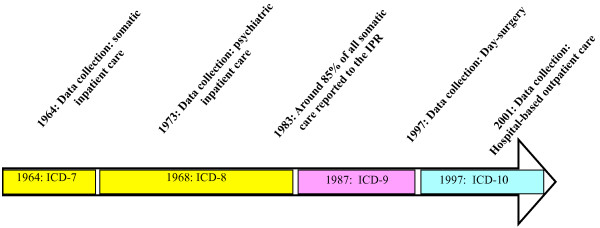
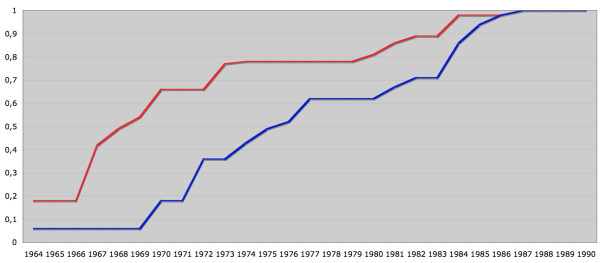
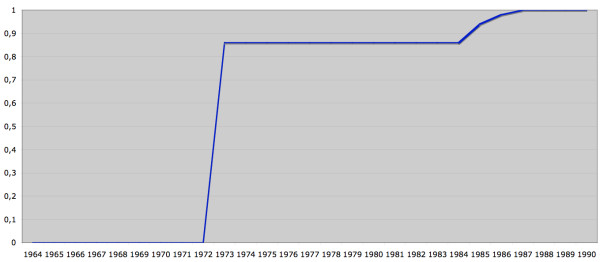
BACKGROUND: The Swedish National Inpatient Register (IPR), also called the Hospital Discharge Register, is a principal source of data for numerous research projects. The IPR is part of the National Patient Register. The Swedish IPR was launched in 1964 (psychiatric diagnoses from 1973) but complete coverage did not begin until 1987. Currently, more than 99% of all somatic (including surgery) and psychiatric hospital discharges are registered in the IPR. A previous validation of the IPR by the National Board of Health and Welfare showed that 85-95% of all diagnoses in the IPR are valid. The current paper describes the history, structure, coverage and quality of the Swedish IPR. METHODS AND RESULTS: In January 2010, we searched the medical databases, Medline and HighWire, using the search algorithm "validat* (inpatient or hospital discharge) Sweden". We also contacted 218 members of the Swedish Society of Epidemiology and an additional 201 medical researchers to identify papers that had validated the IPR. In total, 132 papers were reviewed. The positive predictive value (PPV) was found to differ between diagnoses in the IPR, but is generally 85-95%. CONCLUSIONS: In conclusion, the validity of the Swedish IPR is high for many but not all diagnoses. The long follow-up makes the register particularly suitable for large-scale population-based research, but for certain research areas the use of other health registers, such as the Swedish Cancer Register, may be more suitable.
Overview
The claims and statistics of this paper haven’t been checked yet.
Free: it reads the open-access text and checks the first 5 claims that cite a source we can check. Create a free account to check every claim.
Integrity signals
Registry
Cites
Statistics
Figures
Verification
Claims the paper makes
The claims and statistics of this paper haven’t been checked yet.
Free: it reads the open-access text and checks the first 5 claims that cite a source we can check. Create a free account to check every claim.
Claims other papers make about this one
Each is checked against this paper’s own text: does it say what the citing paper says it does?
The source backs part of the claim, not all of it — or backs it for a different population, condition or comparison.
In the citing paper
“The NPR contains data on somatic and psychiatric inpatient health care since 1973 and outpatient care since 2001 (15).”
From Risks of psychiatric disorders and suicide attempts in children and adolescents with type 1 diabetes: a population-based cohort study (2015) · cites this paper as [15]
Experimental — accuracy not yet measuredThe source backs part of the claim, not all of it — or backs it for a different population, condition or comparison.
In the citing paper
“While we are unaware of any validation of these two diagnoses, most chronic diagnoses have a positive predictive value of 85–95 % in the Patient Registry [14].”
From Nationwide population-based cohort study of psychiatric disorders in individuals with Ehlers–Danlos syndrome or hypermobility syndrome and their siblings (2016) · cites this paper as [14]
Experimental — accuracy not yet measuredThe source backs part of the claim, not all of it — or backs it for a different population, condition or comparison.
In the citing paper
“While the specificity of this register is high [14], especially for chronic disorders (including EDS or hypermobility syndrome), the sensitivity may be lower.”
From Nationwide population-based cohort study of psychiatric disorders in individuals with Ehlers–Danlos syndrome or hypermobility syndrome and their siblings (2016) · cites this paper as [14]
Experimental — accuracy not yet measuredThe source backs part of the claim, not all of it — or backs it for a different population, condition or comparison.
In the citing paper
“Secondary health care consultations and hospitalizations are identical to the National Patient Register (NPR) which has previously been extensively used in epidemiological research and proved to be of sufficient quality and coverage [29].”
From Trends in psychiatric diagnoses, medications and psychological therapies in a large Swedish region: A population-based study (2020) · cites this paper as [29]
Experimental — accuracy not yet measuredThe source backs part of the claim, not all of it — or backs it for a different population, condition or comparison.
In the citing paper
“The National Patient Register contains nationwide records on inpatient care since 1987 and more than 80% of specialized (hospital-based) outpatient care since 2001 [26].”
From Antidepressant use and cognitive decline in patients with dementia: a national cohort study (2025) · cites this paper as [26]
Experimental — accuracy not yet measured
2 more claims about this paper
Create a free account to see every claim other papers make about this one.
Self-check
Percentages, sums and reported differences re-computed from the paper’s own numbers.
The self-check needs the paper’s full text.
Citations
Cites
Arnett, F. C., Edworthy, S. M., Bloch, D. A., Mcshane, D. J., Fries, J. F., Cooper, N. S., Healey, L. A., Kaplan, S. R., Liang, M. H., Luthra, H. S., et al. (1988) · Arthritis & Rheumatism · doi:10.1002/art.1780310302 · Cited by 19,752 · cited 1×
“According to the RA criteria of the American College of Rheumatology [41].”
BackgroundRevised Criteria for the Classification of Rheumatoid Arthritis
Arnett, F. C. (1990) · Orthopaedic Nursing · doi:10.1097/00006416-199003000-00011 · Cited by 7,723
The Swedish personal identity number: possibilities and pitfalls in healthcare and medical research
Ludvigsson, J. F., Otterblad-Olausson, P., Pettersson, B. U., & Ekbom, A. (2009) · European Journal of Epidemiology · doi:10.1007/s10654-009-9350-y · Cited by 2,403 · cited 10×
“Individual patients can be identified by their unique PIN.”
BackgroundInfluentialSelf-citationLeavitt, R. Y., Fauci, A. S., Bloch, D. A., Michel, B. A., Hunder, G. G., Arend, W. P., Calabrese, L. H., Fries, J. F., Lie, J. T., Lightfoot, R. W., et al. (1990) · Arthritis & Rheumatism · doi:10.1002/art.1780330807 · Cited by 1,947 · cited 1×
“Wegener’s granulomatosis 68/78 (87) American College of Rheumatology diagnostic criteria [43] Knight [12] 12115591 2002 MR”
BackgroundLimitations of the Application of Fourfold Table Analysis to Hospital Data
Berkson, J. (1946) · Biometrics Bulletin · doi:10.2307/3002000 · Cited by 1,810
Baecklund, E., Iliadou, A., Askling, J., Ekbom, A., Backlin, C., Granath, F., Catrina, A. I., Rosenquist, R., Feltelius, N., Sundström, C., et al. (2006) · Arthritis & Rheumatism · doi:10.1002/art.21675 · Cited by 890 · cited 3×
“5) In 40 of the 386 cases with lymphoma, medical records did not include enough information to evaluate whether the RA criteria of the American College of Rheumatology were fulfilled but all available information supported the diagnosis of RA Baecklund [22] 16508929 2006 MR”
BackgroundInfluentialSelf-citationLanghorne, Berman, P. H., Blomstrand, C., Dennis, M., Douglas, J. A., Erilä, T., Garraway, M. O., Hamrin, E., Hankey, G. J., Ilmavirta, M., et al. (1997) · PubMed · Cited by 733
Schizophrenia, substance abuse, and violent crime
Fazel, S. (2009) · JAMA · doi:10.1001/jama.2009.675 · Cited by 726 · cited 2×
“Fazel [25] 19454640 2009 Forensic psychiatric assessment”
BackgroundMattsson, B., & Wallgren, A. (1984) · Acta Radiologica: Oncology · doi:10.3109/02841868409136026 · Cited by 559 · cited 2×
“The long followup makes the register particularly suitable for large-scale population-based research, but for certain research areas the use of other health registers, such as the Swedish Cancer Register, may be more suitable.”
Research works printed but not linked: 8
- Forsberg L Rydh H Jacobsson A Nyqvist K Heurgren M Kvalitet och innehåll i patientregistret. Utskrivningar från slutenvården 1964-2007 och besök i specialiserad öppenvård (exklusive primärvårdsbesök) 1997-2007. (Quality and content of the Patient Register)(2009-125-15) Book Kvalitet och innehåll i patientregistret. Utskrivningar från slutenvården 1964-2007 och besök i specialiserad öppenvård (exklusive primärvårdsbesök) 1997-2007. (Quality and content of the Patient Register)(2009-125-15). (Editor ed.^eds.). City 2009
- Carjsö K Smedby B Spetz CL Evaluation of the Data quality in the Swedish National Hospital Discharge Register Book Evaluation of the Data quality in the Swedish National Hospital Discharge Register (Editor ed.^eds.). pp. 1-10. City: WHO/HST/ICD/C/98.34 1998 1 10
- Kouchecki B Köster M Eckerström L Wiberg-Hedman K Bilaga 1-3 till Öppna jämförelser av hälso- och sjukvårdens kvalitet och effektivitet 2009 Book Bilaga 1-3 till Öppna jämförelser av hälso- och sjukvårdens kvalitet och effektivitet 2009. (Editor ed.^eds.) 2009 City: Socialstyrelsen (National Board of Health and Welfare)
- Heurgren M Serden L Patientregistret för 2008 ur ett DRG-perspektiv. (The Patient Register from a DRG perspective)(2010-4-14) Book Patientregistret för 2008 ur ett DRG-perspektiv. (The Patient Register from a DRG perspective)(2010-4-14). (Editor ed.^eds.). City 2009
- Reutfors J Life time OPCRIT generated DSM-IV diagnoses among patients with an initial clinical ICD schizophrenia spectrum diagnosis 29th Nordic Congress of Psychiatr; Stockholm 2009
- Kristjansson E Allebeck P Wistedt B Validity of the diagnosis schizophrenia in a psychiatric inpatient register 1987 41 229 234
- Bergman B Belfrage H Grann M Mentally disorderd offenders in Sweden: Forensic and general psychiatric diagnoses American Journal of Forensic Psychiatry 1999 20 27 37
- Grann M Haggård U Tengström A Woodhouse A Långström N Holmberg G Kullgren G Some experiences from registers of interest to forensic research in Sweden Scand J Forensic Science 1998 78 80
Cited by
The Danish National Patient Registry: a review of content, data quality, and research potential
Schmidt, M., Schmidt, S. A. J., Sandegaard, J. L., Ehrenstein, V., Pedersen, L., & Sørensen, H. T. (2015) · Clinical Epidemiology · doi:10.2147/clep.s91125 · Cited by 4,769
SCORE2 working group and ESC Cardiovascular risk collaboration, Hageman, S., Pennells, L., Ojeda, F., Kaptoge, S., Kuulasmaa, K., de Vries, T., Xu, Z., Kee, F., Chung, R., et al. (2021) · European Heart Journal · doi:10.1093/eurheartj/ehab309 · Cited by 1,810
Registers of the Swedish total population and their use in medical research
Ludvigsson, J. F., Almqvist, C., Bonamy, A.-K. E., Ljung, R., Michaëlsson, K., Neovius, M., Stephansson, O., & Ye, W. (2016) · European Journal of Epidemiology · doi:10.1007/s10654-016-0117-y · Cited by 1,674
Self-citationQuality of the Finnish Hospital Discharge Register: A systematic review
Sund, R. (2012) · Scandinavian Journal of Public Health · doi:10.1177/1403494812456637 · Cited by 1,185
“Sweden [3] and Denmark [4] have had similar nation-”
BackgroundSandin, S., Lichtenstein, P., Kuja-Halkola, R., Larsson, H., Hultman, C. M., & Reichenberg, A. (2014) · JAMA · doi:10.1001/jama.2014.4144 · Cited by 1,073
“Age at ASD diagnosis 13 (4-22) 13 (4-22) 13 (4-23) 13 (4-22) 11 (4-21) 10 (4-25)”
Metadata
- Authors
- Ludvigsson, J. F., Andersson, E., Ekbom, A., Feychting, M., Kim, J.-L., Reuterwall, C., Heurgren, M., & Olausson, P. O.
- Affiliations
- Örebro University Hospital (SE)
- University of Gothenburg (SE)
- Karolinska University Hospital (SE)
- Karolinska Institutet (SE)
- Umeå University (SE)
- National Board of Health and Welfare (SE)
- Corresponding author
- Ludvigsson, Jonas F
- Venue
- BMC Public Health
- Published
- 2011-06-09
- Volume
- 11
- Issue
- 1
- Pages
- 450-450
- ISSN
- 1471-2458 (ISSN-L)
- PMC
- PMC3142234
- OpenAlex
- W2166018731
- Cited by
- 5,055
- References
- 71
- Citations by year
- 2026: 276 · 2025: 425 · 2024: 458 · 2023: 421 · 2022: 419 · 2021: 474 · 2020: 442 · 2019: 398 · 2018: 322 · 2017: 348 · 2016: 291 · 2015: 272 · 2014: 213 · 2013: 183 · 2012: 98
- FWCI
- 257.58
- Type
- journal article
- Language
- en
- Open access
- gold
- doi.org
- Licence
- Locations
- BMC Public Health (publishedVersion, cc-by)
- PubMed Central (publishedVersion, cc-by)
- PubMed (publishedVersion)
- Gothenburg University Publications Electronic Archive (Gothenburg University) (acceptedVersion)
- KTH Publication Database DiVA (KTH Royal Institute of Technology) (submittedVersion, other-oa)
- DOAJ (DOAJ: Directory of Open Access Journals) (submittedVersion)
- Funders
- Karolinska Institutet
- Topics
- Health Sciences › Health Professions › Health Information Management › Medical Coding and Health Information
- Social Sciences › Sociology and Political Science › Survey Methodology and Nonresponse
- Health Sciences › Health Professions › Health Information Management › Electronic Health Records Systems
- Keywords
- hospital discharge registry, positive predictive value, hospital discharge diagnoses, National Patient Register, data quality
- MeSH terms
- Adult, Aged, Disease, Epidemiology, Female, Humans, Inpatients, Male, Middle Aged, Morbidity, Registries, Sweden, Young Adult
About these checks
Registry, retraction, Cites and statistics results are computed, not judged, with one exception: a printed reference that no index lists is read once by a model before it counts as a citation error. Claims are extracted by a model and kept only when their quote appears verbatim in the text; each cited source is then checked, with a model’s help, for whether it says what the claim relies on. Those verdicts can be wrong — read the claim’s quote and the cited source before relying on one.
Statistics and arithmetic are recomputed, not judged.
Confidence bands are shown only for fields calibrated on our annotated test set. None is calibrated yet, so no band is shown.
What counts as a claim ›How we measure confidence ›How we check this ›
Are you an author, or do you see a problem with this page? Request a review
How to cite
Cite CoChat for the checks on this page, and the paper for its own findings.
- This page
- CoChat. (2026). Citation check: External review and validation of the Swedish national inpatient register. https://app.cochat.ai/papers/10.1186/1471-2458-11-450
- The paper
- Ludvigsson, J. F., Andersson, E., Ekbom, A., Feychting, M., Kim, J.-L., Reuterwall, C., Heurgren, M., & Olausson, P. O. (2011). External review and validation of the Swedish national inpatient register. BMC Public Health. https://doi.org/10.1186/1471-2458-11-450
Data sources
Bibliographic data: Semantic Scholar, OpenAlex, Crossref.
Contains information from the Semantic Scholar Academic Graph Datasets, made available under the ODC Attribution License (ODC-BY 1.0).
Semantic Scholar’s data is described in: Kinney, R., et al. (2023). The Semantic Scholar Open Data Platform. arXiv:2301.10140.
