

Impact of housing on the survival of persons with AIDS
Open accessThe DOI matches its Crossref record; 58 of the 58 references it cites were found in a registry or an index.
Abstract
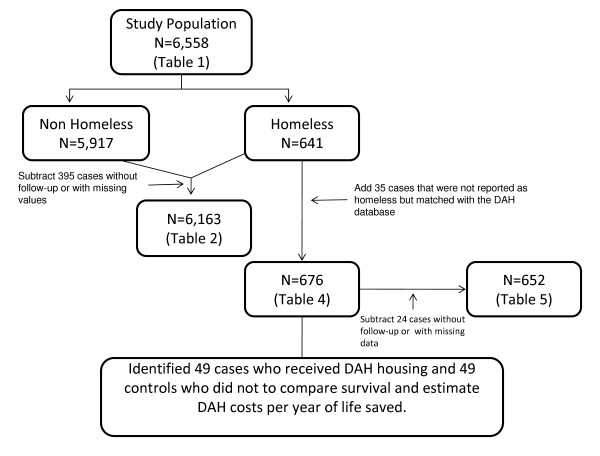
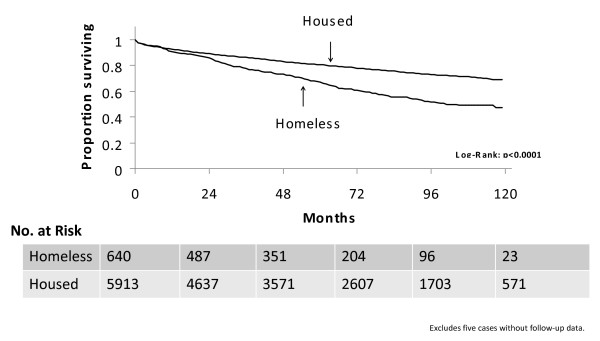
BACKGROUND: Homeless persons with HIV/AIDS have greater morbidity and mortality, more hospitalizations, less use of antiretroviral therapy, and worse medication adherence than HIV-infected persons who are stably housed. We examined the effect of homelessness on the mortality of persons with AIDS and measured the effect of supportive housing on AIDS survival. METHODS: The San Francisco AIDS registry was used to identify homeless and housed persons who were diagnosed with AIDS between 1996 and 2006. The registry was computer-matched with a housing database of homeless persons who received housing after their AIDS diagnosis. The Kaplan-Meier product limit method was used to compare survival between persons who were homeless at AIDS diagnosis and those who were housed. Proportional hazards models were used to estimate the independent effects of homelessness and supportive housing on survival after AIDS diagnosis. RESULTS: Of the 6,558 AIDS cases, 9.8% were homeless at diagnosis. Sixty-seven percent of the persons who were homeless survived five years compared with 81% of those who were housed (p < 0.0001). Homelessness increased the risk of death (adjusted relative hazard [RH] 1.20; 95% confidence limits [CL] 1.03, 1.41). Homeless persons with AIDS who obtained supportive housing had a lower risk of death than those who did not (adjusted RH 0.20; 95% CL 0.05, 0.81). CONCLUSION: Supportive housing ameliorates the negative effect of homelessness on survival with AIDS.
Overview
The claims and statistics of this paper haven’t been checked yet.
Free: it reads the open-access text and checks the first 5 claims that cite a source we can check. Create a free account to check every claim.
Integrity signals
Registry
Cites
Statistics
Figures
Verification
Claims the paper makes
The claims and statistics of this paper haven’t been checked yet.
Free: it reads the open-access text and checks the first 5 claims that cite a source we can check. Create a free account to check every claim.
Claims other papers make about this one
Each is checked against this paper’s own text: does it say what the citing paper says it does?
The source backs part of the claim, not all of it — or backs it for a different population, condition or comparison.
In the citing paper
“Two studies reported decreased mortality of 32% and 42%.14,29”
From Permanent Supportive Housing with Housing First to Reduce Homelessness and Promote Health among Homeless Populations with Disability: A Community Guide Systematic Review (2020) · cites this paper as [29]
Experimental — accuracy not yet measuredThe source backs part of the claim, not all of it — or backs it for a different population, condition or comparison.
In the citing paper
“In addition, some effect estimates were calculated from small numbers of data points. For example, even though the effect estimates of Housing First for people living with HIV were meaningful and consistent, they were based on only three studies.14,29,35”
From Permanent Supportive Housing with Housing First to Reduce Homelessness and Promote Health among Homeless Populations with Disability: A Community Guide Systematic Review (2020) · cites this paper as [29]
Experimental — accuracy not yet measured
Self-check
Percentages, sums and reported differences re-computed from the paper’s own numbers.
The self-check needs the paper’s full text.
Citations
Cites
An Introduction to the Bootstrap
Efron, B., & Tibshirani, R. J. (1994) · doi:10.1201/9780429246593 · Cited by 40,500
An Introduction to the Bootstrap
Grimshaw, S. D., Efron, B., & Tibshirani, R. J. (1995) · Technometrics · doi:10.2307/1269918 · Cited by 2,095
Housing First, Consumer Choice, and Harm Reduction for Homeless Individuals With a Dual Diagnosis
Tsemberis, S., Gulcur, L., & Nakae, M. (2004) · American Journal of Public Health · doi:10.2105/ajph.94.4.651 · Cited by 1,359 · cited 1×
“Prior studies have shown that housing the homeless, including those with mental illness and substance abuse problems, is feasible [46-48] and can be accomplished for a modest cost [49].”
BackgroundFactors Associated With the Health Care Utilization of Homeless Persons
Kushel, M. B. (2001) · JAMA · doi:10.1001/jama.285.2.200 · Cited by 728 · cited 1×
“Homeless persons suffer from high rates of substance abuse [5-7], mental illness [5,7-9], tuberculosis [10,11], infectious hepatitis [6,12-15], and insufficient health care [14,15].”
BackgroundShapiro, M. F., Morton, S. C., McCaffrey, D. F., Senterfitt, J. W., Fleishman, J. A., Perlman, J. F., Athey, L. A., Keesey, J. W., Goldman, D. P., Berry, S. H., et al. (1999) · JAMA · doi:10.1001/jama.281.24.2305 · Cited by 704 · cited 1×
“This finding is supported by other studies of HIV-infected persons [24,41] and may reflect differential access to care and/or treatment [42-45].”
ResultThe epidemiology of alcohol, drug, and mental disorders among homeless persons
Fischer, P. J., & Breakey, W. R. (1991) · American Psychologist · doi:10.1037/0003-066x.46.11.1115 · Cited by 511 · cited 1×
“Homeless persons suffer from high rates of substance abuse [5-7], mental illness [5,7-9], tuberculosis [10,11], infectious hepatitis [6,12-15], and insufficient health care [14,15].”
BackgroundSadowski, L. S., Kee, R. A., VanderWeele, T. J., & Buchanan, D. (2009) · JAMA · doi:10.1001/jama.2009.561 · Cited by 508 · cited 2×
“Prior studies have shown that housing the homeless, including those with mental illness and substance abuse problems, is feasible [46-48] and can be accomplished for a modest cost [49].”
BackgroundSackoff, J. E., Hanna, D. B., Pfeiffer, M. R., & Torian, L. V. (2006) · Annals of Internal Medicine · doi:10.7326/0003-4819-145-6-200609190-00003 · Cited by 451 · cited 2×
“Injection drug use was more common among homeless than housed persons and was an independent predictor of mortality in our study as well as in others [32,33].”
BackgroundResultMortality in a Cohort of Homeless Adults in Philadelphia
Hibbs, J. R., Benner, L., Klugman, L., Spencer, R., Macchia, I., Mellinger, A. K., & Fife, D. (1994) · New England Journal of Medicine · doi:10.1056/nejm199408043310506 · Cited by 359
Cost-effectiveness of supported housing for homeless persons with mental illness.
Rosenheck, R., Kasprow, W., Frisman, L., & Liu-Mares, W. (2003) · Archives of General Psychiatry · doi:10.1001/archpsyc.60.9.940 · Cited by 354 · cited 1×
“Prior studies have shown that housing the homeless, including those with mental illness and substance abuse problems, is feasible [46-48] and can be accomplished for a modest cost [49].”
Background
Research works printed but not linked: 3
- The San Francisco Department of Public Health The San Francisco Department of Public Health HIV/AIDS Epidemiology Report, 2006 2007 51
- CDC HIV/AIDS Surveillance Report, 2007 2009 19 9
- Houghton T The New York/New York agreement cost study: the impact of supportive housing on service use for homeless mentally ill individuals 2001 Corporation for Supportive Housing, New York, New York
Cited by
Aidala, A. A., Wilson, M. G., Shubert, V., Gogolishvili, D., Globerman, J., Rueda, S., Bozack, A. K., Caban, M., & Rourke, S. B. (2016) · American Journal of Public Health · doi:10.2105/ajph.2015.302905 · Cited by 418
Fitzpatrick-Lewis, D., Ganann, R., Krishnaratne, S., Ciliska, D., Kouyoumdjian, F., & Hwang, S. W. (2011) · BMC Public Health · doi:10.1186/1471-2458-11-638 · Cited by 216
“The current review identified 4 new studies that examined interventions for homeless people living with HIV [97-99,101].”
BackgroundMethodInfluentialMilloy, M.-J., Kerr, T., Bangsberg, D. R., Buxton, J., Parashar, S., Guillemi, S., Montaner, J., & Wood, E. (2012) · AIDS Patient Care and STDs · doi:10.1089/apc.2011.0169 · Cited by 112
“individuals with no health insurance as compared to individuals with private or public support.(54) Thus, in settings without universal access to ART, provision of housing might have limited benefit on treatment outcomes.”
BackgroundHousing Status and the Health of People Living with HIV/AIDS
Milloy, M.-J., Marshall, B. D. L., Montaner, J., & Wood, E. (2012) · Current HIV/AIDS Reports · doi:10.1007/s11904-012-0137-5 · Cited by 112
Peng, Y., Hahn, R. A., Finnie, R. K. C., Cobb, J., Williams, S. P., Fielding, J. E., Johnson, R. L., Montgomery, A. E., Schwartz, A. F., Muntaner, C., et al. (2020) · Journal of Public Health Management and Practice · doi:10.1097/phh.0000000000001219 · Cited by 96
Disparities in Engagement in Care and Viral Suppression Among Persons With HIV
Muthulingam, D., Chin, J., Hsu, L. C., Scheer, S., & Schwarcz, S. K. (2013) · JAIDS Journal of Acquired Immune Deficiency Syndromes · doi:10.1097/qai.0b013e3182894555 · Cited by 101
Self-citationAdherence to HIV Treatment and Care Among Previously Homeless Jail Detainees
Chen, N. E., Meyer, J. P., Avery, A., Draine, J., Flanigan, T., Lincoln, T., Spaulding, A. C., Springer, S. A., & Altice, F. L. (2011) · AIDS and Behavior · doi:10.1007/s10461-011-0080-2 · Cited by 102
“have been associated with suboptimal HIV outcomes including poor adherence to HIV medications, fewer primary care visits, and increased risk of death [4, 20, 21].”
Patterns of Homelessness and Implications for HIV Health After Release from Jail
Zelenev, A., Marcus, R., Kopelev, A., Cruzado-Quiñones, J., Spaulding, A. C., Desabrais, M., Lincoln, T., & Altice, F. L. (2013) · AIDS and Behavior · doi:10.1007/s10461-013-0472-6 · Cited by 66
“Compared with individuals who are stably housed, homeless individuals are particularly more likely to experience worse HIV health outcomes, including viral load and CD4 count determinations [18–20].”
Psychiatric correlates of HAART utilization and viral load among HIV-positive impoverished persons
Carrico, A. W., Bangsberg, D. R., Weiser, S. D., Chartier, M., Dilworth, S. E., & Riley, E. D. (2011) · AIDS · doi:10.1097/qad.0b013e3283463f09 · Cited by 58
“Structural factors like unstable housing are linked to hastened mortality among individuals living with AIDS [6], but the mortality rate among homeless and marginally housed HIV-positive persons is substantially attenuated among those that consistently utilize HAART [7].”
BackgroundFinocchario‐Kessler, S., Catley, D., Berkley‐Patton, J., Gerkovich, M. M., Williams, K. B., Banderas, J., & Goggin, K. (2011) · AIDS Patient Care and STDs · doi:10.1089/apc.2010.0319 · Cited by 98
Rajabiun, S., Tryon, J., Feaster, M., Pan, A., McKeithan, L., Fortu, K., Cabral, H., Borne, D., & Altice, F. L. (2018) · American Journal of Public Health · doi:10.2105/ajph.2018.304736 · Cited by 64
HIV Treatment in the Criminal Justice System: Critical Knowledge and Intervention Gaps
Meyer, J. P., Chen, N. E., & Springer, S. A. (2011) · AIDS Research and Treatment · doi:10.1155/2011/680617 · Cited by 54
“This study also noted that antiretroviral use was lower among the homeless compared to the housed and that provision of housing improved survival [69].”
BackgroundCommunicable disease among people experiencing homelessness in California
Liu, C. Y., Chai, S. J., & Watt, J. (2020) · Epidemiology and Infection · doi:10.1017/s0950268820000722 · Cited by 63
“Housing decreases mortality among people with HIV [62] and programs now exist to provide housing for this population.”
BackgroundPerceived Sources of Stress and Resilience in Men in an African American Community
Chung, B., Meldrum, M. L., Jones, F., Brown, A., & Jones, L. (2014) · Progress in community health partnerships · doi:10.1353/cpr.2014.0053 · Cited by 50
Metraux, S., Eng, N., Bainbridge, J., & Culhane, D. P. (2011) · Journal of Urban Health · doi:10.1007/s11524-011-9602-5 · Cited by 51
“One study found that, among persons with AIDS, a higher mortality hazard associated with homelessness was mitigated through placement in supportive housing.(39) Based on this, moves from homelessness to affordable housing arrangements among a more general homeless population should be associated with reduced mortality…”
Katz, M. H. (2010) · Cited by 43
Self-citationKrishnan, A., Wickersham, J. A., Chitsaz, E., Springer, S. A., Jordan, A. O., Zaller, N. D., & Altice, F. L. (2012) · AIDS and Behavior · doi:10.1007/s10461-012-0362-3 · Cited by 51
“Apart from potential medical problems and SUDs, released PLWHA detainees also encounter complications arising from social instability, lack of insurance coverage and homelessness [7, 8, 21].”
Towe, V. L., Wiewel, E. W., Zhong, Y., Linnemayr, S., Johnson, R. E., & Rojas, J. (2019) · AIDS and Behavior · doi:10.1007/s10461-019-02461-4 · Cited by 43
Parashar, S., Palmer, A. K., O’Brien, N., Chan, K., Shen, A., Coulter, S., Montaner, J. S. G., & Hogg, R. S. (2011) · AIDS and Behavior · doi:10.1007/s10461-011-0026-8 · Cited by 36
“Unstably housed individuals often lack the sense of order, security and continuity that is requisite to managing one’s HIV diagnosis, including regularly attending health and ancillary care appointments [8], fully benefiting from prophylaxis for opportunistic illness [10–13], having a safe space to refrigerate medicat…”
BackgroundSpinelli, M. A., Hessol, N. A., Schwarcz, S. K., Hsu, L. C., Parisi, M. K., Pipkin, S. S., Scheer, S., Havlir, D. V., & Buchbinder, S. (2019) · AIDS · doi:10.1097/qad.0000000000002287 · Cited by 33
Self-citationJesús, M. D., & Williams, D. R. (2018) · Public Health Reports · doi:10.1177/0033354918801353 · Cited by 37
Rieke, K., Smolsky, A., Bock, E., Erkes, L. P., Porterfield, E., & Watanabe‐Galloway, S. (2015) · Social Work in Public Health · doi:10.1080/19371918.2015.1063100 · Cited by 25
“Previous literature has shown that for individuals experiencing homelessness, having housing may lead to a reduction in risky behaviors such as substance use, impact survival, and may be associated with a decrease in the utilization of hospital services (Larimer et al., 2009; Schwarcz et al., 2009; Wolitski et al., 20…”
BackgroundInfectious Disease Issues in Underserved Populations
Grief, S. N., & Miller, J. P. (2017) · Primary Care Clinics in Office Practice · doi:10.1016/j.pop.2016.09.011 · Cited by 28
Hessol, N. A., Eng, M., Vu, A., Pipkin, S. S., Hsu, L. C., & Scheer, S. (2019) · BMC Public Health · doi:10.1186/s12889-019-7817-7 · Cited by 24
Self-citationEmergency Department Use among HIV-Infected Released Jail Detainees
Boyd, A. T., Song, D. L., Meyer, J. P., & Altice, F. L. (2014) · Journal of Urban Health · doi:10.1007/s11524-014-9905-4 · Cited by 24
“Homelessness, specifically among PLWHA, is associated with a greater reliance on the ED for health needs,(30,64) having more advanced HIV,(65) and mortality.(18) A recent study of PLWHA released from jail confirmed homelessness as being associated with SUDs, comorbid psychiatric conditions, lacking an HIV provider, an…”
BackgroundAvery, A., Ciomcia, R. W., Lincoln, T., Desbrais, M., Jordan, A. O., Rana, A., & Machekano, R. N. (2012) · AIDS and Behavior · doi:10.1007/s10461-012-0320-0 · Cited by 20
Hotton, A., Perloff, J., Paul, J. L., Parker, C., Ducheny, K., Holloway, T., Johnson, A. K., Garofalo, R., Swartz, J. A., & Kuhns, L. M. (2020) · AIDS and Behavior · doi:10.1007/s10461-020-02874-6 · Cited by 18
Parashar, S., Chan, K., Milan, D., Grafstein, E., Palmer, A. K., Rhodes, C. L., Montaner, J. S. G., & Hogg, R. S. (2013) · AIDS Care · doi:10.1080/09540121.2013.793281 · Cited by 19
Marcus, R., Tie, Y., Dasgupta, S., Beer, L., Padilla, M., Fagan, J. L., & Prejean, J. (2021) · Journal of the Association of Nurses in AIDS Care · doi:10.1097/jnc.0000000000000314 · Cited by 16
“…homelessness have worse HIV outcomes, including poorer retention in care, lower adherence to antiretroviral treatment (ART), higher viral load (Aidala et al., 2016; Bowen &Mitchell, 2016; Milloy et al., 2012; Rajabiun et al., 2018), and a greater likelihood of death (Schwarcz et al., 2009).”
BackgroundReducing Homelessness by Embracing Housing as a Medicaid Benefit
Bamberger, J. D. (2016) · JAMA Internal Medicine · doi:10.1001/jamainternmed.2016.2615 · Cited by 17
Self-citationStanic, A., Rybin, D. V., Cannata, F., Hohl, C., Brody, J. K., Gaeta, J. M., & Bharel, M. (2019) · AIDS Care · doi:10.1080/09540121.2019.1695728 · Cited by 19
Liauw, S. S. L., Luong, L., Liu, S., Atcha, M., Kwok, Y., Nisenbaum, R. A., Fam, N., Hwang, S. W., & Cheema, A. N. (2021) · Canadian Journal of Cardiology · doi:10.1016/j.cjca.2021.05.003 · Cited by 14
The Positive Spaces Healthy Places Study Team, Bekele, T., Globerman, J., Watson, J. R., Hwang, S. W., Hambly, K., Koornstra, J. J., Walker, G., Bacon, J., & Rourke, S. B. (2018) · AIDS and Behavior · doi:10.1007/s10461-018-2040-6 · Cited by 16
“found that those who were homeless at diagnosis had a 20% greater risk of dying than those who were not homeless [12].”
BackgroundHomelessness and Health Disparities: A Health Equity Lens
Bowen, E. A., Savino, R. F., & Irish, A. (2019) · Springer eBooks · doi:10.1007/978-3-030-03727-7_3 · Cited by 21
Wilkins, C. (2015) · American Journal of Psychiatric Rehabilitation · doi:10.1080/15487768.2015.1001690 · Cited by 13
“…visits, inpatient hospitalizations, and stays in skilled nursing facilities (Aidala et al., 2007; Buchanan et al., 2009; Caton et al., 2007; Flaming et al., 2009; Larimer et al., 2009; Linkins et al., 2008; National Center on Family Homelessness, 2009; Sadowski et al., 2009; Schwarcz et al., 2009).”
BackgroundEmbleton, L., Shah, P., Apondi, E., Ayuku, D., & Braitstein, P. K. A. (2023) · Journal of the International AIDS Society · doi:10.1002/jia2.26023 · Cited by 10
Watson, L., Gant, Z., Hu, X., & Johnson, A. S. (2019) · Journal of Racial and Ethnic Health Disparities · doi:10.1007/s40615-019-00589-6 · Cited by 10
Dobbins, S. K., Cruz, M., Shah, S., Abt, L., Moore, J., & Bamberger, J. (2016) · Journal of the Association of Nurses in AIDS Care · doi:10.1016/j.jana.2016.01.002 · Cited by 9
“Supportive housing for those who are homeless and living with HIV has been established as a successful intervention that can improve HIV treatment adherence, extend years of life lived, and improve the quality of life lived (Arno et al., 1996; Schwarcz et al., 2009; Wolitski et al., 2010).”
BackgroundMethodSelf-citationHousing and health: Examining the links
Mahamoud, A., Roche, B., Gardner, B., & Shapcott, M. (2012) · Cited by 11
Loh, J., Kennedy, M. C., Wood, E., Kerr, T. H., Marshall, B. D. L., Parashar, S., Montaner, J. S. G., & Milloy, M. (2016) · AIDS Care · doi:10.1080/09540121.2016.1189498 · Cited by 10
“Similarly, another San Francisco study found greater mortality and morbidity rates among homeless HIV-positive individuals, further exacerbated by a lack of consistent health coverage (Schwarcz et al., 2009).”
BackgroundFletcher-Hildebrand, S., Alimezelli, H. T., Carr, T., Lawson, K. L., Ali, A., & Groot, G. (2021) · BMJ Open · doi:10.1136/bmjopen-2020-044522 · Cited by 9
Spinelli, M. A., Tourneau, N. L., Glidden, D. V., Hsu, L. C., Hickey, M. D., Imbert, E., Arreguin, M. I., Jain, J. P., Oskarsson, J., Buchbinder, S., et al. (2022) · Clinical Infectious Diseases · doi:10.1093/cid/ciac179 · Cited by 10
“Housing status is a strong predictor of VS and future mortality among PLWH [24–26], with housing interventions shown to improve disparities [25, 27].”
BackgroundSelf-citationDemographics and Clinical Profiles of Patients Visiting a Free Clinic in Miami, Florida
Zhang, M., García, A., & Bretones-Graham, G. (2019) · Frontiers in Public Health · doi:10.3389/fpubh.2019.00212 · Cited by 11
“The burden of HIV disproportionally affects indigent populations (53) and is associated with underdiagnosis (54), poor adherence to medications (55), incomplete viral suppression (56), higher rates of comorbidities (57), and early death (58).”
BackgroundPalm, M. J., & Whitzman, C. (2019) · Housing Studies · doi:10.1080/02673037.2019.1636001 · Cited by 8
“This research includes impacts to physical health (Krieger & Higgins, 2002), mental health (Bentley et al., 2011), educational outcomes in children (Mueller & Tighe, 2007), and the survival rates of individuals living with chronic diseases (Rourke et al., 2012; Schwarcz et al., 2009).”
BackgroundBerthaud, V., Johnson, L., Jennings, R., Chandler-Auguste, M., Osijo, A., Baldwin, M. T., Matthews-Juarez, P., Juárez, P. D., Wilus, D. M., & Tabatabai, M. (2022) · BMC Infectious Diseases · doi:10.1186/s12879-022-07105-y · Cited by 13
Chiu, Y.-C. J., Conyers, L. M., Eissenstat, S. J., & Misrok, M. (2020) · Rehabilitation Counseling Bulletin · doi:10.1177/0034355220962175 · Cited by 7
The Place of Housing Stability in HIV Research: A Critical Review of the Literature
Parashar, S. (2016) · Housing Theory and Society · doi:10.1080/14036096.2016.1151459 · Cited by 8
“Homelessness and housing instability have long been known to heighten vulnerability to HIV infection, and contribute to poorer health status among people living with HIV and AIDS (Riley et al. 2005; Stewart, Cianfrini, and Walker 2005; Walley et al. 2008; Buchanan et al. 2009; Schwarcz et al. 2009).”
BackgroundBenz, F. (2023) · British Journal of Diabetes · doi:10.15277/bjd.2023.421 · Cited by 6
Antiretroviral Therapy Adherence Among People Living With HIV While Experiencing Homelessness
Graham, G., & Plankey, M. W. (2023) · Georgetown Medical Review · doi:10.52504/001c.90758 · Cited by 6
Hart, L. A., Thigpen, A. P., Fine, A. H., Gorczyca, K., Willits, N. H., Bernaldo, R., Malzyner, S., Guillén, J. H., & D’Amato, K. (2022) · Animals · doi:10.3390/ani12111449 · Cited by 6
Burt, M. R. (2015) · American Journal of Psychiatric Rehabilitation · doi:10.1080/15487768.2015.1001696 · Cited by 4
“…Larimer et al., 2009; Linkins, Brya, & Chandler, 2008; National Center on Family Homelessness, 2009; Sadowski, Kee, Vanderweele, & Buchanan, 2009; Schwarcz et al., 2009), prompting the incentives built into the Affordable Care Act to encourage states and the nonprofit and private sectors to move…”
BackgroundInfluentialMarziali, M. E., Hansen, S., Kooij, K. W., Budu, M. O., Ye, M., Tam, C., McLinden, T., Emerson, S. D., Montaner, J. S. G., Parashar, S., et al. (2025) · Social Science & Medicine · doi:10.1016/j.socscimed.2025.117713 · Cited by 4
Byrne, T. H., & Culhane, D. P. (2022) · International Journal on Homelessness · doi:10.5206/ijoh.2022.1.13726 · Cited by 3
Infectious Disease Issues in Underserved Populations
Grief, S. N., & Miller, J. P. (2018) · Physician Assistant Clinics · doi:10.1016/j.cpha.2018.08.006 · Cited by 3
Stewart, A. M., Antoniou, T., Graves, E., Plumptre, L., & Carusone, S. C. (2021) · CMAJ Open · doi:10.9778/cmajo.20200024 · Cited by 3
Hunter, S. B., Henwood, B. F., Ramchand, R., Holliday, S. B., & Garvey, R. (2021) · RAND Corporation eBooks · doi:10.7249/rra1320-1 · Cited by 3
Methods for adjusting for baseline differences between treatment groups
Katz, M. H. (2010) · Cambridge University Press eBooks · doi:10.1017/cbo9780511712074.008 · Cited by 2
Self-citationAli, A., Groot, G., April, M., MacPhee, M., Witham, S., Alimezelli, H. T., & Carr, T. (2024) · BMJ Open · doi:10.1136/bmjopen-2023-075194 · Cited by 1
Varghese, J. (2013) · HIV & AIDS Review · doi:10.1016/j.hivar.2013.05.001 · Cited by 1
HIV Housing Helps End Homelessness and HIV/AIDS in the United States
Hilvers, J., George, C. C., & Bendixen, A. V. (2016) · Social disparities in health and health care · doi:10.1007/978-3-319-34004-3_11 · Cited by 2
Ranadive, N., Hussen, S. A., & Chakraborty, R. (2020) · Springer eBooks · doi:10.1007/978-3-030-20491-4_17 · Cited by 1
Forthal, S., Choi, S., Yerneni, R., Macinski, S., Levey, W., Kerwin, J., Ahadzi, M., Fish, D. G., Anderson, B. J., & Neighbors, C. J. (2022) · AIDS Care · doi:10.1080/09540121.2022.2158302 · Cited by 1
“Individuals with unstable housing may fi nd it di ffi cult to prioritize non-emer-gency health care and regular medical and prescription management due to competing concerns such as food, shelter, and safety, even when they have insurance coverage (Gelberg et al., 1997; Schwarcz et al., 2009).”
BackgroundNeely, B. (2017) · D-Scholarship@Pitt (University of Pittsburgh) · Cited by 1
Forro, V. A. (2012) · Springer eBooks · doi:10.1007/978-1-4614-5283-6_48
Satisfaction and Dissatisfaction with Case Management and Social Services
Aidala, A. A., West, B. S., Lee, G., & Berk, S. (2010)
Hospital Readmissions among Patients who are Homeless in Toronto
Saab, D. (2014) · TSpace (University of Toronto) · Cited by 1
Bozarth, A. (2017) · SMARTech Repository (Georgia Institute of Technology)
Homelessness and HIV Transmission
Livingstone, K., Herman, D. B., Adler, N. E., & Susser, E. (2017) · Oxford University Press eBooks · doi:10.1093/med/9780199392742.003.0030
A POPULAÇÃO EM SITUAÇÃO DE RUA E O HIV: UMA REVISÃO INTEGRATIVA
Julião, R. C., SCHNEIDER, B. H., IZAKI, E. Y., Duffeck, L. L., Amanda Almeida Da, L. U. Z., Knauber, L., Bellani, W. A. G. D. O., Cássio, Z. I. N. I., ZAHDI, J. O. R., & Perotta, B. (2022) · REVISTA MÉDICA DO PARANÁ · doi:10.55684/79.2.1641
Networks of HIV Service Organisations: Changes Over Time and Implications for HIV Elimination
Davoudpour, S., Ruprecht, M. M., Xu, J., Felt, D., Boegner, J., Lindeman, P. T., Janulis, P. F., Greene, G. J., Johnson, A. K., Kern, D., et al. (2024) · Journal of Health Management · doi:10.1177/09720634241262160
“While individual-level factors such as substance use (Friedman et al., 2009), food insecurity (Colasanti et al., 2017), housing (Schwarcz et al., 2009; Thakarar et al., 2016; Wolitski et al., 2007) or employment (Gayles et al., 2016) in unsuccessful engagement with healthcare or HIV prevention…”
Chatterjee, P., Venkataramani, A. S., & Long, J. A. (2025) · Elsevier eBooks · doi:10.1016/b978-0-443-23750-8.00008-4
Dewald, A., Unwala, N., & Willison, C. E. (2026) · Journal of Social Distress and the Homeless · doi:10.1080/10530789.2026.2639370
“…decreased healthcare utilization and reduced Medicaid expenditures (Gabrielian et al., 2016; Syrop, 2016; Wright et al., 2016); improvement in mental health (Harris et al., 2019); and significant mortality benefit for individuals living with HIV/AIDS (Buchanan et al., 2009; Schwarcz et al., 2009).”
Metadata
- Authors
- Schwarcz, S. K., Hsu, L. C., Vittinghoff, E., Vu, A., Bamberger, J. D., & Katz, M. H.
- Affiliations
- San Francisco Department of Public Health (US)
- University of California, San Francisco (US)
- Corresponding author
- Schwarcz, Sandra K
- Venue
- BMC Public Health
- Published
- 2009-07-07
- Volume
- 9
- Issue
- 1
- Pages
- 220-220
- ISSN
- 1471-2458 (ISSN-L)
- PMC
- PMC2728715
- OpenAlex
- W1985599936
- Cited by
- 73
- References
- 58
- Citations by year
- 2026: 1 · 2025: 2 · 2024: 2 · 2023: 3 · 2022: 5 · 2021: 6 · 2020: 6 · 2019: 8 · 2018: 4 · 2017: 4 · 2016: 5 · 2015: 4 · 2014: 3 · 2013: 4 · 2012: 5
- FWCI
- 9.66
- Type
- journal article
- Language
- en
- Open access
- gold
- doi.org
- Licence
- cc-by
- creativecommons.org/licenses/by/2.0 (tdm)
- Locations
- BMC Public Health (publishedVersion, cc-by)
- PubMed Central (publishedVersion, cc-by)
- PubMed (publishedVersion)
- DOAJ (DOAJ: Directory of Open Access Journals) (submittedVersion)
- Funders
- Centers for Disease Control and Prevention (PS08-80202-09, PS08-80202)
- Topics
- Social Sciences › Sociology and Political Science › Homelessness and Social Issues
- Health Sciences › Medicine › Epidemiology › HIV, Drug Use, Sexual Risk
- Health Sciences › Medicine › Infectious Diseases › HIV/AIDS Research and Interventions
- Keywords
- homelessness, AIDS, HIV, supported housing, survival, mortality, housing and health
- MeSH terms
- Acquired Immunodeficiency Syndrome, Adolescent, Adult, Female, Ill-Housed Persons, Housing, Humans, Male, Middle Aged, Risk Factors, San Francisco, Survival
About these checks
Registry, retraction, Cites and statistics results are computed, not judged, with one exception: a printed reference that no index lists is read once by a model before it counts as a citation error. Claims are extracted by a model and kept only when their quote appears verbatim in the text; each cited source is then checked, with a model’s help, for whether it says what the claim relies on. Those verdicts can be wrong — read the claim’s quote and the cited source before relying on one.
Statistics and arithmetic are recomputed, not judged.
Confidence bands are shown only for fields calibrated on our annotated test set. None is calibrated yet, so no band is shown.
What counts as a claim ›How we measure confidence ›How we check this ›
Are you an author, or do you see a problem with this page? Request a review
Data sources
Bibliographic data: Semantic Scholar, OpenAlex, Crossref.
Contains information from the Semantic Scholar Academic Graph Datasets, made available under the ODC Attribution License (ODC-BY 1.0).
Semantic Scholar’s data is described in: Kinney, R., et al. (2023). The Semantic Scholar Open Data Platform. arXiv:2301.10140.
