

Calcitonin substitution in calcitonin deficiency reduces particle-induced osteolysis
Open accessThe DOI matches its Crossref record; 44 of the 44 references it cites were found in a registry or an index.
Abstract
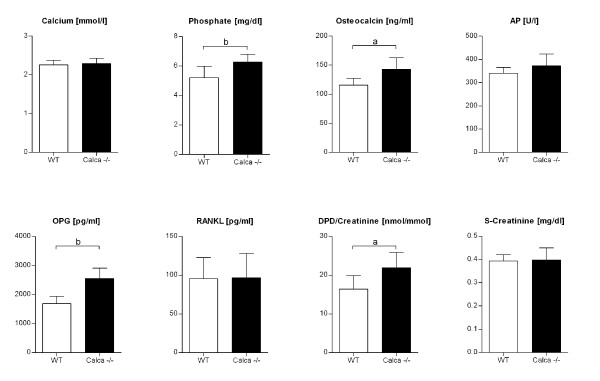
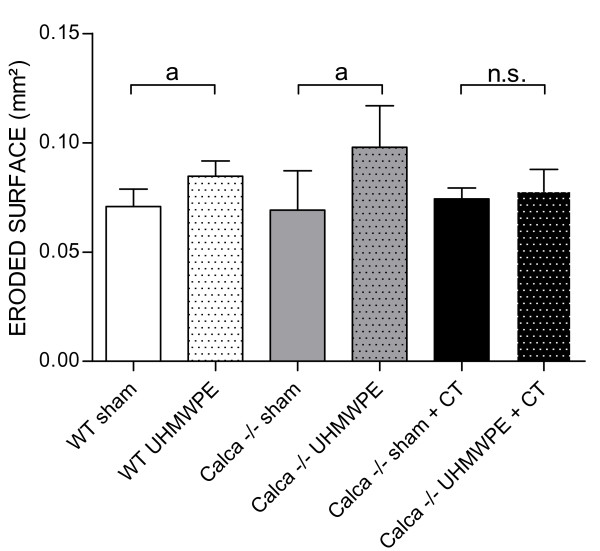
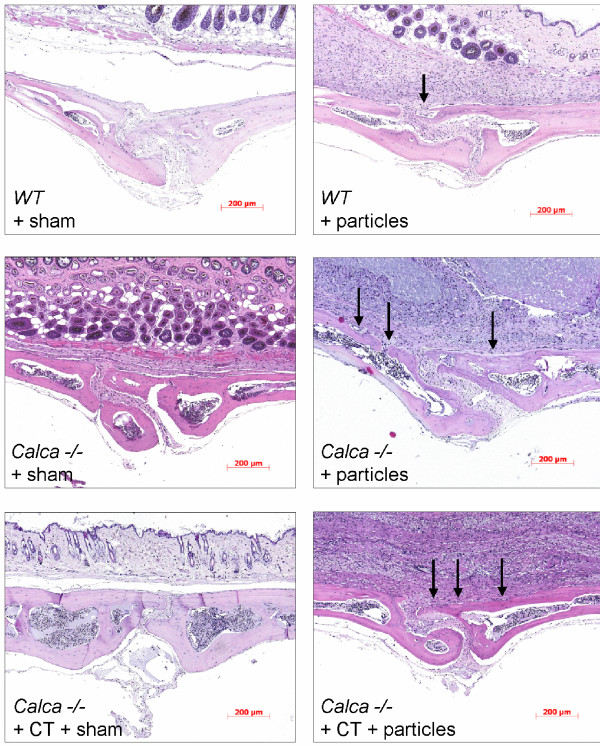
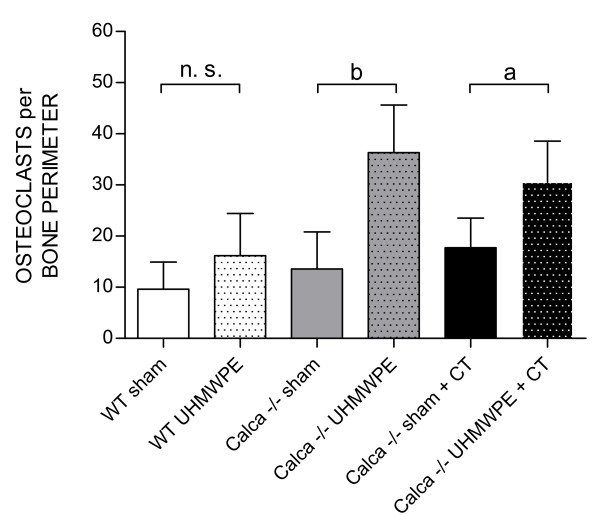
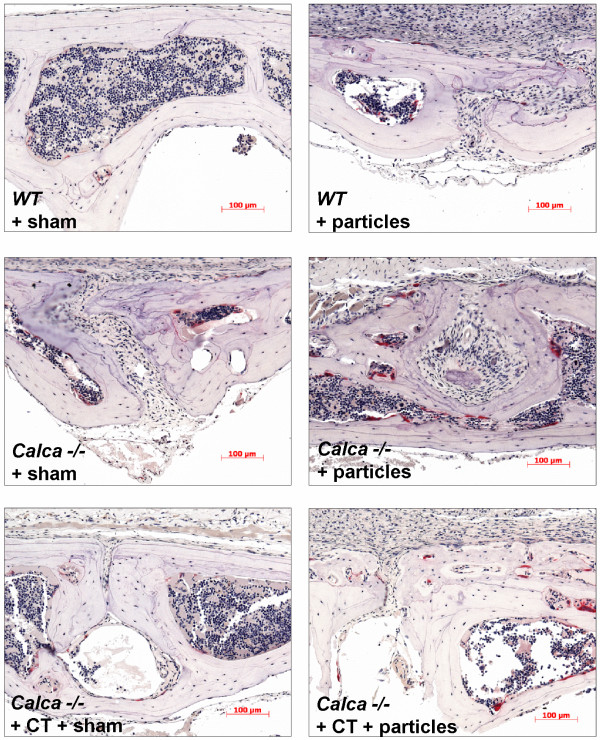
BACKGROUND: Periprosthetic osteolysis is a major cause of aseptic loosening in joint arthroplasty. This study investigates the impact of CT (calcitonin) deficiency and CT substitution under in-vivo circumstances on particle-induced osteolysis in Calca -/- mice. METHODS: We used the murine calvarial osteolysis model based on ultra-high molecular weight polyethylene (UHMWPE) particles in 10 C57BL/6J wild-type (WT) mice and twenty Calca -/- mice. The mice were divided into six groups: WT without UHMWPE particles (Group 1), WT with UHMWPE particles (Group 2), Calca -/- mice without UHMWPE particles (Group 3), Calca -/- mice with UHMWPE particles (Group 4), Calca -/- mice without UHMWPE particles and calcitonin substitution (Group 5), and Calca -/- mice with UHMWPE particle implantation and calcitonin substitution (Group 6). Analytes were extracted from serum and urine. Bone resorption was measured by bone histomorphometry. The number of osteoclasts was determined by counting the tartrate-resistant acid phosphatase (TRACP) + cells. RESULTS: Bone resorption was significantly increased in Calca -/- mice compared with their corresponding WT. The eroded surface in Calca -/- mice with particle implantation was reduced by 20.6% after CT substitution. Osteoclast numbers were significantly increased in Calca -/- mice after particle implantation. Serum OPG (osteoprotegerin) increased significantly after CT substitution. CONCLUSIONS: As anticipated, Calca -/- mice show extensive osteolysis compared with wild-type mice, and CT substitution reduces particle-induced osteolysis.
Overview
The claims and statistics of this paper haven’t been checked yet.
Free: it reads the open-access text and checks the first 5 claims that cite a source we can check. Create a free account to check every claim.
Integrity signals
Registry
Cites
Statistics
Figures
Verification
Claims the paper makes
The claims and statistics of this paper haven’t been checked yet.
Free: it reads the open-access text and checks the first 5 claims that cite a source we can check. Create a free account to check every claim.
Claims other papers make about this one
Each is checked against this paper’s own text: does it say what the citing paper says it does?
In the citing paper
“In both cell types, UHMWPE particles induced RANKL expression and inhibited the expression of OPG, whereas CGRP reduced UHMWPE-induced RANKL expression, suggesting an indirect inhibition of particle-induced bone resorption.”
From The Activity of Peptides of the Calcitonin Family in Bone (2019) · cites this paper as [117]
Self-check
Percentages, sums and reported differences re-computed from the paper’s own numbers.
The self-check needs the paper’s full text.
Citations
Cites
Parfitt, A. M., Drezner, M. K., Glorieux, F. H., Kanis, J. A., Malluche, H., Meunier, P. J., Ott, S. M., & Recker, R. R. (1987) · Journal of Bone and Mineral Research · doi:10.1002/jbmr.5650020617 · Cited by 5,016 · cited 1×
“The area of soft tissue including any bone resorption pits in the midline suture was traced in hematoxylin and eosin-stained sections to determine the bone resorption area in the midline suture [24,25].”
BackgroundBone Histomorphometry : Standardization of Nomenclature, Symbols, and Units
PARFITT, A. M., Drezner, M. K., Glorieux, F. H., Kanis, J. А., Malluche, H. H., Meunier, P. J., Ott, S. M., & Recker, R. R. (1987) · Journal of Bone and Mineral Research · Cited by 3,258
Amara, S. G., Jonas, V., Rosenfeld, M. G., Ong, E. S., & Evans, R. M. (1982) · Nature · doi:10.1038/298240a0 · Cited by 2,105 · cited 1×
“Alpha-CGRP is generated from the Calca gene that further codes for calcitonin (CT) by cell-specific alternative splicing [10,11].”
BackgroundCalcitonin alters behaviour of isolated osteoclasts
Chambers, T. J., & Magnus, C. J. (1982) · The Journal of Pathology · doi:10.1002/path.1711360104 · Cited by 504
Calcitonin: Physiology and Pathophysiology
Austin, L. A., & Heath, H. (1981) · New England Journal of Medicine · doi:10.1056/nejm198101293040505 · Cited by 420 · cited 1×
“Calcitonin is mainly produced in the thyroidal C cells and is a single-chain peptide of 32 amino acids in length with a molecular mass of 3,418 daltons and a half-life in serum of approximately ten minutes [13].”
BackgroundWillert, H. G., Bertram, H., & BUCHHORN, G. H. (1990) · PubMed · Cited by 387
Roodman, G. D., & Windle, J. J. (2005) · Journal of Clinical Investigation · doi:10.1172/jci24281 · Cited by 340
Increased bone mass is an unexpected phenotype associated with deletion of the calcitonin gene
Hoff, A. O., Catala-Lehnen, P., Thomas, P. M., Priemel, M., Rueger, J. M., Nasonkin, I., Bradley, A., Hughes, M. R., Ordonez, N., Cote, G. J., et al. (2002) · Journal of Clinical Investigation · doi:10.1172/jci200214218 · Cited by 209 · cited 6×
“Both alphaCGRP and calcitonin are generated by alternative splicing from the Calca gene, therefore we were interested in the outstanding phenotype of Calca deficient mice with an increased bone formation rate (BFR) in contrast to the decreased BFR in alpha-CGRP knockout mice [20,28].”
BackgroundResultInfluentialAmylin inhibits bone resorption while the calcitonin receptor controls bone formation in vivo
Dacquin, R., Davey, R. A., Laplace, C., Levasseur, R., Morris, H. A., Goldring, S. R., Gebre-Medhin, S., Galson, D. L., Zajac, J. D., & Karsenty, G. (2004) · The Journal of Cell Biology · doi:10.1083/jcb.200312135 · Cited by 206 · cited 1×
“observed increased bone formation with no consequences for bone resorption [37].”
BackgroundTumor necrosis factor‐α/nuclear transcription factor‐κB signaling in periprosthetic osteolysis
Schwarz, E. M., Lu, A. P., Goater, J. J., Benz, E. B., Kollias, G., Rosier, R. N., Puzas, J. E., & O'Keefe, R. J. (2000) · Journal of Orthopaedic Research · doi:10.1002/jor.1100180321 · Cited by 199
Forrest, S. M., Ng, K. W., Findlay, D. M., Michelangeli, V. P., Livesey, S. A., Partridge, N. C., Zajac, J. D., & Martin, T. J. (1985) · Calcified Tissue International · doi:10.1007/bf02557679 · Cited by 190 · cited 1×
“Despite the known influence of CT on osteoclasts, there is only little evidence to support the theory that there is a CT receptor on the surface of osteoblasts [34,35].”
The role of peptides and receptors of the calcitonin family in the regulation of bone metabolism
Naot, D., & Cornish, J. (2008) · Bone · doi:10.1016/j.bone.2008.07.003 · Cited by 182 · cited 1×
“It is possible that CT may have an even more potent effect on particle-induced osteolysis than alpha-CGRP, a theory that has also been reported by other authors [31].”
Effects of calcitonin, amylin, and calcitonin gene-related peptide on osteoclast development
Cornish, J., Callon, K. E., Bava, U., Kamona, S. A., Cooper, G. J. S., & Reid, I. R. (2001) · Bone · doi:10.1016/s8756-3282(01)00494-x · Cited by 173 · cited 1×
“CT is known to inhibit osteoclast differentiation and bone resorption under in-vitro and in-vivo circumstances [32].”
BackgroundCalcitonin gene-related peptide inhibits osteoclastic bone resorption: A comparative study
Zaidi, M., Fuller, K., Bevis, P. J. R., GainesDas, R. E., Chambers, T. J., & MacIntyre, I. (1987) · Calcified Tissue International · doi:10.1007/bf02555699 · Cited by 165 · cited 1×
“However, the expression of the CGRP-receptor on primary osteoclasts has a modulatory function on osteoclasts by a direct mechanism [8,9].”
BackgroundElevated Sympathetic Nervous Activity in Mice Deficient in αCGRP
Oh-hashi, Y., Shindo, T., Kurihara, Y., Imai, T., Wang, Y., Morita, H., Imai, Y., Kayaba, Y., Nishimatsu, H., Suematsu, Y., et al. (2001) · Circulation Research · doi:10.1161/hh2301.100812 · Cited by 154 · cited 1×
“Alpha-CGRP is expressed in the cells of the central and peripheral nervous system and is mostly known for its regulatory effect on the vascular system [6,7] and its inhibition of the differentiation and recruitment of osteoclast precursors.”
BackgroundIncreased Blood Pressure in α-Calcitonin Gene–Related Peptide/Calcitonin Gene Knockout Mice
Gangula, P. R. R., Zhao, H., Supowit, S. C., Wimalawansa, S. J., Dipette, D. J., Westlund, K. N., Gagel, R. F., & Yallampalli, C. (2000) · Hypertension · doi:10.1161/01.hyp.35.1.470 · Cited by 145
Atkins, G. J., Welldon, K. J., Holding, C. A., Haynes, D. R., Howie, D. W., & Findlay, D. M. (2009) · Biomaterials · doi:10.1016/j.biomaterials.2009.03.035 · Cited by 121 · cited 1×
“Furthermore, polyethylene particles can induce a catabolic phenotype of osteoblasts which also contribute to implant loosening [26].”
BackgroundSaxler, G., Löer, F., Skumavc, M., Pförtner, J., & Hanesch, U. (2006) · European Journal of Pain · doi:10.1016/j.ejpain.2005.12.011 · Cited by 120 · cited 1×
“[27] there has been much discussion about a possible influence of the nervous system on particleinduced osteolysis.”
BackgroundGooi, J. H., Pompolo, S., Karsdal, M. A., Kulkarni, N. H., Kalajzic, I., McAhren, S. H. M., Han, B., Onyia, J. E., Ho, P. W. M., Gillespie, M. T., et al. (2010) · Bone · doi:10.1016/j.bone.2010.02.018 · Cited by 117 · cited 2×
“recently described the CT-receptor on osteocytes with a negative regulation on bone formation [12].”
BackgroundHuman Synthetic Calcitonin Gene-Related Peptide Inhibits Bone Resorption in Vitro*
D'SOUZA, S. M., MACINTYRE, I., GIRGIS, S. I., & MUNDY, G. R. (1986) · Endocrinology · doi:10.1210/endo-119-1-58 · Cited by 95 · cited 1×
“Both CT and alpha-CGRP inhibit bone resorption [18,19].”
BackgroundReginster, J., Deroisy, R., Lecart, M.-P., Sarlet, N., Zegels, B., Jupsin, I., Longueville, M. D., & Franchimont, P. (1995) · The American Journal of Medicine · doi:10.1016/s0002-9343(99)80344-1 · Cited by 93 · cited 2×
“Thus, the osteo-anabolic effect of artificial CT substitution could be comparable to the intranasal substitution of CT to prevent osteoporosis [17].”
BackgroundCalcitonin Receptor Plays a Physiological Role to Protect Against Hypercalcemia in Mice
Davey, R. A., Turner, A. G., McManus, J. F., Chiu, W. M., Tjahyono, F., Moore, A. J., Atkins, G. J., Anderson, P. H., Ma, C., Glatt, V., et al. (2008) · Journal of Bone and Mineral Research · doi:10.1359/jbmr.080310 · Cited by 87 · cited 1×
“using the CreloxP system, in which the CTR is globally deleted by > 94% but < 100% [38].”
MethodWhat's New in Orthopaedic Research
Rodeo, S. A., Hidaka, C., & Maher, S. A. (2005) · Journal of Bone and Joint Surgery · doi:10.2106/jbjs.e.00569 · Cited by 87
Calcitonin for prevention and treatment of osteoporosis
Reginster, J. (1993) · The American Journal of Medicine · doi:10.1016/0002-9343(93)90382-y · Cited by 83
Calcitonin Deficiency in Mice Progressively Results in High Bone Turnover
Huebner, A. K., Schinke, T., Priemel, M., Schilling, S., Schilling, A. F., Emeson, R. B., Rueger, J. M., & Amling, M. (2006) · Journal of Bone and Mineral Research · doi:10.1359/jbmr.060820 · Cited by 81 · cited 2×
“found a significant increase in bone volume and an up to four-fold elevation of osteoclast numbers in Calca -/- mice at the age of 12 months compared to wild-type or alpha-CGRP mice [28].”
The role of calcitonin and α-calcitonin gene-related peptide in bone formation
Huebner, A. K., Keller, J., Catala-Lehnen, P., Perkovic, S., Streichert, T., Emeson, R. B., Amling, M., & Schinke, T. (2008) · Archives of Biochemistry and Biophysics · doi:10.1016/j.abb.2008.02.013 · Cited by 73
Saxler, G., Löer, F., Skumavc, M., Pförtner, J., & Hanesch, U. (2007) · Cited by 70
Akopian, A., Demulder, A., Ouriaghli, F. E., Corazza, F., Fondu, P., & Bergmann, P. (2000) · Peptides · doi:10.1016/s0196-9781(00)00185-6 · Cited by 68 · cited 1×
“However, the expression of the CGRP-receptor on primary osteoclasts has a modulatory function on osteoclasts by a direct mechanism [8,9].”
BackgroundCalcitonin promotes osteoclast survival in vitro
Selander, K. S., Härkönen, P. L., Valve, E. M., Mönkkönen, J., Hannuniemi, R., & Väänänen, H. K. (1996) · Molecular and Cellular Endocrinology · doi:10.1016/0303-7207(96)03870-1 · Cited by 65 · cited 1×
“The direct influence of CT on osteoclasts is mediated by the CT receptor which is localized on the surface of osteoclasts [33].”
BackgroundKapurniotu, A., & Taylor, J. W. (1995) · Journal of Medicinal Chemistry · doi:10.1021/jm00005a011 · Cited by 63 · cited 1×
“Groups 5 and 6 received additional, daily s.c. injections of 2 μ g human-CT (Sigma Aldrich, T3535, Saint Louis, Missouri, USA) in the dorsal neck, dissolved in 250 μ L 0.9% saline, for the full duration of the experiment (14 days) as described by Kapurniotu et al. [21].”
MethodInfluentialSensory nerves in the interface membrane of aseptic loose hip prostheses
Ahmed, M., Bergström, J. P., Lundblad, H., Gillespie, W. J., & Andris Kreicbergs, A. (1998) · Journal of Bone and Joint Surgery - British Volume · doi:10.1302/0301-620x.80b1.8138 · Cited by 49
New factors controlling bone remodeling.
Marie, P. J., Debiais, F., Cohen-Solal, M. E., & de Vernejoul, M. C. (2000) · PubMed · Cited by 39
What's New in Orthopaedic Research
Sandell, L. J., & Silva, M. J. (2001) · Journal of Bone and Joint Surgery · doi:10.2106/00004623-200107000-00031 · Cited by 35
Journal of Bone and Mineral Research
Gutteridge, D. H., Price, R. I., Kent, G. N., Prince, R. L., & Michell, P. (1990) · Journal of Bone and Mineral Research · doi:10.1002/jbmr.5650051332 · Cited by 34
Polyethylene Particle–Induced Bone Resorption in α-Calcitonin Gene–Related Peptide–Deficient Mice
Wedemeyer, C., Neuerburg, C., Pfeiffer, A., Heckelei, A., Bylski, D., von Knoch, F., Schinke, T., Hilken, G., Gosheger, G., von Knoch, M., et al. (2007) · Journal of Bone and Mineral Research · doi:10.1359/jbmr.070408 · Cited by 32 · cited 7×
“Thus, the Calca -/- mice that received additional CT substitution during the experimental setup showed a phenotype similar to the phenotype seen in alpha-CGRP deficient animals [5].”
BackgroundMethodResultInfluentialSelf-citationGröße und Form kommerziell erhältlicher Polyethylenpartikel für In-vitro- und In-vivo-Versuche
von Knoch, M., Sprecher, C., Barden, B., Saxler, G., Löer, F., & Wimmer, M. (2004) · Zeitschrift für Orthopädie und ihre Grenzgebiete · doi:10.1055/s-2004-822589 · Cited by 28
Polyethylene Particle-Induced Bone Resorption in Substance P-Deficient Mice
Wedemeyer, C., Neuerburg, C., Pfeiffer, A., Heckelei, A., von Knoch, F., Hilken, G., Brankamp, J., Henschke, F., von Knoch, M., Löer, F., et al. (2007) · Calcified Tissue International · doi:10.1007/s00223-007-9005-5 · Cited by 25 · cited 3×
“Fourteen days after operation the animals were sacrificed in a CO2 chamber, as our previous research had shown that particle-induced osteolysis can be detected from this time point [5,23].”
MethodResultSelf-citationKobayashi, T., Sugimoto, T., Saijoh, K., Fukase, M., & Chihara, K. (1994) · Biochemical and Biophysical Research Communications · doi:10.1006/bbrc.1994.1310 · Cited by 21 · cited 1×
“Despite the known influence of CT on osteoclasts, there is only little evidence to support the theory that there is a CT receptor on the surface of osteoblasts [34,35].”
BackgroundBCL2-938C > A and CALCA-1786T > C polymorphisms in aseptic loosened total hip arthroplasty
Wedemeyer, C., Kauther, M. D., Hanenkamp, S., Nückel, H., Bau, M., Siffert, W., & Bachmann, H. S. (2009) · European journal of medical research · doi:10.1186/2047-783x-14-6-250 · Cited by 20 · cited 1×
“therefore recently analyzed single nucleotide polymorphisms of the human Calca gene, but were not able to detect a significant correlation with aseptic loosening in their preliminary study [40].”
BackgroundSelf-citationTunnel Syndromes: Peripheral Nerve Compression Syndromes. 3rd ed.
STYF, J. R. (2002) · Journal of Bone and Joint Surgery · doi:10.2106/00004623-200208000-00040 · Cited by 17
Qian, Y., Zeng, B.-F., Zhang, X., & Jiang, Y. (2008) · Acta Orthopaedica · doi:10.1080/17453670710015238 · Cited by 9 · cited 2×
“The neurotransmitter calcitonin gene-related peptide (CGRP) has been found in the synovial fluid and neocapsules of patients with loosened implants, and it appears to play an important role in neuro-osteogenic interactions [3,4].”
BackgroundResultRadiographic and Micro—Computed Tomographic Imaging of Lipopolysaccharide-Mediated Bone Resorption
Nason, R., Lee, D. H., Jung, J. Y., & Chole, R. A. (2009) · Annals of Otology Rhinology & Laryngology · doi:10.1177/000348940911800512 · Cited by 9
Biochemical markers of particle induced osteolysis in C57BL/6 mice
Kauther, M. D., Zimmermann, C., Bachmann, H. S., Broecker‐Preuss, M., Hilken, G., von Knoch, M., & Wedemeyer, C. (2010) · Clinical Chemistry and Laboratory Medicine (CCLM) · doi:10.1515/cclm.2010.305 · Cited by 5 · cited 1×
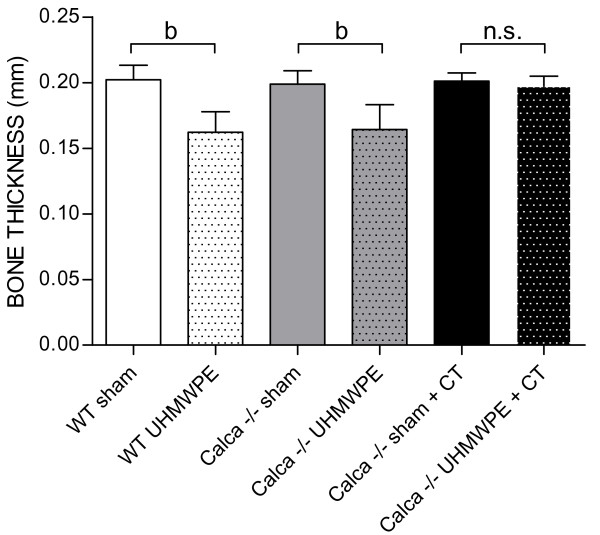
“We recently described DPD as a possible marker to detect particle-induced osteolysis [30], yet despite this finding, it Figure 4 Average bone thickness determined by histomor-”
BackgroundSelf-citation
Cited by
Osteolysis around total knee arthroplasty: A review of pathogenetic mechanisms
Gallo, J., Goodman, S. B., Konttinen, Y. T., Wimmer, M. A., & Holinka, M. (2013) · Acta Biomaterialia · doi:10.1016/j.actbio.2013.05.005 · Cited by 353
The Activity of Peptides of the Calcitonin Family in Bone
Naot, D., Musson, D. S., & Cornish, J. (2019) · Physiological Reviews · doi:10.1152/physrev.00066.2017 · Cited by 141
“The effect of CGRP on the catabolic activity of ultra-high molecular weight polyethylene (UHMWPE) particles was studied in vitro in primary human osteoblasts and in the human osteoblast-like cell line MG-63 (117, 224).”
BackgroundPereira, M., Jeyabalan, J., Jørgensen, C. S., Hopkinson, M., Al-Jazzar, A., Roux, J. P., Chavassieux, P., Orriss, I. R., Cleasby, M. E., & Chenu, C. (2015) · Bone · doi:10.1016/j.bone.2015.08.006 · Cited by 137
Calcitonin and Bone Physiology: In Vitro, In Vivo, and Clinical Investigations
Xie, J., Guo, J., Kanwal, Z., Wu, M., Lv, X., Ibrahim, N. A., Li, P., Buabeid, M. A., Arafa, E. A., & Sun, Q. (2020) · International Journal of Endocrinology · doi:10.1155/2020/3236828 · Cited by 83
“An in vitro study was conducted on osteoblasts and osteoblast-like cell line MG-63 to study the influence of CGRP on the catabolism induced by ultra-huge molecular weight polyethene (UHMWPE) particles [109, 110].”
Hu, X., Ping, Z., Gan, M., Tao, Y., Wang, L., Shi, J., Wu, X., Zhang, W., Yang, H., Xu, Y., et al. (2016) · Acta Biomaterialia · doi:10.1016/j.actbio.2016.11.022 · Cited by 70
Metadata
- Authors
- Kauther, M. D., Bachmann, H. S., Neuerburg, L., Broecker-Preuss, M., Hilken, G., Grabellus, F., Koehler, G., von Knoch, M., & Wedemeyer, C.
- Affiliations
- University of Duisburg-Essen (DE)
- University of Münster (DE)
- Corresponding author
- Kauther, Max D
- Venue
- BMC Musculoskeletal Disorders
- Published
- 2011-08-15
- Volume
- 12
- Issue
- 1
- Pages
- 186-186
- ISSN
- 1471-2474 (ISSN-L)
- PMC
- PMC3171722
- OpenAlex
- W2169263091
- Cited by
- 22
- References
- 44
- Citations by year
- 2026: 1 · 2025: 1 · 2023: 1 · 2021: 2 · 2020: 2 · 2019: 1 · 2018: 2 · 2017: 1 · 2016: 2 · 2015: 1 · 2014: 3 · 2013: 4 · 2012: 1
- FWCI
- 2.62
- Type
- journal article
- Language
- en
- Open access
- gold
- doi.org
- Licence
- Locations
- BMC Musculoskeletal Disorders (publishedVersion, cc-by)
- Europe PMC (PubMed Central) (publishedVersion, cc-by)
- PubMed Central (publishedVersion, cc-by)
- PubMed (publishedVersion)
- Universitätsbibliographie, Universität Duisburg-Essen (submittedVersion)
- DOAJ (DOAJ: Directory of Open Access Journals) (submittedVersion)
- DuEPublico (University of Duisburg-Essen) (submittedVersion, cc-by)
- Funders
- Deutsche Forschungsgemeinschaft
- University of Texas MD Anderson Cancer Center
- Universitätsklinikum Hamburg-Eppendorf
- Topics
- Health Sciences › Medicine › Surgery › Orthopaedic implants and arthroplasty
- Life Sciences › Biochemistry, Genetics and Molecular Biology › Molecular Biology › Bone Metabolism and Diseases
- Health Sciences › Medicine › Nephrology › Parathyroid Disorders and Treatments
- Keywords
- particle-induced osteolysis, periprosthetic osteolysis, aseptic loosening, arthroplasty, bone resorption, osteoclasts, osteoprotegerin, bone histomorphometry
- MeSH terms
- Animals, Bone Resorption, Calcitonin, Cell Count, Disease Models, Animal, Male, Mice, Inbred C57BL, Microspheres, Osteoclasts, Osteolysis, Prosthesis Failure, Skull, Treatment Outcome, Mice, Knockout, Polyethylene, Bone Density Conservation Agents, Mice, Osteoprotegerin
About these checks
Registry, retraction, Cites and statistics results are computed, not judged, with one exception: a printed reference that no index lists is read once by a model before it counts as a citation error. Claims are extracted by a model and kept only when their quote appears verbatim in the text; each cited source is then checked, with a model’s help, for whether it says what the claim relies on. Those verdicts can be wrong — read the claim’s quote and the cited source before relying on one.
Statistics and arithmetic are recomputed, not judged.
Confidence bands are shown only for fields calibrated on our annotated test set. None is calibrated yet, so no band is shown.
What counts as a claim ›How we measure confidence ›How we check this ›
Are you an author, or do you see a problem with this page? Request a review
Data sources
Bibliographic data: Semantic Scholar, OpenAlex, Crossref.
Contains information from the Semantic Scholar Academic Graph Datasets, made available under the ODC Attribution License (ODC-BY 1.0).
Semantic Scholar’s data is described in: Kinney, R., et al. (2023). The Semantic Scholar Open Data Platform. arXiv:2301.10140.
