

Comparisons between two biochemical markers in evaluating periodontal disease severity: a cross-sectional study
Open accessThe DOI matches its Crossref record; 46 of the 46 references it cites were found in a registry or an index.
Abstract
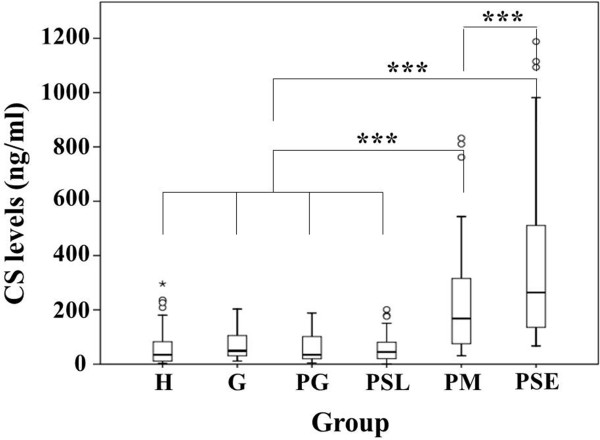
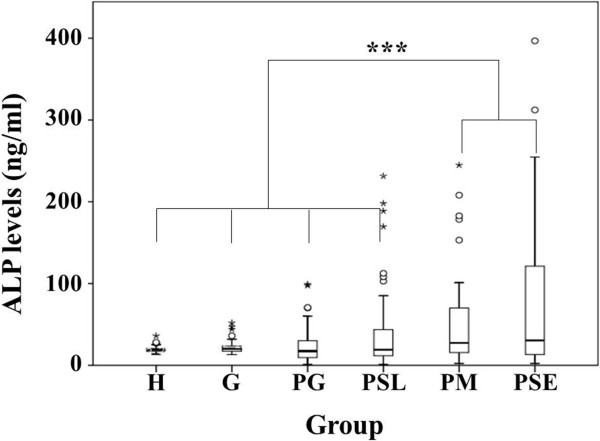
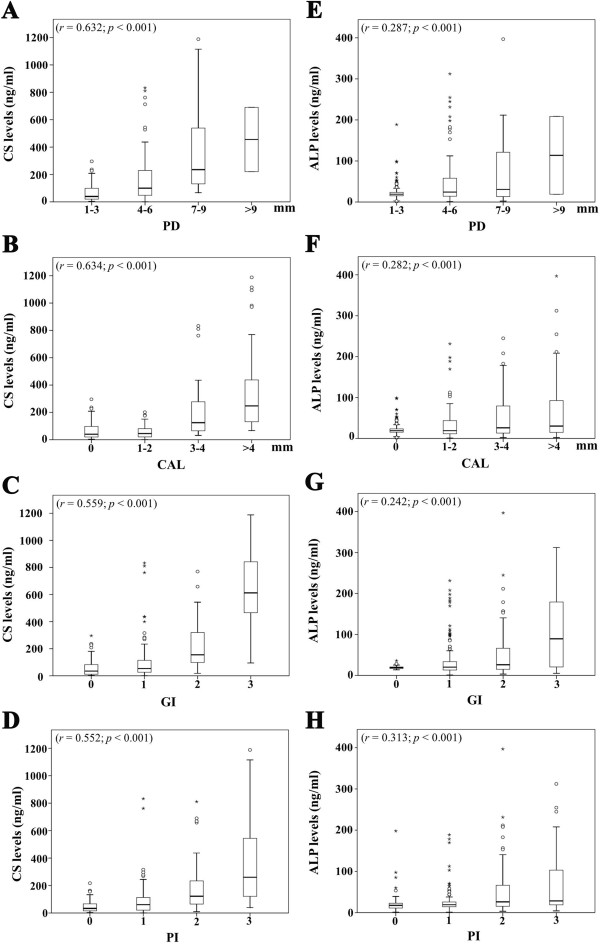
BACKGROUND: The purpose of this study was to compare two biochemical markers, which have been previously used to determine the degrees of alveolar bone destruction, in evaluating periodontal disease severity. METHODS: The WF6 epitope of chondroitin sulfate (CS) and the alkaline phosphatase (ALP) levels were determined in gingival crevicular fluid (GCF) samples collected from patients with various degrees of disease severity, including ten patients with gingivitis (50 gingivitis sites) and 33 patients with chronic periodontitis (including gingivitis, slight, moderate, and severe periodontitis sites; n = 50 each), as well as from ten healthy volunteers (50 healthy sites) by Periopaper strips. The levels of CS and ALP were measured by an ELISA and a fluorometric assay, respectively. RESULTS: The results demonstrated low levels of CS and ALP in non-destructive and slightly destructive periodontitis sites, whereas significantly high levels of these two biomolecules were shown in moderately and severely destructive sites (p < 0.05). Although a significant difference in CS levels was found between moderate and severe periodontitis sites, no difference in ALP levels was found. Stronger correlations were found between CS levels and periodontal parameters, including probing depth, loss of clinical attachment levels, gingival index and plaque index, than between ALP levels and these parameters. CONCLUSIONS: It is suggested that the CS level is a better diagnostic marker than the ALP level for evaluating distinct severity of chronic periodontitis.
Overview
The claims and statistics of this paper haven’t been checked yet.
Free: it reads the open-access text and checks the first 5 claims that cite a source we can check. Create a free account to check every claim.
Integrity signals
Registry
Cites
Statistics
Figures
Verification
Claims the paper makes
The claims and statistics of this paper haven’t been checked yet.
Free: it reads the open-access text and checks the first 5 claims that cite a source we can check. Create a free account to check every claim.
Claims other papers make about this one
Each is checked against this paper’s own text: does it say what the citing paper says it does?
In the citing paper
“However, the local concentrations of calcium and phosphate ions are not high enough to cause spontaneous precipitation31.”
From Recent advances in the pathogenesis and prevention strategies of dental calculus (2024) · cites this paper as [31]
Self-check
Percentages, sums and reported differences re-computed from the paper’s own numbers.
The self-check needs the paper’s full text.
Citations
Cites
Periodontal Disease in Pregnancy II. Correlation Between Oral Hygiene and Periodontal Condition
Silness, J., & Löe, H. (1964) · Acta Odontologica Scandinavica · doi:10.3109/00016356408993968 · Cited by 7,932 · cited 1×
“Clinical parameters, including probing depth (PD), gingival recession, CAL, plaque index (PI) [32] and gingival index (GI) [33] were recorded.”
BackgroundPeriodontal Disease in Pregnancy I. Prevalence and Severity
Löe, H., & Silness, J. (1963) · Acta Odontologica Scandinavica · doi:10.3109/00016356309011240 · Cited by 7,203 · cited 1×
“Clinical parameters, including probing depth (PD), gingival recession, CAL, plaque index (PI) [32] and gingival index (GI) [33] were recorded.”
BackgroundPeriodontal diagnoses and classification of periodontal diseases
Armitage, G. C. (2004) · Periodontology 2000 · doi:10.1046/j.0906-6713.2002.003421.x · Cited by 777 · cited 1×
“They were diagnosed according to the classification of periodontal diseases by the American Academy of Periodontology (AAP) 1999 [31].”
MethodSorsa, T., Tjäderhane, L., Konttinen, Y. T., Lauhio, A., Salo, T., Lee, H., Golub, L. M., Brown, D. L., & Mäntylä, P. (2006) · Annals of Medicine · doi:10.1080/07853890600800103 · Cited by 673 · cited 1×
“Lastly, CS is a repeating disaccharide unit of GAGs and should not be cleaved by GCF proteinases, derived from both periodontal pathogens and host cells [45], whereas ALP enzyme can be degraded by these proteinases during GCF storage.”
BackgroundDiagnostic Biomarkers for Oral and Periodontal Diseases
Taba, M., Kinney, J., Kim, A. S., & Giannobile, W. V. (2005) · Dental Clinics of North America · doi:10.1016/j.cden.2005.03.009 · Cited by 332 · cited 1×
“the conventional clinical parameters cannot [36,37].”
Development and general structure of the periodontium
CHO, M., & GARANT, P. R. (2000) · Periodontology 2000 · doi:10.1034/j.1600-0757.2000.2240102.x · Cited by 298 · cited 1×
“This may be because CS is derived only from destruction of host extracellular matrix [39], whereas ALP can be derived from both bacterial cells [40] and host cells [41-43].”
BackgroundBostanci, N., İlgenli, T., Emingil, G., Afacan, B., Han, B., Töz, H., Atilla, G., Hughes, F. J., & Belibasakis, G. N. (2007) · Journal of Clinical Periodontology · doi:10.1111/j.1600-051x.2007.01061.x · Cited by 294 · cited 1×
“These include inflammatory mediators and host-response modifiers [6-8], host-derived enzymes and their inhibitors [9-11] and tissue breakdown products [12-14].”
BackgroundPosition Paper: Diagnosis of Periodontal Diseases
Research, S. A. T. C. (2003) · Journal of Periodontology · doi:10.1902/jop.2003.74.8.1237 · Cited by 286
Analysis of Gingival Crevicular Fluid as Applied to the Diagnosis of Oral and Systemic Diseases
LAMSTER, I. B., & AHLO, J. K. (2007) · Annals of the New York Academy of Sciences · doi:10.1196/annals.1384.027 · Cited by 268
Whyte, M. P., Landt, M., Ryan, L. M., Mulivor, R. A., Henthorn, P. S., Fedde, K. N., Mahuren, J. D., & Coburn, S. P. (1995) · Journal of Clinical Investigation · doi:10.1172/jci117814 · Cited by 165 · cited 1×
“This may be because CS is derived only from destruction of host extracellular matrix [39], whereas ALP can be derived from both bacterial cells [40] and host cells [41-43].”
BackgroundHost‐derived diagnostic markers for periodontitis: do they exist in gingival crevice fluid?
Loos, B. G., & Tjoa, S. (2005) · Periodontology 2000 · doi:10.1111/j.1600-0757.2005.00129.x · Cited by 162 · cited 1×
“This may be because CS is derived only from destruction of host extracellular matrix [39], whereas ALP can be derived from both bacterial cells [40] and host cells [41-43].”
BackgroundProinflammatory cytokines in the crevicular fluid of patients with peri-implantitis
Javed, F., Al‐Hezaimi, K., Salameh, Z. A., Almas, K., & Romanos, G. E. (2010) · Cytokine · doi:10.1016/j.cyto.2010.08.013 · Cited by 148 · cited 1×
“These include inflammatory mediators and host-response modifiers [6-8], host-derived enzymes and their inhibitors [9-11] and tissue breakdown products [12-14].”
BackgroundNakashima, K., Giannopoulou, C., Andersen, E., Roehrich, N., Brochut, P., Dubrez, B., & Cimasoni, G. (1996) · Journal Of Clinical Periodontology · doi:10.1111/j.1600-051x.1996.tb00620.x · Cited by 124
Nakashima, K., Roehrich, N., & Cimasoni, G. (1994) · Journal of Clinical Periodontology · doi:10.1111/j.1600-051x.1994.tb00721.x · Cited by 124 · cited 1×
“Significantly higher concentrations of ALP were observed in periodontitis than in healthy and gingivitis sites, and positive correlations of ALP levels with clinical parameters, including PD and GI, were reported [16,38].”
BackgroundSalivary enzymes and periodontal disease.
Todorović, T., Dožić, I., Barrero, M. V., Ljušković, B., Pejović, J., Marjanović, M., & Knežević, M. (2006) · PubMed · Cited by 105
Gingival Crevicular Fluid and Plasma Acute‐Phase Cytokine Levels in Different Periodontal Diseases
Becerik, S., Öztürk, V. Ö., Atmaca, H., Atilla, G., & Emingil, G. (2012) · Journal of Periodontology · doi:10.1902/jop.2012.110616 · Cited by 101 · cited 1×
“These include inflammatory mediators and host-response modifiers [6-8], host-derived enzymes and their inhibitors [9-11] and tissue breakdown products [12-14].”
BackgroundRawlinson, A., Grummitt, J. M., Walsh, T. F., & Ian Douglas, C. W. (2003) · Journal of Clinical Periodontology · doi:10.1034/j.1600-051x.2003.300107.x · Cited by 91 · cited 1×
“These include inflammatory mediators and host-response modifiers [6-8], host-derived enzymes and their inhibitors [9-11] and tissue breakdown products [12-14].”
BackgroundReinhardt, R. A., Stoner, J. A., Golub, L. M., Lee, H., Nummikoski, P. V., Sorsa, T., & Payne, J. B. (2010) · Journal of Periodontology · doi:10.1902/jop.2009.090374 · Cited by 84 · cited 1×
“These include inflammatory mediators and host-response modifiers [6-8], host-derived enzymes and their inhibitors [9-11] and tissue breakdown products [12-14].”
BackgroundAlkaline phosphatase in human gingival fluid and its relation to periodontitis
Ishikawa, I., & Cimasoni, G. (1970) · Archives of Oral Biology · doi:10.1016/0003-9969(70)90032-4 · Cited by 69 · cited 1×
“Among host-derived enzymes, positive association between alkaline phosphatase (ALP) and periodontal disease activity has previously been reported [15,16].”
BackgroundGupta, G. (2012) · PubMed Central · Cited by 58
Tsuchida, S., Satoh, M., Kawashima, Y., Sogawa, K., Kado, S., Sawai, S., Nishimura, M., Ogita, M., Takeuchi, Y., Kobyashi, H., et al. (2013) · PROTEOMICS · doi:10.1002/pmic.201200510 · Cited by 57 · cited 1×
“These include inflammatory mediators and host-response modifiers [6-8], host-derived enzymes and their inhibitors [9-11] and tissue breakdown products [12-14].”
BackgroundPerinetti, G., Paolantonio, M., Femminella, B., Serra, E., & Spoto, G. (2008) · Journal of Periodontology · doi:10.1902/jop.2008.070519 · Cited by 55 · cited 2×
“inflamed periodontium as well as from osteoblasts during bone formation [18,19].”
BackgroundDaltaban, Ö., Saygun, I., Bal, B., Baloş, K., & Serdar, M. A. (2006) · Journal of Periodontology · doi:10.1902/jop.2006.77.1.67 · Cited by 53 · cited 1×
“Moreover, it is recognized that raised CS levels are principally due to alveolar bone resorption, whereas elevated ALP levels are found to be implicated in the process of bone formation [19] in addition to bone resorption in destructive sites [35,44].”
BackgroundLuo, L., Xie, P., Gong, P., Tang, X.-H., Ding, Y., & Deng, L.-X. (2011) · Archives of Oral Biology · doi:10.1016/j.archoralbio.2011.03.020 · Cited by 51
[Diagnosis of periodontal disease].
García, T. L., & Jm, S. F. (1987) · PubMed · Cited by 50
Agrawal, P., Sanikop, S., & Patil, S. (2012) · Journal of Indian Society of Periodontology · doi:10.4103/0972-124x.106889 · Cited by 49 · cited 3×
“The reason we chose to study the GCF levels of CS and ALP was because it was previously demonstrated that elevated levels of these two biomolecules were closely associated with alveolar bone destruction in chronic periodontitis [14,35], whereas raised levels of other biomolecules, such as host-derived pro-inflammatory…”
BackgroundResultBakri, I., Douglas, C. W. I., & Rawlinson, A. (2013) · Journal of Clinical Periodontology · doi:10.1111/jcpe.12142 · Cited by 42 · cited 1×
“A number of previous studies have recommended gingival crevicular fluid (GCF), a serum exudate, as a source of biomolecules sampling in order to evaluate periodontal disease status [2-4].”
BackgroundPothacharoen, P., Kalayanamitra, K., Deepa, S. S., Fukui, S., Hattori, T., Fukushima, N., Hardingham, T., Kongtawelert, P., & Sugahara, K. (2007) · Journal of Biological Chemistry · doi:10.1074/jbc.m702255200 · Cited by 39 · cited 1×
“The aims of this study were, therefore, to investigate the levels of CS, as determined by our patented monoclonal antibody, raised against the WF6 catabolic epitope of CS [30], and of ALP in GCF obtained from patients with various disease statuses in comparison to healthy controls, and to compare the efficiency of the…”
ResultSelf-citationOksala, O., Haapasalmi, K., Häkkinen, L., Uitto, V. J., & Larjava, H. (1997) · Journal of Dental Research · doi:10.1177/00220345970760060401 · Cited by 34 · cited 1×
“Consequently, raised levels of GAGs detectable in GCF directly reflect, and are associated with the destruction of periodontal tissues, especially alveolar bone, at the diseased site [22-25].”
BackgroundNganvongpanit, K., Itthiarbha, A., Ongchai, S., & Kongtawelert, P. (2008) · Journal of Veterinary Science · doi:10.4142/jvs.2008.9.3.317 · Cited by 34
Self-citationJúnior, A. A. B., Pallos, D., Cortelli, J. R., Saraceni, C. H. C., & Queiroz, C. S. (2010) · Revista Odonto Ciência · doi:10.1590/s1980-65232010000300003 · Cited by 33 · cited 2×
“as a phospho-hydrolytic enzyme, is a calcium- and phosphate-binding protein [17].”
BackgroundResultChapple, I., Glenwright, H. D., Matthews, J. B., Thorpe, G. H. G., & Lumley, P. J. (1994) · Journal Of Clinical Periodontology · doi:10.1111/j.1600-051x.1994.tb00738.x · Cited by 31
Gingival crevicular fluid glycosaminoglycan levels in patients with chronic adult periodontitis
Smith, A. J., Addy, M., & Embery, G. (1995) · Journal Of Clinical Periodontology · doi:10.1111/j.1600-051x.1995.tb00161.x · Cited by 30 · cited 1×
“parison to those from healthy controls [20,21].”
Ferianec, V., & Linhartová, L. (2011) · PubMed · Cited by 24
Waddington, R. J., Embery, G., & Smith, A. J. (1998) · Archives of Oral Biology · doi:10.1016/s0003-9969(97)00119-2 · Cited by 23 · cited 1×
“Consequently, raised levels of GAGs detectable in GCF directly reflect, and are associated with the destruction of periodontal tissues, especially alveolar bone, at the diseased site [22-25].”
BackgroundPruksakorn, D., Rojanasthien, S., Pothacharoen, P., Luevitoonvechkij, S., Wongtreratanachai, P., Ongchai, S., & Kongtawelert, P. (2008) · Journal of science and medicine in sport · doi:10.1016/j.jsams.2008.02.003 · Cited by 22 · cited 1×
“In addition to periodontal disease, CS levels can be precisely detected in physiologic tooth movement [26,27] and in patients with pathologic inflammatory disorders, such as degenerative joint diseases [28,29].”
BackgroundSelf-citationMakeudom, A., Kulpawaropas, S., Montreekachon, P., Khongkhunthian, S., Sastraruji, T., Pothacharoen, P., Kongtawelert, P., & Krisanaprakornkit, S. (2013) · Journal Of Clinical Periodontology · doi:10.1111/jcpe.12216 · Cited by 19 · cited 2×
“The plates were then washed three times with 150 μl/well of Trisincubation buffer (Tris-IB) [34] and dried.”
MethodSelf-citationLee, J., Choi, Y.-J., Heo, S., Lee, J., & Cho, J. (2011) · BMB Reports · doi:10.5483/bmbrep.2011.44.7.473 · Cited by 17 · cited 1×
“These include inflammatory mediators and host-response modifiers [6-8], host-derived enzymes and their inhibitors [9-11] and tissue breakdown products [12-14].”
BackgroundIntachai, I., Krisanaprakornkit, S., Kongtawelert, P., Ong-chai, S., Buranastidporn, B., Suzuki, E. Y., & Jotikasthira, D. (2009) · European Journal of Orthodontics · doi:10.1093/ejo/cjp056 · Cited by 17 · cited 1×
“In addition to periodontal disease, CS levels can be precisely detected in physiologic tooth movement [26,27] and in patients with pathologic inflammatory disorders, such as degenerative joint diseases [28,29].”
BackgroundSelf-citationRaised chondroitin sulphate WF6 epitope levels in gingival crevicular fluid in chronic periodontitis
Khongkhunthian, S., Srimueang, N., Krisanaprakornkit, S., Pattanaporn, K., Ongchai, S., & Kongtawelert, P. (2008) · Journal Of Clinical Periodontology · doi:10.1111/j.1600-051x.2008.01312.x · Cited by 13 · cited 9×
“The reason we chose to study the GCF levels of CS and ALP was because it was previously demonstrated that elevated levels of these two biomolecules were closely associated with alveolar bone destruction in chronic periodontitis [14,35], whereas raised levels of other biomolecules, such as host-derived pro-inflammatory…”
BackgroundMethodResultInfluentialSelf-citationWaddington, R. J., Langley, M. S., Guida, L., Luorio, G., Labella, R., Embery, G., & Caruso, F. P. (1996) · Journal of Periodontal Research · doi:10.1111/j.1600-0765.1996.tb00480.x · Cited by 12 · cited 1×
“Consequently, raised levels of GAGs detectable in GCF directly reflect, and are associated with the destruction of periodontal tissues, especially alveolar bone, at the diseased site [22-25].”
BackgroundInsee, K., Pothacharoen, P., Kongtawelert, P., Ongchai, S., Jotikasthira, D., & Krisanaprakornkit, S. (2013) · European Journal of Orthodontics · doi:10.1093/ejo/cjs109 · Cited by 10 · cited 1×
“In addition to periodontal disease, CS levels can be precisely detected in physiologic tooth movement [26,27] and in patients with pathologic inflammatory disorders, such as degenerative joint diseases [28,29].”
BackgroundSelf-citationUtoh, E., Okazaki, J., & Gonda, Y. (1998) · PubMed · Cited by 5
Vardar, S., Baylas, H., Zihnioğlu, F., Emingil, G., Buduneli, N., & Atilla, G. (2004) · Journal of Periodontology · doi:10.1902/jop.2004.75.3.393 · Cited by 5 · cited 1×
“parison to those from healthy controls [20,21].”
Huri, C. B., Yamalık, N., Kılınç, K., Kılınç, A., Etikán, Í., & Eratalay, K. (2003) · Journal Of Clinical Periodontology · doi:10.1034/j.1600-051x.2003.00408.x · Cited by 5 · cited 1×
“These include inflammatory mediators and host-response modifiers [6-8], host-derived enzymes and their inhibitors [9-11] and tissue breakdown products [12-14].”
BackgroundYoshinari, K., Matsumoto, K., & Misaki, H. (1999) · Cytotechnology · doi:10.1023/a:1008061424281 · Cited by 3 · cited 1×
“This may be because CS is derived only from destruction of host extracellular matrix [39], whereas ALP can be derived from both bacterial cells [40] and host cells [41-43].”
Background
Cited by
Nazar Majeed, Z., Philip, K., Alabsi, A. M., Pushparajan, S., & Swaminathan, D. (2016) · Disease Markers · doi:10.1155/2016/1804727 · Cited by 107
Zhang, Q., Chen, B., Dinggui, Z., & Yan, F. (2016) · Archives of Oral Biology · doi:10.1016/j.archoralbio.2016.08.020 · Cited by 68
“Traditionally, the diagnosis and evaluation of periodontitis are based on periodontal parameters, such as the probing pocket depth (PD), bleeding on probing (BOP), plaque index (PI), gingival recession (GR), clinical attachment loss (CAL) and radiographic findings (Khongkhunthian et al., 2014).”
BackgroundRecent advances in the pathogenesis and prevention strategies of dental calculus
Wei, Y., Dang, G.-P., Ren, Z.-Y., Wan, M.-C., Wang, C.-Y., Li, H.-B., Zhang, T., Tay, F. R., & Niu, L.-N. (2024) · npj Biofilms and Microbiomes · doi:10.1038/s41522-024-00529-1 · Cited by 43
“However, the local concentrations of calcium and phosphate ions are not high enough to cause spontaneous precipitation 31 .”
BackgroundZorzetto, L., Scoppola, E., Raguin, É., Blank, K. G., Fratzl, P., & Bidan, C. M. (2023) · Chemistry of Materials · doi:10.1021/acs.chemmater.2c02969 · Cited by 35
Microbial β-glucuronidases drive human periodontal disease etiology
Lietzan, A. D., Simpson, J. B., Walton, W. G., Jariwala, P. B., Xu, Y., Boynton, M. H., Liu, J., & Redinbo, M. R. (2023) · Science Advances · doi:10.1126/sciadv.adg3390 · Cited by 27
Metadata
- Authors
- Khongkhunthian, S., Kongtawelert, P., Ongchai, S., Pothacharoen, P., Sastraruji, T., Jotikasthira, D., & Krisanaprakornkit, S.
- Affiliations
- Chiang Mai University (TH)
- Corresponding author
- Krisanaprakornkit, Suttichai
- ORCID
- Venue
- BMC Oral Health
- Published
- 2014-08-30
- Volume
- 14
- Issue
- 1
- Pages
- 107-107
- ISSN
- 1472-6831 (ISSN-L)
- PMC
- PMC4236641
- OpenAlex
- W1963908810
- Cited by
- 19
- References
- 46
- Citations by year
- 2025: 1 · 2024: 2 · 2023: 4 · 2022: 1 · 2021: 1 · 2020: 1 · 2019: 1 · 2018: 3 · 2017: 2 · 2016: 3
- FWCI
- 2.23
- Type
- journal article
- Language
- en
- Open access
- gold
- doi.org
- Licence
- Locations
- BMC Oral Health (publishedVersion, cc-by)
- PubMed Central (publishedVersion, cc-by)
- PubMed (publishedVersion)
- Funders
- Chiang Mai University
- National Science and Technology Development Agency
- Thailand Research Fund (BRG5680001)
- Ministry of Science and Technology of Thailand
- Topics
- Health Sciences › Dentistry › Periodontics › Oral microbiology and periodontitis research
- Health Sciences › Dentistry › Periodontics › Periodontal Regeneration and Treatments
- Health Sciences › Dentistry › Periodontics › Oral and gingival health research
- Keywords
- periodontal disease severity, chronic periodontitis, gingivitis, chondroitin sulfate, alkaline phosphatase, gingival crevicular fluid, biochemical markers, alveolar destruction, clinical attachment loss, probing depth, diagnostic biomarkers
- MeSH terms
- Adult, Alkaline Phosphatase, Antibodies, Monoclonal, Epitopes, Chondroitin Sulfates, Cross-Sectional Studies, Dental Plaque Index, Female, Gingival Crevicular Fluid, Gingival Recession, Gingivitis, Humans, Male, Middle Aged, Periodontal Index, Periodontal Pocket, Periodontitis, Periodontium, Biomarkers, Alveolar Bone Loss, Periodontal Attachment Loss, Chronic Periodontitis
About these checks
Registry, retraction, Cites and statistics results are computed, not judged, with one exception: a printed reference that no index lists is read once by a model before it counts as a citation error. Claims are extracted by a model and kept only when their quote appears verbatim in the text; each cited source is then checked, with a model’s help, for whether it says what the claim relies on. Those verdicts can be wrong — read the claim’s quote and the cited source before relying on one.
Statistics and arithmetic are recomputed, not judged.
Confidence bands are shown only for fields calibrated on our annotated test set. None is calibrated yet, so no band is shown.
What counts as a claim ›How we measure confidence ›How we check this ›
Are you an author, or do you see a problem with this page? Request a review
Data sources
Bibliographic data: Semantic Scholar, OpenAlex, Crossref.
Contains information from the Semantic Scholar Academic Graph Datasets, made available under the ODC Attribution License (ODC-BY 1.0).
Semantic Scholar’s data is described in: Kinney, R., et al. (2023). The Semantic Scholar Open Data Platform. arXiv:2301.10140.
