

The DOI matches its Crossref record; 48 of the 49 references it cites were found in a registry or an index.
Effects of two Lactobacillus strains on lipid metabolism and intestinal microflora in rats fed a high-cholesterol diet
Open accessAbstract
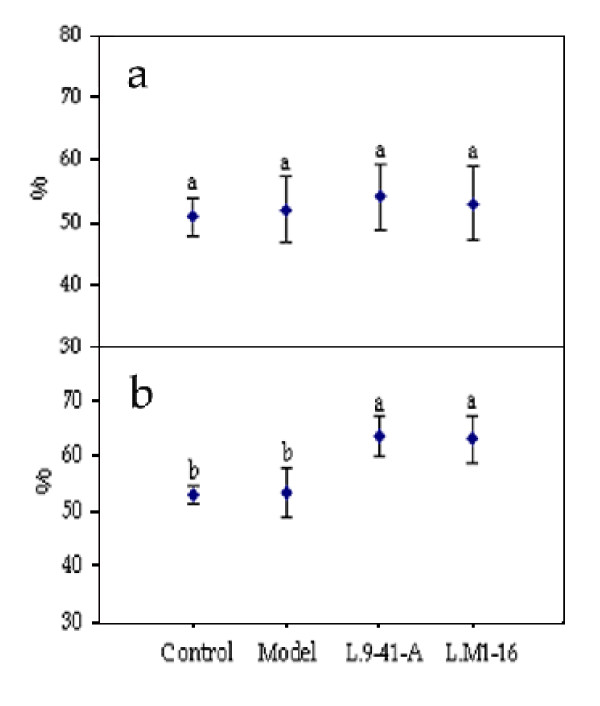
BACKGROUND: The hypocholesterolemic effects of lactic acid bacteria (LAB) have now become an area of great interest and controversy for many scientists. In this study, we evaluated the effects of Lactobacillus plantarum 9-41-A and Lactobacillus fermentum M1-16 on body weight, lipid metabolism and intestinal microflora of rats fed a high-cholesterol diet. METHODS: Forty rats were assigned to four groups and fed either a normal or a high-cholesterol diet. The LAB-treated groups received the high-cholesterol diet supplemented with Lactobacillus plantarum 9-41-A or Lactobacillus fermentum M1-16. The rats were sacrificed after a 6-week feeding period. Body weights, visceral organ and fat pad weights, serum and liver cholesterol and lipid levels, and fecal cholesterol and bile acid concentrations were measured. Liver lipid deposition and adipocyte size were evaluated histologically. RESULTS: Compared with rats fed a high-cholesterol diet but without LAB supplementation, serum total cholesterol, low-density lipoprotein cholesterol and triglycerides levels were significantly decreased in LAB-treated rats (p < 0.05), with no significant change in high-density lipoprotein cholesterol levels. Hepatic cholesterol and triglyceride levels and liver lipid deposition were significantly decreased in the LAB-treated groups (p < 0.05). Accordingly, both fecal cholesterol and bile acids levels were significantly increased after LAB administration (p < 0.05). Intestinal Lactobacillus and Bifidobacterium colonies were increased while Escherichia coli colonies were decreased in the LAB-treated groups. Fecal water content was higher in the LAB-treated groups. Compared with rats fed a high-cholesterol diet, administration of Lactobacillus plantarum 9-41-A resulted in decreases in the body weight gain, liver and fat pad weight, and adipocytes size (p < 0.05). CONCLUSIONS: This study suggests that LAB supplementation has hypocholesterolemic effects in rats fed a high-cholesterol diet. The ability to lower serum cholesterol varies among LAB strains. Our strains might be able to improve the intestinal microbial balance and potentially improve intestinal transit time. Although the mechanism is largely unknown, L. plantarum 9-41-A may play a role in fat metabolism.
Overview
The claims and statistics of this paper haven’t been checked yet.
Run the check — free, no account needed. It reads the open-access text and checks the sources it cites.
Integrity signals
Registry
Cites
Statistics
Figures
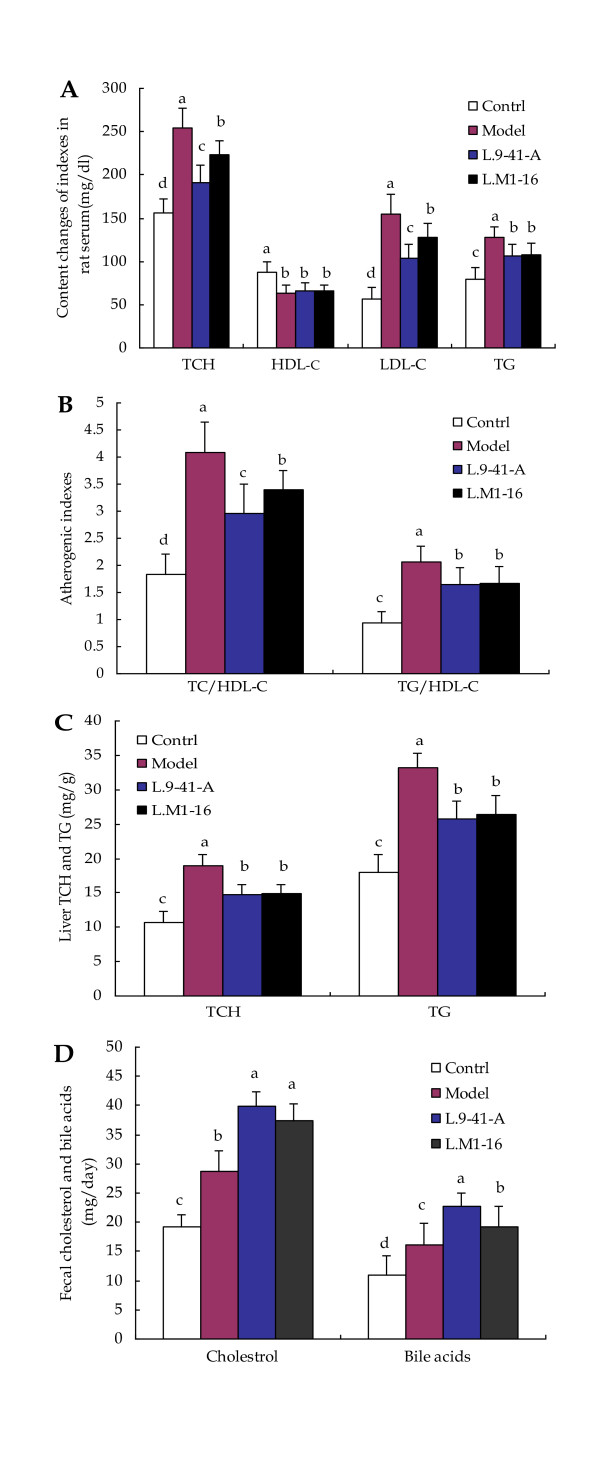
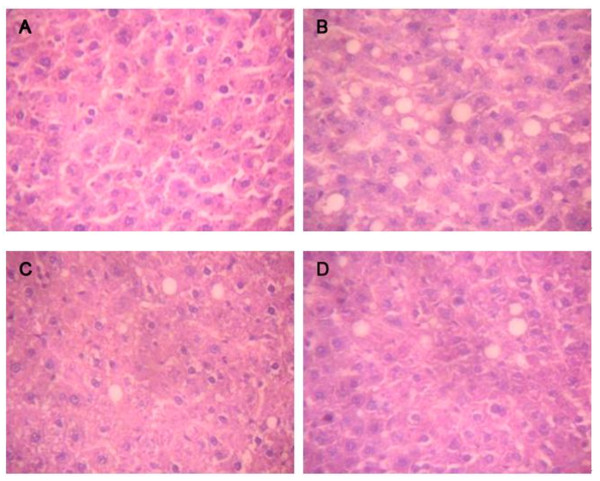
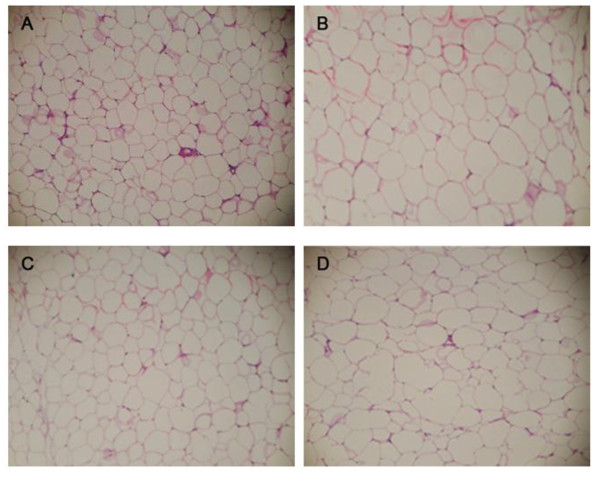
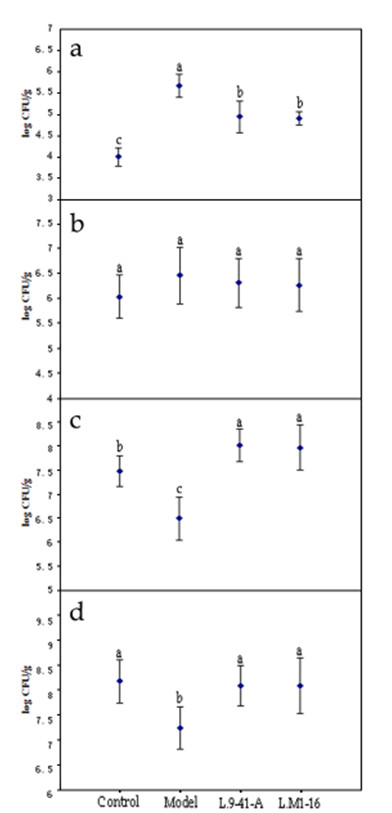
Verification
Claims the paper makes
The claims and statistics of this paper haven’t been checked yet.
Run the check — free, no account needed. It reads the open-access text and checks the sources it cites.
Claims other papers make about this one
Each is checked against this paper’s own text: does it say what the citing paper says it does?
The check wasn’t confident either way, so it gives no verdict — never disputed.
In the citing paper
“Therefore, the dosage of 5 × 10⁹ CFU/mL has been widely utilized in the field of probiotic preparations.”
From Lactiplantibacillus plantarum N4 ameliorates lipid metabolism and gut microbiota structure in high fat diet-fed rats (2024) · cites this paper as Xie et al., 2011
Experimental — accuracy not yet measured
Self-check
Percentages, sums and reported differences re-computed from the paper’s own numbers.
The self-check needs the paper’s full text.
Citations
Cites
AFRC, R. F. (1989) · Journal of Applied Bacteriology · doi:10.1111/j.1365-2672.1989.tb05105.x · Cited by 4,831
Bile acids induce energy expenditure by promoting intracellular thyroid hormone activation
Watanabe, M., Houten, S. M., Mataki, C., Christoffolete, M. A., Kim, B. W., Sato, H., Messaddeq, N., Harney, J. W., Ezaki, O., Kodama, T., et al. (2006) · Nature · doi:10.1038/nature04330 · Cited by 2,220
Probiotics in man and animals.
Fuller, R. (1989) · PubMed · Cited by 1,292
Bile Salt Hydrolase Activity in Probiotics
Begley, M., Hill, C., & Gahan, C. G. M. (2006) · Applied and Environmental Microbiology · doi:10.1128/aem.72.3.1729-1738.2006 · Cited by 1,187
Assimilation of cholesterol by Lactobacillus acidophilus
Gilliland, S. E., Nelson, C. R., & Maxwell, C. V. (1985) · Applied and Environmental Microbiology · doi:10.1128/aem.49.2.377-381.1985 · Cited by 652
Acid and Bile Tolerance and Cholesterol Removal Ability of Lactobacilli Strains
Liong, M., & Shah, N. P. (2005) · Journal of Dairy Science · doi:10.3168/jds.s0022-0302(05)72662-x · Cited by 538
The Primary Prevention of Myocardial Infarction
Manson, J. E., Tosteson, H., Ridker, P. M., Satterfield, S., Hebert, P., O'Connor, G. T., Buring, J. E., & Hennekens, C. H. (1992) · New England Journal of Medicine · doi:10.1056/nejm199205213262107 · Cited by 508
Cholesterol Assimilation by Lactic Acid Bacteria and Bifidobacteria Isolated from the Human Gut
Pereira, D. I. A., & Gibson, G. R. (2002) · Applied and Environmental Microbiology · doi:10.1128/aem.68.9.4689-4693.2002 · Cited by 481
Studies of a surfactant and cholesteremia in the Maasai
Mann, G. V., & Spoerry, A. (1974) · American Journal of Clinical Nutrition · doi:10.1093/ajcn/27.5.464 · Cited by 386
High Ratio of Triglycerides to HDL-Cholesterol Predicts Extensive Coronary Disease
da Luz, P. L., Favarato, D., Faria‐Neto, J. R., Lemos, P. A., & Chagas, A. C. P. (2008) · Clinics · doi:10.1590/s1807-59322008000400003 · Cited by 385
Cited by
Sorted by citations
Items 201–207 of 207
PROSPEK DAN PERKEMBANGAN BIOTEKNOLOGI MIKROBAPreprint
Hafsan (2023) · OSF Preprints (OSF Preprints) · doi:10.31219/osf.io/wy3zx
Suzuki, Y., Ishioka, K., Nakamura, T., Miyazaki, N., Marubashi, S., & Suzutani, T. (2025) · Nutrients · doi:10.3390/nu17111931
Role of probiotics in health and diseases
Trabzuni, D. M. (2019) · International Journal of Biosciences (IJB) · doi:10.12692/ijb/14.2.319-325
Chriaa, O., Amor, M. G.-B., Mathlouthi, N. E. H., Slima, A. B., Mhalhel, K., Turki, M., Kacem, F. H., Germanà, A., Ali, M. B., & Gdoura, R. (2026) · World Journal of Microbiology and Biotechnology · doi:10.1007/s11274-026-04816-1
Anti-Obesity Effect of Probiotic Carrot Nectar Incorporated with L. Plantarum MCC5231
Goel, A., Khan, M. T., Muthukumar, S., Chauhan, A. S., Tamang, J. P., & Halami, P. M. (2026) · Probiotics and Antimicrobial Proteins · doi:10.1007/s12602-025-10902-x
Impact du microbiote intestinal dans la maladie alcoolique du foie
Cailleux, F. (2014) · theses.fr (ABES) · doi:10.70675/a55c2e90z2db3z41c3z8036z19a4571a6b81
Gao, Y., & Li, D. (2026) · Frontiers in Microbiology · doi:10.3389/fmicb.2026.1830530
Metadata
- Authors
- Xie, N., Cui, Y., Yin, Y.-N., Zhao, X., Yang, J.-W., Wang, Z.-G., Fu, N., Tang, Y., Wang, X.-H., Liu, X.-W., Wang, C.-L., & Lu, F.-G.
- Affiliations
- Central South University (CN)
- University of South China (CN)
- Venue
- BMC Complementary and Alternative Medicine
- Published
- 2011-07-03
- Volume
- 11
- Issue
- 1
- Pages
- 53-53
- ISSN
- 1472-6882 (ISSN-L)
- PMC
- PMC3144010
- OpenAlex
- W2167081472
- Cited by
- 211
- References
- 49
- Citations by year
- 2026: 5 · 2025: 12 · 2024: 15 · 2023: 8 · 2022: 16 · 2021: 20 · 2020: 24 · 2019: 21 · 2018: 13 · 2017: 6 · 2016: 9 · 2015: 15 · 2014: 23 · 2013: 11 · 2012: 12
- FWCI
- 21.99
- Type
- journal article
- Language
- en
- Open access
- gold
- doi.org
- Licence
- Locations
- BMC Complementary and Alternative Medicine (publishedVersion, cc-by)
- Europe PMC (PubMed Central) (publishedVersion, cc-by)
- PubMed Central (publishedVersion, cc-by)
- PubMed (publishedVersion)
- DOAJ (DOAJ: Directory of Open Access Journals) (submittedVersion, cc-by-sa)
- Funders
- National Natural Science Foundation of China
- Topics
- Life Sciences › Agricultural and Biological Sciences › Food Science › Probiotics and Fermented Foods
- Life Sciences › Biochemistry, Genetics and Molecular Biology › Molecular Biology › Gut microbiota and health
- Life Sciences › Immunology and Microbiology › Microbiology › Reproductive tract infections research
- Keywords
- Lactobacillus plantarum, Lactobacillus fermentum, lactic acid bacteria, cholesterol-lowering effect, high-cholesterol diet, serum cholesterol, liver cholesterol, fecal cholesterol, bile acids, gut microbiota, Bifidobacterium, Escherichia coli, adipocyte size, fat pad weight, lipid metabolism, dietary supplementation
- MeSH terms
- Adipose Tissue, Animals, Anticholesteremic Agents, Bacteria, Bile Acids and Salts, Cholesterol, Cholesterol, Dietary, Feces, Hypercholesterolemia, Intestines, Lactobacillus, Liver, Male, Organ Size, Triglycerides, Water, Weight Gain, Rats, Sprague-Dawley, Adipocytes, Dietary Supplements, Probiotics, Lactobacillus plantarum, Lactiplantibacillus plantarum, Lipid Metabolism, Rats, Limosilactobacillus fermentum, Microbial Interactions
About these checks
Registry, retraction, Cites and statistics results are computed, not judged, with one exception: a printed reference that no index lists is read once by a model before it counts as a citation error. Claims are extracted by a model and kept only when their quote appears verbatim in the text; each cited source is then checked, with a model’s help, for whether it says what the claim relies on. Those verdicts can be wrong — read the claim’s quote and the cited source before relying on one.
Statistics and arithmetic are recomputed, not judged.
Confidence bands are shown only for fields calibrated on our annotated test set. None is calibrated yet, so no band is shown.
What counts as a claim ›How we measure confidence ›How we check this ›
Are you an author, or do you see a problem with this page? Request a review
