

The DOI matches its Crossref record; 45 of the 45 references it cites were found in a registry or an index.
Antimicrobial activities of endophytic fungi isolated from Ophiopogon japonicus (Liliaceae)
Open accessAbstract
Background: Drug resistance in bacteria has become a global concern and the search for new antibacterial agents is urgent and ongoing. Endophytes provide an abundant reservoir of bioactive metabolites for medicinal exploitation, and an increasing number of novel compounds are being isolated from endophytic fungi. Ophiopogon japonicus, containing compounds with antibacterial activity, is a traditional Chinese medicinal plant used for eliminating phlegm, relieving coughs, latent heat in the lungs, and alleviating diabetes mellitus. We investigated the antimicrobial activities of 30 strains of O. japonicus. Methods: Fungal endophytes were isolated from roots and stems of O. japonicus collected from Chongqing City, southwestern China. Mycelial extracts (MC) and fermentation broth (FB) were tested for antimicrobial activity using peptide deformylase (PDF) inhibition fluorescence assays and MTT cell proliferation assays. Results: A total of 30 endophytic strains were isolated from O. japonicus; 22 from roots and eight from stems. 53.33% of the mycelial extracts (MC) and 33.33% of the fermentation broths (FB) displayed potent inhibition of PDF. 80% of MC and 33.33% of FB significantly inhibited Staphylococcus aureus. 70% of MC and 36.67% of FB showed strong activities against Cryptococcus neoformans. None showed influence on Escherichia coli. Conclusion: The secondary metabolites of endophytic fungi from O. japonicus are potential antimicrobial agents.
Overview
The claims and statistics of this paper haven’t been checked yet.
Run the check — free, no account needed. It reads the open-access text and checks the sources it cites.
Integrity signals
Registry
Cites
Statistics
Figures
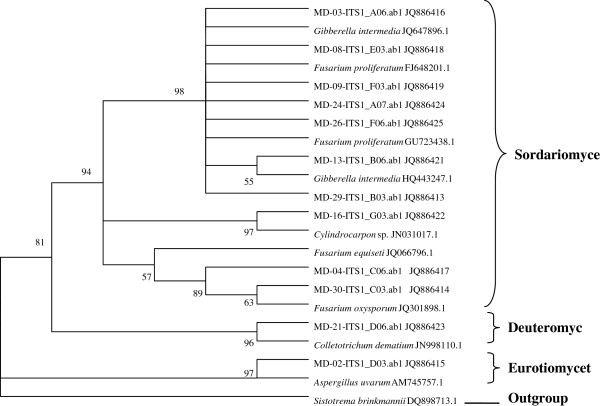
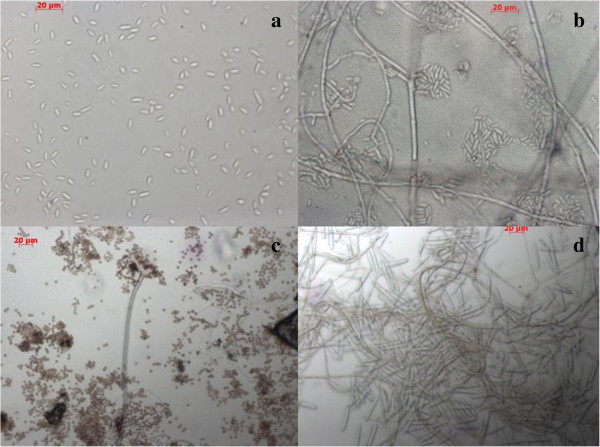
Verification
Claims the paper makes
The claims and statistics of this paper haven’t been checked yet.
Run the check — free, no account needed. It reads the open-access text and checks the sources it cites.
Claims other papers make about this one
Each is checked against this paper’s own text: does it say what the citing paper says it does?
The source backs part of the claim, not all of it — or backs it for a different population, condition or comparison.
In the citing paper
“Tetrazolium salts, 3-(4,5-dimethylthiazol-2-yl)-2,5-diphenyltetrazolium bromide (MTT) and 2,3-bis {2-methoxy-4-nitro-5-[(sulfenylamino) carbonyl]-2H-tetrazolium-hydroxide} (XTT), are often used in the MIC endpoint determination for both antifungal and antibacterial microdilution assays [57], [58], [59], [60].”
From Methods for in vitro evaluating antimicrobial activity: A review (2016) · cites this paper as [58]
Experimental — accuracy not yet measured
Self-check
Percentages, sums and reported differences re-computed from the paper’s own numbers.
The self-check needs the paper’s full text.
Citations
Cites
Mosmann, T. (1983) · Journal of Immunological Methods · doi:10.1016/0022-1759(83)90303-4 · Cited by 56,104
Rapid colorimetric assay for cell growth and survival
Denizot, F., & Lang, R. (1986) · Journal of Immunological Methods · doi:10.1016/0022-1759(86)90368-6 · Cited by 4,935
Bioprospecting for Microbial Endophytes and Their Natural Products
Strobel, G. A., & Daisy, B. (2003) · Microbiology and Molecular Biology Reviews · doi:10.1128/mmbr.67.4.491-502.2003 · Cited by 2,364
Are tropical fungal endophytes hyperdiverse?
Arnold, A. E., Maynard, Z., Gilbert, G. S., Coley, P. D., & Kursar, T. A. (2000) · Ecology Letters · doi:10.1046/j.1461-0248.2000.00159.x · Cited by 832
Pharmacology and applications of chinese materia medica
(1987) · European Journal of Medicinal Chemistry · doi:10.1016/0223-5234(87)90305-9 · Cited by 557
A Convenient Microdilution Method for Screening Natural Products Against Bacteria and Fungi
Zgoda-Pols, J. R., & Porter, J. R. (2001) · Pharmaceutical Biology · doi:10.1076/phbi.39.3.221.5934 · Cited by 407
Pestalachlorides A–C, antifungal metabolites from the plant endophytic fungus Pestalotiopsis adusta
Li, E., Jiang, L., Guo, L., Zhang, H., & Che, Y. (2008) · Bioorganic & Medicinal Chemistry · doi:10.1016/j.bmc.2008.07.075 · Cited by 252
Antibiotic Activity and Characterization of BB-3497, a Novel Peptide Deformylase Inhibitor
Clements, J. M., Beckett, R. P., Brown, A. E., Catlin, G., Lobell, M., Palan, S., Thomas, W., Whittaker, M. A., Wood, S., Salama, S. M., et al. (2001) · Antimicrobial Agents and Chemotherapy · doi:10.1128/aac.45.2.563-570.2001 · Cited by 231
Pharmacology and Applications of Chinese Materia Medica
CHANG, H.-M., But, P. P., Yao, S.-C., Wang, L.-L., & Yeung, S. C.-S. (1986) · WORLD SCIENTIFIC eBooks · doi:10.1142/0284 · Cited by 216
Subglutinols A and B: Immunosuppressive compounds from the endophytic fungus Fusarium subglutinans
Lee, J. C., Lobkovsky, E. B., Pliam, N. B., Strobel, G. A., & Clardy, J. (1995) · The Journal of Organic Chemistry · doi:10.1021/jo00127a001 · Cited by 188
Peptide deformylase as a target for new generation, broad spectrum antimicrobial agents
Giglione, C., Pierre, M., & Meinnel, T. (2000) · Molecular Microbiology · doi:10.1046/j.1365-2958.2000.01908.x · Cited by 186
Wang, F. W., Jiao, R., Cheng, A. B., Tan, S. H., & Song, Y. (2006) · World Journal of Microbiology and Biotechnology · doi:10.1007/s11274-006-9195-4 · Cited by 178
Isolation and analysis of endophytic fungal communities from woody plants.
Bills, G. F. (1996) · Cited by 166
Kim, S., Shin, D., Lee, T., & Oh, K. (2004) · Journal of Natural Products · doi:10.1021/np030384h · Cited by 141
Kou, J., Sun, Y., Lin, Y.-W., Cheng, Z., Zheng, W., Yu, B., & Xu, Q. (2005) · Biological and Pharmaceutical Bulletin · doi:10.1248/bpb.28.1234 · Cited by 134
Traditional Chinese Medicines in Treatment of Patients with Type 2 Diabetes Mellitus
Xie, W., Zhao, Y., & Zhang, Y. (2011) · Evidence-based Complementary and Alternative Medicine · doi:10.1155/2011/726723 · Cited by 132
Endophytic Fungi in Grasses and Woody Plants. Systematics, Ecology and Evolution
Stone, J. K. (1997) · Forest Science · doi:10.1093/forestscience/43.3.458 · Cited by 129
Deformylase as a novel antibacterial target
Yuan, Z., Trias, J., & White, R. J. (2001) · Drug Discovery Today · doi:10.1016/s1359-6446(01)01925-0 · Cited by 124
Xu, L., Han, T., Wu, J.-Z., Zhang, Q., Zhang, H., Huang, B., Rahman, K., & Qin, L. (2009) · Phytomedicine · doi:10.1016/j.phymed.2009.03.014 · Cited by 119
Xing, Y.-M., Chen, J., Cui, J., Chen, X., & Guo, S. (2010) · Current Microbiology · doi:10.1007/s00284-010-9848-2 · Cited by 113
Self-citationHydroxamic Acid Derivatives as Potent Peptide Deformylase Inhibitors and Antibacterial Agents
Apfel, C. M., Banner, D. W., Bur, D., Dietz, M., Hirata, T., Hubschwerlen, C., Locher, H. H., Page, M. G. P., Pirson, W., Rossé, G., et al. (2000) · Journal of Medicinal Chemistry · doi:10.1021/jm000018k · Cited by 112
Chemical constituents from endophytic fungus Fusarium oxysporum
Wang, Q., Li, S.-F., Zhao, F., Dai, H., Bao, L., Ding, R., Gao, H., Zhang, L., Wen, H., & Liu, H. (2011) · Fitoterapia · doi:10.1016/j.fitote.2011.04.002 · Cited by 111
Endophytic Fungi in Grasses and Woody Plants. Systematics, Ecology and Evolution.
Rogerson, C. T., Redlin, S. C., & Carris, L. M. (1997) · The Journal of the Torrey Botanical Society · doi:10.2307/2996588 · Cited by 105
Endophytic fungi assemblages from 10 Dendrobium medicinal plants (Orchidaceae)
Chen, J., Hu, K.-X., Hou, X., & Guo, S. (2010) · World Journal of Microbiology and Biotechnology · doi:10.1007/s11274-010-0544-y · Cited by 102
Self-citationAntimicrobial activity of endophytic fungi associated with Orchidaceae in Brazil
Vaz, A. B. M., da Mota, R. C., Bomfim, M. R. Q., Vieira, M. L. A., Zani, C. L., Rosa, C. A., & Rosa, L. H. (2009) · Canadian Journal of Microbiology · doi:10.1139/w09-101 · Cited by 100
CR377, a New Pentaketide Antifungal Agent Isolated from an Endophytic Fungus
Brady, S. F., & Clardy, J. (2000) · Journal of Natural Products · doi:10.1021/np990568p · Cited by 95
Hung, T. M., Thu, C. V., Đạt, N. T., Ryoo, S., Lee, J. H., Kim, J. C., Na, M., Jung, H., Bae, K., & Min, B. S. (2010) · Bioorganic & Medicinal Chemistry Letters · doi:10.1016/j.bmcl.2010.03.043 · Cited by 61
Peptide deformylase: a target for novel antibiotics?
Pei, D. (2001) · Emerging Therapeutic Targets · doi:10.1517/14728222.5.1.23 · Cited by 40
Terpenoid glycosides from Ophiopogon japonicus roots
Adinolfi, M., Parrilli, M., & Zhu, Y. (1990) · Phytochemistry · doi:10.1016/0031-9422(90)80151-6 · Cited by 38
Isolating endophytic fungi from evergreen plants and determining their antifungal activities
Liu, C., Liu, T., Yuan, F., & Gu, Y. (2010) · African Journal of Microbiology Research · doi:10.5897/ajmr.9000442 · Cited by 34
Two homoisoflavones from Ophiopogon japonicus
Zhu, Y., Yan, K., & Tu, G. (1987) · Phytochemistry · doi:10.1016/s0031-9422(00)83615-8 · Cited by 34
Li, L., Ding, Y., Groth, I., Menzel, K., Peschel, G., Voigt, K., Deng, Z.-W., Sattler, I., & Lin, W. (2008) · Journal of Asian Natural Products Research · doi:10.1080/10286020802031106 · Cited by 31
Wang, F., Cao, L., & Hu, S. (2007) · Journal of Zhejiang University SCIENCE B · doi:10.1631/jzus.2007.b0549 · Cited by 18
Cui, J., Guo, S., Dong, H., & Xiao, P. (2011) · Phytotherapy Research · doi:10.1002/ptr.3361 · Cited by 16
Self-citationStudies on the Components of Ophiopogon tuber (China). II
Nakanishi, H., & Kaneda, N. (1987) · YAKUGAKU ZASSHI · doi:10.1248/yakushi1947.107.10_780 · Cited by 15
Millán, A. F., Obregón, P., & Veramendi, J. (2010) · Transgenic Research · doi:10.1007/s11248-010-9447-9 · Cited by 13
[Formation of blood resin in abiotic Dracaena cochinchinensis inoculated with Fusarium 9568D].
Jiang, D.-F., Ma, P., Yang, J., Wang, X., Kunyi, X., Huang, Y., & Chen, S. (2003) · PubMed · Cited by 13
倪志伟, 李国红, Zhao, P., & 沈月毛 (2008) · Tianran chanwu yanjiu yu kaifa · Cited by 10
Nam, K. H., Ham, J. I., Priyadarshi, A., Kim, E. E., Chung, N., & Hwang, K. Y. (2008) · Proteins Structure Function and Bioinformatics · doi:10.1002/prot.22257 · Cited by 3
Effects of methanol extracts from Ophiopogon japonicus on rice blast fungus
Lin, D., Tsuzuki, E., Sugimoto, Y., & Matsuo, M. (2003) · Zenodo (CERN European Organization for Nuclear Research) · doi:10.5281/zenodo.7005397 · Cited by 3
Study on the eliminating phlegm effect and bacteriostatic action of compound Maidong pills
Zhao, B. (2008) · Chinese Journal of Hospital Pharmacy · Cited by 3
Dong-zhi, L. (2009) · Anhui nongye kexue · Cited by 3
Study on the Bacteriostasis of Some Kinds of Chinese Herbal Medicine Extracting Solution
Yuan-min, Z. (2007) · Anhui nongye kexue · Cited by 2
Xian-Bingtang, Shu-Yisi, & Yue-Qinzhang (2004) · PubMed · Cited by 2
Li, X. (2001) · Journal of Shandong University of Traditional Chinese Medicine · Cited by 1
Research works printed but not linked: 2
- Flora of China Editorial Committee of Chinese Academy of Sciences: Flora of China. 1978, Beijing: Science Press, 130-164.
- Lin D: Study on allelopathy of dwarf lilyturf (Ophiopogon japonicus Ker-Gawl.). MS thesis. 2001, Japan: Miyazaki University, 15-47.
Cited by
Sorted by citations
Methods for in vitro evaluating antimicrobial activity: A review
Balouiri, M., Sadiki, M., & Ibnsouda, S. K. (2016) · Journal of Pharmaceutical Analysis · doi:10.1016/j.jpha.2015.11.005 · Cited by 8,044
Alkaloids Used as Medicines: Structural Phytochemistry Meets Biodiversity—An Update and Forward Look
Heinrich, M., Mah, J., & Amirkia, V. (2021) · Molecules · doi:10.3390/molecules26071836 · Cited by 449
The structures and biological functions of polysaccharides from traditional Chinese herbs
Zeng, P., Li, J., Chen, Y., & Zhang, L. (2019) · Progress in molecular biology and translational science · doi:10.1016/bs.pmbts.2019.03.003 · Cited by 404
A worldwide list of endophytic fungi with notes on ecology and diversity
Rashmi, M. (2019) · Mycosphere · doi:10.5943/mycosphere/10/1/19 · Cited by 245
Ophiopogon japonicus—A phytochemical, ethnomedicinal and pharmacological review
Chen, M., Chen, X., Wang, M., Lin, L., & Wang, Y. (2016) · Journal of Ethnopharmacology · doi:10.1016/j.jep.2016.01.037 · Cited by 221
Metadata
- Authors
- Liang, H., Xing, Y., Chen, J., Zhang, D., Guo, S., & Wang, C.
- Affiliations
- Chinese Academy of Medical Sciences & Peking Union Medical College (CN)
- Corresponding author
- Wang, Chunlan
- Venue
- BMC Complementary and Alternative Medicine
- Published
- 2012-11-28
- Volume
- 12
- Issue
- 1
- Pages
- 238-238
- ISSN
- 1472-6882 (ISSN-L)
- PMC
- PMC3534486
- OpenAlex
- W2164806808
- Cited by
- 108
- References
- 45
- Citations by year
- 2026: 3 · 2025: 5 · 2024: 8 · 2023: 10 · 2022: 12 · 2021: 11 · 2020: 12 · 2019: 15 · 2018: 6 · 2017: 7 · 2016: 5 · 2015: 3 · 2014: 9 · 2013: 2
- FWCI
- 3.29
- Type
- journal article
- Language
- en
- Open access
- gold
- doi.org
- Locations
- BMC Complementary and Alternative Medicine (publishedVersion, cc-by)
- Europe PMC (PubMed Central) (publishedVersion, cc-by)
- PubMed Central (publishedVersion, cc-by)
- PubMed (publishedVersion)
- DOAJ (DOAJ: Directory of Open Access Journals) (submittedVersion, cc-by-sa)
- Funders
- National Natural Science Foundation of China (31170016, 31070300)
- Topics
- Life Sciences › Immunology and Microbiology › Applied Microbiology and Biotechnology › Microbial Natural Products and Biosynthesis
- Life Sciences › Agricultural and Biological Sciences › Ecology, Evolution, Behavior and Systematics › Plant and fungal interactions
- Health Sciences › Medicine › Pharmacology (medical) › Biological and pharmacological studies of plants
- Keywords
- endophytic fungi, Ophiopogon japonicus, antimicrobial activity, Staphylococcus aureus, Cryptococcus neoformans, secondary metabolites, mycelial extract, fermentation broth, traditional Chinese medicinal plants, antibacterial agents
- MeSH terms
- Anti-Infective Agents, Bacteria, Cryptococcus neoformans, Fungi, Molecular Sequence Data, Phylogeny, Ophiopogon, Endophytes
About these checks
Registry, retraction, Cites and statistics results are computed, not judged, with one exception: a printed reference that no index lists is read once by a model before it counts as a citation error. Claims are extracted by a model and kept only when their quote appears verbatim in the text; each cited source is then checked, with a model’s help, for whether it says what the claim relies on. Those verdicts can be wrong — read the claim’s quote and the cited source before relying on one.
Statistics and arithmetic are recomputed, not judged.
Confidence bands are shown only for fields calibrated on our annotated test set. None is calibrated yet, so no band is shown.
What counts as a claim ›How we measure confidence ›How we check this ›
Are you an author, or do you see a problem with this page? Request a review
