

The DOI matches its Crossref record; 42 of the 43 references it cites were found in a registry or an index, and 1 are not checked yet.
Medical Students' and Residents' preferred site characteristics and preceptor behaviours for learning in the ambulatory setting: a cross-sectional survey
Open accessAbstract
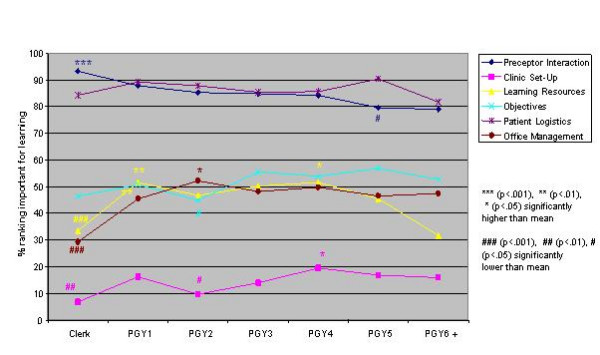
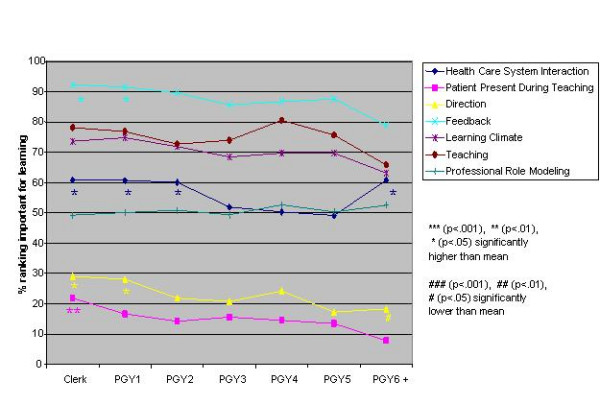
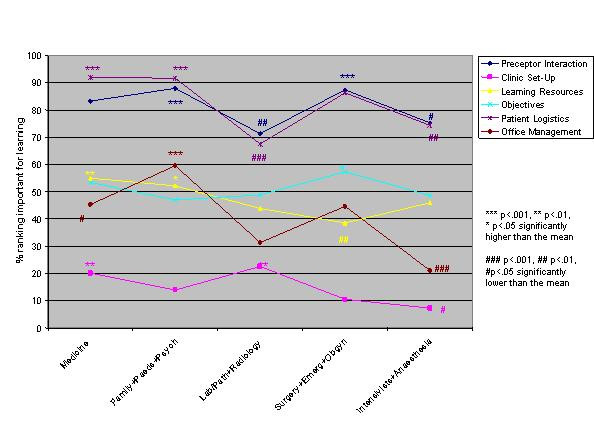
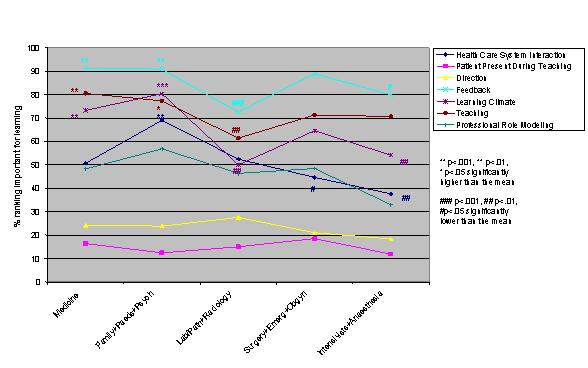
Background: Medical training is increasingly occurring in the ambulatory setting for final year medical students and residents. This study looks to identify if gender, school, level of training, or speciality affects learner's (final year medical students and residents) preferred site characteristics and preceptor behaviours for learning in the ambulatory setting. Methods: All final year medical students and residents at the five medical schools in Ontario (N = 3471) were surveyed about the site characteristics and preceptor behaviours most enhancing their learning in the ambulatory setting. Preferred site characteristics and preceptor behaviours were rank ordered. Factor analysis grouped the site characteristics and preceptor behaviours into themes which were then correlated with gender, school, level of training, and speciality. Results: Having an adequate number and variety of patients while being supervised by enthusiastic preceptors who give feedback and are willing to discuss their reasoning processes and delegate responsibility are site characteristics and preceptor behaviours valued by almost all learners. Some teaching strategies recently suggested to improve efficiency in the ambulatory teaching setting, such as structuring the interview for the student and teaching and reviewing the case in front of the patient, were found not to be valued by learners. There was a striking degree of similarity in what was valued by all learners but there were also some educationally significant differences, particularly between learners at different levels and in different specialities. Key findings between the different levels include preceptor interaction being most important for medical students as opposed to residents who most value issues pertaining to patient logistics. Learning resources are less valued early and late in training. Teaching and having the case reviewed in front of the patient becomes increasingly less valued as learners advance in their training. As one approaches the end of ones' training office management instruction becomes increasingly valued. Differences between specialities pertain most to the type of practice residents will ultimately end up in (ie: office based specialties particularly valuing instruction in office management and health care system interaction). Conclusions: Preceptors need to be aware of, and make efforts to provide, teaching strategies such as feedback and discussing clinical reasoning, that learners have identified as being helpful for learning. If strategies identified as not being valued for learning, such as teaching in front of the patient, must continue it will be important to explore the barriers they present to learning. Although what all learners want from their preceptors and clinic settings to enhance their learning is remarkably similar, being aware of the educationally significant differences, particularly for learners at different levels and in different specialities, will enhance teaching in the ambulatory setting.
Overview
The claims and statistics of this paper haven’t been checked yet.
Run the check — free, no account needed. It reads the open-access text and checks the sources it cites.
Integrity signals
Registry
Cites
Statistics
Figures
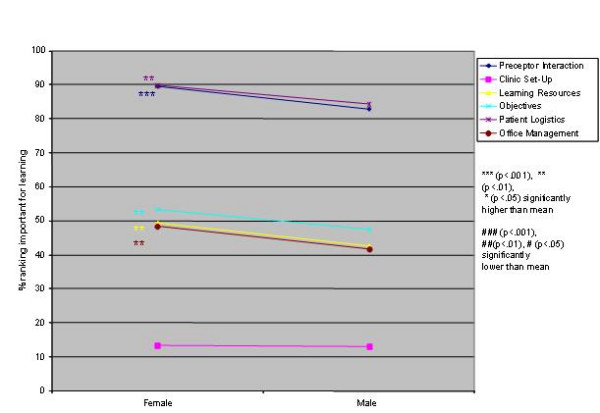
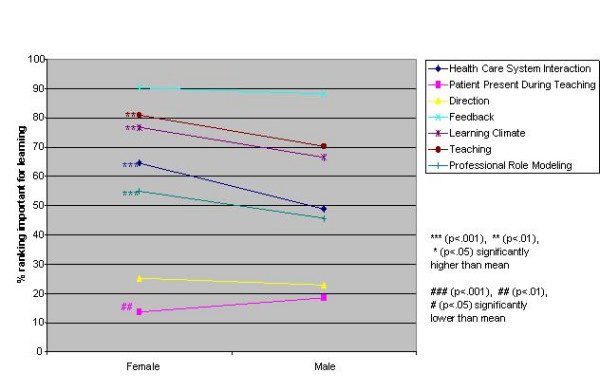
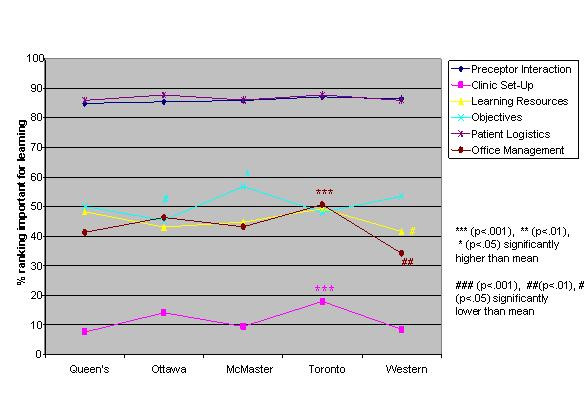
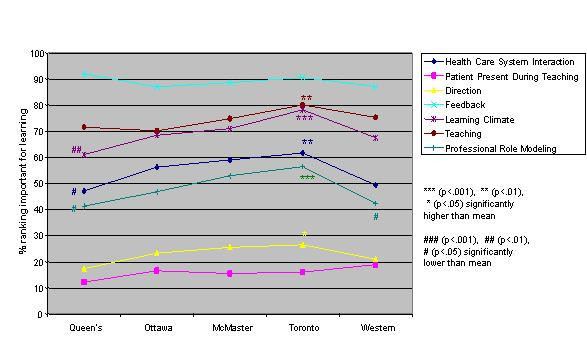
Verification
Claims the paper makes
The claims and statistics of this paper haven’t been checked yet.
Run the check — free, no account needed. It reads the open-access text and checks the sources it cites.
Claims other papers make about this one
Each is checked against this paper’s own text: does it say what the citing paper says it does?
In the citing paper
“Surveys have demonstrated that trainees value feedback in principle, and value the provision of feedback as a desired quality of clinical teachers [53].”
From Guidelines: The do’s, don’ts and don’t knows of feedback for clinical education. (2015) · cites this paper as [53]
Self-check
Percentages, sums and reported differences re-computed from the paper’s own numbers.
The self-check needs the paper’s full text.
Citations
Cites
Tabachnick, B. G., & Fidell, L. S. (1983) · Cited by 79,882
(1983) · Cited by 33,192
- STATISTICAL PACKAGE FOR SOCIAL SCIENCES
Reddy, M. V. (2014) · Apple Academic Press eBooks · doi:10.1201/b17560-26 · Cited by 12,121
Effective physician-patient communication and health outcomes: a review.
(1995) · Europe PMC (PubMed Central) · Cited by 4,085
In a Different Voice: Women's Conceptions of Self and of Morality
Gilligan, C. (1977) · Harvard Educational Review · doi:10.17763/haer.47.4.g6167429416hg5l0 · Cited by 2,402
Teaching and learning in ambulatory care settings
Irby, D. M. (1995) · Academic Medicine · doi:10.1097/00001888-199510000-00014 · Cited by 508
Attributes of Excellent Attending-Physician Role Models
Wright, S. M., Kern, D. E., Kolodner, K., Howard, D. M., & Brancati, F. L. (1998) · New England Journal of Medicine · doi:10.1056/nejm199812313392706 · Cited by 499
Issues in cognitive psychology
Regehr, G., & Norman, G. R. (1996) · Academic Medicine · doi:10.1097/00001888-199609000-00015 · Cited by 396
Faculty and the Observation of Trainees’ Clinical Skills: Problems and Opportunities
Holmboe, E. S. (2004) · Academic Medicine · doi:10.1097/00001888-200401000-00006 · Cited by 327
New maps of development: New visions of maturity.
Gilligan, C. (1982) · American Journal of Orthopsychiatry · doi:10.1111/j.1939-0025.1982.tb02682.x · Cited by 181
Research works printed but not linked: 1
- Perry WG: Intellectual and ethical development. Troy, Mo: Holt Rinehart and Winston. 1972
Cited by
Sorted by citations
Guidelines: The do’s, don’ts and don’t knows of feedback for clinical education.
Lefroy, J., Watling, C., Teunissen, P. W., & Brand, P. (2015) · Perspectives on Medical Education · doi:10.1007/s40037-015-0231-7 · Cited by 347
Learning from clinical work: the roles of learning cues and credibility judgements
Watling, C., Driessen, E., van der Vleuten, C. P. M., & Lingard, L. (2012) · Medical Education · doi:10.1111/j.1365-2923.2011.04126.x · Cited by 261
Kogan, J. R., Hatala, R. A., Hauer, K. E., & Holmboe, E. S. (2017) · Perspectives on Medical Education · doi:10.1007/s40037-017-0376-7 · Cited by 167
Understanding responses to feedback: the potential and limitations of regulatory focus theory
Watling, C., Driessen, E., van der Vleuten, C. P. M., Vanstone, M., & Lingard, L. (2012) · Medical Education · doi:10.1111/j.1365-2923.2012.04209.x · Cited by 99
Unfulfilled promise, untapped potential: Feedback at the crossroads
Watling, C. (2014) · Medical Teacher · doi:10.3109/0142159x.2014.889812 · Cited by 90
Metadata
- Authors
- Schultz, K. W., Kirby, J., Delva, D., Godwin, M., Verma, S., Birtwhistle, R., Knapper, C., & Seguin, R.
- Affiliations
- Queen's University (CA)
- Corresponding author
- Schultz, Karen W
- Venue
- BMC Medical Education
- Published
- 2004-08-06
- Volume
- 4
- Issue
- 1
- Pages
- 12-12
- ISSN
- 1472-6920 (ISSN-L)
- PMC
- PMC514563
- OpenAlex
- W1607610280
- Cited by
- 103
- References
- 41
- Citations by year
- 2026: 3 · 2025: 2 · 2024: 1 · 2023: 2 · 2022: 7 · 2021: 5 · 2020: 2 · 2019: 3 · 2018: 8 · 2017: 4 · 2016: 5 · 2015: 7 · 2014: 8 · 2013: 5 · 2012: 10
- FWCI
- 3.73
- Type
- journal article
- Language
- en
- Open access
- gold
- doi.org
- Licence
- Locations
- BMC Medical Education (publishedVersion, cc-by)
- PubMed Central (publishedVersion, cc-by)
- PubMed (publishedVersion)
- DOAJ (DOAJ: Directory of Open Access Journals) (submittedVersion, cc-by-sa)
- Funders
- Canadian Celiac Association
- Canadian Institutes of Health Research
- Topics
- Social Sciences › Education › Innovations in Medical Education
- Health Sciences › Health Professions › General Health Professions › Health and Medical Education
- Health Sciences › Nursing › Leadership and Management › Hospital Admissions and Outcomes
- Keywords
- site conditions, medical students, residents (medical training), clinical supervision, feedback, clinical reasoning, specialty differences, training status, learner preferences
- MeSH terms
- Adult, Ambulatory Care Facilities, Attitude of Health Personnel, Behavior, Clinical Clerkship, Consumer Behavior, Factor Analysis, Statistical, Feedback, Female, Humans, Internship and Residency, Male, Ontario, Preceptorship, Schools, Medical, Students, Medical, Teaching, Program Evaluation
About these checks
Registry, retraction, Cites and statistics results are computed, not judged, with one exception: a printed reference that no index lists is read once by a model before it counts as a citation error. Claims are extracted by a model and kept only when their quote appears verbatim in the text; each cited source is then checked, with a model’s help, for whether it says what the claim relies on. Those verdicts can be wrong — read the claim’s quote and the cited source before relying on one.
Statistics and arithmetic are recomputed, not judged.
Confidence bands are shown only for fields calibrated on our annotated test set. None is calibrated yet, so no band is shown.
What counts as a claim ›How we measure confidence ›How we check this ›
Are you an author, or do you see a problem with this page? Request a review
