

The DOI matches its Crossref record; 22 of the 23 references it cites were found in a registry or an index.
A randomized controlled study about the use of eHealth in the home health care of premature infants
Open accessAbstract
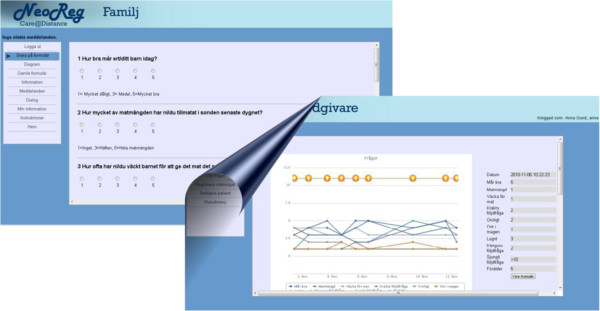
Background: One area where the use of information and communication technology (ICT), or eHealth, could be developed is the home health care of premature infants. The aim of this randomized controlled study was to investigate whether the use of video conferencing or a web application improves parents’ satisfaction in taking care of a premature infant at home and decreases the need of home visits. In addition, nurses’ attitudes regarding the use of these tools were examined. Method: Thirty-four families were randomized to one of three groups before their premature infant was discharged from the hospital to home health care: a control group receiving standard home health care (13 families); a web group receiving home health care supplemented with the use of a web application (12 families); a video group with home health care supplemented with video conferencing using Skype (9 families). Families and nursing staff answered questionnaires about the usefulness of ICT. In addition, semi-structured interviews were conducted with 16 families. Results: All the parents in the web group found the web application easy to use. 83% of the families thought it was good to have access to their child’s data through the application. All the families in the video group found Skype easy to use and were satisfied with the video calls. 88% of the families thought that video calls were better than ordinary phone calls. 33% of the families in the web group and 75% of those in the video group thought the need for home visits was decreased by the web application or Skype. 50% of the families in the web group and 100% of those in the video group thought the web application or the video calls had helped them feel more confident in caring for their child. Most of the nurses were motivated to use ICT but some were reluctant and avoided using the web application and video conferencing. Conclusion: The families were satisfied with both the web application and video conferencing. The families readily embraced the use of ICT, whereas motivating some of the nurses to accept and use ICT was a major challenge.
Overview
The claims and statistics of this paper haven’t been checked yet.
Run the check — free, no account needed. It reads the open-access text and checks the sources it cites.
Integrity signals
Registry
Cites
Statistics
Figures
Verification
Claims the paper makes
The claims and statistics of this paper haven’t been checked yet.
Run the check — free, no account needed. It reads the open-access text and checks the sources it cites.
Claims other papers make about this one
Each is checked against this paper’s own text: does it say what the citing paper says it does?
The source backs part of the claim, not all of it — or backs it for a different population, condition or comparison.
In the citing paper
“The face-to-face communication and support provided by in-person home visits was shown to reduce parental stress, anxiety, and fear, increase parental confidence, competency, feeling of being supported, sense of security, and trust in the infant’s capacity (Baraldi et al., 2020; dos Santos et al., 2014; Gund et al., 2013; Kynø et al., 2013; Ravn et al., 2012; Spencer-Smith et al., 2012).”
From Scoping review of interventions to support families with preterm infants post-NICU discharge (2022) · cites this paper as Gund et al., 2013
Experimental — accuracy not yet measuredThe source backs part of the claim, not all of it — or backs it for a different population, condition or comparison.
In the citing paper
“All families who received phone calls in addition to the in-person home visits reported feeling more confident in caring for their infants at home (Gund et al., 2013).”
From Scoping review of interventions to support families with preterm infants post-NICU discharge (2022) · cites this paper as Gund et al., 2013
Experimental — accuracy not yet measuredThe source backs part of the claim, not all of it — or backs it for a different population, condition or comparison.
In the citing paper
“The face-to-face communication and support provided by in-person home visits was shown to reduce parental stress, anxiety, and fear, increase parental confidence, competency, feeling of being supported, sense of security, and trust in the infant’s capacity (Baraldi et al., 2020; dos Santos et al., 2014; Gund et al., 2013; Kynø et al., 2013; Ravn et al., 2012; Spencer-Smith et al., 2012).”
From Scoping review of interventions to support families with preterm infants post-NICU discharge (2022) · cites this paper as Gund et al., 2013
Experimental — accuracy not yet measuredThe source backs part of the claim, not all of it — or backs it for a different population, condition or comparison.
In the citing paper
“The face-to-face communication and support provided by in-person home visits was shown to reduce parental stress, anxiety, and fear, increase parental confidence, competency, feeling of being supported, sense of security, and trust in the infant’s capacity (Baraldi et al., 2020; dos Santos et al., 2014; Gund et al., 2013; Kynø et al., 2013; Ravn et al., 2012; Spencer-Smith et al., 2012).”
From Scoping review of interventions to support families with preterm infants post-NICU discharge (2022) · cites this paper as Gund et al., 2013
Experimental — accuracy not yet measured
The source backs part of the claim, not all of it — or backs it for a different population, condition or comparison.
In the citing paper
“Of note, about 7% of families felt there was no need for the web app since their infants were stable post-discharge (Gund et al., 2013).”
From Scoping review of interventions to support families with preterm infants post-NICU discharge (2022) · cites this paper as Gund et al., 2013
Experimental — accuracy not yet measuredThe source backs part of the claim, not all of it — or backs it for a different population, condition or comparison.
In the citing paper
“Researchers also noted that the in-person home visits and web app may be more beneficial for families whose infants had higher medical risk factors or complications (Awindaogo et al., 2016; Baraldi et al., 2020; Gund et al., 2013).”
From Scoping review of interventions to support families with preterm infants post-NICU discharge (2022) · cites this paper as Gund et al., 2013
Experimental — accuracy not yet measuredThe source backs part of the claim, not all of it — or backs it for a different population, condition or comparison.
In the citing paper
“Similarly, the NeoRaksha, Care@Distance, and family mobile apps allowed for remote monitoring of infant growth, developmental milestones, health status post-discharge, immunization status, scheduling clinic visits, identification of risks, referrals, and infant care and development information (Gund et al., 2013; Hägi-Pedersen et al., 2022; Nayak et al., 2019).”
From Scoping review of interventions to support families with preterm infants post-NICU discharge (2022) · cites this paper as Gund et al., 2013
Experimental — accuracy not yet measuredThe cited source says what the claim attributes to it.
In the citing paper
“The face-to-face communication and support provided by in-person home visits was shown to reduce parental stress, anxiety, and fear, increase parental confidence, competency, feeling of being supported, sense of security, and trust in the infant’s capacity (Baraldi et al., 2020; dos Santos et al., 2014; Gund et al., 2013; Kynø et al., 2013; Ravn et al., 2012; Spencer-Smith et al., 2012).”
From Scoping review of interventions to support families with preterm infants post-NICU discharge (2022) · cites this paper as Gund et al., 2013
The cited source says what the claim attributes to it.
In the citing paper
“All families were satisfied with video calls and found that they were easy to use (Gund et al., 2013).”
From Scoping review of interventions to support families with preterm infants post-NICU discharge (2022) · cites this paper as Gund et al., 2013
The cited source says what the claim attributes to it.
In the citing paper
“Only 50% of families who received access to the web app in addition the in-person home visits reported feeling more confident in caring for their infants at home (Gund et al., 2013).”
From Scoping review of interventions to support families with preterm infants post-NICU discharge (2022) · cites this paper as Gund et al., 2013
The cited source says what the claim attributes to it.
In the citing paper
“Approximately 83% of families was satisfied with the web app and all families found the web app was easy to use (Gund et al., 2013).”
From Scoping review of interventions to support families with preterm infants post-NICU discharge (2022) · cites this paper as Gund et al., 2013
The check wasn’t confident either way, so it gives no verdict — never disputed.
In the citing paper
“The face-to-face communication and support provided by in-person home visits was shown to reduce parental stress, anxiety, and fear, increase parental confidence, competency, feeling of being supported, sense of security, and trust in the infant’s capacity (Baraldi et al., 2020; dos Santos et al., 2014; Gund et al., 2013; Kynø et al., 2013; Ravn et al., 2012; Spencer-Smith et al., 2012).”
From Scoping review of interventions to support families with preterm infants post-NICU discharge (2022) · cites this paper as Gund et al., 2013
Experimental — accuracy not yet measured
Self-check
Percentages, sums and reported differences re-computed from the paper’s own numbers.
The self-check needs the paper’s full text.
Citations
Cites
Eysenbach, G. (2001) · Journal of Medical Internet Research · doi:10.2196/jmir.3.2.e20 · Cited by 2,449
On the "localness" of user-generated content
Hecht, B. J., & Gergle, D. (2010) · ACM Conference on Computer Supported Cooperative Work (CSCW) · doi:10.1145/1718918.1718962 · Cited by 311
Baby CareLink: Using the Internet and Telemedicine to Improve Care for High-Risk Infants
Gray, J. E., Safran, C., Davis, R. B., Pompilio-Weitzner, G., Stewart, J. E., Zaccagnini, L., & Pursley, D. (2000) · Pediatrics · doi:10.1542/peds.106.6.1318 · Cited by 238
Tang, Y. (2008) · 北京周报:英文版 · Cited by 143
Early NICU discharge of very low birth weight infants: a critical review and analysis
Merritt, T. A., Pillers, D. M., & Prows, S. L. (2003) · Seminars in Neonatology · doi:10.1016/s1084-2756(02)00219-1 · Cited by 137
Flacking, R., Ewald, U., & Starrin, B. (2007) · Social Science & Medicine · doi:10.1016/j.socscimed.2007.03.008 · Cited by 125
Liu, L. S., Hirano, S. H., Tentori, M. E., Cheng, K. G., George, S., Park, S. Y., & Hayes, G. R. (2011) · ACM Conference on Computer Supported Cooperative Work (CSCW) · doi:10.1145/1958824.1958897 · Cited by 89
The Heart of the Matter. About Good Nursing and Telecare
Pols, J. J. (2010) · Health Care Analysis · doi:10.1007/s10728-009-0140-1 · Cited by 84
Paay, J., Kjeldskov, J., & O'Hara, K. P. (2011) · CHI Conference Extended Abstracts on Human Factors in Computing Systems (CHI EA) · doi:10.1145/1979742.1979644 · Cited by 50
Lindberg, B., Axelsson, K., & Öhrling, K. (2009) · Journal of Neonatal Nursing · doi:10.1016/j.jnn.2009.01.004 · Cited by 50
Research works printed but not linked: 3
- Griffin JB, Pickler RH: Transition of Preterm Infants from Hospital to Home. Neonatal Intensive Care. 2005, 18: 22-25.
- Sandberg K, Sjöqvist BA: Telemedicin för hemövervakning av nyfödda kortar vårdtid och höjer kvalitet. Läkartidningen. 2000, 97: 3489-3491.
- Young Seok L, Craig G, Noel M, Shirley C, Sana H: NICU-2-HOME: supporting the transition to home from the neonatal intensive care unit using a mobile application. Proceedings of the 2011 annual conference extended abstracts on Human factors in computing systems. 2011, Vancouver, BC, Canada: ACM
Cited by
Sorted by citations
Items 101–106 of 106
Implementing Outpatient Therapeutic Playgroups for NICU Families: A Quality Improvement Project
Aokalani, M. C., Wisner, K. L., Andescavage, N. N., Limperopoulos, C., & Stuart, B. K. (2026) · Behavioral Sciences · doi:10.3390/bs16040600
Schweiberger, K. A., Lee, S., Hyland-Brown, R., Brinkman, W. B., Britto, M. T., Beck, A. F., Ray, K. N., Tegtmeyer, K., & Lipstein, E. A. (2026) · MDM Policy & Practice · doi:10.1177/23814683261447292
Research efforts within neonatal nursing care in a Nordic context: A scoping review
Karlsen, M. W., Rød, I., Mariussen, K. L., Grundt, H., Solevåg, A. L., Sørensen, A. L., Aagaard, H., & Tandberg, B. S. (2026) · Journal of Neonatal Nursing · doi:10.1016/j.jnn.2026.101924
Buccione, E., D’Errico, A., Magi, C. E., Amato, S., Nicolosi, B., Previdera, R., Ferraioli, S., Rasero, L., & Bambi, S. (2026) · Journal of Neonatal Nursing · doi:10.1016/j.jnn.2026.101981
Ferraz, L., Xavier, M. R., Gameiro, M., Vieira, R., Cardoso, A. F., Cardoso, D., Paradela, L., Dinis, D., Coutinho, E., Maia, A. C., et al. (2026) · International Journal of Nursing Studies Advances · doi:10.1016/j.ijnsa.2026.100684
Melton, K. R., Henkel, R. D., Cahill, T. E., House, M. A., Tabacaru, C., Denker, K., Liu, C., Ehrlich, S., & Kaplan, H. C. (2026) · Journal of Medical Internet Research · doi:10.2196/96090
Metadata
- Authors
- Gund, A., Sjöqvist, B. A., Wigert, H., Hentz, E., Lindecrantz, K., & Bry, K.
- Affiliations
- Chalmers University of Technology (SE)
- Sahlgrenska University Hospital (SE)
- Karolinska Institutet (SE)
- Corresponding author
- Bry, Kristina
- Venue
- BMC Medical Informatics and Decision Making
- Published
- 2013-02-09
- Volume
- 13
- Issue
- 1
- Pages
- 22-22
- ISSN
- 1472-6947 (ISSN-L)
- PMC
- PMC3583709
- OpenAlex
- W2016780403
- Cited by
- 105
- References
- 23
- Citations by year
- 2026: 4 · 2025: 7 · 2024: 17 · 2023: 9 · 2022: 8 · 2021: 8 · 2020: 7 · 2019: 8 · 2018: 11 · 2017: 11 · 2016: 5 · 2015: 2 · 2014: 6 · 2013: 2
- FWCI
- 5.10
- Type
- journal article
- Language
- en
- Open access
- gold
- doi.org
- Licence
- Locations
- BMC Medical Informatics and Decision Making (publishedVersion, cc-by)
- Europe PMC (PubMed Central) (publishedVersion, cc-by)
- PubMed Central (publishedVersion, cc-by)
- PubMed (publishedVersion)
- DOAJ (DOAJ: Directory of Open Access Journals) (submittedVersion, cc-by-sa)
- Chalmers Publication Library (Chalmers University of Technology) (submittedVersion)
- Chalmers Research (Chalmers University of Technology) (submittedVersion)
- Funders
- VINNOVA
- Sahlgrenska Universitetssjukhuset
- Topics
- Health Sciences › Medicine › Public Health, Environmental and Occupational Health › Telemedicine and Telehealth Implementation
- Health Sciences › Health Professions › General Health Professions › Mobile Health and mHealth Applications
- Health Sciences › Medicine › Pediatrics, Perinatology and Child Health › Infant Development and Preterm Care
- Keywords
- e-health, home health care, preterm infants, videoconferencing, web application, parental satisfaction, home visits, nurses' attitudes, information and communication technologies, parental confidence, telemedicine
- MeSH terms
- Adult, Female, Humans, Infant Care, Infant, Newborn, Infant, Premature, Parents, Patient Satisfaction, Telemedicine, Home Care Services, Hospital-Based, Remote Consultation, Internet, Young Adult
About these checks
Registry, retraction, Cites and statistics results are computed, not judged, with one exception: a printed reference that no index lists is read once by a model before it counts as a citation error. Claims are extracted by a model and kept only when their quote appears verbatim in the text; each cited source is then checked, with a model’s help, for whether it says what the claim relies on. Those verdicts can be wrong — read the claim’s quote and the cited source before relying on one.
Statistics and arithmetic are recomputed, not judged.
Confidence bands are shown only for fields calibrated on our annotated test set. None is calibrated yet, so no band is shown.
What counts as a claim ›How we measure confidence ›How we check this ›
Are you an author, or do you see a problem with this page? Request a review
