

The DOI matches its Crossref record; 31 of the 31 references it cites were found in a registry or an index.
Pre-expression of a sulfhydryl oxidase significantly increases the yields of eukaryotic disulfide bond containing proteins expressed in the cytoplasm of E.coli
Open accessAbstract
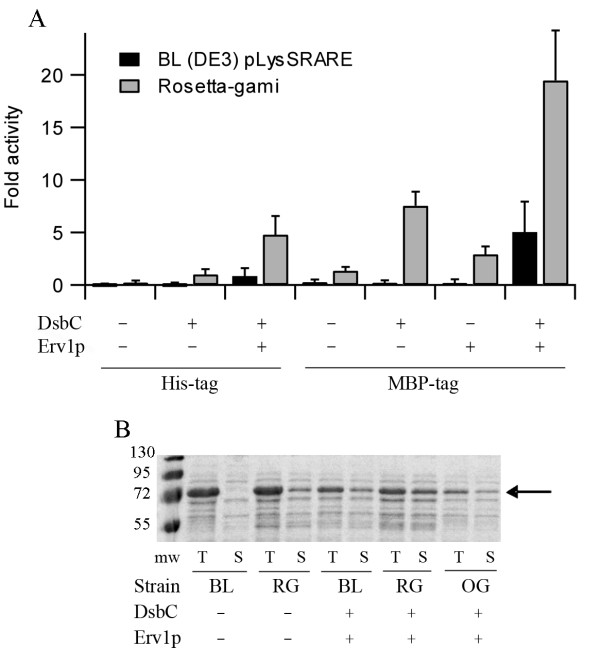
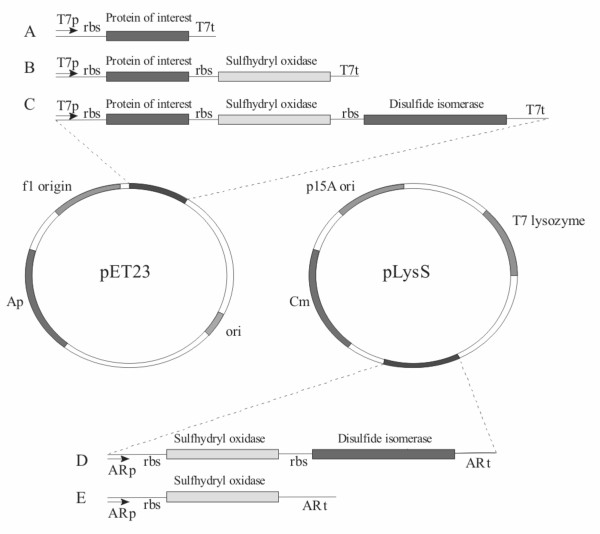
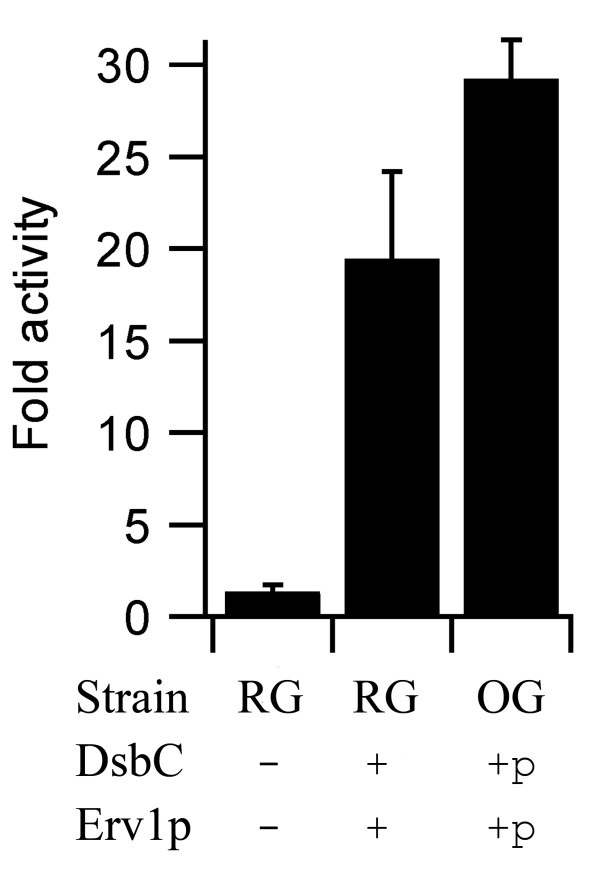
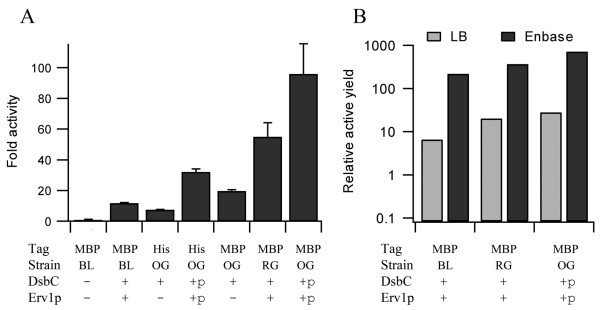
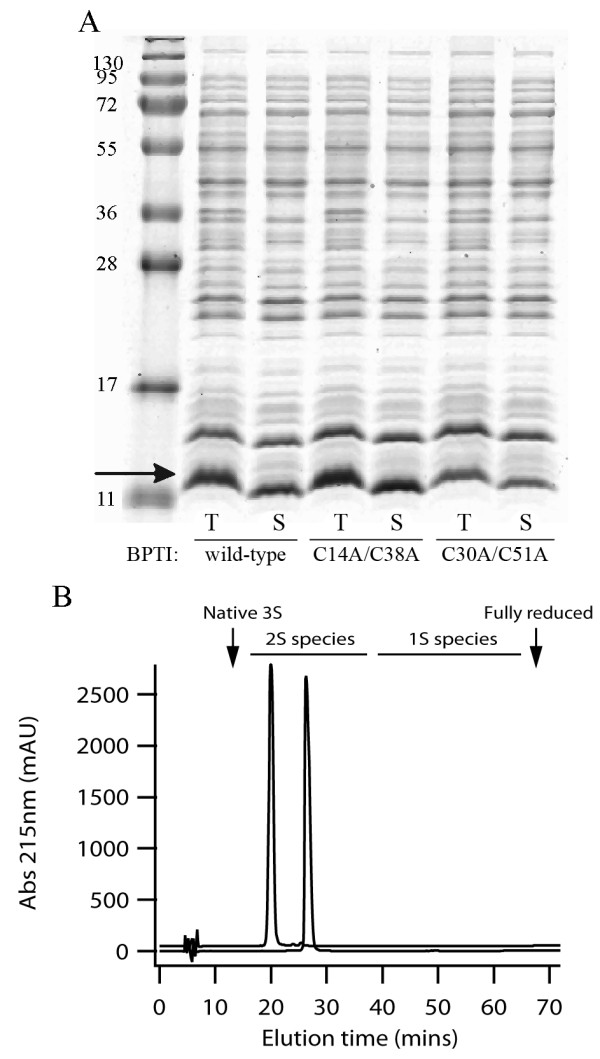
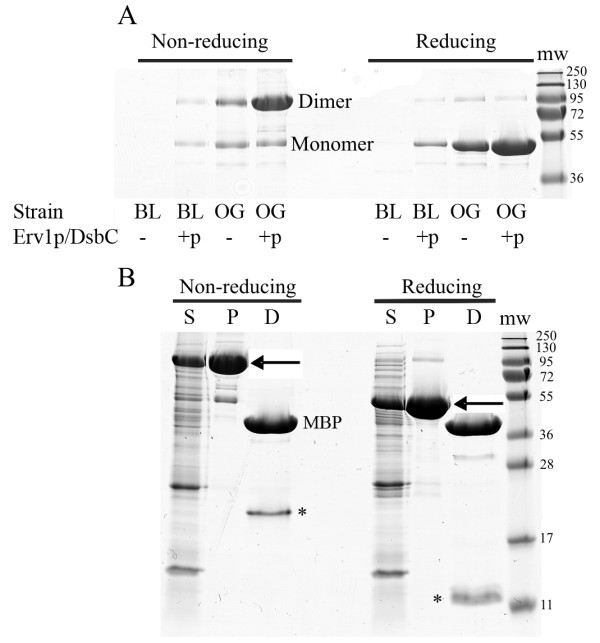
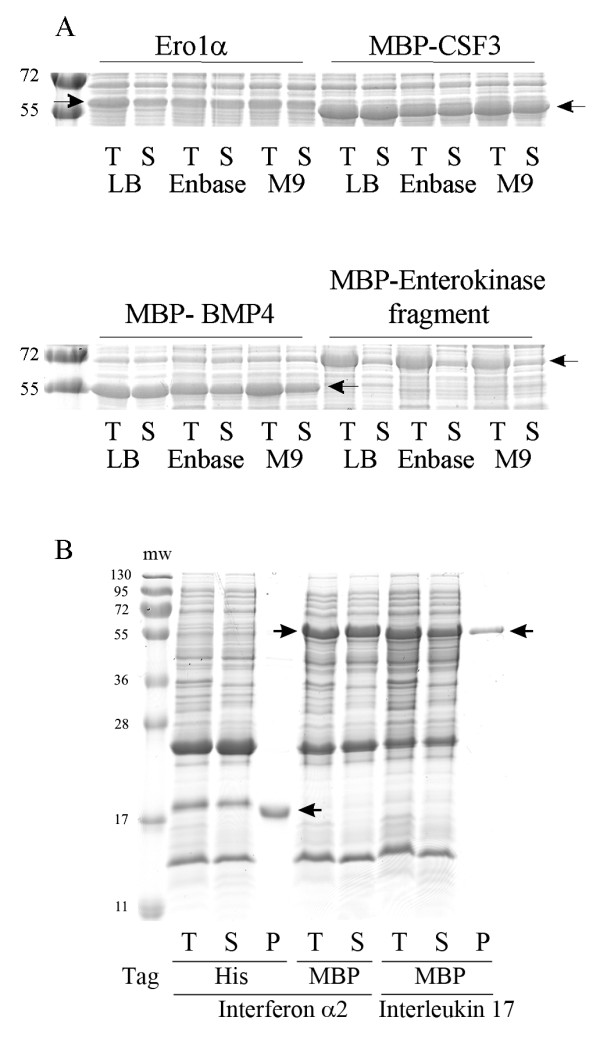
Background: Disulfide bonds are one of the most common post-translational modifications found in proteins. The production of proteins that contain native disulfide bonds is challenging, especially on a large scale. Either the protein needs to be targeted to the endoplasmic reticulum in eukaryotes or to the prokaryotic periplasm. These compartments that are specialised for disulfide bond formation have an active catalyst for their formation, along with catalysts for isomerization to the native state. We have recently shown that it is possible to produce large amounts of prokaryotic disulfide bond containing proteins in the cytoplasm of wild-type bacteria such as E. coli by the introduction of catalysts for both of these processes. Results: Here we show that the introduction of Erv1p, a sulfhydryl oxidase and a disulfide isomerase allows the efficient formation of natively folded eukaryotic proteins with multiple disulfide bonds in the cytoplasm of E. coli. The production of disulfide bonded proteins was also aided by the use of an appropriate fusion protein to keep the folding intermediates soluble and by choice of media. By combining the pre-expression of a sulfhydryl oxidase and a disulfide isomerase with these other factors, high level expression of even complex disulfide bonded eukaryotic proteins is possible Conclusions: Our results show that the production of eukaryotic proteins with multiple disulfide bonds in the cytoplasm of E. coli is possible. The required exogenous components can be put onto a single plasmid vector allowing facile transfer between different prokaryotic strains. These results open up new avenues for the use of E. coli as a microbial cell factory.
Overview
The claims and statistics of this paper haven’t been checked yet.
Run the check — free, no account needed. It reads the open-access text and checks the sources it cites.
Integrity signals
Registry
Cites
Statistics
Figures
Verification
Claims the paper makes
The claims and statistics of this paper haven’t been checked yet.
Run the check — free, no account needed. It reads the open-access text and checks the sources it cites.
Claims other papers make about this one
Each is checked against this paper’s own text: does it say what the citing paper says it does?
In the citing paper
“In this context, cells selected under growth limiting conditions can show growth trade-offs in non-limiting conditions and vice versa[53].”
From Adaptive laboratory evolution—Principles and applications for biotechnology (2013) · cites this paper as [53]
In the citing paper
“Glucose import, sensing and regulation represent major targets during glucose-limited chemostat growth, as a further study also identified frequent mutations in HXT genes and glucose sensors and regulators such as RGT1 and MIG2[53].”
From Adaptive laboratory evolution—Principles and applications for biotechnology (2013) · cites this paper as [53]
In the citing paper
“Similarly, aerobic chemostat-selected S. cerevisiae cells also showed increased fitness in anaerobic glucose-limited chemostats and in acetate-limited chemostats, but decreased fitness in nitrogen-limited batch cultivations [53].”
From Adaptive laboratory evolution—Principles and applications for biotechnology (2013) · cites this paper as [53]
Self-check
Percentages, sums and reported differences re-computed from the paper’s own numbers.
The self-check needs the paper’s full text.
Citations
Cites
The hormone resistin links obesity to diabetes
Steppan, C. M., Bailey, S. T., Bhat, S., Brown, E. J., Banerjee, R. R., Wright, C. M., Patel, H. R., Ahima, R. S., & Lazar, M. A. (2001) · Nature · doi:10.1038/35053000 · Cited by 4,755
T cell interleukin-17 induces stromal cells to produce proinflammatory and hematopoietic cytokines
Fossiez, F., Djossou, O., Chomarat, P., Flores-Romo, L., Ait-Yahia, S., Maat, C., Pin, J. J., Garrone, P., Garcia, E., Saeland, S., et al. (1996) · The Journal of Experimental Medicine · doi:10.1084/jem.183.6.2593 · Cited by 1,526
Souza, L., Boone, T., Gabrilove, J., Lai, P., Zsebo, K., Murdock, D., Chazin, V., Bruszewski, J., Lu, H.-B., Chen, K.-K., et al. (1986) · Science · doi:10.1126/science.2420009 · Cited by 1,286
BMP4 initiates human embryonic stem cell differentiation to trophoblast
Xu, R., Chen, X., Li, D. S., Li, R., Addicks, G. C., Glennon, C., Zwaka, T. P., & Thomson, J. A. (2002) · Nature Biotechnology · doi:10.1038/nbt761 · Cited by 1,118
Kapust, R. B., & Waugh, D. S. (1999) · Protein Science · doi:10.1110/ps.8.8.1668 · Cited by 960
Protein Disulfide Isomerase: A Critical Evaluation of Its Function in Disulfide Bond Formation
Hatahet, F., & Ruddock, L. W. (2009) · Antioxidants and Redox Signaling · doi:10.1089/ars.2009.2466 · Cited by 673
Self-citationPrinz, W. A., Åslund, F., Holmgren, A., & Beckwith, J. (1997) · Journal of Biological Chemistry · doi:10.1074/jbc.272.25.15661 · Cited by 662
Efficient folding of proteins with multiple disulfide bonds in the Escherichia coli cytoplasm
Bessette, P. H., Åslund, F., Beckwith, J., & Georgiou, G. (1999) · Proceedings of the National Academy of Sciences · doi:10.1073/pnas.96.24.13703 · Cited by 636
Reexamination of the Folding of BPTI: Predominance of Native Intermediates
Weissman, J. S., & Kim, P. S. (1991) · Science · doi:10.1126/science.1716783 · Cited by 513
The ERO1 Gene of Yeast Is Required for Oxidation of Protein Dithiols in the Endoplasmic Reticulum
Frand, A. R., & Kaiser, C. A. (1998) · Molecular Cell · doi:10.1016/s1097-2765(00)80017-9 · Cited by 495
Cited by
Sorted by citations
Adaptive laboratory evolution—Principles and applications for biotechnology
Dragosits, M., & Mattanovich, D. (2013) · Microbial Cell Factories · doi:10.1186/1475-2859-12-64 · Cited by 827
Lobstein, J., Emrich, C. A., Jeans, C., Faulkner, M. J., Riggs, P. D., & Berkmen, M. (2012) · Microbial Cell Factories · doi:10.1186/1475-2859-11-56 · Cited by 597
Plug-and-Display: decoration of Virus-Like Particles via isopeptide bonds for modular immunization
Brune, K. D., Leneghan, D. B., Brian, I. J., Ishizuka, A. S., Bachmann, M. F., Draper, S. J., Biswas, S., & Howarth, M. R. (2016) · Scientific Reports · doi:10.1038/srep19234 · Cited by 427
Bhatwa, A., Wang, W., Hassan, Y. I., Abraham, N., Li, X., & Zhou, T. (2021) · Frontiers in Bioengineering and Biotechnology · doi:10.3389/fbioe.2021.630551 · Cited by 360
Masquerading microbial pathogens: capsular polysaccharides mimic host-tissue molecules
Cress, B. F., Englaender, J. A., He, W., Kasper, D., Linhardt, R. J., & Koffas, M. A. G. (2014) · FEMS Microbiology Reviews · doi:10.1111/1574-6976.12056 · Cited by 282
Vázquez, J. A., Amado, I. R., Montemayor, M., Fraguas, J., González, M. P., & Murado, M. A. (2013) · Marine Drugs · doi:10.3390/md11030747 · Cited by 275
Production of disulfide-bonded proteins in Escherichia coli
Berkmen, M. (2011) · Protein Expression and Purification · doi:10.1016/j.pep.2011.10.009 · Cited by 233
Antifungal Plant Defensins: Mechanisms of Action and Production
Vriens, K., Cammue, B. P. A., & Thevissen, K. (2014) · Molecules · doi:10.3390/molecules190812280 · Cited by 229
Strain engineering for improved expression of recombinant proteins in bacteria
Makino, T., Σκρέτας, Γ., & Georgiou, G. (2011) · Microbial Cell Factories · doi:10.1186/1475-2859-10-32 · Cited by 207
Advances in recombinant protein expression for use in pharmaceutical research
Assenberg, R., Wan, P., Geisse, S., & Mayr, L. M. (2013) · Current Opinion in Structural Biology · doi:10.1016/j.sbi.2013.03.008 · Cited by 183
Processes for the Production of Xylitol—A Review
Rafiqul, I. S. M., & Sakinah, A. M. M. (2012) · Food Reviews International · doi:10.1080/87559129.2012.714434 · Cited by 177
Survival of Microencapsulated Probiotic Bacteria after Processing and during Storage: A Review
Dianawati, D., Mishra, V. K., & Shah, N. P. (2015) · Critical Reviews in Food Science and Nutrition · doi:10.1080/10408398.2013.798779 · Cited by 170
Biotechnological applications of recombinant single-domain antibody fragments
de Marco, A. (2011) · Microbial Cell Factories · doi:10.1186/1475-2859-10-44 · Cited by 170
Technological trends and market perspectives for production of microbial oils rich in omega-3
Finco, A. M. D. O., Goyzueta-Mamani, L. D., de Carvalho, J. C., Pereira, G. V. D. M., Thomaz‐Soccol, V., & Soccol, C. R. (2016) · Critical Reviews in Biotechnology · doi:10.1080/07388551.2016.1213221 · Cited by 146
Phage-assisted continuous evolution of proteases with altered substrate specificity
Packer, M. S., Rees, H. A., & Liu, D. R. (2017) · Nature Communications · doi:10.1038/s41467-017-01055-9 · Cited by 141
Flach, J., van der Waal, M. B., van den Nieuwboer, M., Claassen, E., & Larsen, O. F. A. (2018) · Critical Reviews in Food Science and Nutrition · doi:10.1080/10408398.2017.1334624 · Cited by 131
Xylitol Biological Production: A Review of Recent Studies
Mohamad, N. L., Kamal, S. M. M., & Mokhtar, M. N. (2014) · Food Reviews International · doi:10.1080/87559129.2014.961077 · Cited by 121
Disulfide bond formation in prokaryotes: History, diversity and design
Hatahet, F., Boyd, D. H., & Beckwith, J. (2014) · Biochimica et Biophysica Acta (BBA) - Proteins and Proteomics · doi:10.1016/j.bbapap.2014.02.014 · Cited by 120
Self-citationSun, M., Zhao, F., Shi, M., Zhang, X., Zhou, B., Zhang, Y., & Chen, X. (2015) · Scientific Reports · doi:10.1038/srep18435 · Cited by 120
Delic, M., Göngrich, R., Mattanovich, D., & Gasser, B. (2014) · Antioxidants and Redox Signaling · doi:10.1089/ars.2014.5844 · Cited by 111
Lee, J., Yang, W., Hostetler, A., Schultz, N., Suckow, M. A., Stewart, K. L., Kim, D. D., & Kim, H. S. (2016) · BMC Microbiology · doi:10.1186/s12866-016-0686-7 · Cited by 107
Systematic screening of soluble expression of antibody fragments in the cytoplasm of E. coli
Gaciarz, A., Veijola, J., Uchida, Y., Saaranen, M. J., Wang, C., Hörkkö, S., & Ruddock, L. W. (2016) · Microbial Cell Factories · doi:10.1186/s12934-016-0419-5 · Cited by 100
Self-citationRodríguez‐Limas, W. A., Sekar, K., & Tyo, K. E. J. (2013) · Current Opinion in Biotechnology · doi:10.1016/j.copbio.2013.02.008 · Cited by 100
Gąciarz, A., Khatri, N. K., Velez-Suberbie, M. L., Saaranen, M. J., Uchida, Y., Keshavarz-Moore, E., & Ruddock, L. W. (2017) · Microbial Cell Factories · doi:10.1186/s12934-017-0721-x · Cited by 99
Self-citationProduction of Disulfide‐Bonded Proteins in Escherichia coli
Ke, N., & Berkmen, M. (2014) · Current Protocols in Molecular Biology · doi:10.1002/0471142727.mb1601bs108 · Cited by 93
Recent advances in genetic tools for engineering probiotic lactic acid bacteria
Mugwanda, K., Hamese, S., van Zyl, W. F., Prinsloo, E., Plessis, M. D., Dicks, L. M. T., & Raj, D. B. T. G. (2023) · Bioscience Reports · doi:10.1042/bsr20211299 · Cited by 93
Xiao, X., Conghaile, P. Ó., Leech, D., Ludwig, R., & Magner, E. (2016) · Biosensors and Bioelectronics · doi:10.1016/j.bios.2016.11.012 · Cited by 86
Towards clinical development of aPfs48/45-based transmission blocking malaria vaccine
Theisen, M., Jore, M. M., & Sauerwein, R. W. (2017) · Expert Review of Vaccines · doi:10.1080/14760584.2017.1276833 · Cited by 80
Liu, L., & Alper, H. S. (2014) · Genome Announcements · doi:10.1128/genomea.00652-14 · Cited by 77
Change in cell surface properties of Lactobacillus casei under heat shock treatment
Haddaji, N., Mahdhi, A., Krifi, B., Ismail, M. B., & Bakhrouf, A. (2015) · FEMS Microbiology Letters · doi:10.1093/femsle/fnv047 · Cited by 77
Djender, S., Schneider, A., Beugnet, A., Crépin, R., Even-Desrumeaux, K., Romani, C., Moutel, S., Perez, F., & de Marco, A. (2014) · Microbial Cell Factories · doi:10.1186/preaccept-1444588381355050 · Cited by 76
Lessons on fruiting body morphogenesis from genomes and transcriptomes of Agaricomycetes
Nagy, L. G., Vonk, P. J., Künzler, M., Földi, C., Virágh, M., Ohm, R. A., Hennicke, F., Balázs, B., Csernetics, Á., Hegedüs, B., et al. (2023) · Studies in Mycology · doi:10.3114/sim.2022.104.01 · Cited by 73
Jäger, V. D., Lamm, R., Küsters, K., Ölçücü, G., Oldiges, M., Jaeger, K., Büchs, J., & Krauß, U. (2020) · Applied Microbiology and Biotechnology · doi:10.1007/s00253-020-10760-3 · Cited by 72
Next-generation sequencing and its potential impact on food microbial genomics
Solieri, L., Dakal, T. C., & Giudici, P. (2012) · Annals of Microbiology · doi:10.1007/s13213-012-0478-8 · Cited by 78
Amaniampong, P. N., Karam, A., Trịnh, Q. T., Xu, K. L., Hirao, H., Jérôme, F., & Châtel, G. (2017) · Scientific Reports · doi:10.1038/srep40650 · Cited by 71
Mohamed, Y. M., Ghazy, M. A., Sayed, A. A., Ouf, A. A., El-Dorry, H. A., & Siam, R. (2013) · Scientific Reports · doi:10.1038/srep03358 · Cited by 70
Bianchi, F., Rossi, E., Gomes, R., & Sivieri, K. (2014) · Food Science and Technology International · doi:10.1177/1082013214540672 · Cited by 70
Lei, H., Zheng, L., Wang, C., Zhao, H., & Zhao, M. (2012) · International Journal of Food Microbiology · doi:10.1016/j.ijfoodmicro.2012.11.024 · Cited by 68
Salari, N., Mansouri, K., Valipour, E., Abam, F., Jaymand, M., Rasoulpoor, S., Dokaneheifard, S., & Mohammadi, M. (2021) · DARU Journal of Pharmaceutical Sciences · doi:10.1007/s40199-021-00416-6 · Cited by 68
Veggiani, G., & de Marco, A. (2011) · Protein Expression and Purification · doi:10.1016/j.pep.2011.03.005 · Cited by 67
Krause, M., Neubauer, A., & Neubauer, P. B. (2016) · Microbial Cell Factories · doi:10.1186/s12934-016-0513-8 · Cited by 69
Nozach, H., Fruchart‐Gaillard, C., Fenaille, F., Beau, F., Ramos, O. H. P., Douzi, B., Saez, N. J., Moutiez, M., Servent, D., Gondry, M., et al. (2013) · Microbial Cell Factories · doi:10.1186/1475-2859-12-37 · Cited by 65
Ukkonen, K., Veijola, J., Vasala, A., & Neubauer, P. (2013) · Microbial Cell Factories · doi:10.1186/1475-2859-12-73 · Cited by 65
Ukkonen, K., Vasala, A., Ojamo, H., & Neubauer, P. B. (2011) · Microbial Cell Factories · doi:10.1186/1475-2859-10-107 · Cited by 64
Strategies for Optimizing the Production of Proteins and Peptides with Multiple Disulfide Bonds
Ma, Y., Lee, C.-J., & Park, J.-S. (2020) · Antibiotics · doi:10.3390/antibiotics9090541 · Cited by 63
Mital, S., Christie, G., & Dikicioǧlu, D. (2021) · Microbial Cell Factories · doi:10.1186/s12934-021-01698-w · Cited by 68
Heparin and related polysaccharides: synthesis using recombinant enzymes and metabolic engineering
Suflita, M., Fu, L., He, W., Koffas, M. A. G., & Linhardt, R. J. (2015) · Applied Microbiology and Biotechnology · doi:10.1007/s00253-015-6821-9 · Cited by 64
Azizi, F., Najafi, M. B. H., & Dovom, M. R. E. (2017) · AMB Express · doi:10.1186/s13568-017-0474-2 · Cited by 62
Therapeutic proteins: developments, progress, challenges, and future perspectives
Kumar, V., Barwal, A., Sharma, N., Mir, D. S., Kumar, P., & Kumar, V. (2024) · 3 Biotech · doi:10.1007/s13205-024-03958-z · Cited by 62
Use of the SHuffle strains in production of proteins
Ren, G., Ke, N., & Berkmen, M. (2016) · Current Protocols in Protein Science · doi:10.1002/cpps.11 · Cited by 60
de Souza, C. C., Guimarães, J. M., Pereira, S. D. S., & Mariúba, L. A. M. (2021) · Experimental Biology and Medicine · doi:10.1177/15353702211030189 · Cited by 59
Kabanova, N., Stulova, I., & Vilu, R. (2011) · Food Microbiology · doi:10.1016/j.fm.2011.08.018 · Cited by 57
Microbial surfactants in nanotechnology: recent trends and applications
Nitschke, M., & Marangon, C. A. (2021) · Critical Reviews in Biotechnology · doi:10.1080/07388551.2021.1933890 · Cited by 56
Matos, C. F. R. O., Robinson, C., Alanen, H. I., Prus, P., Uchida, Y., Ruddock, L. W., Freedman, R. B., & Keshavarz‐Moore, E. (2013) · Biotechnology Progress · doi:10.1002/btpr.1858 · Cited by 55
Self-citationJabbari, V., Khiabani, M. S., Mokarram, R. R., Hassanzadeh, A. M., Ahmadi, E., Gharenaghadeh, S., Karimi, N., & Kafil, H. S. (2017) · Probiotics and Antimicrobial Proteins · doi:10.1007/s12602-017-9255-0 · Cited by 55
Nanofiltration for separation and purification of saccharides from biomass
Li, X., Tan, S. C., Luo, J., & Pinelo, M. (2021) · Frontiers of Chemical Science and Engineering · doi:10.1007/s11705-020-2020-z · Cited by 55
Strategies for Heterologous Expression, Synthesis, and Purification of Animal Venom Toxins
Rivera‐de‐Torre, E., Rimbault, C., Jenkins, T. P., Sørensen, C. V., Damsbo, A., Saez, N. J., Duhoo, Y., Hackney, C. M., Ellgaard, L., & Laustsen, A. H. (2022) · Frontiers in Bioengineering and Biotechnology · doi:10.3389/fbioe.2021.811905 · Cited by 54
An oxygen-independent and membrane-less glucose biobattery/supercapacitor hybrid device
Xiao, X., Conghaile, P. Ó., Leech, D., Ludwig, R., & Magner, E. (2017) · Biosensors and Bioelectronics · doi:10.1016/j.bios.2017.07.023 · Cited by 54
Popović, M., Mazzega, E., Toffoletto, B., & de Marco, A. (2018) · Microbial Cell Factories · doi:10.1186/s12934-017-0856-9 · Cited by 53
Filipović, L., Spasojević, M., Prodanović, R., Korać, A., Matijasević, S., Brajušković, G. N., de Marco, A., & Popović, M. (2022) · New Biotechnology · doi:10.1016/j.nbt.2022.03.001 · Cited by 52
Jampala, P., Satish, T., Preethi, M., Ramanujam, S., & Uppuluri, K. B. (2017) · 3 Biotech · doi:10.1007/s13205-017-0607-y · Cited by 52
Du, T., Buenbrazo, N., Kell, L., Rahmani, S., Sim, L., Withers, S. G., DeFrees, S. A., & Wakarchuk, W. W. (2018) · Cell chemical biology · doi:10.1016/j.chembiol.2018.10.017 · Cited by 52
Ghosh, A., Luis, A. S., Brás, J. L. A., Fontes, C. M. G. A., & Goyal, A. (2013) · Journal of Agricultural and Food Chemistry · doi:10.1021/jf403111g · Cited by 50
Salonen, N., Nyyssölä, A., Salonen, K., & Turunen, O. (2012) · Applied Biochemistry and Biotechnology · doi:10.1007/s12010-012-9783-8 · Cited by 48
Acinetobacter baylyi ADP1 growth performance and lipid accumulation on different carbon sources
Salcedo‐Vite, K., Sigala, J., Segura, D., Gosset, G., & Martı́nez, A. (2019) · Applied Microbiology and Biotechnology · doi:10.1007/s00253-019-09910-z · Cited by 48
Green, B. R., Bulaj, G. W., & Norton, R. S. (2014) · Future Medicinal Chemistry · doi:10.4155/fmc.14.107 · Cited by 45
Expression in Escherichia coli: becoming faster and more complex
Vincentelli, R., & Romier, C. (2013) · Current Opinion in Structural Biology · doi:10.1016/j.sbi.2013.01.006 · Cited by 44
Ramli, A. N. M., Mahadi, N. M., Shamsir, M. S., Rabu, A., Joyce-Tan, K. H., Murad, A. M. A., & Illias, R. M. (2012) · Journal of Computer-Aided Molecular Design · doi:10.1007/s10822-012-9585-7 · Cited by 45
Ukkonen, K., Mayer, S., Vasala, A., & Neubauer, P. B. (2013) · Protein Expression and Purification · doi:10.1016/j.pep.2013.07.016 · Cited by 42
Stanbury, P. F., Whitaker, A., & Hall, S. J. (2016) · Elsevier eBooks · doi:10.1016/b978-0-08-099953-1.00009-0 · Cited by 41
Sun, M.-L., Liu, S.-B., Qiao, L.-P., Chen, X.-L., Pang, X., Shi, M., Zhang, X.-Y., Qin, Q.-L., Zhou, B.-C., Zhang, Y.-Z., et al. (2014) · Applied Microbiology and Biotechnology · doi:10.1007/s00253-014-5839-8 · Cited by 39
Strategies to enhance soluble production of heterologous proteins in Escherichia coli
Falak, S., Sajed, M., & Rashid, N. (2022) · Biologia · doi:10.1007/s11756-021-00994-5 · Cited by 41
Evidence of high exposure to Toxoplasma gondii in free-ranging and captive African carnivores
Ferreira, S. C. M., Torelli, F., Klein, S. M., Fyumagwa, R., Karesh, W. B., Hofer, H., Seeber, F., & East, M. L. (2018) · International Journal for Parasitology Parasites and Wildlife · doi:10.1016/j.ijppaw.2018.12.007 · Cited by 39
Venom biotechnology: casting light on nature’s deadliest weapons using synthetic biology
Lüddecke, T., Paas, A., Harris, R. J., Talmann, L., Kirchhoff, K. N., Billion, A., Hardes, K., Steinbrink, A., Gerlach, D., Fry, B. G., et al. (2023) · Frontiers in Bioengineering and Biotechnology · doi:10.3389/fbioe.2023.1166601 · Cited by 39
Perspectives on global fermented foods
Soni, S., & Dey, G. (2014) · British Food Journal · doi:10.1108/bfj-01-2014-0032 · Cited by 38
Hui, C.-Y., Guo, Y. L., Zhang, W., & Huang, X. (2018) · AMB Express · doi:10.1186/s13568-018-0612-5 · Cited by 36
Correa, A., & Oppezzo, P. (2014) · Methods in molecular biology · doi:10.1007/978-1-4939-2205-5_2 · Cited by 36
Disulfide Bond Formation in the Cytoplasm
Saaranen, M. J., & Ruddock, L. W. (2012) · Antioxidants and Redox Signaling · doi:10.1089/ars.2012.4868 · Cited by 35
Self-citationExpression of Functional Human Sialyltransferases ST3Gal1 and ST6Gal1 in Escherichia coli
Ortiz‐Soto, M. E., & Seibel, J. (2016) · PLoS ONE · doi:10.1371/journal.pone.0155410 · Cited by 34
In vivo self-assembly of TMV-like particles in yeast and bacteria for nanotechnological applications
Kadri, A., Wege, C., & Jeske, H. (2013) · Journal of Virological Methods · doi:10.1016/j.jviromet.2013.02.017 · Cited by 34
Gransagne, M., Aymé, G., Brier, S., Friec, G. C.-L., Mériaux, V., Nowakowski, M., Déjardin, F., Levallois, S., de Melo, G. D., Donati, F., et al. (2021) · Journal of Biological Chemistry · doi:10.1016/j.jbc.2021.101290 · Cited by 33
Sulfhydryl oxidases: sources, properties, production and applications
Faccio, G., Nivala, O., Kruus, K., Büchert, J., & Saloheimo, M. (2011) · Applied Microbiology and Biotechnology · doi:10.1007/s00253-011-3440-y · Cited by 33
Fast and high yield recovery of arabinose from destarched wheat bran
Mario Aguedo, A., Vanderghem, C., Goffin, D., Richel, A., & Paquot, M. (2012) · Industrial Crops and Products · doi:10.1016/j.indcrop.2012.07.029 · Cited by 33
Proteases supplementation to high gravity worts enhances fermentation performance of brewer's yeast
Lei, H., Zhao, H., & Zhao, M. (2013) · Biochemical Engineering Journal · doi:10.1016/j.bej.2013.04.016 · Cited by 33
Hatahet, F., & Ruddock, L. W. (2013) · Journal of Molecular Biology · doi:10.1016/j.jmb.2013.04.034 · Cited by 33
Self-citationCruz, P. J. D. D., Dagaas, C. T., Mangubat, K. M. M., Angeles, A. A., & Abanto, O. D. (2019) · Tropical Animal Health and Production · doi:10.1007/s11250-018-01791-0 · Cited by 32
Effect of environmental stress on cell surface and membrane fatty acids of Lactobacillus plantarum
Haddaji, N., Mahdhi, A., Ismail, M. B., & Bakhrouf, A. (2017) · Archives of Microbiology · doi:10.1007/s00203-017-1395-9 · Cited by 31
Molecular analysis of human Ero1 reveals novel regulatory mechanisms for oxidative protein folding
Moilanen, A., Korhonen, K., Saaranen, M. J., & Ruddock, L. W. (2018) · Life Science Alliance · doi:10.26508/lsa.201800090 · Cited by 31
Self-citationJansma, M., Linke, C., Eustermann, S., Lammens, K., Kostrewa, D., Stakyte, K., Litz, C., Keßler, B., & Hopfner, K. (2019) · Structure · doi:10.1016/j.str.2019.10.013 · Cited by 31
Complete Genome Sequence of the Probiotic Lactobacillus plantarum Strain ZJ316
Li, X., Gu, Q., Lou, X., Zhang, X., Song, D., Shen, L., & Zhao, Y. (2013) · Genome Announcements · doi:10.1128/genomea.00094-13 · Cited by 30
Wang, Y., Yuan, W., Guo, S., Li, Q., Chen, X., Liu, Q., Liu, Q., Sun, L., Chen, Z., Yuan, Z., et al. (2022) · Nature Communications · doi:10.1038/s41467-022-32423-9 · Cited by 30
Fu, J., Sharma, U., Sparling, R., Çiçek, N., & Levin, D. B. (2014) · Canadian Journal of Microbiology · doi:10.1139/cjm-2014-0108 · Cited by 30
Expression of the functional recombinant human glycosyltransferase GalNAcT2 in Escherichia coli
Lauber, J., Handrick, R., Leptihn, S., Dürre, P., & Gaisser, S. (2015) · Microbial Cell Factories · doi:10.1186/s12934-014-0186-0 · Cited by 30
de Marco, A. (2013) · Microbial Cell Factories · doi:10.1186/1475-2859-12-101 · Cited by 29
Javitt, G., Zelas, Z. B.-B., Jerabek‐Willemsen, M., & Fishman, A. (2017) · BMC Biotechnology · doi:10.1186/s12896-017-0339-4 · Cited by 29
Nikkhoi, S. K., Rahbarizadeh, F., Ahmadvand, D., & Moghimi, S. M. (2018) · European Journal of Pharmaceutical Sciences · doi:10.1016/j.ejps.2018.06.019 · Cited by 29
Liu, K., & Catchmark, J. M. (2020) · Cellulose · doi:10.1007/s10570-019-02924-w · Cited by 29
The multipurpose family of flavoprotein oxidases
Martin, C., Binda, C., Fraaije, M. W., & Mattevi, A. (2020) · The Enzymes · doi:10.1016/bs.enz.2020.05.002 · Cited by 29
Nielsen, L. D., Foged, M. M., Albert, A., Bertelsen, A. B., Søltoft, C. L., Robinson, S. D., Petersen, S. V., Purcell, A. W., Olivera, B. M., Norton, R. S., et al. (2019) · Journal of Biological Chemistry · doi:10.1074/jbc.ra119.007491 · Cited by 29
Stable immobilisation of His-tagged proteins on BLI biosensor surface using cobalt
Auer, S., Azizi, L., Faschinger, F., Blazevic, V., Vesikari, T., Gruber, H. J., & Hytönen, V. P. (2016) · Sensors and Actuators B Chemical · doi:10.1016/j.snb.2016.11.090 · Cited by 28
Metadata
- Authors
- Nguyen, V. D., Hatahet, F., Salo, K. E., Enlund, E., Zhang, C., & Ruddock, L. W.
- Affiliations
- University of Oulu (FI)
- Corresponding author
- Ruddock, Lloyd W
- Venue
- Microbial Cell Factories
- Published
- 2011-01-07
- Volume
- 10
- Issue
- 1
- Pages
- 1-1
- ISSN
- 1475-2859 (ISSN-L)
- PMC
- PMC3022669
- OpenAlex
- W2135101596
- Cited by
- 260
- References
- 31
- Citations by year
- 2026: 7 · 2025: 8 · 2024: 12 · 2023: 20 · 2022: 14 · 2021: 18 · 2020: 19 · 2019: 13 · 2018: 16 · 2017: 20 · 2016: 18 · 2015: 18 · 2014: 24 · 2013: 25 · 2012: 17
- FWCI
- 10.01
- Type
- journal article
- Language
- en
- Open access
- gold
- doi.org
- Licence
- cc-by
- Locations
- Microbial Cell Factories (publishedVersion, cc-by)
- Europe PMC (PubMed Central) (publishedVersion, cc-by)
- PubMed Central (publishedVersion, cc-by)
- PubMed (publishedVersion)
- DOAJ (DOAJ: Directory of Open Access Journals) (submittedVersion)
- Funders
- Academy of Finland
- Tekes
- Oulun Yliopisto
- Topics
- Life Sciences › Biochemistry, Genetics and Molecular Biology › Molecular Biology › Protein purification and stability
- Life Sciences › Biochemistry, Genetics and Molecular Biology › Molecular Biology › Redox biology and oxidative stress
- Life Sciences › Biochemistry, Genetics and Molecular Biology › Genetics › Bacterial Genetics and Biotechnology
- Keywords
- sulfhydryl oxidase, disulfide bond formation, protein disulfide isomerase, fusion protein, microbial cell factories, recombinant protein expression
- MeSH terms
- Cytoplasm, Disulfides, Escherichia coli, Genetic Engineering, Humans, Oxidoreductases, Protein Processing, Post-Translational, Recombinant Proteins, Gene Expression, Protein Disulfide-Isomerases, Protein Transport, Oxidoreductases Acting on Sulfur Group Donors
About these checks
Registry, retraction, Cites and statistics results are computed, not judged, with one exception: a printed reference that no index lists is read once by a model before it counts as a citation error. Claims are extracted by a model and kept only when their quote appears verbatim in the text; each cited source is then checked, with a model’s help, for whether it says what the claim relies on. Those verdicts can be wrong — read the claim’s quote and the cited source before relying on one.
Statistics and arithmetic are recomputed, not judged.
Confidence bands are shown only for fields calibrated on our annotated test set. None is calibrated yet, so no band is shown.
What counts as a claim ›How we measure confidence ›How we check this ›
Are you an author, or do you see a problem with this page? Request a review
