

Attractive toxic sugar bait (ATSB) methods decimate populations of Anopheles malaria vectors in arid environments regardless of the local availability of favoured sugar-source blossoms
Open accessThe DOI matches its Crossref record; 30 of the 30 references it cites were found in a registry or an index; 9 of the 40 sources its claims cite were checked for support.
Abstract
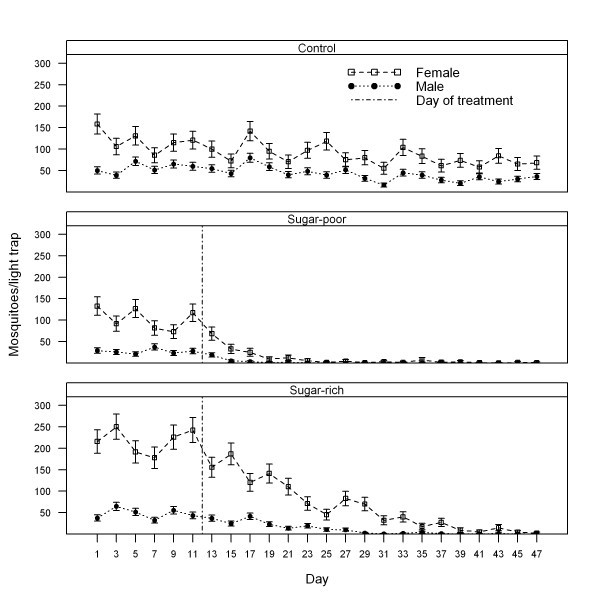
BACKGROUND: Attractive toxic sugar bait (ATSB) methods are a new and promising "attract and kill" strategy for mosquito control. Sugar-feeding female and male mosquitoes attracted to ATSB solutions, either sprayed on plants or in bait stations, ingest an incorporated low-risk toxin such as boric acid and are killed. This field study in the arid malaria-free oasis environment of Israel compares how the availability of a primary natural sugar source for Anopheles sergentii mosquitoes: flowering Acacia raddiana trees, affects the efficacy of ATSB methods for mosquito control. METHODS: A 47-day field trial was conducted to compare impacts of a single application of ATSB treatment on mosquito densities and age structure in isolated uninhabited sugar-rich and sugar-poor oases relative to an untreated sugar-rich oasis that served as a control. RESULTS: ATSB spraying on patches of non-flowering vegetation around freshwater springs reduced densities of female An. sergentii by 95.2% in the sugar-rich oasis and 98.6% in the sugar-poor oasis; males in both oases were practically eliminated. It reduced daily survival rates of female An. sergentii from 0.77 to 0.35 in the sugar-poor oasis and from 0.85 to 0.51 in the sugar-rich oasis. ATSB treatment reduced the proportion of older more epidemiologically dangerous mosquitoes (three or more gonotrophic cycles) by 100% and 96.7%, respectively, in the sugar-poor and sugar-rich oases. Overall, malaria vectorial capacity was reduced from 11.2 to 0.0 in the sugar-poor oasis and from 79.0 to 0.03 in the sugar-rich oasis. Reduction in vector capacity to negligible levels days after ATSB application in the sugar-poor oasis, but not until after 2 weeks in the sugar-rich oasis, show that natural sugar sources compete with the applied ATSB solutions. CONCLUSION: While readily available natural sugar sources delay ATSB impact, they do not affect overall outcomes because the high frequency of sugar feeding by mosquitoes has an accumulating effect on the probability they will be attracted to and killed by ATSB methods. Operationally, ATSB methods for malaria vector control are highly effective in arid environments regardless of competitive, highly attractive natural sugar sources in their outdoor environment.
Overview
CoChat Summary
## TL;DR
A 47-day field trial in two Israeli oases found that a single ATSB spraying reduced female An. sergentii densities by 95.2% in the sugar-rich oasis and 98.6% in the sugar-poor oasis, and nearly eliminated males. Natural sugar sources delayed the effect in the sugar-rich site, but ATSB still drove malaria vectorial capacity to negligible levels in both sites.
## Key findings
- A single ATSB application on day 12 reduced female An. sergentii densities by 95.2% in the sugar-rich oasis and 98.6% in the sugar-poor oasis; males were “practically eliminated.”
- Female daily survival fell from 0.77 to 0.35 in the sugar-poor oasis and from 0.85 to 0.51 in the sugar-rich oasis.
- The proportion of females with three or more gonotrophic cycles was reduced by 100% in the sugar-poor oasis and 96.7% (also reported as 94.9% elsewhere in the text) in the sugar-rich oasis.
- Malaria vectorial capacity (VC) dropped from 11.2 to 0.0 in the sugar-poor oasis and from 79.0 to 0.03 in the sugar-rich oasis.
## Methods
- Design: 47-day field trial comparing one ATSB treatment in two isolated oases with different natural sugar availability, plus an untreated sugar-rich control oasis.
- Sample/data: Mosquitoes were trapped every two days (24 sampling times) with six CDC UV traps at each site; the focus was An. sergentii adults, with female physiological age assessed by ovary dissection.
- Analysis: Logistic regression for the proportion of older females (three or more gonotrophic cycles), Poisson regression for male and female counts, and estimation of vectorial capacity before vs. after treatment.
## Limitations
- The paper does not report randomization or replication beyond the three oases, so the evidence comes from a small field comparison.
- The paper states this was a single application over 47 days, so longer-term durability is not assessed.
- Evident from the text: the study was conducted in arid oasis environments in Israel and centered on An. sergentii, so generalizability to other ecologies or mosquito species is not directly tested.
Model-written summary. Check it against the paper before relying on it.
Integrity signals
Registry
Cites
Statistics
Figures
Verification
Claims the paper makes
7 Valid · 1 Not valid · 6 Not checked · 32 Own results and interpretations
Every source the paper cites for this claim was checked and supports it.
In the paper
“As demonstrated in a recent comparative study of An. sergentii in sugar-rich and sugar-poor oases in Israel, the availability of natural plant sugar sources affects mosquito fitness, population dynamics, and malaria vector capacity [23].”
§ Attractive toxic sugar bait (ATSB) methods decimate populations of Anopheles malaria vectors in arid environments regardless of the local availability of favoured sugar-source blossoms > Background
What the sources say
- Supportedcites [23] Gu W Muller G Schlein Y Novak RJ Beier JC Natural plant sugar sources of Anopheles mosquitoes strongly impact malaria transmission potential PLoS One 2011 6 e15996 10.1371/journal.pone.0015996 21283732 PMC3024498 source
The Abstract reports that An. sergentii in the sugar-poor Israeli oasis had a smaller population, lower survival, and longer gonotrophic cycles than those in the sugar-rich oasis. The Discussion links sugar availability to these differences and reports more than a 250-fold difference in estimated malarial vectorial capacity, supporting the claim about fitness, population dynamics, and transmission potential. (LLM, conf=0.94)
boostedstates a cause- Asserted: passes — The authors put it forward as true.
- Checkable: passes — It can be checked against evidence.
- Load-bearing: passes — The paper’s conclusions depend on it.
- Based: passes — The paper gives a reason why it holds.
- Supported
Every source the paper cites for this claim was checked and supports it.
In the paper
“As recently described [23], the environments of the two oases are very similar except for the availability of sugar sources.”
§ Attractive toxic sugar bait (ATSB) methods decimate populations of Anopheles malaria vectors in arid environments regardless of the local availability of favoured sugar-source blossoms > Methods > Study sites
What the sources say
- Supportedcites [23] Gu W Muller G Schlein Y Novak RJ Beier JC Natural plant sugar sources of Anopheles mosquitoes strongly impact malaria transmission potential PLoS One 2011 6 e15996 10.1371/journal.pone.0015996 21283732 PMC3024498 source
The Materials and Methods, Study area section states directly that the two oases were very similar except for sugar-source availability. It identifies flowering Acacia trees in the sugar-rich oasis and no flowering trees in the sugar-poor oasis. (LLM, conf=0.95)
plain- Asserted: passes — The authors put it forward as true.
- Checkable: passes — It can be checked against evidence.
- Load-bearing: passes — The paper’s conclusions depend on it.
- Based: passes — The paper gives a reason why it holds.
- Supported
The cited sources support only part of this claim — read each source’s verdict below.
In the paper
“Based on ATSB field trials to date [1-7], it is likely that this new approach can also be used in different malaria endemic environments to impact entomological inoculation rates (EIRs) and epidemiological parameters of malaria in humans.”
§ Attractive toxic sugar bait (ATSB) methods decimate populations of Anopheles malaria vectors in arid environments regardless of the local availability of favoured sugar-source blossoms > Discussion
What the sources say
- Not checked — no full text of the sourcecites [1] Muller G Schlein Y Sugar questing mosquitoes in arid areas gather on scarce blossoms that can be used for control Int J Parasitol 2006 36 1077 1080 10.1016/j.ijpara.2006.06.008 16860326 source
- Not checked — no full text of the sourcecites [2] Muller GC Schlein Y Efficacy of toxic sugar baits against adult cistern-dwelling Anopheles claviger Trans R Soc Trop Med Hyg 2008 102 480 484 10.1016/j.trstmh.2008.01.008 18387642 source
- Supportedcites [3] Schlein Y Muller GC An approach to mosquito control: using the dominant attraction of flowering Tamarix jordani trees against Culex pipiens J Med Entomol 2008 45 384 390 10.1603/0022-2585(2008)45[384:AATMCU]2.0.CO;2 18533430 source
The citation is attached to the pooled phrase 'ATSB field trials to date [1-7]', so what is attributed to this source is that it IS one of those field trials, not the malaria/EIR extrapolation (which is the citing authors' own inference). Our copy supports that: Experiment 2 sprayed flowering T. jordanis with 0.04% oral insecticide Spinosad plus 20% sucrose and produced a drastic, continuous reduction of Cx. pipiens numbers (Results, 'Experiment 2: Mosquito Populations...'; Discussion). The Discussion also generalises beyond this species — 'such flowering plants or extract of their flowers can be used for mosquito control... species of other genera are similarly selective... and they also have overriding preferences that can be used for their control' — which is the basis the citing sentence invokes. The paper itself contains no malaria, Anopheles-field-trial, EIR or human-epidemiology data, but none of that is claimed of this single source. (LLM, conf=0.80)
- Not checked — no full text of the sourcecites [4] Muller GC Kravchenko VD Schlein Y Decline of Anopheles sergentiiand Aedes caspius populations following presentation of attractive toxic (spinosad) sugar bait stations in an oasis J Am Mosq Control Assoc 2008 24 147 149 10.2987/8756-971X(2008)24[147:DOASAA]2.0.CO;2 18437830 source
- Not checked — no full text of the sourcecites [5] Muller GC Junnila A Schlein Y Effective control of adult Culex pipiensby spraying an attractive toxic sugar bait solution in the vegetation near larval habitats J Med Entomol 2010 47 63 66 10.1603/033.047.0108 20180309 source
- Not checked — no full text of the sourcecites [6] Muller GC Junnila A Qualls W Revay EE Kline DL Allan S Schlein Y Xue RD Control of Culex quinquefasciatus in a storm drain system in Florida using attractive toxic sugar baits Med Vet Entomol 2010 24 346 351 10.1111/j.1365-2915.2010.00876.x 20546128 source
- Partly supportedcites [7] Muller GC Beier JC Traore SF Toure MB Traore MM Bah S Doumbia S Schlein Y Successful field trial of attractive toxic sugar bait (ATSB) plant-spraying methods against malaria vectors in the Anopheles gambiae complex in Mali, West Africa Malar J 2010 9 210 10.1186/1475-2875-9-210 20663142 PMC2914067 sourceExperimental — accuracy not yet measured
The Discussion (page not provided) says the Mali trial indicates ATSB could be effective for vector control across malaria-endemic environments, but makes that prospect conditional on further testing. It also says ATSB’s effects on EIRs and human malaria incidence and prevalence still need to be measured, so the predicted impact on those outcomes is not established by this trial. (LLM, conf=0.86)
hedgedstates a possible cause- Asserted: passes — The authors put it forward as true.
- Checkable: passes — It can be checked against evidence.
- Load-bearing: passes — The paper’s conclusions depend on it.
- Based: passes — The paper gives a reason why it holds.
Every source the paper cites for this claim was checked and supports it.
In the paper
“When ATSB solutions are sprayed on non-flowering vegetation as a strategy to reduce overall impact on non-target insects [7], the sprayed areas largely represent favourable outdoor mosquito resting microenvironments and not sugar-feeding centres containing attractive flowering plants.”
§ Attractive toxic sugar bait (ATSB) methods decimate populations of Anopheles malaria vectors in arid environments regardless of the local availability of favoured sugar-source blossoms > Discussion
What the sources say
- Supportedcites [7] Muller GC Beier JC Traore SF Toure MB Traore MM Bah S Doumbia S Schlein Y Successful field trial of attractive toxic sugar bait (ATSB) plant-spraying methods against malaria vectors in the Anopheles gambiae complex in Mali, West Africa Malar J 2010 9 210 10.1186/1475-2875-9-210 20663142 PMC2914067 source
Split into 2 atoms — 2 confirmed, 0 partially supported, 0 disputed, 0 misattributed, 0 unverifiable. Expand the claim to see per-atom verdicts.
plain- Asserted: passes — The authors put it forward as true.
- Checkable: passes — It can be checked against evidence.
- Load-bearing: passes — The paper’s conclusions depend on it.
- Based: passes — The paper gives a reason why it holds.
- Supported
A result the paper reports from its own data — it cites no other source for it, so there is none to check. The quote shows it is in the paper.
In the paper
“At the sugar-rich site, the number of females with three or more gonotropic cycles was significantly reduced in the first week post-treatment (p = 0.001) and at the subsequent measurement times (p < 0.001 for both times).”
§ Attractive toxic sugar bait (ATSB) methods decimate populations of Anopheles malaria vectors in arid environments regardless of the local availability of favoured sugar-source blossoms > Results
plainstates a cause- Asserted: passes — The authors put it forward as true.
- Checkable: passes — It can be checked against evidence.
- Load-bearing: passes — The paper’s conclusions depend on it.
- Based: passes — The paper gives a reason why it holds.
23 more claims
Create a free account to see all 46 claims and to verify the 2 references still open.
- Probably not a substantial claim. 6
- It may state two separate claims as one. 13
Self-check
Percentages, sums and reported differences re-computed from the paper’s own numbers.
Each contradiction between two passages listed here was confirmed by an independent check.
Rated minor: it would not touch a result — a value no result rests on, a p-value that stays on the same side of the significance level, or a conflict that is clerical, resolved elsewhere in the paper, or outside its own findings.
In the paper
§ Attractive toxic sugar bait (ATSB) methods decimate populations of Anopheles malaria vectors in arid environments regardless of the local availability of favoured sugar-source blossoms > Abstract > Results
“ATSB treatment reduced the proportion of older more epidemiologically dangerous mosquitoes (three or more gonotrophic cycles) by 100% and 96.7%, respectively, in the sugar-poor and sugar-rich oases.”
§ Attractive toxic sugar bait (ATSB) methods decimate populations of Anopheles malaria vectors in arid environments regardless of the local availability of favoured sugar-source blossoms > Results
“ATSB treatment reduced the proportion of older more epidemiologically dangerous mosquitoes (three or more gonotrophic cycles) by 100% and 94.9%, respectively, in the sugar-poor and sugar-rich oasis.”
Citations
Cites
Detinova, T. S. (1962) · The Journal of Parasitology · doi:10.2307/3275215 · Cited by 804
Mosquito Sugar Feeding and Reproductive Energetics
Foster, W. A. (1995) · Annual Review of Entomology · doi:10.1146/annurev.en.40.010195.002303 · Cited by 709 · cited 1×
“ATSB methods work by competing with available natural plant sugar sources, which are an essential source of energy for females and the only food source for male mosquitoes [10,11].”
BackgroundMalaria Management: Past, Present, and Future
Enayati, A., & Hemingway, J. (2010) · Annual Review of Entomology · doi:10.1146/annurev-ento-112408-085423 · Cited by 264 · cited 1×
“The new ATSB methods are highly effective, technologically simple, low-cost, and circumvent traditional problems associated with the indiscriminate effects of contact insecticides [8] by narrowing the specificity of attraction to sugar-seeking mosquitoes and by using environmentally safe oral toxins such as boric acid…”
BackgroundMüller, G. C., Beier, J. C., Traore, S. F., Toure, M. B., Traore, M. M., Bah, S., Doumbia, S., & Schlein, Y. (2010) · Malaria Journal · doi:10.1186/1475-2875-9-210 · Cited by 239
Self-citationVectorial capacity: Must we measure all its components?
Dye, C. (1986) · Parasitology Today · doi:10.1016/0169-4758(86)90082-7 · Cited by 178 · cited 1×
“Following Dye [32], VC was compared before and after the intervention.”
MethodKitron, U., & Spielman, A. (1989) · Clinical Infectious Diseases · doi:10.1093/clinids/11.3.391 · Cited by 151 · cited 1×
“This mosquito species was the main vector responsible for malaria outbreaks [17-19] before the elimination of malaria parasite transmission from Israel in the 1960s [20-22].”
BackgroundGU, W., & NOVAK, R. J. (2005) · The American Journal of Tropical Medicine and Hygiene · doi:10.4269/ajtmh.2005.73.546 · Cited by 135 · cited 1×
“EIP was the extrinsic incubation period of malaria parasites in mosquitoes assuming to be 10 days [31].”
BackgroundSelf-citationNatural Plant Sugar Sources of Anopheles Mosquitoes Strongly Impact Malaria Transmission Potential
Gu, W., Müller, G., Schlein, Y., Novak, R. J., & Beier, J. C. (2011) · PLoS ONE · doi:10.1371/journal.pone.0015996 · Cited by 128 · cited 4×
“Both sites covered areas of about 5 ha, included small fresh-water springs surrounded by dense non-flowering vegetation which was largely grazed out by camels and donkeys with no visible plant sugar sources during the period of field experiments [23,24].”
BackgroundInfluentialSelf-citationSugar questing mosquitoes in arid areas gather on scarce blossoms that can be used for control
Müller, G., & Schlein, Y. (2006) · International Journal for Parasitology · doi:10.1016/j.ijpara.2006.06.008 · Cited by 123 · cited 5×
“Based on ATSB field trials to date [1-7], it is likely that this new approach can also be used in different malaria endemic environments to impact entomological inoculation rates (EIRs) and epidemiological parameters of malaria in humans.”
BackgroundMethodResultInfluentialSelf-citationAnopheles gambiae feeding and survival on honeydew and extra‐floral nectar of peridomestic plants
Gary, R. E., & Foster, W. A. (2004) · Medical and Veterinary Entomology · doi:10.1111/j.0269-283x.2004.00483.x · Cited by 121 · cited 1×
“high frequencies of mosquito sugar-feeding [33,34].”
Research works printed but not linked: 4
- Environmental Protection Agency R.E.D Facts: Boric Acid 1993 U.S. Environmental Protection Agency, Office of Prevention, Pesticides and Toxic Substances, Washington D.C. Report PB94-161668; EPA/738/F-93/006
- Saliternik Z The history of the struggle against malaria and its eradication in Israel. (In Hebrew) American Physicians Fellowship Inc Jerusalem 1979 217
- Zohary M Orshansky G Structure and ecology of the vegetation in the Dead Sea region of Palestine Palest J Bot 1949 4 177 206
- Danin A Flora and Vegetation of Israel 1988 Dordrecht: Junk
Cited by
Malaria eradication within a generation: ambitious, achievable, and necessary
Feachem, R. G. A., Chen, I., Akbari, O., Bertozzi-Villa, A., Bhatt, S., Binka, F., Boni, M. F., Buckee, C., Dieleman, J., Dondorp, A., et al. (2019) · The Lancet · doi:10.1016/s0140-6736(19)31139-0 · Cited by 366
Alternative strategies for mosquito-borne arbovirus control
Achee, N. L., Grieco, J. P., Vatandoost, H., Seixas, G., Pinto, J., Ching-NG, L., Martins, A. J., Juntarajumnong, W., Corbel, V., Gouagna, C., et al. (2019) · PLOS Neglected Tropical Diseases · doi:10.1371/journal.pntd.0006822 · Cited by 353
Transmission of pathogens by Stomoxys flies (Diptera, Muscidae): a review
Baldacchino, F., Muenworn, V., Desquesnes, M., Desoli, F., Charoenviriyaphap, T., & Duvallet, G. (2013) · Parasite · doi:10.1051/parasite/2013026 · Cited by 353
“Experiments are now performed to evaluate the association of the ATSB (Attractive Toxic Sugar Bait) method [5, 89] with attractive devices to control flies.”
MethodCurrent vector control challenges in the fight against malaria
Benelli, G., & Beier, J. C. (2017) · Acta Tropica · doi:10.1016/j.actatropica.2017.06.028 · Cited by 313
Self-citationPrevention Efforts for Malaria
Tizifa, T. A., Kabaghe, A. N., McCann, R. S., van den Berg, H., Van Vugt, M., & Phiri, K. S. (2018) · Current Tropical Medicine Reports · doi:10.1007/s40475-018-0133-y · Cited by 192
Sougoufara, S., Ottih, E. C., & Tripet, F. (2020) · Parasites & Vectors · doi:10.1186/s13071-020-04170-7 · Cited by 187
Fiorenzano, J. M., Koehler, P. G., & Xue, R.-D. (2017) · International Journal of Environmental Research and Public Health · doi:10.3390/ijerph14040398 · Cited by 161
“ATSBs have been applied to foliage in and around larval habitats as spot treatments, in barrier applications [7,9,31,37,40], and in bait stations [8,41–45].”
BackgroundInfluentialEvidence-based vector control? Improving the quality of vector control trials
Wilson, A. L., Boelaert, M., Kleinschmidt, I., Pinder, M., Scott, T. W., Tusting, L. S., & Lindsay, S. W. (2015) · Trends in Parasitology · doi:10.1016/j.pt.2015.04.015 · Cited by 157
Traore, M. M., Junnila, A., Traore, S. F., Doumbia, S., Revay, E. E., Kravchenko, V. D., Schlein, Y., Arheart, K. L., Gergely, P., Xue, R., et al. (2020) · Malaria Journal · doi:10.1186/s12936-020-3132-0 · Cited by 138
“The current field trial in Mali tested the potential impact of ATSB by different criteria including vector densities, the rate of biting on humans, the proportion of ‘old’ females that passed at least three or more egg laying cycles, sporozoite infection rate, and EIR.”
BackgroundResultInfluentialSelf-citationOchomo, E. O., Bayoh, N. M., Walker, E. D., Abongo, B. O., Ombok, M. O., Ouma, C., Githeko, A. K., Vulule, J., Yan, G., & Gimnig, J. E. (2013) · Malaria Journal · doi:10.1186/1475-2875-12-368 · Cited by 127
Fractional model for malaria transmission under control strategies
Pinto, C. M. A., & Machado, J. A. T. (2012) · Computers & Mathematics with Applications · doi:10.1016/j.camwa.2012.11.017 · Cited by 126
Review of Issues on Residual Malaria Transmission
Carnevale, P., & Manguin, S. (2021) · The Journal of Infectious Diseases · doi:10.1093/infdis/jiab084 · Cited by 137
Stewart, Z., Oxborough, R. M., Tungu, P., Kirby, M. J., Rowland, M., & Irish, S. R. (2013) · PLoS ONE · doi:10.1371/journal.pone.0084168 · Cited by 117
“Until now the application of ATSB as a mosquito control tool has been limited - albeit highly successfully - to outdoor use [12,13].”
BackgroundMethodQualls, W. A., Müller, G. C., Traore, S. F., Traore, M. M., Arheart, K. L., Doumbia, S., Schlein, Y., Kravchenko, V. D., Xue, R., & Beier, J. C. (2015) · Malaria Journal · doi:10.1186/s12936-015-0819-8 · Cited by 117
“Importantly, ATSB methods differ from and potentially complement LLIN and IRS methods and they have so far proven effective in outdoor [11, 12, 14] and indoor environments for killing mosquitoes.”
BackgroundSelf-citationVolatile phytochemicals as mosquito semiochemicals
Nyasembe, V. O., & Torto, B. (2013) · Phytochemistry Letters · doi:10.1016/j.phytol.2013.10.003 · Cited by 104
“Studies have shown that spraying of vegetations around water bodies with attractive toxic sugar baits can reduce mosquito populations by up to 98% (Schlein and Müller, 2008; Müller et al., 2010a; Beier et al., 2012).”
BackgroundBiological control of human disease vectors: a perspective on challenges and opportunities
Thomas, M. B. (2017) · BioControl · doi:10.1007/s10526-017-9815-y · Cited by 133
“For example, there is a growing interest in developing sugar baits as novel delivery systems for both chemical actives and biologicals (Müller et al. 2010; Beier et al. 2012; Marshall et al. 2013; Ondiaka et al. 2015; Dennison et al. 2016).”
BackgroundRNA Interference for Mosquito and Mosquito-Borne Disease Control
Airs, P. M., & Bartholomay, L. C. (2017) · Insects · doi:10.3390/insects8010004 · Cited by 99
“Surprisingly high ATSB efficacy has been found in spray formulations on flowering and non-flowering plants in arid and wet climates [30,31,35,36,39].”
BackgroundSlater, H. C., Foy, B. D., Kobylinski, K. C., Chaccour, C., Watson, O. J., Hellewell, J., Aljayyoussi, G., Bousema, T., Burrows, J. N., D’Alessandro, U., et al. (2020) · The Lancet Infectious Diseases · doi:10.1016/s1473-3099(19)30633-4 · Cited by 93
Qualls, W. A., Müller, G. C., Revay, E. E., Allan, S. A., Arheart, K. L., Beier, J. C., Smith, M. L., Scott, J. M., Kravchenko, V. D., Hausmann, A., et al. (2013) · Acta Tropica · doi:10.1016/j.actatropica.2013.12.004 · Cited by 88
“Previous studies have demonstrated decimation of important malaria vectors in arid and semi-arid environments (Müller and Schlein, 2006; Müller et al., 2008, 2010a,c; Beier et al., 2012).”
InfluentialSelf-citationSissoko, F., Junnila, A., Traore, M. M., Traore, S. F., Doumbia, S., Dembélé, S. M., Schlein, Y., Traore, A., Gergely, P., Xue, R., et al. (2019) · PLoS ONE · doi:10.1371/journal.pone.0214170 · Cited by 90
“The potential and efficiency of this method have been demonstrated in several 104 experiments with various mosquito genera and species [27-34].”
MethodSelf-citationKhallaayoune, K., Qualls, W. A., Revay, E. E., Allan, S. A., Arheart, K. L., Kravchenko, V. D., Xue, R., Schlein, Y., Beier, J. C., & Müller, G. C. (2013) · Environmental Entomology · doi:10.1603/en13119 · Cited by 84
Self-citationImplications of diet on mosquito life history traits and pathogen transmission
Carvajal-Lago, L., Ruiz‐López, M. J., Figuerola, J., & la Puente, J. M. (2021) · Environmental Research · doi:10.1016/j.envres.2021.110893 · Cited by 98
Naranjo, D. P., Qualls, W. A., Müller, G. C., Samson, D. M., Roque, D. D., Alimi, T. O., Arheart, K. L., Beier, J. C., & Xue, R. (2013) · Parasitology Research · doi:10.1007/s00436-013-3312-8 · Cited by 87
Self-citationMalaria Parasites Produce Volatile Mosquito Attractants
Kelly, M., Su, C., Schaber, C., Crowley, J. R., Hsu, F., Carlson, J. R., & John, A. R. O. (2015) · mBio · doi:10.1128/mbio.00235-15 · Cited by 83
“This phytoattraction has been successfully harnessed by malaria control efforts through “attractive nectar baiting” strategies, in which mosquitoes are lured to sugar-water blends spiked with plant volatiles and insecticides (12, 13).”
BackgroundJunnila, A., Revay, E. E., Müller, G. C., Kravchenko, V. D., Qualls, W. A., Xue, R., Allen, S. A., Beier, J. C., & Schlein, Y. (2015) · Acta Tropica · doi:10.1016/j.actatropica.2015.09.006 · Cited by 77
Self-citationNureye, D., & Assefa, S. (2020) · The Scientific World JOURNAL · doi:10.1155/2020/1295381 · Cited by 96
Priorities for Broadening the Malaria Vector Control Tool Kit
Barreaux, P., Barreaux, A. M. G., Sternberg, E. D., Suh, E., Waite, J. L., Whitehead, S. A., & Thomas, M. B. (2017) · Trends in Parasitology · doi:10.1016/j.pt.2017.06.003 · Cited by 67
“A similar study in the Rift Valley showed a 95% reduction in female Anopheles sergentii populations, while completely eradicating males [41].”
BackgroundMarshall, J. M., White, M. T., Ghani, A. C., Schlein, Y., Müller, G. C., & Beier, J. C. (2013) · Malaria Journal · doi:10.1186/1475-2875-12-291 · Cited by 61
“sources [47] and to reduce mosquito populations even in sugar-rich environments [48].”
BackgroundSelf-citationTenywa, F. C., Kambagha, A., Saddler, A., & Maia, M. F. (2017) · Malaria Journal · doi:10.1186/s12936-017-1994-6 · Cited by 62
“Similar interventions observed to be effective at reducing non-malaria vectors population by approximately 80% in Florida and Israel [12, 15, 16].”
BackgroundAttractive targeted sugar bait phase III trials in Kenya, Mali, and Zambia
Attractive Targeted Sugar Bait Phase III Trial Group, Eisele, T. P., Kleinschmidt, I., Sarrassat, S., ter Kuile, F. O., Miller, J., Chanda, J., Silumbe, K., Samuels, A. M., Janssen, J., et al. (2022) · Trials · doi:10.1186/s13063-022-06555-8 · Cited by 60
Self-citationNıkbakhtzadeh, M. R., Terbot, J. W., Otienoburu, P. E., & Foster, W. A. (2014) · Journal of Vector Ecology · doi:10.1111/jvec.12113 · Cited by 64
“The chemicals are of interest because they might be exploited for malaria vector surveillance and control (Müller and Schlein 2006, Foster 2008, Müller et al. 2008, Beier et al. 2012).”
BackgroundDiarra, R. A., Traore, M. M., Junnila, A., Traore, S. F., Doumbia, S., Revay, E. E., Kravchenko, V. D., Schlein, Y., Arheart, K. L., Gergely, P., et al. (2021) · Malaria Journal · doi:10.1186/s12936-021-03704-3 · Cited by 58
“The potential of Attractive Toxic Sugar Baits (ATSB) for control has been shown against populations of Anopheles vectors of malaria as well as several other mosquito species [2,3,5-7, 14, 15, 16].”
BackgroundSelf-citationFraser, K., Mwandigha, L., Traore, S. F., Traore, M. M., Doumbia, S., Junnila, A., Revay, E. E., Beier, J. C., Marshall, J. M., Ghani, A. C., et al. (2021) · Malaria Journal · doi:10.1186/s12936-021-03684-4 · Cited by 52
Self-citationNyasembe, V. O., Tchouassi, D. P., Kirwa, H. K., Foster, W. A., Teal, P. E. A., Borgemeister, C., & Torto, B. (2014) · PLoS ONE · doi:10.1371/journal.pone.0089818 · Cited by 64
“Furthermore, progress has been made in the development of attractive toxic sugar-baits (ATSB) [69,70], but these baits are still limited by the fact that they employ ripened fruits and flowering plants, and therefore their application is still restricted to available plant products [69,70].”
BackgroundRevay, E. E., Schlein, Y., Tsabari, O., Kravchenko, V. D., Qualls, W. A., De-Xue, R., Beier, J. C., Traore, S. F., Doumbia, S., Hausmann, A., et al. (2015) · Acta Tropica · doi:10.1016/j.actatropica.2015.06.018 · Cited by 62
“…nets (LLINs) and indoor residual spraying (IRS) have been shown to cause selection-pressure and contribute to the emergence of mosquito populations which are resistant to one or several classes of chemical compounds (Oxborough et al., 2008; Ranson et al., 2009, 2011; Beier et al., 2012).”
BackgroundSelf-citationStone, C., Jackson, B. T., & Foster, W. A. (2012) · American Journal of Tropical Medicine and Hygiene · doi:10.4269/ajtmh.2012.12-0123 · Cited by 62
Pitts, R. J., Mozūraitis, R., Gauvin‐Bialecki, A., & Lempérière, G. (2013) · Acta Tropica · doi:10.1016/j.actatropica.2013.09.005 · Cited by 53
Malaria vector research and control in Haiti: a systematic review
Frederick, J., Jean, Y. S., Lemoine, J. F., Dotson, E. M., Mace, K. E., Chang, M., Slutsker, L., Menach, A. L., Beier, J. C., Eisele, T. P., et al. (2016) · Malaria Journal · doi:10.1186/s12936-016-1436-x · Cited by 59
Self-citationMuema, J. M., Bargul, J. L., Njeru, S. N., Onyango, J. O., & Imbahale, S. S. (2017) · Parasites & Vectors · doi:10.1186/s13071-017-2122-8 · Cited by 55
“demonstrated that ATSB methods reduced the densities of female anopheline mosquitoes in arid oases during a 47-day field trial study [164].”
Lutz, E. K., Lahondère, C., Vinauger, C., & Riffell, J. A. (2017) · Current Opinion in Insect Science · doi:10.1016/j.cois.2017.03.002 · Cited by 50
Almire, F., Terhzaz, S., Terry, S., McFarlane, M., Gestuveo, R. J., Szemiel, A. M., Varjak, M., McDonald, A., Kohl, A., & Pondeville, E. (2021) · PLoS Pathogens · doi:10.1371/journal.ppat.1009870 · Cited by 53
Furnival-Adams, J., Camara, S., Rowland, M., Koffi, A. A., Alou, L. P. A., Oumbouke, W. A., & N’Guessan, R. (2020) · Malaria Journal · doi:10.1186/s12936-019-3095-1 · Cited by 43
Blanford, S., Jenkins, N. E., Read, A. F., & Thomas, M. B. (2012) · Malaria Journal · doi:10.1186/1475-2875-11-365 · Cited by 48
Qualls, W. A., Müller, G. C., Khallaayoune, K., Revay, E. E., Zhioua, E., Kravchenko, V. D., Arheart, K. L., Xue, R., Schlein, Y., Hausmann, A., et al. (2015) · Parasites & Vectors · doi:10.1186/s13071-015-0671-2 · Cited by 44
Self-citationPlant-feeding phlebotomine sand flies, vectors of leishmaniasis, prefer Cannabis sativa
Abbasi, I., Queiroz, A. T. L., Kirstein, O. D., Nasereddin, A., Horwitz, B. Z., Hailu, A., Salah, I., Mota, T. F., Fraga, D. B. M., Veras, P. S. T., et al. (2018) · Proceedings of the National Academy of Sciences · doi:10.1073/pnas.1810435115 · Cited by 53
“A novel approach for controlling blood-sucking mosquitoes and sand flies exploits their plant feeding habit by utilizing attractive toxic sugar baits (ATSBs) that emit olfactory cues to attract sand flies and mosquitoes (41, 42).”
BackgroundMeza, F. C., Roberts, J. M., Sobhy, I. S., Okumu, F. O., Tripet, F., & Bruce, T. J. A. (2020) · Journal of Chemical Ecology · doi:10.1007/s10886-020-01172-8 · Cited by 39
“A growing body of evidence has shown that Afrotropical malaria mosquitoes feed on plant sugars while being found in habitats surrounded by plants (Impoinvil et al. 2004; Manda et al. 2007; Beier et al. 2012).”
BackgroundManaging mosquitoes and ticks in a rapidly changing world – Facts and trends
Benelli, G. (2018) · Saudi Journal of Biological Sciences · doi:10.1016/j.sjbs.2018.06.007 · Cited by 48
Ebrahimi, B., Jackson, B. T., Guseman, J., Przybylowicz, C. M., Stone, C., & Foster, W. A. (2017) · Journal of Applied Ecology · doi:10.1111/1365-2664.13001 · Cited by 40
“This approach is particularly feasible for island- like ecosystems, such as patches of abundant vegetation around villages in otherwise arid areas, where selective removal and replacement of plant species can cause a striking reduction or elimination of a vector (Beier et al., 2012).”
BackgroundGuglielmo, F., Sanou, A., Churcher, T. S., Ferguson, H. M., Ranson, H., & Sherrard-Smith, E. (2021) · Malaria Journal · doi:10.1186/s12936-020-03538-5 · Cited by 42
Gene drives: an alternative approach to malaria control?
Naidoo, K., & Oliver, S. V. (2024) · Gene Therapy · doi:10.1038/s41434-024-00468-8 · Cited by 50
Is outdoor vector control needed for malaria elimination? An individual-based modelling study
Zhu, L., Müller, G. C., Marshall, J. M., Arheart, K. L., Qualls, W. A., Hlaing, W. M., Schlein, Y., Traore, S. F., Doumbia, S., & Beier, J. C. (2017) · Malaria Journal · doi:10.1186/s12936-017-1920-y · Cited by 40
Self-citationGeorgiades, M., Alampounti, A. C., Somers, J., Su, M. P., Ellis, D., Bagi, J., Terrazas-Duque, D., Tytheridge, S. J., Ntabaliba, W. S., Moore, S., et al. (2023) · Nature Communications · doi:10.1038/s41467-023-40029-y · Cited by 36
Samson, D. M., Qualls, W. A., Roque, D. D., Naranjo, D. P., Alimi, T. O., Arheart, K. L., Müller, G. C., Beier, J. C., & Xue, R. (2013) · Journal of the American Mosquito Control Association · doi:10.2987/13-6347r.1 · Cited by 43
“While sugar feeding preference of mosquitoes in nature is still largely unclear (Harada et al. 1975, 1976), this behavior more recently has been used to maximize vector control strategies (Xue et al. 2006, Müller et al. 2010a, Beier et al. 2012).”
Self-citationLobo, N. F., Achee, N. L., Grieco, J. P., & Collins, F. H. (2017) · Cold Spring Harbor Perspectives in Medicine · doi:10.1101/cshperspect.a025643 · Cited by 51
“A single application of ATSBs affected mosquito density, parity, survival, and hence vectorial capacity (Garrett-Jones and Shidrawi 1969; Beier et al. 2012).”
BackgroundPaton, D. G., Probst, A. S., Ma, E., Adams, K. L., Shaw, W. R., Singh, N. P., Bopp, S. E. R., Volkman, S. K., Hien, D. F. D. S., Paré, P. S. L., et al. (2022) · PLoS Pathogens · doi:10.1371/journal.ppat.1010609 · Cited by 38
“While current proposed ATSB designs rely on insecticidal ingredients [24,25,47], the use of antimalarials in sugar baits could act as a more specific and environmentally benign paradigm for this promising intervention should suitable antimalarial ingredients be identified [48–50].”
BackgroundAn agent-based model of the population dynamics of Anopheles gambiae
Arifin, S. N., Zhou, Y., Davis, G. J., Gentile, J. E., Madey, G. R., & Collins, F. H. (2014) · Malaria Journal · doi:10.1186/1475-2875-13-424 · Cited by 40
“ATSB kills female and male mosquitoes searching for essential sugar sources in the outdoor environment [43].”
BackgroundAttractive toxic sugar baits for controlling mosquitoes: a qualitative study in Bagamoyo, Tanzania
Maia, M. F., Tenywa, F. C., Nelson, H., Kambagha, A., Ashura, A., Bakari, I., Mruah, D., Simba, A., & Bedford, A. (2018) · Malaria Journal · doi:10.1186/s12936-018-2171-2 · Cited by 31
Efficacy of orally toxic sugar baits against contact-insecticide resistant culex quinquefasciatus
Gu, Z. Y., He, J., Teng, X. D., Lan, C. J., Shen, R.-X., Wang, Y. T., Zhang, N., Dong, Y. D., Zhao, T., & Li, C. X. (2019) · Acta Tropica · doi:10.1016/j.actatropica.2019.105256 · Cited by 30
Maximizing the Potential of Attractive Targeted Sugar Baits (ATSBs) for Integrated Vector Management
Njoroge, T. M., Hamid‐Adiamoh, M., & Duman‐Scheel, M. (2023) · Insects · doi:10.3390/insects14070585 · Cited by 32
“Another study [81] indicated that the efficacy of ATSBs will not be affected by the availability of alternative sugar sources, as previously suggested [82].”
BackgroundQualls, W. A., Xue, R., Revay, E. E., Allan, S. A., & Müller, G. C. (2012) · Acta Tropica · doi:10.1016/j.actatropica.2012.07.004 · Cited by 33
Self-citationAlimi, T. O., Fuller, D. O., Quiñones, M. L., Xue, R., Herrera, S. V., Arévalo‐Herrera, M., Ulrich, J. N., Qualls, W. A., & Beier, J. C. (2015) · Malaria Journal · doi:10.1186/s12936-015-1052-1 · Cited by 33
“The ATSB method works through bait stations or spraying an attractive sugar solution containing an oral toxin on spots of vegetation in order to kill mosquitoes that feed on it [98–102].”
MethodSelf-citationZhu, L., Marshall, J. M., Qualls, W. A., Schlein, Y., McManus, J. W., Arheart, K. L., Hlaing, W. M., Traore, S. F., Doumbia, S., Müller, G. C., et al. (2015) · Malaria Journal · doi:10.1186/s12936-015-1012-9 · Cited by 30
Self-citationNovel odor-based strategies for integrated management of vectors of disease
Mafra‐Neto, A., & Dekker, T. (2019) · Current Opinion in Insect Science · doi:10.1016/j.cois.2019.05.007 · Cited by 29
“Fruit juices and fermenting substrates laced with a toxicant agent can reduce populations of various mosquito species in lab, semi-field, and field environments [8][9][34][45][48][49] [63].”
BackgroundAfrotropical sand fly-host plant relationships in a leishmaniasis endemic area, Kenya
Hassaballa, I. B., Sole, C. L., Cheseto, X., Torto, B., & Tchouassi, D. P. (2021) · PLoS neglected tropical diseases · doi:10.1371/journal.pntd.0009041 · Cited by 30
Yu, B.-T., Ding, Y.-M., & Mo, J. (2015) · Parasites & Vectors · doi:10.1186/s13071-015-1212-8 · Cited by 32
“(ATSB) have been successfully applied in controlling a variety of mosquito species [27–29].”
BackgroundNatural sugar feeding rates of Anopheles mosquitoes collected by different methods in western Kenya
Omondi, S., Kosgei, J. J., Agumba, S., Polo, B., Yalla, N., Moshi, V., Abong’o, B., Ombok, M., McDermott, D. P., Entwistle, J., et al. (2022) · Scientific Reports · doi:10.1038/s41598-022-25004-9 · Cited by 27
Sangoro, O. P., Gavana, T., Finda, M. F., Mponzi, W. P., Hape, E. E., Limwagu, A. J., Govella, N. J., Chaki, P., & Okumu, F. O. (2020) · Malaria Journal · doi:10.1186/s12936-020-03215-7 · Cited by 27
Kumar, G., Sharma, A., & Dhiman, R. C. (2022) · Journal of Vector Borne Diseases · doi:10.4103/0972-9062.331414 · Cited by 29
Dieng, H., Satho, T., Arzemi, N. A. B., Aliasan, N. E., Abang, F. B., Wydiamala, E., Miake, F., Zuharah, W. F., Kassim, N. F. A., Vargas, R. E. M., et al. (2018) · Acta Tropica · doi:10.1016/j.actatropica.2018.05.019 · Cited by 27
Caragata, E. P., Otero, L. M., Carlson, J. S., Dizaji, N. B., & Dimopoulos, G. (2020) · Applied and Environmental Microbiology · doi:10.1128/aem.00240-20 · Cited by 34
Mysore, K., Sun, L., Hapairai, L. K., Wang, C.-W., Roethele, J. B., Igiede, J., Scheel, M. P., Scheel, N. D., Li, P., Wei, N., et al. (2021) · Pathogens · doi:10.3390/pathogens10101251 · Cited by 24
Qualls, W. A., Xue, R. D., Beier, J. C., & Müller, G. C. (2013) · Parasitology Research · doi:10.1007/s00436-013-3396-1 · Cited by 33
“One new approach in mosquito control is to target the obligatory sugar-feeding behavior (Schlein and Müller 2008; Müller et al. 2008; Beier et al. 2012, Qualls et al. 2012) of mosquitoes because both male and female mosquitoes require sugar for nutrition and energy for their day-today activities…”
BackgroundSelf-citationVector control for malaria elimination in Botswana: progress, gaps and opportunities
Kgoroebutswe, T. K., Makate, N., Fillinger, U., Mpho, M., Segoea, G., Sangoro, O. P., Mutero, C. M., Chanda, E., Ntebela, D., Mogopa, M., et al. (2020) · Malaria Journal · doi:10.1186/s12936-020-03375-6 · Cited by 26
New insight-guided approaches to detect, cure, prevent and eliminate malaria
Kumar, S., Kumari, R., & Pandey, R. (2014) · PROTOPLASMA · doi:10.1007/s00709-014-0697-x · Cited by 26
“The procedure has proven effective in curtailing the local mosquito populations in several different African geographical locations where it was field tested (Muller et al. 2010; Beier et al. 2012; Marshall et al. 2013).”
BackgroundNewer Approaches for Malaria Vector Control and Challenges of Outdoor Transmission
Beier, J. C., Wilke, A. B. B., & Benelli, G. (2018) · InTech eBooks · doi:10.5772/intechopen.75513 · Cited by 30
“The ATSB method is also found under the same strategy of “lure and kill”; it exploits the instinct of mosquitoes, both males and females to seek and feed on sugar sources [42, 43].”
MethodSelf-citationBilgo, E. M., Vantaux, A., Sanon, A., Ilboudo, S., Dabiré, R. K., Jacobs‐Lorena, M., & Diabaté, A. (2018) · Malaria Journal · doi:10.1186/s12936-018-2516-x · Cited by 26
Ashton, R. A., Saili, K., Chishya, C., Yikona, H. B., Arnzen, A., Orange, E., Chitoshi, C., Chulu, J., Tobolo, T., Ndalama, F., et al. (2024) · Malaria Journal · doi:10.1186/s12936-024-05175-8 · Cited by 22
“Spraying vegetation with ATSB solution in Mali led to reduction in Anopheles gambiae sensu lato ( s.l .) abundance by 90% [2], and a similar approach in Israel reduced density of female Anopheles sergentii by over 95% [3].”
Urbán, P., Ranucci, E., & Fernàndez‐Busquets, X. (2015) · Nanomedicine · doi:10.2217/nnm.15.174 · Cited by 22
“This phytoattraction has been successfully harnessed by malaria control efforts through attractive nectar baiting strategies, in which mosquitoes are lured to sugarwater blends spiked with plant volatiles and insecticides [92,93].”
BackgroundKumar, G., Ojha, V., & Pasi, S. (2020) · Pest Management Science · doi:10.1002/ps.6226 · Cited by 23
Yalla, N., Polo, B., McDermott, D. P., Kosgei, J. J., Omondi, S., Agumba, S., Moshi, V., Abong’o, B., Gimnig, J. E., Harris, A. F., et al. (2023) · PLoS ONE · doi:10.1371/journal.pone.0286679 · Cited by 19
Sugar‐feeding behaviour and longevity of E uropean C ulicoides biting midges
Kaufmann, C. A., Mathis, A., & Vorburger, C. (2014) · Medical and Veterinary Entomology · doi:10.1111/mve.12086 · Cited by 23
“Biting midges may represent a good target for toxic sugar-baited traps such as those already used successfully against mosquitoes (e.g. Beier et al., 2012).”
BackgroundSaghafipour, A., Vatandoost, H., Zahraei-Ramazani, A., Yaghoobi-Ershadi, M., Rassi, Y., Jooshin, M. K., Shirzadi, M., & Akhavan, A. (2017) · PLoS ONE · doi:10.1371/journal.pone.0173558 · Cited by 19
Biting patterns of malaria vectors of the lower Shire valley, southern Malawi
Mburu, M. M., Mzilahowa, T., Amoah, B., Chifundo, D., Phiri, K. S., van den Berg, H., Takken, W., & McCann, R. S. (2019) · Acta Tropica · doi:10.1016/j.actatropica.2019.105059 · Cited by 22
Wagman, J., Chanda, B., Chanda, J., Saili, K., Orange, E., Mambo, P., Muyabe, R., Kaniki, T., Mwenya, M., Ng’andu, M., et al. (2024) · Malaria Journal · doi:10.1186/s12936-024-05045-3 · Cited by 17
“…Israel) has undergone multiple rounds of prototype refinement and field validation against malaria vectors in Israel and southern Mali, and has demonstrated significant reductions in Anopheles sergentii and Anopheles gambiae sensu lato ( s.l .) population numbers, biting rates, and EIRs [11–13].”
BackgroundQualls, W. A., Naranjo, D. P., Subía, M. A., Ramón, G., Cevallos, V., Grijalva, I. O. G., Gómez, E. A., Arheart, K. L., Fuller, D. O., & Beier, J. C. (2016) · Journal of Vector Ecology · doi:10.1111/jvec.12217 · Cited by 21
“…most of the studies with a highly attractive sugar bait (attractant added), >50% staining rate was achieved with at least that percentage of control if the attractive sugar mixture was toxic (Müller and Schlein 2006, Müller et al. 2010a, Beier et al. 2012, Qualls et al. 2012, Junnila et al. 2015).”
BackgroundMethodSelf-citationMcDermott, E. G., Morris, E. K., & Garver, L. S. (2019) · Journal of Medical Entomology · doi:10.1093/jme/tjz079 · Cited by 18
Mysore, K., Sun, L., Hapairai, L. K., Wang, C.-W., Igiede, J., Roethele, J. B., Scheel, N. D., Scheel, M. P., Li, P., Wei, N., et al. (2021) · Insects · doi:10.3390/insects12110986 · Cited by 17
“Likewise, various Culex species have been effectively controlled with ATSBs that deliver insecticides such as dinotefuran, boric acid, eugenol, encapsulated garlic oil, and Spinosad [24,30–33], and ATSBs targeting Anopheles mosquitoes are being developed as a mechanism for addressing residual malaria transmission [20,…”
BackgroundOgwang, C., Samuels, A. M., McDermott, D. P., Kamau, A., Lesosky, M., Obiet, K., Janssen, J. M., Odongo, W., Gimnig, J. E., Gutman, J., et al. (2025) · PLOS Global Public Health · doi:10.1371/journal.pgph.0004230 · Cited by 19
Fryzlewicz, L., VanWinkle, A., & Lahondère, C. (2021) · Journal of Medical Entomology · doi:10.1093/jme/tjab151 · Cited by 19
Wang, S., & Jacobs‐Lorena, M. (2017) · Elsevier eBooks · doi:10.1016/b978-0-12-805350-8.00013-1 · Cited by 19
Kumar, G., Pasi, S., Yadav, C. P., Kaur, J., & Sharma, A. K. (2022) · Pest Management Science · doi:10.1002/ps.7217 · Cited by 17
Kumar, S., Sharma, A., Samal, R. R., Kumar, M., Verma, V., Sagar, R., Singh, S., & Raghavendra, K. (2022) · Journal of Tropical Medicine · doi:10.1155/2022/2977454 · Cited by 14
“2 million) were ever reported worldwide a¢ecting all WHO regions [2].”
BackgroundSchlein, Y., & Müller, G. C. (2012) · Acta Tropica · doi:10.1016/j.actatropica.2012.06.007 · Cited by 14
Self-citationSanford, M. R., Olson, J. K., LEWIS, W. J., & Tomberlin, J. K. (2012) · Journal of Insect Behavior · doi:10.1007/s10905-012-9368-y · Cited by 14
“Another aspect of mosquito control with a sugarfeeding basis is the recent success of Attractive Toxic Sugar Baits (ATSBs) in a growing array of locations (Müller et al. 2010a, b; Beier et al. 2012).”
BackgroundN’Guessan, R., Camara, S., Rowland, M., Alou, L. P. A., Wolie, R. Z., Zoh, M. G., Brou, N., Tia, I. Z., Oumbouke, W. A., Thomas, M. B., et al. (2023) · Malaria Journal · doi:10.1186/s12936-023-04758-1 · Cited by 14
Chapter 7: Behavioural ecology of plant-mosquito relations
Foster, W. A. (2022) · Wageningen Academic Publishers eBooks · doi:10.3920/978-90-8686-932-9_7 · Cited by 17
Yu, B.-T., Huang, S.-Q., Ding, Y.-M., Fouad, H., Li, H., & Mo, J. (2017) · Journal of Asia-Pacific Entomology · doi:10.1016/j.aspen.2017.06.010 · Cited by 14
Laboratory evaluation of differential attraction of Culex pipiens pallens to fruit-based sugar baits
Ding, Y.-M., Hu, Y., Yu, B.-T., Mo, X., & Mo, J. (2016) · Acta Tropica · doi:10.1016/j.actatropica.2016.07.016 · Cited by 12
“The numbers of female and male mosquitoes in each trap were transformed by log10(x + 1) prior to analysis to normalize the data (Cilek et al., 2011), then they were compared using the Student-NewmanKeuls (SNK) test.”
MethodDevelopment of Attractive Toxic Sugar Baits (ATSBs) System and Its Effectiveness in Mosquito Control
Zhang, R., Zhao, T., Xing, D., Zhou, X., Yu, H., Geng, D., Fan, Z. T., Wang, K., Huang, X., & Li, C. (2025) · Insects · doi:10.3390/insects16030258 · Cited by 12
“…trials conducted in Israel and the United States, this product, mixed with 1% boric acid at working concentrations ranging from 1% to 10%, demonstrated over 95% mortality of Anopheles sergentii mosquitoes after 47 days, and 85% mortality of Cx. quinquefasciatus mosquitoes after 7 days [47,48].”
Kumar, S., Sharma, A., Samal, R. R., Kumar, M., Verma, V., Sagar, R., Singh, S. P., & Raghavendra, K. (2023) · Malaria Journal · doi:10.1186/s12936-023-04524-3 · Cited by 12
Metadata
- Authors
- Beier, J. C., Müller, G. C., Gu, W., Arheart, K. L., & Schlein, Y.
- Affiliations
- University of Miami (US)
- Hebrew University of Jerusalem (IL)
- Centers for Disease Control and Prevention (US)
- Corresponding author
- Beier, John C
- Venue
- Malaria Journal
- Published
- 2012-02-01
- Volume
- 11
- Issue
- 1
- Pages
- 31-31
- ISSN
- 1475-2875 (ISSN-L)
- PMC
- PMC3293779
- OpenAlex
- W2141976564
- Semantic Scholar
- 94e1b02171310cd6d93d5735adeed457fcfbd4a9
- Cited by
- 199
- References
- 30
- Citations by year
- 2026: 12 · 2025: 17 · 2024: 18 · 2023: 17 · 2022: 16 · 2021: 18 · 2020: 14 · 2019: 15 · 2018: 13 · 2017: 14 · 2016: 6 · 2015: 13 · 2014: 7 · 2013: 13 · 2012: 6
- FWCI
- 12.03
- Type
- journal article
- Language
- en
- Open access
- gold
- doi.org
- Licence
- cc-by
- creativecommons.org/licenses/by/2.0 (tdm)
- Locations
- Malaria Journal (publishedVersion, cc-by)
- Europe PMC (PubMed Central) (publishedVersion, cc-by)
- PubMed Central (publishedVersion, cc-by)
- PubMed (publishedVersion)
- DOAJ (DOAJ: Directory of Open Access Journals) (submittedVersion)
- Funders
- Bill and Melinda Gates Foundation (47302)
- Topics
- Health Sciences › Medicine › Public Health, Environmental and Occupational Health › Malaria Research and Control
- Health Sciences › Medicine › Public Health, Environmental and Occupational Health › Mosquito-borne diseases and control
- Health Sciences › Medicine › Public Health, Environmental and Occupational Health › Dengue and Mosquito Control Research
- Keywords
- attractive toxic sugar baits, Anopheles sergentii, malaria vector control, arid regions, Acacia raddiana, boric acid, mosquito abundance, daily survival rate, gonotrophic cycle, vectorial capacity, attract-and-kill
- MeSH terms
- Acacia, Animals, Anopheles, Feeding Behavior, Female, Israel, Male, Mosquito Control, Poisons, Population Density, Survival Analysis, Ecosystem, Carbohydrate Metabolism
About these checks
Registry, retraction, Cites and statistics results are computed, not judged, with one exception: a printed reference that no index lists is read once by a model before it counts as a citation error. Claims are extracted by a model and kept only when their quote appears verbatim in the text; each cited source is then checked, with a model’s help, for whether it says what the claim relies on. Those verdicts can be wrong — read the claim’s quote and the cited source before relying on one.
The claim verdicts this report counts are experimental: their accuracy is not yet measured.
A language model drew the claims from the paper on 2026-10-10, under version 3 of the claim definition (model deepseek-v4.1-flash, prompt extract-v3).
A second model labelled each claim on 2026-10-10 (model jev-1.13-20260917, definition revision gold-guideline-v0.2).
Cited sources are checked with a language model’s help (gpt-6-sol and qwen3.8-omni-flash).
Statistics and arithmetic are recomputed, not judged.
Confidence bands are shown only for fields calibrated on our annotated test set. None is calibrated yet, so no band is shown.
What counts as a claim ›How we measure confidence ›How we check this ›
Are you an author, or do you see a problem with this page? Request a review
Data sources
Bibliographic data: Semantic Scholar, OpenAlex, Crossref.
Contains information from the Semantic Scholar Academic Graph Datasets, made available under the ODC Attribution License (ODC-BY 1.0).
Semantic Scholar’s data is described in: Kinney, R., et al. (2023). The Semantic Scholar Open Data Platform. arXiv:2301.10140.
