

The DOI matches its Crossref record; 108 of the 108 references it cites were found in a registry or an index.
Anti-folate drug resistance in Africa: meta-analysis of reported dihydrofolate reductase (dhfr) and dihydropteroate synthase (dhps) mutant genotype frequencies in African Plasmodium falciparum parasite populations
Open accessAbstract
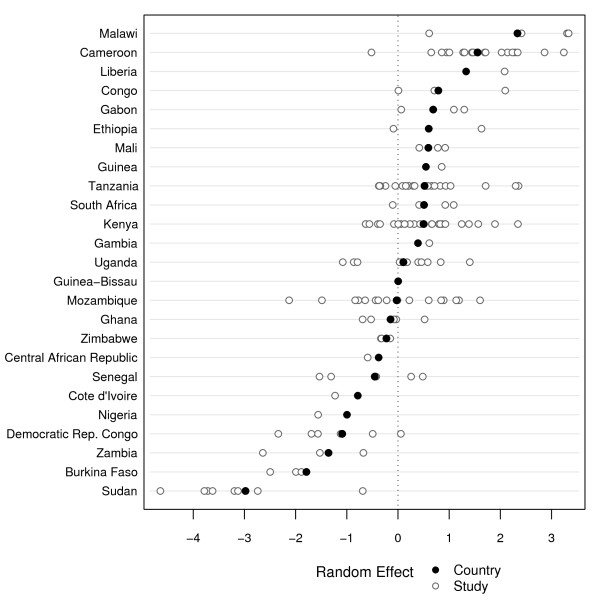
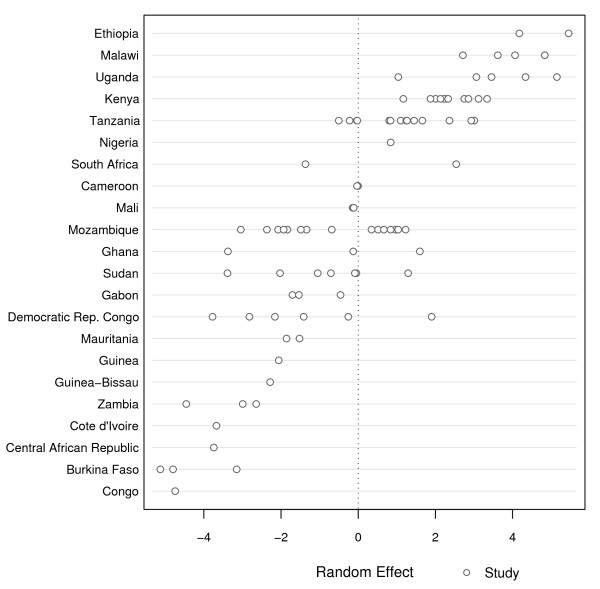
BACKGROUND: Mutations in the dihydrofolate reductase (dhfr) and dihydropteroate synthase (dhps) genes of Plasmodium falciparum are associated with resistance to anti-folate drugs, most notably sulphadoxine-pyrimethamine (SP). Molecular studies document the prevalence of these mutations in parasite populations across the African continent. However, there is no systematic review examining the collective epidemiological significance of these studies. This meta-analysis attempts to: 1) summarize genotype frequency data that are critical for molecular surveillance of anti-folate resistance and 2) identify the specific challenges facing the development of future molecular databases. METHODS: This review consists of 220 studies published prior to 2009 that report the frequency of select dhfr and dhps mutations in 31 African countries. Maps were created to summarize the location and prevalence of the highly resistant dhfr triple mutant (N51I, C59R, S108N) genotype and dhps double mutant (A437G and K540E) genotype in Africa. A hierarchical mixed effects logistic regression was used to examine the influence of various factors on reported mutant genotype frequency. These factors include: year and location of study, age and clinical status of sampled population, and reporting conventions for mixed genotype data. RESULTS: A database consisting of dhfr and dhps mutant genotype frequencies from all African studies that met selection criteria was created for this analysis. The map illustrates particularly high prevalence of both the dhfr triple and dhps double mutant genotypes along the Kenya-Tanzania border and Malawi. The regression model shows a statistically significant increase in the prevalence of both the dhfr triple and dhps double mutant genotypes in Africa. CONCLUSION: Increasing prevalence of the dhfr triple mutant and dhps double mutant genotypes in Africa are consistent with the loss of efficacy of SP for treatment of clinical malaria in most parts of this continent. Continued assessment of the effectiveness of SP for the treatment of clinical malaria and intermittent preventive treatment in pregnancy is needed. The creation of a centralized resistance data network, such as the one proposed by the WorldWide Antimalarial Resistance Network (WWARN), will become a valuable resource for planning timely actions to combat drug resistant malaria.
Overview
The claims and statistics of this paper haven’t been checked yet.
Run the check — free, no account needed. It reads the open-access text and checks the sources it cites.
Integrity signals
Registry
Cites
Statistics
Figures
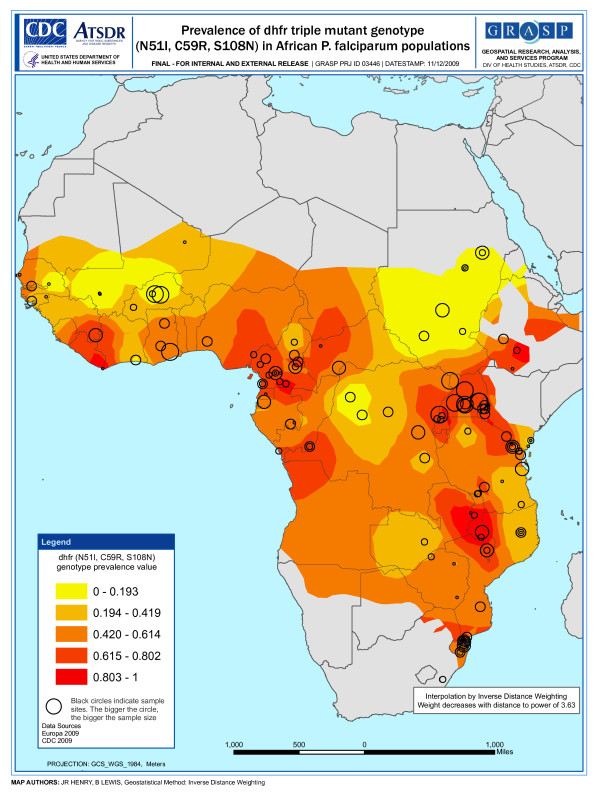
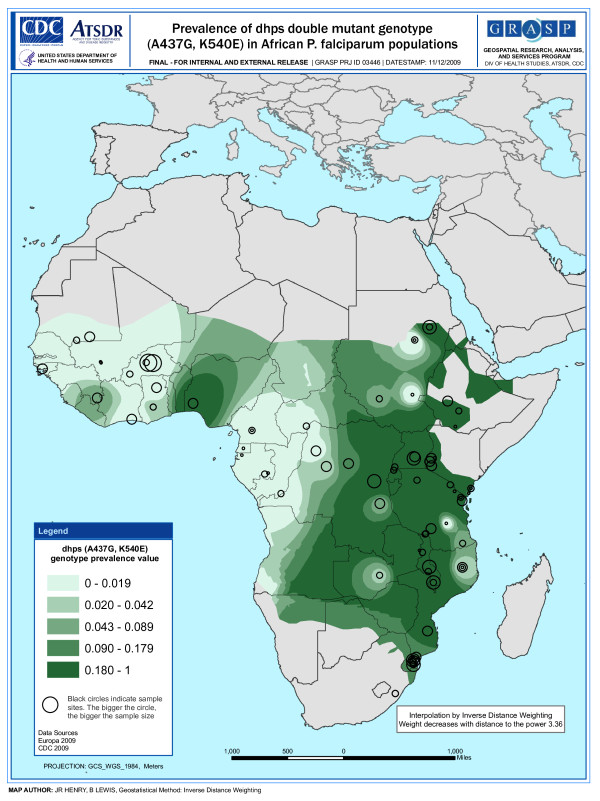
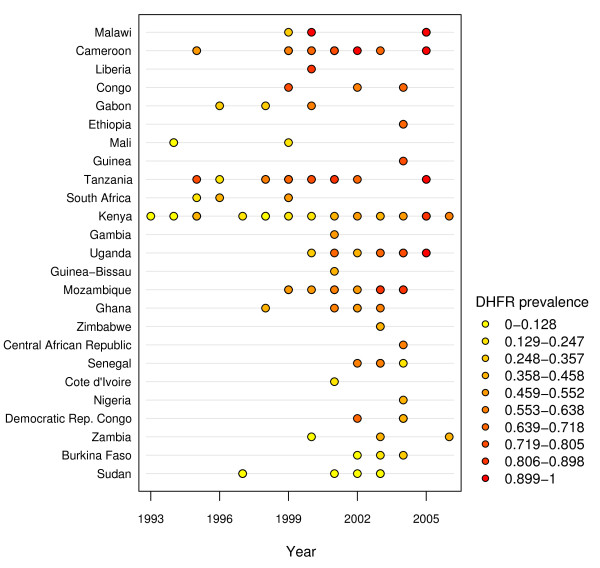
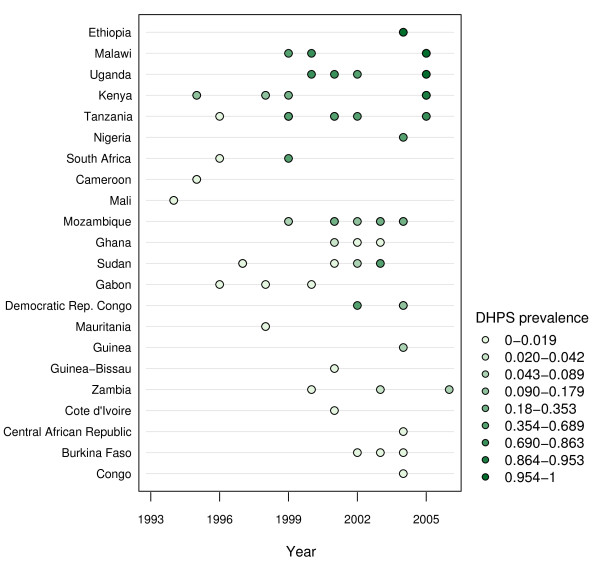
Verification
Claims the paper makes
The claims and statistics of this paper haven’t been checked yet.
Run the check — free, no account needed. It reads the open-access text and checks the sources it cites.
Claims other papers make about this one
Each is checked against this paper’s own text: does it say what the citing paper says it does?
The cited source says what the claim attributes to it.
In the citing paper
“Concerns that increasing SP resistance in SSA [13] may have compromised the efficacy of this chemoprophylactic control measure [14], makes WHO’s call for enhanced regular monitoring of IPTp effectiveness ever more relevant in all malaria-endemic ecosystems.”
From Intermittent preventive treatment with Sulphadoxine-Pyrimethamine (IPTp-SP) is associated with protection against sub-microscopic P. falciparum infection in pregnant women during the low transmission dry season in southwestern Cameroon: A Semi - longitudinal study (2022) · cites this paper as [13]
Self-check
Percentages, sums and reported differences re-computed from the paper’s own numbers.
The self-check needs the paper’s full text.
Citations
Cites
Bulletin of the World Health Organization
van der Sande, M. A. B., Walraven, G. E. L., Milligan, P. J., BANYA, W. A. S., CEESAY, S. M., Nyan, O. A., & McAdam, K. P. W. J. (2001) · Bulletin of the World Health Organization · Cited by 7,097
Approximate Inference in Generalized Linear Mixed Models
Breslow, N. E., & Clayton, D. G. (1993) · Journal of the American Statistical Association · doi:10.1080/01621459.1993.10594284 · Cited by 4,662
The burden of oral disease: challenges to improving oral health in the 21st century.
Petersen, P. E. (2005) · Europe PMC (PubMed Central) · Cited by 3,575
Approximate Inference in Generalized Linear Mixed Models
(1993) · doi:10.2307/2290687 · Cited by 1,800
Using the general linear mixed model to analyse unbalanced repeated measures and longitudinal data
Cnaan, A., Laird, N. M., & Slasor, P. (1997) · Statistics in Medicine · doi:10.1002/(sici)1097-0258(19971030)16:20 · Cited by 1,227
A new world malaria map: Plasmodium falciparum endemicity in 2010
Gething, P. W., Patil, A. P., Smith, D. L., Guerra, C. A., Elyazar, I., Johnston, G. L., Tatem, A. J., & Hay, S. I. (2011) · Malaria Journal · doi:10.1186/1475-2875-10-378 · Cited by 1,169
Marquardt, D. W., & Snee, R. D. (1975) · The American Statistician · doi:10.1080/00031305.1975.10479105 · Cited by 1,016
A Molecular Marker for Chloroquine-Resistant Falciparum Malaria
DJIMDÉ, A. A., Doumbo, O. K., Cortese, J. F., Kayentao, K., Doumbo, S., Diourte, Y., Coulibaly, D. M., Dicko, A., Su, X., Nomura, T., et al. (2001) · New England Journal of Medicine · doi:10.1056/nejm200101253440403 · Cited by 1,010
Epidemiology of drug-resistant malaria
Wongsrichanalai, C., Pickard, A., Wernsdorfer, W. H., & Meshnick, S. R. (2002) · The Lancet Infectious Diseases · doi:10.1016/s1473-3099(02)00239-6 · Cited by 819
Chloroquine Resistance in Plasmodium falciparum Malaria Parasites Conferred by pfcrt Mutations
Sidhu, A. B. S., Verdier-Pinard, D., & Fidock, D. A. (2002) · Science · doi:10.1126/science.1074045 · Cited by 723
Cited by
Sorted by citations
Antimalarial Drugs: Modes Of Action And Mechanisms Of Parasite Resistance
Müller, I. B., & Hyde, J. E. (2010) · Future Microbiology · doi:10.2217/fmb.10.136 · Cited by 147
Global Phenotypic Screening for Antimalarials
Guiguemde, W. A., Shelat, A. A., Garcia-Bustos, J., Diagana, T. T., Gamo, F., & Guy, R. K. (2012) · Chemistry & Biology · doi:10.1016/j.chembiol.2012.01.004 · Cited by 141
Arya, A., Foko, L. P. K., Chaudhry, S., Sharma, A. K., & Singh, V. (2020) · International Journal for Parasitology Drugs and Drug Resistance · doi:10.1016/j.ijpddr.2020.11.006 · Cited by 116
Kimani, J., Phiri, K. S., Kamiza, S., Duparc, S., Ayoub, A., Rojo, R., Robbins, J. L., Orrico, R., & Vandenbroucke, P. (2016) · PLoS ONE · doi:10.1371/journal.pone.0157045 · Cited by 94
Chloroquine and Sulfadoxine–Pyrimethamine Resistance in Sub-Saharan Africa—A Review
Roux, A. T., Maharaj, L., Oyegoke, O. O., Akoniyon, O. P., Adeleke, M. A., Maharaj, R., & Okpeku, M. (2021) · Frontiers in Genetics · doi:10.3389/fgene.2021.668574 · Cited by 90
Metadata
- Authors
- Sridaran, S., McClintock, S. K., Syphard, L. M., Herman, K. M., Barnwell, J. W., & Udhayakumar, V.
- Affiliations
- Centers for Disease Control and Prevention (US)
- Corresponding author
- Udhayakumar, Venkatachalam
- Venue
- Malaria Journal
- Published
- 2010-08-30
- Volume
- 9
- Issue
- 1
- Pages
- 247-247
- ISSN
- 1475-2875 (ISSN-L)
- PMC
- PMC2940896
- OpenAlex
- W2165336268
- Cited by
- 124
- References
- 106
- Citations by year
- 2026: 5 · 2025: 7 · 2024: 9 · 2023: 7 · 2022: 5 · 2021: 6 · 2020: 3 · 2019: 5 · 2018: 2 · 2017: 8 · 2016: 11 · 2015: 10 · 2014: 8 · 2013: 15 · 2012: 18
- FWCI
- 1.75
- Type
- journal article
- Language
- en
- Open access
- gold
- doi.org
- Licence
- cc-by
- Locations
- Malaria Journal (publishedVersion, cc-by)
- PubMed Central (publishedVersion, cc-by)
- PubMed (publishedVersion)
- DOAJ (DOAJ: Directory of Open Access Journals) (submittedVersion)
- Funders
- Association of Public Health Laboratories
- Centers for Disease Control and Prevention
- Agency for Toxic Substances and Disease Registry
- Topics
- Health Sciences › Medicine › Public Health, Environmental and Occupational Health › Malaria Research and Control
- Life Sciences › Pharmacology, Toxicology and Pharmaceutics › Pharmacology › Pharmacogenetics and Drug Metabolism
- Health Sciences › Medicine › Microbiology (medical) › Antibiotic Resistance in Bacteria
- Keywords
- Plasmodium falciparum, dihydrofolate reductase, dihydropteroate synthase, sulfadoxine-pyrimethamine, molecular surveillance, intermittent preventive treatment in pregnancy, Africa
- MeSH terms
- Africa, Antimalarials, Dihydropteroate Synthase, Drug Combinations, Drug Resistance, Gene Frequency, Genotype, Humans, Plasmodium falciparum, Pyrimethamine, Sulfadoxine, Tetrahydrofolate Dehydrogenase, Protozoan Proteins, DNA, Protozoan, Amino Acid Substitution, Mutation, Missense, Mutant Proteins
About these checks
Registry, retraction, Cites and statistics results are computed, not judged, with one exception: a printed reference that no index lists is read once by a model before it counts as a citation error. Claims are extracted by a model and kept only when their quote appears verbatim in the text; each cited source is then checked, with a model’s help, for whether it says what the claim relies on. Those verdicts can be wrong — read the claim’s quote and the cited source before relying on one.
Statistics and arithmetic are recomputed, not judged.
Confidence bands are shown only for fields calibrated on our annotated test set. None is calibrated yet, so no band is shown.
What counts as a claim ›How we measure confidence ›How we check this ›
Are you an author, or do you see a problem with this page? Request a review
