

Exergames for health and fitness: the roles of GPS and geosocial apps
Open accessThe DOI matches its Crossref record; 16 of the 16 references it cites were found in a registry or an index.
Abstract
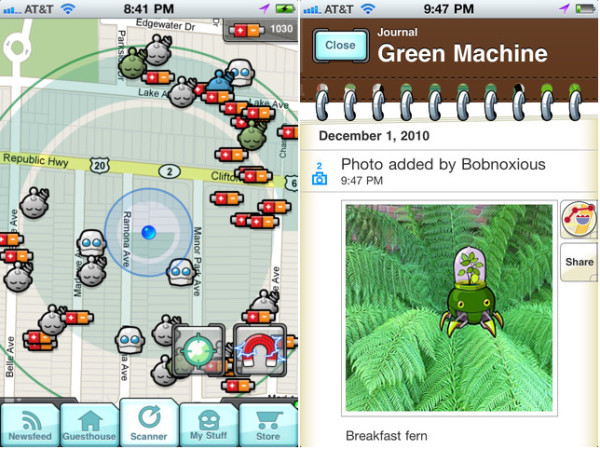
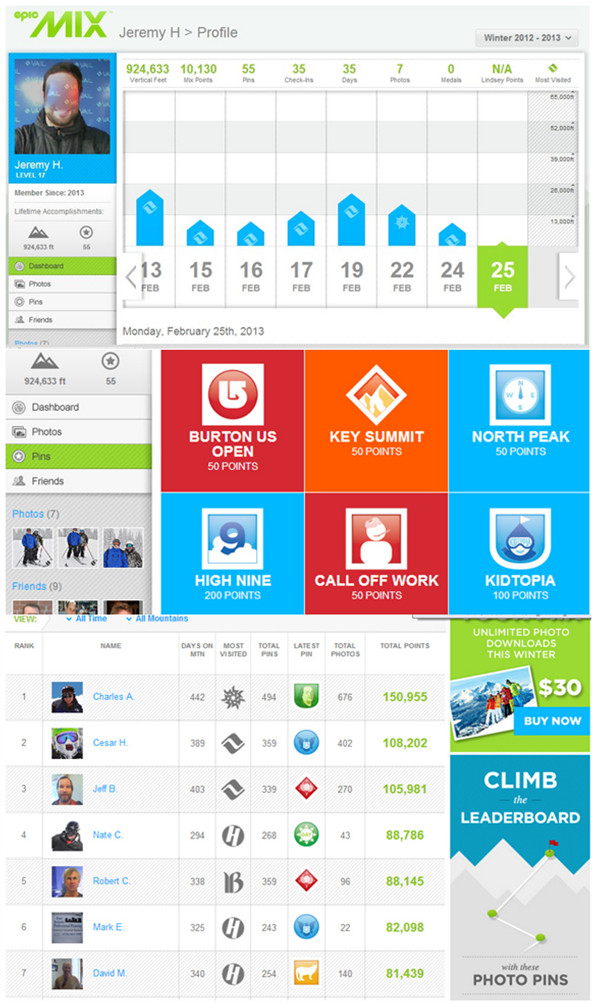
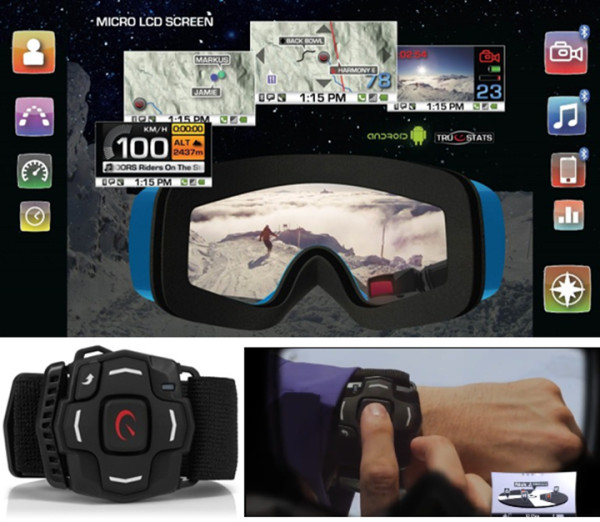
Large numbers of children and adolescents in Canada, UK and USA are not getting their recommended daily dose of moderate to vigorous physical activity, and are thus more prone to obesity and its ill health effects. Exergames (video games that require physical activity to play) are rapidly gaining user acceptance, and may have the potential to increase physical activity levels among young people. Mobile exergames for GPS (global positioning system)-enabled smartphones and mini-tablets take players outdoors, in the open air, unlike console exergames, e.g., Xbox 360 Kinect exergames, which limit players to playing indoors in front of a TV set. In this paper and its companion 'Additional file 1', we review different examples of GPS exergames and of gamified geosocial apps and gadgets (mobile, location-aware apps and devices with social and gamification features), and briefly discuss some of the issues surrounding their use. Further research is needed to document best practices in this area, quantify the exact health and fitness benefits of GPS exergames and apps (under different settings and scenarios), and find out what is needed to improve them and the best ways to promote their adoption by the public.
Overview
The claims and statistics of this paper haven’t been checked yet.
Free: it reads the open-access text and checks the first 5 claims that cite a source we can check. Create a free account to check every claim.
Integrity signals
Registry
Cites
Statistics
Figures

Verification
Claims the paper makes
The claims and statistics of this paper haven’t been checked yet.
Free: it reads the open-access text and checks the first 5 claims that cite a source we can check. Create a free account to check every claim.
Claims other papers make about this one
Each is checked against this paper’s own text: does it say what the citing paper says it does?
The check wasn’t confident either way, so it gives no verdict — never disputed.
In the citing paper
“In fact, the current success of health games is measured in revenue generation, not behavioral metrics [20,33,34].”
From Just a Fad? Gamification in Health and Fitness Apps (2014) · cites this paper as [34]
Experimental — accuracy not yet measuredIn the citing paper
“This adaptation removes the fact that the traditional games are already naturally reinforcing and motivating, while complex behaviors such as diet and physical activity may not be [18,33,34].”
From Just a Fad? Gamification in Health and Fitness Apps (2014) · cites this paper as [34]
Self-check
Percentages, sums and reported differences re-computed from the paper’s own numbers.
The self-check needs the paper’s full text.
Citations
Cites
Self-efficacy: The exercise of control
Bandura, A., Freeman, W. H., & Lightsey, R. (1999) · Journal of Cognitive Psychotherapy · doi:10.1891/0889-8391.13.2.158 · Cited by 46,835
Actual causes of death in the United States
McGinnis, J. M. (1993) · JAMA: The Journal of the American Medical Association · doi:10.1001/jama.1993.03510180077038 · Cited by 5,480
Actual Causes of Death in the United States, 2000
Mokdad, A. H. (2004) · JAMA · doi:10.1001/jama.291.10.1238 · Cited by 5,211
Generation M2: Media in the Lives of 8- to 18-Year-Olds
Foehr, U. G., Rideout, V. J., & Roberts, D. F. (2010) · Cited by 2,190
Community Programs to Promote Youth Development
(2002) · National Academies Press eBooks · doi:10.17226/10022 · Cited by 2,020
Moderate-to-Vigorous Physical Activity From Ages 9 to 15 Years
Nader, P. R. (2008) · JAMA · doi:10.1001/jama.300.3.295 · Cited by 1,210
Boulos, M., Wheeler, S., Tavares, C., & Jones, R. (2011) · BioMedical Engineering OnLine · doi:10.1186/1475-925x-10-24 · Cited by 1,071
Self-citationLignac, G. O. E. (1951) · PubMed · Cited by 1,013
An integrative analysis of intrinsic and extrinsic motivation in sport
Vallerand, R. J., & Losier, G. F. (1999) · Journal of Applied Sport Psychology · doi:10.1080/10413209908402956 · Cited by 729
Officer, C. M. (2013) · Cited by 624
Cited by
Items 101–141 of 141
When Play Hurts: Understanding Common Barriers in Movement-Based Games
Cmentowski, S., Karaosmanoglu, S., Steinicke, F., & Bernhaupt, R. (2026) · CHI Conference on Human Factors in Computing Systems · doi:10.1145/3772318.3790905 · Cited by 1
Butler, M. S., & Luebbers, P. E. (2016) · Advances in educational technologies and instructional design book series · doi:10.4018/978-1-5225-0069-8.ch004 · Cited by 2
From Gamification to Funification of Exercise: Case Zombie Run Pori 2015.
Friman, U., & Turtiainen, R. (2017) · Cited by 1
Enciso, J., Vairya, D., Velasco, J., Sunthonlap, J., Pebdani, R. N., de Leon, R. D., Keslacy, S., Dy, C. J., & Won, D. S. (2020) · Annual International Conference of the IEEE Engineering in Medicine and Biology Society (EMBC) · doi:10.1109/embc44109.2020.9176685 · Cited by 1
A Recommendation Ubiquitous System to Personalize Diet for Children with Obesity
Polo-Rodríguez, A., Ariza, M., Rivas, A., Carvajal, M. A., & Medina-Quero, J. (2022) · Lecture notes in networks and systems · doi:10.1007/978-3-031-21333-5_27 · Cited by 1
Mobil Uygulamalar Aracılığıyla Koşma Egzersizleri İçin Performans Ölçümü
Ulupınar, S., & Özbay, S. (2023) · Özgür Yayınları eBooks · doi:10.58830/ozgur.pub223.c960 · Cited by 1
Srivastava, P., Chan, G., Nkwo, M. S., & Orji, R. (2025) · SeGAH ... IEEE ... International Conference on Serious Games and Applications for Health/IEEE International Conference on Serious Games and Applications for Health · doi:10.1109/segah65397.2025.11168288 · Cited by 1
Mobile gaming in gyms — Can fitness and games join together?
Siira, E., Häikiö, J., & Annanperä, E. (2018) · SeGAH ... IEEE ... International Conference on Serious Games and Applications for Health/IEEE International Conference on Serious Games and Applications for Health · doi:10.1109/segah.2018.8401350 · Cited by 4
Exposure to food environments, diet and weight status in children
Cetateanu, A. (2014) · UEA Digital Repository (University of East Anglia) · Cited by 1
ATINER's Conference Paper Series EDU2014-0980
Buchtová, M., & Simkova, Z. (2014)
Costa, A. C. P. (2015) · Digital Library of Theses and Dissertations (Universidade de São Paulo) · doi:10.11606/d.25.2016.tde-26022016-112955
Kooiman, B. J., & Sheehan, D. P. (2015)
Exergames for subthreshold depression among older adults
Li, J. (2017) · DR-NTU (Nanyang Technological University) · doi:10.32657/10356/72891
Gómez, M. C. (2017) · Universidad Santo Tomás eBooks · doi:10.15332/tg.mae.2017.00367 · Cited by 3
Utilización de smartphone en los programas de rehabilitación cardíaca. Una revisión sistemática
Fernández, A. M., & González, M. S. (2018) · Rehabilitación · doi:10.1016/j.rh.2018.04.005 · Cited by 3
Fitness interactive technology in promoting exercise performance and adherence.
Labbé, E. E., Huennekens, A. O., & Naylor, P. D. (2019) · American Psychological Association eBooks · doi:10.1037/0000124-015
Franco, R. C. (2019) · Digital Library of Theses and Dissertations (Universidade de São Paulo) · doi:10.11606/t.17.2019.tde-22052019-112144
Entertainment and Physical Activities: New Connections Through the Use of Pokémon GO
Finco, M. D. (2019) · Advances in educational technologies and instructional design book series · doi:10.4018/978-1-7998-2015-4.ch005
O’Loughlin, E. K. (2019) · Spectrum Research Repository (Concordia University) · Cited by 4
Analyzing Genre of Character-Describing Cards in ‘Clash Royale’ Android Game
Kurniawan, M. H. (2020) · Notion Journal of Linguistics Literature and Culture · doi:10.12928/notion.v2i2.3162 · Cited by 1
Baum, A., & Giunti, G. (2015) · Evidencia actualizacion en la práctica ambulatoria · doi:10.51987/evidencia.v18i3.6330
Player Matching using Personal Characteristics for Asynchronous Multiplayer Exergames
Chan, G. (2021) · Carleton University's Institutional Repository (MacOdrum Library, Carleton University) · doi:10.22215/etd/2021-14932
Entertainment and Physical Activities: New Connections Through the Use of Pokémon GO
Finco, M. D. (2021) · IGI Global eBooks · doi:10.4018/978-1-7998-7707-3.ch052
Berglund, E., Klompstra, L. V., Orädd, H., Fallström, J., Strömberg, A., Jaarsma, T., & Berglund, A. (2023) · doi:10.2196/preprints.50066
Futbolda Hazırlık Dönemi Periyotlama ve Teknoloji
Atasever, G. (2023) · Özgür Yayınları eBooks · doi:10.58830/ozgur.pub223.c966
Teknolojik İnovasyon ve Alp Disiplini
Aktaş, B. S. (2023) · Özgür Yayınları eBooks · doi:10.58830/ozgur.pub223.c964
Dijital Çağda Spor Araştırmaları II
Ai, M. E., Ulupınar, S., Özbay, S., Dertli, Ş., Dertli, M. E., Budak, D., Aktaş, B. S., Alaeddinoğlu, M. F., Erciş, S., Sivrikaya, M. H., et al. (2023) · Özgür Yayınları eBooks · doi:10.58830/ozgur.pub223 · Cited by 1
Turizm ve Sporun Geleceği Üzerine Bir Değerlendirme
Budak, D. (2023) · Özgür Yayınları eBooks · doi:10.58830/ozgur.pub223.c962 · Cited by 2
An Entertaining Application to Mix Exercise with Fun using Pose Estimate and Unity
Wu, A., Wu, A., & Andaya, M. (2023) · International Conference on Artificial Intelligence, Soft Computing and Applications (AIAPP) · doi:10.5121/csit.2023.132206
Lakshika, E., Barlow, M., Yang, S., Barlow, Z., & Townsend, T. (2023) · doi:10.2196/preprints.55543
Self-citationValera, P. A., Amad, T., Delaney, J., Sackey, J. D., Potter, D., Palomino, K., Sohail, R., & Lassiter, T. E. (2025) · AIDS Care · doi:10.1080/09540121.2025.2476639
Revolutionizing technologies: Exploring smart concepts’ tools
Alfaiz, A. (2025) · Elsevier eBooks · doi:10.1016/b978-0-443-34127-4.00003-5
Lee, J. L. C., Ng, P. H. F., Wu, K., Zhang, H. Y., Wong, A. Y. L., & Sun, R. (2025) · doi:10.2196/preprints.75999
Integrating Natural Language Processing in Human Geography
Zhou, B., Lin, B., Zou, L., Yang, M., Hao, T., & Cai, H. (2025) · Springer geography · doi:10.1007/978-3-031-87421-5_4
Wei, W., Luo, Y., Tian, M., Xie, L., Li, H., Hu, W., & Chen, Y. (2026) · JMIR Serious Games · doi:10.2196/67595
Metadata
- Authors
- Boulos, M. N., & Yang, S. P.
- Affiliations
- University of Plymouth (GB)
- SUNY Cortland (US)
- Corresponding author
- Boulos, Maged N
- ORCID
- Boulos, Maged N
- Venue
- International Journal of Health Geographics
- Published
- 2013
- Volume
- 12
- Issue
- 1
- Pages
- 18
- ISSN
- 1476-072X (ISSN-L)
- PMC
- PMC3657542
- OpenAlex
- W2108229024
- Cited by
- 143
- References
- 16
- Citations by year
- 2026: 3 · 2025: 5 · 2024: 2 · 2023: 21 · 2022: 3 · 2021: 9 · 2020: 8 · 2019: 15 · 2018: 12 · 2017: 18 · 2016: 14 · 2015: 18 · 2014: 12 · 2013: 3
- Type
- journal article
- Language
- en
- Open access
- gold
- doi.org
- Licence
- cc-by
- Locations
- International Journal of Health Geographics (publishedVersion, cc-by)
- Europe PMC (PubMed Central) (publishedVersion, cc-by)
- PubMed Central (publishedVersion, cc-by)
- PubMed (publishedVersion)
- Topics
- Social Sciences › Psychology › Developmental and Educational Psychology › Educational Games and Gamification
- Health Sciences › Medicine › Public Health, Environmental and Occupational Health › Physical Activity and Health
- Health Sciences › Health Professions › General Health Professions › Mobile Health and mHealth Applications
- Keywords
- exergames, gamification, physical activity, children and adolescents, obesity prevention, outdoor physical activity, health promotion, technology adoption
- MeSH terms
- Health Status, Humans, Physical Fitness, Video Games, Geographic Information Systems, Cell Phone
About these checks
Registry, retraction, Cites and statistics results are computed, not judged, with one exception: a printed reference that no index lists is read once by a model before it counts as a citation error. Claims are extracted by a model and kept only when their quote appears verbatim in the text; each cited source is then checked, with a model’s help, for whether it says what the claim relies on. Those verdicts can be wrong — read the claim’s quote and the cited source before relying on one.
Statistics and arithmetic are recomputed, not judged.
Confidence bands are shown only for fields calibrated on our annotated test set. None is calibrated yet, so no band is shown.
What counts as a claim ›How we measure confidence ›How we check this ›
Are you an author, or do you see a problem with this page? Request a review
Data sources
Bibliographic data: Semantic Scholar, OpenAlex, Crossref.
Contains information from the Semantic Scholar Academic Graph Datasets, made available under the ODC Attribution License (ODC-BY 1.0).
Semantic Scholar’s data is described in: Kinney, R., et al. (2023). The Semantic Scholar Open Data Platform. arXiv:2301.10140.
