

Corticotropin Releasing Factor promotes breast cancer cell motility and invasiveness
Open accessThe DOI matches its Crossref record; 62 of the 62 references it cites were found in a registry or an index.
Abstract
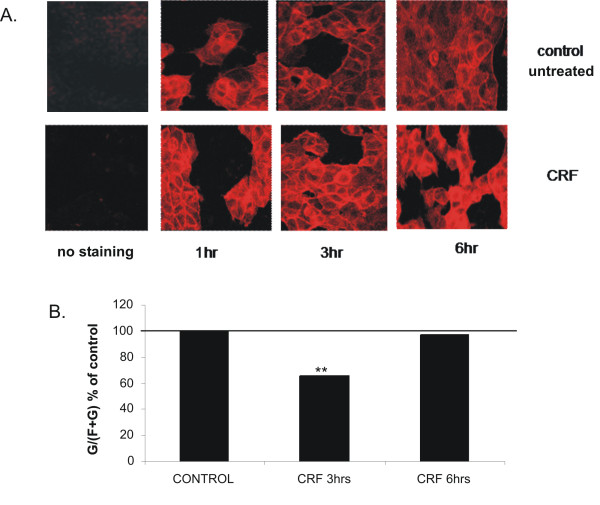
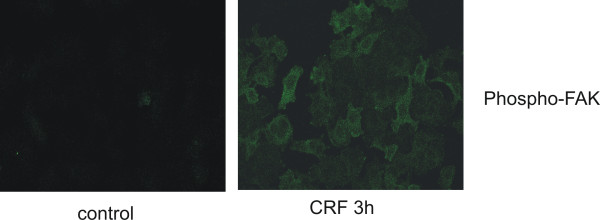
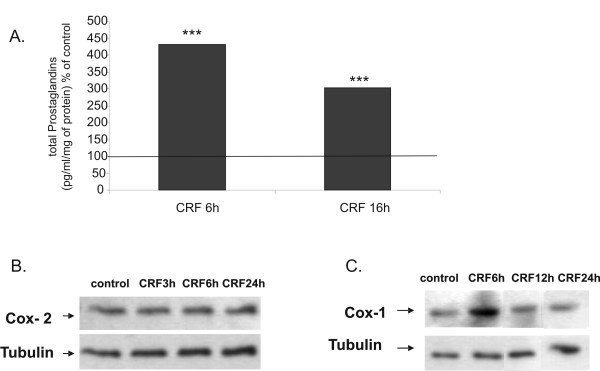
Introduction: Cancer cells secrete bioactive peptides that act in an autocrine or paracrine fashion affecting tumor growth and metastasis. Corticotropin-releasing factor (CRF), a hypothalamic neuropeptide that controls the response to stress, has been detected in breast cancer tissues and cell lines. CRF can affect breast cancer cells in an autocrine or paracrine manner via its production from innervating sympathetic neurons or immune cells. Methods: In the present study we report our findings regarding the impact of CRF on breast cancer cell motility and invasiveness. For this purpose we used the MCF7 breast cancer cell line and evaluated the effect of CRF on motility and invasiveness using the wound-healing and boyden-chamber assays. In addition, we measured the effect of CRF on molecules that mediate motility by western blot, immunofluorescence, ELISA and RT-PCR. Results: Our findings show that: 1. CRF transiently inhibited the apoptosis of MCF7 cells. 2. CRF enhanced MCF7 cell motility in a wound healing assay and their invasiveness through extracellular matrix. 3. CRF increased actin polymerization, phosphorylation of Focal Adhesion Kinase (FAK), providing a potential mechanism for the observed induction of MCF7 motility. 4. CRF induced the expression of Cox-1 but not Cox-2 in MCF7 cells as well as the production of prostaglandins, factors known to promote invasiveness and metastasis. Conclusion: Overall, our data suggest that CRF stimulates cell motility and invasiveness of MCF7 cells most probably via induction of FAK phosphorylation and actin filament reorganization and production of prostaglandins via Cox1. Based on these findings we postulate that the stress neuropeptide CRF present in the vicinity of tumors (either produced locally by the tumor cells themselves or by nearby normal cells or secreted from the innervations of surrounding tissues) may play an important role on breast tumor growth and metastatic capacity, providing a potential link between stress and tumor progression.
Overview
The claims and statistics of this paper haven’t been checked yet.
Free: it reads the open-access text and checks the first 5 claims that cite a source we can check. Create a free account to check every claim.
Integrity signals
Registry
Cites
Statistics
Figures
Verification
Claims the paper makes
The claims and statistics of this paper haven’t been checked yet.
Free: it reads the open-access text and checks the first 5 claims that cite a source we can check. Create a free account to check every claim.
Claims other papers make about this one
Each is checked against this paper’s own text: does it say what the citing paper says it does?
The source backs part of the claim, not all of it — or backs it for a different population, condition or comparison.
In the citing paper
“CRF is widely present in the central nervous system, that has been detected in breast cancer tissues and cell lines, and affects breast cancer cell proliferation and invasion in an autocrine or paracrine manner (10).”
From Chronic Stress Promotes Cancer Development (2020) · cites this paper as [10]
Experimental — accuracy not yet measured
Self-check
Percentages, sums and reported differences re-computed from the paper’s own numbers.
The self-check needs the paper’s full text.
Citations
Cites
2 retracted
Kargiotis, O., Chetty, C., Gondi, C. S., Tsung, A. J., Dinh, D. H., Gujrati, M., Lakka, S. S., Kyritsis, A. P., & Rao, J. S. (2008) · Oncogene · doi:10.1038/onc.2008.122 · Cited by 133 · cited 1×
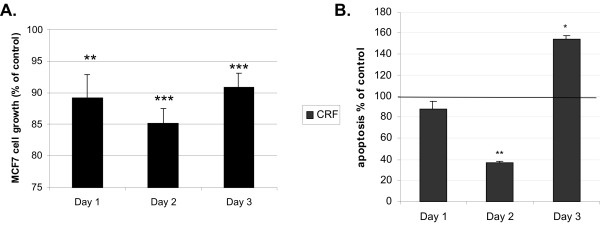
“Evasion of apoptosis is a hallmark of cancer cells and is frequently associated with proliferation and invasiveness [35-38].”
RetractedWang, Z. P., Song, W., Aboukameel, A., Mohammad, M., Wang, G., Banerjee, S., Kong, D., Wang, S., Sarkar, F. H., & Mohammad, R. M. (2008) · International Journal of Cancer · doi:10.1002/ijc.23610 · Cited by 60 · cited 1×
“2. CRF affects apoptosis of MCF7 cells in a time dependent-manner Evasion of apoptosis is a hallmark of cancer cells and is frequently associated with proliferation and invasiveness [ 35-38 ].”
RetractedCRF and CRF receptors: role in stress responsivity and other behaviors
Bale, T. L., & Vale, W. W. (2004) · Annual Review of Pharmacology and Toxicology · doi:10.1146/annurev.pharmtox.44.101802.121410 · Cited by 1,270 · cited 2×
“It should be noted here that CRF is constantly present in the microenvironment of tumors produced by nearby cells including endothelial cells [24] and immune cells [14] and by the local neuronal innervations [25].”
The actin cytoskeleton in cancer cell motility
Olson, M. F., & Sahai, E. (2009) · Clinical & Experimental Metastasis · doi:10.1007/s10585-008-9174-2 · Cited by 572 · cited 1×
“Increased actin polymerization is associated with dynamic changes in cytoskeletal structures that allow cells to migrate and metastasize [49].”
The CRF peptide family and their receptors: yet more partners discovered
Dautzenberg, F. M., & Hauger, R. L. (2002) · Trends in Pharmacological Sciences · doi:10.1016/s0165-6147(02)01946-6 · Cited by 532 · cited 1×
“The neuropeptide CRF and its family members Urocortin (UCN)1, UCN2 and UCN3 act via two receptors, CRF1 and CRF2, subtypes of which are differentially expressed in the central nervous system (CNS) and a multitude of peripheral tissues [9,10].”
Association of focal adhesion kinase with its potential substrate phosphatidylinositol 3-kinase.
Chen, H. C., & Guan, J. L. (1994) · Proceedings of the National Academy of Sciences · doi:10.1073/pnas.91.21.10148 · Cited by 513 · cited 1×
“FAK activation by phosphorylation is the first element, which may transmit extracellular signals to downstream signaling proteins, leading to actin reorganization [40, 42- 44 ] and is implicated in cell migration [33,41].”
Signalling networks regulating cyclooxygenase-2
Tsatsanis, C., Androulidaki, A., Venihaki, M., & Margioris, A. N. (2006) · The International Journal of Biochemistry & Cell Biology · doi:10.1016/j.biocel.2006.03.021 · Cited by 492 · cited 2×
“Cyclooxygenase activation and prostaglandin production has also been associated with increase in metastasis [47,55,56].”
Self-citationXiong, H., Zhang, Z.-G., Tian, X.-Q., Sun, D.-F., Liang, Q.-C., Zhang, Y.-J., Lu, R., Chen, Y.-X., & Fang, J.-Y. (2008) · Neoplasia · doi:10.1593/neo.07971 · Cited by 426 · cited 1×
“Evasion of apoptosis is a hallmark of cancer cells and is frequently associated with proliferation and invasiveness [35-38].”
Lamellipodia and filopodia in metastasis and invasion
Machesky, L. M. (2008) · FEBS Letters · doi:10.1016/j.febslet.2008.03.039 · Cited by 300 · cited 1×
“Filamentous actin is the major component of microfilaments, present in filipodia and lamellipodia, which are reported to facilitate cell migration [39].”
Cao, J., Papadopoulou, N., Kempuraj, D., Boucher, W. S., Sugimoto, K., Cetrulo, C. L., & Theoharides, T. C. (2005) · The Journal of Immunology · doi:10.4049/jimmunol.174.12.7665 · Cited by 285 · cited 1×
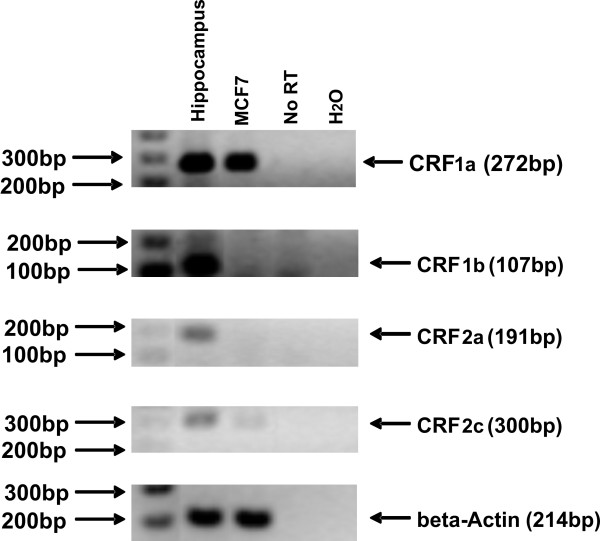
“The primer sets, previously reported to detect the respective CRF receptors in human brain specimen [31], were: CRF1a (272 bp): sense 5'-GGCAGCTAGTGGTTCG-”
Cited by
Chronic Stress Promotes Cancer Development
Dai, S., Mo, Y., Wang, Y., Xiang, B., Liao, Q., Zhou, M., Li, X., Li, Y., Xiong, W., Li, G., et al. (2020) · Frontiers in Oncology · doi:10.3389/fonc.2020.01492 · Cited by 405
“CRF and Thyroid Hormone CRF is widely present in the central nervous system, that has been detected in breast cancer tissues and cell lines, and affects breast cancer cell proliferation and invasion in an autocrine or paracrine manner (10).”
BackgroundHaakensen, V. D., Bjøro, T., Lüders, T., Riis, M., Bukholm, I. K., Kristensen, V. N., Troester, M. A., Homen, M. M., Ursin, G., Børresen‐Dale, A., et al. (2011) · BMC Cancer · doi:10.1186/1471-2407-11-332 · Cited by 53
“has a carcinogenic role in different epithelial cancers [37-41].”
BackgroundHang, Z., Lei, T., Zeng, Z., Cai, S., Bi, W., & Du, H. (2021) · Biomedicine & Pharmacotherapy · doi:10.1016/j.biopha.2021.112343 · Cited by 47
Zhu, C., Sun, Z., Li, C., Guo, R., Li, L., Jin, L., Wan, R., & Li, S. (2014) · Cellular Signalling · doi:10.1016/j.cellsig.2014.02.002 · Cited by 38
The corticotropin releasing factor system in cancer: expression and pathophysiological implications
Kaprara, A., Pazaitou‐Panayiotou, K., Kortsaris, A., & Chatzaki, Ε. (2010) · Cellular and Molecular Life Sciences · doi:10.1007/s00018-010-0265-2 · Cited by 38
“Interestingly, while CRF transiently inhibited apoptosis, it also promoted cell motility and invasiveness most probably via induction of focal adhesion kinase phosphorylation, actin filament reorganization, and production of prostaglandins via Cox 1 [ 40 ].”
BackgroundAnalgesics promote welfare and sustain tumour growth in orthotopic 4T1 and B16 mouse cancer models
Lofgren, J. L. S., Miller, A. L., Lee, C. C. S., Bradshaw, C., Flecknell, P. A., & Roughan, J. V. (2017) · Laboratory Animals · doi:10.1177/0023677217739934 · Cited by 37
Effect of chronic stress on tumorigenesis and development
Wang, C., Shen, Y., Ni, J., Hu, W., & Yang, Y. (2022) · Cellular and Molecular Life Sciences · doi:10.1007/s00018-022-04455-3 · Cited by 37
“Studies reveal that chronic stress are involved in the regulation of 8 of the 14 tumor hallmarks defined in 2022 [12], including sustaining proliferative signaling, unlocking phenotypic plasticity, resisting cell death, increasing genome instability and mutation, activating tumor-promoting inflammation, avoiding immun…”
BackgroundRemodeling the tumor dormancy ecosystem to prevent recurrence and metastasis
Liang, Y., Chen, W., Zhang, Y., & Li, L. (2026) · Signal Transduction and Targeted Therapy · doi:10.1038/s41392-025-02328-2 · Cited by 36
“171 β -Adrenergic signaling activated by chronic psychological stress has been shown to not only activate prometastatic pathways within breast cancer cells but also participate in the construction of premetastatic niches.”
The impact of stress on tumor growth: peripheral CRF mediates tumor-promoting effects of stress
Arranz, A., Venihaki, M., Mol, B., Androulidaki, A., Dermitzaki, E., Rassouli, O., Ripoll, J., Stathopoulos, E. N., Gomariz, R. P., Margioris, A. N., et al. (2010) · Molecular Cancer · doi:10.1186/1476-4598-9-261 · Cited by 30
“Moreover, in the human breast cancer MCF7 cells, an estrogendependent tumor cell line, CRF inhibits cell proliferation but promotes motility and invasiveness via the activation of CRF1 [17,18].”
BackgroundResultInfluentialSelf-citationShao, W., Kühn, C., Mayr, D. C., Ditsch, N. C., Kailuwait, M., Wolf, V., Harbeck, N., Mahner, S., Jeschke, U., Cavaillès, V., et al. (2020) · Journal of Translational Medicine · doi:10.1186/s12967-020-02271-6 · Cited by 30
Wang, C., Ni, J., Zhai, D., Xu, Y., Wu, Z., Chen, Y., Liu, N., Du, J., Shen, Y., Liu, G., et al. (2024) · Experimental & Molecular Medicine · doi:10.1038/s12276-024-01223-0 · Cited by 29
Zhang, J., Ren, R., Luo, X., Fan, P., Liu, X., Liang, S., Ma, L., Yu, P., & Bai, H. (2014) · PLoS ONE · doi:10.1371/journal.pone.0092252 · Cited by 28
“Indeed, in MCF7 breast cancer cell line, motility and invasiveness of the cells under corticotropin-releasing factor stimulation showed involvement of FAK phosphorylation and actin filament reorganization[46].”
BackgroundLal, S. K., Allan, A., Markovic, D., Walker, R. A., Macartney, J. C., Europe‐Finner, N., Tyson-Capper, A. J., & Grammatopoulos, D. K. (2013) · Science Signaling · doi:10.1126/scisignal.2003926 · Cited by 26
CRF2 Signaling Is a Novel Regulator of Cellular Adhesion and Migration in Colorectal Cancer Cells
Ducarouge, B., Pelissier-Rota, M. A., Lainé, M. G., Cristina, N., Vachez, Y. M., Scoazec, J., Bonaz, B. L., & Jacquier‐Sarlin, M. R. (2013) · PLoS ONE · doi:10.1371/journal.pone.0079335 · Cited by 26
“Theref ore, CRF system could modulate the tumor micro-environment by autocrine/paracrine acti vations on cancer or stromal cells [9,15,16].”
BackgroundJin, L., Chen, J., Li, L., Li, C., Chen, C., & Li, S. (2014) · Cellular Signalling · doi:10.1016/j.cellsig.2013.12.017 · Cited by 25
Brain metastases of mouse mammary adenocarcinoma is increased by acute stress
Rózniecki, J., Sahagian, G. G., Kempuraj, D., Tao, K. X., Jocobson, S., Zhang, B., & Theoharides, T. C. (2010) · Brain Research · doi:10.1016/j.brainres.2010.09.085 · Cited by 23
Jin, L., Chen, C. Y., Guo, R., Wan, R., & Li, S. (2012) · European Journal of Pharmacology · doi:10.1016/j.ejphar.2012.03.034 · Cited by 21
“, 2007) and promote motility and invasiveness (Androulidaki et al., 2009) mainly via corticotropin-releasing hormone receptor type 1 in MCF-7 cells.”
BackgroundInfluentialDistinct distribution of corticotropin releasing factor receptors in human breast cancer
Kaprara, A., Pazaitou‐Panayiotou, K., Chemonidou, M. C., Constantinidis, T. C., Lambropoulou, M., Koffa, M. D., Kiziridou, A., Kakolyris, S., Kortsaris, A., & Chatzaki, Ε. (2010) · Neuropeptides · doi:10.1016/j.npep.2010.06.005 · Cited by 21
“Our results add to the pathophysiological significance of various in vivo and in vitro experimental findings (Tjuvajev et al., 1998; Graziani et al., 2007; Androulidaki et al., 2009) supporting a paracrine role of the CRF system in breast cancer cell growth, homeostasis, motility and metastatic potential, as the prese…”
BackgroundResultWu, M., Yang, H., Liu, S., Jiang, L., Liang, T., Wang, Y., Zhu, M., Song, X. C., Liu, H., Shen, J., et al. (2024) · Nature Biomedical Engineering · doi:10.1038/s41551-024-01316-1 · Cited by 17
“In cancer biology, CRH is associated with tumour progression, angiogenesis and metastasis 31 .”
Pozzoli, G., Petrucci, G., Navarra, P., Marei, H. E. S., & Cenciarelli, C. (2019) · Journal of Cellular and Molecular Medicine · doi:10.1111/jcmm.14610 · Cited by 15
Alderman, S. L., Leishman, E. M., Fuzzen, M. L. M., & Bernier, N. J. (2018) · General and Comparative Endocrinology · doi:10.1016/j.ygcen.2018.05.025 · Cited by 16
Sato, N., Takagi, K., Suzuki, T., Miki, Y., Tanaka, S., Nagase, S., Warita, H., Fukudo, S., Sato, F., Sasano, H., et al. (2014) · International Journal of Gynecological Cancer · doi:10.1097/igc.0000000000000269 · Cited by 14
Cell adhesion property affected by cyclooxygenase and lipoxygenase: Opto-electric approach
Choi, C. K., Sukhthankar, M., Kim, C., Lee, S.-H., English, A. E., Kihm, K. D., & Baek, S. J. (2009) · Biochemical and Biophysical Research Communications · doi:10.1016/j.bbrc.2009.12.069 · Cited by 13
“Although no direct linkage between the 15LOX-1 pathway and FAK has been reported, FAK signaling connections to COX-1 [6] and COX-2 [7] reflect tumorigenesis that may contribute to angiogenesis.”
BackgroundChronic stress in cancer development and progression
Niu, X., Wu, T. H., Zeng, L., Wang, F., Lv, W., Zhang, L., & Zhou, F. (2025) · Science Bulletin · doi:10.1016/j.scib.2025.09.034 · Cited by 12
Pozzoli, G., Simone, M. L. D., Cantalupo, E., Cenciarelli, C., Lisi, L., Boninsegna, A., Russo, C. D., Sgambato, A., & Navarra, P. (2015) · Molecular and Cellular Endocrinology · doi:10.1016/j.mce.2015.05.004 · Cited by 11
“CRF has also been shown to stimulate cell motility and invasiveness in breast cancer cells (Androulidaki et al., 2009).”
BackgroundZhu, C., Cao, C., Dai, L., Yuan, J., & Li, S. (2015) · Vascular Pharmacology · doi:10.1016/j.vph.2015.03.013 · Cited by 11
Singh, N., & Bhattacharyya, D. (2017) · Journal of Pharmaceutical and Biomedical Analysis · doi:10.1016/j.jpba.2017.06.060 · Cited by 11
Sato, N., Motoi, F., Tajiki, H., Kawaguchi, K., Ohtsuka, H., Takadate, T., Nakagawa, K., Takagi, K., Suzuki, T., Katayose, Y., et al. (2022) · Gastro Hep Advances · doi:10.1016/j.gastha.2022.09.003 · Cited by 8
“In endometrial cancer 28 and breast cancer, 29,30 CRH might promote proliferation of cancer cells via CRHR1.”
Koureta, M., Karaglani, M., Παναγοπούλου, Μ., Balgkouranidou, I., Papadaki-Anastasopoulou, A., Zarouchlioti, C., Dekavallas, S., Kolios, G. C., Lambropoulou, M., Baritaki, S., et al. (2020) · Peptides · doi:10.1016/j.peptides.2020.170316 · Cited by 8
Balogh, B., Vecsernyés, M., Veres-Székely, A., Berta, G., Stayer‐Harci, A., Tarjányi, O., & Sétáló, G. (2022) · Molecular and Cellular Endocrinology · doi:10.1016/j.mce.2022.111610 · Cited by 7
“CRFR expression was reported in MCF7 cells at the mRNA level (Androulidaki et al., 2009; Graziani et al., 2007) with CRFR1 mRNA in much higher amounts than that of CRFR2.”
BackgroundImplications of Corticotropin Releasing Factor in Targeted Anticancer Therapy
Kim, B.-J., & Jones, H. P. (2010) · Journal of Pharmacy Practice · doi:10.1177/0897190009360023 · Cited by 7
Cancer Neuroscience: Innovative Conception and Emerging Strategy of Therapy
Wang, T., Dong, Z., Wang, Y., An, Z., Wang, S., & Jin, W. (2026) · MedComm · doi:10.1002/mco2.70708 · Cited by 6
Tiwari, R. K., Rawat, S. G., Rai, S., & Kumar, A. (2025) · Endocrine · doi:10.1007/s12020-025-04161-7 · Cited by 6
“The aberrant levels of CRH and CRH receptors have been reported in several cancers, such as adrenal [79], breast [80, 81], cervical [82], colon [83], endometrial [84], gastric [85], kidney [86], liver [87], melanoma [88], and ovarian cancers [89].”
Corticotropin Releasing Hormone Is Correlated With Tumorigenesis of Gastric Cancer
Yang, S., Liu, W., Wen, J., Zhu, M., & Xu, S. (2013) · Cancer Investigation · doi:10.3109/07357907.2013.771269 · Cited by 6
“It is also reported that CRH can promote the cell motility and invasiveness in MCF-7 cancer cells (16).”
BackgroundStehouwer, J. S., Birnbaum, M. S., Voll, R. J., Owens, M. J., Plott, S. J., Bourke, C. H., Wassef, M. A., Kilts, C. D., & Goodman, M. M. (2015) · Bioorganic & Medicinal Chemistry · doi:10.1016/j.bmc.2015.06.036 · Cited by 6
Sanz, C. (2024) · University of California Press eBooks · doi:10.1525/9780520392892 · Cited by 5
Euthanasia as a safeguard for living: Anticipation and incurable cancer in a Colombian context
Sanz, C. (2025) · Medical Anthropology Quarterly · doi:10.1111/maq.70012 · Cited by 5
“Firstly, cancer patients who experience high levels of stress and anxiety are more likely to experience severe metastases, and their medications seem to lose effectiveness (Androulidaki et al., 2009; Chang et al., 2016).”
Ditto, M., Jacho, D., Eisenmann, K. M., & Yildirim-Ayan, E. D. (2023) · Bioengineering · doi:10.3390/bioengineering10111271 · Cited by 5
“The coordinated polymerization and reorganization of the actin cytoskeleton is crucial for tumor cell motility [7,54–56].”
BackgroundStuhr, L. E. B., Wei, E. T., & Reed, R. K. (2013) · Tumor Biology · doi:10.1007/s13277-013-1186-0 · Cited by 5
Biology of the normal breast : Relation to mammographic density and risk of breast cancer
Haakensen, V. D. (2011) · NORA - Norwegian Open Research Archives · Cited by 4
Kim, H. J., Ha, S., Joung, C., Kim, S., & Pahk, K. (2026) · Frontiers in Endocrinology · doi:10.3389/fendo.2026.1747732 · Cited by 3
Dimas, A., Margioula‐Siarkou, C., Politi, A., Sotiriadis, A., Παπανικολάου, Α., Dinas, K. D., & Petousis, S. (2023) · Menopause Review/Przegląd Menopauzalny · doi:10.5114/pm.2023.133878 · Cited by 3
“These findings were consistent with those of Androulidaki et al. [19], who reported that CRH inhibits apoptosis and proliferation but enhances motility and invasiveness of MCF-7 cells via CRHR1 activation.”
BackgroundResultDynamic Regulation of Adherens Junctions: Implication in Cell Differentiation and Tumor Development
Pelissier-Rota, M. A., Chartier, N. T., & Jacquier‐Sarlin, M. R. (2015) · Springer eBooks · doi:10.1007/978-94-017-7380-5_4 · Cited by 3
Correlation of Beta2-Glycoprotein I With Tumor Prognosis in Breast Cancer Patients
LEE, Y.-C., TANG, C.-T., Kan, J., Chiang, C.-P., LI, H.-T., SUNG, J.-N., & Chiu, W.-C. (2023) · Anticancer Research · doi:10.21873/anticanres.16521 · Cited by 3
Expression and Role of Corticotropin – Releasing Hormone System in Malignant Cancers
(2018) · Japan Journal of Medicine · doi:10.31488/jjm.1000111 · Cited by 2
Dimas, A., GOUSSIA, A. C., Papoudou‐Bai, A., Politi, A., Paschopoulos, M. E., Navrozoglou, I., Makrigiannakis, A., & Vrekoussis, T. (2023) · Clinical & Translational Oncology · doi:10.1007/s12094-023-03249-8 · Cited by 2
“The importance of this CRH augmentation at the transition from precancer to cancer has been also considered as an inducer of angiogenesis and tumor cell migration [32, 33].”
BackgroundThe Involvement of the Peptidergic Systems in Breast Cancer Development
Sánchez, M. L., Robinson, P., Italia, Z., Hoang, T., Muñoz, M., & Coveñas, R. (2025) · Cancers · doi:10.3390/cancers17223662 · Cited by 1
The Role of Actin-Binding Proteins in Breast Cancer Progression
Alfarafisa, N. M., Herriyanto, R., Alhaq, K. F., Fauzi, M. B., & Khairani, A. F. (2026) · Breast Cancer Targets and Therapy · doi:10.2147/bctt.s566309 · Cited by 1
A unifying theory of brain signaling and its possible role in acquired chronic disease
Pereira, G., Corbett, M., Vernon, S. D., Colburn, S., & Chanda, S. (2026) · Frontiers in Neuroscience · doi:10.3389/fnins.2026.1683413 · Cited by 1
Ducarouge, B. (2012) · theses.fr (ABES) · doi:10.70675/13bf55d2z68abz419ez83cdz6b313949ee26
Ditto, M. (2013) · OhioLink ETD Center (Ohio Library and Information Network)
O’Brien, K., & Sali, A. (2017) · Springer eBooks · doi:10.1007/978-3-319-56632-0_2
Hamzah, S. S. (2026) · Warwick Research Archive Portal (University of Warwick) · doi:10.82444/warw.33758431
Herz, S. B. (2019) · mediaTUM (Technical University of Munich)
Bladder carcinogenesis and the biological activity of sulforaphane and iberin
Dunk, M. J. (2009) · UEA Digital Repository (University of East Anglia)
Kim, B.-J., Donkor, M., & Jones, H. P. (2022) · Research Square · doi:10.21203/rs.3.rs-1862560/v1
Kapfhammer, H. (2022) · Springer eBooks · doi:10.1007/978-3-662-65873-4_12
Wan, R., & Zhu, C. (2025) · Springer eBooks · doi:10.1007/978-981-96-5322-5_7
CRF Peptides in the Reproductive System
Li, S., & Zhu, C. (2025) · Springer eBooks · doi:10.1007/978-981-96-5322-5_8
Ma, C., Ma, C., Xing, X., Sun, C., Guan, L., Schiöth, H. B., & Liu, W. (2026) · 癌症:英文版 · doi:10.34133/cancomm.0053
Patrad, E., & Alizadeh, A. M. (2026) · Experimental and Molecular Pathology · doi:10.1016/j.yexmp.2026.105083
Cancer Biomarkers: Molecular Insights into Diagnosis, Prognosis, and Risk Prediction, volume II
(2026) · Frontiers research topics · doi:10.3389/978-2-8325-8991-5
Pelissier-Rota, M. A. (2014) · theses.fr (ABES) · doi:10.70675/034352caz38ffz4bd5za0eczec6c0490ea78
Metadata
- Authors
- Androulidaki, A., Dermitzaki, E., Venihaki, M., Karagianni, E., Rassouli, O., Andreakou, E., Stournaras, C., Margioris, A. N., & Tsatsanis, C.
- Affiliations
- University of Crete (GR)
- Corresponding author
- Margioris, Andrew N
- Tsatsanis, Christos
- Venue
- Molecular Cancer
- Published
- 2009-06-02
- Volume
- 8
- Issue
- 1
- Pages
- 30-30
- ISSN
- 1476-4598 (ISSN-L)
- PMC
- PMC2697132
- OpenAlex
- W2138640721
- Cited by
- 58
- References
- 59
- Citations by year
- 2026: 8 · 2025: 5 · 2024: 2 · 2023: 4 · 2022: 5 · 2021: 1 · 2020: 3 · 2019: 1 · 2018: 2 · 2017: 3 · 2015: 4 · 2014: 4 · 2013: 5 · 2012: 1
- FWCI
- 2.26
- Type
- journal article
- Language
- en
- Open access
- gold
- doi.org
- Licence
- cc-by
- Locations
- Molecular Cancer (publishedVersion, cc-by)
- PubMed Central (publishedVersion, cc-by)
- PubMed (publishedVersion)
- DOAJ (DOAJ: Directory of Open Access Journals) (submittedVersion)
- Topics
- Life Sciences › Biochemistry, Genetics and Molecular Biology › Cancer Research › Cancer, Stress, Anesthesia, and Immune Response
- Life Sciences › Neuroscience › Cellular and Molecular Neuroscience › Neuropeptides and Animal Physiology
- Life Sciences › Biochemistry, Genetics and Molecular Biology › Molecular Biology › Mechanisms of cancer metastasis
- Keywords
- corticotropin-releasing factor, breast cancer, cell motility, tumor invasion, MCF-7 cells, apoptosis inhibition, focal adhesion kinase phosphorylation, actin polymerization, cyclooxygenase-1, prostaglandins, metastasis, tumor microenvironment
- MeSH terms
- Actins, Analysis of Variance, Breast Neoplasms, Cell Movement, Corticotropin-Releasing Hormone, Enzyme-Linked Immunosorbent Assay, Female, Fluorescent Antibody Technique, Humans, Neoplasm Invasiveness, Phosphorylation, Prostaglandins, Blotting, Western, Apoptosis, Reverse Transcriptase Polymerase Chain Reaction, Cell Line, Tumor, Focal Adhesion Kinase 1, Cyclooxygenase 2
About these checks
Registry, retraction, Cites and statistics results are computed, not judged, with one exception: a printed reference that no index lists is read once by a model before it counts as a citation error. Claims are extracted by a model and kept only when their quote appears verbatim in the text; each cited source is then checked, with a model’s help, for whether it says what the claim relies on. Those verdicts can be wrong — read the claim’s quote and the cited source before relying on one.
Statistics and arithmetic are recomputed, not judged.
Confidence bands are shown only for fields calibrated on our annotated test set. None is calibrated yet, so no band is shown.
What counts as a claim ›How we measure confidence ›How we check this ›
Are you an author, or do you see a problem with this page? Request a review
Data sources
Bibliographic data: Semantic Scholar, OpenAlex, Crossref.
Contains information from the Semantic Scholar Academic Graph Datasets, made available under the ODC Attribution License (ODC-BY 1.0).
Semantic Scholar’s data is described in: Kinney, R., et al. (2023). The Semantic Scholar Open Data Platform. arXiv:2301.10140.
