

The impact of stress on tumor growth: peripheral CRF mediates tumor-promoting effects of stress
Open accessThe DOI matches its Crossref record; 57 of the 57 references it cites were found in a registry or an index.
Abstract
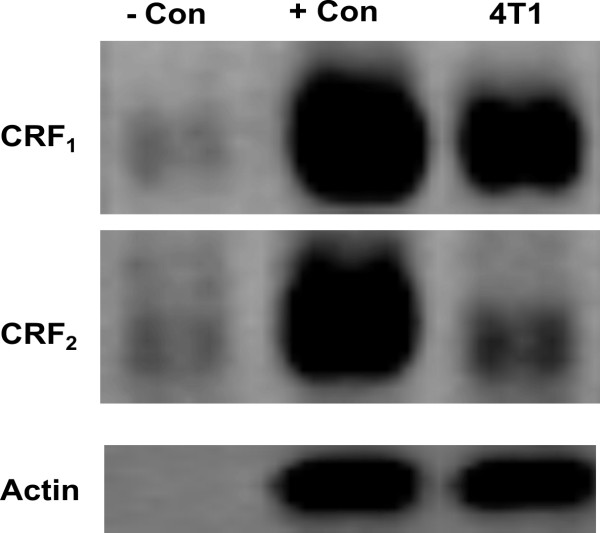
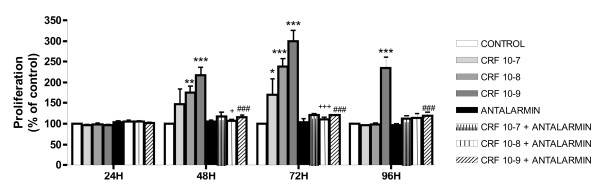
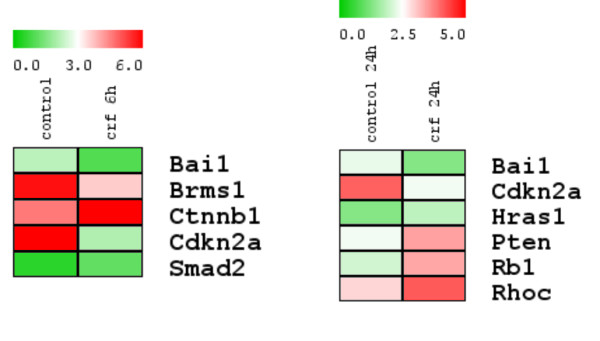
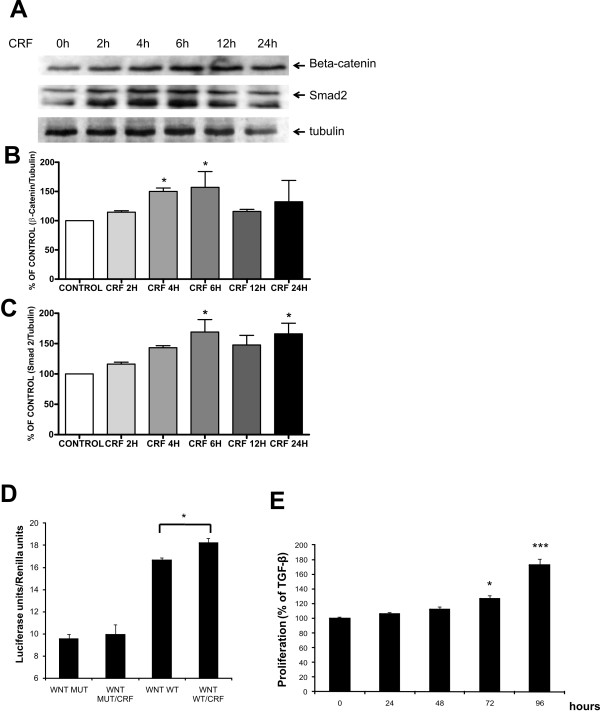
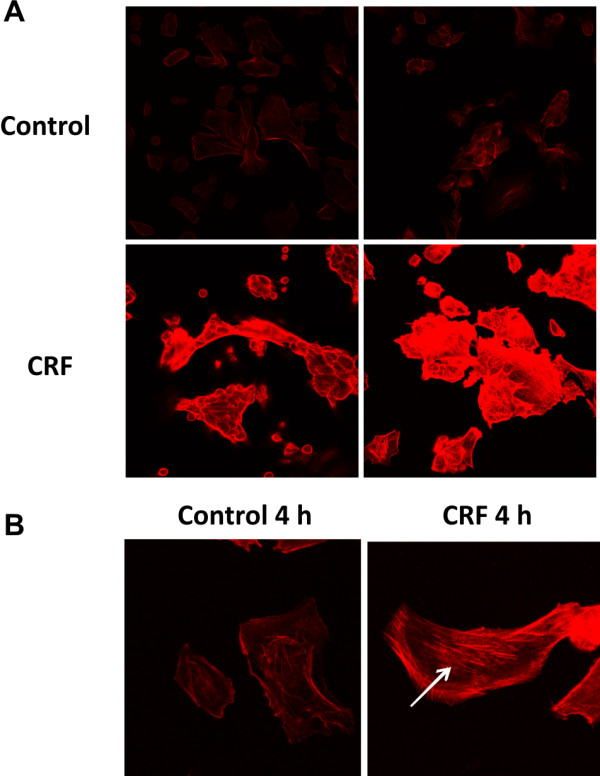
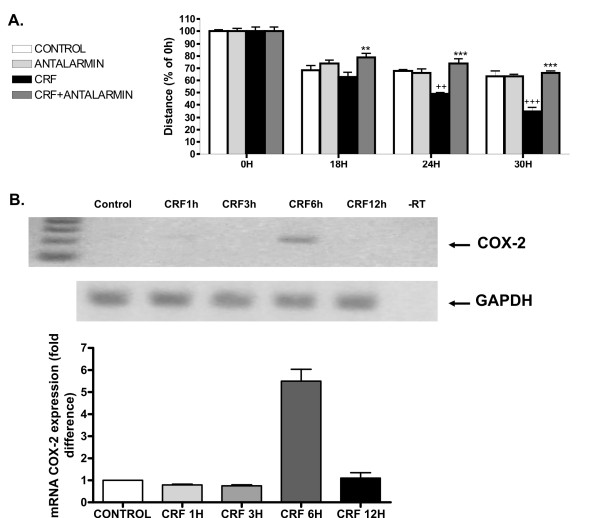
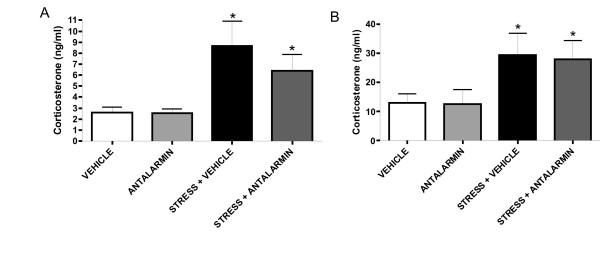
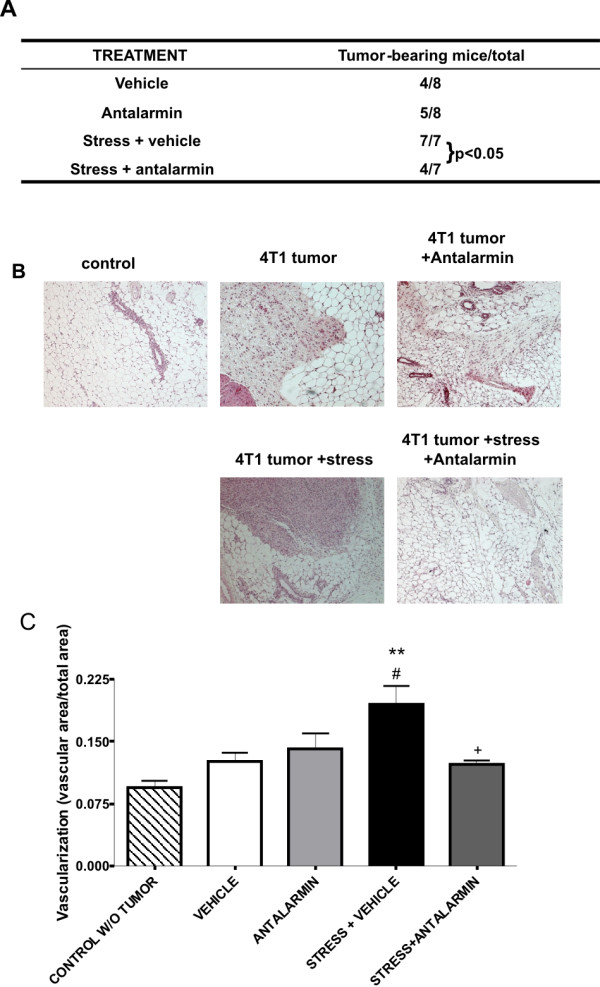
Introduction: Stress has been shown to be a tumor promoting factor. Both clinical and laboratory studies have shown that chronic stress is associated with tumor growth in several types of cancer. Corticotropin Releasing Factor (CRF) is the major hypothalamic mediator of stress, but is also expressed in peripheral tissues. Earlier studies have shown that peripheral CRF affects breast cancer cell proliferation and motility. The aim of the present study was to assess the significance of peripheral CRF on tumor growth as a mediator of the response to stress in vivo. Methods: For this purpose we used the 4T1 breast cancer cell line in cell culture and in vivo. Cells were treated with CRF in culture and gene specific arrays were performed to identify genes directly affected by CRF and involved in breast cancer cell growth. To assess the impact of peripheral CRF as a stress mediator in tumor growth, Balb/c mice were orthotopically injected with 4T1 cells in the mammary fat pad to induce breast tumors. Mice were subjected to repetitive immobilization stress as a model of chronic stress. To inhibit the action of CRF, the CRF antagonist antalarmin was injected intraperitoneally. Breast tissue samples were histologically analyzed and assessed for neoangiogenesis. Results: Array analysis revealed among other genes that CRF induced the expression of SMAD2 and β-catenin, genes involved in breast cancer cell proliferation and cytoskeletal changes associated with metastasis. Cell transfection and luciferase assays confirmed the role of CRF in WNT- β-catenin signaling. CRF induced 4T1 cell proliferation and augmented the TGF-β action on proliferation confirming its impact on TGFβ/SMAD2 signaling. In addition, CRF promoted actin reorganization and cell migration, suggesting a direct tumor-promoting action. Chronic stress augmented tumor growth in 4T1 breast tumor bearing mice and peripheral administration of the CRF antagonist antalarmin suppressed this effect. Moreover, antalarmin suppressed neoangiogenesis in 4T1 tumors in vivo. Conclusion: This is the first report demonstrating that peripheral CRF, at least in part, mediates the tumor-promoting effects of stress and implicates CRF in SMAD2 and β-catenin expression.
Overview
The claims and statistics of this paper haven’t been checked yet.
Free: it reads the open-access text and checks the first 5 claims that cite a source we can check. Create a free account to check every claim.
Integrity signals
Registry
Cites
Statistics
Figures
Verification
Claims the paper makes
The claims and statistics of this paper haven’t been checked yet.
Free: it reads the open-access text and checks the first 5 claims that cite a source we can check. Create a free account to check every claim.
Self-check
Percentages, sums and reported differences re-computed from the paper’s own numbers.
The self-check needs the paper’s full text.
Citations
Cites
Stress, depression, the immune system, and cancer
Reiche, E. M. V., Nunes, S. O. V., & Morimoto, H. K. (2004) · The Lancet Oncology · doi:10.1016/s1470-2045(04)01597-9 · Cited by 1,364 · cited 2×
“Discussion The impact of stress on the development of cancer has been widely proposed [1,2,36].”
BackgroundCRF and CRF receptors: role in stress responsivity and other behaviors
Bale, T. L., & Vale, W. W. (2004) · Annual Review of Pharmacology and Toxicology · doi:10.1146/annurev.pharmtox.44.101802.121410 · Cited by 1,270 · cited 1×
“In the tumor microenvironment, CRF is released by endothelial and immune cells and by the local neuronal innervation [9-11].”
BackgroundThe Kinase Akt1 Controls Macrophage Response to Lipopolysaccharide by Regulating MicroRNAs
Androulidaki, A., Iliopoulos, D., Arranz, A., Doxaki, C., Schworer, S., Zacharioudaki, V., Margioris, A. N., Tsichlis, P. N., & Tsatsanis, C. (2009) · Immunity · doi:10.1016/j.immuni.2009.06.024 · Cited by 581
Self-citationThe actin cytoskeleton in cancer cell motility
Olson, M. F., & Sahai, E. (2009) · Clinical & Experimental Metastasis · doi:10.1007/s10585-008-9174-2 · Cited by 572 · cited 1×
“This suggests that CRF could promote changes in cytoskeletal structures that allow cells to migrate and metastasize [45].”
BackgroundDevelopment of TGF-β signalling inhibitors for cancer therapy
Yingling, J. M., Blanchard, K. L., & Sawyer, J. S. (2004) · Nature Reviews Drug Discovery · doi:10.1038/nrd1580 · Cited by 549 · cited 4×
“Up-regulation of SMAD2, a downstream mediator of TGF-b signaling [28] was also confirmed by western blot analysis (Figure 4B, C).”
BackgroundInfluentialSignalling networks regulating cyclooxygenase-2
Tsatsanis, C., Androulidaki, A., Venihaki, M., & Margioris, A. N. (2006) · The International Journal of Biochemistry & Cell Biology · doi:10.1016/j.biocel.2006.03.021 · Cited by 492 · cited 1×
“Earlier studies from our group had shown that CRF induced Cox-2 expression [31], an enzyme known to promote angiogenesis via production of prostaglandins [32].”
BackgroundSelf-citationTheoharides, T. C., Singh, L. K., Boucher, W. S., Pang, X., Létourneau, R., Webster, E., & Chrousos, G. P. (1998) · Endocrinology · doi:10.1210/en.139.1.403 · Cited by 447
Neuroimmunoendocrine circuitry of the ‘brain-skin connection’
Paus, R., Theoharides, T. C., & Arck, P. C. (2006) · Trends in Immunology · doi:10.1016/j.it.2005.10.002 · Cited by 343 · cited 1×
“CRF is the main hypothalamic stress-induced neuropeptide and its peripheral effect has also been reported in several systems [3,5,8,9,31,37-39].”
BackgroundCassoni, P., Papotti, M., Ghè, C., Catapano, F., Sapino, A., Graziani, A., Deghenghi, R., Reissmann, T., Ghigo, E., & Muccioli, G. (2001) · The Journal of Clinical Endocrinology & Metabolism · doi:10.1210/jcem.86.4.7402 · Cited by 329 · cited 2×
“Moreover, the effect of grelin on the phenotype depends on the expression of Estrogen Receptor [47,48].”
BackgroundWebster, E. L. (1996) · Endocrinology · doi:10.1210/en.137.12.5747 · Cited by 312 · cited 1×
“5. Evaluation of the in vivo model of chronic stress In order to greater extent the molecular mediators of CRF on tumor growth and the effect of peripheral CRF, we used an in vivo model of restraint stress (see Materials and methods) and antalarmin, a synthetic CRF1 receptor antagonist [ 33 ,34].”
Method
Cited by
Chronic Stress Promotes Cancer Development
Dai, S., Mo, Y., Wang, Y., Xiang, B., Liao, Q., Zhou, M., Li, X., Li, Y., Xiong, W., Li, G., et al. (2020) · Frontiers in Oncology · doi:10.3389/fonc.2020.01492 · Cited by 405
“The antagonist of CRF, antalarmin, inhibits neovascularization in 4T1 breast cancer cell lines in vivo (43).”
BackgroundDu, P., Zeng, H., Xiao, Y., Zhao, Y., Zheng, B., Deng, Y., Liu, J., Huang, B., Zhang, X., Yang, K., et al. (2020) · Cell Death & Disease · doi:10.1038/s41419-020-02981-1 · Cited by 81
Zhang, J., Gan, L., Wu, Z., Yan, S., Liu, X., & Guo, W. (2016) · Oncotarget · doi:10.18632/oncotarget.7399 · Cited by 58
“reported that peripheral CRF contributed to proliferation and metastasis of tumors, by means of altering the expression of SMAD2, β-catenin, and cytoskeletal genes.[38] As proangiogenic factors that play a considerable role in neovascularization and development of GC[39–41], lower levels of VEGF and IL-6 are shown to…”
BackgroundAnalgesics promote welfare and sustain tumour growth in orthotopic 4T1 and B16 mouse cancer models
Lofgren, J. L. S., Miller, A. L., Lee, C. C. S., Bradshaw, C., Flecknell, P. A., & Roughan, J. V. (2017) · Laboratory Animals · doi:10.1177/0023677217739934 · Cited by 37
Psychologic Stress Drives Progression of Malignant Tumors via DRD2/HIF1α Signaling
Liu, H., Yang, J., Zhang, Y., Han, J., Yang, Y., Zhao, Z., Dai, X., Wang, H., Ding, X., Liu, Y., et al. (2021) · Cancer Research · doi:10.1158/0008-5472.can-21-1043 · Cited by 37
“growth in a chronic-stress mouse model (25).”
Effect of chronic stress on tumorigenesis and development
Wang, C., Shen, Y., Ni, J., Hu, W., & Yang, Y. (2022) · Cellular and Molecular Life Sciences · doi:10.1007/s00018-022-04455-3 · Cited by 37
“The CRF released by the hypothalamus increases the potentials of proliferation and invasion in breast cancer cells [134].”
BackgroundLal, S. K., Allan, A., Markovic, D., Walker, R. A., Macartney, J. C., Europe‐Finner, N., Tyson-Capper, A. J., & Grammatopoulos, D. K. (2013) · Science Signaling · doi:10.1126/scisignal.2003926 · Cited by 26
Jin, L., Chen, J., Li, L., Li, C., Chen, C., & Li, S. (2014) · Cellular Signalling · doi:10.1016/j.cellsig.2013.12.017 · Cited by 25
Jin, L., Li, C., Li, R., Sun, Z., Fang, X., & Li, S. (2014) · Journal of Molecular Endocrinology · doi:10.1530/jme-13-0270 · Cited by 22
“2002) and that Ucn1 inhibited hepatocellular carcinoma growth and angiogenesis (Bale et al. 2002, Wang et al. 2008). Rassouli et al. (2011) suggested that dermal fibroblasts, deficient in CRH (CRHK/K), had higher proliferation and migration rates compared with WT (CRHC/C) cells.”
BackgroundHeterotrimeric G protein signaling in cancer cells with regard to metastasis formation
Entschladen, F., Zänker, K. S., & Powe, D. G. (2011) · Cell Cycle · doi:10.4161/cc.10.7.15208 · Cited by 24
Jin, L., Zhu, C., Wang, X., Li, C., Cao, C., Yuan, J., & Li, S. (2015) · Journal of Cellular Biochemistry · doi:10.1002/jcb.25194 · Cited by 16
“It is reported that CRH/Ucn in cancer cells regulates cellular proliferation [Graziani et al., 2007; Arranz et al., 2010], apoptosis [Chatzaki et al.”
BackgroundSato, N., Takagi, K., Suzuki, T., Miki, Y., Tanaka, S., Nagase, S., Warita, H., Fukudo, S., Sato, F., Sasano, H., et al. (2014) · International Journal of Gynecological Cancer · doi:10.1097/igc.0000000000000269 · Cited by 14
“Recent studies have demonstrated that CRH is present not only in the central nervous system but also in various peripheral organs.(9) Corticotropin-releasing hormone mediates endocrine responses to stress by activating the HPA axis as well as via direct actions in the periphery.”
BackgroundSato, N., Motoi, F., Tajiki, H., Kawaguchi, K., Ohtsuka, H., Takadate, T., Nakagawa, K., Takagi, K., Suzuki, T., Katayose, Y., et al. (2022) · Gastro Hep Advances · doi:10.1016/j.gastha.2022.09.003 · Cited by 8
“Also, there are reports 10,12,26,29 that CRH acts on cancer growth, and the action of CRH-CRHR1 in living organisms remains unclear.”
Perceived Stress in Cancer Patients: An Integrative Review
Jan, F., Singh, M., & Nisar, S. (2021) · Indian Journal of Psychiatric Nursing · doi:10.4103/iopn.iopn_4_21 · Cited by 7
Koureta, M., Karaglani, M., Παναγοπούλου, Μ., Balgkouranidou, I., Papadaki-Anastasopoulou, A., Zarouchlioti, C., Dekavallas, S., Kolios, G. C., Lambropoulou, M., Baritaki, S., et al. (2020) · Peptides · doi:10.1016/j.peptides.2020.170316 · Cited by 8
Stehouwer, J. S., Birnbaum, M. S., Voll, R. J., Owens, M. J., Plott, S. J., Bourke, C. H., Wassef, M. A., Kilts, C. D., & Goodman, M. M. (2015) · Bioorganic & Medicinal Chemistry · doi:10.1016/j.bmc.2015.06.036 · Cited by 6
Chronic stress in cancer development and progression
Niu, X., Wu, T. H., Zeng, L., Wang, F., Lv, W., Zhang, L., & Zhou, F. (2025) · Science Bulletin · doi:10.1016/j.scib.2025.09.034 · Cited by 12
García-Laguna, G., Gerena-Cruz, M. F., Sánchez, A. Y., Monroy-Gómez, J. A., & Dueñas, Z. (2021) · Physiology & Behavior · doi:10.1016/j.physbeh.2021.113399 · Cited by 5
Stuhr, L. E. B., Wei, E. T., & Reed, R. K. (2013) · Tumor Biology · doi:10.1007/s13277-013-1186-0 · Cited by 5
Voluntary exercise influences metastatic organotropism in a murine colorectal cancer model
Wijler, L. A., Raats, D., Verheem, A., den Otter, A. M., Rundqvist, H., van Dijk, M., May, A. M., & Kranenburg, O. (2021) · JCSM Rapid Communications · doi:10.1002/rco2.51 · Cited by 6
“In breast cancer models, forced exercise increases the release of stress-related hormones such as corticosterone,(24) resulting in changes in proliferation, migration and invasion potential, thereby promote tumour progression.(25,26) Hence,”
BackgroundCorticotropin-Releasing Hormone Receptor Signaling ☆
Brar, B. K. (2017) · Elsevier eBooks · doi:10.1016/b978-0-12-809324-5.03380-0 · Cited by 5
Dynamic Regulation of Adherens Junctions: Implication in Cell Differentiation and Tumor Development
Pelissier-Rota, M. A., Chartier, N. T., & Jacquier‐Sarlin, M. R. (2015) · Springer eBooks · doi:10.1007/978-94-017-7380-5_4 · Cited by 3
A unifying theory of brain signaling and its possible role in acquired chronic disease
Pereira, G., Corbett, M., Vernon, S. D., Colburn, S., & Chanda, S. (2026) · Frontiers in Neuroscience · doi:10.3389/fnins.2026.1683413 · Cited by 1
Guo, L., Du, Y., Chang, S., Zhang, W., & Wang, J. (2014) · Psychosomatic Medicine · doi:10.1097/psy.0000000000000102 · Cited by 1
“INTRODUCTION A s a type of adverse experience, chronic stress (CS) has been reported to be an important factor associated with many complex diseases (1), such as psychiatric diseases (2Y4), metabolic diseases (5), autoimmune diseases (6Y8), cancers (8,9), and various cardiovascular events (10).”
BackgroundComponents of the Corticotropin-Releasing-Factor (CRF) Signaling System in Snail Atria
Martynova, M. G., Petukhova, O. A., Sharlaimova, N. S., Shabelnikov, S., & Bystrova, O. A. (2018) · Cell and Tissue Biology · doi:10.1134/s1990519x18040053 · Cited by 1
D’Arcy, M. E. (2016) · Carolina Digital Repository (University of North Carolina at Chapel Hill) · doi:10.17615/vdtb-2232
O’Brien, K., & Sali, A. (2017) · Springer eBooks · doi:10.1007/978-3-319-56632-0_2
Complementary Mind-Body Therapies in Cancer
Hriso, C., Newberg, A. B., & Monti, D. (2022) · Springer eBooks · doi:10.1007/978-3-030-85702-8_13
Zhong, F., Wu, J., Wu, H., Wang, Y., Xiao, F., Xu, B., Li, J., Luo, Y., Fu, Q., Liu, X. X., et al. (2026) · PLoS ONE · doi:10.1371/journal.pone.0353182
Patrad, E., & Alizadeh, A. M. (2026) · Experimental and Molecular Pathology · doi:10.1016/j.yexmp.2026.105083
Metadata
- Authors
- Arranz, A., Venihaki, M., Mol, B., Androulidaki, A., Dermitzaki, E., Rassouli, O., Ripoll, J., Stathopoulos, E. N., Gomariz, R. P., Margioris, A. N., & Tsatsanis, C.
- Affiliations
- University of Crete (GR)
- Foundation for Research and Technology Hellas (GR)
- Universidad Complutense de Madrid (ES)
- Corresponding author
- Margioris, Andrew N
- Tsatsanis, Christos
- Venue
- Molecular Cancer
- Published
- 2010-09-27
- Volume
- 9
- Issue
- 1
- Pages
- 261-261
- ISSN
- 1476-4598 (ISSN-L)
- PMC
- PMC2956730
- OpenAlex
- W2116390790
- Cited by
- 30
- References
- 56
- Citations by year
- 2026: 3 · 2025: 1 · 2022: 3 · 2021: 4 · 2020: 3 · 2019: 1 · 2018: 1 · 2017: 3 · 2016: 1 · 2015: 3 · 2014: 4 · 2013: 2
- FWCI
- 0.65
- Type
- journal article
- Language
- en
- Open access
- gold
- doi.org
- Licence
- cc-by
- Locations
- Molecular Cancer (publishedVersion, cc-by)
- PubMed Central (publishedVersion, cc-by)
- PubMed (publishedVersion)
- DOAJ (DOAJ: Directory of Open Access Journals) (submittedVersion)
- Funders
- U.S. Department of Defense
- Topics
- Life Sciences › Biochemistry, Genetics and Molecular Biology › Cancer Research › Cancer, Stress, Anesthesia, and Immune Response
- Life Sciences › Neuroscience › Behavioral Neuroscience › Stress Responses and Cortisol
- Life Sciences › Neuroscience › Cellular and Molecular Neuroscience › Neuropeptides and Animal Physiology
- Keywords
- corticotropin-releasing factor, chronic stress, tumor growth, breast cancer, 4T1 cells, antalarmin, Wnt/β-catenin signaling, Smad2, TGF-β/Smad2 signaling, cell proliferation, cell migration, actin reorganization, neoangiogenesis, restraint stress
- MeSH terms
- Animals, Breast Neoplasms, Cell Movement, Cell Survival, Corticotropin-Releasing Hormone, Female, Fluorescent Antibody Technique, Mice, Inbred BALB C, Pyrimidines, Pyrroles, Radioimmunoassay, Stress, Physiological, Blotting, Western, Gene Expression Regulation, Neoplastic, Reverse Transcriptase Polymerase Chain Reaction, Cell Line, Tumor, Cell Proliferation, Mice
About these checks
Registry, retraction, Cites and statistics results are computed, not judged, with one exception: a printed reference that no index lists is read once by a model before it counts as a citation error. Claims are extracted by a model and kept only when their quote appears verbatim in the text; each cited source is then checked, with a model’s help, for whether it says what the claim relies on. Those verdicts can be wrong — read the claim’s quote and the cited source before relying on one.
Statistics and arithmetic are recomputed, not judged.
Confidence bands are shown only for fields calibrated on our annotated test set. None is calibrated yet, so no band is shown.
What counts as a claim ›How we measure confidence ›How we check this ›
Are you an author, or do you see a problem with this page? Request a review
Data sources
Bibliographic data: Semantic Scholar, OpenAlex, Crossref.
Contains information from the Semantic Scholar Academic Graph Datasets, made available under the ODC Attribution License (ODC-BY 1.0).
Semantic Scholar’s data is described in: Kinney, R., et al. (2023). The Semantic Scholar Open Data Platform. arXiv:2301.10140.
