

Harnessing the power of advertising to prevent childhood obesity
Open accessThe DOI matches its Crossref record; 24 of the 24 references it cites were found in a registry or an index.
Abstract
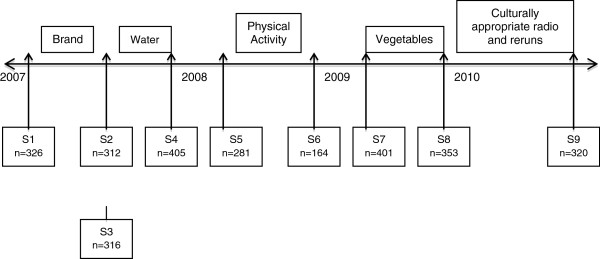
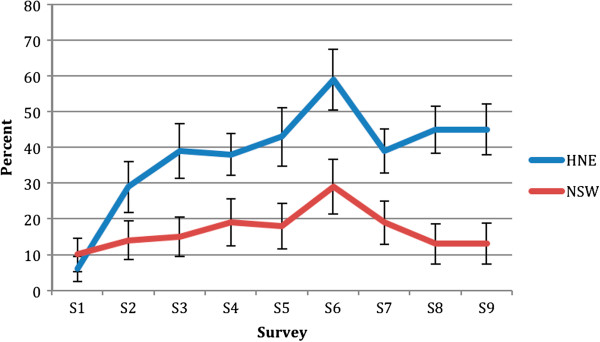
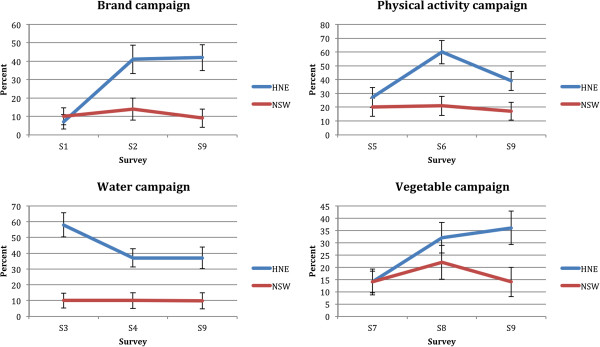
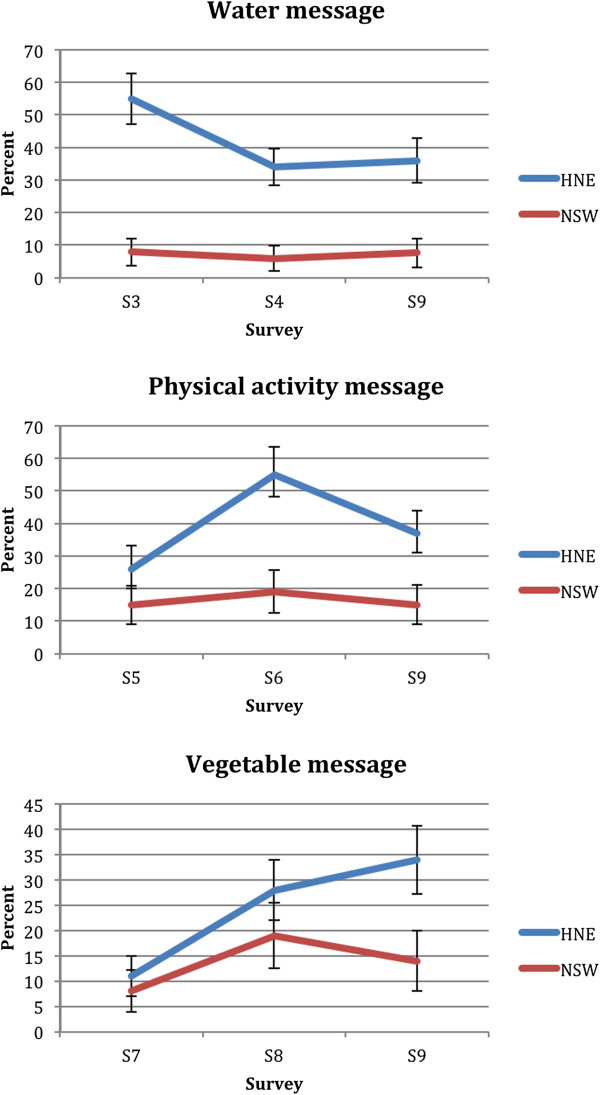
BACKGROUND: Social marketing integrates communication campaigns with behavioural and environmental change strategies. Childhood obesity programs could benefit significantly from social marketing but communication campaigns on this issue tend to be stand-alone. METHODS: A large-scale multi-setting child obesity prevention program was implemented in the Hunter New England (HNE) region of New South Wales (NSW), Australia from 2005-2010. The program included a series of communication campaigns promoting the program and its key messages: drinking water; getting physically active and; eating more vegetables and fruit. Pre-post telephone surveys (n = 9) were undertaken to evaluate awareness of the campaigns among parents of children aged 2-15 years using repeat cross-sections of randomly selected cohorts. A total of 1,367 parents (HNE = 748, NSW = 619) participated. RESULTS: At each survey post baseline, HNE parents were significantly more likely to have seen, read or heard about the program and its messages in the media than parents in the remainder of the state (p < 0.001). Further, there was a significant increase in awareness of the program and each of its messages over time in HNE compared to no change over time in NSW (p < 0.001). Awareness was significantly higher (p < 0.05) in HNE compared to NSW after each specific campaign (except the vegetable one) and significantly higher awareness levels were sustained for each campaign until the end of the program. At the end of the program participants without a tertiary education were significantly more likely (p = 0.04) to be aware of the brand campaign (31%) than those with (20%) but there were no other statistically significant socio-demographic differences in awareness. CONCLUSIONS: The Good for Kids communication campaigns increased and maintained awareness of childhood obesity prevention messages. Moreover, messages were delivered equitably to diverse socio-demographic groups within the region.
Overview
The claims and statistics of this paper haven’t been checked yet.
Free: it reads the open-access text and checks the first 5 claims that cite a source we can check. Create a free account to check every claim.
Integrity signals
Registry
Cites
Statistics
Figures
Verification
Claims the paper makes
The claims and statistics of this paper haven’t been checked yet.
Free: it reads the open-access text and checks the first 5 claims that cite a source we can check. Create a free account to check every claim.
Claims other papers make about this one
Each is checked against this paper’s own text: does it say what the citing paper says it does?
The cited source says what the claim attributes to it.
In the citing paper
“When further extending the scope to campaigns directed at other health awareness themes, such as increasing awareness of alcohol as a carcinogen (Christensen et al., 2019;Martin et al., 2018) or increasing parents' awareness surrounding healthy behaviors of children (Bell et al., 2013;Orr et al., 2010), similar findings are frequently observed.”
From Increasing knowledge on dementia risk reduction in the general population: Results of a public awareness campaign. (2021) · cites this paper as Bell et al., 2013
The cited source says what the claim attributes to it.
In the citing paper
“These mass media campaigns were successful in delivering the campaign message and increasing awareness on the respective topic (Bell et al., 2013;Christensen et al., 2019;Martin et al., 2018;Orr et al., 2010).”
From Increasing knowledge on dementia risk reduction in the general population: Results of a public awareness campaign. (2021) · cites this paper as Bell et al., 2013
Self-check
Percentages, sums and reported differences re-computed from the paper’s own numbers.
The self-check needs the paper’s full text.
Citations
Cites
Preventing Childhood Obesity: Health in the Balance: (407782005-001)
Koplan, J. P., National Academy of Sciences; National Academics Center for Education, Liverman, C. T., & Kraak, V. A. (2004) · PsycEXTRA Dataset · doi:10.1037/e407782005-001 · Cited by 1,378
Social Marketing: Its Definition and Domain
Andreasen, A. R. (1994) · Journal of Public Policy & Marketing · doi:10.1177/074391569401300109 · Cited by 862 · cited 2×
“In accord with communication [25] and social marketing principles, [12] the Good for Kids program aimed to have a clearly defined target audience.”
BackgroundA School-Based Intervention for Diabetes Risk Reduction
(2010) · New England Journal of Medicine · doi:10.1056/nejmoa1001933 · Cited by 350 · cited 2×
“These findings were consistent with population data for the state [17].”
BackgroundResultCavill, N., & Bauman, A. (2004) · Journal of Sports Sciences · doi:10.1080/02640410410001712467 · Cited by 307 · cited 1×
“Formative research led to good message awareness by parents given the complexities associated with conveying simple and actionable diet and physical activity messages in an environment where people are exposed to competing messages from many sources [26,27].”
BackgroundHuhman, M., Potter, L. D., Wong, F. L., Banspach, S. W., Duke, J. C., & Heitzler, C. D. (2005) · Pediatrics · doi:10.1542/peds.2005-0043 · Cited by 225 · cited 1×
“developed and planned using social marketing theory and focus group testing [20-22].”
MethodDattilo, A. M., Birch, L., Krebs, N. F., Lake, A., Taveras, E. M., & Saavedra, J. M. (2012) · Journal of Obesity · doi:10.1155/2012/123023 · Cited by 185 · cited 1×
“Given international concerns about obesity prevalence, [9] communication campaigns centred on television advertising have increasingly been applied to promoting healthy eating and physical activity.”
BackgroundImpact of an Australian mass media campaign targeting physical activity in 1998
Bauman, A. E., Bellew, B., Owen, N., & Vita, P. (2001) · American Journal of Preventive Medicine · doi:10.1016/s0749-3797(01)00313-0 · Cited by 172
Effects of TV time and other sedentary pursuits
Swinburn, B. A., & Shelly, A. (2008) · International Journal of Obesity · doi:10.1038/ijo.2008.249 · Cited by 160 · cited 1×
“Television advertising is a powerful medium, able to influence behaviour change by providing information in a relevant and engaging way [1].”
BackgroundFood advertising on Australian television: the extent of children's exposure
Neville, L., Thomas, M., & Bauman, A. (2005) · Health Promotion International · doi:10.1093/heapro/dah601 · Cited by 123 · cited 1×
“[3-6] In response to the marketing power of commercial industries promoting unhealthy products, governments and public health practitioners have adopted similar”
Background(2010) · Cited by 121
Cited by
Van Asbroeck, S., van Boxtel, M. P. J., Steyaert, J., Köhler, S., Heger, I., de Vugt, M., Verhey, F., & Deckers, K. (2021) · Preventive Medicine · doi:10.1016/j.ypmed.2021.106522 · Cited by 102
Sustaining obesity prevention in communities: a systematic narrative synthesis review
Whelan, J., Love, P., Millar, L., Allender, S. E., & Bell, C. (2018) · Obesity Reviews · doi:10.1111/obr.12675 · Cited by 82
“These were linked to increased awareness of project branding and healthy messaging (34,61).”
BackgroundViolence in Advertisements in New York City Subway Stations: A Pilot Study
Basch, C. H., Fullwood, M. D., & LeBlanc, M. L. (2015) · Journal of Community Health · doi:10.1007/s10900-015-0108-z · Cited by 9
“to stimulate a response or appeal toward awareness of human emotion [11].”
BackgroundPettigrew, S., Chapman, K. L., Miller, C. L., & Thomas, S. L. (2014) · BMC Obesity · doi:10.1186/s40608-014-0017-1 · Cited by 9
“There is some support in the literature for Quadrant 3 respondents’ hope in the potential of healthy food advertising to counteract the effects of advertising for unhealthy foods [10,64,65].”
BackgroundGase, L. N., Montes, C., Robles, B., Tyree, R., & Kuo, T. (2015) · Journal of Public Health Management and Practice · doi:10.1097/phh.0000000000000279 · Cited by 7
Obesity as a threat to health security
Szymonik, A. (2023) · De Securitate et Defensione O Bezpieczeństwie i Obronności · doi:10.34739/dsd.2023.01.12 · Cited by 10
Economic evaluation of physical activity mass media campaigns across the globe: a systematic review
Pinheiro, M. B., Howard, K., Sherrington, C., Bauman, A. E., Costa, N., Smith, B. J., Bellew, W., Ding, D., Tiedemann, A., Wang, B., et al. (2022) · International Journal of Behavioral Nutrition and Physical Activity · doi:10.1186/s12966-022-01340-x · Cited by 6
“The campaigns targeted adults (n = 8) [10, 37, 39, 41, 42, 44, 49, 50], both adults and older adults (n = 5) [35, 43, 45, 48, 51], older adults only (n = 1) [36], adolescents (n = 1) [38], children (n = 1) [46], and people across the lifespan (n = 4) [40, 47, 52, 53] (Additional file 1: Appendix Table 2).”
BackgroundPromotion – The 4th P of Social Marketing: A Scoping Review of Efforts from 2010–2022
Perrault, E. K., Labadorf, B. A., Chavda, B., Mbah, P. T., & Munoz, C. (2026) · Journal of Health Communication · doi:10.1080/10810730.2026.2615828 · Cited by 1
“For example, temporary tattoos were used in an anti-smoking campaign targeting Aboriginal communities (Campbell et al., 2014) and an obesity prevention campaign targeting children (Bell et al., 2013).”
The Role of National Media Programs in the Prevention of Childhood Cancer
Kajiyazdi, M., Jesmani, N., & Eftekhari, K. (2021) · Journal of Comprehensive Pediatrics · doi:10.5812/compreped.110142
A parental perspective of food advertising on television aimed at children : a case of the eThekwini
Mpungane, V. I. (2023) · DUT Open Scholar (Durban University of Technology) · doi:10.51415/10321/4950
Asbroeck, S. V. (2024) · Research Publications (Maastricht University) · doi:10.26481/dis.20240618sa
Reinbach, H. C., Buch‐Andersen, T., Winkler, L. L., Toft, U., Mikkelsen, B. E., & Bloch, P. (2026) · BMC Public Health · doi:10.1186/s12889-026-28425-7
Pinheiro, M. B., Howard, K., Sherrington, C., Bauman, A. E., Costa, N., Smith, B. J., Bellew, W., Ding, D., Tiedemann, A., Wang, B., et al. (2022) · Figshare · doi:10.6084/m9.figshare.20677843
Carter, E. (2025) · Repository@Hull (Worktribe) (University of Hull)
Jones, C. D. (2014) · University Libraries (University of Maryland) · doi:10.13016/m20312
Metadata
- Authors
- Bell, A., Wolfenden, L., Sutherland, R., Coggan, L., Young, K., Fitzgerald, M., Hodder, R., Orr, N., Milat, A. J., & Wiggers, J.
- Affiliations
- University of Newcastle Australia (AU)
- Hunter New England Local Health District (AU)
- Concordia University (CA)
- New South Wales Department of Health (AU)
- The University of Sydney (AU)
- Corresponding author
- Bell, Andrew
- Venue
- International Journal of Behavioral Nutrition and Physical Activity
- Published
- 2013
- Volume
- 10
- Issue
- 1
- Pages
- 114
- ISSN
- 1479-5868 (ISSN-L)
- PMC
- PMC3852185
- OpenAlex
- W2157588386
- Semantic Scholar
- 73121c73c7389b80782239ca5919a63126b58867
- Cited by
- 14
- References
- 24
- Citations by year
- 2026: 2 · 2024: 1 · 2023: 2 · 2022: 2 · 2021: 2 · 2018: 1 · 2015: 2 · 2014: 2
- FWCI
- 1.36
- Type
- journal article
- Language
- en
- Open access
- gold
- doi.org
- Licence
- cc-by
- Locations
- International Journal of Behavioral Nutrition and Physical Activity (publishedVersion, cc-by)
- Europe PMC (PubMed Central) (publishedVersion, cc-by)
- PubMed Central (publishedVersion, cc-by)
- PubMed (publishedVersion)
- Figshare (submittedVersion, cc-by)
- NOVA (University of Newcastle Australia) (submittedVersion)
- Funders
- NSW Ministry of Health
- Topics
- Health Sciences › Medicine › Public Health, Environmental and Occupational Health › Obesity, Physical Activity, Diet
- Social Sciences › Communication › Media Influence and Health
- Health Sciences › Medicine › Public Health, Environmental and Occupational Health › Obesity and Health Practices
- Keywords
- childhood obesity prevention, social marketing, communication campaigns, media awareness, parental awareness, physical activity promotion, fruit and vegetable intake
- MeSH terms
- Adolescent, Advertising, Child, Child, Preschool, Cross-Sectional Studies, Fruit, Health Promotion, Humans, Health Knowledge, Attitudes, Practice, Mass Media, Motor Activity, New South Wales, Surveys and Questionnaires, Socioeconomic Factors, Vegetables, Program Evaluation, Social Marketing, Pediatric Obesity
About these checks
Registry, retraction, Cites and statistics results are computed, not judged, with one exception: a printed reference that no index lists is read once by a model before it counts as a citation error. Claims are extracted by a model and kept only when their quote appears verbatim in the text; each cited source is then checked, with a model’s help, for whether it says what the claim relies on. Those verdicts can be wrong — read the claim’s quote and the cited source before relying on one.
Statistics and arithmetic are recomputed, not judged.
Confidence bands are shown only for fields calibrated on our annotated test set. None is calibrated yet, so no band is shown.
What counts as a claim ›How we measure confidence ›How we check this ›
Are you an author, or do you see a problem with this page? Request a review
Data sources
Bibliographic data: Semantic Scholar, OpenAlex, Crossref.
Contains information from the Semantic Scholar Academic Graph Datasets, made available under the ODC Attribution License (ODC-BY 1.0).
Semantic Scholar’s data is described in: Kinney, R., et al. (2023). The Semantic Scholar Open Data Platform. arXiv:2301.10140.
