

The DOI matches its Crossref record; 43 of the 43 references it cites were found in a registry or an index.
Toll-like receptor 4 signaling promotes epithelial-mesenchymal transition in human hepatocellular carcinoma induced by lipopolysaccharide
Open accessAbstract
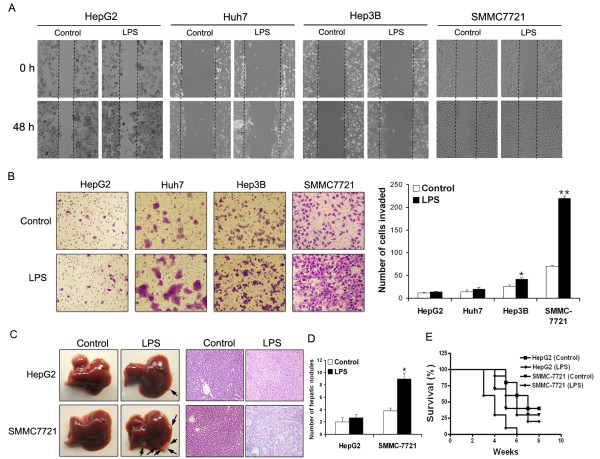
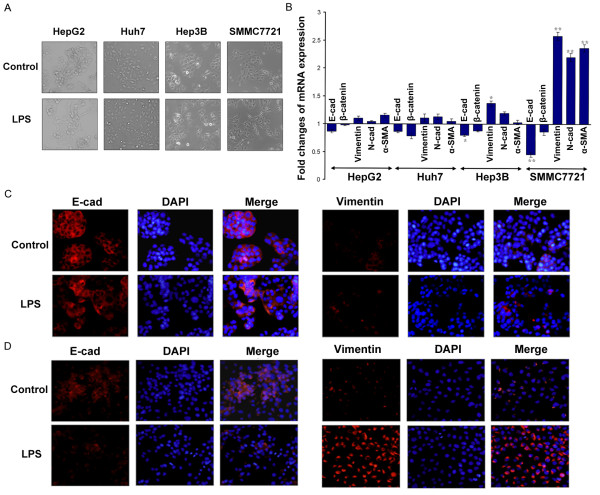
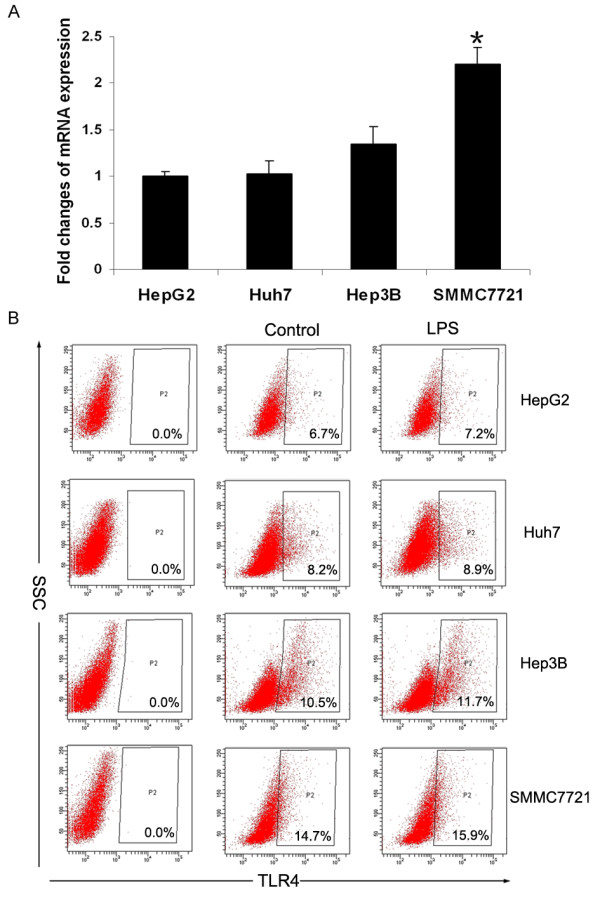
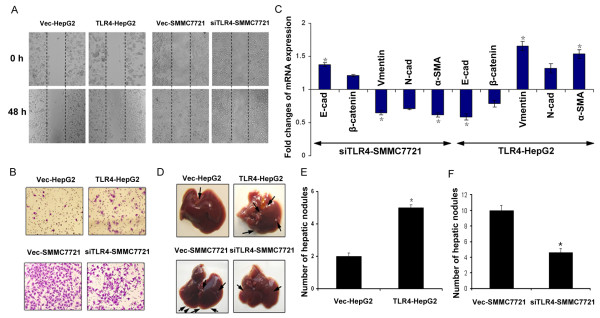
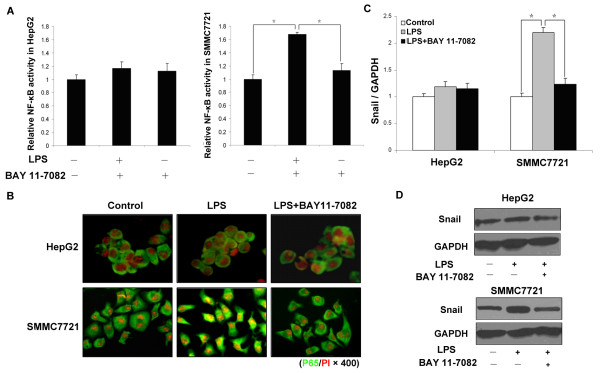
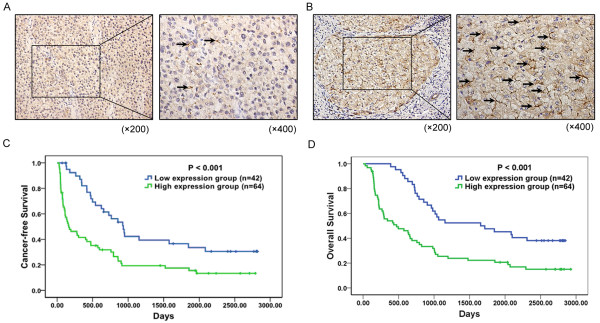
Background: The endotoxin level in the portal and peripheral veins of hepatocellular carcinoma (HCC) patients is higher and lipopolysaccharide (LPS), a cell wall constituent of gram-negative bacteria, has been reported to inhibit tumor growth. However, in this study, we found that LPS-induced toll-like receptor 4 (TLR4) signaling was involved in tumor invasion and survival, and the molecular mechanism was investigated, Methods: Four HCC cell lines and a splenic vein metastasis of the nude mouse model were used to study the invasion ability of LPS-induced HCC cells and the epithelia-mesenchymal transition (EMT) in vitro and in vivo. A total of 106 clinical samples from HCC patients were used to evaluate TLR4 expression and analyze its association with clinicopathological characteristics Results: The in vitro and in vivo experiments demonstrated that LPS could significantly enhance the invasive potential and induce EMT in HCC cells with TLR4 dependent. Further studies showed that LPS could directly activate nuclear factor kappa B (NF-κB) signaling through TLR4 in HCC cells. Interestingly, blocking NF-κB signaling significantly inhibited transcription factor Snail expression and thereby inhibited EMT occurrence. High expression of TLR4 in HCC tissues was strongly associated with both poor cancer-free survival and overall survival in patients. Conclusions: Our results indicate that TLR4 signaling is required for LPS-induced EMT, tumor cell invasion and metastasis, which provide molecular insights for LPS-related pathogenesis and a basis for developing new strategies against metastasis in HCC.
Overview
The claims and statistics of this paper haven’t been checked yet.
Run the check — free, no account needed. It reads the open-access text and checks the sources it cites.
Integrity signals
Registry
Cites
Statistics
Figures
Verification
Claims the paper makes
The claims and statistics of this paper haven’t been checked yet.
Run the check — free, no account needed. It reads the open-access text and checks the sources it cites.
Claims other papers make about this one
Each is checked against this paper’s own text: does it say what the citing paper says it does?
In the citing paper
“In addition, TLR4 activation in HCC cell lines by LPS enhances their invasive potential and induces the epithelial–mesenchymal transition83.”
From The gut microbiome and liver cancer: mechanisms and clinical translation (2017) · cites this paper as [83]
Self-check
Percentages, sums and reported differences re-computed from the paper’s own numbers.
The self-check needs the paper’s full text.
Citations
Cites
Akira, S., & Takeda, K. (2004) · Nature reviews. Immunology · doi:10.1038/nri1391 · Cited by 8,312
Toll-like receptor control of the adaptive immune responses
Iwasaki, A., & Medzhitov, R. M. (2004) · Nature Immunology · doi:10.1038/ni1112 · Cited by 4,166
Cano, A., Pérez‐Moreno, M., Rodrigo, I., Locascio, A., Blanco, M. J., Barrio, M. G. D., Portillo, F., & Nieto, M. A. (2000) · Nature Cell Biology · doi:10.1038/35000025 · Cited by 3,672
Batlle, E., Sancho, E., Francí, C., Dominguez-Sola, D., Monfar, M., Baulida, J., & de Herreros, A. G. (2000) · Nature Cell Biology · doi:10.1038/35000034 · Cited by 2,730
Larue, L., & Bellacosa, A. (2005) · Oncogene · doi:10.1038/sj.onc.1209091 · Cited by 1,247
Huber, M. A., Azoitei, N., Baumann, B., Grünert, S., Sommer, A., Pehamberger, H., Kraut, N., Beug, H., & Wirth, T. (2004) · Journal of Clinical Investigation · doi:10.1172/jci21358 · Cited by 1,049
Intravital imaging of cell movement in tumours
Condeelis, J. S., & Segall, J. E. (2003) · Nature reviews. Cancer · doi:10.1038/nrc1231 · Cited by 930
Stabilization of Snail by NF-κB Is Required for Inflammation-Induced Cell Migration and Invasion
Wu, Y., Deng, J., Rychahou, P. G., Qiu, S., Evers, B. M., & Zhou, B. P. (2009) · Cancer Cell · doi:10.1016/j.ccr.2009.03.016 · Cited by 814
Prospective analysis of risk factors for hepatocellular carcinoma in patients with liver cirrhosis
Velázquez, R. F., Rodríguez, M., Navascués, C., Linares, A., Pérez, R., Sotorríos, N. G., Martínez, I., & Rodrigo, L. (2003) · Hepatology · doi:10.1053/jhep.2003.50093 · Cited by 457
Toll-Like Receptor Signaling in the Liver
Schwabe, R. F., Seki, E., & Brenner, D. A. (2006) · Gastroenterology · doi:10.1053/j.gastro.2006.01.038 · Cited by 411
Cited by
Sorted by citations
The gut microbiome and liver cancer: mechanisms and clinical translation
Yu, L.-X., & Schwabe, R. F. (2017) · Nature Reviews Gastroenterology & Hepatology · doi:10.1038/nrgastro.2017.72 · Cited by 634
Fan, Q., Jing, Y., Yu, G., Kou, X., Ye, F., Gao, L., Li, R., Zhao, Q., Yang, Y., Lu, Z., et al. (2014) · Cancer Letters · doi:10.1016/j.canlet.2014.05.008 · Cited by 459
Self-citationDock-family exchange factors in cell migration and disease
Gadea, G., & Blangy, A. (2014) · European Journal of Cell Biology · doi:10.1016/j.ejcb.2014.06.003 · Cited by 217
Yu, L., Yan, L., Yang, W. K., Wu, F., Yan, L., Chen, S., Tang, L. V., Tan, Y., Cao, D., Wu, M., et al. (2014) · Nature Communications · doi:10.1038/ncomms6256 · Cited by 180
Self-citationVacchelli, E., Eggermont, A. M. M., Sautès‐Fridman, C., Galon, J., Zitvogel, L., Kroemer, G., & Galluzzi, L. (2013) · OncoImmunology · doi:10.4161/onci.25238 · Cited by 160
Metadata
- Authors
- Jing, Y.-Y., Han, Z.-P., Sun, K., Zhang, S.-S., Hou, J., Liu, Y., Li, R., Gao, L., Zhao, X., Zhao, Q.-D., Wu, M.-C., & Wei, L.-X.
- Affiliations
- Second Military Medical University (CN)
- Venue
- BMC Medicine
- Published
- 2012-08-31
- Volume
- 10
- Issue
- 1
- Pages
- 98-98
- ISSN
- 1741-7015 (ISSN-L)
- PMC
- PMC3482562
- OpenAlex
- W1970916626
- Cited by
- 162
- References
- 43
- Citations by year
- 2026: 8 · 2025: 15 · 2024: 11 · 2023: 13 · 2022: 14 · 2021: 18 · 2020: 9 · 2019: 11 · 2018: 11 · 2017: 13 · 2016: 10 · 2015: 11 · 2014: 11 · 2013: 7
- FWCI
- 3.99
- Type
- journal article
- Language
- en
- Open access
- gold
- doi.org
- Licence
- Locations
- BMC Medicine (publishedVersion, cc-by)
- Europe PMC (PubMed Central) (publishedVersion, cc-by)
- PubMed Central (publishedVersion, cc-by)
- PubMed (publishedVersion)
- DOAJ (DOAJ: Directory of Open Access Journals) (submittedVersion)
- Funders
- National Natural Science Foundation of China (30921006, 81030041, 2008ZX10002-019, 81000970, SCMRC1102, 2011CB966200, 81101622, 31171321, 30901722)
- Science and Technology Commission of Shanghai Municipality (10411963100, 10ZR1439900, 11ZR1449500, 10ZR1439600)
- Science Fund for Creative Research Groups (30921006)
- Topics
- Life Sciences › Immunology and Microbiology › Immunology › Immune Response and Inflammation
- Life Sciences › Biochemistry, Genetics and Molecular Biology › Molecular Biology › TGF-β signaling in diseases
- Health Sciences › Medicine › Hepatology › Hepatocellular Carcinoma Treatment and Prognosis
- Keywords
- TLR4, hepatocellular carcinoma, epithelial-mesenchymal transition, lipopolysaccharide, NF-κB signaling, Snail transcription factor, tumor invasion, metastasis, endotoxin, tumor-free survival, overall survival
- MeSH terms
- Adolescent, Adult, Aged, Animals, Child, Endotoxins, Female, Carcinoma, Hepatocellular, Humans, Lipopolysaccharides, Male, Mice, Nude, Middle Aged, Signal Transduction, Gene Expression Profiling, Toll-Like Receptor 4, Mice, Young Adult, Epithelial-Mesenchymal Transition
About these checks
Registry, retraction, Cites and statistics results are computed, not judged, with one exception: a printed reference that no index lists is read once by a model before it counts as a citation error. Claims are extracted by a model and kept only when their quote appears verbatim in the text; each cited source is then checked, with a model’s help, for whether it says what the claim relies on. Those verdicts can be wrong — read the claim’s quote and the cited source before relying on one.
Statistics and arithmetic are recomputed, not judged.
Confidence bands are shown only for fields calibrated on our annotated test set. None is calibrated yet, so no band is shown.
What counts as a claim ›How we measure confidence ›How we check this ›
Are you an author, or do you see a problem with this page? Request a review
