

The DOI matches its Crossref record; 99 of the 100 references it cites were found in a registry or an index.
Preconception care: caffeine, smoking, alcohol, drugs and other environmental chemical/radiation exposure
Open accessAbstract
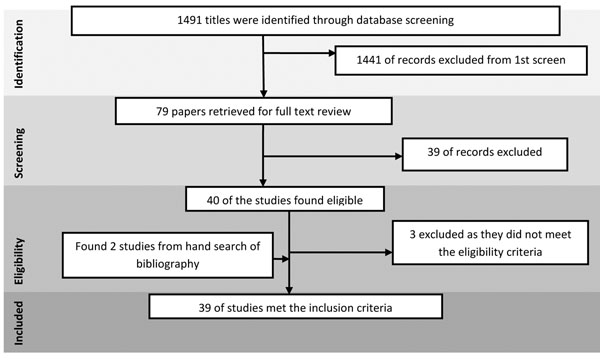
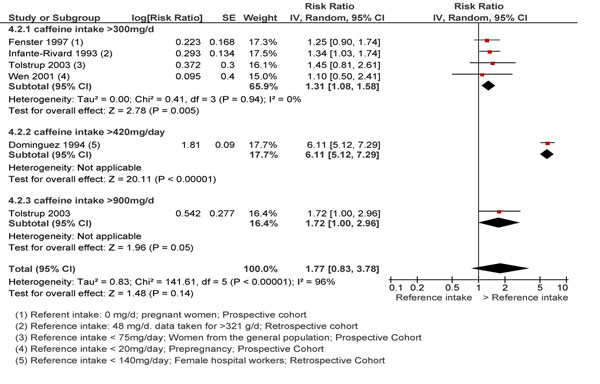
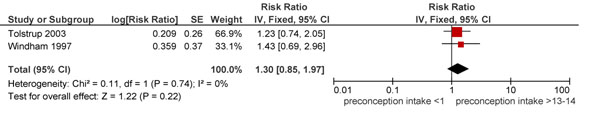
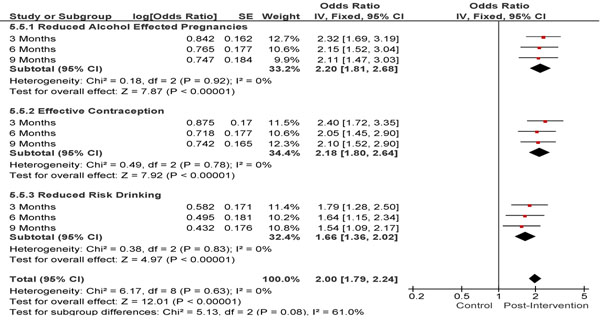
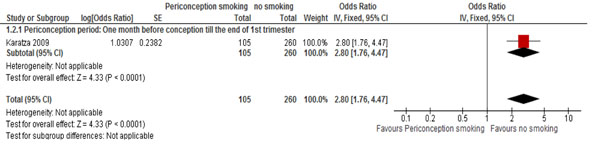
INTRODUCTION: As providing health education, optimizing nutrition, and managing risk factors can be effective for ensuring a healthy outcome for women and her yet un-conceived baby, external influences play a significant role as well. Alcohol, smoking, caffeine use and other similar lifestyle factors, have now become an integral part of the daily life of most men and women, who use/misuse one or more of these harmful substances regularly despite knowledge of their detrimental effects. The adverse health outcomes of these voluntary and involuntary exposures are of even greater concern in women of child bearing age where the exposure has the potential of inflicting harm to two generations. This paper is examining the available literature for the possible effects of caffeine consumption, smoking, alcohol or exposure to chemicals may have on the maternal, newborn and child health (MNCH). METHODS: A systematic review and meta-analysis of the evidence was conducted to ascertain the possible impact of preconception usage of caffeine, tobacco, alcohol and other illicit drugs; and exposure to environmental chemicals and radiant on MNCH outcomes. A comprehensive strategy was used to search electronic reference libraries, and both observational and clinical controlled trials were included. Cross-referencing and a separate search strategy for each preconception risk and intervention ensured wider study capture. RESULTS: Heavy maternal preconception caffeine intake of >300 mg/d significantly increase the risk of a subsequent fetal loss by 31% (95% CI: 8-58%). On the other hand, preconception alcohol consumption leads to non-significant 30% increase in spontaneous abortion (RR 1.30; 95% CI: 0.85-1.97). Preconception counselling can lead to a significant decrease in the consumption of alcohol during the first trimester (OR 1.79; 95% CI: 1.08-2.97). Periconception smoking, on the other hand, was found to be associated with an almost 3 times increased risk of congenital heart defects (OR 2.80; 95% CI 1.76-4.47). While the review found limited evidence of preconception environmental exposure on maternal, newborn and child health outcomes, occupational exposure in female radiation workers before conception showed an increased impact in risk of early miscarriages. CONCLUSION: Identification of substance abuse and environmental history during preconception period provides an opportunity to assist women in reducing major health risks and identify key determinants of healthy pregnancy. Studies have shown that the aversion and prevention of exposure feasibility can play an important role in improving the health of women and their families, however, the results should be interpreted with great caution as there were few studies in each section. Therefore, there is a need for more rigorous studies to test the hypotheses.
Overview
The claims and statistics of this paper haven’t been checked yet.
Run the check — free, no account needed. It reads the open-access text and checks the sources it cites.
Integrity signals
Registry
Cites
Statistics
Figures
Verification
Claims the paper makes
The claims and statistics of this paper haven’t been checked yet.
Run the check — free, no account needed. It reads the open-access text and checks the sources it cites.
Claims other papers make about this one
Each is checked against this paper’s own text: does it say what the citing paper says it does?
The source backs part of the claim, not all of it — or backs it for a different population, condition or comparison.
In the citing paper
“Evidence suggests that lifestyle changes, such as reducing alcohol use and smoking, losing weight, improving fruit and vegetable consumption, can reduce the prevalence of adverse pregnancy outcomes, especially when initiated in early pregnancy or even before conception [4–7].”
From Associations between periconceptional lifestyle behaviours and adverse pregnancy outcomes (2021) · cites this paper as [5]
Experimental — accuracy not yet measuredThe source backs part of the claim, not all of it — or backs it for a different population, condition or comparison.
In the citing paper
“Our results are relevant since an unhealthy diet, lifestyle behaviours and exercising pattern are progressively becoming part of Western society, including among a high percentage of women in their reproductive age [5, 6, 16].”
From Associations between periconceptional lifestyle behaviours and adverse pregnancy outcomes (2021) · cites this paper as [5]
Experimental — accuracy not yet measured
Self-check
Percentages, sums and reported differences re-computed from the paper’s own numbers.
The self-check needs the paper’s full text.
Citations
Cites
Cochrane Handbook for Systematic Reviews of Interventions: Cochrane Book Series
(2008) · doi:10.1002/9780470712184 · Cited by 25,048
Cochrane Handbook for Systematic Reviews of Interventions Version 5.0.1. The Cochrane Collaboration
Higgins, J., Green, S. R., & Higgins, J. (2008) · Cited by 5,544
Cancer epidemiology biomarkers & prevention
Press, H. (1991) · Cited by 1,398
Fetal alcohol syndrome: diagnosis, epidemiology, prevention, and treatment
(1997) · Choice Reviews Online · doi:10.5860/choice.34-2779 · Cited by 918
Gardner, M. J., Snee, M. P., Hall, A. J., Powell, C., Downes, S., & Terrell, J. D. (1990) · BMJ · doi:10.1136/bmj.300.6722.423 · Cited by 778
British journal of industrial medicine
(1989) · Journal of Sound and Vibration · doi:10.1016/0022-460x(89)90628-7 · Cited by 750
Psychosocial interventions for supporting women to stop smoking in pregnancy
Chamberlain, C., O'Mara-Eves, A., Porter, J., Coleman, T., Perlen, S. M., Thomas, J., & McKenzie, J. E. (2017) · Cochrane Database of Systematic Reviews · doi:10.1002/14651858.cd001055.pub5 · Cited by 650
Fetal Alcohol Syndrome: Diagnosis, Epidemiology, Prevention, and Treatment
Glantz, J. C. (1997) · Birth · doi:10.1111/j.1523-536x.1997.00129.pp.x · Cited by 623
Curtis, L. H., Hammill, B. G., Eisenstein, E. L., Kramer, J. M., & Anstrom, K. J. (2007) · Medical Care · doi:10.1097/mlr.0b013e31806518ac · Cited by 494
Ambient Air Pollution and Low Birth Weight in Connecticut and Massachusetts
Bell, M. L., Ebisu, K., & Belanger, K. D. (2007) · Environmental Health Perspectives · doi:10.1289/ehp.9759 · Cited by 422
Research works printed but not linked: 3
- WHO WHO: Meeting to develop a global consensus on preconception care to reduce maternal and childhood mortality and morbidity. 2012, Geneva: World Health Organization Headquarters
- Review Manager (RevMan). [computer program]. Version 5.0:. 2008, Copenhagen: Nordic Cochrane Collaboration
- Sever LE, Gilbert ES, Tucker K, Greaves JA, Greaves C, Buchanan J: Epidemiological evaluation of childhood leukaemia and paternal exposure to ionizing radiation. Seattle: Battelle Memorial Institute. 1997
Cited by
Sorted by citations
Recurrent pregnancy loss: current perspectives
Hachem, H. E., Crepaux, V., May‐Panloup, P., Descamps, P., Legendre, G., & Bouet, P. (2017) · International Journal of Women s Health · doi:10.2147/ijwh.s100817 · Cited by 465
Environment, lifestyle, and female infertility
Bala, R., Singh, V., Rajender, S., & Singh, K. (2021) · Reproductive Sciences · doi:10.1007/s43032-020-00279-3 · Cited by 242
Dean, S., Lassi, Z., Imam, A., & Bhutta, Z. (2014) · Reproductive Health · doi:10.1186/1742-4755-11-s3-s1 · Cited by 180
Self-citationPreconception care: delivery strategies and packages for care
Lassi, Z. S., Dean, S. V., Mallick, D., & Bhutta, Z. A. (2014) · Reproductive Health · doi:10.1186/1742-4755-11-s3-s7 · Cited by 142
Self-citationChen, L.-W., Wu, Y., Neelakantan, N., Chong, M. F.-F., Pan, A., & van Dam, R. M. (2016) · Public Health Nutrition · doi:10.1017/s1368980015002463 · Cited by 100
Metadata
- Authors
- Lassi, Z. S., Imam, A. M., Dean, S. V., & Bhutta, Z. A.
- Affiliations
- Aga Khan University (PK)
- Corresponding author
- Bhutta, Zulfiqar A
- Venue
- Reproductive Health
- Published
- 2014-09-26
- Volume
- 11
- Issue
- S3
- Pages
- S6-S6
- ISSN
- 1742-4755 (ISSN-L)
- PMC
- PMC4196566
- OpenAlex
- W2146057142
- Cited by
- 186
- References
- 100
- Citations by year
- 2026: 10 · 2025: 12 · 2024: 16 · 2023: 16 · 2022: 17 · 2021: 24 · 2020: 20 · 2019: 15 · 2018: 16 · 2017: 20 · 2016: 12 · 2015: 5 · 2014: 3
- FWCI
- 2.01
- Type
- journal article
- Language
- en
- Open access
- gold
- doi.org
- Licence
- cc-by
- Locations
- Reproductive Health (publishedVersion, cc-by)
- PubMed Central (publishedVersion, cc-by)
- PubMed (publishedVersion)
- Adelaide Research & Scholarship (AR&S) (University of Adelaide) (submittedVersion, cc-by)
- Topics
- Health Sciences › Medicine › Pediatrics, Perinatology and Child Health › Prenatal Substance Exposure Effects
- Health Sciences › Medicine › Public Health, Environmental and Occupational Health › Pregnancy and Medication Impact
- Health Sciences › Medicine › Pediatrics, Perinatology and Child Health › Maternal and Neonatal Healthcare
- Keywords
- preconception care, maternal caffeine intake, illicit drug use, environmental chemical exposure, radiation exposure, fetal death, miscarriage, congenital heart disease, preconception counseling, maternal, newborn and child health, occupational radiation exposure, women of reproductive age, substance use prevention, pregnancy risk factors, lifestyle risk factors
- MeSH terms
- Alcohol Drinking, Caffeine, Environmental Exposure, Female, Humans, Pregnancy, Pregnancy Complications, Smoking, Preconception Care, Maternal Exposure, Substance-Related Disorders
About these checks
Registry, retraction, Cites and statistics results are computed, not judged, with one exception: a printed reference that no index lists is read once by a model before it counts as a citation error. Claims are extracted by a model and kept only when their quote appears verbatim in the text; each cited source is then checked, with a model’s help, for whether it says what the claim relies on. Those verdicts can be wrong — read the claim’s quote and the cited source before relying on one.
Statistics and arithmetic are recomputed, not judged.
Confidence bands are shown only for fields calibrated on our annotated test set. None is calibrated yet, so no band is shown.
What counts as a claim ›How we measure confidence ›How we check this ›
Are you an author, or do you see a problem with this page? Request a review
