

The Global Network Maternal Newborn Health Registry: a multi-national, community-based registry of pregnancy outcomes
Open accessThe DOI matches its Crossref record; 27 of the 27 references it cites were found in a registry or an index.
Abstract
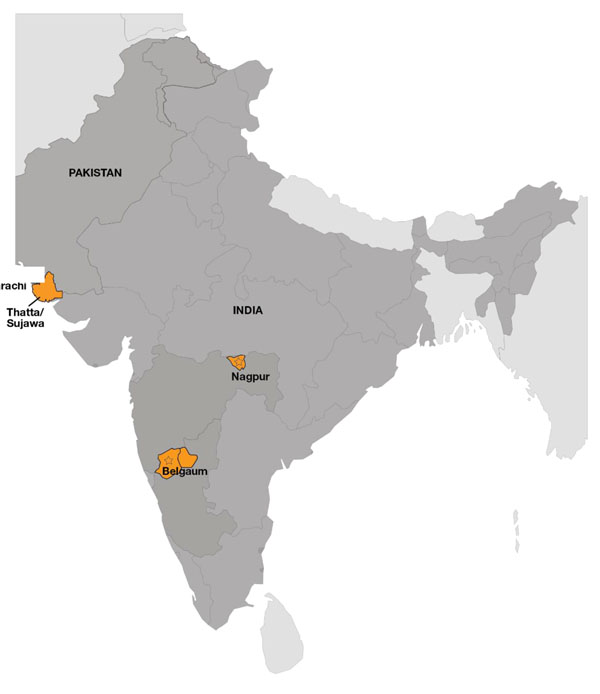
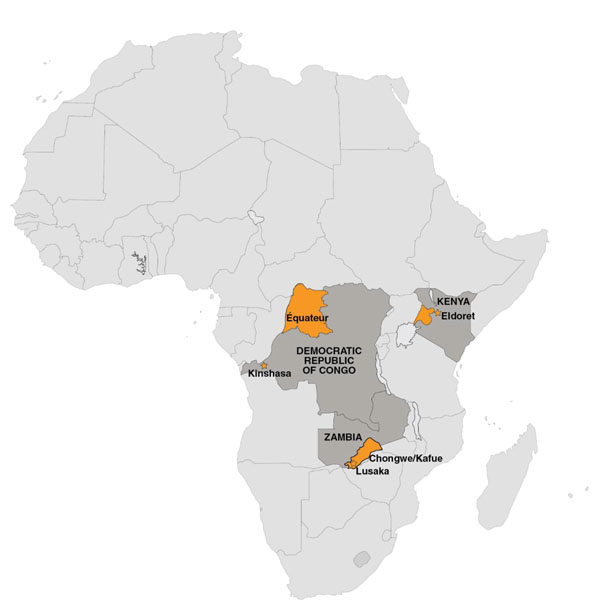
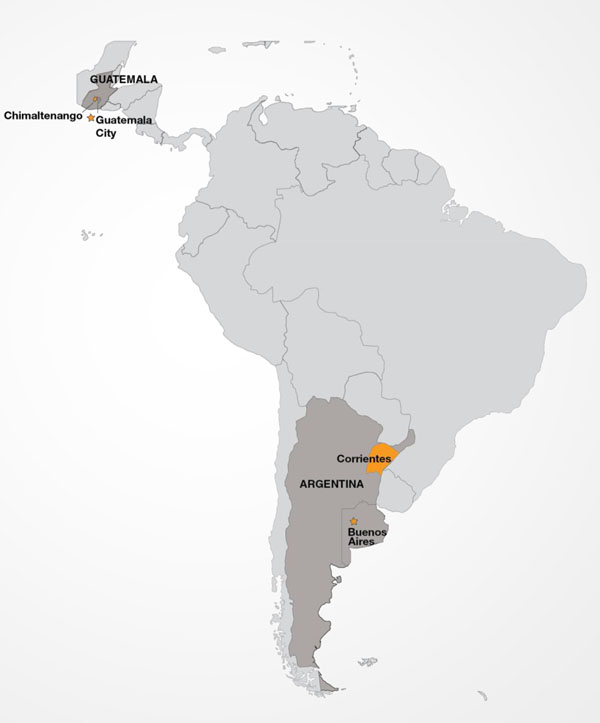
BACKGROUND: The Global Network for Women's and Children's Health Research (Global Network) supports and conducts clinical trials in resource-limited countries by pairing foreign and U.S. investigators, with the goal of evaluating low-cost, sustainable interventions to improve the health of women and children. Accurate reporting of births, stillbirths, neonatal deaths, maternal mortality, and measures of obstetric and neonatal care is critical to efforts to discover strategies for improving pregnancy outcomes in resource-limited settings. Because most of the sites in the Global Network have weak registration within their health care systems, the Global Network developed the Maternal Newborn Health Registry (MNHR), a prospective, population-based registry of pregnancies at the Global Network sites to provide precise data on health outcomes and measures of care. METHODS: Pregnant women are enrolled in the MNHR if they reside in or receive healthcare in designated groups of communities within sites in the Global Network. For each woman, demographic, health characteristics and major outcomes of pregnancy are recorded. Data are recorded at enrollment, the time of delivery and at 42 days postpartum. RESULTS: From 2010 through 2013 Global Network sites were located in Argentina, Guatemala, Belgaum and Nagpur, India, Pakistan, Kenya, and Zambia. During this period, 283,496 pregnant women were enrolled in the MNHR; this number represented 98.8% of all eligible women. Delivery data were collected for 98.8% of women and 42-day follow-up data for 98.4% of those enrolled. In this supplement, there are a series of manuscripts that use data gathered through the MNHR to report outcomes of these pregnancies. CONCLUSIONS: Developing public policy and improving public health in countries with poor perinatal outcomes is, in part, dependent upon understanding the outcome of every pregnancy. Because the worst pregnancy outcomes typically occur in countries with limited health registration systems and vital records, alternative registration systems may prove to be highly valuable in providing data. The MNHR, an international, multicenter, population-based registry, assesses pregnancy outcomes over time in support of efforts to develop improved perinatal healthcare in resource-limited areas.
Overview
The claims and statistics of this paper haven’t been checked yet.
Free: it reads the open-access text and checks the first 5 claims that cite a source we can check. Create a free account to check every claim.
Integrity signals
Registry
Cites
Statistics
Figures
Verification
Claims the paper makes
The claims and statistics of this paper haven’t been checked yet.
Free: it reads the open-access text and checks the first 5 claims that cite a source we can check. Create a free account to check every claim.
Self-check
Percentages, sums and reported differences re-computed from the paper’s own numbers.
The self-check needs the paper’s full text.
Citations
Cites
Born Too Soon: The global epidemiology of 15 million preterm births
Blencowe, H., Cousens, S., Chou, D., Oestergaard, M., Say, L., Moller, A.-B., Kinney, M., Lawn, J., & the Born Too Soon Preterm Birth Action Group (see acknowledgement for full list) (2013) · Reproductive Health · doi:10.1186/1742-4755-10-s1-s2 · Cited by 2,206
Newborn-Care Training and Perinatal Mortality in Developing Countries
Carlo, W. A., Goudar, S. S., Jehan, I., Chomba, E., Tshefu, A., Garces, A., Sailajanandan, P., Althabe, F., McClure, E. M., Derman, R. J., et al. (2010) · New England Journal of Medicine · doi:10.1056/nejmsa0806033 · Cited by 420
Self-citationWall, S. N., Lee, A. C., Niermeyer, S., English, M., Keenan, W. J., Carlo, W., Bhutta, Z. A., Bang, A., Narayanan, I., Ariawan, I., et al. (2009) · International Journal of Gynecology & Obstetrics · doi:10.1016/j.ijgo.2009.07.013 · Cited by 354
Self-citationAlthabe, F., Belizán, J. M., McClure, E. M., Hemingway-Foday, J., Berrueta, M., Mazzoni, A., Ciganda, A., Goudar, S. S., Kodkany, B. S., Mahantshetti, N. S., et al. (2015) · The Lancet · doi:10.1016/s0140-6736(14)61651-2 · Cited by 334
Self-citationAlthabe, F., Moore, J. L., Gibbons, L., Berrueta, M., Goudar, S. S., Chomba, E., Derman, R. J., Patel, A., Saleem, S., Pasha, O., et al. (2015) · Reproductive Health · doi:10.1186/1742-4755-12-s2-s8 · Cited by 271
Self-citationBauserman, M., Lokangaka, A., Thorsten, V., Tshefu, A., Goudar, S. S., Esamai, F., Garces, A., Saleem, S., Pasha, O., Patel, A., et al. (2015) · Reproductive Health · doi:10.1186/1742-4755-12-s2-s5 · Cited by 216
Self-citationPostpartum contraceptive use and unmet need for family planning in five low-income countries
Pasha, O., Goudar, S. S., Patel, A., Garces, A., Esamai, F., Chomba, E., Moore, J. L., Kodkany, B. S., Saleem, S., Derman, R. J., et al. (2015) · Reproductive Health · doi:10.1186/1742-4755-12-s2-s11 · Cited by 173
Self-citation; on behalf of the neonatal infections estimation team, Seale, A. C., Blencowe, H., Zaidi, A., Ganatra, H., Syed, S., Engmann, C., Newton, C. R., Vergnano, S., Stoll, B. J., et al. (2013) · Pediatric Research · doi:10.1038/pr.2013.207 · Cited by 159
Goudar, S. S., Carlo, W. A., McClure, E. M., Pasha, O., Patel, A., Esamai, F., Chomba, E., Garces, A., Althabe, F., Kodkany, B., et al. (2012) · International Journal of Gynecology & Obstetrics · doi:10.1016/j.ijgo.2012.04.022 · Cited by 144 · cited 1×
“The MNHR began in May 2008, as an expansion of the populationbased data collection tool established at sites for the FIRST BREATH Study, a clinical trial investigating the impact of newborn care training on perinatal mortality in resource limited areas in low and low-middle income countries [1,2].”
Self-citationMcClure, E. M., Saleem, S., Goudar, S. S., Moore, J. L., Garces, A., Esamai, F., Patel, A., Chomba, E., Althabe, F., Pasha, O., et al. (2015) · Reproductive Health · doi:10.1186/1742-4755-12-s2-s7 · Cited by 120
Self-citation
Research works printed but not linked: 1
- Alan H. Jobe (University of Cincinnati Children's Hospital). Site field teams Argentina: Ana Maria Dominguez; Tania Lima Pérez; María José Pellegrini; Cristina Ganduglia; Rita Agüero; Diego Espinosa; Lucas Urquiza; Andrea Barea; Daniela Moreli; Belgaum, India: Ganapti V Lakkundi; Harsha S Patil; SM Chowdappanavar; Sanjay S Siddannavar; V N Kpasi; Satish P Malali; Ramesh Haller; Jagadish K Jingi; RS Balikaj; MB Rayar; Vinod D Gasti; Mahesh J Kumbar; Iranna I Kalli; Bhujabali D Yalagudri; N A Gotyal; Chan- drakanth Sutar; Sukanya Handage; Anil Salagare; Ashok S Kumbar; Salim A Mujawar; Laxmi B Herawade; B N PatIl; Sheetal Ingle; Ravasab Sankaje; Uday S Kudachi; Shahid Gadekai; Shivanand Mulakuri; Adivesh Munavalli; Daya- nand Shirur; Rajendra K Kilabanur; Sanjay S Doddamani; Santosh G Shettar; S V Melavanki; Shridhar S Pattar; Kusuma Y Magi; Vikas B Parwatikar; P M Itagi; K F Maya- chari; Venkanna Emmi; Basavraj S Madali; Vinayak Mhe- tre; Nagraj Khade; Tanaji Khade; Sachin Mastiholi; G S Kengapur; B B Avoji; Democratic Republic of Congo: Charles Kombi, Michel Kalonji; Kenya: Carolyne Chem- weno; Guatemala: Evelyn Morales, Marta Lidia Aguilar; Nagpur, India: Jayant Shamkuwar, Ravi Petkar, Shashank Ambhore, Atul Chopde, Nitesh Nikose, Atul Andelkar; Pakistan: Zahid Soomro; Amirzadi Khaskheli; Irfan Karim; Hussein Shaikh; Asma Amir; Samreen Gul; Rabia Samejo; Fahmida Gul; Zambia: Royce Shamapu; Rosemary Sotelli; Jessica Kapesa; Emmanuel Lwao; Lasco Ntanisha; Edwin Cheelo; Mavis Liteta; Raymond Ngwenya; Martha Katenga; Jean Mwanza; Shira Makwama ; Denis Kapamu- lomo ; Doreen Kadipa ; Carol Mubila ; Love Kasakula ; Sara Mukula ; Eness Sappi ; Mwazi Sikalenge ; Salome Lyanoonga ; Emilliy Muchimba The study was funded by grants (U01HD040636, U10HD078437, U10HD076461, U10HD076465, U10HD076457, U10HD078439, U10HD078438, and U10HD076474) from the Eunice Kennedy Shriver National Institute of Child Health and Human Development of the US National Institutes of Health. Peer review Reviewer reports for this article can be found in Addi- tional file 1. References
Cited by
Items 101–135 of 135
Tikmani, S. S., Brown, N., Inayat, A., Mårtensson, A., Saleem, S., & Mårtensson, T. (2024) · BMJ Paediatrics Open · doi:10.1136/bmjpo-2023-002316 · Cited by 5
Preconception Diagnosis, Awareness, Advocacy for Safe Pregnancy, Safe Birth
Chhabra, S. (2016) · Journal of Pregnancy and Child Health · doi:10.4172/2376-127x.1000279 · Cited by 3
Social Determinants of Women's Health in Low and Middle Income Countries
Baxi, G. D. (2024) · Frontiers research topics · doi:10.3389/978-2-8325-5658-0 · Cited by 2
Harrison, M. S., Garcés, A., Figueroa, L., Westcott, J., Hambidge, M., & Krebs, N. F. (2021) · BMC Pregnancy and Childbirth · doi:10.1186/s12884-021-04000-3 · Cited by 2
Ijaz, M., Ahmed, Z., & Khalid, N. (2024) · Global Knowledge, Memory and Communication · doi:10.1108/gkmc-08-2023-0314 · Cited by 3
Design and Conduct of Global Health Research in Low- and Middle-Income Countries
Thayyil, S., Bauserman, M., Valentine, G. C., Patterson, J. K., Hoffman, M., Aagaard, K. M., Ramji, S., Lokangaka, A. L., Mhango, J., Bhutta, Z. A., et al. (2024) · The Journal of Pediatrics · doi:10.1016/j.jpeds.2024.114268 · Cited by 2
Self-citationCastro, P. S., Silveira, M. F., Caldeira, A. P., & de PINHO, L. (2024) · Cadernos Saúde Coletiva · doi:10.1590/1414-462x202432020527 · Cited by 2
Bhat, N., Knudson, S., AbuShweimeh, R., Nakambale, H. N., Mooney, J., Salts, N., Mehta, U., Sevene, E., Fell, D. B., Lamprianou, S., et al. (2025) · BMJ Open · doi:10.1136/bmjopen-2024-097198 · Cited by 2
Birth weight and gestational age distributions in a rural Kenyan population
Bucher, S., Nowak, K. J., Otieno, K., Tenge, C., Marete, I., Rutto, F., Kemboi, M., Achieng, E., Ekhaguere, O. A., Nyongesa, P., et al. (2023) · BMC Pediatrics · doi:10.1186/s12887-023-03925-2 · Cited by 2
Kavi, A. J., Goudar, S. S., Somannavar, M. S., Moore, J., Derman, R. J., Saleem, S., Naqvi, S., Billah, S. M., Haque, R., Figueroa, L., et al. (2023) · BJOG An International Journal of Obstetrics & Gynaecology · doi:10.1111/1471-0528.17604 · Cited by 2
Self-citationKlimiuk, K. B., Kot, A., Majcherek, E., Kubiak, K. B., & Balwicki, Ł. (2024) · Journal of Medical Internet Research · doi:10.2196/59544 · Cited by 1
“Ideally, such a registry could serve as a valuable data source for analyzing maternal health realities, identifying potential threats, and enhancing guidelines and preventive measures, similar to practices applied to certain states or medical conditions [41-43].”
Kapellou, A., Koutelidakis, A. Ε., & Stoupi, S. (2025) · Applied Sciences · doi:10.3390/app16010429 · Cited by 1
Harrison, M. S., Garcés, A., Figueroa, L., Westcott, J., Hambidge, M., & Krebs, N. F. (2021) · Reproductive Health · doi:10.1186/s12978-021-01153-4 · Cited by 1
“The Global Network’s prospective registry, the MNHR, includes pregnancy related data and outcomes from rural or semi-urban geographical areas.”
BackgroundMethodMaternal morbidity of adolescent pregnant women
Coahuila, C. A. P., Herrera, J. A., Alonso-Lozano, D. A., Guerrero, L. P., Ojeda, R. A. M., & Zerón, H. M. (2021) · The Moldovan Medical Journal · doi:10.52418/moldovan-med-j.64-6.21.02 · Cited by 1
Jessani, S., Saleem, S., Fogleman, E., Billah, S. M., Haque, R., Figueroa, L., Lokangaka, A. L., Tshefu, A. K., Goudar, S. S., Kavi, A. J., et al. (2023) · BJOG An International Journal of Obstetrics & Gynaecology · doi:10.1111/1471-0528.17630 · Cited by 1
Self-citationTikmani, S. S., Saleem, S., McClure, E. M., Naqvi, F., Abrejo, F. G., Soomro, Z., Wallace, D., & Goldenberg, R. L. (2018) · Journal of Family Medicine and Primary Care · doi:10.4103/jfmpc.jfmpc_59_17 · Cited by 1
“In the District Thatta of Sindh Province, the population is scattered over large geographical areas, making supervision and monitoring for any program very difficult.[2] Thus, ensuring high quality of the data from the region may require specialized tools.”
BackgroundMethodSelf-citationThe use of statistical models to estimate the timing and causes of neonatal deaths
Oza, S. (2019) · LSHTM Research Online (London School of Hygiene and Tropical Medicine) · doi:10.17037/pubs.04655993 · Cited by 2
Nirdhāra : a multimethod study of women's abortion trajectories in Karnataka, India
Nandagiri, R. (2019) · London School of Economics and Political Science Research Online (London School of Economics and Political Science) · Cited by 6
Christou, A. (2018) · The Sydney eScholarship Repository (The University of Sydney) · Cited by 1
Updates from the Literature, July/August 2020
Niemczyk, N. A., & Osborne, C. (2020) · Journal of Midwifery & Women s Health · doi:10.1111/jmwh.13129
Harrison, M. S., Garcés, A., Figueroa, L., Westcott, J., Hambidge, M., & Krebs, N. F. (2020) · Research Square · doi:10.21203/rs.3.rs-52175/v1
Liechty, E. A. (2019) · Seminars in Perinatology · doi:10.1053/j.semperi.2019.03.011
Bayati, M., Biabanakigoortani, A., Changiz, T., & Namnabati, M. (2023) · Journal of Education and Health Promotion · doi:10.4103/jehp.jehp_46_22
“[26,27] Bose et al.[28] also believe that pregnancies with adverse outcomes in some countries should be registered in a health system for pregnant women, so that programs can be designed for preventing further problems.”
BackgroundTikmani, S. S., Mårtensson, T., Roujani, S., Feroz, A. S., Seyfulayeva, A., Mårtensson, A., Brown, N., & Saleem, S. (2024) · PLoS ONE · doi:10.1371/journal.pone.0299395
Babamiry, P., Tabrizi, F. M., & Alinejad, V. (2025) · Nursing and Midwifery Journal · doi:10.61186/unmf.22.10.828
Berrueta, M., Ciapponi, A., Bardach, A., Cairoli, F. R., Castellano, F. J., Xiong, X., Stergachis, A., Zaraa, S., Meulen, A. S.-T., & Buekens, P. M. (2021) · Figshare · doi:10.6084/m9.figshare.14234734
Berrueta, M., Ciapponi, A., Bardach, A., Cairoli, F. R., Castellano, F. J., Xiong, X., Stergachis, A., Zaraa, S., Meulen, A. S.-T., & Buekens, P. M. (2021) · Figshare · doi:10.6084/m9.figshare.14234731
Bauserman, M., Nowak, K. J., Nolen, T. L., Patterson, J., Lokangaka, A. L., Tshefu, A., Patel, A. B., Hibberd, P. L., Garces, A. L., Figueroa, L., et al. (2020) · Figshare · doi:10.6084/m9.figshare.13310611
Self-citationVerschueren, K. J. C., Prüst, Z. D., Paidin, R. R., Kodan, L. R., Bloemenkamp, K. W. M., Rijken, M. J., & Browne, J. L. (2020) · Figshare · doi:10.6084/m9.figshare.12269699
Bresnahan, B. W., Vodicka, E., Babigumira, J. B., Malik, A. M., Yego, F., Lokangaka, A. L., Chitah, B. M., Bauer, Z., Chavez, H., Moore, J., et al. (2021) · Figshare · doi:10.6084/m9.figshare.14634131
Self-citationVerschueren, K. J. C., Prüst, Z. D., Paidin, R. R., Kodan, L. R., Bloemenkamp, K. W. M., Rijken, M. J., & Browne, J. L. (2020) · Figshare · doi:10.6084/m9.figshare.12269705
Patterson, J., Thorsten, V., Eggleston, B. S., Nolen, T. L., Lokangaka, A. L., Tshefu, A., Goudar, S. S., Derman, R. J., Chomba, E., Carlo, W. A., et al. (2023) · Figshare · doi:10.6084/m9.figshare.24013029
Self-citationAghai, Z. H., Kavi, A. J., Thorsten, V., Somannavar, M. S., Bhat, R., McClure, E. M., Babineau, D. C., Patel, A. B., Saleem, S., Dhaded, S. M., et al. (2026) · Journal of Perinatology · doi:10.1038/s41372-026-02732-8
“The included sites enrolled participants from 2017 to 2023 and had between 8 to 12 study clusters, which are de fi ned geographic areas with ~300 – 500 annual births [10, 12].”
Self-citationWulan, N. R., Brink, D. T., Wickramaarachchi, W. P. T. M., Ali, S., Papageorghiou, A. T., & Scott, N. (2026) · BMC Global and Public Health · doi:10.1186/s44263-026-00312-8
“The selection of a reduction point was considered on the basis of the findings from the Global Network for Women’s and Children’s Health Research (Global Network), a multi-country research network in LMICs [22].”
Goldenberg, R. L., Saleem, S., Billah, S. M., Kim, J., Moore, J., Ghanchi, N. K., Haque, R., Figueroa, L., Ayala, A., Lokangaka, A. L., et al. (2026) · Reproductive Female and Child Health · doi:10.1002/rfc2.70070
Self-citation
Metadata
- Authors
- Bose, C. L., Bauserman, M., Goldenberg, R. L., Goudar, S. S., McClure, E. M., Pasha, O., Carlo, W. A., Garces, A., Moore, J. L., Miodovnik, M., & Koso-Thomas, M.
- Affiliations
- University of North Carolina at Chapel Hill (US)
- Columbia University (US)
- Jawaharlal Nehru Medical College (IN)
- RTI International (US)
- Aga Khan University (PK)
- University of Alabama at Birmingham (US)
- Eunice Kennedy Shriver National Institute of Child Health and Human Development (US)
- Corresponding author
- Bose, Carl L
- ORCID
- Venue
- Reproductive Health
- Published
- 2015-06-08
- Volume
- 12
- Issue
- S2
- Pages
- 184-184
- ISSN
- 1742-4755 (ISSN-L)
- PMC
- PMC4464212
- OpenAlex
- W1541716189
- Semantic Scholar
- 7f902c128d7b4420ec4f3ac91eff93310408666a
- Cited by
- 131
- References
- 27
- Citations by year
- 2026: 3 · 2025: 3 · 2024: 12 · 2023: 17 · 2022: 10 · 2021: 12 · 2020: 32 · 2019: 14 · 2018: 7 · 2017: 6 · 2016: 9 · 2015: 6
- FWCI
- 9.32
- Type
- journal article
- Language
- en
- Open access
- gold
- doi.org
- Licence
- Locations
- Reproductive Health (publishedVersion, cc-by)
- Europe PMC (PubMed Central) (publishedVersion, cc-by)
- PubMed Central (publishedVersion, cc-by)
- PubMed (publishedVersion)
- Carolina Digital Repository (University of North Carolina at Chapel Hill) (submittedVersion)
- Greater South Information System
- Funders
- Eunice Kennedy Shriver National Institute of Child Health and Human Development (UG1HD076461, U10HD076474, U01HD040636, U10HD078437, U01HD040607, U10HD078438, U10HD078439, U10HD076461, U10HD076465, U10HD076457, UG1HD076465, UG1HD076474, UG1HD076457, UG1HD078439, UG1HD078438)
- Topics
- Health Sciences › Medicine › Pediatrics, Perinatology and Child Health › Global Maternal and Child Health
- Health Sciences › Medicine › Pediatrics, Perinatology and Child Health › Maternal and Neonatal Healthcare
- Health Sciences › Medicine › Obstetrics and Gynecology › Maternal and Perinatal Health Interventions
- Keywords
- pregnancy outcomes, perinatal health, low- and middle-income countries, birth registration, vital records, neonatal mortality, maternal mortality, stillbirth, neonatal care, obstetric care, community-based registry, data quality, resource-limited settings, Guatemala, India, Pakistan, Democratic Republic of the Congo
- MeSH terms
- Maternal Health, Infant Health, Data Collection, Developing Countries, Female, Humans, Infant, Newborn, Pregnancy, Pregnancy Outcome, Quality Assurance, Health Care, Registries, Global Health, Multicenter Studies as Topic, Delivery, Obstetric
About these checks
Registry, retraction, Cites and statistics results are computed, not judged, with one exception: a printed reference that no index lists is read once by a model before it counts as a citation error. Claims are extracted by a model and kept only when their quote appears verbatim in the text; each cited source is then checked, with a model’s help, for whether it says what the claim relies on. Those verdicts can be wrong — read the claim’s quote and the cited source before relying on one.
Statistics and arithmetic are recomputed, not judged.
Confidence bands are shown only for fields calibrated on our annotated test set. None is calibrated yet, so no band is shown.
What counts as a claim ›How we measure confidence ›How we check this ›
Are you an author, or do you see a problem with this page? Request a review
Data sources
Bibliographic data: Semantic Scholar, OpenAlex, Crossref.
Contains information from the Semantic Scholar Academic Graph Datasets, made available under the ODC Attribution License (ODC-BY 1.0).
Semantic Scholar’s data is described in: Kinney, R., et al. (2023). The Semantic Scholar Open Data Platform. arXiv:2301.10140.
