

The DOI matches its Crossref record; the references it cites are not checked yet.
Autonomous indoor wayfinding for individuals with cognitive impairments
Open accessAbstract
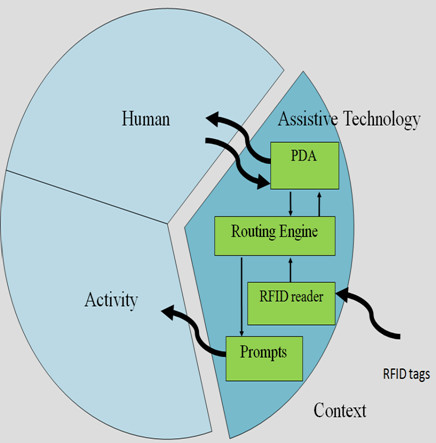
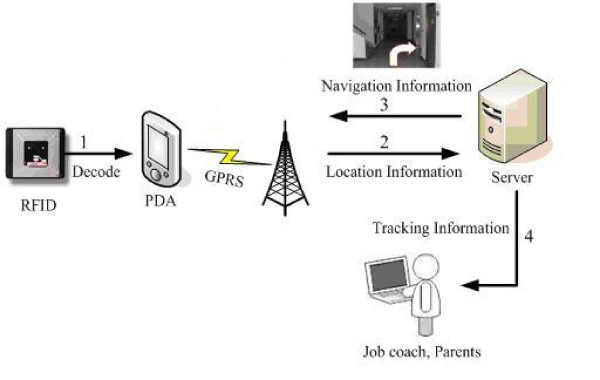
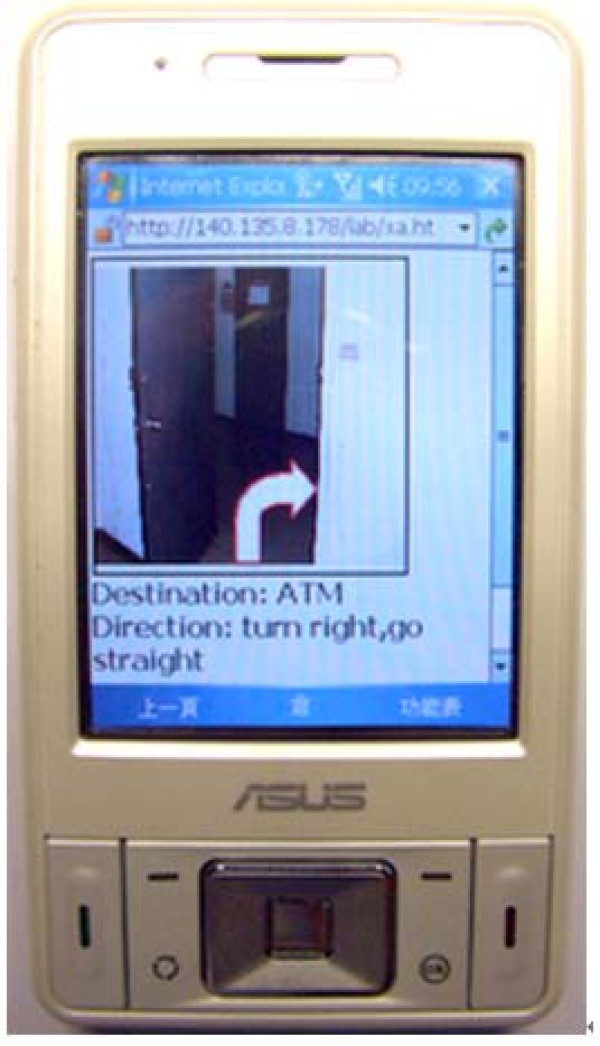
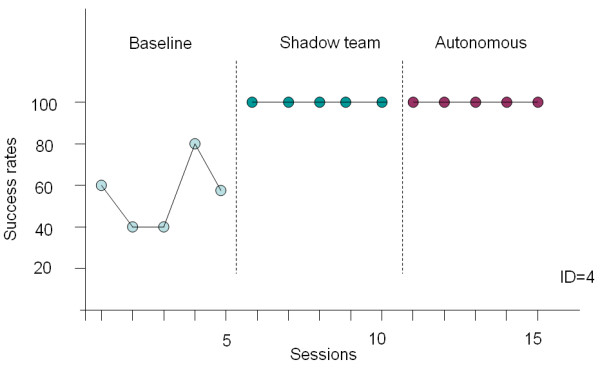
BACKGROUND: A challenge to individuals with cognitive impairments in wayfinding is how to remain oriented, recall routines, and travel in unfamiliar areas in a way relying on limited cognitive capacity. While people without disabilities often use maps or written directions as navigation tools or for remaining oriented, this cognitively-impaired population is very sensitive to issues of abstraction (e.g. icons on maps or signage) and presents the designer with a challenge to tailor navigation information specific to each user and context. METHODS: This paper describes an approach to providing distributed cognition support of travel guidance for persons with cognitive disabilities. A solution is proposed based on passive near-field RFID tags and scanning PDAs. A prototype is built and tested in field experiments with real subjects. The unique strength of the system is the ability to provide unique-to-the-user prompts that are triggered by context. The key to the approach is to spread the context awareness across the system, with the context being flagged by the RFID tags and the appropriate response being evoked by displaying the appropriate path guidance images indexed by the intersection of specific end-user and context ID embedded in RFID tags. RESULTS: We found that passive RFIDs generally served as good context for triggering navigation prompts, although individual differences in effectiveness varied. The results of controlled experiments provided more evidence with regard to applicabilities of the proposed autonomous indoor wayfinding method. CONCLUSIONS: Our findings suggest that the ability to adapt indoor wayfinding devices for appropriate timing of directions and standing orientation will be particularly important.
Overview
The claims and statistics of this paper haven’t been checked yet.
Run the check — free, no account needed. It reads the open-access text and checks the sources it cites.
Integrity signals
Registry
Cites
Statistics
Figures
Verification
Claims the paper makes
The claims and statistics of this paper haven’t been checked yet.
Run the check — free, no account needed. It reads the open-access text and checks the sources it cites.
Claims other papers make about this one
Each is checked against this paper’s own text: does it say what the citing paper says it does?
The cited source doesn’t support the claim as written.
In the citing paper
“Both studies found that the participants with MCI/D managed wayfinding in approximately half of the attempts.”
From Usability and acceptability of technology for community-dwelling older adults with mild cognitive impairment and dementia: a systematic literature review (2018) · cites this paper as [35]
Checked by a reasoning model — may be wrong.
Experimental — accuracy not yet measuredThe cited source says what the claim attributes to it.
In the citing paper
“Domain 1 presents six papers on technology either for locating persons32–34 or for supporting navigation,35,36 or on how to involve users in the product design of devices for location and navigation.37”
From Usability and acceptability of technology for community-dwelling older adults with mild cognitive impairment and dementia: a systematic literature review (2018) · cites this paper as [35]
The cited source says what the claim attributes to it.
In the citing paper
“Two other studies explored navigation technologies for indoor wayfinding.35,36”
From Usability and acceptability of technology for community-dwelling older adults with mild cognitive impairment and dementia: a systematic literature review (2018) · cites this paper as [35]
Self-check
Percentages, sums and reported differences re-computed from the paper’s own numbers.
The self-check needs the paper’s full text.
Citations
The citation lists haven’t been fetched yet
References 22 · Cited by 43
Research works printed but not linked: 23
- The Aphasia Institute: What is Aphasia? [Online].2005. [ http://www.aphasia.ca/ ]
- Wu M, Baecker R, Richards B: Richards Participatory Design of an Orientation Aid for Amnesics, CHI. Portland, Oregon, USA; 2006:511-520.
- Dutton GN: Cognitive vision, its disorders and differential diagnosis in adults and children: Knowing where and what things are. Eye. 2003, 17: 289-304.
- Sohlberg M, Fickas S, Hung PF, Fortier A: A comparison of four prompt modes for route finding for community travelers with severe cognitive impairments. Brain Injury 2007,21(5):531-538. 10.1080/02699050701311000 · DOI
- Chang YJ, Wang TY: Comparing Picture and Video Prompting in Autonomous Indoor Wayfinding for Individuals with Cognitive Impairments. Personal and Ubiquitous Computing accepted · DOI
- Wahlster W, Baus J, Kray C, Krüger A: A Resource-Adaptive Mobile Navigation System. Proceedings of the International Workshop on Information Presentation and Natural Multimodal Dialogue (IPNMD-2001), Verona, Italy 5-9.
- Kray C: Situational Context and Navigational Assistance. Poster of Spatial Cognition, Tutzing, Starnberger, Germany 2002.
- Baus J, Wasinger R, Aslan I, Krüger A, Maier A, Schwartz A: Auditory perceptible landmarks in mobile navigation, Proceedings of the 12th international conference on Intelligent user interfaces. Honolulu, Hawaii, USA; 2007:302-304.
- Goodman J, Brewster SA, Gray P: How can we best use landmarks to support older people in navigation? Behavior and Information Technology 2005, 24: 3-20. 10.1080/01449290512331319021 · DOI
- Patterson J, Liao L, Gajos K, Collier M, Livic N, Olson K, Wang S, Fox D, Kautz H: Opportunity Knocks: a System to Provide Cognitive Assistance with Transportation Services. Proceedings of The Sixth International Conference on Ubiquitous Computing (UBICOMP) 2004.
- Liao L, Fox D, Kautz H: Learning and inferring transportation routines. Proc of the 19th Natl Conf on AI 2004.
- Carmien S, Dawe M, Fischer G, Gorman A, Kintsch A, Sullivan JF: Socio-technical environments supporting people with cognitive disabilities using public transportation. ACM Trans on Computer-Human Interaction 2005,12(2):233-262. 10.1145/1067860.1067865 · DOI
- Liu L, Hile H, Kautz H, Borriello G, Brown PA, Harniss M, Johnson K: Indoor Wayfinding: Developing a Functional Interface for Individuals with Cognitive Impairments. Proceedings of Computers & Accessibility, ASSETS 2006, 95-102.
- Cook AM, Polgar JM, Hussey SM: Assistive Technology Principles and Practice. 3rd edition. Mosby-Elsevier; 2008.
- Allen G: Spatial abilities, cognitive maps, and wayfinding: bases for individual differences in spatial cognition and behavior. In Wayfinding behavior: cognitive mapping and other spatial processes. Edited by: Golledge R. Johns Hopkins University Press, Baltimore; 1999:46-80.
- Passini R: Wayfinding design: logic, application and some thoughts on universality. Design Studies 1996, 17: 319-331. 10.1016/0142-694X(96)00001-4 · DOI
- Liu H, Darabi H, Banerjee P, Liu J: Survey of Wireless Indoor Positioning Techniques and Systems. IEEE Trans. Systems, Man, Cybernetics, Part C 2007,37(6):1067-1080. 10.1109/TSMCC.2007.905750 · DOI
- Gu Y, Lo A, Niemegeers I: A survey of indoor positioning systems for wireless personal networks. IEEE Communications Surveys and Tutorials 2009,11(1):13-32. 10.1109/SURV.2009.090103 · DOI
- Sheng QZ, Li X, Zeadally S: Enabling Next-Generation RFID Applications: Solutions and Challenges. IEEE Computer 2008,41(9):21-28. · DOI
- Dijkstra E: A Note on Two Problems in Connexion with Graphs. Numerische Mathematik 1959, 1: 269-271. 10.1007/BF01386390 · DOI
- Horner RD, Baer DM: Multiple-probe technique: A variation of the multiple baseline. Journal of Applied Behavior Analysis 1978, 11: 189-196. 10.1901/jaba.1978.11-189 · DOI
- Barlow DH, Hersen M: Single case experimental designs: Strategies for studying behavior change. New York: Pergamon Press; 1984.
- Wang HW, Chiang SS, Wu JH, Lee RG: Design and Evaluation of Active RFID Positioning System for Home Healthcare Service, Biomedical Engineering: Applications, Basis and Communications. 2007,19(2):105-115.
Metadata
- Authors
- Chang, Y.-J., Peng, S.-M., Wang, T.-Y., Chen, S.-F., Chen, Y.-R., & Chen, H.-C.
- Affiliations
- Chung Yuan Christian University (TW)
- National Yang Ming University (TW)
- Taipei City Hospital (TW)
- Corresponding author
- Chang, Yao-Jen
- Venue
- Journal of NeuroEngineering and Rehabilitation
- Published
- 2010-09-14
- Volume
- 7
- Issue
- 1
- Pages
- 45-45
- ISSN
- 1743-0003 (ISSN-L)
- PMC
- PMC2946295
- OpenAlex
- W2145271582
- Cited by
- 43
- References
- 22
- Citations by year
- 2026: 2 · 2025: 4 · 2023: 3 · 2022: 2 · 2019: 5 · 2018: 1 · 2017: 2 · 2016: 2 · 2015: 2 · 2014: 3 · 2013: 7 · 2012: 2
- FWCI
- 18.12
- Type
- journal article
- Language
- en
- Open access
- gold
- doi.org
- Licence
- Locations
- Journal of NeuroEngineering and Rehabilitation (publishedVersion, cc-by)
- PubMed Central (publishedVersion, cc-by)
- PubMed (publishedVersion)
- DOAJ (DOAJ: Directory of Open Access Journals) (submittedVersion, cc-by-sa)
- Funders
- National Science Council
- Topics
- Health Sciences › Health Professions › Occupational Therapy › Assistive Technology in Communication and Mobility
- Social Sciences › Psychology › Experimental and Cognitive Psychology › Spatial Cognition and Navigation
- Physical Sciences › Engineering › Electrical and Electronic Engineering › Indoor and Outdoor Localization Technologies
- Keywords
- indoor wayfinding, cognitive impairment, distributed cognition, context-aware navigation, passive RFID tags, personal digital assistants, spatial orientation, assistive technology
- MeSH terms
- Adult, Aged, Cognition Disorders, Cues, Female, Humans, Male, Memory Disorders, Middle Aged, Orientation, Self-Help Devices, User-Computer Interface, Wheelchairs, Computers, Handheld, Young Adult, Radio Frequency Identification Device
About these checks
Registry, retraction, Cites and statistics results are computed, not judged, with one exception: a printed reference that no index lists is read once by a model before it counts as a citation error. Claims are extracted by a model and kept only when their quote appears verbatim in the text; each cited source is then checked, with a model’s help, for whether it says what the claim relies on. Those verdicts can be wrong — read the claim’s quote and the cited source before relying on one.
Statistics and arithmetic are recomputed, not judged.
Confidence bands are shown only for fields calibrated on our annotated test set. None is calibrated yet, so no band is shown.
What counts as a claim ›How we measure confidence ›How we check this ›
Are you an author, or do you see a problem with this page? Request a review
How to cite
Cite CoChat for the checks on this page, and the paper for its own findings.
- This page
- CoChat. (2026). Citation check: Autonomous indoor wayfinding for individuals with cognitive impairments. https://app.cochat.ai/papers/10.1186/1743-0003-7-45
- The paper
- Chang, Y.-J., Peng, S.-M., Wang, T.-Y., Chen, S.-F., Chen, Y.-R., & Chen, H.-C. (2010). Autonomous indoor wayfinding for individuals with cognitive impairments. Journal of NeuroEngineering and Rehabilitation. https://doi.org/10.1186/1743-0003-7-45
