

The DOI matches its Crossref record; 28 of the 28 references it cites were found in a registry or an index.
A prospective evaluation of the safety and efficacy of the TAXUS Element paclitaxel-eluting coronary stent system for the treatment of de novo coronary artery lesions: Design and statistical methods of the PERSEUS clinical program
Open accessAbstract
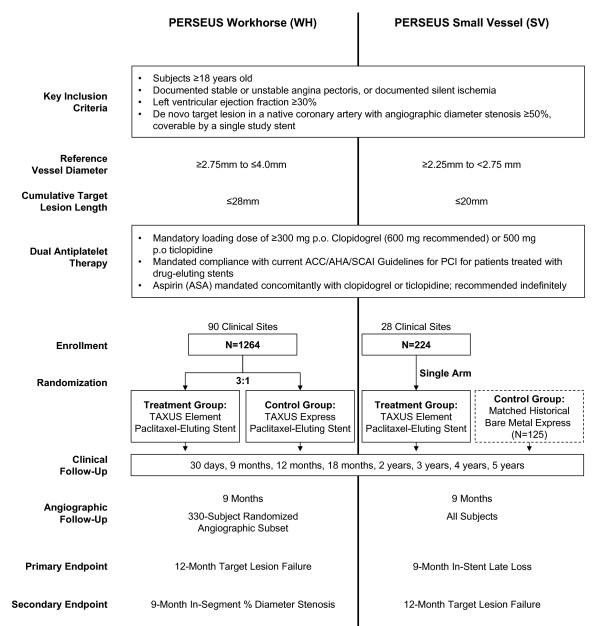
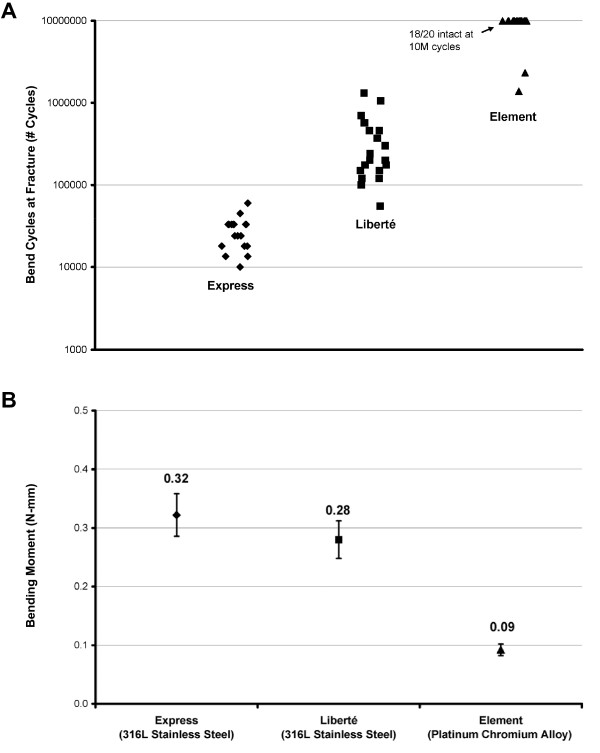
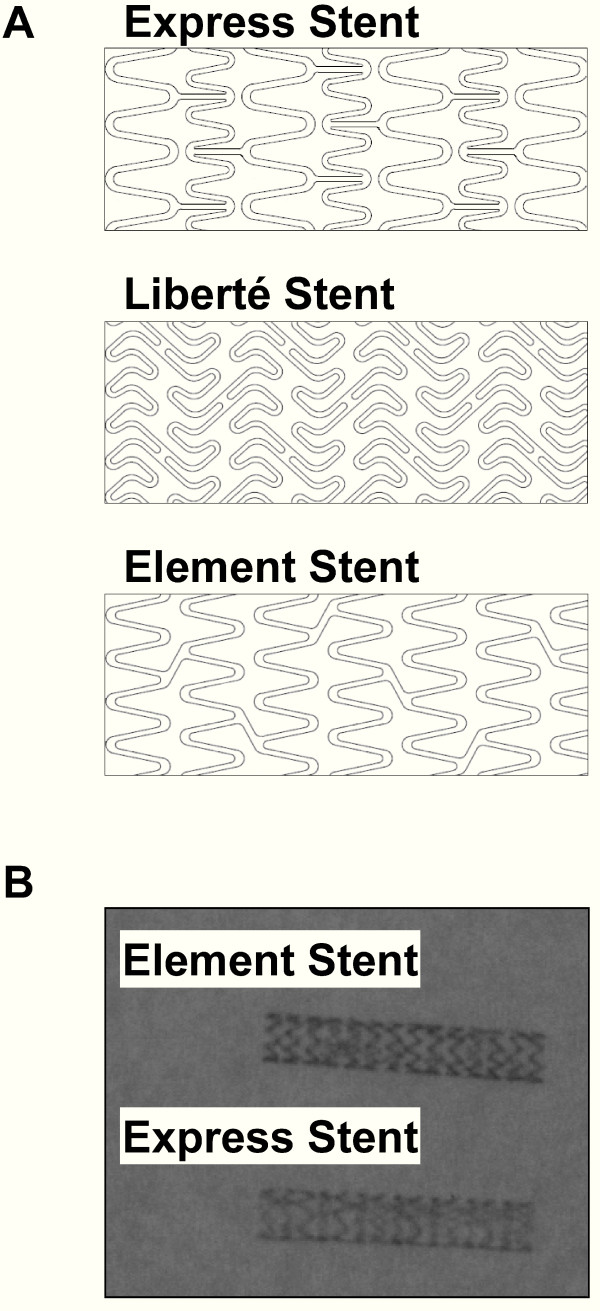
Background: Paclitaxel-eluting stents decrease angiographic and clinical restenosis following percutaneous coronary intervention compared to bare metal stents. TAXUS Element is a third-generation paclitaxel-eluting stent which incorporates a novel, thinner-strut, platinum-enriched metal alloy platform. The stent is intended to have enhanced radiopacity and improved deliverability compared to other paclitaxel-eluting stents. The safety and efficacy of the TAXUS Element stent are being evaluated in the pivotal PERSEUS clinical trials. Methods/Design: The PERSEUS trials include two parallel studies of the TAXUS Element stent in single, de novo coronary atherosclerotic lesions. The PERSEUS Workhorse study is a prospective, randomized (3:1), single-blind, non-inferiority trial in subjects with lesion length ≤28 mm and vessel diameter ≥2.75 mm to ≤4.0 mm which compares TAXUS Element to the TAXUS Express 2 paclitaxel-eluting stent system. The Workhorse study employs a novel Bayesian statistical approach that uses prior information to limit the number of study subjects exposed to the investigational device and thus provide a safer and more efficient analysis of the TAXUS Element stent. PERSEUS Small Vessel is a prospective, single-arm, superiority trial in subjects with lesion length ≤20 mm and vessel diameter ≥2.25 mm to <2.75 mm that compares TAXUS Element with a matched historical bare metal Express stent control. Discussion: The TAXUS PERSEUS clinical trial program uses a novel statistical approach to evaluate whether design and metal alloy iterations in the TAXUS Element stent platform provide comparable safety and improved procedural performance compared to the previous generation Express stent. PERSEUS trial enrollment is complete and primary endpoint data are expected in 2010. PERSEUS Workhorse and Small Vessel are registered at http://www.clinicaltrials.gov, identification numbers NCT00484315 and NCT00489541.
Overview
The claims and statistics of this paper haven’t been checked yet.
Run the check — free, no account needed. It reads the open-access text and checks the sources it cites.
Integrity signals
Registry
Cites
Statistics
Figures
Verification
Claims the paper makes
The claims and statistics of this paper haven’t been checked yet.
Run the check — free, no account needed. It reads the open-access text and checks the sources it cites.
Claims other papers make about this one
Each is checked against this paper’s own text: does it say what the citing paper says it does?
In the citing paper
“Furthermore, heterogeneity of treatment effects might remain undetected in a traditional RCT design.78”
From Development, evaluation and implementation of a digital behavioural health treatment for chronic pain: study protocol of the multiphase DAHLIA project (2022) · cites this paper as [78]
Self-check
Percentages, sums and reported differences re-computed from the paper’s own numbers.
The self-check needs the paper’s full text.
Citations
Cites
Clinical End Points in Coronary Stent Trials
Cutlip, D. E., Windecker, S., Mehran, R., Boam, A. B., Cohen, D. J., van Es, G., Steg, P. G., Morel, M., Mauri, L., Vranckx, P., et al. (2007) · Circulation · doi:10.1161/circulationaha.106.685313 · Cited by 5,501
A Polymer-Based, Paclitaxel-Eluting Stent in Patients with Coronary Artery Disease
Stone, G. W., Ellis, S. G., Cox, D. A., Hermiller, J. B., O’Shaughnessy, C. D., Mann, J. T., Turco, M. A., Caputo, R. P., Bergin, P. J., Greenberg, J. D., et al. (2004) · New England Journal of Medicine · doi:10.1056/nejmoa032441 · Cited by 2,748
ACC/AHA/SCAI 2005 Guideline Update for Percutaneous Coronary Intervention—Summary Article
Smith, S. C., Feldman, T. E., Hirshfeld, J. W., Jacobs, A. K., Kern, M. J., King, S. B., Morrison, D. A., O’Neill, W. W., Schaff, H. V., Whitlow, P. L., et al. (2006) · Circulation · doi:10.1161/circulationaha.105.170815 · Cited by 2,213
Ryan, T. J., Faxon, D. P., Gunnar, R. M., Kennedy, J. W., King, S. B., Loop, F. D., Peterson, K. L., Reeves, T. J., Williams, D. O., & Winters, W. L. (1988) · Circulation · doi:10.1161/01.cir.78.2.486 · Cited by 2,123
Safety and Efficacy of Sirolimus- and Paclitaxel-Eluting Coronary Stents
Stone, G. W., Moses, J. W., Ellis, S. G., Schöfer, J., Dawkins, K. D., Morice, M., Colombo, A., Schampaert, É., Grube, E., Kirtane, A. J., et al. (2007) · New England Journal of Medicine · doi:10.1056/nejmoa067193 · Cited by 1,631
Self-citationEllis, S., Vandormael, M. G., Cowley, M. J., DiSciascio, G., Deligönül, U., Topol, E. J., & Bulle, T. M. (1990) · Circulation · doi:10.1161/01.cir.82.4.1193 · Cited by 1,342
2007 Focused Update of the ACC/AHA/SCAI 2005 Guideline Update for Percutaneous Coronary Intervention
King, S. B., Smith, S. C., Hirshfeld, J. W., Jacobs, A. K., Morrison, D. A., Williams, D. O., Smith, S. C., Feldman, T. E., Hirshfeld, J. W., Jacobs, A. K., et al. (2007) · Circulation · doi:10.1161/circulationaha.107.188208 · Cited by 1,008
Properties and Selection: Irons, Steels, and High-Performance Alloys
(1990) · ASM International eBooks · doi:10.31399/asm.hb.v01.9781627081610 · Cited by 965
Intracoronary Stenting and Angiographic Results
Kastrati, A., Mehilli, J., Dirschinger, J., Dotzer, F., Schühlen, H., Neumann, F., Fleckenstein, M., Pfafferott, C., Seyfarth, M., & Schömig, A. (2001) · Circulation · doi:10.1161/01.cir.103.23.2816 · Cited by 939
Stone, G. W., Ellis, S. G., Cannon, L., Mann, J. T., Greenberg, J. D., Spriggs, D. J., O’Shaughnessy, C. D., DeMaio, S. J., Hall, P. A. X., Popma, J. J., et al. (2005) · JAMA · doi:10.1001/jama.294.10.1215 · Cited by 765
Self-citation
Research works printed but not linked: 1
- Turco M, Grube E: Taxus Clinical Update-Experts discuss the current role of the Taxus stent. Cardiac Intervent Today. 2008, September: 34-39.
Cited by
Sorted by citations
Lenferink, A., Brusse-Keizer, M., van der Valk, P. D., Frith, P. A., Zwerink, M., Monninkhof, E. M., van der Palen, J., & Effing, T. W. (2017) · Cochrane Database of Systematic Reviews · doi:10.1002/14651858.cd011682.pub2 · Cited by 328
Chen, Y.-J., Lin, H., Zhang, X., Huang, W., Shi, L., & Wang, D. (2017) · 3D Printing in Medicine · doi:10.1186/s41205-017-0019-y · Cited by 198
Verhoef, T. I., Redekop, K., Daly, A. K., van Schie, R. M., de Boer, A., & der Zee, A. H. M. (2013) · British Journal of Clinical Pharmacology · doi:10.1111/bcp.12220 · Cited by 165
He, J., Morales, D. R., & Guthrie, B. (2020) · Trials · doi:10.1186/s13063-020-4139-0 · Cited by 147
Pharmacogenetics and Cardiovascular Disease—Implications for Personalized Medicine
Johnson, J. A., & Cavallari, L. H. (2013) · Pharmacological Reviews · doi:10.1124/pr.112.007252 · Cited by 141
Metadata
- Authors
- Allocco, D. J., Cannon, L. A., Britt, A., Heil, J. E., Nersesov, A., Wehrenberg, S., Dawkins, K. D., & Kereiakes, D. J.
- Affiliations
- Boston Scientific (United States) (US)
- Cardiac And Vascular Research Center Of Northern Michigan (US)
- Christ Hospital (US)
- Corresponding author
- Kereiakes, Dean J
- Venue
- Trials
- Published
- 2010-01-07
- Volume
- 11
- Issue
- 1
- Pages
- 1-1
- ISSN
- 1745-6215 (ISSN-L)
- PMC
- PMC2826324
- OpenAlex
- W2139043704
- Cited by
- 159
- References
- 28
- Citations by year
- 2026: 2 · 2025: 4 · 2024: 6 · 2022: 8 · 2021: 34 · 2020: 11 · 2019: 7 · 2018: 7 · 2017: 12 · 2016: 10 · 2015: 10 · 2014: 19 · 2013: 7 · 2012: 8
- FWCI
- 9.77
- Type
- journal article
- Language
- en
- Open access
- gold
- doi.org
- Licence
- Locations
- Trials (publishedVersion, cc-by)
- PubMed Central (publishedVersion, cc-by)
- PubMed (publishedVersion)
- DOAJ (DOAJ: Directory of Open Access Journals) (submittedVersion, cc-by-sa)
- Funders
- University of Connecticut
- Boston Scientific Corporation
- Cordis
- Topics
- Health Sciences › Medicine › Cardiology and Cardiovascular Medicine › Coronary Interventions and Diagnostics
- Health Sciences › Medicine › Cardiology and Cardiovascular Medicine › Antiplatelet Therapy and Cardiovascular Diseases
- Health Sciences › Medicine › Cardiology and Cardiovascular Medicine › Acute Myocardial Infarction Research
- Keywords
- paclitaxel-eluting stents, de novo coronary lesions, percutaneous coronary intervention, restenosis
- MeSH terms
- Australia, Bayes Theorem, Cardiovascular Agents, Chromium Alloys, Coronary Artery Disease, Data Interpretation, Statistical, Humans, New Zealand, Platelet Aggregation Inhibitors, Platinum, Prospective Studies, Prosthesis Design, Research Design, Severity of Illness Index, Singapore, Time Factors, United States, Stents, Angioplasty, Balloon, Coronary, Single-Blind Method, Treatment Outcome, Coronary Angiography, Paclitaxel, Drug-Eluting Stents
About these checks
Registry, retraction, Cites and statistics results are computed, not judged, with one exception: a printed reference that no index lists is read once by a model before it counts as a citation error. Claims are extracted by a model and kept only when their quote appears verbatim in the text; each cited source is then checked, with a model’s help, for whether it says what the claim relies on. Those verdicts can be wrong — read the claim’s quote and the cited source before relying on one.
Statistics and arithmetic are recomputed, not judged.
Confidence bands are shown only for fields calibrated on our annotated test set. None is calibrated yet, so no band is shown.
What counts as a claim ›How we measure confidence ›How we check this ›
Are you an author, or do you see a problem with this page? Request a review
