

Application and investigation of a bound for outcome reporting bias
Open accessThe DOI matches its Crossref record; 13 of the 13 references it cites were found in a registry or an index.
Abstract
BACKGROUND: Direct empirical evidence for the existence of outcome reporting bias is accumulating and this source of bias is recognised as a potential threat to the validity of meta-analysis of randomised clinical trials. METHODS: A method for calculating the maximum bias in a meta-analysis due to publication bias is adapted for the setting where within-study selective non-reporting of outcomes is suspected, and compared to the alternative approach of missing data imputation. The properties of both methods are investigated in realistic small sample situations. RESULTS: The results suggest that the adapted Copas and Jackson approach is the preferred method for reviewers to apply as an initial assessment of robustness to within-study selective non-reporting. CONCLUSION: The Copas and Jackson approach is a useful method for systematic reviewers to apply to assess robustness to outcome reporting bias.
Overview
The claims and statistics of this paper haven’t been checked yet.
Free: it reads the open-access text and checks the first 5 claims that cite a source we can check. Create a free account to check every claim.
Integrity signals
Registry
Cites
Statistics
Figures
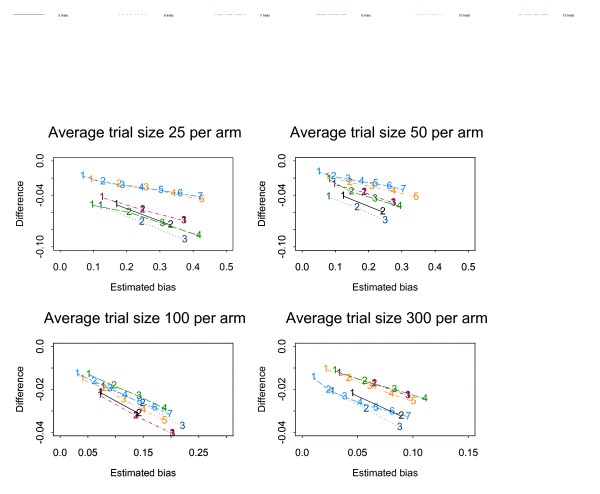
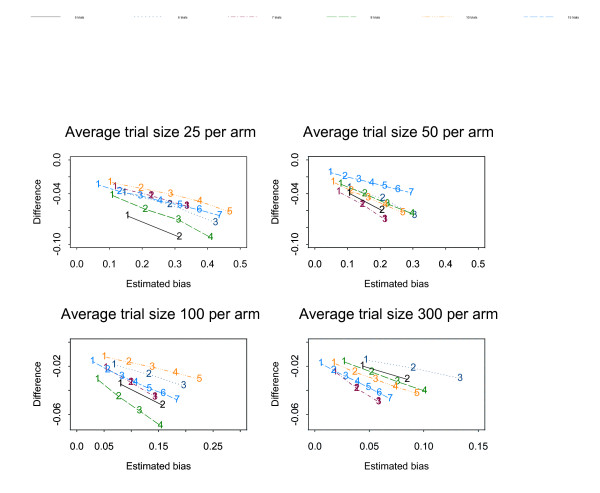
Verification
Claims the paper makes
The claims and statistics of this paper haven’t been checked yet.
Free: it reads the open-access text and checks the first 5 claims that cite a source we can check. Create a free account to check every claim.
Claims other papers make about this one
Each is checked against this paper’s own text: does it say what the citing paper says it does?
The source backs part of the claim, not all of it — or backs it for a different population, condition or comparison.
In the citing paper
“the available evidence suggests that no single method outperforms others in all scenarios”
From Investigating and dealing with publication bias and other reporting biases in meta-analyses of health research: a review (2021) · cites this paper as [73]
Experimental — accuracy not yet measuredThe source backs part of the claim, not all of it — or backs it for a different population, condition or comparison.
In the citing paper
“there is a danger that uncritical application can lead to inappropriate conclusions being drawn 68,73,74”
From Investigating and dealing with publication bias and other reporting biases in meta-analyses of health research: a review (2021) · cites this paper as [73]
Experimental — accuracy not yet measured
Self-check
Percentages, sums and reported differences re-computed from the paper’s own numbers.
The self-check needs the paper’s full text.
Citations
Cites
Comparison of two methods to detect publication bias in meta-analysis.
Peters, J. L. (2006) · JAMA · doi:10.1001/jama.295.6.676 · Cited by 2,278 · cited 1×
“Tests for asymmetry in a funnel plot, including that of Egger, have low power in typical meta-analyses involving 5–10 trials [11].”
MethodChan, A.-W., Hróbjartsson, A., Haahr, M. T., Gøtzsche, P. C., & Altman, D. G. (2004) · JAMA · doi:10.1001/jama.291.20.2457 · Cited by 1,845
Publication bias and clinical trials
Dickersin, K., Chan, S., Chalmersx, T. C., Sacks, H. S., & Smith, H. (1987) · Controlled Clinical Trials · doi:10.1016/0197-2456(87)90155-3 · Cited by 715
Terrin, N., Schmid, C. H., & Lau, J. (2005) · Journal of Clinical Epidemiology · doi:10.1016/j.jclinepi.2005.01.006 · Cited by 492 · cited 1×
“Researchers often rely on the shape of funnel plots to detect publication bias however empirical studies suggest that this may be misleading [10].”
BackgroundIoannidis, J. P. A., & Trikalinos, T. A. (2005) · Journal of Clinical Epidemiology · doi:10.1016/j.jclinepi.2004.10.019 · Cited by 325 · cited 1×
“Understanding selection bias is made all the more difficult when one recognises that the process may vary across different fields, for example mechanisms operating in genetic epidemiology may differ from clinical trials [ 9 ].”
BackgroundModelling publication bias in meta-analysis: a review
Sutton, A. J., Song, F., Gilbody, S. M., & Abrams, K. R. (2000) · Statistical Methods in Medical Research · doi:10.1177/096228020000900503 · Cited by 288
Bias in Meta-Analysis Due to Outcome Variable Selection Within Studies
Hutton, J. L., & Williamson, P. R. (2000) · Journal of the Royal Statistical Society Series C: Applied Statistics · doi:10.1111/1467-9876.00197 · Cited by 194 · cited 1×
“Within-study selective reporting, or outcome reporting bias, has been defined as 'the selection of a subset of the original variables recorded for inclusion in publication of trials' [4].”
BackgroundSelf-citationOutcome selection bias in meta-analysis
Williamson, P. R., Gamble, C., Altman, D. G., & Hutton, J. L. (2005) · Statistical Methods in Medical Research · doi:10.1191/0962280205sm415oa · Cited by 188
Self-citationIdentification and impact of outcome selection bias in meta‐analysis
Williamson, P. R., & Gamble, C. (2005) · Statistics in Medicine · doi:10.1002/sim.2025 · Cited by 132 · cited 8×
“Constrained data were imputed for two reviews as follows [8].”
BackgroundMethodInfluentialSelf-citationHahn, S., Williamson, P. R., & Hutton, J. L. (2002) · Journal of Evaluation in Clinical Practice · doi:10.1046/j.1365-2753.2002.00314.x · Cited by 97
Self-citation
Cited by
Shamseer, L., Moher, D., Clarke, M., Ghersi, D., Liberati, A., Petticrew, M., Shekelle, P., Stewart, L. A., & the PRISMA-P Group (2015) · BMJ · doi:10.1136/bmj.g7647 · Cited by 13,120
Systematic Review of the Empirical Evidence of Study Publication Bias and Outcome Reporting Bias
Dwan, K., Altman, D. G., Arnaiz, J. A., Bloom, J., Chan, A.-W., Cronin, E., Decullier, E., Easterbrook, P. J., Von Elm, E., Gamble, C., et al. (2008) · PLoS ONE · doi:10.1371/journal.pone.0003081 · Cited by 1,546
Self-citationKirkham, J. J., Dwan, K. M., Altman, D. G., Gamble, C., Dodd, S., Smyth, R., & Williamson, P. R. (2010) · BMJ · doi:10.1136/bmj.c365 · Cited by 1,133
“The amount of missing data per review was calculated, firstly on the basis of trials that omitted data for any reason and secondly only using those trials where data omission was suspected on the basis of the results (that is, outcome reporting bias was suspected). The maximum bias bound approach was used in a sensiti…”
MethodSelf-citationDwan, K., Gamble, C., Williamson, P. R., Kirkham, J. J., & the Reporting Bias Group (2013) · PLoS ONE · doi:10.1371/journal.pone.0066844 · Cited by 1,127
Self-citationPage, M. J., Sterne, J. A. C., Higgins, J. P. T., & Egger, M. (2021) · Research Synthesis Methods · doi:10.1002/jrsm.1468 · Cited by 294
Metadata
- Authors
- Williamson, P. R., & Gamble, C.
- Affiliations
- University of Liverpool (GB)
- Corresponding author
- Williamson, Paula R
- Venue
- Trials
- Published
- 2007-03-06
- Volume
- 8
- Issue
- 1
- Pages
- 9-9
- ISSN
- 1745-6215 (ISSN-L)
- PMC
- PMC1821040
- OpenAlex
- W2057509710
- Cited by
- 26
- References
- 12
- Citations by year
- 2022: 2 · 2020: 1 · 2018: 1 · 2017: 3 · 2016: 4 · 2015: 1 · 2014: 1 · 2013: 6 · 2012: 1
- FWCI
- 1.48
- Type
- journal article
- Language
- en
- Open access
- gold
- doi.org
- Licence
- Locations
- Trials (publishedVersion, cc-by)
- Europe PMC (PubMed Central) (publishedVersion, cc-by)
- PubMed Central (publishedVersion, cc-by)
- PubMed (publishedVersion)
- DOAJ (DOAJ: Directory of Open Access Journals) (submittedVersion, cc-by-sa)
- Topics
- Social Sciences › Decision Sciences › Statistics, Probability and Uncertainty › Meta-analysis and systematic reviews
- Physical Sciences › Mathematics › Statistics and Probability › Statistical Methods in Clinical Trials
- Physical Sciences › Mathematics › Statistics and Probability › Statistical Methods in Epidemiology
- Keywords
- selective reporting, publication bias, missing data imputation, randomized controlled trials, systematic reviews
About these checks
Registry, retraction, Cites and statistics results are computed, not judged, with one exception: a printed reference that no index lists is read once by a model before it counts as a citation error. Claims are extracted by a model and kept only when their quote appears verbatim in the text; each cited source is then checked, with a model’s help, for whether it says what the claim relies on. Those verdicts can be wrong — read the claim’s quote and the cited source before relying on one.
Statistics and arithmetic are recomputed, not judged.
Confidence bands are shown only for fields calibrated on our annotated test set. None is calibrated yet, so no band is shown.
What counts as a claim ›How we measure confidence ›How we check this ›
Are you an author, or do you see a problem with this page? Request a review
How to cite
Cite CoChat for the checks on this page, and the paper for its own findings.
- This page
- CoChat. (2026). Citation check: Application and investigation of a bound for outcome reporting bias. https://app.cochat.ai/papers/10.1186/1745-6215-8-9
- The paper
- Williamson, P. R., & Gamble, C. (2007). Application and investigation of a bound for outcome reporting bias. Trials. https://doi.org/10.1186/1745-6215-8-9
Data sources
Bibliographic data: Semantic Scholar, OpenAlex, Crossref.
Contains information from the Semantic Scholar Academic Graph Datasets, made available under the ODC Attribution License (ODC-BY 1.0).
Semantic Scholar’s data is described in: Kinney, R., et al. (2023). The Semantic Scholar Open Data Platform. arXiv:2301.10140.
