

High initiation and long duration of breastfeeding despite absence of early skin-to-skin contact in Karen refugees on the Thai-Myanmar border: a mixed methods study
Open accessThe DOI matches its Crossref record; 43 of the 43 references it cites were found in a registry or an index.
Abstract
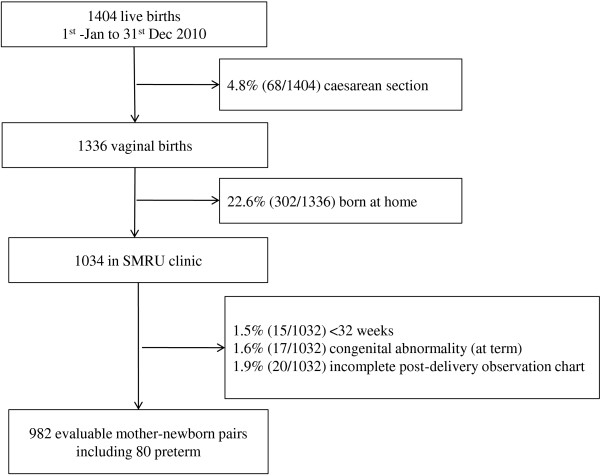
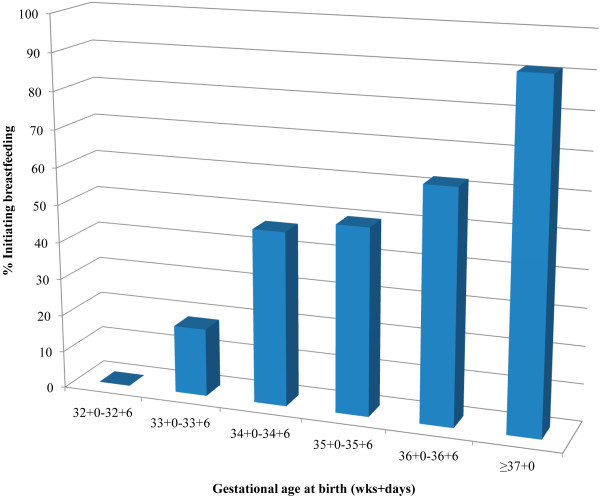
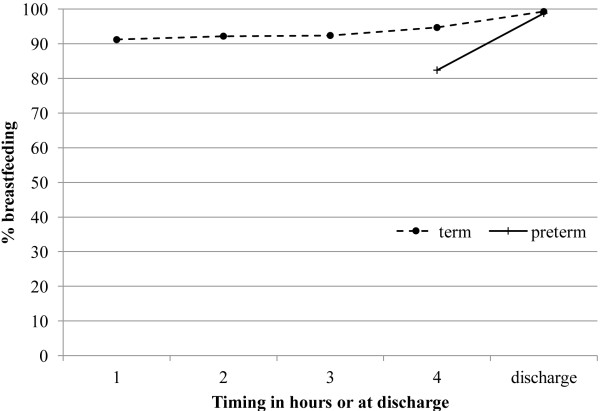
BACKGROUND: Early skin-to-skin contact (SSC) after birth is recommended as part of the United Nations Children's Fund (UNICEF) baby friendly health initiative to promote optimum breastfeeding. This paper reports rates of breastfeeding initiation and duration in a low resource environment, where early SSC is not practised, and explores views of pregnant women and midwives surrounding breastfeeding and swaddling. METHODS: Data from records from a single hospital on the Thai-Myanmar border where refugee women gave birth during a one-year period (2010) were used to determine breastfeeding initiation rates and the time of the first breastfeed, and duration of breastfeeding of the previous alive child in multigravidae. Focus group discussions (FGD) were conducted to obtain information from pregnant women attending antenatal care about their intended or previous duration of breastfeeding and views on breastfeeding. Interviews with local midwives explored reasons for high rates of breastfeeding in this setting and the practice of newborn swaddling. RESULTS: Of 1404 live births in 2010 in Maela refugee camp there were 982 evaluable mother-newborn pairs, including 80 infants born before 37 weeks gestation. Initiation of breastfeeding within the first hour after birth and exclusive breastfeeding at discharge in term mother-newborn pairs was 91.2% (823/902) and 99.3% (896/902); and before 37 weeks gestation, 48.8% (39/80) and 98.8% (79/80). Reported duration of previous breastfeeding was 19 (range 2 to 72) months.During FGD all primigravidae (n = 17) intended to breastfeed and all multigravidae (n = 33) had previously breastfed; expected or previous duration of feeding was for more than one year or longer. The major theme identified during FGD was breastfeeding is "good". Women stated their intention to breastfeed with certainty. This certainty was echoed during the interviews with midwifery staff. SSC requires a delay in early swaddling that in Karen people, with animistic beliefs, could risk loss of the spirit of the newborn or attract malevolent spirits. CONCLUSIONS: In a population with a strong culture of breastfeeding and robust breastfeeding practices, high rates of initiation and duration of breastfeeding were found despite a lack of early skin-to-skin contact. Local preferences, traditions and practices that protect, support and maintain high rates of breastfeeding should be promoted.
Overview
The claims and statistics of this paper haven’t been checked yet.
Free: it reads the open-access text and checks the first 5 claims that cite a source we can check. Create a free account to check every claim.
Integrity signals
Registry
Cites
Statistics
Figures
Verification
Claims the paper makes
The claims and statistics of this paper haven’t been checked yet.
Free: it reads the open-access text and checks the first 5 claims that cite a source we can check. Create a free account to check every claim.
Claims other papers make about this one
Each is checked against this paper’s own text: does it say what the citing paper says it does?
The cited source says what the claim attributes to it.
In the citing paper
“the concept of skin-to-skin contact is not well perceived by the population who has a strong traditional belief in swaddling the newborn immediately after birth (22).”
In the citing paper
“FGDs have been used in the Thai-Myanmar border population for many years [44] and are a culturally-accepted method particularly suited to low-literacy populations [31,32].”
From Pregnant migrant and refugee women’s perceptions of mental illness on the Thai-Myanmar border: a qualitative study (2015) · cites this paper as [31]
Self-check
Percentages, sums and reported differences re-computed from the paper’s own numbers.
The self-check needs the paper’s full text.
Citations
Cites
Content Analysis: An Introduction to its Methodology.
Shelley, M., & Krippendorff, K. (1984) · Journal of the American Statistical Association · doi:10.2307/2288384 · Cited by 24,312
Content Analysis: An Introduction to Its Methodology
Krippendorff, K. (2019) · doi:10.4135/9781071878781 · Cited by 15,448 · cited 2×
“1% (629/982) multigravidae, with a mean [min-max] age of 21 [14–42] and 29 [15–47] years.”
BackgroundHow many child deaths can we prevent this year?
Jones, G., Steketee, R. W., Black, R. E., Bhutta, Z. A., & Morris, S. S. (2003) · The Lancet · doi:10.1016/s0140-6736(03)13811-1 · Cited by 2,244
Early skin-to-skin contact for mothers and their healthy newborn infants
Moore, E. R., Bergman, N., Anderson, G. C., & Medley, N. (2016) · Cochrane Database of Systematic Reviews · doi:10.1002/14651858.cd003519.pub4 · Cited by 1,736
How many child deaths can we prevent this year?
(2003) · Child: Care, Health and Development · doi:10.1046/j.1365-2214.2003.00376_6.x · Cited by 1,580
Breastfeeding: A Guide for the Medical Profession
Lawrence, R. A. (1980) · Medical Entomology and Zoology · Cited by 1,101
Delayed Breastfeeding Initiation Increases Risk of Neonatal Mortality
Edmond, K. M., Zandoh, C., Quigley, M. A., Amenga-Etego, S., Owusu-Agyei, S., & Kirkwood, B. R. (2006) · Pediatrics · doi:10.1542/peds.2005-1496 · Cited by 1,055 · cited 1×
“The main limitation of this study was no data on exclusive breastfeeding at 6 months of age as one of the main benefits of early SSC is increased exclusive breastfeeding at six months [2] and subsequent reduced child mortality especially from diarrhea and pneumonia [39,40].”
Breast-Feeding: A Guide for the Medical Profession
GARTNER, L. M. (1981) · Archives of Pediatrics & Adolescent Medicine · doi:10.1001/archpedi.1981.02130250074035 · Cited by 649
Research works printed but not linked: 6
- WHO Brownlee AB Baby-friendly hospital initiative: revised, updated and expanded for integrated care 2009 Geneva: World Health Organization, UNICEF, Wellstart International http://whqlibdoc.who.int/publications/2009/9789241594967_eng.pdf. 23926623
- TBBC Thailand Burma Border Consortium - Maela Refugee Camp 2012 Bangkok http://www.tbbc.org/camps/mst.htm#ml.
- Oh SA Ochalumthan S Pla Law L Htoo J Education Survey Report 2005 2006 Mae Sot: ZOA Refugee Care Thailand
- Hoogenboom G Quality of maternal health care at Shoklo Malaria Research Unit in Maela Refugee camp in 2008 2009 Amsterdam: Royal Tropical Institute, Vrije Universiteit Amsterdam
- WHO Rapid advice: revised WHO principles and recommendations on infant feeding in the context of HIV – November 2009 2009 Geneva
- Buadaeng K Negotiating religious practices in a changing Sgaw Karen community in North Thailand. PhD thesis 2001 The University of Sydney, Anthropology Department
Cited by
Adhikari, M., Khanal, V., Karkee, R., & Gavidia, T. (2014) · International Breastfeeding Journal · doi:10.1186/s13006-014-0021-6 · Cited by 162
“Globally, various studies have shown that factors specific to the mother are associated with timely initiation of breastfeeding such as maternal education [6,15-18], and occupation [6,15,16]; the economic status of their household [16,19], and place of residence (rural vs.”
BackgroundThet, M. M., Khaing, E. E., Diamond‐Smith, N., Sudhinaraset, M., Oo, S., & Aung, T. T. (2015) · Appetite · doi:10.1016/j.appet.2015.08.044 · Cited by 136
“Research into motivators of breastfeeding in Myanmar found that women breastfeed their children because of traditional beliefs that breast milk is most beneficial for newborns (White et al., 2012).”
BackgroundDelivering maternal and neonatal health interventions in conflict settings: a systematic review
Munyuzangabo, M., Gaffey, M. F., Khalifa, D. S., Als, D., Ataullahjan, A., Kamali, M., Jain, R. P., Meteke, S., Radhakrishnan, A., Shah, S., et al. (2021) · BMJ Global Health · doi:10.1136/bmjgh-2020-003750 · Cited by 91
Wolde, T., Adeba, E., & Sufa, A. (2015) · BMC Public Health · doi:10.1186/s12889-015-2420-z · Cited by 74
“The finding was similar to finding from Karen refugees [11].”
ResultHoogenboom, G., Thwin, M. M., Velink, K., Baaijens, M., Charrunwatthana, P., Nosten, F., & McGready, R. (2015) · BMC Pregnancy and Childbirth · doi:10.1186/s12884-015-0444-0 · Cited by 48
“Skin-to-skin contact, timing of first contact with the mother and timing of first breastfeeding have not been included in the observations, as these have been reported previously [38].”
Self-citationFellmeth, G., Plugge, E., Paw, M. K., Charunwatthana, P., Nosten, F., & McGready, R. (2015) · BMC Pregnancy and Childbirth · doi:10.1186/s12884-015-0517-0 · Cited by 48
“This midwife is fluent in Karen, Burmese and English and has extensive experience in conducting FGDs.”
BackgroundMethodInfluentialSelf-citationPrimaquine Pharmacokinetics in Lactating Women and Breastfed Infant Exposures
Gilder, M. E., Hanpithakphong, W., Hoglund, R. M., Tärning, J., Win, H. H., Hilda, N., Chu, C. S., Bancone, G., Carrara, V. I., Singhasivanon, P., et al. (2018) · Clinical Infectious Diseases · doi:10.1093/cid/ciy235 · Cited by 40
“Antenatal care and delivery services at SMRU clinics are described elsewhere [15].”
BackgroundSelf-citationHashmi, A., Nyein, P. B., Pilaseng, K., Paw, M. K., Darakamon, M. C., Min, A. M., Charunwatthana, P., Nosten, F. H., McGready, R. M., & Carrara, V. I. (2019) · BMC Public Health · doi:10.1186/s12889-019-7825-7 · Cited by 37
Self-citationRisks and Benefits of Swaddling Healthy Infants
Nelson, A. M. (2017) · MCN The American Journal of Maternal/Child Nursing · doi:10.1097/nmc.0000000000000344 · Cited by 35
Chrzan‐Dętkoś, M., Muñoz, M. D. L. F. R., Krupelnytska, L., Morozova-Larina, O., Vavilova, A., García-López, H. S., Murawaska, N., & Radoš, S. N. (2022) · Clínica y Salud · doi:10.5093/clysa2022a14 · Cited by 44
“However, it is essential to acknowledge that new mothers should give extra help whose stress level may impact their lactation (White et al., 2012).”
BackgroundKomakech, H., Lubogo, D., Nabiwemba, E., & Orach, C. G. (2020) · PLoS ONE · doi:10.1371/journal.pone.0231970 · Cited by 22
“This finding is similar to a study by [46] among Karen refugees that found poor SSC despite of high rates of breast feeding initiation by mothers.”
ResultDevine, A., Harvey, R., Min, A. M., Gilder, M. E., Paw, M. K., Kang, J., Watts, I. V. C., Hanboonkunupakarn, B., Nosten, F. H., & McGready, R. M. (2017) · BMC Infectious Diseases · doi:10.1186/s12879-017-2660-x · Cited by 24
Self-citationHmone, M. P., Li, M., Alam, A., & Dibley, M. J. (2017) · JMIR Research Protocols · doi:10.2196/resprot.7679 · Cited by 19
“In Myanmar, regardless of race or religion, breastmilk is considered the most beneficial food for newborns, and breastfeeding is culturally and socially supported in both urban and rural areas [15].”
From Liminality to Vitality: Infant Feeding Beliefs Among Refugee Mothers From Vietnam and Myanmar
Joseph, J., Liamputtong, P., & Brodribb, W. E. (2019) · Qualitative Health Research · doi:10.1177/1049732318825147 · Cited by 16
“Also, there is a dearth of global data surrounding infant feeding perspectives of the oppressed ethnic minorities from Myanmar, except for a study in Thailand (White et al., 2012).”
BackgroundPrins, T. J., Trip-Hoving, M., Paw, M. K., Ka, M. L., Win, N. N., Htoo, G., Hser, M. K., Chotivanich, K., Nosten, F., & McGready, R. (2017) · Journal of Tropical Pediatrics · doi:10.1093/tropej/fmw055 · Cited by 12
“In these populations, neonates and young infants are traditionally swaddled in baby cloths as described previously [27].”
BackgroundSelf-citationGilder, M. E., Tun, N. W., Carter, A., Tan, F. F. S. L., Min, A. M., Eh, H., Aye, P., Carrara, V. I., Angkurawaranon, C., & McGready, R. M. (2021) · BMC Pregnancy and Childbirth · doi:10.1186/s12884-021-03610-1 · Cited by 14
Self-citationGilder, M. E., Pateekhum, C., Wai, N. S., Misa, P., Sanguanwai, P., Sappayabanphot, J., Tho, N. E., Wiwattanacharoen, W., Nantsupawat, N., Hashmi, A., et al. (2024) · International Breastfeeding Journal · doi:10.1186/s13006-024-00613-4 · Cited by 15
“Breastfeeding initiation and duration both in Myanmar [19] and in displaced communities from Myanmar in Thailand is high [20], but exclusivity is low [21].”
BackgroundSelf-citationThe practice of the fourth step of the baby friendly hospital initiative
D’Artibale, E. F., & Bercini, L. O. (2014) · Escola Anna Nery · doi:10.5935/1414-8145.20140052 · Cited by 11
Gabida, M., Chemhuru, M., Tshimanga, M., Gombe, N. T., Takundwa, L., & Bangure, D. (2015) · International Breastfeeding Journal · doi:10.1186/s13006-015-0037-6 · Cited by 13
“The global strategy on infant and young child feeding emphasizes on optimal infant and child feeding practices where infants should be exclusively breastfed for the first six months of life and continue to breastfeed from six months with timely, adequate complementary foods up to two years or beyond [1,6,7].”
BackgroundMethodInfluentialAbou-Rizk, J., Jeremias, T., Nasreddine, L., Jomaa, L., Hwalla, N. C., Frank, J., & Scherbaum, V. (2022) · Nutrients · doi:10.3390/nu14214459 · Cited by 14
“Breastfeeding intention was found to have a crucial role in the initiation and sustainability of effective breastfeeding among refugees [54,55].”
BackgroundHashmi, A., Carrara, V. I., Nyein, P. B., Darakamon, M. C., Charunwatthana, P., & McGready, R. M. (2019) · Global Health Action · doi:10.1080/16549716.2018.1560115 · Cited by 16
“gesting high rates of breastfeeding initiation and breastfeeding duration [16], which may also positively impact uptake of behavior change education [8].”
Self-citationCarrara, V. I., Darakamon, M. C., Thin, N. W. W., Paw, N. T. K., Wah, N., Wah, H. G., Helen, N., Keereecharoen, S., Paw, N. T. M., Jittamala, P., et al. (2016) · PLoS ONE · doi:10.1371/journal.pone.0157087 · Cited by 9
“This is a challenge in this population where newborns are systematically swaddled to calm them and are breastfed as soon as they stir and cry [26].”
BackgroundSelf-citationWattanakul, T., Gilder, M. E., McGready, R. M., Hanpithakpong, W., Day, N. P. J., White, N. J., Nosten, F. H., Tärning, J., & Hoglund, R. M. (2024) · Nature Communications · doi:10.1038/s41467-024-47908-y · Cited by 7
“This is the situation along the malaria-endemic border between Thailand and Myanmar, where prolonged breastfeeding is common 2 .”
Self-citationKutty, R., Benjamin, E. E., Thomas, E., & Sebastian, T. (2020) · Indian Journal of Continuing Nursing Education · doi:10.4103/ijcn.ijcn_46_20 · Cited by 5
Hashmi, A., Darakamon, M. C., Aung, K. K., Mu, M., Misa, P., Jittamala, P., Chu, C., Phyo, A. P., Turner, C., Nosten, F., et al. (2023) · Frontiers in Public Health · doi:10.3389/fpubh.2023.1144642 · Cited by 4
“Neonates are kept warm in an infant radiant warmer or on a warm blanket, swaddled and surrounded by warm water bottles; the concept of skin-to-skin contact is not well perceived by the population who has a strong traditional belief in swaddling the newborn immediately after birth (22).”
BackgroundSelf-citationThe impact of swaddling upon breastfeeding: A critical review
Dixley, A., & Ball, H. L. (2023) · American Journal of Human Biology · doi:10.1002/ajhb.23878 · Cited by 5
Thet, M. M., Aung, T. T., Diamond‐Smith, N., & Sudhinaraset, M. (2018) · Public Health Nutrition · doi:10.1017/s1368980018001799 · Cited by 8
“This was also found in another study of Burmese along the Thai–Myanmar border in which high levels of initiation of breast-feeding was found due to a strong culture of breast-feeding practices((29)).”
ResultAdeli, M., Alirezaei, S., Kabiriyan, M., & safei, M. (2018) · DOAJ (DOAJ: Directory of Open Access Journals) · Cited by 3
Cohort Profile: the SMRU Refugee and Migrant Pregnancy Study in Western Thailand and Eastern Myanmar
McGready, R., J White, N., Nosten, F. H., & Collaborators, S. R. A. M. P. S. (2026) · Wellcome Open Research · doi:10.12688/wellcomeopenres.25582.2 · Cited by 2
Self-citationMixed Methods Studies on Breastfeeding: A Scoping Review
Minarini, G. P. S. S., Lima, E. D. F. A., Figueiredo, K. C., Pereira, N. C. B., Carmona, A. P. R., Bueno, M., & Primo, C. Ç. (2025) · Healthcare · doi:10.3390/healthcare13070746 · Cited by 1
“Participants who placed importance on the benefits of breastfeeding for their infants’ health and development generally continued to breastfeed longer [20,26].”
InfluentialGabida, M. (2013) · University of Zimbabwe Institutional Repository (University of Zimbabwe)
Al Jabri, N. S. H. (2017) · Figshare · doi:10.4225/03/58b7a0e53361a · Cited by 1
A metasummary of published qualitative research on pregnancy and resettlement among refugee women
Kingsbury, D. M., & Chatfield, S. (2017) · NSUWorks (Nova Southeastern University)
Feeding an infant in a foreign land: the experiences of refugee mothers from Vietnam and Myanmar
Joseph, J. (2018) · The University of Queensland · doi:10.14264/uql.2018.625 · Cited by 2
Nannig, P. M. (2013) · Revista chilena de pediatría · doi:10.4067/s0370-41062013000500015
Gold, D. (2013) · Revista chilena de pediatría · doi:10.4067/s0370-41062013000500014
Gilder, M. E., Pateekhum, C., Wai, N. S., Misa, P., Sanguanwai, P., Sappayabanphot, J., Tho, N. E., Wiwattanacharoen, W., Nantsupawat, N., Hashmi, A., et al. (2024) · Figshare · doi:10.6084/m9.figshare.25067214
Self-citationWomen's Experiences of Breastfeeding Beyond One Year: A Qualitative Systematic Review
Cronin, T., Ahmad, N. A. G., & McCarthy, N. D. (2026) · Maternal and Child Nutrition · doi:10.1111/mcn.70242
“…al. 2012; Stearns 2011), though some studies also used written narratives (Säilävaara 2020), focus groups (Skelton et al. 2018; Augusto et al. 2023; White et al. 2012), surveys with open‐ended responses (Brown et al. 2011; Dowling and Brown 2013; Manhire et al. 2007; Gribble 2008; Froh and Spatz…”
Metadata
- Authors
- White, A. L., Carrara, V. I., Paw, M. K., Malika, Dahbu, C., Gross, M. M., Stuetz, W., Nosten, F. H., & McGready, R.
- Affiliations
- Shoklo Malaria Research Unit (TH)
- Medizinische Hochschule Hannover (DE)
- Friedrich Schiller University Jena (DE)
- Mahidol University (TH)
- Corresponding author
- White, Adrienne L
- Venue
- International Breastfeeding Journal
- Published
- 2012-12
- Volume
- 7
- Issue
- 1
- Pages
- 19-19
- ISSN
- 1746-4358 (ISSN-L)
- PMC
- PMC3547777
- OpenAlex
- W2128654488
- Cited by
- 40
- References
- 42
- Citations by year
- 2026: 2 · 2025: 1 · 2024: 3 · 2023: 2 · 2022: 2 · 2021: 2 · 2020: 2 · 2019: 3 · 2018: 4 · 2017: 5 · 2016: 2 · 2015: 5 · 2014: 3 · 2013: 4
- FWCI
- 2.87
- Type
- journal article
- Language
- en
- Open access
- gold
- doi.org
- Licence
- cc-by
- creativecommons.org/licenses/by/2.0 (tdm)
- Locations
- International Breastfeeding Journal (publishedVersion, cc-by)
- Europe PMC (PubMed Central) (publishedVersion, cc-by)
- PubMed Central (publishedVersion, cc-by)
- PubMed (publishedVersion)
- DOAJ (DOAJ: Directory of Open Access Journals) (submittedVersion)
- Greater South Information System
- Funders
- Wellcome Trust (089275)
- Mahidol University
- Topics
- Health Sciences › Medicine › Epidemiology › Breastfeeding Practices and Influences
- Health Sciences › Medicine › Pediatrics, Perinatology and Child Health › Global Maternal and Child Health
- Health Sciences › Medicine › Obstetrics and Gynecology › Maternal and Perinatal Health Interventions
- Keywords
- breastfeeding initiation, breastfeeding duration, early skin-to-skin contact, Karen refugees, refugee women, swaddling, animism, midwives' perceptions, Thai-Myanmar border, resource-limited settings, exclusive breastfeeding, infant feeding practices, multigravidae, primigravida, preterm birth
About these checks
Registry, retraction, Cites and statistics results are computed, not judged, with one exception: a printed reference that no index lists is read once by a model before it counts as a citation error. Claims are extracted by a model and kept only when their quote appears verbatim in the text; each cited source is then checked, with a model’s help, for whether it says what the claim relies on. Those verdicts can be wrong — read the claim’s quote and the cited source before relying on one.
Statistics and arithmetic are recomputed, not judged.
Confidence bands are shown only for fields calibrated on our annotated test set. None is calibrated yet, so no band is shown.
What counts as a claim ›How we measure confidence ›How we check this ›
Are you an author, or do you see a problem with this page? Request a review
Data sources
Bibliographic data: Semantic Scholar, OpenAlex, Crossref.
Contains information from the Semantic Scholar Academic Graph Datasets, made available under the ODC Attribution License (ODC-BY 1.0).
Semantic Scholar’s data is described in: Kinney, R., et al. (2023). The Semantic Scholar Open Data Platform. arXiv:2301.10140.
