

Two decades of biomonitoring polar bear health in Greenland: a review
Open accessThe DOI matches its Crossref record; 42 of the 42 references it cites were found in a registry or an index; none of the 95 sources its claims cite is checked for support yet.
Abstract
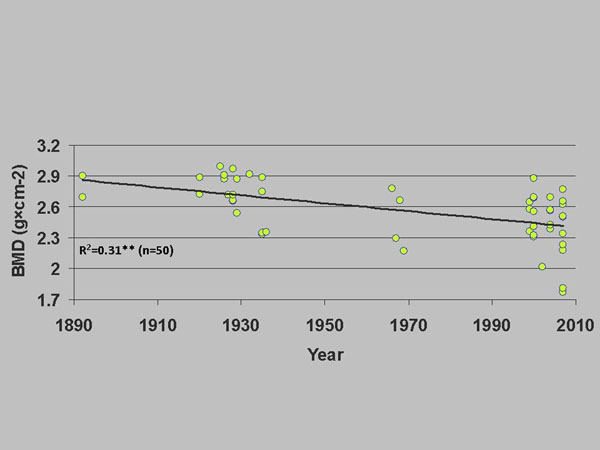
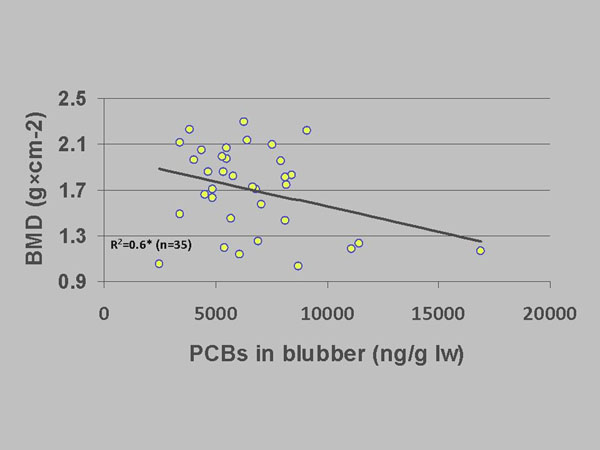
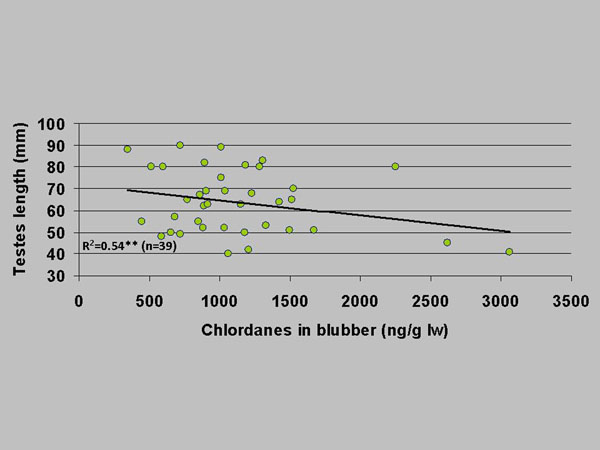
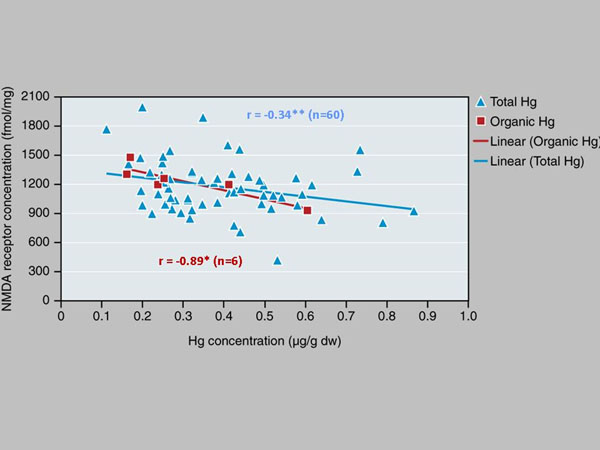
We present an overview of studies of anthropogenic pollutants in East Greenland polar bears over the period of 1999-2011. East Greenland polar bears are among the most polluted species, not just in the Arctic but globally, and represent an excellent biomonitoring species for levels and effects of global pollution in an apex predator. Therefore, an international multidisciplinary team joined to monitor and assess the patterns and concentrations of contaminants and their potential negative impact on polar bears. The review showed that East Greenland polar bears are exposed to a mix of chlorinated, brominated and fluorinated organic compounds as well as mercury which are all known to have endocrine, immune and organ-system toxic properties. For example, the concentrations of PCBs (polychlorinated biphenyls) in blubber ranged approximately 800-21,000 ng/g lw while mercury concentrations in liver and kidney ranged 0.1-50 μg/g ww. Regarding health endpoints, bone density seemed to decrease as a function of time and OHC (organohalogen compound) concentrations and further T-score for adult males indicated risk for osteoporosis. .The size of sexual organs decreased with increasing OHC concentrations. In the lower brain stem, mercury-associated decreases in NMDA-receptor levels and DNA-methylation was found The present review indicated that age was one of the major drivers for liver and renal lesions, although contaminants and infectious diseases may also play a role. Lesions in thyroid glands were most likely a result of infectious and genetic factors and probably, together with endocrine disrupting chemical (EDCs), the reason for disturbances/fluctuations in blood plasma thyroid hormone concentrations. Except for bone density reductions and neurological measures, all findings were supported by case-control studies of Greenland sledge dogs exposed long-term orally to similar combinations of contaminant concentrations. The studies of sledge dogs also indicated that the mixture of contaminants and fatty acids in the blubber of prey similar to that of polar bears induces cellular as well as humoral immune toxic changes. These controlled studies using model species for polar bears indicate that the correlative findings between health endpoint and contaminants in polar bears could be a cause-and-effect relationship. Physiologically based pharmacokinetic (PBPK) modelling showed that the risk quotients were ≥1 for ΣPCB, dieldrin and PFOS, which indicate an increased risk of prenatally reproductive pathology. In conclusion polar bears are susceptible to long-range transported chemicals that may have various adverse effects on multiple organ systems such as the reproductive and immune system.
Overview
CoChat Summary
TL;DR
This review synthesizes two decades of biomonitoring of East Greenland polar bears, showing they are among the most contaminant-exposed Arctic species and that organohalogen and mercury burdens correlate with adverse effects across skeletal, reproductive, hepatic/renal, thyroid, neuro-endocrine, and immune endpoints. Controlled sledge-dog studies support causality for many findings, while climate-related stressors may compound health risks.
Key findings
- East Greenland polar bears are exposed to chlorinated, brominated, and fluorinated organic compounds plus mercury; PCB concentrations in blubber ranged approximately 800–21,000 ng/g lw and mercury in liver and kidney ranged 0.1–50 μg/g ww. Legacy chlorinated contaminants decreased and stabilized since 1990, while PFCs and mercury increased.
- Skull bone mineral density decreased significantly over time in subadults and adult males but not adult females, and was inversely related to OHC concentrations; T-score in adult males indicated risk for osteoporosis. Testicle, baculum/penis, and ovary/female reproductive tract size decreased with increasing OHC concentrations.
- Age was the major driver of liver and renal lesions, although contaminants and infectious diseases may also play a role; 8 of 20 thyroid glands had lesions while none of 50 adrenals did. Mercury-associated decreases in NMDA-receptor levels and DNA methylation were found in the lower brain stem.
- PBPK modelling showed risk quotients ≥1 for ΣPCB, dieldrin, and PFOS, indicating increased risk of prenatally reproductive pathology. Sledge-dog case-control studies supported all findings except bone density reductions and neurological measures.
Methods
- Design: narrative review/overview of biomonitoring and health-effects studies on East Greenland polar bears, covering 1999–2011 (background states 1999–2010), integrating field sampling, museum specimens, and controlled sledge-dog model studies.
- Data/sample: tissues including brain, adipose, liver, kidney, blood, and hair, plus skulls; skull BMD in 139 bears from 1892–2009; sexual organs from 55 males and 44 females; liver n=79, renal n=75, thyroid n=20, adrenals n=50; medulla oblongata n=82; thyroid hormones n=62; contaminant concentrations from 1999–2002.
- Analysis: multiple regression controlling for age/sex for BMD and organ size; histopathology; correlations with contaminant burdens; PBPK modelling; comparison with case-control sledge-dog exposure studies.
Limitations
- Stated in paper: histopathological evaluation is difficult without a control group and is confounded by age and infectious diseases; exact pathways for OHC effects are unknown; little has been published on the East Greenland polar bear immune system; sea-ice/prey speculation is undocumented; correlative field findings cannot alone establish cause-effect, though sledge-dog studies support causality.
- Stated in paper: it is not possible to fully estimate the impact of reproductive disruptions/pathologies on semen quality/quantity and population consequences.
- Evident from text: the review relies heavily on correlative associations and museum specimens, and immune findings for East Greenland bears are limited and largely inferred from Svalbard bears and model species.
Model-written summary. Check it against the paper before relying on it.
Integrity signals
Registry
Cites
Statistics
Figures
Verification
Claims the paper makes
0 Valid · 0 Not valid · 41 Not checked · 16 Own results and interpretations
A result the paper reports from its own data — it cites no other source for it, so there is none to check. The quote shows it is in the paper.
In the paper
“Physiologically based pharmacokinetic (PBPK) modelling showed that the risk quotients were ≥1 for ΣPCB, dieldrin and PFOS, which indicate an increased risk of prenatally reproductive pathology.”
§ Two decades of biomonitoring polar bear health in Greenland: a review > Abstract > Summary
plainstates a cause- Asserted: passes — The authors put it forward as true.
- Checkable: passes — It can be checked against evidence.
- Load-bearing: passes — The paper’s conclusions depend on it.
- Based: passes — The paper gives a reason why it holds.
None of the sources cited for this claim have been checked yet.
In the paper
“The studies of sledge dogs also indicated that the mixture of contaminants and fatty acids in the blubber of prey similar to that of polar bears induces cellular as well as humoral immune toxic changes.”
§ Two decades of biomonitoring polar bear health in Greenland: a review > Abstract > Summary
What the sources say
- Not checked yetcites [37] Sonne C Dietz R Larsen HJS Loft KE Kirkegaard M Letcher RJ Shahmiri S Møller P Impairment of cellular immunity in West Greenland sledge dogs (Canis familiaris) dietary exposed to polluted minke whale (Balaenoptera acutorostrata) blubber Environ Sci Technol 2006 40 2056 2062 10.1021/es052151d 16570636 source
- Not checked yetcites [38] Sonne C Fonfara S Dietz R Kirkegaard M Letcher RJ Shahmiri S Andersen S Møller P Multiple cytokine and acute phase protein gene transcription in West Greenland sledge dogs (Canis familiaris) dietary exposed to organic environmental pollutants Arch Environ Contam Toxicol 2007 53 110 118 10.1007/s00244-006-0135-y 17396211 source
- Not checked yetcites [39] Sonne C Larsen HJS Kirkegaard M Letcher RJ Dietz R Trans-generational and neonatal immune suppression in West Greenland sledge dogs (Canis familiaris) exposed to organohalogenated environmental contaminants Sci Total Environ 2010 408 5801 5807 10.1016/j.scitotenv.2010.07.076 20832100 source
hedgedstates a cause- Asserted: passes — The authors put it forward as true.
- Checkable: passes — It can be checked against evidence.
- Load-bearing: passes — The paper’s conclusions depend on it.
- Based: passes — The paper gives a reason why it holds.
In the paper
“In the lower brain stem, mercury-associated decreases in NMDA-receptor levels and DNA-methylation was found”
- Also stated in: § Neuro-endocrine system · plain
“First, like in several other wildlife species [30,31], Hg-associated decreases in the levels of NMDA receptor were found.”
§ Two decades of biomonitoring polar bear health in Greenland: a review > Abstract > Summary
What the sources say
- Not checked yetcites [29] Basu N Scheuhammer AM Sonne C Letcher RJ Dietz R Is dietary mercury of neurotoxicological concern to wild polar bears (Ursus maritimus)? Environ Toxicol Chem 2009 28 133 140 10.1897/08-251.1 18717617 source
plainstates an associationn = 82 ·- Asserted: passes — The authors put it forward as true.
- Checkable: passes — It can be checked against evidence.
- Load-bearing: passes — The paper’s conclusions depend on it.
- Based: passes — The paper gives a reason why it holds.
- Also stated in: § Neuro-endocrine system · plain
In the paper
“The size of sexual organs decreased with increasing OHC concentrations.”
- Also stated in: § Reproductive organs · plain
“When controlling for age, the analyses showed that size of testicles, baculum/penis, and ovaries/female reproductive tract decreased as a function of increasing OHC concentrations in adipose tissue (Figure 3) [20].”
§ Two decades of biomonitoring polar bear health in Greenland: a review > Abstract > Summary
What the sources say
- Not checked yetcites [20] Sonne C Leifsson PS Dietz R Born EW Letcher RJ Hyldstrup L Rigét FF Kirkegaard M Muir DCG Xenoendocrine pollutants may reduce size of sexual organs in East Greenland polar bears (Ursus maritimus) Environ Sci Technol 2006 40 5668 5674 10.1021/es060836n 17007124 source
plainstates an association- Asserted: passes — The authors put it forward as true.
- Checkable: passes — It can be checked against evidence.
- Load-bearing: passes — The paper’s conclusions depend on it.
- Based: passes — The paper gives a reason why it holds.
- Also stated in: § Reproductive organs · plain
A result the paper reports from its own data — it cites no other source for it, so there is none to check. The quote shows it is in the paper.
In the paper
“The review showed that East Greenland polar bears are exposed to a mix of chlorinated, brominated and fluorinated organic compounds as well as mercury which are all known to have endocrine, immune and organ-system toxic properties.”
§ Two decades of biomonitoring polar bear health in Greenland: a review > Abstract > Summary
plain- Asserted: passes — The authors put it forward as true.
- Checkable: passes — It can be checked against evidence.
- Load-bearing: passes — The paper’s conclusions depend on it.
- Based: passes — The paper gives a reason why it holds.
38 more claims
Create a free account to see all 57 claims and to verify the 95 references still open.
- It may state two separate claims as one. 11
- The quote only partly states this claim. 1
- Probably not a substantial claim. 3
Self-check
Percentages, sums and reported differences re-computed from the paper’s own numbers.
Each contradiction between two passages listed here was confirmed by an independent check.
Rated minor: it would not touch a result — a value no result rests on, a p-value that stays on the same side of the significance level, or a conflict that is clerical, resolved elsewhere in the paper, or outside its own findings.
In the paper
§ Two decades of biomonitoring polar bear health in Greenland: a review > Abstract > Summary
“mercury concentrations in liver and kidney ranged 0.1-50 μg/g ww”
§ Two decades of biomonitoring polar bear health in Greenland: a review > Levels of contaminants
“| Mercury | - | 11 (1-36, 59) | 14 (1-50, 57) | 0.4 (0.1-0.9, 82) | - |”
Citations
Cites
(1971) · Annals of Internal Medicine · doi:10.7326/0003-4819-75-6-991_4 · Cited by 2,379
Exposure and effects assessment of persistent organohalogen contaminants in arctic wildlife and fish
Letcher, R. J., Bustnes, J. O., Dietz, R., Jenssen, B. M., Jørgensen, E. H., Sonne, C., Verreault, J., Vijayan, M. M., & Gabrielsen, G. W. (2010) · Science of The Total Environment · doi:10.1016/j.scitotenv.2009.10.038 · Cited by 793
Self-citation(1964) · Medical Journal of Australia · doi:10.5694/j.1326-5377.1964.tb134286.x · Cited by 742
AMAP Assessment Report: Arctic Pollution Issues
Arctic Monitoring and Assessment Programme (1998) · Cited by 684
Sonne, C. (2010) · Environment International · doi:10.1016/j.envint.2010.03.002 · Cited by 277
Self-citationPredicting survival, reproduction and abundance of polar bears under climate change
Molnár, P. K., Derocher, A. E., Thiemann, G. W., & Lewis, M. A. (2010) · Biological Conservation · doi:10.1016/j.biocon.2010.04.004 · Cited by 229
Jenssen, B. M. (2006) · Environmental Health Perspectives · doi:10.1289/ehp.8057 · Cited by 220
Monitoring, A., Assessment Programme, & institutt, M. (2008) · Cited by 215
Anthropogenic contributions to mercury levels in present-day Arctic animals—A review
Dietz, R., Outridge, P. M., & Hobson, K. A. (2009) · Science of The Total Environment · doi:10.1016/j.scitotenv.2009.08.036 · Cited by 214
Self-citationScheuhammer, A. M., Basu, N., Burgess, N. M., Elliott, J. E., Campbell, G. D., Wayland, M., Champoux, L., & Rodrigue, J. (2007) · Ecotoxicology · doi:10.1007/s10646-007-0170-0 · Cited by 174
Self-citation
Research works printed but not linked: 2
- AMAP Assessment 2010: Mercury in the Arctic Arctic Monitoring and Assessment Programme: Oslo, Norway in press
- AMAP AMAP Assessment 2002: Persistent Organic Pollutants in the Arctic 2004 Arctic Monitoring and Assessment Programme (AMAP), Oslo, Norway xvi+310 http://www.amap.no
Cited by
Forecasting the relative influence of environmental and anthropogenic stressors on polar bears
Atwood, T. C., Marcot, B. G., Douglas, D. C., Amstrup, S. C., Rode, K. D., Durner, G. M., & Bromaghin, J. F. (2016) · Ecosphere · doi:10.1002/ecs2.1370 · Cited by 133
Climate Change in the North American Arctic: A One Health Perspective
Dudley, J. P., Hoberg, E. P., Jenkins, E., & Parkinson, A. J. (2015) · EcoHealth · doi:10.1007/s10393-015-1036-1 · Cited by 120
Marked for Life: Epigenetic Effects of Endocrine Disrupting Chemicals
Jacobs, M. N., Marczylo, E. L., Guerrero‐Bosagna, C., & Rüegg, J. (2017) · Annual Review of Environment and Resources · doi:10.1146/annurev-environ-102016-061111 · Cited by 95
Fagre, A. C., Patyk, K. A., Nol, P., Atwood, T. C., Hueffer, K., & Duncan, C. (2015) · EcoHealth · doi:10.1007/s10393-015-1023-6 · Cited by 82
Laidre, K. L., & York, G. S. (2018) · doi:10.2305/iucn.ch.2018.ssc-op.63.en · Cited by 80
Nouhi, S., Ahrens, L., Campos-Pereira, H., Hughes, A. V., Campana, M., Gutfreund, P., Pálsson, G. K., Vorobiev, A., & Hellsing, M. S. (2017) · Journal of Colloid and Interface Science · doi:10.1016/j.jcis.2017.09.102 · Cited by 77
Sonne, C., Bechshøft, T., Rigét, F. F., Baagøe, H. J., Hedayat, A., Andersen, M., Jensen, J. B., Hyldstrup, L., Letcher, R. J., & Dietz, R. (2013) · Ecological Indicators · doi:10.1016/j.ecolind.2013.04.015 · Cited by 55
Self-citationPatyk, K. A., Duncan, C., Nol, P., Sonne, C., Laidre, K. L., Obbard, M. E., Wiig, Ø., Aars, J., Regehr, E. V., Gustafson, L., et al. (2015) · The Science of The Total Environment · doi:10.1016/j.scitotenv.2015.02.007 · Cited by 55
Self-citationBechshøft, T., Derocher, A. E., Viengkone, M., Routti, H., Aars, J., Letcher, R. J., Dietz, R., Sonne, C., Jenssen, B. M., Richardson, E. S., et al. (2017) · Environmental Reviews · doi:10.1139/er-2016-0118 · Cited by 55
Self-citationEvaluating and ranking threats to the long-term persistence of polar bears
Atwood, T. C., Marcot, B. G., Douglas, D. C., Amstrup, S. C., Rode, K. D., Durner, G. M., & Bromaghin, J. F. (2015) · Antarctica A Keystone in a Changing World · doi:10.3133/ofr20141254 · Cited by 51
A veterinary perspective on One Health in the Arctic
Sonne, C., Letcher, R. J., Jenssen, B. M., Desforges, J.-P. W., Eulaers, I., Andersen-Ranberg, E., Gustavson, K., Styrishave, B., & Dietz, R. (2017) · Acta veterinaria Scandinavica · doi:10.1186/s13028-017-0353-5 · Cited by 48
Self-citationLille‐Langøy, R., Goldstone, J. V., Rusten, M., Milnes, M. R., Male, R., Stegeman, J. J., Blumberg, B., & Goksøyr, A. (2015) · Toxicology and Applied Pharmacology · doi:10.1016/j.taap.2015.02.001 · Cited by 48
Bears of the World: Ecology, Conservation and Management
Krofel, M., Elfström, M., Ambarlı, H., Bombieri, G., González-Bernardo, E., Jerina, K., Laguna, A., Penteriani, V., Phillips, J. P., Selva, N., et al. (2020) · Cambridge University Press eBooks · doi:10.1017/9781108692571 · Cited by 44
Penile density and globally used chemicals in Canadian and Greenland polar bears
Sonne, C., Dyck, M. G., Rigét, F. F., Jensen, J. B., Hyldstrup, L., Letcher, R. J., Gustavson, K., Gilbert, M. T. P., & Dietz, R. (2015) · Environmental Research · doi:10.1016/j.envres.2014.12.026 · Cited by 42
Self-citationHuman–Polar Bear Interactions in a Changing Arctic: Existing and Emerging Concerns
Atwood, T. C., Simac, K. S., Breck, S. W., York, G. W., & Wilder, J. M. (2017) · Animal welfare · doi:10.1007/978-3-319-46994-2_22 · Cited by 42
Brown Bear ( Ursus arctos ; Eurasia)
Swenson, J. E., Ambarlı, H., Arnemo, J. M., Миронович, Б. Л., Ciucci, P., Danilov, P. I., Delibes, M., Elfström, M., Evans, A. L., Groff, C., et al. (2020) · Cambridge University Press eBooks · doi:10.1017/9781108692571.013 · Cited by 40
Krofel, M., Elfström, M., Ambarlı, H., Bombieri, G., González-Bernardo, E., Jerina, K., Laguna, A., Penteriani, V., Phillips, J. P., Selva, N., et al. (2020) · Cambridge University Press eBooks · doi:10.1017/9781108692571.016 · Cited by 37
Etcheverría, A. I., Lucchesi, P. M. A., Krüger, A., Bentancor, A., & Padola, N. L. (2016) · Springer eBooks · doi:10.1007/978-3-319-45092-6_7 · Cited by 36
Meena, P. R., Yadav, P. D., Hemlata, H., Tejavath, K. K., & Singh, A. P. (2020) · Journal of Applied Microbiology · doi:10.1111/jam.14905 · Cited by 33
Human bodies as chemical sensors: A history of biomonitoring for environmental health and regulation
Creager, A. N. H. (2018) · Studies in History and Philosophy of Science Part A · doi:10.1016/j.shpsa.2018.05.010 · Cited by 31
Brown Bear ( Ursus arctos ; North America)
Haroldson, M. A., Clapham, M., Costello, C. M., Gunther, K. A., Kendall, K. C., Miller, S. D., Pigeon, K. E., Proctor, M. F., Rode, K. D., Servheen, C. W., et al. (2020) · Cambridge University Press eBooks · doi:10.1017/9781108692571.014 · Cited by 29
Routti, H., Berg, M. K., Lille‐Langøy, R., Øygarden, L., Harju, M., Dietz, R., Sonne, C., & Goksøyr, A. (2019) · Scientific Reports · doi:10.1038/s41598-019-43337-w · Cited by 25
Self-citationBioaccumulation and Biotransformation of Brominated Flame Retardants
Weijs, L., Dirtu, A. C., Malarvannan, G., & Covaci, A. (2015) · Comprehensive analytical chemistry · doi:10.1016/b978-0-444-63299-9.00014-4 · Cited by 24
American Black Bear ( Ursus americanus )
Clark, J. D., Beckmann, J. P., Boyce, M. S., Leopold, B. D., Loosen, A. E., & Pelton, M. R. (2020) · Cambridge University Press eBooks · doi:10.1017/9781108692571.012 · Cited by 23
Daugaard-Petersen, T., Langebæk, R., Rigét, F. F., Dyck, M. G., Letcher, R. J., Hyldstrup, L., Jensen, J. B., Dietz, R., & Sonne, C. (2018) · Environment International · doi:10.1016/j.envint.2018.02.022 · Cited by 23
Self-citationBlake, B. E., & McCoy, K. A. (2015) · Neuroscience & Biobehavioral Reviews · doi:10.1016/j.neubiorev.2015.04.021 · Cited by 21
Sonne, C., Letcher, R. J., Leifsson, P. S., Rigét, F. F., Bechshøft, T., Bossi, R., Asmund, G., & Dietz, R. (2012) · Environment International · doi:10.1016/j.envint.2012.07.002 · Cited by 21
Self-citationDaugaard-Petersen, T., Langebæk, R., Rigét, F. F., Letcher, R. J., Hyldstrup, L., Jensen, J. B., Bechshøft, T., Wiig, Ø., Jenssen, B. M., Pertoldi, C., et al. (2017) · Environmental Research · doi:10.1016/j.envres.2017.12.009 · Cited by 21
Self-citationSonne, C., Torjesen, P. A., Fuglei, E., Muir, D. C. G., Jenssen, B. M., Jørgensen, E. H., Dietz, R., & Ahlstrøm, Ø. (2017) · Environmental Science & Technology · doi:10.1021/acs.est.7b00289 · Cited by 21
Self-citationEckstein, C., Mol, J. P. D. S., Costa, F. B., Nunes, P. P., de Lima, P. A., Melo, M. M., de Carvalho, T. P., dos Santos, D. O., Silva, M. F., de Carvalho, T. F., et al. (2020) · PLoS ONE · doi:10.1371/journal.pone.0231893 · Cited by 21
Asiatic Black Bear ( Ursus thibetanus )
Kozakai, C., Seryodkin, I. V., Pigeon, K. E., Yamazaki, K., Wangchuk, S., Koike, S., Tsubota, T., & Jamtsho, Y. (2020) · Cambridge University Press eBooks · doi:10.1017/9781108692571.011 · Cited by 17
Lessa, T. B., de Abreu, D. K., Rodrigues, M. N., Brolio, M. P., Miglino, M. A., & Ambrósio, C. E. (2014) · Microscopy Research and Technique · doi:10.1002/jemt.22408 · Cited by 17
Garshelis, D. L., Noyce, K. V., Ditmer, M. A., Coy, P. L., Tri, A. N., Laske, T. G., & Iaizzo, P. A. (2020) · Bears of the World · doi:10.1017/9781108692571.006 · Cited by 13
Penteriani, V., Karamanlidis, A. A., Ordiz, A., Ciucci, P., Boitani, L., Bertorelle, G., Zarzo‐Arias, A., Bombieri, G., González-Bernardo, E., Morini, P., et al. (2020) · Cambridge University Press eBooks · doi:10.1017/9781108692571.020 · Cited by 16
Sonne, C., Gustavson, K., Eulaers, I., Desforges, J.-P. W., Letcher, R. J., Rigét, F. F., Styrishave, B., & Dietz, R. (2016) · Environment International · doi:10.1016/j.envint.2015.11.017 · Cited by 15
Self-citationPortuguese inventory of dioxins and furans atmospheric emissions
Relvas, H., Lopes, M. A. D. S. B. D. N., & Coutinho, M. (2013) · Chemosphere · doi:10.1016/j.chemosphere.2013.08.005 · Cited by 15
Ecotoxicologic Stress in Arctic Marine Mammals, With Particular Focus on Polar Bears
Routti, H., Jenssen, B. M., & Tartu, S. (2018) · Elsevier eBooks · doi:10.1016/b978-0-12-812144-3.00013-9 · Cited by 14
Why is it So Difficult to Choose Safer Alternatives for Hazardous Chemicals?
Brown, V. J. (2012) · Environmental Health Perspectives · doi:10.1289/ehp.120-a280 · Cited by 14
Diffuse type testicular seminoma in a stallion
Farjanikish, G., Sayari, M., Raisi, A., & Shirian, S. (2016) · Comparative Clinical Pathology · doi:10.1007/s00580-016-2316-z · Cited by 12
Boutet, V., Dominique, M., Eccles, K., Branigan, M., Dyck, M. G., de Groot, P. V. C., Lougheed, S. C., Rutter, A., & Langlois, V. S. (2022) · Environmental Pollution · doi:10.1016/j.envpol.2022.120663 · Cited by 12
Sonne, C., Mæhre, S. A. B., Sagerup, K., Harju, M., Heimstad, E. S., Leifsson, P. S., Dietz, R., & Gabrielsen, G. W. (2012) · Toxicological & Environmental Chemistry Reviews · doi:10.1080/02772248.2012.744438 · Cited by 12
Self-citationMandibular shape in farmed Arctic foxes (Vulpes lagopus) exposed to persistent organic pollutants
Bradley, M. M., Perra, M., Ahlstrøm, Ø., Jenssen, B. M., Jørgensen, E. H., Fuglei, E., Muir, D. C. G., & Sonne, C. (2018) · The Science of The Total Environment · doi:10.1016/j.scitotenv.2018.07.367 · Cited by 11
Self-citationSystematics, Evolution, and Genetics of Bears
Kitchener, A. C., Bellemain, E., Ding, X., Kopatz, A., Kutschera, V. E., Salomashkina, V., Ruiz‐García, M., Graves, T. A., Hou, Y., Werdelin, L., et al. (2020) · Cambridge University Press eBooks · doi:10.1017/9781108692571.002 · Cited by 11
Imazaki, P. H. D., Brose, F., Jauniaux, T. P., Das, K., Müller, M., & Scippo, M. (2015) · BioMed Research International · doi:10.1155/2015/438295 · Cited by 11
Patterns of Bear Attacks on Humans, Factors Triggering Risky Scenarios, and How to Reduce Them
Penteriani, V., Bombieri, G., Delgado, M. D. M., Sharp, T. R., Yamazaki, K., Bargali, H. S., Dharaiya, N., Jangid, A. K., Sharma, R. K., Lamichhane, B. R., et al. (2020) · Cambridge University Press eBooks · doi:10.1017/9781108692571.018 · Cited by 11
Interspecific Interactions between Brown Bears, Ungulates, and Other Large Carnivores
Ordiz, A., Krofel, M., Milleret, C., Seryodkin, I. V., Tallian, A. G., Støen, O., Sivertsen, T. R., Kindberg, J., Wabakken, P., Sand, H., et al. (2020) · Cambridge University Press eBooks · doi:10.1017/9781108692571.004 · Cited by 10
Sled Dogs as Sentinel Species for Monitoring Arctic Ecosystem Health
Sonne, C., Letcher, R. J., Jenssen, B. M., Desforges, J.-P. W., Eulaers, I., Andersen-Ranberg, E., Gustavson, K., Bossi, R., Styrishave, B., Sinding, M. S., et al. (2019) · Springer eBooks · doi:10.1007/978-3-030-30734-9_2 · Cited by 10
Self-citationSonne, C., Dietz, R., & Letcher, R. J. (2013) · Toxicological & Environmental Chemistry Reviews · doi:10.1080/02772248.2013.809917 · Cited by 9
Self-citationAndean Bear ( Tremarctos ornatus )
Velez–Liendo, X., Jackson, D. W., Ruiz‐García, M., Castellanos, A., Espinosa, S., & Laguna, A. (2020) · Cambridge University Press eBooks · doi:10.1017/9781108692571.008 · Cited by 9
Steyaert, S. M. J. G., Zedrosser, A., Swaisgood, R. R., Filipczyková, E., Crudge, B., Dutta, T., Sharma, S., Ratnayeke, S., Koike, S., Leclerc, M., et al. (2020) · Cambridge University Press eBooks · doi:10.1017/9781108692571.003 · Cited by 8
Testosterone and persistent organic pollutants in East Greenland male polar bears (Ursus maritimus)
Ciesielski, T. M., Sonne, C., Smette, E. I., Villanger, G. D., Styrishave, B., Letcher, R. J., Hitchcock, D. J., Dietz, R., & Jenssen, B. M. (2023) · Heliyon · doi:10.1016/j.heliyon.2023.e13263 · Cited by 8
Self-citationFeder, D., Ierardi, M. G., Covre, A. L., Petri, G., Carvalho, A. A. D. S., Fonseca, F. L. A., & Bertassoli, B. M. (2018) · Apmis · doi:10.1111/apm.12864 · Cited by 8
Sloth Bear ( Melursus ursinus )
Bargali, H. S., Pigeon, K. E., Akhtar, N., Sharp, T. R., & Jadav, K. K. (2020) · Cambridge University Press eBooks · doi:10.1017/9781108692571.010 · Cited by 6
Environmental endocrine-disrupting chemicals and their effects in marine mammals
Fair, P. A., & Houde, M. (2023) · Elsevier eBooks · doi:10.1016/b978-0-12-824464-7.00017-9 · Cited by 7
Conservation and Management of Bears
Servheen, C. W., Ambarlı, H., Bargali, H. S., Breck, S. W., D’Cruze, N. C., Groff, C., Fredriksson, G. M., Gibeau, M. L., Aizman, I. G., Huber, Đ., et al. (2020) · Cambridge University Press eBooks · doi:10.1017/9781108692571.021 · Cited by 7
Prevalence of skull pathologies in European harbor seals (Phoca vitulina) during 1981–2014
Pertoldi, C., Jensen, L. F., Alstrup, A. K. O., Munk, O. L., Pedersen, T. B., Sonne, C., Dietz, R., Daugaard-Petersen, T., Kortegaard, H. E., Olsen, M. T., et al. (2017) · Mammal Research · doi:10.1007/s13364-017-0340-2 · Cited by 7
Self-citationMartín, C. M., Kogika, M. M., Miyashiro, S. I., & Pinto, A. C. B. D. C. F. (2017) · Pesquisa Veterinária Brasileira · doi:10.1590/s0100-736x2017000700018 · Cited by 6
Steinmetz, R., Garshelis, D. L., & Choudhury, A. (2020) · Cambridge University Press eBooks · doi:10.1017/9781108692571.005 · Cited by 8
Celozzi, S., Mattiello, S., Battini, M., Zucali, M., Pirovano, L., Albano, C., Brasca, M., & Bava, L. (2021) · Italian Journal of Animal Science · doi:10.1080/1828051x.2021.1920483 · Cited by 6
Steroid hormones in multiple tissues of East Greenland polar bears (Ursus maritimus)
Styrishave, B., Pedersen, K. E., Clarke, O., Hansen, M. A., Björklund, E., Sonne, C., & Dietz, R. (2016) · Polar Biology · doi:10.1007/s00300-016-1922-1 · Cited by 6
Self-citationDietz, R., Sonne, C., Letcher, R. J., & Jenssen, B. M. (2016) · From pole to pole · doi:10.1007/978-3-642-12315-3_11 · Cited by 5
Self-citationLessa, T. B., de Abreu, D. K., Bertassoli, B. M., & Ambrósio, C. E. (2015) · Pesquisa Veterinária Brasileira · doi:10.1590/s0100-736x2015001300010 · Cited by 5
The Challenge of Brown Bear Management in Hokkaido, Japan
Mano, T., Yamanaka, M., Tsuruga, H., & Sato, Y. (2020) · Cambridge University Press eBooks · doi:10.1017/9781108692571.025 · Cited by 4
Wastewater sources of priority contaminants in four Canadian Arctic communities
Stroski, K. (2019) · Mspace (University of Manitoba) · Cited by 4
Giant Panda ( Ailuropoda melanoleuca )
Swaisgood, R. R., McShea, W. M., Wildt, D. E., Hull, V., Zhang, J., Owen, M. A., Zhang, Z., Dvornicky-Raymond, Z. T., Valitutto, M., Li, D., et al. (2020) · Cambridge University Press eBooks · doi:10.1017/9781108692571.007 · Cited by 3
Effects of Human Disturbance on Brown Bear Behavior
Støen, O., Ordiz, A., Elfström, M., Hertel, A. G., Sahlén, V., Kindberg, J., & Swenson, J. E. (2020) · Cambridge University Press eBooks · doi:10.1017/9781108692571.019 · Cited by 3
Polar Bear ( Ursus maritimus )
Rode, K. D., Obbard, M. E., Belikov, S., Derocher, A. E., Durner, G. M., Thiemann, G. W., Tryland, M., Letcher, R. J., Meyerson, R., Sonne, C., et al. (2020) · Cambridge University Press eBooks · doi:10.1017/9781108692571.015 · Cited by 3
Self-citationEcological and Social Dimensions of Sloth Bear Conservation in Sri Lanka
Ratnayeke, S., & van Manen, F. T. (2020) · Cambridge University Press eBooks · doi:10.1017/9781108692571.029 · Cited by 2
Doko, T., Chen, W., Uno, R., Tamate, H. B., Toxopeus, A. G., Skidmore, A. K., & Fukui, H. (2020) · Cambridge University Press eBooks · doi:10.1017/9781108692571.026 · Cited by 1
Captive Bears in Asia: Implications for Animal Welfare and Conservation
Schmidt-Burbach, J., -i-Abbas, F., & D’Cruze, N. C. (2020) · Cambridge University Press eBooks · doi:10.1017/9781108692571.027 · Cited by 1
Penteriani, V., & Melletti, M. (2020) · Cambridge University Press eBooks · doi:10.1017/9781108692571.001 · Cited by 1
The Danish Polar Bear Skull Collection 1830–2016
Leerhøi, F., Dietz, R., Sonne, C., & Lorenzen, E. D. (2017) · ARCTIC · doi:10.14430/arctic4675 · Cited by 1
Self-citationSun Bear ( Helarctos malayanus )
Scotson, L., Frederick, C. A., Officer, K., & Wong, W. (2020) · Cambridge University Press eBooks · doi:10.1017/9781108692571.009 · Cited by 1
Managing for Interpopulation Connectivity of the World’s Bear Species
Proctor, M. F., Dutta, T., McLellan, B. N., García-Rangel, S., Paetkau, D., Swaisgood, R. R., & Zedrosser, A. (2020) · Cambridge University Press eBooks · doi:10.1017/9781108692571.023 · Cited by 1
Ex Situ Conservation of Bears: Roles, Status, and Management
Kolter, L., Sergiel, A., Huber, Đ., & Silver, S. (2020) · Cambridge University Press eBooks · doi:10.1017/9781108692571.024 · Cited by 1
Principles of Human–Bear Conflict Management in Challenging Environments
Can, Ö. E. (2020) · Cambridge University Press eBooks · doi:10.1017/9781108692571.017 · Cited by 1
Assessing the roles of anti-androgenic and oestrogenic mixtures on endocrine disruption in fish
Green, C. (2014) · Brunel University Research Archive (BURA) (Brunel University London) · Cited by 1
Kunnskapsgrunnlaget for Sentral-Spitsbergen
Ravolainen, V. T., Strøm, H., Elvevold, S., Fuglei, E., Pedersen, Å. Ø., Routti, H., Gabrielsen, G. W., Nordgård, I. K., Svenning, M., Vongraven, D., et al. (2018) · NORA - Norwegian Open Research Archives · doi:10.13140/rg.2.2.31324.49280 · Cited by 1
Human Dimensions of Asiatic Black Bear Conflicts and Management in Japan
Sakurai, R. (2020) · Cambridge University Press eBooks · doi:10.1017/9781108692571.028
How Is Climate Change Affecting Polar Bears and Giant Pandas?
Songer, M., Atwood, T. C., Douglas, D. C., Huang, Q., Li, R., Pilfold, N. W., Xu, M., & Durner, G. M. (2020) · Cambridge University Press eBooks · doi:10.1017/9781108692571.022
Fagre, A. C., Patyk, K. A., Nol, P., Atwood, T. C., Hueffer, K., & Duncan, C. (2015) · EcoHealth · doi:10.1007/s10393-015-1070-z
Penteriani, V., & Melletti, M. (2020) · Cambridge University Press eBooks · doi:10.1017/9781108692571.030
Penteriani, V., & Melletti, M. (2020) · Cambridge University Press eBooks · doi:10.1017/9781108692571.031
Penteriani, V., & Melletti, M. (2020) · Cambridge University Press eBooks · doi:10.1017/9781108692571.032
Environmental occurrence of industrial endocrine disrupting chemicals
Chandra, S., Pavithra, K., Rex, K. R., Mukhopadhyay, M., Ahamed, A. A., & Chakraborty, P. (2024) · Elsevier eBooks · doi:10.1016/b978-0-12-823897-4.00002-2
Shilin, M., Abramova, A., Abramov, V. M., & Zavyalova, A. N. (2025) · Arctic and Innovations · doi:10.21443/3034-1434-2025-3-4-6-25
Methodological approaches to estimate human population exposure to chemical substances
Mancini, F. R. (2015) · AMS Dottorato Institutional Doctoral Theses Repository (University of Bologna) · doi:10.6092/unibo/amsdottorato/6909
Metadata
- Authors
- Sonne, C., Letcher, R. J., Bechshøft, T. Ø., Rigét, F. F., Muir, D. C. G., Leifsson, P. S., Born, E. W., Hyldstrup, L., Basu, N., Kirkegaard, M., & Dietz, R.
- Affiliations
- Aarhus University (DK)
- Environment and Climate Change Canada (CA)
- Grønlands Naturinstitut (GL)
- Hvidovre Hospital (DK)
- University of Michigan (US)
- Corresponding author
- Sonne, Christian
- ORCID
- Venue
- Acta Veterinaria Scandinavica
- Published
- 2012-02-24
- Volume
- 54
- Issue
- S1
- Pages
- S15
- ISSN
- 0044-605X (ISSN-L)
- 1751-0147
- PMC
- PMC3305763
- OpenAlex
- W2163153072
- Semantic Scholar
- 5c814d36325b444370e7c071451c1fc64c364dfe
- Cited by
- 87
- References
- 42
- Citations by year
- 2025: 1 · 2024: 1 · 2023: 2 · 2022: 1 · 2021: 1 · 2020: 35 · 2019: 3 · 2018: 7 · 2017: 10 · 2016: 6 · 2015: 12 · 2014: 2 · 2013: 3 · 2012: 3
- FWCI
- 3.53
- Type
- journal article
- Language
- en
- Open access
- gold
- doi.org
- Licence
- cc-by
- creativecommons.org/licenses/by/2.0 (tdm)
- Locations
- Acta veterinaria Scandinavica (publishedVersion, cc-by)
- PubMed Central (publishedVersion, cc-by)
- Research at the University of Copenhagen (University of Copenhagen) (publishedVersion)
- Funders
- Lundbeckfonden
- Kommissionen for Videnskabelige Undersøgelser i Grønland
- Prince Albert II of Monaco Foundation
- H. Lundbeck A/S
- Comisión de Investigaciones Científicas
- Topics
- Physical Sciences › Environmental Science › Health, Toxicology and Mutagenesis › Toxic Organic Pollutants Impact
- Physical Sciences › Environmental Science › Health, Toxicology and Mutagenesis › Environmental Toxicology and Ecotoxicology
- Physical Sciences › Environmental Science › Health, Toxicology and Mutagenesis › Mercury impact and mitigation studies
- Keywords
- polar bear, biomonitoring, anthropogenic pollutants, organohalogen compounds, polychlorinated biphenyls, mercury, PFOS, dieldrin, sled dogs, bone mineral density, osteoporosis, thyroid dysfunction, endocrine disruptors, immunotoxicity, neurotoxicity, DNA methylation, reproductive toxicity, physiologically based pharmacokinetic modeling, East Greenland
About these checks
Registry, retraction, Cites and statistics results are computed, not judged, with one exception: a printed reference that no index lists is read once by a model before it counts as a citation error. Claims are extracted by a model and kept only when their quote appears verbatim in the text; each cited source is then checked, with a model’s help, for whether it says what the claim relies on. Those verdicts can be wrong — read the claim’s quote and the cited source before relying on one.
A language model drew the claims from the paper on 2026-11-20, under version 3 of the claim definition (model deepseek-v4.1-flash, prompt extract-v3).
A second model labelled each claim on 2026-11-20 (model jev-1.13-20260917, definition revision gold-guideline-v0.2).
Statistics and arithmetic are recomputed, not judged.
Confidence bands are shown only for fields calibrated on our annotated test set. None is calibrated yet, so no band is shown.
What counts as a claim ›How we measure confidence ›How we check this ›
Are you an author, or do you see a problem with this page? Request a review
Data sources
Bibliographic data: Semantic Scholar, OpenAlex, Crossref.
Contains information from the Semantic Scholar Academic Graph Datasets, made available under the ODC Attribution License (ODC-BY 1.0).
Semantic Scholar’s data is described in: Kinney, R., et al. (2023). The Semantic Scholar Open Data Platform. arXiv:2301.10140.
