

An in silico model of the ubiquitin-proteasome system that incorporates normal homeostasis and age-related decline
Open accessThe DOI matches its Crossref record; 46 of the 48 references it cites were found in a registry or an index.
Abstract
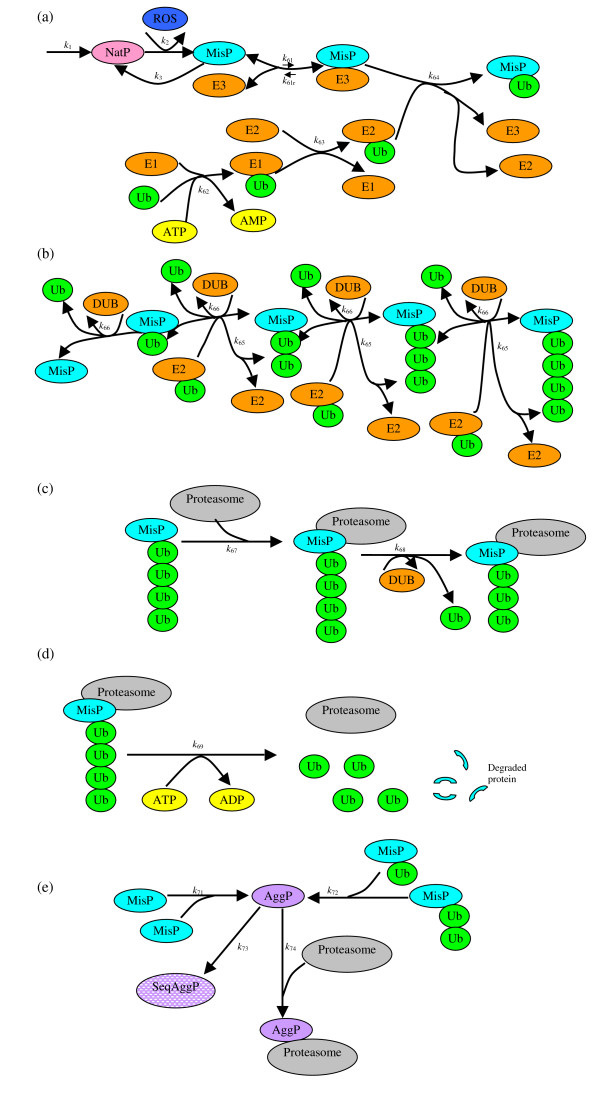
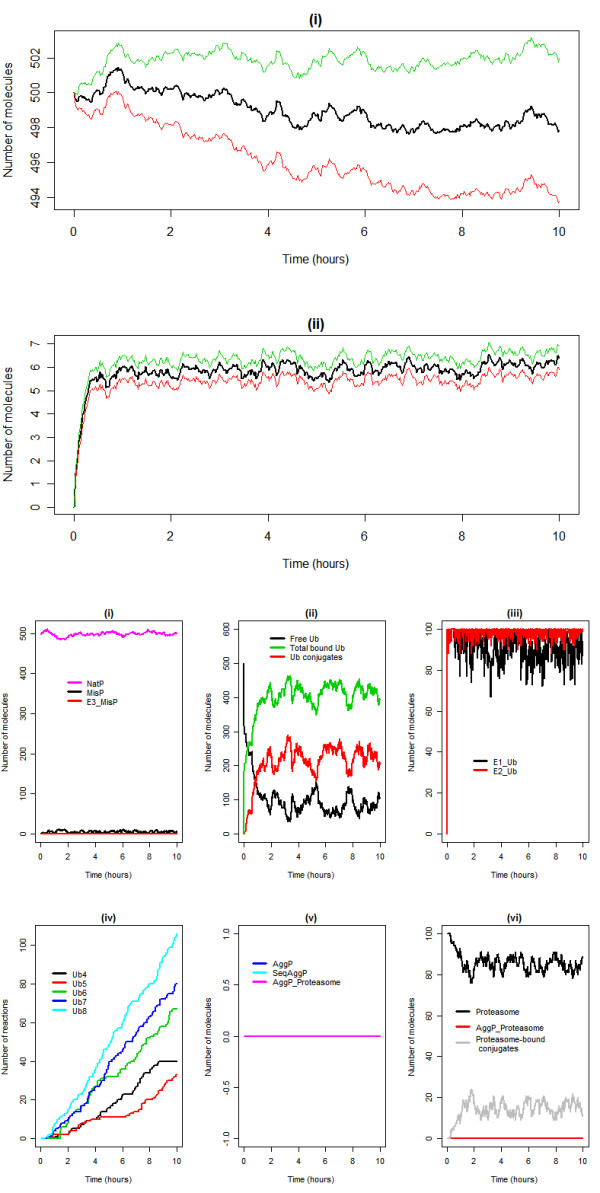
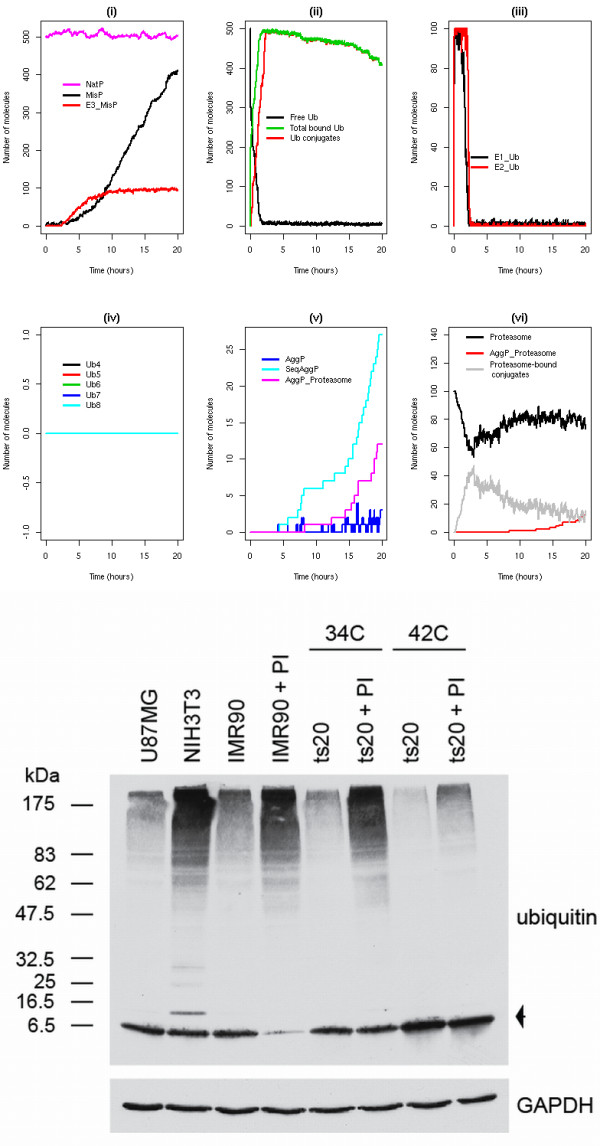
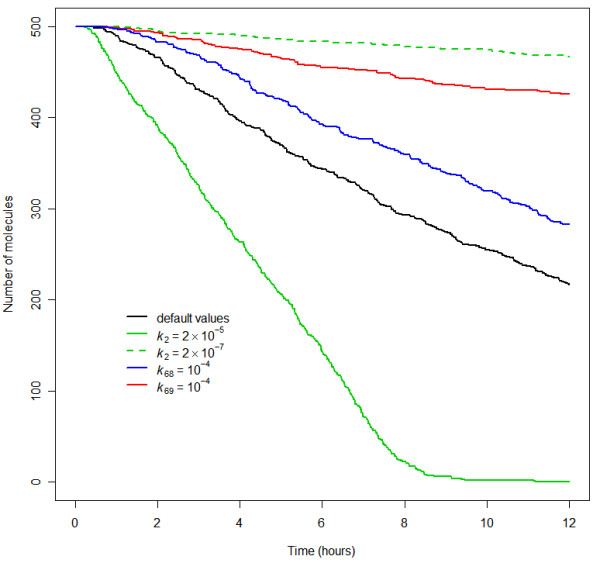
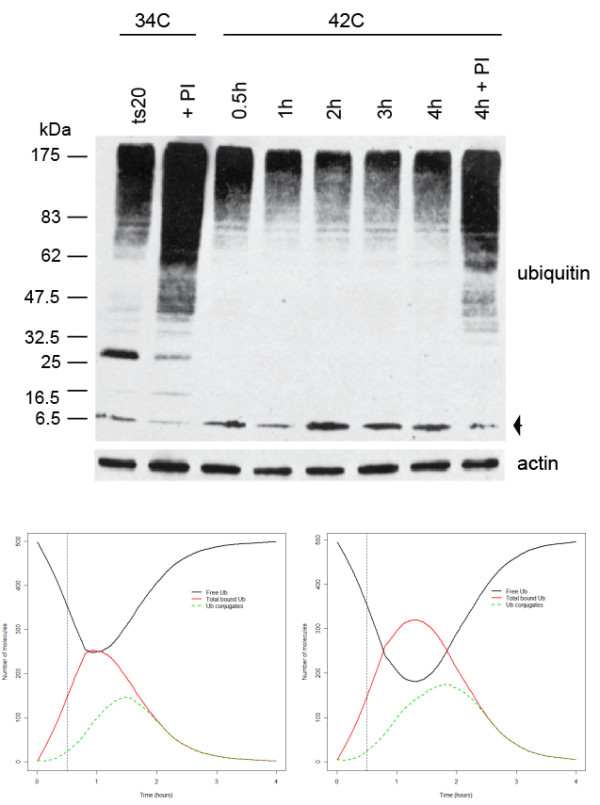
BACKGROUND: The ubiquitin-proteasome system is responsible for homeostatic degradation of intact protein substrates as well as the elimination of damaged or misfolded proteins that might otherwise aggregate. During ageing there is a decline in proteasome activity and an increase in aggregated proteins. Many neurodegenerative diseases are characterised by the presence of distinctive ubiquitin-positive inclusion bodies in affected regions of the brain. These inclusions consist of insoluble, unfolded, ubiquitinated polypeptides that fail to be targeted and degraded by the proteasome. We are using a systems biology approach to try and determine the primary event in the decline in proteolytic capacity with age and whether there is in fact a vicious cycle of inhibition, with accumulating aggregates further inhibiting proteolysis, prompting accumulation of aggregates and so on. A stochastic model of the ubiquitin-proteasome system has been developed using the Systems Biology Mark-up Language (SBML). Simulations are carried out on the BASIS (Biology of Ageing e-Science Integration and Simulation) system and the model output is compared to experimental data wherein levels of ubiquitin and ubiquitinated substrates are monitored in cultured cells under various conditions. The model can be used to predict the effects of different experimental procedures such as inhibition of the proteasome or shutting down the enzyme cascade responsible for ubiquitin conjugation. RESULTS: The model output shows good agreement with experimental data under a number of different conditions. However, our model predicts that monomeric ubiquitin pools are always depleted under conditions of proteasome inhibition, whereas experimental data show that monomeric pools were depleted in IMR-90 cells but not in ts20 cells, suggesting that cell lines vary in their ability to replenish ubiquitin pools and there is the need to incorporate ubiquitin turnover into the model. Sensitivity analysis of the model revealed which parameters have an important effect on protein turnover and aggregation kinetics. CONCLUSION: We have developed a model of the ubiquitin-proteasome system using an iterative approach of model building and validation against experimental data. Using SBML to encode the model ensures that it can be easily modified and extended as more data become available. Important aspects to be included in subsequent models are details of ubiquitin turnover, models of autophagy, the inclusion of a pool of short-lived proteins and further details of the aggregation process.
Overview
The claims and statistics of this paper haven’t been checked yet.
Free: it reads the open-access text and checks the first 5 claims that cite a source we can check. Create a free account to check every claim.
Integrity signals
Registry
Cites
Statistics
Figures
Verification
Claims the paper makes
The claims and statistics of this paper haven’t been checked yet.
Free: it reads the open-access text and checks the first 5 claims that cite a source we can check. Create a free account to check every claim.
Claims other papers make about this one
Each is checked against this paper’s own text: does it say what the citing paper says it does?
The source backs part of the claim, not all of it — or backs it for a different population, condition or comparison.
In the citing paper
“a range of distinct aetologies, which manifest as a variety of different syndromes or diseases, converge at some point on an autocatalytic series of reactions, involving imperfectly liganded iron, in the production of the very damaging hydroxyl radical, that by causing the destruction of appropriate cellular structures and proteins liberates further ‘free’ iron and other reactive oxygen species,”
From Towards a unifying, systems biology understanding of large-scale cellular death and destruction caused by poorly liganded iron: Parkinson’s, Huntington’s, Alzheimer’s, prions, bactericides, chemical toxicology and others as examples (2010) · cites this paper as Proctor et al. 2007
Experimental — accuracy not yet measured
Self-check
Percentages, sums and reported differences re-computed from the paper’s own numbers.
The self-check needs the paper’s full text.
Citations
Cites
Exact stochastic simulation of coupled chemical reactions
Gillespie, D. T. (1977) · The Journal of Physical Chemistry · doi:10.1021/j100540a008 · Cited by 10,136 · cited 1×
“The model was imported into the BASIS (Biology of Ageing e-Science Integration and Simulation) system [39,40] and simulations were carried out using a stochastic simulator based on the Gillespie algorithm [41].”
MethodLodish, H. F. (1986) · Cited by 5,650
Bjørkøy, G., Lamark, T., Brech, A., Outzen, H., Perander, M., Øvervatn, A., Stenmark, H., & Johansen, T. (2005) · The Journal of Cell Biology · doi:10.1083/jcb.200507002 · Cited by 3,276 · cited 1×
“Interestingly, proteasomes themselves are degraded by the lysosomal system and there is evidence for cross-talk between the two degradation pathways [8,9].”
BackgroundHucka, M., Finney, A., Sauro, H. M., Bolouri, H., Doyle, J. C., Kitano, H., Arkin, A. P., Bornstein, B. J., Bray, D., Cornish-Bowden, A., et al. (2003) · Bioinformatics · doi:10.1093/bioinformatics/btg015 · Cited by 3,060 · cited 1×
“To encode the model we used SBML shorthand [37] which can then be converted into the Systems Biology Markup Language (SBML), a computer-readable format for representing biochemical models [38].”
MethodImpairment of the Ubiquitin-Proteasome System by Protein Aggregation
Bence, N. F., Sampat, R. M., & Kopito, R. R. (2001) · Science · doi:10.1126/science.292.5521.1552 · Cited by 2,187
Aggresomes: A Cellular Response to Misfolded Proteins
Johnston, J. A., Ward, C. L., & Kopito, R. R. (1998) · The Journal of Cell Biology · doi:10.1083/jcb.143.7.1883 · Cited by 2,148 · cited 2×
“Another set of data indicates that aggregation occurs when the capacity of the proteasome degradation pathway is exceeded but no distinction could be drawn between the possibility of increased substrate expression or a decline in proteasome activity [21].”
BackgroundInclusion body formation reduces levels of mutant huntingtin and the risk of neuronal death
Arrasate, M., Mitra, S., Schweitzer, E. S., Segal, M. R., & Finkbeiner, S. (2004) · Nature · doi:10.1038/nature02998 · Cited by 1,979 · cited 1×
“It has been demonstrated that misfolded proteins are less toxic to cells capable of forming nuclear inclusions [23].”
BackgroundKirkwood, T. B. L. (1977) · Nature · doi:10.1038/270301a0 · Cited by 1,957
Bender, A., Krishnan, K. J., Morris, C. M., Taylor, G. A., Reeve, A. K., Perry, R. H., Jaros, E., Hersheson, J. S., Betts, J., Klopstock, T., et al. (2006) · Nature Genetics · doi:10.1038/ng1769 · Cited by 1,570 · cited 1×
“This would be very valuable since neurodegeneration is not only associated with an increase in aggregated protein but also an increase in damaged mitochondrial DNA [36].”
BackgroundExcess brain protein oxidation and enzyme dysfunction in normal aging and in Alzheimer disease.
Smith, C. D., Carney, J. M., Starke-Reed, P. E., Oliver, C. N., Stadtman, E. R., Floyd, R. A., & Markesbery, W. R. (1991) · Proceedings of the National Academy of Sciences · doi:10.1073/pnas.88.23.10540 · Cited by 1,296 · cited 1×
“This is supported by the evidence that tissues composed of postmitotic cells such as the heart and brain show the most pronounced age-related changes [4,5], whereas tissues with constantly proliferating cell populations such as the intestinal epithelium show only minor changes with age [6].”
Background
Cited by
Kell, D. B. (2010) · Archives of Toxicology · doi:10.1007/s00204-010-0577-x · Cited by 361
Modelling the molecular mechanisms of aging
Mc Auley, M. T., Guimera, A. M., Hodgson, D., Mcdonald, N., Mooney, K. M., Morgan, A. E., & Proctor, C. J. (2017) · Bioscience Reports · doi:10.1042/bsr20160177 · Cited by 208
Self-citationDifferential inflammatory responses in aging and disease: TNF-α and IL-6 as possible biomarkers
de Gonzalo-Calvo, D., Neitzert, K., Fernández, M., Vega-Naredo, I., Caballero, B., García-Macía, M., Suárez, F. M., Rodríguez-Colunga, M. J., Solano, J. J., & Coto-Montes, A. (2010) · Free Radical Biology and Medicine · doi:10.1016/j.freeradbiomed.2010.05.019 · Cited by 165
Sun, X., & Weckwerth, W. (2012) · Metabolomics · doi:10.1007/s11306-012-0399-3 · Cited by 162
Explaining oscillations and variability in the p53-Mdm2 system
Proctor, C. J., & Gray, D. A. (2008) · BMC Systems Biology · doi:10.1186/1752-0509-2-75 · Cited by 132
Self-citationWeckwerth, W. (2011) · Analytical and Bioanalytical Chemistry · doi:10.1007/s00216-011-4948-9 · Cited by 101
A large dataset of protein dynamics in the mammalian heart proteome
Lau, E., Cao, Q., Ng, D. C. M., Bleakley, B. J., Dincer, T. U., Bot, B. M., Wang, D., Liem, D. A., Lam, M. P. Y., Ge, J., et al. (2016) · Scientific Data · doi:10.1038/sdata.2016.15 · Cited by 88
Modelling the Role of the Hsp70/Hsp90 System in the Maintenance of Protein Homeostasis
Proctor, C. J., & Lorimer, I. A. J. (2011) · PLoS ONE · doi:10.1371/journal.pone.0022038 · Cited by 93
Self-citationGSK3 and p53 - is there a link in Alzheimer's disease?
Proctor, C. J., & Gray, D. A. (2010) · Molecular Neurodegeneration · doi:10.1186/1750-1326-5-7 · Cited by 80
Self-citationCevenini, E., Bellavista, E., Tieri, P., Castellani, G., Lescai, F., Francesconi, M., Mishto, M., Santoro, A., Valensin, S., Salvioli, S., et al. (2010) · Current Pharmaceutical Design · doi:10.2174/138161210790883660 · Cited by 71
“A first attempt to describe, in a systems biology framework, the ubiquitin-proteasome system in normal homeostasis as well as during aging, has been reported by Proctor and co-worker [76], while a more recent model of on-going conflicts between the aggregation of -synuclein ( SN) and the maintenance of a functional pr…”
BackgroundBioModels: Content, Features, Functionality, and Use
Juty, N., Ali, R., Glont, M., Keating, S., Rodriguez, N., Swat, M., Wimalaratne, S., Hermjakob, H., Le Novère, N., Laibe, C., et al. (2015) · CPT: Pharmacometrics & Systems Pharmacology · doi:10.1002/psp4.3 · Cited by 67
“Molecular details on ubiquitin-mediated proteolysis and aggregation processes were incorporated in BIOMD0000000105 41 (Proctor2007).”
BackgroundGordleeva, S., Игоревич, К. О., Ivanchenko, M., Zaikin, A. A., & Franceschi, C. (2020) · Seminars in Immunopathology · doi:10.1007/s00281-020-00816-x · Cited by 68
“loss of protein homeostasis [69], upregulation of molecular chaperones [70], protein degradation pathways [71, 72], crosstalk between autophagy and apoptotic pathways subject to stress [73], protein aggregation [74–78], mitochondrial damage and ROS [79], mitochondrial dynamics [80], dysregulation of cellular signaling…”
BackgroundDe Baets, G., Reumers, J., Delgado Blanco, J., Dopazo, J., Schymkowitz, J., & Rousseau, F. (2011) · PLoS Computational Biology · doi:10.1371/journal.pcbi.1002090 · Cited by 54
Lloret‐Villas, A., Varusai, T., Juty, N., Laibe, C., Novère, N. G. L., Hermjakob, H., & Chelliah, V. (2017) · CPT Pharmacometrics & Systems Pharmacology · doi:10.1002/psp4.12155 · Cited by 55
Smith, G. R., & Shanley, D. P. (2010) · PLoS ONE · doi:10.1371/journal.pone.0011092 · Cited by 38
“. Unlike the other PTMs, it is possible that there could be competition between the processes of acetylation and monoubiquitination, since both PTMs are attached to Lys. However, the two modifications are treated as independent in the model. Polyubiquitination, leading to degradation, is treated as a one-step process,…”
BackgroundComputational modelling of the regulation of Insulin signalling by oxidative stress
Smith, G. R., & Shanley, D. P. (2013) · BMC Systems Biology · doi:10.1186/1752-0509-7-41 · Cited by 45
“…damage is not explicitly represented in this work: more detailed models of the effects of molecular damage and its resolution by protein turnover [84-86] or the DNA damage response [87,88] have been developed; in future work it would be desirable to combine these and explicitly represent the…”
Mathematical Biology Models of Parkinson's Disease
Bakshi, S., Chelliah, V., Chen, C., & van der Graaf, P. H. (2018) · CPT Pharmacometrics & Systems Pharmacology · doi:10.1002/psp4.12362 · Cited by 37
“This model built on the previous models of UPP, in which aggregation of a generic (nonspecific) protein was included in a model of UPP and lysosomal pathway.(41,42) The parameters for these models were trained on in vitro data collected on a time scale of 7 days and, as such, it is not clear how the pathogenesis progr…”
MethodModelling the Role of UCH-L1 on Protein Aggregation in Age-Related Neurodegeneration
Proctor, C. J., Tangeman, P. J., & Ardley, H. C. (2010) · PLoS ONE · doi:10.1371/journal.pone.0013175 · Cited by 27
“Building the model We extended our earlier model of the ubiquitin-proteasome system [30] to include detail of UCH-L1 and a-synuclein.”
BackgroundMethodInfluentialSelf-citationBiP Clustering Facilitates Protein Folding in the Endoplasmic Reticulum
Griesemer, M., Young, C. L., Robinson, A. S., & Petzold, L. R. (2014) · PLoS Computational Biology · doi:10.1371/journal.pcbi.1003675 · Cited by 25
Systems Biology of Parkinson's Disease
Wellstead, P. E., & Cloutier, M. (2012) · Springer eBooks · doi:10.1007/978-1-4614-3411-5 · Cited by 18
Experimental and Computational Analysis of Polyglutamine-Mediated Cytotoxicity
Tang, M. Y. H., Proctor, C. J., Woulfe, J., & Gray, D. A. (2010) · PLoS Computational Biology · doi:10.1371/journal.pcbi.1000944 · Cited by 16
“We have previously used stochastic computer modeling to study the age-related decline of proteolysis”
MethodSelf-citationIntegrative systems biology and networks in autophagy
Ng, A. (2010) · Seminars in Immunopathology · doi:10.1007/s00281-010-0225-9 · Cited by 13
“Integrative approaches encompassing biochemical assays, time-series imaging, dynamic flux analyses [22], genome-wide screens, network analyses, and quantitative mathematical modeling [25] will become increasingly important to achieve the necessary systemswide perspective of the regulatory framework orchestrating autop…”
BackgroundA design principle underlying the paradoxical roles of E3 ubiquitin ligases
Lee, D., Kim, M., & Cho, K. (2014) · Scientific Reports · doi:10.1038/srep05573 · Cited by 14
Mathematical Modeling of E6-p53 interactions in Cervical Cancer
Khattak, F., Haseeb, M., Fazal, S., Bhatti, A. I., & Ullah, M. (2017) · Europe PMC (PubMed Central) · doi:10.22034/apjcp.2017.18.4.1057 · Cited by 8
“0×10-3 molecule-1sec-1 and the dimerization of E2_Ub is increased (Proctor et al., 2007).”
BackgroundModelling the role of redox-related mechanisms in musculoskeletal ageing
Guimera, A. M., Shanley, D. P., & Proctor, C. J. (2018) · Free Radical Biology and Medicine · doi:10.1016/j.freeradbiomed.2018.09.013 · Cited by 7
Self-citationRighetti, E., Antonello, A., Marchetti, L., Domenici, E., & Reali, F. (2022) · Frontiers in Applied Mathematics and Statistics · doi:10.3389/fams.2022.1060489 · Cited by 8
“[74], Proctor and colleagues first presented a stochastic model for aggregation and proteasomal degradation of a generic protein under normal homeostasis and aging.”
The ribosome ubiquitination code: fine-tuning translation under stress
Wooters, H. C., Nimmagadda, N. C., Darnell, A. M., & Silva, G. M. (2025) · Trends in Biochemical Sciences · doi:10.1016/j.tibs.2025.06.009 · Cited by 3
Castagnino, N., Tortolina, L., Montagna, R., Pesenti, R., Balbi, A., & Parodi, S. (2010) · Lecture notes in computer science · doi:10.1007/978-3-642-14571-1_11 · Cited by 3
“Interesting stochastic simulations have been produced in the Medicine field, for instance applied to ageing [15, 16 ].”
MethodCrosstalk and ultrasensitivity in protein degradation pathways
Mallela, A., Nariya, M. K., & Deeds, E. J. (2020) · PLoS Computational Biology · doi:10.1371/journal.pcbi.1008492 · Cited by 3
“Most of the available literature suggests that this ubiquitin chain needs to be at least four units long in order for the proteasome to efficiently recognize and degrade the substrate [13,30,31].”
BackgroundDynamical Aspects of Pharmacokinetic/Pharmacodynamic & Quantitative Systems Pharmacology Models
Loisios-Konstantinidis, I., Mavroudis, P. D., & Macheras, P. E. (2020) · Human perspectives in health sciences and technology · doi:10.1007/978-3-030-32857-3_2 · Cited by 2
Stochastic reaction–diffusion algorithms for macromolecular crowding
Sturrock, M. (2016) · Physical Biology · doi:10.1088/1478-3975/13/3/036010 · Cited by 3
Dysfunction of the Ubiquitin/Proteasome System and Mitochondria in Neurodegenerative Disease
Tang, M. Y. H., & Gray, D. A. (2011) · Springer eBooks · doi:10.1007/978-0-85729-701-3_9 · Cited by 1
Self-citationModeling Protein and Oxidative Metabolism in Parkinson’s Disease
Cloutier, M., & Wellstead, P. E. (2012) · Springer eBooks · doi:10.1007/978-1-4614-3411-5_7 · Cited by 2
Belić, M., & Furman, D. (2026) · bioRxiv (Cold Spring Harbor Laboratory) · doi:10.64898/2026.09.22.753641
Metadata
- Authors
- Proctor, C. J., Tsirigotis, M., & Gray, D. A.
- Affiliations
- Newcastle University (GB)
- University of Ottawa (CA)
- Corresponding author
- Proctor, Carole J
- Venue
- BMC Systems Biology
- Published
- 2007-03-21
- Volume
- 1
- Issue
- 1
- Pages
- 17-17
- ISSN
- 1752-0509 (ISSN-L)
- PMC
- PMC1847462
- OpenAlex
- W2091451344
- Cited by
- 34
- References
- 48
- Citations by year
- 2026: 1 · 2025: 1 · 2022: 1 · 2020: 3 · 2018: 2 · 2017: 3 · 2016: 2 · 2015: 1 · 2014: 2 · 2013: 1 · 2012: 3
- FWCI
- 1.32
- Type
- journal article
- Language
- en
- Open access
- gold
- doi.org
- Licence
- cc-by
- creativecommons.org/licenses/by/2.0 (tdm)
- Locations
- BMC Systems Biology (publishedVersion, cc-by)
- Europe PMC (PubMed Central) (publishedVersion, cc-by)
- PubMed Central (publishedVersion, cc-by)
- PubMed (publishedVersion)
- Newcastle University ePrints (Newcastle Univesity)
- Funders
- Unilever
- Canadian Institutes of Health Research
- Medical Research Council
- Engineering and Physical Sciences Research Council
- Biotechnology and Biological Sciences Research Council
- Topics
- Life Sciences › Biochemistry, Genetics and Molecular Biology › Molecular Biology › Ubiquitin and proteasome pathways
- Life Sciences › Biochemistry, Genetics and Molecular Biology › Aging › Genetics, Aging, and Longevity in Model Organisms
- Life Sciences › Biochemistry, Genetics and Molecular Biology › Cell Biology › Autophagy in Disease and Therapy
- Keywords
- ubiquitin-proteasome system, proteasome inhibition, protein aggregation, aging, ubiquitin conjugation, stochastic modeling, SBML, model validation, proteostasis, autophagy
- MeSH terms
- Aging, Animals, Computer Simulation, Cricetulus, Cricetinae, Homeostasis, Humans, Models, Biological, CHO Cells, Protein Folding, Ubiquitin, NIH 3T3 Cells, Ubiquitin-Activating Enzymes, Cell Line, Tumor, Proteasome Endopeptidase Complex, Mice, Metabolic Networks and Pathways, Proteasome Inhibitors
About these checks
Registry, retraction, Cites and statistics results are computed, not judged, with one exception: a printed reference that no index lists is read once by a model before it counts as a citation error. Claims are extracted by a model and kept only when their quote appears verbatim in the text; each cited source is then checked, with a model’s help, for whether it says what the claim relies on. Those verdicts can be wrong — read the claim’s quote and the cited source before relying on one.
Statistics and arithmetic are recomputed, not judged.
Confidence bands are shown only for fields calibrated on our annotated test set. None is calibrated yet, so no band is shown.
What counts as a claim ›How we measure confidence ›How we check this ›
Are you an author, or do you see a problem with this page? Request a review
Data sources
Bibliographic data: Semantic Scholar, OpenAlex, Crossref.
Contains information from the Semantic Scholar Academic Graph Datasets, made available under the ODC Attribution License (ODC-BY 1.0).
Semantic Scholar’s data is described in: Kinney, R., et al. (2023). The Semantic Scholar Open Data Platform. arXiv:2301.10140.
