

Impact of the solvent capacity constraint on E. coli metabolism
Open accessThe DOI matches its Crossref record; 32 of the 32 references it cites were found in a registry or an index.
Abstract
BACKGROUND: Obtaining quantitative predictions for cellular metabolic activities requires the identification and modeling of the physicochemical constraints that are relevant at physiological growth conditions. Molecular crowding in a cell's cytoplasm is one such potential constraint, as it limits the solvent capacity available to metabolic enzymes. RESULTS: Using a recently introduced flux balance modeling framework (FBAwMC) here we demonstrate that this constraint determines a metabolic switch in E. coli cells when they are shifted from low to high growth rates. The switch is characterized by a change in effective optimization strategy, the excretion of acetate at high growth rates, and a global reorganization of E. coli metabolic fluxes, the latter being partially confirmed by flux measurements of central metabolic reactions. CONCLUSION: These results implicate the solvent capacity as an important physiological constraint acting on E. coli cells operating at high metabolic rates and for the activation of a metabolic switch when they are shifted from low to high growth rates. The relevance of this constraint in the context of both the aerobic ethanol excretion seen in fast growing yeast cells (Crabtree effect) and the aerobic glycolysis observed in rapidly dividing cancer cells (Warburg effect) should be addressed in the future.
Overview
The claims and statistics of this paper haven’t been checked yet.
Free: it reads the open-access text and checks the first 5 claims that cite a source we can check. Create a free account to check every claim.
Integrity signals
Registry
Cites
Statistics
Figures
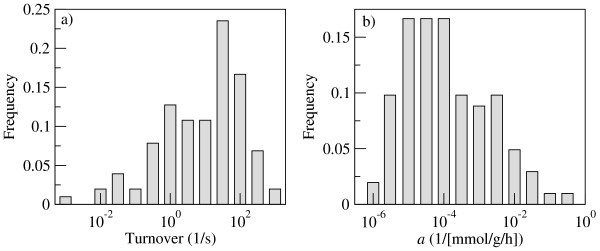
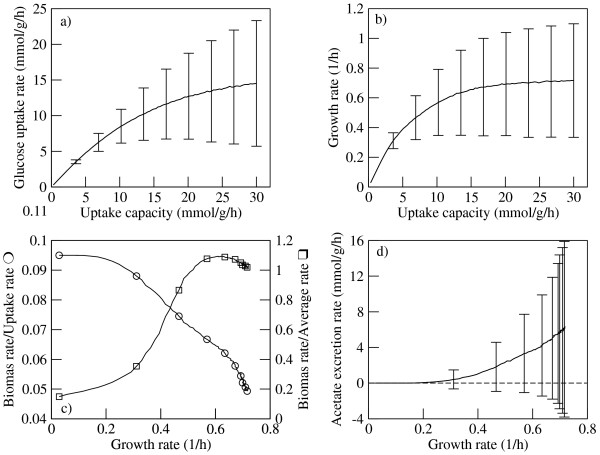
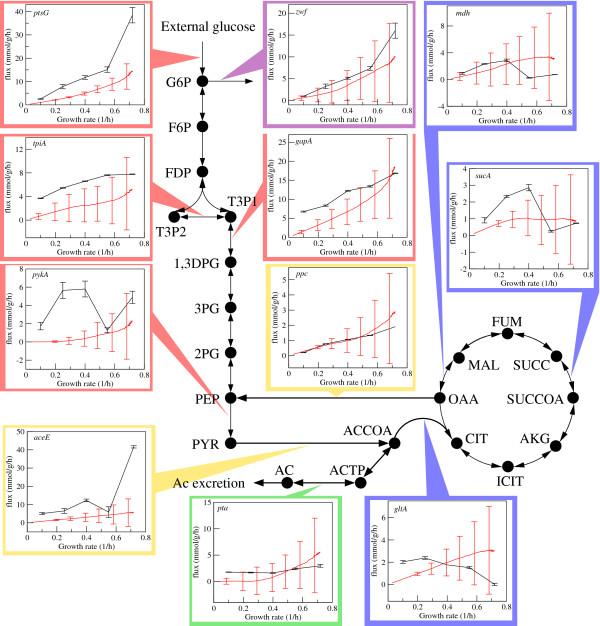
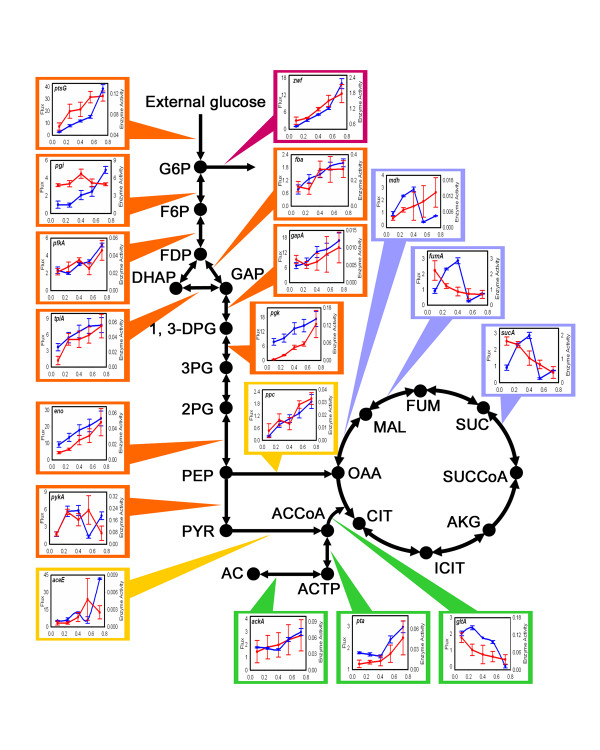
Verification
Claims the paper makes
The claims and statistics of this paper haven’t been checked yet.
Free: it reads the open-access text and checks the first 5 claims that cite a source we can check. Create a free account to check every claim.
Claims other papers make about this one
Each is checked against this paper’s own text: does it say what the citing paper says it does?
The cited source says what the claim attributes to it.
In the citing paper
“This has been shown with different approaches in a self‐replicator model (Molenaar et al, 2009; Berkhout et al, 2013), E. coli (Vazquez et al, 2008; O'Brien et al, 2013; Basan et al, 2015; Peebo et al, 2015), cancer cells (Shlomi et al, 2011; Vazquez & Oltvai, 2011), and S. cerevisiae (Van Hoek & Merks, 2012; Nilsson & Nielsen, 2016).”
From Improving the phenotype predictions of a yeast genome‐scale metabolic model by incorporating enzymatic constraints (2017) · cites this paper as Vazquez et al, 2008
In the citing paper
“Using FBAwMC together with a GEM of Escherichia coli, it was shown that acetate production at a high specific growth rate is due to the low catalytic efficiency of oxidative phosphorylation (Beg et al, 2007; Vazquez et al, 2008).”
From Improving the phenotype predictions of a yeast genome‐scale metabolic model by incorporating enzymatic constraints (2017) · cites this paper as Vazquez et al, 2008
In the citing paper
“Both of these findings point to the intracellular milieu being crowded not only with macromolecules (Vazquez et al, 2008), but also with small molecule metabolites, which greatly outnumber macromolecules on a molar basis.”
From Metabolomics-driven quantitative analysis of ammonia assimilation in E. coli (2009) · cites this paper as Vazquez et al, 2008
Self-check
Percentages, sums and reported differences re-computed from the paper’s own numbers.
The self-check needs the paper’s full text.
Citations
Cites
Network biology: understanding the cell's functional organization
Barabási, A.-L., & Oltvai, Z. N. (2004) · Nature Reviews Genetics · doi:10.1038/nrg1272 · Cited by 7,903
Self-citationFeist, A. M., Henry, C. S., Reed, J. L., Krummenacker, M., Joyce, A. R., Karp, P. D., Broadbelt, L. J., Hatzimanikatis, V., & Palsson, B. Ø. (2007) · Molecular Systems Biology · doi:10.1038/msb4100155 · Cited by 1,383
Analysis of optimality in natural and perturbed metabolic networks
Segrè, D., Vitkup, D., & Church, G. M. (2002) · Proceedings of the National Academy of Sciences · doi:10.1073/pnas.232349399 · Cited by 1,362
Zimmerman, S. B., & Trach, S. O. (1991) · Journal of Molecular Biology · doi:10.1016/0022-2836(91)90499-v · Cited by 1,337
Wolfe, A. J. (2005) · Microbiology and Molecular Biology Reviews · doi:10.1128/mmbr.69.1.12-50.2005 · Cited by 1,233
The Regulation of Cellular Systems
Heinrich, R., & Schuster, S. (1996) · Springer eBooks · doi:10.1007/978-1-4613-1161-4 · Cited by 1,193
Varma, A., & Palsson, B. O. (1994) · Applied and Environmental Microbiology · doi:10.1128/aem.60.10.3724-3731.1994 · Cited by 1,051
Genome-scale models of microbial cells: evaluating the consequences of constraints
Price, N. D., Reed, J. L., & Palsson, B. Ø. (2004) · Nature Reviews Microbiology · doi:10.1038/nrmicro1023 · Cited by 1,023
Systematic evaluation of objective functions for predicting intracellular fluxes in Escherichia coli
Schuetz, R., Kuepfer, L., & Sauer, U. (2007) · Molecular Systems Biology · doi:10.1038/msb4100162 · Cited by 677
BRENDA, enzyme data and metabolic information
Schomburg, I. (2002) · Nucleic Acids Research · doi:10.1093/nar/30.1.47 · Cited by 525
Cited by
Items 101–125 of 125
Mapping high-growth phenotypes in the flux space of microbial metabolism
Güell, O., Massucci, F. A., Font-Clos, F., Sagués, F., & Serrano, M. Á. (2015) · Journal of The Royal Society Interface · doi:10.1098/rsif.2015.0543 · Cited by 5
Constraint-based analysis of substructures of metabolic networks
Marashi, S. (2011) · Universitätsbibliothek der FU Berlin Hochschulschriftenstelle u. Dokumentenserver · doi:10.17169/refubium-17895 · Cited by 5
Balancing the cellular budget: Lessons in metabolism from microbes to cancer
Vibishan, B., Jolly, M. K., & Goyal, A. (2025) · Biosystems · doi:10.1016/j.biosystems.2025.105571 · Cited by 3
The cytoplasmic structure hypothesis for ribosome assembly, vertical inheritance, and phylogeny
Thaler, D. S. (2009) · BioEssays · doi:10.1002/bies.200800190 · Cited by 3
The effects of near optimal growth solutions in genome-scale human cancer metabolic model
Tzamali, E., Sakkalis, V., & Kostas Marias, A. (2012) · IEEE International Conference on Bioinformatics and Bioengineering (BIBE) · doi:10.1109/bibe.2012.6399774 · Cited by 3
Geometrically balanced model of cell growth
Vázquez, A., & Gedeon, T. (2025) · Journal of Theoretical Biology · doi:10.1016/j.jtbi.2025.112085 · Cited by 3
Verhagen, K. J. A., Eerden, S. A., Sikkema, B., & Wahl, A. (2022) · Frontiers in Molecular Biosciences · doi:10.3389/fmolb.2022.863470 · Cited by 3
Liu, J. (2010) · D-Scholarship@Pitt (University of Pittsburgh) · Cited by 1
Assessing FBA Optimal States in the Feasible Flux Phenotypic Space
Güell, O. (2017) · Springer theses · doi:10.1007/978-3-319-64000-6_6 · Cited by 1
Asefaw, B. K., Walia, N., Stroupe, M. E., Chen, H., & Tang, Y. (2024) · Environmental Science and Pollution Research · doi:10.1007/s11356-024-35140-6 · Cited by 1
Aging and recovery of Listeria monocytogenes ScottA
Alharbi, M. (2018) · UTAS Research Repository · doi:10.25959/100.00028360 · Cited by 2
Calmels, C., Joshi, C. J., Lewis, N. E., Malphettes, L., & Andersen, M. R. (2019) · Wiley eBooks · doi:10.1002/9783527811410.ch6 · Cited by 1
Impact of life origins on metabolismPreprint
Vázquez, A. (2024) · bioRxiv (Cold Spring Harbor Laboratory) · doi:10.1101/2024.06.07.597902 · Cited by 1
Goelzer, A. (2010) · theses.fr (ABES) · doi:10.70675/c001541ez91e1z4051z9599z9312c406d014 · Cited by 2
Vazquez, A., Markert, E. K., & Oltvai, Z. N. (2011) · PLoS ONE · doi:10.1371/journal.pone.0025881 · Cited by 87
Self-citationVázquez, A. (2011) · Nature Precedings · doi:10.1038/npre.2011.5784.1 · Cited by 1
Thermodynamic and stoichiometric constraint-based inference of metabolic phenotypes
Leupold, K. E. S. (2018) · University of Groningen research database (University of Groningen / Centre for Information Technology)
Dynamic optimization of metabolic networks coupled with gene expressionPreprint
Waldherr, S., Oyarzún, D. A., & Bockmayr, A. (2013) · arXiv (Cornell University) · doi:10.17169/refubium-19093
Rasnick, D. (2012) · CRC Press eBooks · doi:10.1201/b11665-10
(2017) · Elsevier eBooks · doi:10.1016/b978-0-12-812208-2.00018-4
Mechanisms of Selenate Reduction by Azospira Sp. A9d-23b in Distinct Reactor ConfigurationsPreprint
Asefaw, B. K., Walia, N., Stroupe, M. E., Chen, H., & Tang, Y. (2024) · SSRN Electronic Journal · doi:10.2139/ssrn.4685864
Growth-rate-dependent protein production in bacteria
Borkowski, O. (2013) · theses.fr (ABES) · doi:10.70675/433e453azd16cz4b03z81bazb07c122d24bf · Cited by 1
Re-allocation of cellular resources for the production of heterologous proteins in Bacillus subtilis
Zaarour, M. (2019) · theses.fr (ABES) · doi:10.70675/1ae7eea5z7c68z4e95z8f62z7f8d45eb0c51
Metadata
- Authors
- Vazquez, A., Beg, Q. K., deMenezes, M. A., Ernst, J., Bar-Joseph, Z., Barabási, A.-L., Boros, L. G., & Oltvai, Z. N.
- Affiliations
- Boston University (US)
- Carnegie Mellon University (US)
- University of California, Los Angeles (US)
- University of Pittsburgh (US)
- Corresponding author
- Oltvai, Zoltán N
- Venue
- BMC Systems Biology
- Published
- 2008-01-23
- Volume
- 2
- Issue
- 1
- Pages
- 7-7
- ISSN
- 1752-0509 (ISSN-L)
- PMC
- PMC2270259
- OpenAlex
- W2054087105
- Cited by
- 124
- References
- 32
- Citations by year
- 2026: 1 · 2025: 7 · 2024: 5 · 2023: 4 · 2022: 6 · 2021: 4 · 2020: 7 · 2019: 7 · 2018: 9 · 2017: 7 · 2016: 3 · 2015: 13 · 2014: 6 · 2013: 9 · 2012: 6
- FWCI
- 4.11
- Type
- journal article
- Language
- en
- Open access
- gold
- doi.org
- Licence
- cc-by
- creativecommons.org/licenses/by/2.0 (tdm)
- Locations
- BMC Systems Biology (publishedVersion, cc-by)
- PubMed Central (publishedVersion, cc-by)
- PubMed (publishedVersion)
- Digital Repository Service (Northeastern University) (submittedVersion)
- DOAJ (DOAJ: Directory of Open Access Journals) (submittedVersion)
- eScholarship (California Digital Library) (submittedVersion)
- eScholarship (California Digital Library) (submittedVersion, cc-by)
- OpenBU (Boston University) (submittedVersion, cc-by)
- Funders
- University of Pittsburgh
- University of Notre Dame
- National Institute of Allergy and Infectious Diseases (U01AI070499)
- Topics
- Life Sciences › Biochemistry, Genetics and Molecular Biology › Molecular Biology › Microbial Metabolic Engineering and Bioproduction
- Life Sciences › Biochemistry, Genetics and Molecular Biology › Molecular Biology › Gene Regulatory Network Analysis
- Life Sciences › Biochemistry, Genetics and Molecular Biology › Molecular Biology › Bioinformatics and Genomic Networks
- Keywords
- solvent capacity, macromolecular crowding, Escherichia coli metabolism, acetate excretion, growth rate, metabolic switch, Crabtree effect, Warburg effect, aerobic glycolysis
- MeSH terms
- Escherichia coli, Food, Models, Biological, Solvents, Gene Expression Regulation, Bacterial, Intracellular Space, Cell Size
About these checks
Registry, retraction, Cites and statistics results are computed, not judged, with one exception: a printed reference that no index lists is read once by a model before it counts as a citation error. Claims are extracted by a model and kept only when their quote appears verbatim in the text; each cited source is then checked, with a model’s help, for whether it says what the claim relies on. Those verdicts can be wrong — read the claim’s quote and the cited source before relying on one.
Statistics and arithmetic are recomputed, not judged.
Confidence bands are shown only for fields calibrated on our annotated test set. None is calibrated yet, so no band is shown.
What counts as a claim ›How we measure confidence ›How we check this ›
Are you an author, or do you see a problem with this page? Request a review
Data sources
Bibliographic data: Semantic Scholar, OpenAlex, Crossref.
Contains information from the Semantic Scholar Academic Graph Datasets, made available under the ODC Attribution License (ODC-BY 1.0).
Semantic Scholar’s data is described in: Kinney, R., et al. (2023). The Semantic Scholar Open Data Platform. arXiv:2301.10140.
