

Tracking humanitarian funding for reproductive health: a systematic analysis of health and protection proposals from 2002-2013
Open accessThe DOI matches its Crossref record; 20 of the 20 references it cites were found in a registry or an index.
Abstract
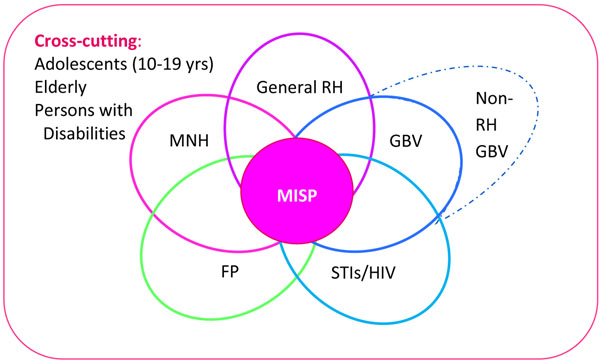
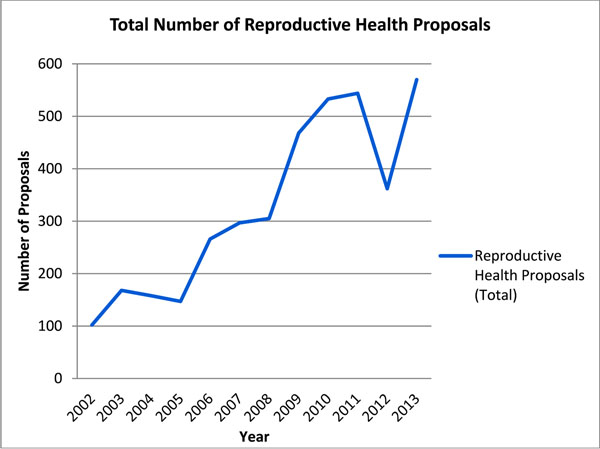
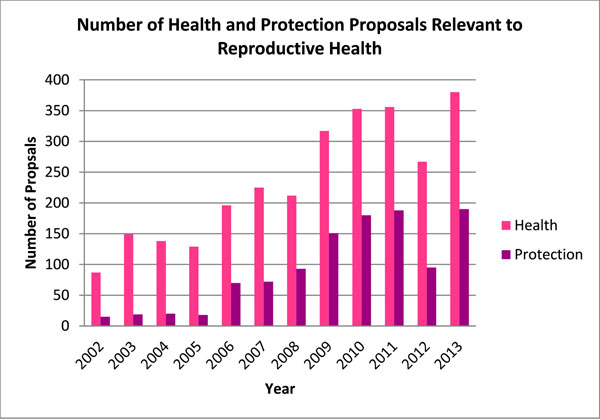
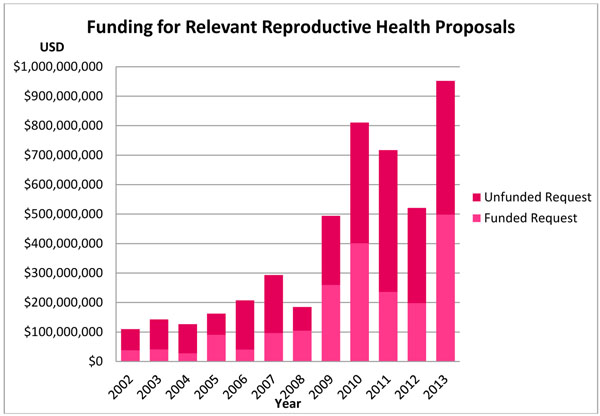
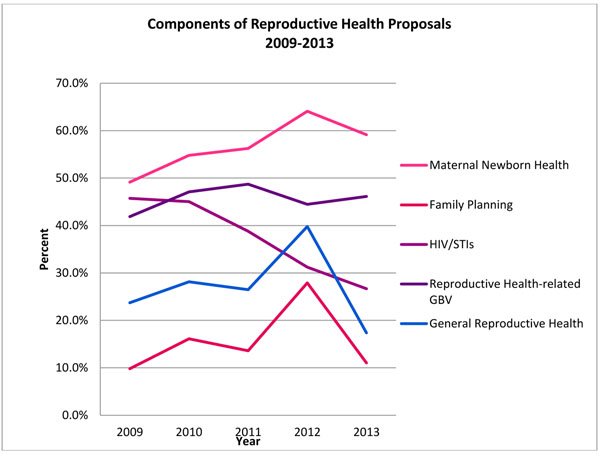
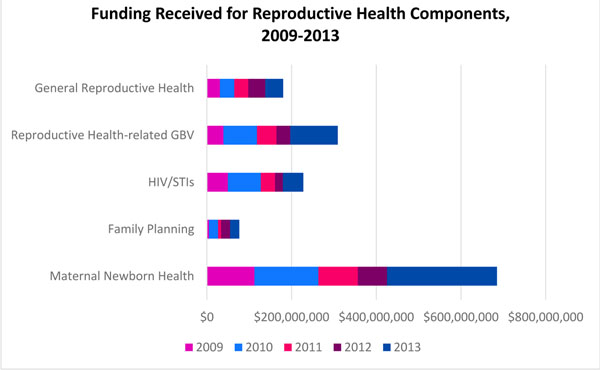
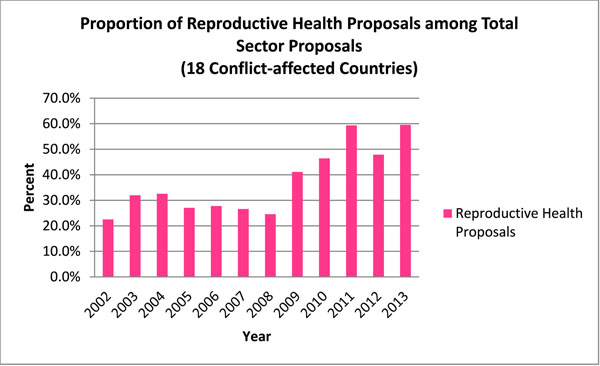
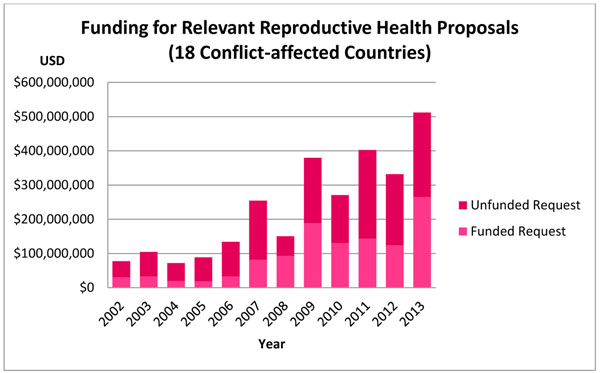
BACKGROUND: The Inter-agency Working Group on Reproductive Health in Crises conducted a ten-year global evaluation of reproductive health in humanitarian settings. This paper examines proposals for reproductive health activities under humanitarian health and protection funding mechanisms for 2002-2013, and the level at which these reproductive health proposals were funded. METHODS: The study used English and French health and protection proposal data for 2002-2013, extracted from the Financial Tracking Service (FTS) database managed by the United Nations Office for the Coordination of Humanitarian Affairs. Every project was reviewed for relevance against pre-determined reproductive health definitions for 2002-2008. An in-depth analysis was additionally conducted for 2009-2013 through systematically reviewing proposals via a key word search and subsequently classifying them under designated reproductive health categories. Among the relevant reproductive health proposals, counts and proportions were calculated in Excel based on their reproductive health components, primarily by year. Contributions, requests, and unfunded requests were calculated based on the data provided by FTS. RESULTS: Among the 11,347 health and protection proposals issued from 345 emergencies between 2002 and 2013, 3,912 were relevant to reproductive health (34.5%). The number of proposals containing reproductive health activities increased by an average of 21.9% per year, while the proportion of health and protection sector appeals containing reproductive health activities increased by an average of 10.1% per year. The total funding request over the 12 years amounted to $4.720 billion USD, of which $2.031 billion USD was received. Among reproductive health components for 2009-2013 proposals, maternal newborn health comprised the largest proportion (56.4%), followed by reproductive health-related gender-based violence (45.9%), HIV/sexually transmitted infections (37.5%), general reproductive health (26.2%), and lastly, family planning (14.9%). CONCLUSION: Findings show that more agencies are responding to humanitarian appeals by proposing to implement reproductive health programs and receiving increased aid over the twelve year period. While such developments are welcome, project descriptions show comparatively limited attention and programming for family planning and abortion care in particular.
Overview
The claims and statistics of this paper haven’t been checked yet.
Free: it reads the open-access text and checks the first 5 claims that cite a source we can check. Create a free account to check every claim.
Integrity signals
Registry
Cites
Statistics
Figures
Verification
Claims the paper makes
The claims and statistics of this paper haven’t been checked yet.
Free: it reads the open-access text and checks the first 5 claims that cite a source we can check. Create a free account to check every claim.
Claims other papers make about this one
Each is checked against this paper’s own text: does it say what the citing paper says it does?
The source backs part of the claim, not all of it — or backs it for a different population, condition or comparison.
In the citing paper
“In 2015, a global review of grant applications found that contraception, especially emergency and long-acting contraception, as well as safe abortion were significantly under-represented in humanitarian appeals [11].”
From Navigating the crisis landscape: engaging the ministry of health and United Nations agencies to make abortion care available to Rohingya refugees (2020) · cites this paper as [11]
Experimental — accuracy not yet measured
Self-check
Percentages, sums and reported differences re-computed from the paper’s own numbers.
The self-check needs the paper’s full text.
Citations
Cites
Mental health and psychosocial support in humanitarian settings: linking practice and research
Tol, W. A., Barbui, C., Galappatti, A., Silove, D., Betancourt, T. S., Souza, R., Golaz, A., & van Ommeren, M. (2011) · The Lancet · doi:10.1016/s0140-6736(11)61094-5 · Cited by 625
Humanitarian Charter and Minimum Standards in Humanitarian Response: The Sphere Handbook
The Sphere Project (2011) · The Sphere Project eBooks · doi:10.3362/9781908176202 · Cited by 556
Global humanitarian assistance report 2019
Urquhart, A. (2019) · Issue Lab (Candid) · Cited by 338
Report on the international conference on population and development
Paul, S. S. (1994) · Ageing International · doi:10.1007/bf02681115 · Cited by 283
Young, H., & Harvey, P. (2004) · Disasters · doi:10.1111/j.0361-3666.2004.00245.x · Cited by 255
Versteeg, M., & Maredi, M. (2006) · Local government bulletin · Cited by 251
Spiegel, P. B., Bennedsen, A. R., Claass, J., Bruns, L., Patterson, N., Yiweza, D., & Schilperoord, M. (2007) · The Lancet · doi:10.1016/s0140-6736(07)61015-0 · Cited by 225
Casey, S. E., Chynoweth, S. K., Cornier, N., Gallagher, M. C., & Wheeler, E. E. (2015) · Conflict and Health · doi:10.1186/1752-1505-9-s1-s3 · Cited by 157
Reproductive Health: A Right for Refugees and Internally Displaced Persons
Austin, J., Guy, S., Lee-Jones, L., McGinn, T., & Schlecht, J. (2008) · Reproductive Health Matters · doi:10.1016/s0968-8080(08)31351-2 · Cited by 142
United Nations Security Council Resolution 1333 (2000)
Walter, C. A., Vöneky, S., Röben, V., & Schorkopf, F. (2004) · Beiträge zum ausländischen öffentlichen Recht und Völkerrecht · doi:10.1007/978-3-642-18896-1_51 · Cited by 136
Research works printed but not linked: 12
- 3. Reproductive Health Access, Information and Services (RAISE) Initiative: Reproductive Health in Emergencies: A Review of the Policy Environment. New York; 2009.
- 6. United Nations Office for the Coordination of Humanitarian Affairs: Revised Guidelines for Flash Appeals. New York; 2009.
- 7. United Nations Office for the Coordination of Humanitarian Affairs: Consolidated Appeals Process: About the Process. 2014 [http://www. unocha.org/cap/about-the-cap/about-process].
- United Nations Office for the Coordination of Humanitarian Affairs: What is the Consolidated Appeals Process?. 2014
- 8. Financial Tracking Service: About FTS. 2014 [http://fts.unocha.org/ pageloader.aspx?page=AboutFTS-uctrlAboutFTS].
- 15. CARE International: Donor Spending on Gender in Emergencies 2013: An investigation by CARE International UK into the UN data on donor aid to emergency appeals for 17 countries in crisis. London; 2013.
- 17. Inter-agency Working Group on Reproductive Health in Crises: Inter-agency Field Manual on Reproductive Health in Humanitarian Settings. Geneva; 1999, 2010 revision.
- 19. Inter-agency Standing Committee: Health Cluster Guide: A practical guide for country-level implementation of the Health Cluster. Geneva; 2009.
- 23. Global Fund to Fight AIDS Tuberculosis and Malaria: Thematic Review of The Global Fund in Fragile States: Framing Document. 2013 [http://www. theglobalfund.org/documents/terg/evaluation_2013-2014/TERG_ Evaluation2013-2014ThematicReviewFragileStates_FramingDocument_en/].
- 26. United Nations Security Council: Resolution 1960. UN Security Council; 2010, UN Doc S/RES/1960.
- 28. IASC Gender Marker: 2012 Gender Marker: Analysis of Results and Lessons Learned. Geneva: UN OCHA; 2012.
- 29. Global Protection Cluster, Gender based Violence: What is the Gender- based Violence Area of Responsibility? 2014 [http://gbvaor.net/].
Cited by
Casey, S. E., Chynoweth, S. K., Cornier, N., Gallagher, M. C., & Wheeler, E. E. (2015) · Conflict and Health · doi:10.1186/1752-1505-9-s1-s3 · Cited by 157
Krause, S., Williams, H., Onyango, M. A., Sami, S., Doedens, W., Giga, N., Stone, E., & Tomczyk, B. (2015) · Conflict and Health · doi:10.1186/1752-1505-9-s1-s4 · Cited by 130
Self-citationSustainable Development Goals and the Ongoing Process of Reducing Maternal Mortality
Callister, L. C., & Edwards, J. E. (2017) · Journal of Obstetric, Gynecologic & Neonatal Nursing · doi:10.1016/j.jogn.2016.10.009 · Cited by 139
Kibira, S. P. S., Karp, C. A., Wood, S. N., Desta, S., Galadanci, H. S., Makumbi, F. E., Omoluabi, E., Shiferaw, S., Seme, A., TSUI, A. O., et al. (2020) · BMC Public Health · doi:10.1186/s12889-020-08977-y · Cited by 100
Casey, S. E., Gallagher, M. C., Kakesa, J., Kalyanpur, A., Muselemu, J.-B., Rafanoharana, R. V., & Spilotros, N. (2020) · PLoS Medicine · doi:10.1371/journal.pmed.1003086 · Cited by 112
Health financing in fragile and conflict-affected settings: What do we know, seven years on?
Bertone, M. P., Jowett, M. R., Dale, E. M., & Witter, S. (2019) · Social Science & Medicine · doi:10.1016/j.socscimed.2019.04.019 · Cited by 96
VanLeeuwen, C., & Torondel, B. (2018) · International Journal of Women's Health · doi:10.2147/ijwh.s135587 · Cited by 77
“From the seven reviews found in the search, only two focused on MHM in emergency contexts,(4,6) four included some component of MHM, mainly within water, hygiene and sanitation (WASH) in emergency contexts, and one include MHM within the reproductive health and protection sectors in a humanitarian context.(16) Literat…”
BackgroundWhy don’t humanitarian organizations provide safe abortion services?
McGinn, T., & Casey, S. E. (2016) · Conflict and Health · doi:10.1186/s13031-016-0075-8 · Cited by 70
Advancing reproductive health on the humanitarian agenda: the 2012-2014 global review
Chynoweth, S. K. (2015) · Conflict and Health · doi:10.1186/1752-1505-9-s1-i1 · Cited by 70
Tanyag, M. (2018) · Review of International Studies · doi:10.1017/s0260210518000128 · Cited by 62
Birth characteristics of Syrian refugees and Turkish citizens in Turkey in 2015
Demirci, H., Topak, N. Y., Ocakoğlu, G., Gömleksiz, M. K., Üstünyurt, E., & Turker, A. U. (2017) · International Journal of Gynecology & Obstetrics · doi:10.1002/ijgo.12088 · Cited by 53
Rural–urban health-seeking behaviours for non-communicable diseases in Sierra Leone
Idriss, A., Diaconu, K., Zou, G., Senesi, R. G. B., Wurie, H. R., & Witter, S. (2020) · BMJ Global Health · doi:10.1136/bmjgh-2019-002024 · Cited by 58
Sexual and reproductive health and rights in emergencies
Askew, I., Khosla, R., Daniels, U., Krause, S. K., Lofthouse, C., Say, L., Gilmore, K., & Zeid, S. (2016) · Bulletin of the World Health Organization · doi:10.2471/blt.16.173567 · Cited by 48
Self-citationOnyango, M. A., & Heidari, S. (2017) · Reproductive Health Matters · doi:10.1080/09688080.2017.1411093 · Cited by 54
Integrating mental health into primary care for post-conflict populations: a pilot study
Siriwardhana, C., Adikari, A., Jayaweera, K., Abeyrathna, B., & Sumathipala, A. (2016) · International Journal of Mental Health Systems · doi:10.1186/s13033-016-0046-x · Cited by 39
Sami, S., Amsalu, R., Dimiti, A., Jackson, D., Kenyi, S., Meyers, J., Mullany, L. C., Scudder, E., Tomczyk, B., & Kerber, K. (2018) · BMC Pregnancy and Childbirth · doi:10.1186/s12884-018-1953-4 · Cited by 38
Burkhardt, G., Scott, J. A., Onyango, M. A., Rouhani, S. A., Haider, S., Greiner, A. L., Albutt, K. H., VanRooyen, M. J., & Bartels, S. A. (2016) · Conflict and Health · doi:10.1186/s13031-016-0097-2 · Cited by 43
Chase, L., Marahatta, K., Sidgel, K., Shrestha, S., Gautam, K., Luitel, N. P., Dotel, B. R., & Samuel, R. (2018) · International Journal of Mental Health Systems · doi:10.1186/s13033-018-0221-3 · Cited by 44
Tran, N. T., Dawson, A. J., Meyers, J., Krause, S. K., Hickling, C., & Inter-Agency Working Group (IAWG) on Reproductive Health in Crisis (2015) · PLoS ONE · doi:10.1371/journal.pone.0137412 · Cited by 40
Self-citationCasey, S. E., Cannon, A., Balikubirhi, B. M., Muyisa, J. B., Amsalu, R., & Tsolka, M. (2017) · PLoS ONE · doi:10.1371/journal.pone.0182744 · Cited by 44
Touquet, H., Chynoweth, S. K., Martin, S. L., Reis, C., Myrttinen, H., Schulz, P., Turner, L., & Duriesmith, D. (2020) · Journal of Humanitarian Affairs · doi:10.7227/jha.049 · Cited by 46
Persson, M., Larsson, E. C., Islam, N. P., Gemzell‐Danielsson, K., & Klingberg‐Allvin, M. (2021) · Conflict and Health · doi:10.1186/s13031-021-00338-9 · Cited by 33
Ho, L. S., & Wheeler, E. (2018) · Global Health Science and Practice · doi:10.9745/ghsp-d-17-00365 · Cited by 27
Can voluntary pooled procurement reduce the price of antiretroviral drugs? a case study of Efavirenz
Kim, S. W., & Skordis, J. (2017) · Health Policy and Planning · doi:10.1093/heapol/czw165 · Cited by 37
Tousaw, E., La, R. K., Arnott, G., Chinthakanan, O., & Foster, A. M. (2017) · Reproductive Health Matters · doi:10.1080/09688080.2017.1392220 · Cited by 33
Tran, N. T., Greer, A., Dah, T. W., Malilo, B., Kakule, B., Morisho, T. F., Asifiwe, D. K., Musa, H., Simon, J., Meyers, J., et al. (2021) · Conflict and Health · doi:10.1186/s13031-021-00344-x · Cited by 27
Whitmill, J., Blanton, C., Doraiswamy, S., Cornier, N., Schilperood, M., Spiegel, P., & Tomczyk, B. (2016) · Conflict and Health · doi:10.1186/s13031-016-0069-6 · Cited by 25
“A positive finding in the study showed the number of health proposals with an RH component increased by an average of 10 % per year from 2002 to 2013 [6].”
BackgroundPalmer, J. J., & Storeng, K. T. (2016) · Social Science & Medicine · doi:10.1016/j.socscimed.2016.09.011 · Cited by 38
Fetters, T., Rubayet, S., Sultana, S., Nahar, S., Tofigh, S., Jones, L., Samandari, G., & Powell, B. (2020) · Conflict and Health · doi:10.1186/s13031-020-00298-6 · Cited by 22
Deitch, J., Amisi, J. P., Martinez, S., Meyers, J., Muselemu, J.-B., Nzau, J. J., Wheeler, E., & Casey, S. E. (2019) · Global Health Science and Practice · doi:10.9745/ghsp-d-18-00368 · Cited by 23
Amaral, B. D., & Sakellariou, D. (2021) · Frontiers in Global Women s Health · doi:10.3389/fgwh.2021.699121 · Cited by 21
Onyango, M. A., Burkhardt, G., Scott, J. A., Rouhani, S. A., Haider, S., Greiner, A. L., Albutt, K. H., Mullen, C., VanRooyen, M. J., & Bartels, S. A. (2016) · PLoS ONE · doi:10.1371/journal.pone.0164631 · Cited by 24
Perera, S. M., Achakzai, H., Giuffrida, M. M., Kulkarni, M. J., Nagle, D. C., Wali, M. K., & Casey, S. E. (2021) · BMC Women s Health · doi:10.1186/s12905-021-01529-5 · Cited by 23
Vu, A., Wirtz, A. L., Bundgaard, S., Nair, A., Luttah, G., Ngugi, S. W., & Glass, N. E. (2017) · Cambridge Prisms Global Mental Health · doi:10.1017/gmh.2017.18 · Cited by 17
Casey, S. E., Isa, G. P., Mazambi, E. I., Giuffrida, M. M., Kulkarni, M. J., & Perera, S. M. (2021) · Global Public Health · doi:10.1080/17441692.2021.1959939 · Cited by 23
Anti-Oppressive Social Work Research: Prioritising Refugee Voices in Kakuma Refugee Camp
Bilotta, N. (2020) · Ethics and Social Welfare · doi:10.1080/17496535.2020.1822425 · Cited by 20
The remarkable stability of fertility desires during the Colombian armed conflict 2000–2016
Svallfors, S. (2021) · Population Space and Place · doi:10.1002/psp.2514 · Cited by 19
Krause, S. K., Chynoweth, S. K., & Tanabe, M. (2017) · Reproductive Health Matters · doi:10.1080/09688080.2017.1401894 · Cited by 16
Self-citationAldridge, L. R., Garman, E. C., Luitel, N. P., & Jordans, M. J. D. (2020) · PLoS ONE · doi:10.1371/journal.pone.0231158 · Cited by 15
The Governance of Childhood Vaccination Services in Crisis Settings: A Scoping Review
Abdelmagid, N., Southgate, R. J., Alhaffar, M., Ahmed, M., Bani, H., Mounier‐Jack, S., Dahab, M., Checchi, F., Sabahelzain, M. M., Nor, B., et al. (2023) · Vaccines · doi:10.3390/vaccines11121853 · Cited by 21
Aham-Chiabuotu, C. B., Abel, G., & Thompson, L. (2019) · Global Public Health · doi:10.1080/17441692.2019.1690539 · Cited by 10
The Potential of Self-Managed Abortion to Expand Abortion Access in Humanitarian Contexts
Jayaweera, R., Powell, B., Gerdts, C., Kakesa, J., Ouédraogo, R., Ramazani, U., Wado, Y. D., Wheeler, E., & Fetters, T. (2021) · Frontiers in Global Women s Health · doi:10.3389/fgwh.2021.681039 · Cited by 10
Dennis, M. L., Owolabi, O., Cresswell, J. A., Chelwa, N., Colombini, M., Vwalika, B., Mbizvo, M. T., & Campbell, O. M. R. (2019) · Health Policy and Planning · doi:10.1093/heapol/czy106 · Cited by 10
Madoro, D. (2021) · Neuropsychiatric Disease and Treatment · doi:10.2147/ndt.s317803 · Cited by 6
Midwives’ Professional Competency for Preventing Neonatal Mortality in Disasters
Taghizadeh, Z., Rad, M. K., & Kazemnejad, A. (2016) · Health in Emergencies & Disasters Quarterly · doi:10.15412/j.hdq.09010306 · Cited by 5
The Global Politics of Sexual and Reproductive Health
Tanyag, M., Daigle, M., Jacot, J. R., Lazarito, A. G., Blanco, M. L., Loseñada, J., & Youde, J. (2024) · International Feminist Journal of Politics · doi:10.1080/14616742.2026.2670552 · Cited by 5
Spasenoska, D., Grundy, J., Omam, L.-A., Chaudhri, I. A., Khalid, F., O’Connell, T. S., & Tampe, T. (2024) · BMC Global and Public Health · doi:10.1186/s44263-024-00046-5 · Cited by 4
Ngwibete, A., Ogunbode, O. O., Oluwasola, T., & Omigbodun, A. O. (2024) · Malawi Medical Journal · doi:10.4314/mmj.v36i3.11 · Cited by 4
A social pedagogy lens for social work practice with return migrants
Kusari, K., & Walsh, C. A. (2021) · International Journal of Social Pedagogy · doi:10.14324/111.444.ijsp.2021.v10.x.014 · Cited by 7
Kisaakye, P., Küng, S. A., Obare, F., Rich, C., Odwe, G., Wado, Y. D., Wandera, B., Habteyesus, D. F., Dessie, Y., & Giorgio, M. (2025) · Women s Health · doi:10.1177/17455057251401754 · Cited by 1
Amare, N. S., Seyoum, T., Tariku, A., Mattison, C. A., & Klingberg‐Allvin, M. (2026) · Conflict and Health · doi:10.1186/s13031-026-00788-z · Cited by 1
Kanavas, B., & Zisopoulos, A. (2017) · Journal of finance and accounting · doi:10.12691/jfa-5-1-2 · Cited by 1
Addressing the rights of women in conflict and humanitarian settings
Khosla, R., Krause, S. K., & Tanabe, M. (2019) · Oxford University Press eBooks · doi:10.1093/oso/9780198814733.003.0008 · Cited by 2
Self-citationThe Global Crisis of Religious Fundamentalisms
Tanyag, M. (2024) · Oxford University Press eBooks · doi:10.1093/oso/9780197676332.003.0006 · Cited by 1
Access to family planning in refugee camps
WEDEKIND, L. E. (2015)
Culture, Gender and Health in the Humanitarian Context
Levy, E. (2018) · JOJ Nursing & Health Care · doi:10.19080/jojnhc.2018.06.555681
Gardner, K., Zaeem, S., Ghimire, J., Anisuzzaman, A., Kakule, B., Greer, A., Kalyanpur, A., & Tran, N. T. (2021) · Research Square · doi:10.21203/rs.3.rs-183559/v1
Gardner, K., Zaeem, S., Ghimire, J., Anisuzzaman, A., Kakule, B., Greer, A., Kalyanpur, A., & Tran, N. T. (2022) · SCIREA Journal of Health · doi:10.54647/pmh33204 · Cited by 1
Tanyag, M. (2024) · Oxford University Press eBooks · doi:10.1093/oso/9780197676332.002.0005
Tanyag, M. (2024) · Oxford University Press eBooks · doi:10.1093/oso/9780197676332.002.0004
Tanyag, M. (2024) · Oxford University Press eBooks · doi:10.1093/oso/9780197676332.003.0004
Crisis and the Global Political Economy of Sexual and Reproductive Health
Tanyag, M. (2024) · Oxford University Press eBooks · doi:10.1093/oso/9780197676332.003.0002
Tanyag, M. (2024) · Oxford University Press eBooks · doi:10.1093/oso/9780197676332.003.0001
Patriarchal Bargains and Nation-building in the Aftermath of Crisis
Tanyag, M. (2024) · Oxford University Press eBooks · doi:10.1093/oso/9780197676332.003.0005
Tanyag, M. (2024) · Oxford University Press eBooks · doi:10.1093/oso/9780197676332.002.0008
The Household as a Site of Depletion
Tanyag, M. (2024) · Oxford University Press eBooks · doi:10.1093/oso/9780197676332.003.0003
Regeneration and the Politics of Flourishing
Tanyag, M. (2024) · Oxford University Press eBooks · doi:10.1093/oso/9780197676332.003.0007
Tanyag, M. (2024) · Oxford University Press eBooks · doi:10.1093/oso/9780197676332.003.0008
Tanyag, M. (2024) · Oxford University Press eBooks · doi:10.1093/oso/9780197676332.002.0009
Perera, S. M., Achakzai, H., Giuffrida, M. M., Kulkarni, M. J., Nagle, D. C., Wali, M. K., & Casey, S. E. (2021) · Figshare · doi:10.6084/m9.figshare.16944387
Persson, M., Larsson, E. C., Islam, N. P., Gemzell-Danielsson, K., & Klingberg‐Allvin, M. (2021) · Figshare · doi:10.6084/m9.figshare.13572142
Perera, S. M., Achakzai, H., Giuffrida, M. M., Kulkarni, M. J., Nagle, D. C., Wali, M. K., & Casey, S. E. (2021) · Figshare · doi:10.6084/m9.figshare.16944384
Persson, M., Larsson, E. C., Islam, N. P., Gemzell-Danielsson, K., & Klingberg‐Allvin, M. (2021) · Figshare · doi:10.6084/m9.figshare.13572136
Persson, M., Larsson, E. C., Islam, N. P., Gemzell-Danielsson, K., & Klingberg‐Allvin, M. (2021) · Figshare · doi:10.6084/m9.figshare.13572139
47847926 Sexual and Reproductive Health and Family Planning in Armed Conflict and Violence
Torrisi, O., Leone, T., & Voir, R. L. (2025) · De Gruyter eBooks · doi:10.1515/9783111250144-027 · Cited by 1
Metadata
- Authors
- Tanabe, M., Schaus, K., Rastogi, S., Krause, S. K., & Patel, P.
- Affiliations
- Women's Refugee Commission (US)
- King's College London (GB)
- Corresponding author
- Tanabe, Mihoko
- Venue
- Conflict and Health
- Published
- 2015-02-02
- Volume
- 9
- Issue
- S1
- Pages
- S2-S2
- ISSN
- 1752-1505 (ISSN-L)
- PMC
- PMC4331814
- OpenAlex
- W2169710457
- Cited by
- 77
- References
- 20
- Citations by year
- 2026: 1 · 2025: 2 · 2024: 15 · 2023: 2 · 2022: 1 · 2021: 15 · 2020: 7 · 2019: 4 · 2018: 8 · 2017: 8 · 2016: 9 · 2015: 5
- FWCI
- 18.24
- Type
- journal article
- Language
- en
- Open access
- gold
- doi.org
- Licence
- cc-by
- Locations
- Conflict and Health (publishedVersion, cc-by)
- PubMed Central (publishedVersion, cc-by)
- PubMed (publishedVersion)
- Research Portal (King's College London) (submittedVersion, other-oa)
- Funders
- John D. and Catherine T. MacArthur Foundation
- Topics
- Health Sciences › Health Professions › General Health Professions › Health and Conflict Studies
- Social Sciences › Political Science and International Relations › International Human Rights and Reproductive Law
- Health Sciences › Medicine › Public Health, Environmental and Occupational Health › Reproductive Health and Contraception
- Keywords
- reproductive health, humanitarian funding, humanitarian appeal, maternal and newborn health, gender-based violence, family planning, abortion services, financing gap, humanitarian crisis
About these checks
Registry, retraction, Cites and statistics results are computed, not judged, with one exception: a printed reference that no index lists is read once by a model before it counts as a citation error. Claims are extracted by a model and kept only when their quote appears verbatim in the text; each cited source is then checked, with a model’s help, for whether it says what the claim relies on. Those verdicts can be wrong — read the claim’s quote and the cited source before relying on one.
Statistics and arithmetic are recomputed, not judged.
Confidence bands are shown only for fields calibrated on our annotated test set. None is calibrated yet, so no band is shown.
What counts as a claim ›How we measure confidence ›How we check this ›
Are you an author, or do you see a problem with this page? Request a review
Data sources
Bibliographic data: Semantic Scholar, OpenAlex, Crossref.
Contains information from the Semantic Scholar Academic Graph Datasets, made available under the ODC Attribution License (ODC-BY 1.0).
Semantic Scholar’s data is described in: Kinney, R., et al. (2023). The Semantic Scholar Open Data Platform. arXiv:2301.10140.
