

The DOI matches its Crossref record; 556 of the 560 references it cites were found in a registry or an index.
The dominant Anopheles vectors of human malaria in the Asia-Pacific region: occurrence data, distribution maps and bionomic précis
Open accessAbstract
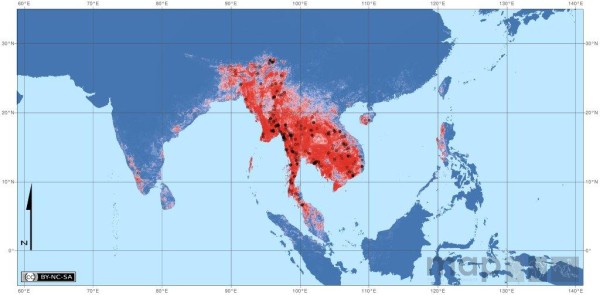
BACKGROUND: The final article in a series of three publications examining the global distribution of 41 dominant vector species (DVS) of malaria is presented here. The first publication examined the DVS from the Americas, with the second covering those species present in Africa, Europe and the Middle East. Here we discuss the 19 DVS of the Asian-Pacific region. This region experiences a high diversity of vector species, many occurring sympatrically, which, combined with the occurrence of a high number of species complexes and suspected species complexes, and behavioural plasticity of many of these major vectors, adds a level of entomological complexity not comparable elsewhere globally. To try and untangle the intricacy of the vectors of this region and to increase the effectiveness of vector control interventions, an understanding of the contemporary distribution of each species, combined with a synthesis of the current knowledge of their behaviour and ecology is needed. RESULTS: Expert opinion (EO) range maps, created with the most up-to-date expert knowledge of each DVS distribution, were combined with a contemporary database of occurrence data and a suite of open access, environmental and climatic variables. Using the Boosted Regression Tree (BRT) modelling method, distribution maps of each DVS were produced. The occurrence data were abstracted from the formal, published literature, plus other relevant sources, resulting in the collation of DVS occurrence at 10116 locations across 31 countries, of which 8853 were successfully geo-referenced and 7430 were resolved to spatial areas that could be included in the BRT model. A detailed summary of the information on the bionomics of each species and species complex is also presented. CONCLUSIONS: This article concludes a project aimed to establish the contemporary global distribution of the DVS of malaria. The three articles produced are intended as a detailed reference for scientists continuing research into the aspects of taxonomy, biology and ecology relevant to species-specific vector control. This research is particularly relevant to help unravel the complicated taxonomic status, ecology and epidemiology of the vectors of the Asia-Pacific region. All the occurrence data, predictive maps and EO-shape files generated during the production of these publications will be made available in the public domain. We hope that this will encourage data sharing to improve future iterations of the distribution maps.
Overview
The claims and statistics of this paper haven’t been checked yet.
Run the check — free, no account needed. It reads the open-access text and checks the sources it cites.
Integrity signals
Registry
Cites
Statistics
Figures
Verification
Claims the paper makes
The claims and statistics of this paper haven’t been checked yet.
Run the check — free, no account needed. It reads the open-access text and checks the sources it cites.
Claims other papers make about this one
Each is checked against this paper’s own text: does it say what the citing paper says it does?
The source backs part of the claim, not all of it — or backs it for a different population, condition or comparison.
In the citing paper
“The predicted native range of An. stephensi includes Saudi Arabia and Oman [6].”
From Sequencing confirms Anopheles stephensi distribution across southern Yemen (2024) · cites this paper as [6]
Experimental — accuracy not yet measured
Self-check
Percentages, sums and reported differences re-computed from the paper’s own numbers.
The self-check needs the paper’s full text.
Citations
Cites
Items 401–556 of 556
Larval ecology and mosquito fauna of upper Brahmaputra valley, northeast India.
Khan, S. A., Handique, R., Tewari, S. C., Dutta, P., Narain, K., & Mahanta, J. (1998) · PubMed · Cited by 14
Takagi, M., POHAN, W., HASIBUAN, H., Panjaitan, W., & Suzuki, T. (1995) · PubMed · Cited by 14
Local transmission of Plasmodium vivax malaria in Singapore.
Ooi, P. L., Goh, K. T., & Lee, K. M. (1997) · PubMed · Cited by 14
Insecticide susceptibility of mosquitoes invading tsunami-affected areas of Thailand.
Komalamisra, N., Trongtokit, Y., Palakul, K., Prummongkol, S., Samung, Y., Apiwathnasorn, C., Phanpoowong, T., Asavanich, A., & Leemingsawat, S. (2006) · PubMed · Cited by 14
Anthropophily of Anophelines in Duars of West Bengal and other regions of India.
Nandi, J., Kaul, S. M., Sharma, S., & Lal, S. (2000) · PubMed · Cited by 14
Sahu, S. S., Parida, S. K., Sadanandane, C., Gunasekaran, K., Jambulingam, P., & Das, P. (1990) · PubMed · Cited by 14
A differential response to mosquito nets by Anopheles and Culex mosquitoes from Papua New Guinea
Charlwood, J. D. (1986) · Transactions of the Royal Society of Tropical Medicine and Hygiene · doi:10.1016/0035-9203(86)90270-1 · Cited by 14
Experimental infection of Anopheles sinensis with Korean isolates of Plasmodium vivax
Lee, H. W., Cho, S., Shin, E.-H., Lee, J., Lee, J., Chai, J.-Y., Lee, S.-H., & Kim, T. S. (2001) · Korean Journal of Parasitology · doi:10.3347/kjp.2001.39.2.177 · Cited by 14
Disappearance of malaria vector Anopheles sundaicus from Chilika Lake area of Orissa State in India
Dash, A. P., Hazra, R. K., Mahapatra, N., & Tripathy, H. K. (2000) · Medical and Veterinary Entomology · doi:10.1046/j.1365-2915.2000.00265.x · Cited by 14
The Anopheles hyrcanus group in Indonesia.
O'Connor, C. T. (1980) · Mosquito systematics · Cited by 14
Evaluation of bifenthrin treated mosquito nets against anopheline and culicine mosquitoes.
Cp, B., Raghavendra, K., Adak, T., Op, S., Sp, S., Pk, M., Malhotra, M. S., Rs, S., & Sk, S. (2005) · PubMed · Cited by 14
Sadanandane, C., Jambulingam, P., & Subramanian, S. (2004) · Bulletin of Entomological Research · doi:10.1079/ber2003281 · Cited by 14
Hwang, U. W., Tang, L., Kobayashi, M., Yong, T., & Ree, H. I. (2006) · Journal of the American Mosquito Control Association · doi:10.2987/8756-971x(2006)22[324:mestaa]2.0.co;2 · Cited by 14
Collins, R. T., Narasimham, M. V. V. L., Dhal, K., & Mukherjee, B. P. (1991) · PubMed · Cited by 14
Baimai, V., Kijchalao, U., & Rattanarithikul, R. (1996) · PubMed · Cited by 14
Role of Anopheles culicifacies during an outbreak of malaria in Gorubandha P.H.C., Assam.
Bhuyan, M., Ng, D., Bc, C., Pk, T., Pk, S., Das, S. C., & Santhanam, K. (1997) · PubMed · Cited by 14
Studies on bionomics of Anopheles fluviatilis and its sibling species in Nainital district, U.P.
Rp, S., Nanda, N., Pandey, A. C., Vk, K., Joshi, H., & Sk, S. (1998) · PubMed · Cited by 14
Reisen, W. K. (1986) · Annals of Tropical Medicine and Parasitology · doi:10.1080/00034983.1986.11811985 · Cited by 14
Entomo-epidemiological studies of malaria in the coastal zone of Ho Chi Minh City, 1990-1992
Tang, N. V., Riec, L. Q., Huyên, V. T., & Lan, N. B. (1993) · Cahiers d'études et de recherches francophones / Santé · Cited by 14
Blood meal identification by using Microdot ELISA in vector mosquitoes.
Thapar, B. R., Sharma, S., Dasgupta, R. K., Kaul, S. M., Bali, A. K., Chhabra, K., & Lal, S. (1998) · PubMed · Cited by 13
ASINAS, C. Y., Hugo, C., Boase, C., & Evans, R. G. (1994) · PubMed · Cited by 13
Application of deltamethrin-impregnated bednets for mosquito and malaria control in Yunnan, China.
Zhang, Z., & Yang, C. (1996) · PubMed · Cited by 13
Atomosoedjono, S., Peenen, P. F. D. V., & Putrali, J. (1976) · Transactions of the Royal Society of Tropical Medicine and Hygiene · doi:10.1016/0035-9203(76)90056-0 · Cited by 13
Lien, J. C., Atmosoedjono, S., Usfinit, A. U., & Gundelfinger, B. F. (1975) · Journal of Medical Entomology · doi:10.1093/jmedent/12.3.333 · Cited by 13
Evidence of the Specific Status of Anopheles flavirostris (Diptera: Culicidae)
Somboon, P., Tuno, N., Tsuda, Y., & Takagi, M. (2000) · Journal of Medical Entomology · doi:10.1603/0022-2585(2000)037[0476:eotsso]2.0.co;2 · Cited by 13
Foley, D. H., & Bryan, J. H. (2000) · Medical and Veterinary Entomology · doi:10.1046/j.1365-2915.2000.00268.x · Cited by 13
Ebsworth, P., Bryan, J. H., & Foley, D. H. (2001) · PubMed · Cited by 13
Reiff, D. M., Kaneko, A., Taleo, G. K., Amos, M., & Lum, J. K. (2007) · Journal of Medical Entomology · doi:10.1603/0022-2585(2007)44[601:psagfo]2.0.co;2 · Cited by 13
Hassan, A. A., Rahman, W. F. W. A., Rashid, M. Z. A., Shahrem, M. R., & Adanan, C. R. (2001) · PubMed · Cited by 13
Malaria and its control in Iran.
Motabar, M., Tabibzadeh, I., & Manouchehri, A. V. (1975) · PubMed · Cited by 13
STUDIES ON THE ANOPHELES HYRCANUS GROUP OF MOSQUITOES IN CHINA
Feng, L. C. (1975) · Acta Entomologica Sinica · Cited by 13
Indoor resting anophelines of north Bengal.
Malakar, P. K., Das, S., Gk, S., Dasgupta, B., & Ak, H. (1995) · PubMed · Cited by 13
Studies on the medical ecological epidemiology in mangrove areas in Thailand.
Harinasuta, C., Guptavanij, P., & Vasuvat, C. (1974) · PubMed · Cited by 13
Vectors of malaria in the Philippines.
Catangui, F. P., Cv, V., & Bd, C. (1985) · PubMed · Cited by 13
Impact of urbanization on bionomics of An. culicifacies and An. stephensi in Delhi.
Cp, B., Adak, T., Vp, S., & Pk, M. (2001) · PubMed · Cited by 13
Claborn, D. M., Hshieh, P., Roberts, D. R., Klein, T. A., Zeichner, B. C., & Andre, R. G. (2002) · PubMed · Cited by 12
Rueda, L. M., Wilkerson, R. C., & Li, C. (2005) · Biodiversity Heritage Library (Smithsonian Institution) · doi:10.5281/zenodo.16456889 · Cited by 12
Ramasamy, M. S., KULASEKERA, R., Srikrishnaraj, K. A., & Ramasamy, R. (1994) · Medical and Veterinary Entomology · doi:10.1111/j.1365-2915.1994.tb00508.x · Cited by 12
Hii, J., Kan, S. K. P., Vun, Y. S., Chin, K. F., Lye, M. S., Mak, J. W., & Cheong, W. H. (1985) · Transactions of the Royal Society of Tropical Medicine and Hygiene · doi:10.1016/0035-9203(85)90189-0 · Cited by 12
Rahman, W. A., Hassan, A. A., Adanan, C. R., & Rashid, M. R. A. (1993) · Acta Tropica · doi:10.1016/0001-706x(93)90080-u · Cited by 12
Oo, T. T. (2003) · heiDOK (Heidelberg University) · doi:10.11588/heidok.00003305 · Cited by 12
Lee, V. H., Atmosoedjono, S., Dennis, D. T., Suhaepi, A., & Suwarta, A. (1983) · Journal of Medical Entomology · doi:10.1093/jmedent/20.5.577 · Cited by 12
Dynamics of malaria transmission with reference to development projects in Nepal.
Sl, S. (1985) · PubMed · Cited by 12
Resting of mosquitoes in outdoor pit shelters in Kheda district, Gujarat.
Rm, B., Rc, S., Yadav, R. S., & Vp, S. (1989) · PubMed · Cited by 12
Prevalence and seasonal distribution of anopheline fauna in district Bikaner (Rajasthan).
Bansal, S., & Singh, K. V. (1993) · PubMed · Cited by 12
Lee, D. K. (1998) · PubMed · Cited by 12
Study on bionomics of principal malaria vectors in Kratie province, Cambodia.
Socheath, S., Seng, C. M., RathTS, Deesin, Deesin, T., & Apiwathanasorn, C. (2000) · PubMed · Cited by 12
Breeding point and larval association of anopheline mosquitoes of northwest Mindoro, Philippines.
Wooster, M. T., & Rivera, D. (1985) · PubMed · Cited by 11
Renshaw, M. A., Elias, M., Maheswary, N. P., Hassan, M. M., Silver, J., & Birley, M. H. (1996) · Annals of Tropical Medicine and Parasitology · doi:10.1080/00034983.1996.11813092 · Cited by 11
Malaria risk assessment for the Republic of Korea based on models of mosquito distribution.
Foley, D. H., Klein, T. A., Kim, H. C., Wilkerson, R. C., & Rueda, L. M. (2008) · PubMed · Cited by 11
Maekawa, Y., Tsuda, Y., Dachlan, Y. P., Yotopranoto, S., GERUDUG, I. K. K., Yoshinaga, K., Kanbara, H., & Takagi, M. (2009) · Medical Entomology and Zoology · doi:10.7601/mez.60.1 · Cited by 11
Whang, C. H. (1962) · Yonsei Medical Journal · doi:10.3349/ymj.1962.3.1.39 · Cited by 11
Contiguity versus similarity paraphasic substitutions in Broca's and in Wernicke's aphasia
Gainotti, G., Miceli, G., & Caltagirone, C. (1981) · Journal of Communication Disorders · doi:10.1016/0021-9924(81)90042-3 · Cited by 11
Chow, C. Y., Ibnoe, R. M., & Josopoero, S. T. (1960) · Bulletin of Entomological Research · doi:10.1017/s0007485300054675 · Cited by 11
Shin, E.-H., Lee, W.-J., Lee, H. I., Lee, D., & Klein, T. A. (2005) · PubMed · Cited by 11
Kirnowardoya, S., & Gp, Y. (1987) · PubMed · Cited by 11
Rahman, W. F. W. A., Hassan, A. A., Adanan, C. R., & Razha, R. M. (1995) · PubMed · Cited by 11
IKEMOTO, T., Sumitro, PANJAITAN, W., & Shibuya, T. (1986) · Medical Entomology and Zoology · doi:10.7601/mez.37.105 · Cited by 11
Malaria outbreak in a tribal area of Gujarat state, India.
Srivastava, H. C., & Yadav, R. S. (2000) · PubMed · Cited by 10
Salinity tolerance of sibling species in the taxon Anopheles subpictus Grassi, 1899.
Reuben, R., Kalyanasundaram, M., & Sg, S. (1984) · PubMed · Cited by 10
Bhatt, R. M., Sharma, R., & Kohli, V. (1990) · PubMed · Cited by 10
Nocturnal biting rhythms of mosquitoes (Diptera Culicidae) in Sri Lanka
Amerasinghe, F. P., & Indrajith, N. G. (1995) · Tropical Zoology · doi:10.1080/03946975.1995.10539271 · Cited by 10
Malaria research in the Solomon Islands
Barnish, G. (1999) · Transactions of the Royal Society of Tropical Medicine and Hygiene · doi:10.1016/s0035-9203(99)90159-1 · Cited by 10
Biting rhythms of some anophelines in central Gujarat.
Rm, B., & Vk, K. (1996) · PubMed · Cited by 10
Status of malaria vectors in Malaysia.
Cc, K. (1985) · PubMed · Cited by 10
Malaria transmission in Nagaland, India. Part-I--Anophelines and their seasonality.
Sp, M., Nandi, J., Narasimham, M. V. V. L., & Rajagopal, R. (1993) · PubMed · Cited by 10
Biology of malaria vectors in central Gujarat.
Bhatt, R. M., Srivastava, H. C., & Pujara, P. K. (1994) · PubMed · Cited by 10
Miyagi, I., Toma, T., Malenganisho, W. L. M., & Uza, M. (1996) · PubMed · Cited by 10
Hasan, A. U., Suguri, S., Fujimoto, C., Itaki, R. L., Harada, M., Kawabata, M., Bugoro, H., & Bobogare, A. (2008) · BMC Evolutionary Biology · doi:10.1186/1471-2148-8-318 · Cited by 9
MOSQUITO SPECIES (DIPTERA: CULICIDAE) FROM LOMBOK ISLAND, INDONESIA
Miyagi, I., Toma, T., Mogi, M., Martono, Yotopranoto, S., Arifin, Z., & Dachlan, Y. P. (1994) · Mosquito systematics · Cited by 9
Rahman, W. F. W. A., Adanan, C. R., & Hassan, A. A. (2002) · PubMed · Cited by 9
Kumar, K., Katyal, R., & Gill, K. S. (2002) · PubMed · Cited by 9
Prakash, A., Bhattacharyya, D. R., Mohapatra, P. K., & Mahanta, J. (2002) · PubMed · Cited by 9
Investigation on malaria vectors and mosquito fauna in south Tripura district, Tripura state.
Prakash, A., Bhattacharyya, D. R., Mohapatra, P. K., & Mahanta, J. (1998) · PubMed · Cited by 9
Chakraborty, S., Ray, S., & Tandon, N. (1998) · PubMed · Cited by 9
Ecological observations on the anopheline mosquitoes of Jalpaiguri Duars, West Bengal.
Nandi, J., Rao, J. S., Dasgupta, R. K., & Sharma, R. S. (1996) · PubMed · Cited by 9
Malaria in Honiara, Solomon Islands: vector studies.
Bell, D. E., Cameron, A., Fernando, M., Pholsyna, K., Foley, D. H., Bakote'e, B., & Bryan, J. H. (1996) · PubMed · Cited by 9
Breeding habitats of mosquitoes in Goa.
Kulkarni, S. M., & Naik, P. S. (1989) · PubMed · Cited by 9
Entomo-epidemiological studies of malaria in the coastal zone of Ho Chi Minh City, 1990-1992
Tang, N. V., y Riec, L. Q., Huyen, V. T. I., et al. (1993) · Cited by 9
Mwandawiro, C. S., Tsuda, Y., Tuno, N., Higa, Y., Urakawa, E., Sugiyama, A., Yanagi, T., & Takagi, M. (1999) · Medical Entomology and Zoology · doi:10.7601/mez.50.267 · Cited by 8
VECTORS OF MALARIA AND FILARIASIS IN INDONESIA
Hoedojo, H. (1989) · Cited by 8
Salinity tolerance of Anopheles farauti Laveran sensu stricto.
Bell, D., Bryan, J. H., Cameron, A., Foley, D. H., & Pholsyna, K. (1999) · PubMed · Cited by 8
Anopheles (Cellia) balabacensis baisas is a vector of Wuchereria bancrofti in Sabah, Malaysia
Hii, J., Kan, S. K. P., Foh, C. K., & Chan, M. K. C. (1984) · Transactions of the Royal Society of Tropical Medicine and Hygiene · doi:10.1016/0035-9203(84)90302-x · Cited by 8
MOSQUITOES OF THE MANGROVE FORESTS OF INDIA: PART 5–CHORAO, GOA, AND VIKHROLI, MAHARASHTRA
Rajavel, A. R., Natarajan, R., Vaidyanathan, K., & Soniya, V. P. (2007) · Journal of the American Mosquito Control Association · doi:10.2987/8756-971x(2007)23[91:motmfo]2.0.co;2 · Cited by 8
First Record of Anopheles balabacensis from Western Sumbawa Island, Indonesia
Maekawa, Y., Sunahara, T., Dachlan, Y. P., Subagyo, Y., Basuki, S., Uemura, H., Kanbara, H., & Takagi, M. (2009) · Journal of the American Mosquito Control Association · doi:10.2987/08-5824.1 · Cited by 8
Ma, A., Vp, S., Pk, M., & Razdan, R. K. (1991) · PubMed · Cited by 8
Tun-Lin, W., Htay-Aung, Moe-Moe, Sebastián, A., Myo-Paing, & Myat-Myat-Thu (1987) · PubMed · Cited by 8
Breeding habitats of Anopheles culicifacies in Rameswaram Island.
Sabesan, S., Krishnamoorthy, K., Jambulingam, P., Rajendran, G., Np, K., & Pk, R. (1986) · PubMed · Cited by 8
Seasonality of indoor resting mosquitoes in a broken-forest ecosystem of north-western Orissa.
Sk, C., Yadav, R. S., & Vp, S. (1993) · PubMed · Cited by 8
Chiang, G. L., Cheong, W. H., Samarawickrema, W. A., Mak, J. W., & Sk, K. (1984) · PubMed · Cited by 8
Kitthawee, S., Jd, E., & Upatham, E. S. (1993) · PubMed · Cited by 8
Kar, I., Eapen, A. K., & Ravindran, K. J. (1996) · PubMed · Cited by 8
Vector of malaria in Kabul, Afghanistan
Iyengar, M. O. T. (1954) · Transactions of the Royal Society of Tropical Medicine and Hygiene · doi:10.1016/0035-9203(54)90102-9 · Cited by 7
Atmosoedjono, S., & Dennis, D. T. (1977) · Mosquito news · Cited by 7
Dry season distribution of mosquito larvae in the bed of the Mekong River, northeastern Thailand
Rattanarithikul, R., Mongkolpanya, K., Noigamol, C., Chanaimongkol, S., Mahapibul, P., & Nakngen, S. (1994) · Journal of the American Mosquito Control Association · Cited by 7
Mk, D., Nagpal, B. N., & Ma, A. (2004) · PubMed · Cited by 7
Study of malaria in a village of lower Myanmar.
Mya, M. M., Saxena, R., & Soe, P. (2004) · PubMed · Cited by 7
Bang, Y. H. (1985) · PubMed · Cited by 7
Kant, R., & Pandey, S. (2001) · PubMed · Cited by 7
Mosquito fauna of the Bengkoka Peninsula, Sabah, Malaysia.
Cheong, W. H., LOONG, K. P., Mahadevan, S., Mak, J. W., & Kan, S. K. P. (1984) · PubMed · Cited by 7
Filariasis and its control in Fujian, China.
Jy, L., Xj, L., Chen, Z., Zp, T., Gb, Z., Yn, C., Yz, Z., Sp, W., Xh, H., & Fz, Y. (1991) · PubMed · Cited by 7
Microfilarial periodicity of Wuchereria bancrofti in Vanuatu
Abé, M., Yaviong, J., Taleo, G. K., & Ichimori, K. (2003) · Transactions of the Royal Society of Tropical Medicine and Hygiene · doi:10.1016/s0035-9203(03)80004-4 · Cited by 6
MALARIA ENDEMIC PATTERNS ON LOMBOK AND SUMBAWA ISLANDS, INDONESIA
Dachlan, Y. P., Yotopranoto, S., Sutanto, B. V., SANTOSO, S. H. B., WIDODO, A. S., Kusmartisnawati, Sutanto, A., GERUDUG, I. K. K., Takagi, M., Tsuda, Y., et al. (2005) · Tropical Medicine and Health · doi:10.2149/tmh.33.105 · Cited by 6
Breeding of Anopheles stephensi (Liston) in wells and cisterns in Salem, Tamil Nadu.
Cp, B., & Reuben, R. (1979) · PubMed · Cited by 6
Daytime resting habits of Anopheles stephensi in an area of Calcutta.
Ak, H., Kk, C., & Biswas, D. (1987) · PubMed · Cited by 6
Wh, H. (1971) · PubMed · Cited by 6
Dewit, I., Coosemans, M., Srikrishnaraj, K. A., & Wéry, M. (1994) · PubMed · Cited by 6
Vp, S., Gk, S., Ma, A., Pk, M., Razdan, R. K., & Cp, B. (1986) · PubMed · Cited by 6
Anophelines of Siliguri-Naxalbari block, Darjeeling, West Bengal.
Malakar, P. K., Das, S., Gk, S., Dasgupta, B., & Ak, H. (1995) · PubMed · Cited by 6
Seasonal prevalence and succession of rice field breeding mosquitoes of central Gujarat.
Kant, R., Pandey, S., & Sharma, R. C. (1992) · PubMed · Cited by 6
Kant, R., Pandey, S., Sharma, S., & Sharma, V. P. (1998) · PubMed · Cited by 6
Epidemio-entomological survey on malarial vector mosquitoes in Kyongbuk, Korea
Joo, C. Y., & Kang, G. T. (1992) · Korean Journal of Parasitology · doi:10.3347/kjp.1992.30.4.329 · Cited by 5
Atmosoedjono, S., DJOHARTI, Purnomo, P., & Bangs, M. J. (1993) · Medical and Veterinary Entomology · doi:10.1111/j.1365-2915.1993.tb00713.x · Cited by 5
Self-citationGunasekaran, K. (1994) · PubMed · Cited by 5
Soil analysis around anopheline breeding habitats in north-western Thailand.
Kankaew, P., Krasaesub, S., & Sithiprasasna, R. (2005) · PubMed · Cited by 5
Chemical control on malaria vector Anopheles aconitus in Central Java, Indonesia.
Sudomo, M., Baroji, & Sustriayu, N. (1985) · PubMed · Cited by 5
Studies on malaria and filariasis vectors in Kamorta and Great Nicobar Islands.
Das, S. C., Dr, N., Bhuyan, M., Ng, D., Baruah, I., & Pk, T. (1989) · PubMed · Cited by 5
Biting rhythms of malaria vector Anopheles culicifacies in Kheda district, Gujarat.
Rm, B., Rc, S., Vk, K., Gautam, A. S., & Dk, G. (1991) · PubMed · Cited by 5
Rn, B., Rc, S., Hc, S., Gautam, A. S., & Dk, G. (1993) · PubMed · Cited by 5
Breeding habits of Anopheles stephensi Liston in an area of Calcutta.
Biswas, D., Rn, D., Sk, G., Kk, C., & Ak, H. (1992) · PubMed · Cited by 5
Malaria & other common ailments among upper Bonda tribals in Koraput district, Orissa.
Das, L. K., Ss, M., Jambulingam, P., Gunasekaran, K., Pani, S. P., & Das, P. K. (1989) · PubMed · Cited by 5
Kant, R., & Srivastava, H. C. (2004) · PubMed · Cited by 4
Sundararaj, R., & Rao, D. R. (1993) · PubMed · Cited by 4
A quantitative survey of anophelines in six villages of Kheda District, Gujarat.
Bhatt, R. M., Sharma, R. C., Gautam, A. S., Gupta, D. K., & Srivastava, H. C. (1991) · PubMed · Cited by 4
Gel diffusion analysis of host preference pattern of Anopheles subpictus in West Bengal, India.
Banerjee, P. K., Ghosh, K. N., & Chatterjee, R. (1991) · PubMed · Cited by 4
Lee, D. J., Hicks, M. M., Griffiths, M., Debenham, M., Bryan, J. H., Russell, R. C., Geary, M., & Marks, E. N. (1987) · Cited by 4
A survey of the mosquitos (Diptera: Culicidae) of Napsan, Palawan, Republic of the Philippines.
Schultz, G. W. (1993) · PubMed · Cited by 4
Self, L. S., Usman, S., Nelson, M. J., Saroso, J. S., Pant, C. P., & Fanara, D. M. (1976) · Cited by 4
Anopheles sundaicus (ludlowi) and Malaria in Calcutta.
Sen, P. (1938) · Journal of the Malaria Institute of India · Cited by 4
Some aspects of changing behaviour of malaria vectors in tribal areas of India.
Rd, J., Sn, S., Dhingra, N., Thapar, B. R., Yadava, R. L., & Lal, S. (1998) · PubMed · Cited by 4
Seasonality of indoor resting anophelines in stone quarry area of District Allahabad, U.P.
Tiwari, S., Prakash, A., & Sk, G. (1997) · PubMed · Cited by 4
Blood meals of mosquito vectors of filariasis in Guizhou Province, China.
Wang, S., & Hj, Z. (1989) · PubMed · Cited by 4
Jaal, Z., & MacDonald, W. (1993) · PubMed · Cited by 4
Man-mosquito contact at Kowanyama, northern Queensland, Australia.
Bh, K. (1985) · PubMed · Cited by 4
Bryan, J. H., Dagoro, H., & Southgate, B. (1995) · PubMed · Cited by 4
Rajavel, A. R., & Das, P. K. (1998) · PubMed · Cited by 4
[Filariasis in the developing countries of southeast Asia].
Pokrovskii, V. I., Ta, N., & Godovannyĭ, B. A. (1986) · PubMed · Cited by 4
Shukla, R. P., Sharma, S., Raghavendra, K., & Subbarao, S. K. (2006) · PubMed · Cited by 4
Foley, D. H., & Bryan, J. H. (2000) · Medical and Veterinary Entomology · doi:10.1046/j.1365-2915.2000.00219.x · Cited by 4
Nagao, Y., Dachlan, Y. P., Soedarto, Hidajati, S., Yotopranoto, S., Kusmartisnawati, Subekti, S., Ideham, B., Tsuda, Y., Kawabata, M., et al. (2003) · PubMed · Cited by 3
Malaria vector mosquitoes in the Solomon Islands.
Suzuki, H., Ishii, A. I., Nihei, N., & Sasa, M. (1998) · Cited by 3
On Some Mosquitoes of Guam, Marianas Islands (Diptera: Culicidae)
Basio, R. G., & Reisen, W. K. (1971) · doi:10.59852/tpe-a42v2i1 · Cited by 3
Singh, S., Raghavendra, K., Kumar, R., Nanda, N., & Subbarao, S. K. (2004) · PubMed · Cited by 3
White, R. S., GHOSH, A. R., & Rao, J. V. V. (1945) · PubMed · Cited by 3
Bionomics of vector anophelines in District Naini Tal, Uttar Pradesh.
Rp, S., Pandey, A. C., Vk, K., Vp, O., & Vp, S. (1995) · PubMed · Cited by 3
Singh, S., Singh, R. P., & Jauhari, R. K. (1995) · PubMed · Cited by 3
Jaal, Z., & Ww, M. (1993) · PubMed · Cited by 3
Song, J., & Peng, Y. (1996) · PubMed · Cited by 3
Observations on the breeding of anophelines in rice fields of Shahjahanpur district, Uttar Pradesh.
Sn, S., & Rn, P. (1991) · PubMed · Cited by 3
Kere, N., Parkinson, A. D., & Samrawickerema, W. A. (1995) · PEDIATRICS · doi:10.1542/peds.95.6.828 · Cited by 2
[Environmental investigation in areas where Anopheles anthropophagus distributed in Hubei Province].
Gq, H., Hf, L., Hx, Z., Jy, L., Jb, Z., Chen, G. Y., Ph, Y., & Gz, M. (2001) · PubMed · Cited by 2
Resting sites of Anopheles stephensi Liston in Calcutta.
Kk, C., Biswas, D., Dk, C., Mukherjee, H., & Ak, H. (1993) · PubMed · Cited by 2
Esbiothrin-impregnated ropes as mosquito repellent.
Ma, A., Vp, S., & Razdan, R. K. (1992) · PubMed · Cited by 2
Feeding behaviour of Anopheles stephensi in Calcutta.
Chandra, G., Kk, C., & Ak, H. (1996) · PubMed · Cited by 2
Biting sites of Anopheles koliensis on human collectors in Papua New Guinea.
Cooper, R. D., & Frances, S. P. (2000) · PubMed · Cited by 1
(1976) · Mosquito news
Research works printed but not linked: 53
- WHO: World malaria report 2010. 2010, World Health Organization (WHO), 238-
- White GB: Malaria. Geographical distribution of arthropod-borne diseases and their principal vectors. 1989, Geneva: World Health Organization, Division of Vector Biology and Control, WHO/VBC/89967, 7-22
- PubMed. [ http://www.ncbi.nlm.nih.gov/pubmed/ ]
- Coosemans M, Thuan LK, Socheat D, Phompida S, Baimai V, Manguin S, Harbach RE, Hemingway J: Monitoring insecticide resistance and mapping malaria vectors in Southeast Asia: a prerequisite for sustainable malaria vector control. INCO report. 2006, IC4-CT-2002-10041, 202
- Reid JA: Anopheline mosquitoes of Malaya and Borneo. 1968, Malaysia
- Harrison BA, Scanlon JE: Medical entomology studies II. The subgenus Anopheles in Thailand (Diptera: Culicidae). Contrib Am Entomol Inst (Ann Arbor). 1975, 12: 1-307.
- Reid JA, Harrison BA, Atmosoedjono S: Variation and vector status in Anopheles barbirostris. Mosq Syst. 1979, 11: 235-251.
- Ma SF: Studies on the Anopheles (A.) sinensis group of mosquitoes in China, including four new sibling species [in Chinese]. Sinozoologia. 1981, 1: 59-70. 54 pls
- Chow C-Y: Malaria vectors in China. Proceeding of the IVth National Vector Control Symposium, Taichung, Taiwan. 1991, Chinese Journal of Entomology Special Publication
- Otsuru M: A new species of Anopheles hyrcanus in Japan [in Japanese]. Fukuoka Igaku Zassi. 1949, 40: 139-148.
- Jinjiang X: Present filariasis situation in The People's Republic of China. Proc WHO Regional Seminar; Kuala Lumpur. Edited by: Mak JW, Yong HS. 1985
- Baisas FE: The mosquito fauna of Subic Bay Naval Reservation. 1974, Republic of the Philippines: Headquarters, First Medical Service Wing (PACAF), Technical Report No. 72-2, 1-170 + illus
- Kamimura K: On Anopheles yesoensis Tsuzuki, 1901 reported from Hokkaido [in Japanese]. Jap J Sanit Zool. 1976, 27:
- Chau GW: An illustrated guide to the identification of the mosquitoes of Hong Kong. 1982, Urban Council Publication, Hong Kong Government
- Rueda LM, Ma Y, Song GH, Gao Q: Notes on the distribution of Anopheles (Anopheles) sinensis Wiedemann (Diptera: Culicidae) in China and the status of some Anopheles hyrcanus group type specimens from China. Proc Entomol Soc Wash. 2005, 107: 235-238.
- Kim DC: Brugian filariasis in Korea. Proc WHO Regional Seminar; Kuala Lumpur. Edited by: Mak JW, Yong HS. 1985
- Whang CY: Studies on the bionomics of Anopheles mosquitoes in Korea [in Korean]. Korean J Parasitol. 1964, 9: 49-74.
- Tsukamoto W, Miyagi I, Toma T: A revised checklist of the Philippine mosquitoes. Trop Biomed. 1985, 2: 149-160.
- Soemarlan , Gandahusada S: The fight against malaria in Indonesia: A historical review and future outlook. 1990, Jakarta: Nat Inst Hlth Res and Development, Ministry of Health, 63-
- Takken W, Snellen WB, Verhave JP, Knols BGJ, Atmosoedjono S: Environmental measures for malaria control in Indonesia: A historical review on species sanitation. 1991, Wageningen, The Netherlands: Wageningen Agricultural Univ. Papers
- Dash AP, Bendley MS, Das AK, Das M, Dwivedi SR: Role of An. annularis as a vector of malaria in inland of Orissa. J Commun Dis. 1982, 14: 224-
- Kyi KM: Malaria vectors in Burma 3. Anopheles annularis Van der Wulp, 1884. Union of Burma J Life Science. 1972, 5: 217-225.
- Myo-Paing : Anopheline mosquitoes of Myanmar III. Myanmar Health Sci Res J. 1990, 2: 32-35.
- Peyton EL, Harrison BA: Anopheles (Cellia) dirus, a new species of the Leucosphyrus Group from Thailand (Diptera: Culicidae). Mosq Syst. 1979, 11: 40-52.
- Hii JLK, Vun YS: A study of dispersal, survival and adult population estimates of the malaria vector, Anopheles balabacensis Baisas (Diptera: Culicidae) in Sabah, Malaysia. Trop Biomed. 1985, 2: 121-131.
- Hii JLK, Vun YS: The influence of a heterogeneous environment on host feeding behaviour by Anopheles balabacensis (Diptera: Culicidae). Trop Biomed. 1987, 4: 67-70.
- Rohani A, Lokman Hakim S, Hassan AR, Chan ST, Ong YF, Abdullah AG, Lee HL: Bionomics of Anopheles balabacensis Baisas, the principal malaria vector in Ranau, Sabah. Trop Biomed. 1999, 2: 31-38.
- Sharma VP: Fighting malaria in India. Curr Sci. 1998, 75: 1127-1140.
- Surendran SN, De Silva BG, Srikrishnaraj KA, Ramasamy MS, Ramasamy R: Establishment of species E, not B as the major vector of malaria in the Anopheles culicifacies complex in the country. Proc Sri Lanka Assoc Advmt Sci. 2003, 59: 18-
- Sharma SK, Nanda N, Dutta VK: Studies on the bionomics of Anopheles fluviatilis s.l. and the sibling species composition in the foothills of Shiwalik Range, India. Southeast Asian J Trop Med Public Health. 1995, 26: 566-572.
- Hii JLK: Involvement of the X-chromosome in hybrid male sterility from crosses between species A and species B of the taxon Anopheles dirus. Mosq News. 1984, 44: 192-196.
- Baimai V: Speciation and species complexes of the Anopheles malaria vector in Thailand. Proceeding of the 3rd conference on malaria research; Thailand, 18-20 October. 1989
- Lee VH, Nalim S, Olson JG, Gubler DJ, Ksiazek TG, Aep S: A survey of adult mosquitoes on Lombok Island, Republic of Indonesia. Mosq News. 1984, 44: 184-191.
- Salazar NP: The malaria situation in the Philippines: A critique. RITM, Dept of Health. 1989, Tech Rep Ser 7, 49
- Raeisi A, Vatandoost H, Mousakazemi SH: Understanding bionomics of main malaria vectors in irrigated areas in southern Baluchistan, for implementation of impregnated bednets in Iran. International Conference on Malaria; 4-6 November; New Delhi, India. 2005
- Kengluecha A, Singhasivanon P, Tiensuwan M, Jones JW, Sithiprasasna R: Water quality and breeding habitats of anopheline mosquito in northwestern Thailand. Southeast Asian J Trop Med Public Health. 2005, 36: 46-53.
- Farid MA, Chen CT, Hsu TC, Liu SY: Report of WHO evaluation team on malaria eradication in the Ryukyu Islands, 1965. 1966, Geneva, 1-53.
- Duc NH, Huu HV: Distribution of Anopheles minimus in Northern Vietnam. Ann Scientific Works. 1973, 134-140.
- Krishnan KS: A. stephensi Liston, 1901. Vectors of Malaria in India. 1961, Delhi: National Society of India for Malaria and Other Mosquito-born Disease, 39-58. 2nd edition.
- Pervez SD, Shah IH: Role of Anopheles stephensi as malaria vector in rural areas of Pakistan. Pak J Health. 1989, 26: 73-84.
- Singh OP: Bionomics of malaria vectors in India. 2002, Malaria Research Centre, 19-31.
- Rao BA, Sweet WC, Subba Rao AM: Ova measurements of A. stephensi type and A. stephensi var. mysorensis. J Malar Inst India. 1938, 1: 261-266.
- Subbarao SK: Anopheline species complexes in Southeast Asia. 1998, New Delhi: WHO, SEARO; Technical Publication No. 18, 81-
- Reuben R, Suguna SG: Morphological differences between sibling species of the taxon Anopheles subpictus Grassi in India, with notes on relationships with known forms. Mosq Syst. 1983, 15: 117-126.
- Merlin: Merlin/WHO emergency control of malaria and other vector borne diseases in East Timor. 2001, London: Merlin
- Chang MS, Linton YM, Harbach RE: The Anopheles sundaicus species complex - a preliminary study of larval ecology from two sites in Sarawak, Malaysia. Mekong Malaria Forum. 2001, 8: 91-95.
- Nagpal BN, Kalra NL: Malaria vectors of India. J Parasit Dis. 1997, 21: 105-112.
- Reid JA: Systematics of malaria vectors - anopheline systematics and malaria control, with special reference to Southeast Asia. Misc Pub Entomol Soc Am. 1970, 7: 52-62.
- Sukowati S, Baimai V, Andris H: Sex chromosome variation in natural populations of the Anopheles sundaicus complex from Thailand and Indonesia. Mosq Borne Dis Bull. 1996, 13: 8-13.
- Nagpal BN, Sharma VP: Indian anophelines. 1995, Lebanon, New Hampshire, USA: Science Publishers, Inc
- Phan VT: Epidémiologie du paludisme et lutte antipaludique au Vietnam. 1998, Hanoi: Editions Médicales Vietnam
- Coosemans M, Cong D, Socheat D, Inthakone S, Baimai V, Manguin S, Harbach RE: Identification and characterization of malaria vectors in Southeast Asia: a prerequisite for appropriate vector control. INCO-DEC report;. 1998, 110- , ERBIC18. CT. 970211
- Myo-Paing , Tun Lin W, Sebastian AA: Behaviour of Anopheles minimus (Theobald) in relation to its role as vector of malaria in a forested foothill area of Burma. Trop Biomed. 1988, 5: 161-166.
Cited by
Sorted by citations
The global distribution of the arbovirus vectors Aedes aegypti and Ae. albopictus
Kraemer, M. U. G., Sinka, M. E., Duda, K. A., Mylne, A., Shearer, F. M., Barker, C. M., Moore, C. G., Carvalho, R. G., Coelho, G. E., Bortel, W. V., et al. (2015) · eLife · doi:10.7554/elife.08347 · Cited by 2,181
Self-citationRefining the Global Spatial Limits of Dengue Virus Transmission by Evidence-Based Consensus
Brady, O. J., Gething, P. W., Bhatt, S., Messina, J. P., Brownstein, J. S., Hoen, A. G., Moyes, C. L., Farlow, A. W. K., Scott, T. W., & Hay, S. I. (2012) · PLoS neglected tropical diseases · doi:10.1371/journal.pntd.0001760 · Cited by 1,859
Self-citationA global map of dominant malaria vectors
Sinka, M. E., Bangs, M. J., Manguin, S., Rubio-Palis, Y., Chareonviriyaphap, T., Coetzee, M., Mbogo, C. M., Hemingway, J., Patil, A. P., Temperley, W. H., et al. (2012) · Parasites & Vectors · doi:10.1186/1756-3305-5-69 · Cited by 792
Self-citationHighly evolvable malaria vectors: The genomes of 16 Anopheles mosquitoes
Neafsey, D. E., Waterhouse, R. M., Abai, M. R., Aganezov, S. S., Alekseyev, M. A., Allen, J. E., Amon, J., Arcà, B., Arensburger, P., Николаевич, А. Г., et al. (2014) · Science · doi:10.1126/science.1258522 · Cited by 573
Wolbachia Invades Anopheles stephensi Populations and Induces Refractoriness to Plasmodium Infection
Bian, G., Joshi, D., Dong, Y., Lü, P., Zhou, G., Pan, X., Xu, Y., Dimopoulos, G., & Xi, Z. (2013) · Science · doi:10.1126/science.1236192 · Cited by 477
Metadata
- Authors
- Sinka, M. E., Bangs, M. J., Manguin, S., Chareonviriyaphap, T., Patil, A. P., Temperley, W. H., Gething, P. W., Elyazar, I. R., Kabaria, C. W., Harbach, R. E., & Hay, S. I.
- Affiliations
- University of Oxford (GB)
- Université de Montpellier (FR)
- Kasetsart University (TH)
- Oxford University Clinical Research Unit Indonesia (ID)
- Kenyatta National Hospital (KE)
- Natural History Museum (GB)
- Corresponding author
- Sinka, Marianne E
- Hay, Simon I
- ORCID
- Venue
- Parasites & Vectors
- Published
- 2011-05-25
- Volume
- 4
- Issue
- 1
- Pages
- 89-89
- ISSN
- 1756-3305 (ISSN-L)
- PMC
- PMC3127851
- OpenAlex
- W2162714623
- Cited by
- 550
- References
- 560
- Citations by year
- 2026: 17 · 2025: 35 · 2024: 51 · 2023: 33 · 2022: 56 · 2021: 39 · 2020: 41 · 2019: 35 · 2018: 26 · 2017: 38 · 2016: 31 · 2015: 31 · 2014: 39 · 2013: 41 · 2012: 32
- FWCI
- 36.43
- Type
- journal article
- Language
- en
- Open access
- gold
- doi.org
- Licence
- Locations
- Parasites & Vectors (publishedVersion, cc-by)
- PubMed Central (publishedVersion, cc-by)
- PubMed (publishedVersion)
- DOAJ (DOAJ: Directory of Open Access Journals) (submittedVersion, cc-by-sa)
- Greater South Information System
- Funders
- Wellcome Trust (083534, 079080, 079091)
- Topics
- Health Sciences › Medicine › Public Health, Environmental and Occupational Health › Malaria Research and Control
- Health Sciences › Medicine › Public Health, Environmental and Occupational Health › Mosquito-borne diseases and control
- Physical Sciences › Environmental Science › Ecological Modeling › Species Distribution and Climate Change
- Keywords
- Anopheles, malaria vectors, species distribution, Asia-Pacific region, bionomics, species complex, sympatric species, vector control, boosted regression trees, occurrence data
- MeSH terms
- Animals, Anopheles, Asia, Disease Vectors, Geography, Humans, Malaria, Pacific Islands, Ecosystem, Biodiversity
About these checks
Registry, retraction, Cites and statistics results are computed, not judged, with one exception: a printed reference that no index lists is read once by a model before it counts as a citation error. Claims are extracted by a model and kept only when their quote appears verbatim in the text; each cited source is then checked, with a model’s help, for whether it says what the claim relies on. Those verdicts can be wrong — read the claim’s quote and the cited source before relying on one.
Statistics and arithmetic are recomputed, not judged.
Confidence bands are shown only for fields calibrated on our annotated test set. None is calibrated yet, so no band is shown.
What counts as a claim ›How we measure confidence ›How we check this ›
Are you an author, or do you see a problem with this page? Request a review
