

Nasal cytology in children: recent advances
Open accessThe DOI matches its Crossref record; 31 of the 31 references it cites were found in a registry or an index.
Abstract
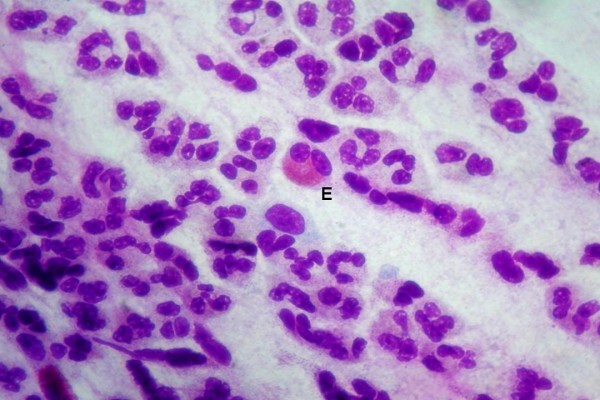
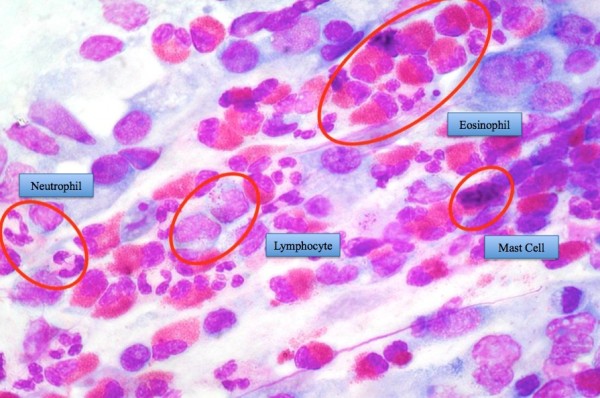
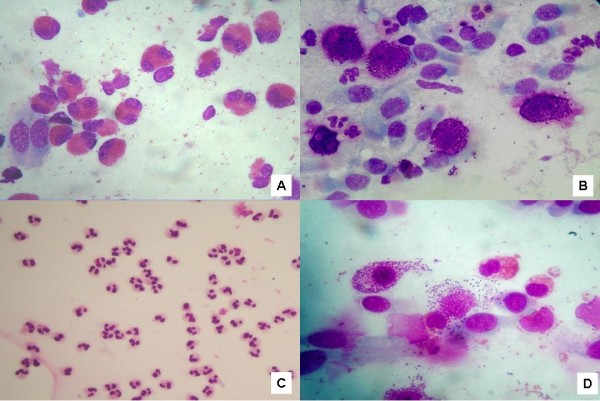
Nasal cytology is a very useful diagnostic tool in nasal disorders, being able to detect both the cellular modifications of the nasal epithelium caused by either allergen exposure or irritative stimuli (that may be physical or chemical, acute or chronic), or inflammation. Over these past few years, nasal cytology has allowed to identify new disorders, such as the non-allergic rhinitis with eosinophils (NARES), the non-allergic rhinitis with mast cells (NARMA), the non-allergic rhinitis with neutrophils (NARNE), and the non-allergic rhinitis with eosinophils and mast cells (NARESMA). The rhinocytogram is actually able to distinguish the different forms of allergic rhinitis and to suggest the appropriate treatment, such as antinflammatory drugs or allergen immunotherapy. The technique is easy to perform and nasal cytology is therefore particularly suitable even for children. Such a consideration suggests the utility of a systematic use of nasal cytology in the diagnostic work-up of nasal disorders in children, in order to reach a proper defined diagnosis and to set a rational therapeutic approach: in facts, these two elements are fundamental in order to prevent from complications and to improve the patient’s quality of life.
Overview
The claims and statistics of this paper haven’t been checked yet.
Free: it reads the open-access text and checks the first 5 claims that cite a source we can check. Create a free account to check every claim.
Integrity signals
Registry
Cites
Statistics
Figures
Verification
Claims the paper makes
The claims and statistics of this paper haven’t been checked yet.
Free: it reads the open-access text and checks the first 5 claims that cite a source we can check. Create a free account to check every claim.
Claims other papers make about this one
Each is checked against this paper’s own text: does it say what the citing paper says it does?
The cited source says what the claim attributes to it.
In the citing paper
“In more recent years, other variants have been defined, including NAR with mast cells (NARMA), with neutrophils (NARNE), and with eosinophils and mast cells (NARESMA).1097”
From International Consensus Statement on Allergy and Rhinology: Allergic Rhinitis (2018) · cites this paper as [1097]
Self-check
Percentages, sums and reported differences re-computed from the paper’s own numbers.
The self-check needs the paper’s full text.
Citations
Cites
Ciprandi, G., Buscaglia, S., Pesce, G., Pronzato, C., Ricca, V., Parmiani, S., Bagnasco, M., & Canonica, G. W. (1995) · Journal of Allergy and Clinical Immunology · doi:10.1016/s0091-6749(95)70235-0 · Cited by 254
Nonallergic rhinitis with eosinophilia (NARES syndrome)
Jacobs, R. L., Freedman, P. M., & Boswell, R. N. (1981) · Journal of Allergy and Clinical Immunology · doi:10.1016/0091-6749(81)90019-1 · Cited by 179 · cited 8×
“Over these past few years, nasal cytology has allowed to identify new disorders, such as the non-allergic rhinitis with eosinophils (NARES), the non-allergic rhinitis with mast cells (NARMA), the non-allergic rhinitis with neutrophils (NARNE), and the non-allergic rhinitis with eosinophils and mast cells (NARESMA).”
BackgroundInfluentialSub‐lingual Immunotherapy: World Allergy Organization Position Paper 2009
Canonica, G. W., Bousquet, J., Casale, T. B., Lockey, R. F., Baena-Cagnani, C. E., Pawankar, R., Potter, P. C., Bousquet, P. J., Cox, L. S., Durham, S. R., et al. (2009) · Allergy · doi:10.1111/j.1398-9995.2009.02309.x · Cited by 139
Minimal persistent inflammation is also present in patients with seasonal allergic rhinitis
Ricca, V., Landi, M., Ferrero, P. V., Bairo, A., Tazzer, C., Canonica, G. W., & Ciprandi, G. (2000) · Journal of Allergy and Clinical Immunology · doi:10.1016/s0091-6749(00)90177-5 · Cited by 126 · cited 1×
“When the intensity of allergen exposure is low but continual, as in persistent rhinitis (caused, for example, by house dust mites allergy), a “minimal persistent inflammation” occurs, characterized by a persistent infiltration of neutrophils and, only minimally, of eosinophils [23,24] (Figure 5).”
BackgroundSelf-citationNasal Cytology in Clinical Practice
Meltzer, E. O., & Jalowayski, A. A. (1988) · American Journal of Rhinology · doi:10.2500/105065888781693212 · Cited by 99 · cited 2×
“The cytological sampling consists of collecting the nasal mucosa surface cells and it can be performed either through the use of a sterile swab (such as an oro-pharyngeal swab) or a small scraper made of disposable plastic such as the Rhinoprobe (Arlington Scientific, Springville, UT, USA) [17].”
MethodNon-Allergic Rhinitis with Eosinophils and Mast Cells Constitutes a New Severe Nasal Disorder
Gelardi, M., Giudice, A. M. D., Fiorella, M. L., Fiorella, R., Russo, C., Soleti, P., Gioacchino, M. D., & Ciprandi, G. (2008) · International Journal of Immunopathology and Pharmacology · doi:10.1177/039463200802100209 · Cited by 97 · cited 8×
“Over these past few years, nasal cytology has allowed to identify new disorders, such as the non-allergic rhinitis with eosinophils (NARES), the non-allergic rhinitis with mast cells (NARMA), the non-allergic rhinitis with neutrophils (NARNE), and the non-allergic rhinitis with eosinophils and mast cells (NARESMA).”
BackgroundInfluentialSelf-citationCytologic changes in the nasal secretions during the late nasal response
Pelikan, Z., & Pelikan-Filipek, M. (1989) · Journal of Allergy and Clinical Immunology · doi:10.1016/0091-6749(89)90448-x · Cited by 83 · cited 1×
“Patients suffering from seasonal or perennial allergic rhinitis (AR), when exposed to the causative allergen, either in the environment or during a nasal provocation test, develop an immediate nasal response, the so-called early phase, and then a late phase response [21,22].”
BackgroundQuantitative cytology of nasal secretions under various conditions
Lee, H. S., Majima, Y., Sakakura, Y., Shinogi, J., Kawaguchi, S., & Kim, B. W. (1993) · The Laryngoscope · doi:10.1288/00005537-199305000-00010 · Cited by 64 · cited 1×
“Considering that the turnover of a ciliated cell takes about three weeks, frequent inflammation does not allow the re-establishment of a normal ratio between the different cellular subsets [19,20].”
BackgroundObservations on the cytology of the secretions in allergy of the nose and paranasal sinuses
Hansel, F. K. (1934) · Journal of Allergy · doi:10.1016/s0021-8707(34)90159-3 · Cited by 58
Rhinitis and asthma represent hot topics for Allergy
Bousquet, J., Bieber, T., Fokkens, W., Kowalski, M. L., Humbert, M., Niggemann, B., & Simon, H. ‐. (2009) · Allergy · doi:10.1111/j.1398-9995.2008.01954.x · Cited by 54
Importance of patient’s education in favouring compliance with sublingual immunotherapy
Incorvaia, C., Rapetti, A., Scurati, S., Puccinelli, P., Capecce, M., & Frati, F. (2010) · Allergy · doi:10.1111/j.1398-9995.2010.02347.x · Cited by 52 · cited 1×
“sufficient duration, corresponding to 3–5 years [29], and patients must be adequately educated in order to ensure an optimal compliance to the prescribed treatment [30].”
BackgroundSelf-citationCytologic changes in the nasal secretions during the immediate nasal response
Pelikan, Z., & Pelikan-Filipek, M. (1988) · Journal of Allergy and Clinical Immunology · doi:10.1016/0091-6749(88)90150-9 · Cited by 49
Modified epithelial cell distribution in chronic airways inflammation
Chapelin, C., Coste, A., Gilain, L., Poron, F., Verra, F., & Escudier, E. F. (1996) · European Respiratory Journal · doi:10.1183/09031936.96.09122474 · Cited by 46 · cited 1×
“Considering that the turnover of a ciliated cell takes about three weeks, frequent inflammation does not allow the re-establishment of a normal ratio between the different cellular subsets [19,20].”
BackgroundNasal mucosa in workers exposed to formaldehyde: a pilot study.
Boysen, M., Zadig, E., Digernes, V, Abeler, V, & Reith, A. (1990) · Occupational and Environmental Medicine · doi:10.1136/oem.47.2.116 · Cited by 45 · cited 1×
“The technique allows clinicians to detect the cellular modifications of the nasal epithelium caused by exposure to either physical or chemical [3,4], acute or chronic irritations.”
BackgroundLXXIII. Nasal Manifestations of Allergy
Eyermann, C. H. (1927) · Annals of Otology Rhinology & Laryngology · doi:10.1177/000348942703600323 · Cited by 42
Pediatric Chronic Rhinosinusitis Histopathology
Berger, G., Kogan, T., Paker, M., Berger‐Achituv, S., & Ebner, Y. (2010) · Otolaryngology · doi:10.1177/0194599810390443 · Cited by 41
The classification of allergic rhinitis and its cytological correlate: ALLERGYNet
Gelardi, M., Incorvaia, C., Passalacqua, G., Quaranta, N., & Frati, F. (2011) · Allergy · doi:10.1111/j.1398-9995.2011.02741.x · Cited by 40 · cited 2×
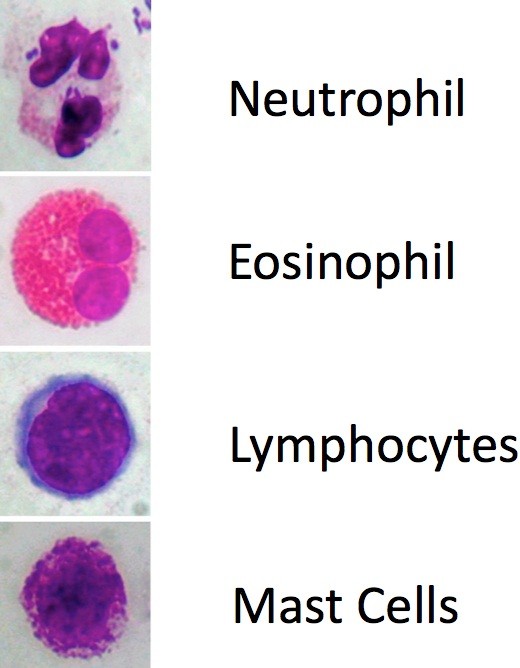
“For the rhinocytogram analysis, at least 50 microscopic fields have to be read in order to detect eosinophils, mast cells, neutrophils, bacteria, spores, calculating their percentages and reach a diagnosis [16,17].”
MethodSelf-citationWhen Allergic Rhinitis is not Only Allergic
Gelardi, M., Russo, C., Fiorella, M. L., Fiorella, R., Canonica, G. W., & Passalacqua, G. (2009) · American Journal of Rhinology & Allergy · doi:10.2500/ajra.2009.23.3320 · Cited by 40 · cited 1×
“The possibility to identify these clinical conditions allows avoiding a wrong therapeutical approach [27].”
BackgroundSelf-citationGelardi, M., Cassano, P., Cassano, M., & Fiorella, M. L. (2003) · American Journal of Rhinology · doi:10.1177/194589240301700503 · Cited by 40 · cited 1×
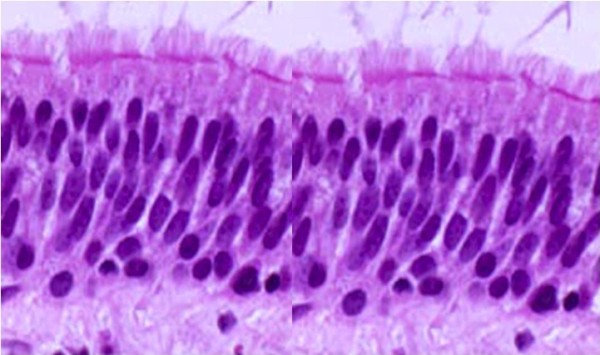
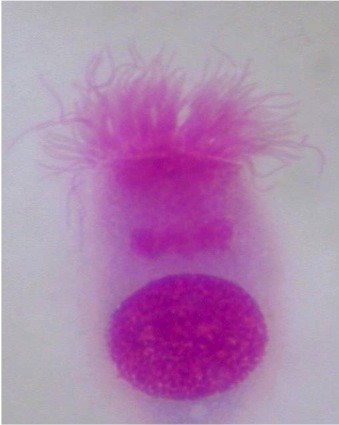
“The ciliated cell (Figure 2) is the most differentiated element of the nasal mucosa [10] and, together with mucoussecreting cells, it represents the first-line defence located in the airways (the so-called mucus-ciliated system).”
BackgroundSelf-citationNasal Smear as a Screening Test for Immediate‐Type Nasal Allergy
Malmberg, H., & Holopainen, E. (1979) · Allergy · doi:10.1111/j.1398-9995.1979.tb04375.x · Cited by 37 · cited 1×
“Review Nasal cytology is a very useful diagnostic tool in diagnosing nasal allergic disorders [1,2].”
BackgroundCytology in the diagnosis of rhinosinusitis
Gelardi, M., Fiorella, M. L., Leo, G., & Incorvaia, C. (2007) · Pediatric Allergy and Immunology · doi:10.1111/j.1399-3038.2007.00634.x · Cited by 33 · cited 2×
“These events favour the stasis of mucous secretions in the nose, determining a major risk of bacterial infection [18].”
BackgroundSelf-citationNasal Resistance and Allergic Inflammation Depend on Allergen Type
Gelardi, M., Giudice, A. M. D., Candreva, T., Fiorella, M. L., Allen, M., Klersy, C., Marseglia, G. L., & Ciprandi, G. (2006) · International Archives of Allergy and Immunology · doi:10.1159/000095465 · Cited by 27 · cited 1×
“A study by our group on patients suffering from AR showed some striking data: subjects with perennial rhinitis and mono-sensitized subjects suffering from pollen-induced AR show different concentrations of inflammatory cells and nasal resistance measured by rhinomanometer, if compared with different types of patients…”
ResultSelf-citationInflammatory cell types in nasal polyps
Gelardi, M., Russo, C., Fiorella, M. L., Fiorella, R., & Ciprandi, G. (2009) · Cytopathology · doi:10.1111/j.1365-2303.2009.00671.x · Cited by 24 · cited 1×
“If these rhinopathies are not effectively controlled by pharmacotherapy, 20 years later they may show an evolution towards nasal polyposis [26].”
BackgroundSelf-citationCytologie Diagnosis in Allergie Disorders
Bryan, M. P., & Bryan, W. T. K. (1974) · Otolaryngologic Clinics of North America · doi:10.1016/s0030-6665(20)32816-4 · Cited by 24 · cited 1×
“Thanks to this discovery, a great value was attributed to the identification of specific cellular subsets related to different nasal pathologies [13-15], and this consideration opened the way to the routine use of nasal cytology in the study of allergic and non allergic, infectious and inflammatory rhinitis.”
BackgroundEpstein-barr virus induced cellular changes in nasal mucosa
Gelardi, M., Tomaiuolo, M., Cassano, M., Besozzi, G., Fiorella, M. L., Calvario, A., Castellano, M. A., & Cassano, P. (2006) · Virology Journal · doi:10.1186/1743-422x-3-6 · Cited by 22 · cited 1×
“Also, it makes it easy to evaluate the different types of inflammation (viral, bacterial, fungal or parasitical) [5,6].”
BackgroundSelf-citationCytologic diagnosis in allergic disorders.
Bryan, M. P., & Bryan, W. T. K. (1974) · PubMed · Cited by 17
The diagnostic value of a cytogram in rhinopathology.
Pa, B., & Clement, P. A. (1981) · PubMed · Cited by 16
Sublingual immunotherapy in children: facts and needs
Marseglia, G. L., Incorvaia, C., Rosa, M. L., Frati, F., & Marcucci, F. (2009) · The Italian Journal of Pediatrics/Italian journal of pediatrics · doi:10.1186/1824-7288-35-31 · Cited by 14 · cited 1×
“If these patients are properly treated by allergen immunotherapy (AIT), mainly sublingual immunotherapy (which is more accepted both by children and caregivers) [28], they will benefit from the advantages related to such a treatment (blockage of the so-called allergic march, and clinical efficacy persisting also after…”
BackgroundSelf-citationCytopathology of the Nasal Mucosa in Smokers: A Possible Biomarker of Air Pollution?
Glück, U., & Gebbers, J. (1996) · American Journal of Rhinology · doi:10.2500/105065896781795193 · Cited by 12 · cited 1×
“The technique allows clinicians to detect the cellular modifications of the nasal epithelium caused by exposure to either physical or chemical [3,4], acute or chronic irritations.”
BackgroundGelardi, M., Fiorella, M. L., Tarasco, E., Passalacqua, G., & Porcelli, F. (2009) · The Lancet · doi:10.1016/s0140-6736(09)60444-x · Cited by 8 · cited 1×
“Thanks to this discovery, a great value was attributed to the identification of specific cellular subsets related to different nasal pathologies [13-15], and this consideration opened the way to the routine use of nasal cytology in the study of allergic and non allergic, infectious and inflammatory rhinitis.”
BackgroundSelf-citation[Nasal cytology in the diagnosis of chronic rhinitis in children].
Sala, O., Marchiori, C., & Soranzo, G. (1988) · PubMed · Cited by 5
Research works printed but not linked: 3
- Bickmore JT Nasal cytology in allergy and infection Otorhinolaryngology Allergy 1978 40 39 46
- Connell JT Nasal mastocytosis J Allergy 1969 43 182 189
- Gollash H Fortschr Med 1889 7 361 365
Cited by
International Consensus Statement on Allergy and Rhinology: Allergic Rhinitis
Wise, S. K., Lin, S. Y., Toskala, E., Orlandi, R. R., Akdis, C. A., Alt, J. A., Azar, A., Baroody, F. M., Bachert, C., Canonica, G. W., et al. (2018) · International Forum of Allergy & Rhinology · doi:10.1002/alr.22073 · Cited by 557
Self-citationNASAL cytology: practical aspects and clinical relevance
Gelardi, M., Iannuzzi, L., Quaranta, N. A. A., Landi, M., & Passalacqua, G. (2016) · Clinical & Experimental Allergy · doi:10.1111/cea.12730 · Cited by 160
Self-citationThe Nose and the Lung: United Airway Disease?
Licari, A., Castagnoli, R., Denicolò, C. F., Rossini, L., Marseglia, A., & Marseglia, G. L. (2017) · Frontiers in Pediatrics · doi:10.3389/fped.2017.00044 · Cited by 155
Self-citationChitosan-Based Trilayer Scaffold for Multitissue Periodontal Regeneration
Varoni, E. M., Vijayakumar, S., Canciani, E., Cochis, A., Nardo, L. D., Lodi, G., Rimondini, L., & Cerruti, M. (2017) · Journal of Dental Research · doi:10.1177/0022034517736255 · Cited by 108
Nasal cytology: Methodology with application to clinical practice and research
Heffler, E. M., Landi, M., Caruso, C., Fichera, S., Gani, F., Guida, G., Liuzzo, M. T., Pistorio, M. P., Pizzimenti, S., Riccio, A., et al. (2018) · Clinical & Experimental Allergy · doi:10.1111/cea.13207 · Cited by 114
Self-citation
Metadata
- Authors
- Gelardi, M., Marseglia, G. L., Licari, A., Landi, M., Dell’Albani, I., Incorvaia, C., Frati, F., & Quaranta, N.
- Affiliations
- University of Bari Aldo Moro (IT)
- University of Pavia (IT)
- Istituti Clinici di Perfezionamento (IT)
- Corresponding author
- Marseglia, Gian Luigi
- Venue
- Italian Journal of Pediatrics
- Published
- 2012-09-25
- Volume
- 38
- Issue
- 1
- Pages
- 51-51
- ISSN
- 1720-8424 (ISSN-L)
- 1824-7288
- PMC
- PMC3533990
- OpenAlex
- W2103846737
- Cited by
- 52
- References
- 31
- Citations by year
- 2026: 3 · 2025: 6 · 2023: 5 · 2022: 2 · 2021: 4 · 2020: 2 · 2019: 3 · 2018: 6 · 2017: 6 · 2016: 8 · 2015: 1 · 2014: 3 · 2013: 3
- FWCI
- 0.31
- Type
- journal article
- Language
- en
- Open access
- gold
- doi.org
- Licence
- cc-by
- Locations
- The Italian Journal of Pediatrics/Italian journal of pediatrics (publishedVersion, cc-by)
- PubMed Central (publishedVersion, cc-by)
- PubMed (publishedVersion)
- DOAJ (DOAJ: Directory of Open Access Journals) (submittedVersion, cc-by-sa)
- CINECA IRIS Institutional Research Information System (University of Bari Aldo Moro) (submittedVersion)
- Topics
- Health Sciences › Medicine › Immunology and Allergy › Allergic Rhinitis and Sensitization
- Health Sciences › Medicine › Otorhinolaryngology › Sinusitis and nasal conditions
- Health Sciences › Medicine › Pulmonary and Respiratory Medicine › Asthma and respiratory diseases
- Keywords
- nasal cytology, allergic rhinitis, non-allergic rhinitis, nasal epithelium, children, allergen exposure, allergen immunotherapy
- MeSH terms
- Child, Cytodiagnosis, Humans, Immunotherapy, Nasal Mucosa, Nose Diseases, Rhinitis
About these checks
Registry, retraction, Cites and statistics results are computed, not judged, with one exception: a printed reference that no index lists is read once by a model before it counts as a citation error. Claims are extracted by a model and kept only when their quote appears verbatim in the text; each cited source is then checked, with a model’s help, for whether it says what the claim relies on. Those verdicts can be wrong — read the claim’s quote and the cited source before relying on one.
Statistics and arithmetic are recomputed, not judged.
Confidence bands are shown only for fields calibrated on our annotated test set. None is calibrated yet, so no band is shown.
What counts as a claim ›How we measure confidence ›How we check this ›
Are you an author, or do you see a problem with this page? Request a review
Data sources
Bibliographic data: Semantic Scholar, OpenAlex, Crossref.
Contains information from the Semantic Scholar Academic Graph Datasets, made available under the ODC Attribution License (ODC-BY 1.0).
Semantic Scholar’s data is described in: Kinney, R., et al. (2023). The Semantic Scholar Open Data Platform. arXiv:2301.10140.
