

Effects of L-theanine or caffeine intake on changes in blood pressure under physical and psychological stresses
Open accessThe DOI matches its Crossref record; 21 of the 21 references it cites were found in a registry or an index; 1 of the 25 sources its claims cite were checked for support.
Abstract
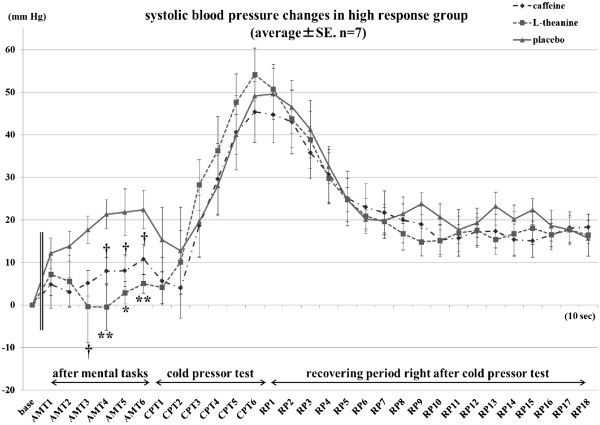
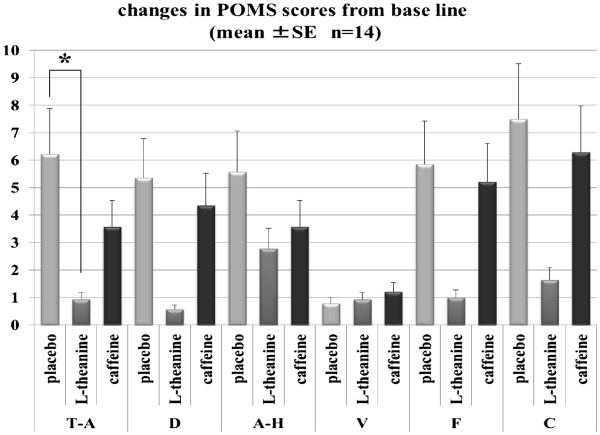
BACKGROUND: L-theanine, an amino acid contained in green tea leaves, is known to block the binding of L-glutamic acid to glutamate receptors in the brain, and has been considered to cause anti-stress effects by inhibiting cortical neuron excitation. Both L-theanine and caffeine, which green tea contains, have been highlighted for their beneficial effects on cognition and mood. METHODS: In this study, we investigated the effects of orally administered L-theanine or caffeine on mental task performance and physiological activities under conditions of physical or psychological stress in humans. Fourteen participants each underwent three separate trials, in which they orally took either L-theanine + placebo, caffeine + placebo, or placebo only. RESULTS: The results after the mental tasks showed that L-theanine significantly inhibited the blood-pressure increases in a high-response group, which consisted of participants whose blood pressure increased more than average by a performance of a mental task after placebo intake. Caffeine tended to have a similar but smaller inhibition of the blood-pressure increases caused by the mental tasks. The result of the Profile of Mood States after the mental tasks also showed that L-theanine reduced the Tension-Anxiety scores as compared with placebo intake. CONCLUSIONS: The findings above denote that L-theanine not only reduces anxiety but also attenuates the blood-pressure increase in high-stress-response adults.
Overview
CoChat Summary
TL;DR
In a randomized, placebo-controlled crossover trial, oral L-theanine (200 mg) attenuated mental-task-induced increases in systolic and diastolic blood pressure in adults classified as high responders, and reduced POMS Tension-Anxiety scores versus placebo. Neither L-theanine nor caffeine reduced the blood-pressure rise caused by the cold pressor test.
Key findings
- In the high-response group, L-theanine significantly lowered systolic blood pressure versus placebo during the latter mental-task measurement epochs AMT4, AMT5, and AMT6 (P=0.008, 0.019, 0.008), with a trend at AMT3 (P=0.082); caffeine showed only trends at AMT4–AMT6 (P=0.099, 0.090, 0.068).
- Diastolic blood pressure in the high-response group was affected by treatment at AMT4 and AMT6 (F(2,12)=7.932, 4.300; P=0.006, 0.039), with lower values after L-theanine (P=0.006, 0.056) or caffeine (P=0.033, 0.071) than placebo.
- POMS Tension-Anxiety and Anger-Hostility scores showed treatment effects across groups (χ2=6.000, 6.048; P=0.050, 0.049), and L-theanine decreased Tension-Anxiety below placebo (P=0.004).
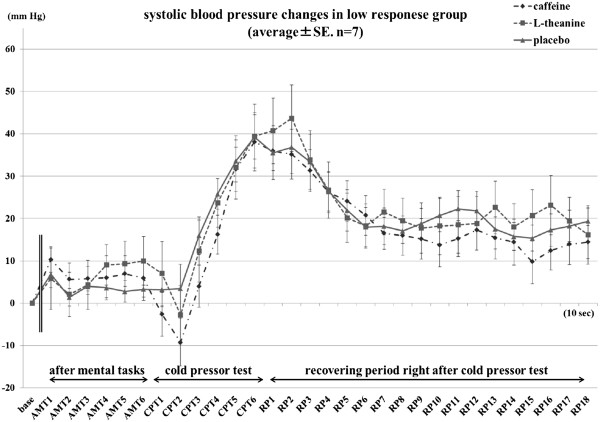
- No treatment effect was found in the low-response group, and neither L-theanine nor caffeine decreased the blood-pressure rise caused by the cold pressor test; skin temperature was not affected by treatment.
Methods
- Fourteen participants were analyzed after two women were excluded for missing at least 2 experiment days; originally 16 healthy volunteers (8 men, 8 women; ages 22.8±2.1 years) participated in three separate trials 7 days apart.
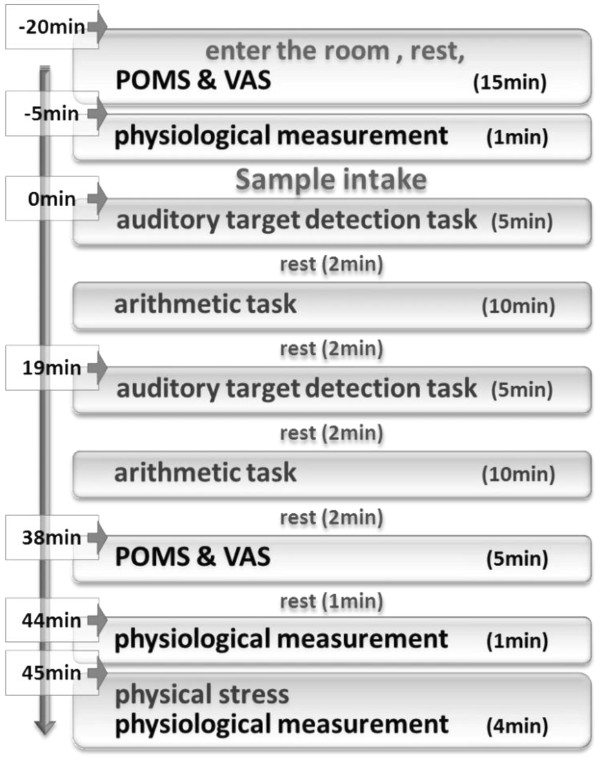
- A randomized, placebo-controlled crossover design used a Latin square to allocate L-theanine (200 mg) + placebo, caffeine (100 mg) + placebo, or placebo only; psychological stress was an auditory oddball target detection task and an arithmetic mental task, and physical stress was a 1-min cold pressor test in slushy ice water (1.5±0.3°C).
- Blood pressure and skin temperature were recorded continuously; POMS and VAS were completed before intake and after mental tasks. Analysis used repeated-measures ANOVA with group (high- vs low-response based on systolic blood pressure change after mental tasks under placebo), treatment, and epoch, plus Tukey HSD, Friedman, and Wilcoxon tests.
Limitations
- Stated: the small number of female participants made menstrual-period effects difficult to discuss, and results might differ with larger numbers sorted into four groups by sex and high/low response.
- Stated: further studies are needed to confirm why neither treatment affected cold-pressor-induced blood-pressure elevation and to test other physical stressors.
- Evident from the text: the high- and low-response groups were defined after the experiment from placebo-condition systolic blood pressure changes, and the analyzed sample was small (14 participants), limiting generalizability; blinding details beyond “placebo-controlled” are not described.
Model-written summary. Check it against the paper before relying on it.
Integrity signals
Registry
Cites
Statistics
Figures
Verification
Claims the paper makes
1 Valid · 0 Not valid · 16 Not checked · 40 Own results and interpretations
A result the paper reports from its own data — it cites no other source for it, so there is none to check. The quote shows it is in the paper.
In the paper
“Diastolic blood pressure did not differ significantly among the treatments in the other periods”
§ Effects of L-theanine or caffeine intake on changes in blood pressure under physical and psychological stresses > Results > Diastolic blood pressure
plain- Asserted: passes — The authors put it forward as true.
- Checkable: passes — It can be checked against evidence.
- Load-bearing: unclear — It is unclear whether the paper’s conclusions depend on it.
- Based: passes — The paper gives a reason why it holds.
A result the paper reports from its own data — it cites no other source for it, so there is none to check. The quote shows it is in the paper.
In the paper
“There was no interaction effect between group and treatment.”
§ Effects of L-theanine or caffeine intake on changes in blood pressure under physical and psychological stresses > Results > Task performance
plain- Asserted: passes — The authors put it forward as true.
- Checkable: passes — It can be checked against evidence.
- Load-bearing: unclear — It is unclear whether the paper’s conclusions depend on it.
- Based: passes — The paper gives a reason why it holds.
A result the paper reports from its own data — it cites no other source for it, so there is none to check. The quote shows it is in the paper.
In the paper
“Oral administration of L-theanine significantly changed both systolic and diastolic blood pressures in the high-response group during the latter part of AMT compared with the placebo condition.”
§ Effects of L-theanine or caffeine intake on changes in blood pressure under physical and psychological stresses > Discussion
plainstates a cause- Asserted: passes — The authors put it forward as true.
- Checkable: passes — It can be checked against evidence.
- Load-bearing: passes — The paper’s conclusions depend on it.
- Based: passes — The paper gives a reason why it holds.
A result the paper reports from its own data — it cites no other source for it, so there is none to check. The quote shows it is in the paper.
In the paper
“The results after the mental tasks showed that L-theanine significantly inhibited the blood-pressure increases in a high-response group, which consisted of participants whose blood pressure increased more than average by a performance of a mental task after placebo intake.”
- Also stated in: § Discussion · plain
“The result showed that the intake of 200 mg L-theanine significantly attenuated the blood pressure response caused by psychological stress in the high-response group.”
§ Effects of L-theanine or caffeine intake on changes in blood pressure under physical and psychological stresses > Abstract > Results
plainstates a cause- Asserted: passes — The authors put it forward as true.
- Checkable: passes — It can be checked against evidence.
- Load-bearing: passes — The paper’s conclusions depend on it.
- Based: passes — The paper gives a reason why it holds.
- Also stated in: § Discussion · plain
A result the paper reports from its own data — it cites no other source for it, so there is none to check. The quote shows it is in the paper.
In the paper
“The high-response group included participants who showed large increases in mean systolic blood pressure after the mental tasks in the placebo intake condition, and the range of elevation was 9.46 to 33.88 mmHg.”
§ Effects of L-theanine or caffeine intake on changes in blood pressure under physical and psychological stresses > Discussion
plainstates a cause- Asserted: passes — The authors put it forward as true.
- Checkable: passes — It can be checked against evidence.
- Load-bearing: passes — The paper’s conclusions depend on it.
- Based: passes — The paper gives a reason why it holds.
21 more claims
Create a free account to see all 57 claims and to verify the 1 reference still open.
- Probably not a substantial claim. 20
- It may state two separate claims as one. 18
Claims other papers make about this one
Each is checked against this paper’s own text: does it say what the citing paper says it does?
The source backs part of the claim, not all of it — or backs it for a different population, condition or comparison.
In the citing paper
“Compared with caffeine, L-theanine (200 mg) had a greater inhibition effect on mental task induced blood pressure, and it decreased the Tension-Anxiety score compared with placebo, indicating the anti-anxiolytic effects of L-theanine.”
From How does the tea L-theanine buffer stress and anxiety (2022) · cites this paper as [25]
Experimental — accuracy not yet measuredThe source backs part of the claim, not all of it — or backs it for a different population, condition or comparison.
In the citing paper
“Montopoli et al. [45] the trials of acute single day intervention have been conducted; studies performed by Yoto et al. [25] and Kimura et al. [31] have shown that 200 mg/day of L-theanine manage to provide the anti-stress effect in the mental arithmetic task (Table 2).”
From How does the tea L-theanine buffer stress and anxiety (2022) · cites this paper as [25]
Experimental — accuracy not yet measuredThe source backs part of the claim, not all of it — or backs it for a different population, condition or comparison.
In the citing paper
“In contrast to the elevation of blood pressure by caffeine of 250 mg [6], 100 mg of caffeine decreased the blood pressure in arithmetic mental task induced psychological stress.”
From How does the tea L-theanine buffer stress and anxiety (2022) · cites this paper as [25]
Experimental — accuracy not yet measuredThe source backs part of the claim, not all of it — or backs it for a different population, condition or comparison.
In the citing paper
“In adults, L-theanine can serve as a hypotensive agent with anti-stress activity, acting on suppression of cortical neuron excitement, reduction of anxiety and control rising of blood pressure in high stress condition [34].”
From l -theanine: A potential multifaceted natural bioactive amide as health supplement (2017) · cites this paper as [34]
Experimental — accuracy not yet measuredThe source backs part of the claim, not all of it — or backs it for a different population, condition or comparison.
In the citing paper
“two further studies also achieved attenuation in blood pressure increases with a dosage of 200 mg L-THE: in one study in response to a high stressor in adults [89]”
From l-Theanine as a Functional Food Additive: Its Role in Disease Prevention and Health Promotion (2016) · cites this paper as [89]
Experimental — accuracy not yet measured
7 more claims about this paper
Create a free account to see every claim other papers make about this one.
Statistics recomputed
Every reported test result, recomputed from its test statistic and degrees of freedom. A result shows as not adding up only once an independent check has confirmed it.
- ConsistentF(2, 24) = 3.438reported p = .049 · recomputed p = .049
“F(2,24)=3.438, p = .049”
- ConsistentF(2, 24) = 2.577reported p = .097 · recomputed p = .097
“F(2,24)=2.577, p = .097”
- ConsistentF(1, 12) = 3.361reported p = .092 · recomputed p = .092
“F(1,12)=3.361, p = .092”
- ConsistentF(2, 26) = 3.261reported p = .054 · recomputed p = .054
“F(2,26)=3.261, p = .054”
Self-check
Percentages, sums and reported differences re-computed from the paper’s own numbers.
Each contradiction between two passages listed here was confirmed by an independent check.
Rated minor: it would not touch a result — a value no result rests on, a p-value that stays on the same side of the significance level, or a conflict that is clerical, resolved elsewhere in the paper, or outside its own findings.
In the paper
§ Effects of L-theanine or caffeine intake on changes in blood pressure under physical and psychological stresses > Methods > Statistical analysis
“epoch (six epochs for AMT, CPT and 18 epochs for CPT)”
§ Effects of L-theanine or caffeine intake on changes in blood pressure under physical and psychological stresses > Methods > Physiological measurement
“Similarly, CPT1 to CPT6 for the CPT epochs, and RP1 to RP18 for epochs during the 3-min recovering period after the 1 min CPT were named respectively and used for the analysis.”
Citations
Cites
Fredholm, B. B., Bättig, K., Holmén, J., Nehlig, A., & Zvartau, E. E. (1999) · Pharmacological Reviews · doi:10.1016/s0031-6997(24)01396-6 · Cited by 2,624 · cited 1×
“5 h after oral ingestion in humans [19].”
BackgroundBlood Pressure Reactivity to Psychological Stress Predicts Hypertension in the CARDIA Study
Matthews, K. A., Katholi, C. R., McCreath, H., Whooley, M. A., Williams, D. R., Zhu, S., & Markovitz, J. H. (2004) · Circulation · doi:10.1161/01.cir.0000133415.37578.e4 · Cited by 436 · cited 2×
“It is known that stress can elevate blood pressure by stimulating the nervous system to produce large amounts of vasoconstricting hormones that increase blood pressure [8,9], L-theanine may have inhibited the increase in blood pressure through its antistress effects on the autonomic nervous system.”
BackgroundL-Theanine—a unique amino acid of green tea and its relaxation effect in humans
Juneja, L. (1999) · Trends in Food Science & Technology · doi:10.1016/s0924-2244(99)00044-8 · Cited by 363 · cited 3×
“; licensee BioMed Central Lt Commons Attribution License (http://creativec reproduction in any medium, provided the or increased alpha brain wave activity in humans after Ltheanine administration, indicating that L-theanine could lead to a relaxed and alert state [3,4].”
BackgroundResultl-theanine reduces psychological and physiological stress responses
Kimura, K., Ozeki, M., Juneja, L. R., & Ohira, H. (2007) · Biological Psychology · doi:10.1016/j.biopsycho.2006.06.006 · Cited by 349 · cited 3×
“(2007), that Ltheanine could cause anti-stress effects by inhibiting cortical neuron excitation, which attenuates the sympathetic nervous activation response to the acute stress task [5].”
BackgroundResultInfluentialSmit, H. J., & Rogers, P. J. (2000) · Psychopharmacology · doi:10.1007/s002130000506 · Cited by 339 · cited 1×
“Caffeine is a CNS-stimulating drug that acts as an adenosine receptor antagonist in the brain [10,11].”
BackgroundThe Effects of L-Theanine, Caffeine and Their Combination on Cognition and Mood
Haskell, C. F., Kennedy, D. O., Milne, A. L., Wesnes, K. A., & Scholey, A. B. (2008) · Biological Psychology · doi:10.1016/j.biopsycho.2007.09.008 · Cited by 280 · cited 1×
“On the other hand, both caffeine and L-theanine were recently found to have beneficial effects on cognition and mood [13-15], but no study has compared these two components under conditions in which acute psychological and physical stresses increase blood pressure.”
BackgroundYokogoshi, H., Kobayashi, M., Mochizuki, M., & Terashima, T. (1998) · Neurochemical Research · doi:10.1023/a:1022490806093 · Cited by 229 · cited 3×
“Animal studies have revealed that L-theanine affected dopamine and serotonin concentrations in the brain, underlying its anxiolytic effect [1,2].”
BackgroundSelf-citationYokogoshi, H., Kato, Y., Sagesaka, Y. M., Takihara-Matsuura, T., Kakuda, T., & Takeuchi, N. (1995) · Bioscience, Biotechnology, and Biochemistry · doi:10.1271/bbb.59.615 · Cited by 192 · cited 3×
“This indicated that Ltheanine reduced blood pressure not only for spontaneously hypertensive rats [6,7] but also for humans at risk of hypertension, despite the lower dose of L-theanine (200/62.”
BackgroundResultSelf-citationRogers, P. J., Smith, J. E., Heatherley, S. V., & Pleydell-Pearce, C. W. (2007) · Psychopharmacology · doi:10.1007/s00213-007-0938-1 · Cited by 183 · cited 2×
“This finding agreed with the blood pressure-reducing effect of Ltheanine intake reported in another study, in which theanine inhibited the blood-pressure increase resulting from caffeine intake [15].”
BackgroundResult(1998) · PubMed · Cited by 157
Cited by
Wikoff, D., Welsh, B. T., Henderson, R., Brorby, G. P., Britt, J., Myers, E., Goldberger, J., Lieberman, H. R., O'Brien, C., Peck, J., et al. (2017) · Food and Chemical Toxicology · doi:10.1016/j.fct.2017.04.002 · Cited by 439
Saeed, M., Naveed, M., Arif, M., Kakar, M. U., Manzoor, R., Abd El-Hack, M. E., Alagawany, M., Tiwari, R., Khandia, R., Munjal, A., et al. (2017) · Biomedicine & Pharmacotherapy · doi:10.1016/j.biopha.2017.09.024 · Cited by 240
Green tea effects on cognition, mood and human brain function: A systematic review
Mancini, E., Beglinger, C., Drewe, J., Zanchi, D., Lang, U. E., & Borgwardt, S. (2017) · Phytomedicine · doi:10.1016/j.phymed.2017.07.008 · Cited by 215
“L-Theanine Ten experimental studies (Einother et al., 2010; Giesbrecht et al., 2010; Haskell et al., 2008; Kelly et al., 2008; Kimura et al., 2007; Ota et al., 2014; Owen et al., 2008; Park et al., 2011; Ritsner et al., 2011; Yoto et al., 2012) focussed on the effects of L-theanine intake.”
BackgroundInfluentialL-Theanine, Unique Amino Acid of Tea, and Its Metabolism, Health Effects, and Safety
Türközü, D., & Şanlier, N. (2017) · Critical Reviews in Food Science and Nutrition · doi:10.1080/10408398.2015.1016141 · Cited by 207
“Besides, when compared to placebo, it was found out that L-theanine caused decreases in the anxiety scores (Yoto et al., 2012).”
Oolong tea: A critical review of processing methods, chemical composition, health effects, and risk
Ng, K.-W., Cao, Z.-J., Chen, H.-B., Zhao, Z.-Z., Zhu, L., & Yi, T. (2018) · Critical Reviews in Food Science and Nutrition · doi:10.1080/10408398.2017.1347556 · Cited by 176
“In this way, the brain can keep the mind at rest in order to decrease stress (Kimura et al., 2007; Yoto et al., 2012).”
BackgroundWilliams, J. L., Everett, J. M., D’Cunha, N. M., Sergi, D., Georgousopoulou, E. N., Keegan, R. J., McKune, A. J., Mellor, D. D., Anstice, N., & Naumovski, N. (2020) · Plant Foods for Human Nutrition · doi:10.1007/s11130-019-00771-5 · Cited by 123
l-Theanine: An astounding sui generis integrant in tea
Sharma, E., Joshi, R., & Gulati, A. (2017) · Food Chemistry · doi:10.1016/j.foodchem.2017.09.046 · Cited by 125
Focusing on the recent progress of tea polyphenol chemistry and perspectives
Li, S., Zhang, L., Wan, X., Zhan, J., & Ho, C. (2022) · Food Science and Human Wellness · doi:10.1016/j.fshw.2021.12.033 · Cited by 105
White, D., De Klerk, S., Woods, W., Gondalia, S., Noonan, C., & Scholey, A. (2016) · Nutrients · doi:10.3390/nu8010053 · Cited by 85
How does the tea L-theanine buffer stress and anxiety
Wang, L., Brennan, M., Li, S., Zhao, H., Lange, K. W., & Brennan, C. (2022) · Food Science and Human Wellness · doi:10.1016/j.fshw.2021.12.004 · Cited by 80
Williams, J., Sergi, D., McKune, A. J., Georgousopoulou, E. N., Mellor, D. D., & Naumovski, N. (2019) · Phytotherapy Research · doi:10.1002/ptr.6277 · Cited by 73
Basic and modern concepts on cholinergic receptor: A review
Tiwari, P. K., Dwivedi, S., Singh, M. P., Mishra, R., & Chandy, A. (2013) · Asian Pacific Journal of Tropical Disease · doi:10.1016/s2222-1808(13)60094-8 · Cited by 92
Effect of Green Tea Phytochemicals on Mood and Cognition
Dietz, C., & Dekker, M. (2017) · Current Pharmaceutical Design · doi:10.2174/1381612823666170105151800 · Cited by 70
Dietz, C., Dekker, M., & Piqueras‐Fiszman, B. (2017) · Food Research International · doi:10.1016/j.foodres.2017.05.002 · Cited by 75
L-theanine: an astounding sui generis amino acid in poultry nutrition
Saeed, M., Khan, M. S., Kamboh, A. A., Alagawany, M., Khafaga, A. F., Noreldin, A. E., Qumar, M., Safdar, M., Hussain, M., Abd El-Hack, M. E., et al. (2020) · Poultry Science · doi:10.1016/j.psj.2020.07.016 · Cited by 65
Tea, cocoa, coffee, and affective disorders: vicious or virtuous cycle?
García-Blanco, T., Dávalos, A., & Visioli, F. (2016) · Journal of Affective Disorders · doi:10.1016/j.jad.2016.11.033 · Cited by 63
l -theanine: A potential multifaceted natural bioactive amide as health supplement
Adhikary, R., & Mandal, V. (2017) · Asian Pacific Journal of Tropical Biomedicine · doi:10.1016/j.apjtb.2017.08.005 · Cited by 55
l-Theanine as a Functional Food Additive: Its Role in Disease Prevention and Health Promotion
Williams, J., Kellett, J., Roach, P., McKune, A., Mellor, D., Thomas, J., & Naumovski, N. (2016) · Beverages · doi:10.3390/beverages2020013 · Cited by 52
“Similarly, two further studies also achieved attenuation in blood pressure increases with a dosage of 200 mg L-THE: in one study in response to a high stressor in adults [89] and in the other, L-THE halted the effect of 250 mg caffeine and resulted in a decrease in blood pressure [90].”
ResultLopes Sakamoto, F., Metzker Pereira Ribeiro, R., Amador Bueno, A., & Oliveira Santos, H. (2019) · Pharmacological Research · doi:10.1016/j.phrs.2019.104395 · Cited by 49
“cortical neural excitation and consequently attenuating sympathetic activity [35].”
BackgroundThe therapeutic potential of matcha tea: A critical review on human and animal studies
Sokary, S., Al‐Asmakh, M., Zakaria, Z. Z., & Bawadi, H. A. (2022) · Current Research in Food Science · doi:10.1016/j.crfs.2022.11.015 · Cited by 76
Li, R., Song, Z., Zhao, J., Huo, D., Fan, Z., Hou, D., & He, X. (2018) · Animal nutrition · doi:10.1016/j.aninu.2018.05.002 · Cited by 47
Effects of Matcha Green Tea Powder on Cognitive Functions of Community-Dwelling Elderly Individuals
Sakurai, K., Shen, C., Ezaki, Y., Inamura, N., Fukushima, Y., Masuoka, N., & Hisatsune, T. (2020) · Nutrients · doi:10.3390/nu12123639 · Cited by 46
Kahathuduwa, C. N., Dhanasekara, C. S., Chin, S.-H., Davis, T., Weerasinghe, V. S., Dassanayake, T. L., & Binks, M. (2018) · Nutrition Research · doi:10.1016/j.nutres.2017.11.002 · Cited by 46
Yoneda, Y., Kuramoto, N., & Kawada, K. (2019) · Neurochemistry International · doi:10.1016/j.neuint.2019.104505 · Cited by 39
Ogawa, S., Ota, M., Ogura, J., Kato, K., & Kunugi, H. (2018) · Psychopharmacology · doi:10.1007/s00213-017-4743-1 · Cited by 37
Yamagata, K., Xie, Y., Suzuki, S., & Tagami, M. (2015) · Phytomedicine · doi:10.1016/j.phymed.2015.01.011 · Cited by 41
Dietary Strategies for Relieving Stress in Pet Dogs and Cats
Fan, Z., Bian, Z., Huang, H., Liu, T., Ren, R., Chen, X., Zhang, X., Wang, Y., Deng, B., & Zhang, L. (2023) · Antioxidants · doi:10.3390/antiox12030545 · Cited by 41
Inoue, K., Miyazaki, Y., Unno, K., Min, J. Z., Todoroki, K., & Toyo'oka, T. (2016) · Biomedical Chromatography · doi:10.1002/bmc.3502 · Cited by 34
Dramard, V., Kern, L., Hofmans, J., Rème, C. A., Nicolas, C. S., Chala, V., & Navarro, C. (2018) · Irish Veterinary Journal · doi:10.1186/s13620-018-0130-4 · Cited by 40
Hong, M., Zhang, R., Liu, Y., Wu, Z., & Weng, P. (2021) · Journal of Food Biochemistry · doi:10.1111/jfbc.13870 · Cited by 39
Health Benefits of Theanine in Green Tea: A Review
Liang, Y.-R., Liu, C., Xiang, L.-P., & Zheng, X.-Q. (2015) · Tropical Journal of Pharmaceutical Research · doi:10.4314/tjpr.v14i10.29 · Cited by 31
“It not only has anti-stress effects, by suppressing cortical neuron excitation, but also reduces anxiety and attenuates blood pressure raises in high stress response adults [28].”
BackgroundKiyohara, C., Washio, M., Horiuchi, T., Asami, T., Ide, S., Atsumi, T., Kobashi, G., Takahashi, H., Tada, Y., & the Kyushu Sapporo SLE (KYSS) Study Group (2014) · Arthritis Care & Research · doi:10.1002/acr.22282 · Cited by 35
Bajerska, J., Mildner–Szkudlarz, S., & Walkowiak, J. (2014) · Journal of Medicinal Food · doi:10.1089/jmf.2014.0032 · Cited by 31
Simvastatin and Bezafibrate ameliorate Emotional disorder Induced by High fat diet in C57BL/6 mice
Wang, H., Zhou, J., Liu, Q. Z., Wang, L. L., & Shang, J. (2017) · Scientific Reports · doi:10.1038/s41598-017-02576-5 · Cited by 29
Boyle, N. B., Billington, J., Lawton, C. L., Quadt, F., & Dye, L. (2021) · Nutritional Neuroscience · doi:10.1080/1028415x.2021.1909204 · Cited by 37
Caffeine and theanine exert opposite effects on attention under emotional arousal
Giles, G. E., Mahoney, C. R., Brunyé, T. T., Taylor, H. A., & Kanarek, R. B. (2017) · Canadian Journal of Physiology and Pharmacology · doi:10.1139/cjpp-2016-0498 · Cited by 27
Noah, L., Morel, V., Bertin, C., Pouteau, E., Macian, N., Dualé, C., Pereira, B., & Pickering, G. (2022) · Nutrients · doi:10.3390/nu14091863 · Cited by 27
Production of l -Theanine by Escherichia coli in the Absence of Supplemental Ethylamine
Hagihara, R., Ohno, S., Hayashi, M., Tabata, K., & Endo, H. (2021) · Applied and Environmental Microbiology · doi:10.1128/aem.00031-21 · Cited by 31
Wang, R., Xiao, M., Zhang, Y., Ho, C., Wan, X., Li, D., & Xie, Z. (2019) · Journal of Agricultural and Food Chemistry · doi:10.1021/acs.jafc.8b05057 · Cited by 25
Chen, H., Cui, F., Li, H., Sheng, J., & Lv, J. (2013) · Journal of Food Science · doi:10.1111/1750-3841.12288 · Cited by 25
The cognitive-enhancing outcomes of caffeine and L-theanine: a systematic review
Anas Sohail, A., Ortiz, F., Varghese, T., Fabara, S. P., Batth, A. S., Sandesara, D. P., Sabir, A., Khurana, M., Datta, S., & Patel, U. K. (2021) · Cureus · doi:10.7759/cureus.20828 · Cited by 23
“Their hunger level could impact the outcomes of maintained attention, impulsive behaviors, and results seen on fMRI [15].”
BackgroundAn L-Glutamine transporter isoform for neurogenesis facilitated by L-Theanine
Yoneda, Y. (2017) · Neurochemical Research · doi:10.1007/s11064-017-2317-6 · Cited by 23
Investigating the effects of tea, water and a positive affect induction on mood and creativity
Einöther, S. J. L., Baas, M., Rowson, M. J., & Giesbrecht, T. (2014) · Food Quality and Preference · doi:10.1016/j.foodqual.2014.06.016 · Cited by 23
The effects of L-theanine consumption on sleep outcomes: a systematic review and meta-analysis
Bulman, A., D’Cunha, N. M., Marx, W., Turner, M., McKune, A., & Naumovski, N. (2025) · Sleep Medicine Reviews · doi:10.1016/j.smrv.2025.102076 · Cited by 20
Williams, J., McKune, A. J., Georgousopoulou, E. N., Kellett, J., D’Cunha, N. M., Sergi, D., Mellor, D., & Naumovski, N. (2020) · Foods · doi:10.3390/foods9030371 · Cited by 19
“In addition, the consumption of L-THE is associated with antihypertensive [12,13], anti-inflammatory properties [8] as well as improvements in cognitive functioning in healthy adults [14] and when consumed in combination with caffeine [10].”
BackgroundBulman, A., D'Cunha, N. M., Marx, W., McKune, A. J., Jani, R., & Naumovski, N. (2021) · Beverages · doi:10.3390/beverages7020033 · Cited by 25
Habitual tea drinking modulates brain efficiency: evidence from brain connectivity evaluation
Li, J., Romero-García, R., Suckling, J., & Feng, L. (2019) · Aging · doi:10.18632/aging.102023 · Cited by 18
Thiagarajah, K., Chee, H. P., & Sit, N. W. (2022) · Nutrients · doi:10.3390/nu14030652 · Cited by 23
Effect of black tea consumption on radial blood pulse spectrum and cognitive health
Chang, C., Wang, S., Jan, M.-Y., & Wang, W. (2017) · Complementary Therapies in Medicine · doi:10.1016/j.ctim.2017.01.001 · Cited by 18
l-Theanine improves functional recovery after traumatic spinal cord injury in rats
Yang, C.-C., Chang, K.-C., Wang, M.-H., Tseng, H.-C., Soung, H.-S., Fang, C.-H., Lin, Y.-W., Li, K.-Y., & Tsai, C.-C. (2020) · Journal of the Formosan Medical Association · doi:10.1016/j.jfma.2019.11.009 · Cited by 15
Payne, E. R., Aceves-Martins, M., Dubost, J., Greyling, A., & de Roos, B. (2025) · Nutrition Reviews · doi:10.1093/nutrit/nuaf054 · Cited by 19
Selective upregulation by theanine of Slc38a1 expression in neural stem cell for brain wellness
Yoneda, Y., Kawada, K., & Kuramoto, N. (2020) · Molecules · doi:10.3390/molecules25020347 · Cited by 13
“Oral intake of theanine was more effective in alleviating the elevations of both anxiety and blood pressure than caffeine in human adults with stressful tasks [68].”
BackgroundMatsuoka, K., Akaihata, H., Hata, J., Tanji, R., Honda‐Takinami, R., Onagi, A., Hoshi, S., Koguchi, T., Sato, Y., Kataoka, M., et al. (2021) · Metabolites · doi:10.3390/metabo11110778 · Cited by 14
Xie, J., Wei, F., Luo, L., Dai, L., Zeng, L., & Wang, X. (2022) · International Journal of Food Science & Technology · doi:10.1111/ijfs.15612 · Cited by 14
Srimaharaj, W., Chaisricharoen, R., Chaising, S., & Sittiprapaporn, P. (2018) · Joint International Conference on Digital Arts, Media and Technology with ECTI Northern Section Conference on Electrical, Electronics, Computer and Telecommunications Engineering (ECTI DAMT & NCON) · doi:10.1109/icdamt.2018.8376536 · Cited by 13
Du, J., He, X., Zhou, Y., Zhai, C., Yu, D., Zhang, S., Chen, Q., & Wan, X. (2020) · Journal of Agricultural and Food Chemistry · doi:10.1021/acs.jafc.0c06490 · Cited by 9
L-theanine inhibits foam cell formation via promoting the scavenger receptor A degradation
Lei, J., Ye, J., She, R., Zhang, R., Wang, Y., Yang, G., Yang, J., & Luo, L. (2021) · European Journal of Pharmacology · doi:10.1016/j.ejphar.2021.174181 · Cited by 12
Examining techniques for measuring the effects of nutrients on mental performance and mood state
Hamer, M., Dye, L., Mitchell, E. S., Layé, S., Saunders, C., Boyle, N., Schuermans, J., & Sijben, J. (2016) · European Journal of Nutrition · doi:10.1007/s00394-015-1143-3 · Cited by 13
Medrano, M., Molina‐Hidalgo, C., Alcántara, J. M. A., Ruiz, J. R., & Jurado‐Fasoli, L. (2022) · Frontiers in Nutrition · doi:10.3389/fnut.2022.858910 · Cited by 17
Tseng, H.-C., Tsai, C.-C., Wang, M., Chang, K., Soung, H.-S., & Yang, C.-C. (2019) · The Chinese Journal of Physiology · doi:10.4103/cjp.cjp_8_19 · Cited by 12
Optimizing the Quality and Commercial Value of Gyokuro-Styled Green Tea Grown in Australia
Krahe, J., & Krahe, M. A. (2022) · Beverages · doi:10.3390/beverages8020022 · Cited by 11
Qin, X., Li, C., Wei, W., He, D., Zhao, Y., Cai, Q., Zhang, N., Chu, X., Shi, S., & Zhang, F. (2023) · Nutritional Neuroscience · doi:10.1080/1028415x.2023.2175412 · Cited by 11
McAllister, M. J., Martaindale, M. H., Dillard, C. C., & McCullough, R. (2024) · Stress · doi:10.1080/10253890.2024.2375588 · Cited by 9
“…shown to reduce the physiological impact of stressors among human participants (hidese et al., 2019; Yamada et al., 2005; Yokogoshi et al., 1998; Yoto et al., 2012). supplementation with l-theanine (~200mg/day) has been shown to reduce heart rate and concentrations of salivary secretory…”
Ross, S. M. (2013) · Holistic Nursing Practice · doi:10.1097/hnp.0000000000000009 · Cited by 11
Drinking tea improves the convergent creativity performance
Jiang, Y., Huang, Y., Wu, Y., & Wang, L. (2021) · Food Quality and Preference · doi:10.1016/j.foodqual.2021.104360 · Cited by 10
Cavanah, A. M., Robinson, L. A., Mattingly, M. L., & Frugé, A. D. (2025) · Biomedicines · doi:10.3390/biomedicines13071656 · Cited by 7
“Similarly, [46] reported significant reductions in MADRS ( p 0.05) and HRSD-17 ( p 0.001) scores from 46 participants following the 5-week green tea consumption of 400 mg 3x/day.”
InfluentialThe Role of Dietary Ingredients in Mental Energy – A Scoping Review of Randomized Controlled Trials
Nieman, K. M., Zhu, Y., Tucker, M., & Koecher, K. J. (2023) · Journal of the American Nutrition Association · doi:10.1080/27697061.2023.2244031 · Cited by 7
Theanine as a promising agent for health-promotion: a review
Wang, Q., Zheng, Y., Ho, C., Huang, J., Guan, X., Lai, C., Gao, H., & Lin, B. (2021) · Journal of Food Bioactives · doi:10.31665/jfb.2020.13257 · Cited by 6
Li, H., Bai, P., Liu, Y., Chen, Y., Cai, S., Zhang, Z., Wang, L., & Yang, J. (2024) · ACS Food Science & Technology · doi:10.1021/acsfoodscitech.3c00631 · Cited by 5
Mukherjee, D., Palit, P., Roychoudhury, S., Kundu, S. K., & Mandal, S. C. (2018) · Elsevier eBooks · doi:10.1016/b978-0-08-102081-4.00014-9 · Cited by 9
Yuan, J., Nie, Q., Pan, W., Liu, Z., Wu, J., Liu, Z., & Cai, S. (2025) · Beverage Plant Research · doi:10.48130/bpr-0025-0001 · Cited by 9
Mátyus, R. O., Szikora, Z., Bodó, D., Vargáné Szabó, B., Csupor, É., Csupor, D., & Tóth, B. (2025) · Journal of Clinical Medicine · doi:10.3390/jcm14217710 · Cited by 6
Amin, M., Khikmawati, N. H., Suryadi, S., Amin, I. F., Kodama, Y., Wibowo, A. H., Maulina, D., & Rachman, I. (2020) · AIP conference proceedings · doi:10.1063/5.0008500 · Cited by 4
Tominaga, T., Furushima, D., Unno, K., Sugiyama, I., Ozeki, M., Nakamura, Y., & Yamada, H. (2022) · Food Science & Nutrition Research · doi:10.33425/2641-4295.1051 · Cited by 5
Too, J., Wanyoko, J. K., Kinyanjui, T. K., Moseti, K., & Wachira, F. N. (2016) · American Journal of Plant Sciences · doi:10.4236/ajps.2016.71006 · Cited by 4
Harnessing Photosynthetic ATP for Whole-Cell Biocatalysis in the Cyanobacterium Synechocystis
Loprete, G., Traverso, E., Vascon, F., Botteri, M., Robescu, M. S., Ubiali, D., Cendron, L., Morosinotto, T., & Bergantino, E. (2025) · ACS Sustainable Chemistry & Engineering · doi:10.1021/acssuschemeng.5c07236 · Cited by 2
Medicinal plants used in child care in southern Brazil
Rossatto, Â. E., Mariana, B. D., Moreira, J., Silvia, D., Vanilde, C.-Z., & Patrcia, D. A. A. (2014) · Journal of Medicinal Plants Research · doi:10.5897/jmpr2014.5505 · Cited by 3
Role of Green Tea on Lipid Profile of Normal and Hyperlipidemic Individuals
Shah, T., Shaikh, F., Sarah, B., Sheikh, K., & Ansari, S. (2018) · Journal of Liaquat University of Medical & Health Sciences · doi:10.22442/jlumhs.181740582 · Cited by 3
Harnessing photosynthetic ATP for whole-cell biocatalysis in the cyanobacterium Synechocystis
Loprete, G., Traverso, E., Vascon, F., Botteri, M., Robescu, M. S., Ubiali, D., Cendron, L., Morosinotto, T., & Bergantino, E. (2025) · doi:10.1101/2025.05.29.656799 · Cited by 2
Steiner, G. Z., & Mathersul, D. C. (2016) · Springer eBooks · doi:10.1007/978-3-319-42307-4_4 · Cited by 2
Srimaharaj, W., Chaising, S., Temdee, P., Sittiprapaporn, P., & Chaisricharoen, R. (2020) · ECTI Transactions on Computer and Information Technology (ECTI-CIT) · doi:10.37936/ecti-cit.2019132.132109 · Cited by 2
Sato, Y., Yamaguchi, K., Ogawa, M., Takekuma, Y., & Sugawara, M. (2021) · PLoS ONE · doi:10.1371/journal.pone.0253066 · Cited by 2
Buonora, J. E., Krum, P. M., & Ceremuga, T. E. (2019) · Plant Science Today · doi:10.14719/pst.2019.6.3.564 · Cited by 2
García-Niño, W. R., Zúñiga-Muñoz, A. M., & Maldonado-Macías, X. P. (2026) · European Journal of Pharmacology · doi:10.1016/j.ejphar.2026.178715 · Cited by 1
Chen, H., Gao, M., Huang, L., Guan, X., & Wei, Y. (2025) · Frontiers in Psychiatry · doi:10.3389/fpsyt.2025.1594067 · Cited by 2
Tanihiro, R., Hosaka, R., Sawada, D., & Hirota, T. (2026) · Frontiers in Nutrition · doi:10.3389/fnut.2026.1796729 · Cited by 2
Hasani, M. H. M. M., Masjedi, F., Khadivi, F., & Mohammadi, S. (2019) · DOAJ (DOAJ: Directory of Open Access Journals) · doi:10.22062/jkmu.2019.89519 · Cited by 1
Effect of Green Tea Amino Acid L-Theanine on Physiological Responses: A Protocol for Clinical Trial
Williams, J., D'Cunha, N. M., Anstice, N. S., McKune, A. J., & Naumovski, N. (2020) · Exploratory Research and Hypothesis in Medicine · doi:10.14218/erhm.2020.00048 · Cited by 3
Ando, K., Sugiyama, I., & Sadzuka, Y. (2024) · Women s Health Reports · doi:10.1089/whr.2023.0108 · Cited by 1
Componentes alimenticios, estado de ánimo y su relación con el sistema inmune en COVID-19
Leticia, I. G., Aguila-Gutiérrez, S. E., Esquivias-López, K. M., la Cruz, V. A. P.-D., Silva-Arzola, N. J., & González‐Becerra, K. (2021) · RESPYN Revista de Salud Pública y Nutrición · doi:10.29105/respyn20.4-7 · Cited by 6
Roundoc Rx: Natural Interventions to Prevent Hypertension: Part 1—Six Things to Avoid
ROUNTREE, R. L. (2013) · Alternative and Complementary Therapies · doi:10.1089/act.2013.19210 · Cited by 1
Cichello, S. A., Begg, D. P., & Weisinger, R. S. (2014) · Current Research in Nutrition and Food Science Journal · doi:10.12944/crnfsj.2.1.05 · Cited by 1
Functional Foods and Mental Wellness
Na’Allah, A., Adedimeji, S., Yusuf, B. O., Moronfolu, I. A., & Asuku, A. O. (2025) · Nutritional neurosciences · doi:10.1007/978-981-95-1414-4_6 · Cited by 1
Fingerprint of Tea: acute mental benefits of tea consumption
Einöther, S. J. L. (2016) · Research Publications (Maastricht University) · doi:10.26481/dis.20160511se
Roundoc Rx: Natural Interventions to Prevent Hypertension: Part 2—Six Things to Include
ROUNTREE, R. L. (2013) · Alternative and Complementary Therapies · doi:10.1089/act.2013.19304
Dietary Supplements for Performance Enhancement in Esports
Bayram, H. M., Rogers, E. J., & Arslan, S. (2025) · Springer eBooks · doi:10.1007/978-3-031-99625-2_6
Gérolymos, C., Saddier, E., Boyer, L., & Fond, G. B. (2026) · Molecular Psychiatry · doi:10.1038/s41380-026-03727-9 · Cited by 1
Rose, J., & Nandipaty, C. (2020) · Evidence-Based Practice · doi:10.1097/ebp.0000000000001103
Research Progress on the Pharmacological Activities of Theanine
张, 欣. (2018) · Pharmacy Information · doi:10.12677/pi.2018.76026
Metadata
- Authors
- Yoto, A., Motoki, M., Murao, S., & Yokogoshi, H.
- Affiliations
- Shizuoka University (JP)
- Corresponding author
- Yoto, Ai
- ORCID
- Yoto, Ai
- Venue
- Journal of Physiological Anthropology
- Published
- 2012-10-29
- Volume
- 31
- Issue
- 1
- Pages
- 28-28
- ISSN
- 1880-6791 (ISSN-L)
- 1880-6805
- PMC
- PMC3518171
- OpenAlex
- W2107907342
- Cited by
- 110
- References
- 21
- Citations by year
- 2026: 4 · 2025: 11 · 2024: 5 · 2023: 3 · 2022: 9 · 2021: 13 · 2020: 9 · 2019: 10 · 2018: 6 · 2017: 15 · 2016: 9 · 2015: 4 · 2014: 6 · 2013: 5 · 2012: 1
- FWCI
- 3.45
- Type
- journal article
- Language
- en
- Open access
- gold
- doi.org
- Licence
- cc-by
- creativecommons.org/licenses/by/2.0 (tdm)
- Locations
- Journal of PHYSIOLOGICAL ANTHROPOLOGY (publishedVersion, cc-by)
- Europe PMC (PubMed Central) (publishedVersion, cc-by)
- PubMed Central (publishedVersion, cc-by)
- PubMed (publishedVersion)
- DOAJ (DOAJ: Directory of Open Access Journals) (submittedVersion, cc-by-sa)
- Funders
- Japan Society for the Promotion of Science
- Topics
- Health Sciences › Medicine › Pharmacology (medical) › Coffee research and impacts
- Life Sciences › Agricultural and Biological Sciences › Food Science › Tea Polyphenols and Effects
- Health Sciences › Medicine › Cardiology and Cardiovascular Medicine › Blood Pressure and Hypertension Studies
- Keywords
- theanine, caffeine, blood pressure, stress response, cognitive task performance, anxiety, Profile of Mood States, glutamate receptor antagonism, green tea
- MeSH terms
- Affect, Analysis of Variance, Blood Pressure, Caffeine, Female, Glutamates, Humans, Male, Severity of Illness Index, Skin Temperature, Stress, Physiological, Stress, Psychological, Task Performance and Analysis, Cross-Over Studies, Young Adult
About these checks
Registry, retraction, Cites and statistics results are computed, not judged, with one exception: a printed reference that no index lists is read once by a model before it counts as a citation error. Claims are extracted by a model and kept only when their quote appears verbatim in the text; each cited source is then checked, with a model’s help, for whether it says what the claim relies on. Those verdicts can be wrong — read the claim’s quote and the cited source before relying on one.
A language model drew the claims from the paper on 2026-10-05, under version 3 of the claim definition (model deepseek-v4.1-flash, prompt extract-v3).
A second model labelled each claim on 2026-10-05 (model jev-1.13-20260917, definition revision gold-guideline-v0.2).
Statistics and arithmetic are recomputed, not judged.
Confidence bands are shown only for fields calibrated on our annotated test set. None is calibrated yet, so no band is shown.
What counts as a claim ›How we measure confidence ›How we check this ›
Are you an author, or do you see a problem with this page? Request a review
Data sources
Bibliographic data: Semantic Scholar, OpenAlex, Crossref.
Contains information from the Semantic Scholar Academic Graph Datasets, made available under the ODC Attribution License (ODC-BY 1.0).
Semantic Scholar’s data is described in: Kinney, R., et al. (2023). The Semantic Scholar Open Data Platform. arXiv:2301.10140.
