

Mining characteristics of epidemiological studies from Medline: a case study in obesity.
Open accessThe DOI matches its Crossref record; 31 of the 31 references it cites were found in a registry or an index.
Abstract
BACKGROUND: The health sciences literature incorporates a relatively large subset of epidemiological studies that focus on population-level findings, including various determinants, outcomes and correlations. Extracting structured information about those characteristics would be useful for more complete understanding of diseases and for meta-analyses and systematic reviews. RESULTS: We present an information extraction approach that enables users to identify key characteristics of epidemiological studies from MEDLINE abstracts. It extracts six types of epidemiological characteristic: design of the study, population that has been studied, exposure, outcome, covariates and effect size. We have developed a generic rule-based approach that has been designed according to semantic patterns observed in text, and tested it in the domain of obesity. Identified exposure, outcome and covariate concepts are clustered into health-related groups of interest. On a manually annotated test corpus of 60 epidemiological abstracts, the system achieved precision, recall and F-score between 79-100%, 80-100% and 82-96% respectively. We report the results of applying the method to a large scale epidemiological corpus related to obesity. CONCLUSIONS: The experiments suggest that the proposed approach could identify key epidemiological characteristics associated with a complex clinical problem from related abstracts. When integrated over the literature, the extracted data can be used to provide a more complete picture of epidemiological efforts, and thus support understanding via meta-analysis and systematic reviews.
Overview
The claims and statistics of this paper haven’t been checked yet.
Free: it reads the open-access text and checks the first 5 claims that cite a source we can check. Create a free account to check every claim.
Integrity signals
Registry
Cites
Statistics
Figures
Verification
Claims the paper makes
The claims and statistics of this paper haven’t been checked yet.
Free: it reads the open-access text and checks the first 5 claims that cite a source we can check. Create a free account to check every claim.
Claims other papers make about this one
Each is checked against this paper’s own text: does it say what the citing paper says it does?
The cited source says what the claim attributes to it.
In the citing paper
“In some instances, however, this evaluation was qualitative where the models were applied to large unlabelled, real-life datasets. 46,58,69,48,95,101,102,164”
From Data extraction methods for systematic review (semi)automation: Update of a living systematic review (2025) · cites this paper as [48]
The check wasn’t confident either way, so it gives no verdict — never disputed.
In the citing paper
“The length of the entity being annotated, for example O or P entities, often caused disagreements between annotators.”
From Data extraction methods for systematic review (semi)automation: Update of a living systematic review (2025) · cites this paper as [48]
Experimental — accuracy not yet measuredThe check wasn’t confident either way, so it gives no verdict — never disputed.
In the citing paper
“The length of the entity being annotated, for example O or P entities, often caused disagreements between annotators. 46 , 48 , 58 , 69 , 95 , 101 , 102”
From Data extraction methods for systematic review (semi)automation: a living systematic review (2021) · cites this paper as [48]
Experimental — accuracy not yet measuredIn the citing paper
“48”
From Data extraction methods for systematic review (semi)automation: Update of a living systematic review (2025) · cites this paper as [48]
In the citing paper
“60 + 30 abstracts”
From Data extraction methods for systematic review (semi)automation: Update of a living systematic review (2025) · cites this paper as [48]
5 more claims about this paper
Create a free account to see every claim other papers make about this one.
Self-check
Percentages, sums and reported differences re-computed from the paper’s own numbers.
The self-check needs the paper’s full text.
Citations
Cites
Obesity and Diabetes in the Developing World — A Growing Challenge
Hossain, P., Kawar, B., & El Nahas, M. (2007) · New England Journal of Medicine · doi:10.1056/nejmp068177 · Cited by 2,200 · cited 2×
“It has been regarded as a multidimensional disorder [10], with major behavioural and environmental determinants, with genetics playing only a minor role [7].”
BackgroundPorta, M. (2026) · doi:10.1093/acref/9780197663639.001.0001 · Cited by 2,175
Ogden, C. L., Yanovski, S. Z., Carroll, M. D., & Flegal, K. M. (2007) · Gastroenterology · doi:10.1053/j.gastro.2007.03.052 · Cited by 1,561
An overview of MetaMap: historical perspective and recent advances
Aronson, A. R., & Lang, F.-M. (2010) · Journal of the American Medical Informatics Association · doi:10.1136/jamia.2009.002733 · Cited by 1,519
Savova, G. K., Kipper-Schuler, K. C., Hurdle, J. F., & Meystre, S. M. (2008) · Yearbook of Medical Informatics · doi:10.1055/s-0038-1638592 · Cited by 895 · cited 1×
“In the last decade, a significant amount of research has been performed on the extraction of information in the biomedical field, especially on the identification of biological [11,12] and clinical concepts [13,14] in the literature.”
BackgroundAutomatic recognition of multi-word terms:. the C-value/NC-value method
Frantzi, K., Ananiadou, S., & Mima, H. (2000) · International Journal on Digital Libraries · doi:10.1007/s007999900023 · Cited by 829
A survey of current work in biomedical text mining
Cohen, A. M. (2005) · Briefings in Bioinformatics · doi:10.1093/bib/6.1.57 · Cited by 765 · cited 1×
“In the last decade, a significant amount of research has been performed on the extraction of information in the biomedical field, especially on the identification of biological [11,12] and clinical concepts [13,14] in the literature.”
BackgroundText Mining for Biology And Biomedicine
Ananiadou, S., & McNaught, J. (2005) · Cited by 369
LINNAEUS: A species name identification system for biomedical literature
Gerner, M., Nenadic, G., & Bergman, C. M. (2010) · BMC Bioinformatics · doi:10.1186/1471-2105-11-85 · Cited by 335 · cited 1×
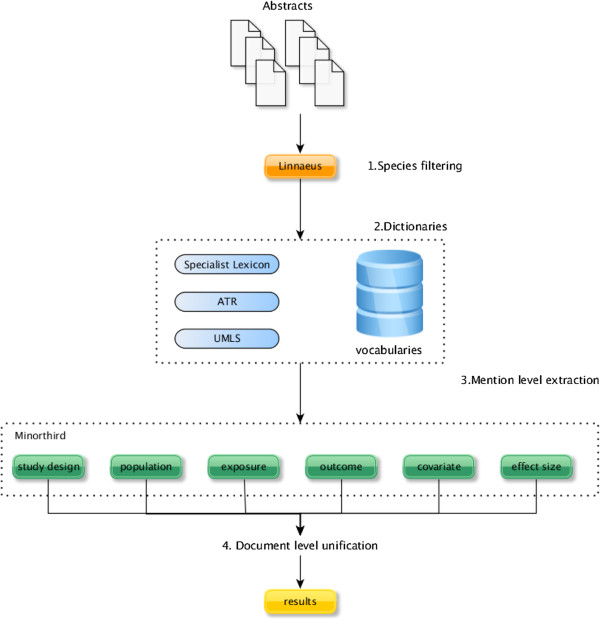
“They are checked by LINNAEUS, a species identification system [24], to filter out studies based on non-human species.”
Fox, C. (1989) · ACM SIGIR Forum · doi:10.1145/378881.378888 · Cited by 325 · cited 1×
“Filtering against a common stop-word list (created by Fox [29]) is applied to remove any concepts of non-biomedical nature.”
Research works printed but not linked: 2
- 13. Aramaki E, Miura Y, Tonoike M, Ohkuma T, Masuichi H, Waki K, Ohe K. Extraction of ADE from clinical records. IMIA. 2010. doi:10,3233/978-1-60750-588-4-739.
- 15. Niu Y, Hirst G. Analysis of Semantic Classes in Medical Text for Q&A. Proc. ACL Workshop on Question Answering in Restricted Domains. 2004. pp. 54–61.
Cited by
Lucini, F. R., Fogliatto, F. S., da Silveira, G. J. C., Neyeloff, J. L., Anzanello, M. J., Kuchenbecker, R. S., & Schaan, B. D. (2017) · International Journal of Medical Informatics · doi:10.1016/j.ijmedinf.2017.01.001 · Cited by 139
“We used the NLTK [35] and scikit-learn [36] libraries.”
MethodData extraction methods for systematic review (semi)automation: a living systematic review
Schmidt, L., Olorisade, B. K., McGuinness, L. A., Thomas, J., & Higgins, J. P. T. (2021) · F1000Research · doi:10.12688/f1000research.51117.1 · Cited by 106
Improving reference prioritisation with PICO recognition.
Brockmeier, A. J., Ju, M., Przybyła, P., & Ananiadou, S. (2019) · BMC Medical Informatics and Decision Making · doi:10.1186/s12911-019-0992-8 · Cited by 62
“They use manually designed filters (using dictionaries and rules) [77, 78] for key inclusion criterion, mentions of specific outcomes, population characteristics, and interventions (exposures) to filter collections with impressive gains.”
Data extraction methods for systematic review (semi)automation: Update of a living systematic review
Schmidt, L., Finnerty Mutlu, A. N., Elmore, R., Olorisade, B. K., Thomas, J., & Higgins, J. P. T. (2023) · F1000Research · doi:10.12688/f1000research.51117.2 · Cited by 44
Karystianis, G., Thayer, K., Wolfe, M., & Tsafnat, G. (2017) · Journal of Biomedical Informatics · doi:10.1016/j.jbi.2017.04.004 · Cited by 31
“Our text mining methodology follows previously published work [34].”
BackgroundMethodSelf-citationData extraction methods for systematic review (semi)automation: Update of a living systematic review
Schmidt, L., Finnerty Mutlu, A. N., Elmore, R., Olorisade, B. K., Thomas, J., & Higgins, J. P. T. (2025) · F1000Research · doi:10.12688/f1000research.51117.3 · Cited by 27
A Narrative Literature Review of Natural Language Processing Applied to the Occupational Exposome
Schoene, A. M., Basinas, I., van Tongeren, M., & Ananiadou, S. (2022) · International Journal of Environmental Research and Public Health · doi:10.3390/ijerph19148544 · Cited by 25
“Research conducted by [19] uses rule-based patterns to analyse 60 PubMed abstracts in the obesity domain for six semantic concepts (study design, population, exposures, outcomes, covariates and effect size).”
Interpretable Topic Features for Post-ICU Mortality Prediction.
Luo, Y.-F., & Rumshisky, A. (2016) · PubMed · Cited by 21
DEXTER: A workbench for automatic term extraction with specialized corpora
Periñán-Pascual, C. (2017) · Natural Language Engineering · doi:10.1017/s1351324917000365 · Cited by 10
A Study of the Influence of Textual Features in Learning Medical Prior Authorization
Magalhães, G. V., Vieira, J. P. A., Santos, R. L. D. S., Barbosa, J. L. N., Neto, P. D. A. D. S., & Moura, R. S. (2019) · Proceedings - IEEE Symposium on Computer-Based Medical Systems · doi:10.1109/cbms.2019.00021 · Cited by 9
“identifying entities from predefined categories), among other applications [5], [6].”
BackgroundKarystianis, G., Simpson, P. L., Lukmanjaya, W., Ginnivan, N., Nenadić, G., Buchan, I. E., & Butler, T. G. (2023) · JMIR Formative Research · doi:10.2196/49721 · Cited by 9
“Other efforts included the recognition of phase III clinical trial information such as patient information [19] or the number of participants from RCTs [20] and the automatic identification of key characteristics (ie, study design, populations, exposure, outcome, confounding factors, effect size, and country where the…”
BackgroundMethodSelf-citationKarystianis, G., Lukmanjaya, W., Buchan, I. E., Simpson, P. L., Ginnivan, N., Nenadić, G., & Butler, T. G. (2024) · BMC Medical Research Methodology · doi:10.1186/s12874-024-02186-6 · Cited by 6
“As more scientific literature becomes available, the task of reading, extracting and synthesising knowledge from large numbers of epidemiological studies becomes more time-consuming [12–16].”
BackgroundInfluentialSelf-citationCapers, P. L., Brown, A. W., Dawson, J., & Allison, D. B. (2015) · Frontiers in Nutrition · doi:10.3389/fnut.2015.00006 · Cited by 4
“, population, design) to identify characteristics of abstracts of interest (3), or evaluating larger corpora of literature using crowdsourcing (4).”
BackgroundA Scoping Review of Adopted Information Extraction Methods for RCTs.
Aletaha, A., Nemati-Anaraki, L., Keshtkar, A., Sedghi, S., Keramatfar, A., & Korolyova, A. (2023) · Medical Journal of The Islamic Republic of Iran · doi:10.47176/mjiri.37.95 · Cited by 2
Lukmanjaya, W., Butler, T. G., Taflan, P., Simpson, P. L., Ginnivan, N., Buchan, I. E., Nenadić, G., & Karystianis, G. (2024) · JMIR Formative Research · doi:10.2196/60878 · Cited by 4
Self-citationEvaluating ontology coverage and internal structure to better align patients with clinical trials
Lee, J., Blake, C. L., & McInnes, B. T. (2019) · Proceedings of the Association for Information Science and Technology · doi:10.1002/pra2.14 · Cited by 3
“…developed to extract these entities directly from published abstracts (Boudin et al., 2010; Hassanzadeh, Groza, & Hunter, 2014; Huang et al., 2013; Karystianis, Buchan, & Nenadic, 2014) achieving an F-score of 86.3% for P and C combined (Boudin et al., 2010); 73.9% for P (Huang et al., 2013); and…”
BackgroundInfluentialThompson, P., Ananiadou, S., Basinas, I., Brinchmann, B. C., Cramer, C., Galea, K. S., Ge, C., Georgiadis, P., Kirkeleit, J., Kuijpers, E., et al. (2024) · PLoS ONE · doi:10.1371/journal.pone.0307844 · Cited by 1
“…promising results were achieved using a dictionary-based approach to detect six key types of information about epidemiological studies in academic abstracts [62,63], the considerable manual effort required to develop multiple dictionaries limits the scalability/adaptivity of such an approach.”
BackgroundAslam, A., Walker, L. E., Abaho, M., Cant, H. E. O., O’Connell, M., Abuzour, A. S., Hama, L., Schofield, P. G., Mair, F. S., Ruddle, R. A., et al. (2025) · BMC Medical Research Methodology · doi:10.1186/s12874-025-02541-1 · Cited by 5
“…over time to avoid temporal drift, tools which help researchers to search, combine, and modify codelists from previously published research [61] (which may now be feasible due to advances in cutting-edge large language models), and standardization of codelists to enable reuse where…”
Self-citationCapers, P. L., Brown, A. W., Dawson, J., & Allison, D. B. (2015) · The FASEB Journal · doi:10.1096/fasebj.29.1_supplement.735.1
Lucini, F. R., Fogliatto, F. S., Calegari, R., da Silveira, G. J. C., neyeloff, J., Anzanello, M. J., Kuchenbecker, R. D. S., & Schaan, B. D. (2018) · Anais do Simpósio Brasileiro de Pesquisa Operacional · doi:10.59254/sbpo-2018-85299
Karystianis, G., Lukmanjaya, W., Buchan, I. E., Simpson, P. L., Ginnivan, N., Nenadić, G., & Butler, T. G. (2024) · Figshare · doi:10.6084/m9.figshare.26694534
Self-citationKarystianis, G., Lukmanjaya, W., Buchan, I. E., Simpson, P. L., Ginnivan, N., Nenadić, G., & Butler, T. G. (2024) · Figshare · doi:10.6084/m9.figshare.26694537
Self-citationHaroutunian, L. (2022) · theses.fr (ABES) · doi:10.70675/a3de09d0z30faz4d04z846fz1d75d3f69a3a
Metadata
- Authors
- Karystianis, G., Buchan, I., & Nenadic, G.
- Affiliations
- University of Manchester (GB)
- Venue
- Journal of Biomedical Semantics
- Published
- 2014-05-19
- Volume
- 5
- Issue
- 1
- Pages
- 22-22
- ISSN
- 2041-1480 (ISSN-L)
- PMC
- PMC4062908
- OpenAlex
- W2157412238
- Cited by
- 23
- References
- 31
- Citations by year
- 2025: 2 · 2024: 5 · 2023: 3 · 2022: 2 · 2021: 1 · 2019: 3 · 2018: 1 · 2017: 3 · 2016: 1 · 2015: 2
- FWCI
- 0.82
- Type
- journal article
- Language
- en
- Open access
- gold
- doi.org
- Licence
- cc-by
- Locations
- Journal of Biomedical Semantics (publishedVersion, cc-by)
- Europe PMC (PubMed Central) (publishedVersion, cc-by)
- PubMed Central (publishedVersion, cc-by)
- PubMed (publishedVersion)
- Research Explorer (The University of Manchester) (publishedVersion)
- Funders
- Medical Research Council (MR/K006665/1, MC_PC_13042)
- Economic and Social Research Council (ES/J010014/1, ES/F029721/1)
- Topics
- Health Sciences › Medicine › Health Informatics › Biomedical Text Mining and Ontologies
- Physical Sciences › Computer Science › Artificial Intelligence › Advanced Text Analysis Techniques
- Social Sciences › Decision Sciences › Statistics, Probability and Uncertainty › Meta-analysis and systematic reviews
- Keywords
- information extraction, MEDLINE abstracts, obesity, rule-based extraction, research design, covariates, effect size, semantic patterns, literature mining
About these checks
Registry, retraction, Cites and statistics results are computed, not judged, with one exception: a printed reference that no index lists is read once by a model before it counts as a citation error. Claims are extracted by a model and kept only when their quote appears verbatim in the text; each cited source is then checked, with a model’s help, for whether it says what the claim relies on. Those verdicts can be wrong — read the claim’s quote and the cited source before relying on one.
Statistics and arithmetic are recomputed, not judged.
Confidence bands are shown only for fields calibrated on our annotated test set. None is calibrated yet, so no band is shown.
What counts as a claim ›How we measure confidence ›How we check this ›
Are you an author, or do you see a problem with this page? Request a review
Data sources
Bibliographic data: Semantic Scholar, OpenAlex, Crossref.
Contains information from the Semantic Scholar Academic Graph Datasets, made available under the ODC Attribution License (ODC-BY 1.0).
Semantic Scholar’s data is described in: Kinney, R., et al. (2023). The Semantic Scholar Open Data Platform. arXiv:2301.10140.
