

Evidence-based mapping of design heterogeneity prior to meta-analysis: a systematic review and evidence synthesis
Open accessThe DOI matches its Crossref record; 68 of the 70 references it cites were found in a registry or an index.
Abstract
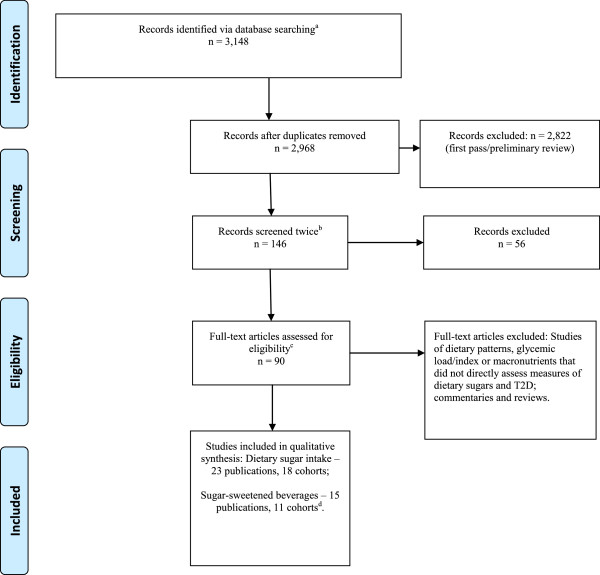
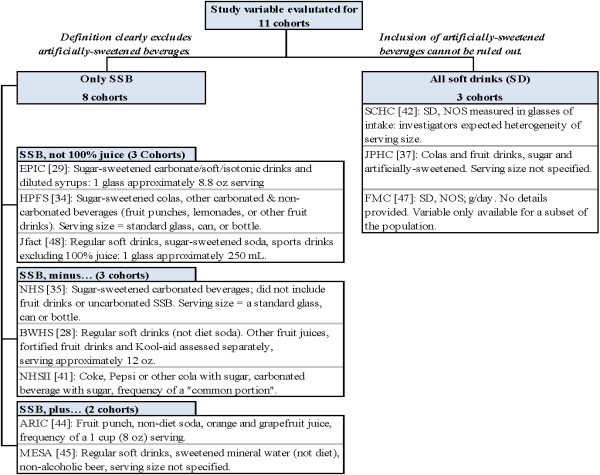
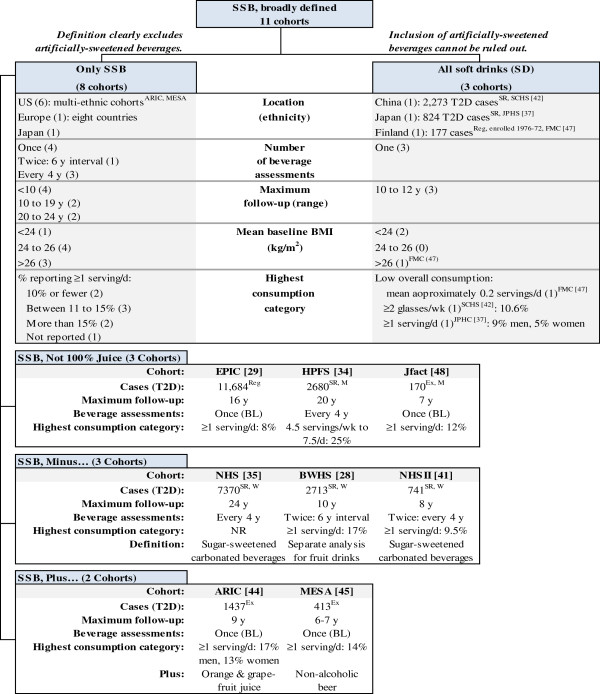
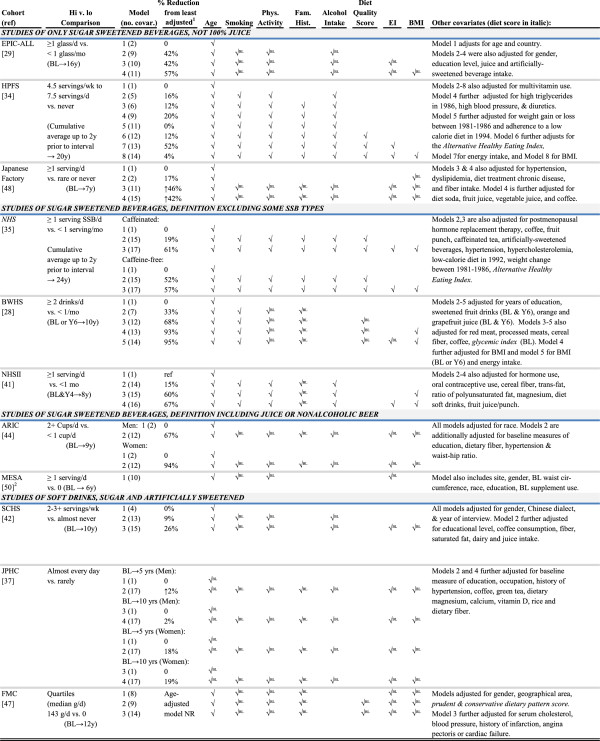
BACKGROUND: Assessment of design heterogeneity conducted prior to meta-analysis is infrequently reported; it is often presented post hoc to explain statistical heterogeneity. However, design heterogeneity determines the mix of included studies and how they are analyzed in a meta-analysis, which in turn can importantly influence the results. The goal of this work is to introduce ways to improve the assessment and reporting of design heterogeneity prior to statistical summarization of epidemiologic studies. METHODS: In this paper, we use an assessment of sugar-sweetened beverages (SSB) and type 2 diabetes (T2D) as an example to show how a technique called 'evidence mapping' can be used to organize studies and evaluate design heterogeneity prior to meta-analysis.. Employing a systematic and reproducible approach, we evaluated the following elements across 11 selected cohort studies: variation in definitions of SSB, T2D, and co-variables, design features and population characteristics associated with specific definitions of SSB, and diversity in modeling strategies. RESULTS: Evidence mapping strategies effectively organized complex data and clearly depicted design heterogeneity. For example, across 11 studies of SSB and T2D, 7 measured diet only once (with 7 to 16 years of disease follow-up), 5 included primarily low SSB consumers, and 3 defined the study variable (SSB) as consumption of either sugar or artificially-sweetened beverages. This exercise also identified diversity in analysis strategies, such as adjustment for 11 to 17 co-variables and a large degree of fluctuation in SSB-T2D risk estimates depending on variables selected for multivariable models (2 to 95% change in the risk estimate from the age-adjusted model). CONCLUSIONS: Meta-analysis seeks to understand heterogeneity in addition to computing a summary risk estimate. This strategy effectively documents design heterogeneity, thus improving the practice of meta-analysis by aiding in: 1) protocol and analysis planning, 2) transparent reporting of differences in study designs, and 3) interpretation of pooled estimates. We recommend expanding the practice of meta-analysis reporting to include a table that summarizes design heterogeneity. This would provide readers with more evidence to interpret the summary risk estimates.
Overview
The claims and statistics of this paper haven’t been checked yet.
Free: it reads the open-access text and checks the first 5 claims that cite a source we can check. Create a free account to check every claim.
Integrity signals
Registry
Cites
Statistics
Figures
Verification
Claims the paper makes
The claims and statistics of this paper haven’t been checked yet.
Free: it reads the open-access text and checks the first 5 claims that cite a source we can check. Create a free account to check every claim.
Claims other papers make about this one
Each is checked against this paper’s own text: does it say what the citing paper says it does?
In the citing paper
“Mapping of heterogeneity between studies [65] may not only provide a useful overview but also help decide whether or not to combine studies statistically in a meta-analysis.”
From COSMOS-E: Guidance on conducting systematic reviews and meta-analyses of observational studies of etiology (2019) · cites this paper as [65]
Self-check
Percentages, sums and reported differences re-computed from the paper’s own numbers.
The self-check needs the paper’s full text.
Citations
Cites
Preferred Reporting Items for Systematic Reviews and Meta-Analyses: the PRISMA statement
Moher, D., Liberati, A., Tetzlaff, J., Altman, D. G., & for the PRISMA Group (2009) · BMJ · doi:10.1136/bmj.b2535 · Cited by 83,823
Measuring inconsistency in meta-analyses
Higgins, J. P. T., Thompson, S. G., Deeks, J. J., & Altman, D. G. (2003) · BMJ · doi:10.1136/bmj.327.7414.557 · Cited by 63,139 · cited 1×
“chance if the effect size was similar across studies [8,10].”
ResultPreferred reporting items for systematic reviews and meta-analyses: the PRISMA Statement.
(2009) · PubMed Central · Cited by 44,859
Scoping studies: towards a methodological framework
Arksey, H., & O'Malley, L. (2005) · International Journal of Social Research Methodology · doi:10.1080/1364557032000119616 · Cited by 36,742 · cited 2×
“This work is guided by previously published evidence maps whose focus was research priority setting [14-23] and the existing standards for conducting and reporting of systematic reviews of observational research [4,24].”
MethodCochrane Handbook for Systematic Reviews of Interventions: Cochrane Book Series
(2008) · doi:10.1002/9780470712184 · Cited by 25,048 · cited 1×
“There are two major types of heterogeneity: statistical heterogeneity and design heterogeneity (sometimes referred to as clinical and methodological diversity) [9].”
BackgroundDermyshi, E., Wang, Y., Yan, C., Hong, W., Qiu, G., Gong, X., & Zhang, T. (2017) · Neonatology · doi:10.1159/000454668 · Cited by 24,451
Meta-analysis of Observational Studies in Epidemiology<SUBTITLE>A Proposal for Reporting</SUBTITLE>
Stroup, D. F. (2000) · JAMA · doi:10.1001/jama.283.15.2008 · Cited by 20,623
Scoping studies: advancing the methodology
Levac, D., Colquhoun, H., & O'Brien, K. K. (2010) · Implementation Science · doi:10.1186/1748-5908-5-69 · Cited by 15,268 · cited 2×
“This work is guided by previously published evidence maps whose focus was research priority setting [14-23] and the existing standards for conducting and reporting of systematic reviews of observational research [4,24].”
MethodBorenstein, M., Hedges, L. V., Higgins, J. P. T., & Rothstein, H. R. (2009) · doi:10.1002/9780470743386 · Cited by 14,225
Borenstein, M., Hedges, L. V., Higgins, J. P. T., & Rothstein, H. R. (2021) · doi:10.1002/9781119558378 · Cited by 9,799
Research works printed but not linked: 2
- Greer N Brasure M Wilt TJ Wheeled mobility (wheelchair) service delivery [ http://www.ncbi.nlm.nih.gov/books/NBK83951/] 22319810
- Chung M Dahabreh IJ Hadar N Ratichek SJ Gaylor JM Trikalinos TA Lau J Emerging MRI technologies for imaging musculoskeletal disorders under loading stress [ http://www.ncbi.nlm.nih.gov/books/NBK82287/] 22191119
Cited by
Miake-Lye, I. M., Hempel, S., Shanman, R., & Shekelle, P. G. (2016) · Systematic Reviews · doi:10.1186/s13643-016-0204-x · Cited by 660
Dekkers, O. M., Vandenbroucke, J. P., Cevallos, M., Renehan, A. G., Altman, D. G., & Egger, M. (2019) · PLOS Medicine · doi:10.1371/journal.pmed.1002742 · Cited by 525
Wagg, E., Blyth, F., Cumming, R. G., & Khalatbari‐Soltani, S. (2021) · Ageing Research Reviews · doi:10.1016/j.arr.2021.101365 · Cited by 111
Pai, L.-W., Li, T.-C., Hwu, Y.-J., Chang, S.-C., Chen, L.-L., & Chang, P.-Y. (2016) · Diabetes Research and Clinical Practice · doi:10.1016/j.diabres.2016.01.011 · Cited by 80
“[45] Althuis MD, Weed DL, Frankenfeld CL.”
BackgroundMarshall, Z., Welch, V. A., Minichiello, A., Swab, M., Brunger, F., & Kaposy, C. (2019) · Transgender Health · doi:10.1089/trgh.2018.0020 · Cited by 86
Pearson, I., Page, S., Zimmerman, C., Meinck, F., Gennari, F., Guedes, A. C., & Stöckl, H. (2022) · Trauma Violence & Abuse · doi:10.1177/15248380221082943 · Cited by 79
“We followed a methodology for evidence-based mapping of design heterogeneity and compared studies based on their population ’ s characteristics, the de fi nitions of violence used, the types of violence measured and the reported perpetrators and targets of the violence (Althuis et al., 2014).”
MethodThe influence of POLST on treatment intensity at the end of life: A systematic review
Vranas, K. C., Plinke, W., Bourne, D. S., Kansagara, D. L., Lee, R. Y., Kross, E. K., Slatore, C. G., & Sullivan, D. R. (2021) · Journal of the American Geriatrics Society · doi:10.1111/jgs.17447 · Cited by 59
“Given the substantial design heterogeneity across included studies (Table S2), we did not perform a metaanalysis, as this may lead to imprecise and possibly invalid inferences.(39) Instead, we synthesized the results qualitatively.”
MethodClemens, E., Broer, L., Langer, T., Uitterlinden, A. G., de Vries, A. C. H., van Grotel, M., Pluijm, S. F. M., Binder, H., Byrne, J., Broeder, E. V. D., et al. (2019) · The Pharmacogenomics Journal · doi:10.1038/s41397-019-0113-1 · Cited by 53
“Heterogeneity between studies was assessed using the I(2) statistic and the Chi-squared statistic [35, 36].”
MethodBigambo, F. M., Sun, H., Yan, W. S., Wu, D., Xia, Y., Wang, X., & Wang, X. (2020) · Environmental Research · doi:10.1016/j.envres.2020.110056 · Cited by 32
Li, Z., Yu, M., Wang, P., Qian, H., Fan, Y., Li, X., Xu, Q., Wang, X., Wang, X., & Lu, C. (2021) · Pediatric Allergy and Immunology · doi:10.1111/pai.13498 · Cited by 27
The Emperor's New Clothes: a Critical Appraisal of Evidence-based Medicine
Tebala, G. D. (2018) · International Journal of Medical Sciences · doi:10.7150/ijms.25869 · Cited by 28
“It may involve different study designs, different criteria of recruitment, different ways to estimate the effect of the treatment and so on, and can negatively affect the results (29).”
BackgroundMarshall, Z., Welch, V. A., Thomas, J., Brunger, F., Swab, M., Shemilt, I., & Kaposy, C. (2017) · Systematic Reviews · doi:10.1186/s13643-017-0427-5 · Cited by 28
“Fifteen databases were selected to ensure the identification of diverse study designs [31] including Academic Search Premier, Anthropology Plus, Bibliography of Native North Americans, CINAHL, First Nations Periodical Index, Indigenous Studies Portal, LILACS, ProQuest Social Sciences Premium (contains Sociological Abs…”
MethodUmberham, B. A., Hedin, R. J., Detweiler, B., Kollmorgen, L., Hicks, C., & Vassar, M. B. (2017) · British Journal of Anaesthesia · doi:10.1093/bja/aex251 · Cited by 14
“To construct evidence maps, we modified an approach proposed by Althuis, Weed, and Frankenfield.13 The Althuis approach focuses on observational studies and included a map to assess covariates adjusted for in multivariate analyses across the primary studies.”
MethodInfluentialChand, R. R., Blyth, F., & Khalatbari‐Soltani, S. (2022) · Pain · doi:10.1097/j.pain.0000000000002777 · Cited by 8
Lorenzo, E., Szeszulski, J., Shin, C.-N., Todd, M. W., & Lee, R. E. (2020) · Journal of Transport & Health · doi:10.1016/j.jth.2020.100927 · Cited by 14
Zolk, O., Knesebeck, A. V. D., Graf, N. M., Simon, T., Hero, B., Abdul‐Khaliq, H., Rahman, M. A. E., Spix, C., Mayer, B., Elsner, S. A., et al. (2021) · JMIR Research Protocols · doi:10.2196/27898 · Cited by 6
Heterogeneity of Systematic Reviews in Oncology
Holmes, J., Herrmann, D., Koller, C., Khan, S. H., Umberham, B. A., Worley, J. A., & Vassar, M. B. (2017) · Baylor University Medical Center Proceedings · doi:10.1080/08998280.2017.11929568 · Cited by 7
Ke, Z., Du, H., Cheung, R. Y. M., Liang, Y., Liu, J., & Chen, W. (2025) · Behavior Research Methods · doi:10.3758/s13428-025-02647-w · Cited by 9
Ye, Y., Long, C., Chua, K. C., Moreno‐Agostino, D., & Prina, M. (2026) · GeroScience · doi:10.1007/s11357-026-02137-7 · Cited by 8
“…outcomes (e.g., binary vs. continuous outcomes), the timing and type of SEP indicators measured (e.g., continuous education years vs. categorical income brackets), and the statistical methods employed (e.g., yielding non-comparable effect estimates such as Odds Ratios vs. Beta coefficients) [36].”
Fekadu, G. A., Wordofa, M. A., Bogale, F., Fite, R. O., Alemu, K., Worku, A., Taddesse, L., Bekele, D., Tolera, G., Chan, G. J., et al. (2025) · Journal of Global Health · doi:10.7189/jogh.15.04080 · Cited by 2
Cheng, J., Zhu, J., Chen, R., Zhang, M., Han, B., Zhu, M., He, Y., Yi, H., & Tang, S. (2025) · International Journal of Clinical Pharmacy · doi:10.1007/s11096-025-01880-9 · Cited by 1
“Subgroup analysis and meta-regression were used to identify sources of heterogeneity, considering region [30], study design [31], diagnostic criteria, causality assessments, Hardy–Weinberg equilibrium (HWE), and covariate adjustments.”
Ethical challenges to patient autonomy in the era of artificial intelligence: a systematic review
Mohammadnejad, S., Raiesifar, A., Bazmi, S., & Ghonodi, F. (2026) · BMC Medical Informatics and Decision Making · doi:10.1186/s12911-026-03614-x · Cited by 2
“Descriptive summaries were used for quantitative studies to report the effects of AI on patient autonomy [44].”
Smit, F., Franco, M. R., Sherrington, C., Cullati, S., Blyth, F., van Zwieten, A., & Khalatbari‐Soltani, S. (2026) · Journal of Epidemiology & Community Health · doi:10.1136/jech-2025-225014 · Cited by 1
Heterogeneity assessment in gastroenterology systematic reviews: an analysis of current practices
Heavener, T. E., Richards, J., Bird, H., & Vassar, M. B. (2017) · International Journal of Evidence-Based Healthcare · doi:10.1097/xeb.0000000000000130 · Cited by 2
Cheng, F., & Zhang, J. (2020) · Springer eBooks · doi:10.1007/978-981-15-5975-4_8 · Cited by 1
Systematic reviews regarding iron and iron supplementation in blood donors
Smith, G. A. (2014) · UPT. Syiah Kuala University Library (Syiah Kuala University)
Jordan, A. E., Perlman, D. C., Smith, D. J., & Hagan, H. (2018) · Comparative Effectiveness Research · doi:10.2147/cer.s145672
“Combining results from studies designed to answer different questions may lead to imprecise and possibly invalid inferences.(9) The degree to which studies examine questions of efficacy or effectiveness is an important form of study-design heterogeneity that systematic reviews must address.”
Association between gestational diabetes mellitus and allergic diseases in childrenPreprint
Li, Z., Yu, M., Pin, W., Qian, H., Fan, Y., Li, X., Xu, Q., Wang, X., Wang, X., & Lu, C. (2020) · doi:10.22541/au.159969635.51164815
Smit, F., Franco, M. R., Sherrington, C., Cullati, S., Blyth, F., van Zwieten, A., & Khalatbari‐Soltani, S. (2025) · medRxiv · doi:10.1101/2025.05.13.25327493
“Using an evidence-based mapping technique (23), considerable heterogeneity between studies was found (appendix pp9-13), thus we narratively synthesised results.”
Life course socio-economic position and healthy ageing: A systematic review of longitudinal studiesPreprint
Ye, Y., Long, C., Chua, K., Moreno‐Agostino, D., & Prina, M. A. (2025) · medRxiv · doi:10.1101/2025.10.22.25338545
“Through systematic evidence mapping of the included studies, we identified significant methodological heterogeneity in the operationalisation of healthy ageing, the timing and type of SEP indicators measured, and the statistical methods employed 35 .”
Metadata
- Authors
- Althuis, M. D., Weed, D. L., & Frankenfeld, C. L.
- Affiliations
- George Mason University (US)
- Corresponding author
- Althuis, Michelle D
- Venue
- Systematic Reviews
- Published
- 2014-07-23
- Volume
- 3
- Issue
- 1
- Pages
- 80-80
- ISSN
- 2046-4053 (ISSN-L)
- PMC
- PMC4128504
- OpenAlex
- W2102955517
- Cited by
- 30
- References
- 70
- Citations by year
- 2026: 3 · 2025: 5 · 2022: 2 · 2021: 4 · 2020: 4 · 2019: 3 · 2018: 2 · 2017: 4 · 2016: 2 · 2014: 1
- FWCI
- 0.64
- Type
- journal article
- Language
- en
- Open access
- gold
- doi.org
- Licence
- Locations
- Systematic Reviews (publishedVersion, cc-by)
- Europe PMC (PubMed Central) (publishedVersion, cc-by)
- PubMed Central (publishedVersion, cc-by)
- PubMed (publishedVersion)
- Topics
- Social Sciences › Decision Sciences › Statistics, Probability and Uncertainty › Meta-analysis and systematic reviews
- Physical Sciences › Mathematics › Statistics and Probability › Statistical Methods in Epidemiology
- Social Sciences › Sociology and Political Science › Delphi Technique in Research
- Keywords
- evidence mapping, meta-analysis reporting, sugar-sweetened beverages, type 2 diabetes, cohort studies, multivariable modeling, risk estimates
- MeSH terms
- Beverages, Diabetes Mellitus, Type 2, Humans, Models, Theoretical, Review Literature as Topic, Meta-Analysis as Topic, Information Storage and Retrieval, Dietary Sucrose
About these checks
Registry, retraction, Cites and statistics results are computed, not judged, with one exception: a printed reference that no index lists is read once by a model before it counts as a citation error. Claims are extracted by a model and kept only when their quote appears verbatim in the text; each cited source is then checked, with a model’s help, for whether it says what the claim relies on. Those verdicts can be wrong — read the claim’s quote and the cited source before relying on one.
Statistics and arithmetic are recomputed, not judged.
Confidence bands are shown only for fields calibrated on our annotated test set. None is calibrated yet, so no band is shown.
What counts as a claim ›How we measure confidence ›How we check this ›
Are you an author, or do you see a problem with this page? Request a review
Data sources
Bibliographic data: Semantic Scholar, OpenAlex, Crossref.
Contains information from the Semantic Scholar Academic Graph Datasets, made available under the ODC Attribution License (ODC-BY 1.0).
Semantic Scholar’s data is described in: Kinney, R., et al. (2023). The Semantic Scholar Open Data Platform. arXiv:2301.10140.
