

Preclinical radiation dosimetry for the novel SV2A radiotracer [18F]UCB-H
Open accessThe DOI matches its Crossref record; 24 of the 25 references it cites were found in a registry or an index.
Abstract
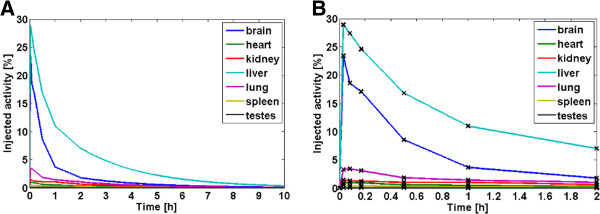
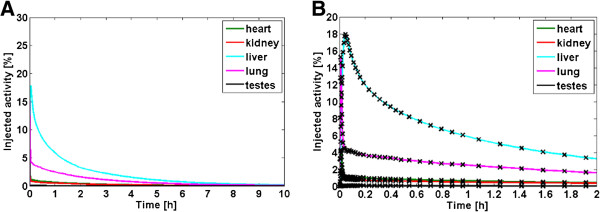
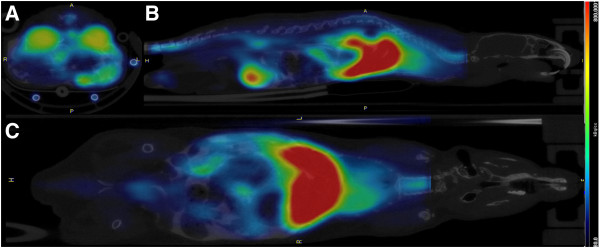
Background: [18 F]UCB-H was developed as a novel radiotracer with a high affinity for synaptic vesicle protein 2A, the binding site for the antiepileptic levetiracetam. The objectives of this study were to evaluate the radiation dosimetry of [18 F]UCB-H in a preclinical trial and to determine the maximum injectable dose according to guidelines for human biomedical research. The radiation dosimetry was derived by organ harvesting and dynamic micro positron emission tomography (PET) imaging in mice, and the results of both methods were compared. Methods: Twenty-four male C57BL-6 mice were injected with 6.96 ± 0.81 MBq of [18 F]UCB-H, and the biodistribution was determined by organ harvesting at 2, 5, 10, 30, 60, and 120 min (n = 4 for each time point). Dynamic microPET imaging was performed on five male C57BL-6 mice after the injection of 9.19 ± 3.40 MBq of [18 F]UCB-H. A theoretical dynamic bladder model was applied to simulate urinary excretion. Human radiation dose estimates were derived from animal data using the International Commission on Radiological Protection 103 tissue weighting factors. Results: Based on organ harvesting, the urinary bladder wall, liver and brain received the highest radiation dose with a resulting effective dose of 1.88E-02 mSv/MBq. Based on dynamic imaging an effective dose of 1.86E-02 mSv/MBq was calculated, with the urinary bladder wall and liver (brain was not in the imaging field of view) receiving the highest radiation. Conclusions: This first preclinical dosimetry study of [18 F]UCB-H showed that the tracer meets the standard criteria for radiation exposure in clinical studies. The dose-limiting organ based on US Food and Drug Administration (FDA) and European guidelines was the urinary bladder wall for FDA and the effective dose for Europe with a maximum injectable single dose of approximately 325 MBq was calculated. Although microPET imaging showed significant deviations from organ harvesting, the Pearson’s correlation coefficient between radiation dosimetry derived by either method was 0.9666.
Overview
The claims and statistics of this paper haven’t been checked yet.
Free: it reads the open-access text and checks the first 5 claims that cite a source we can check. Create a free account to check every claim.
Integrity signals
Registry
Cites
Statistics
Figures
Verification
Claims the paper makes
The claims and statistics of this paper haven’t been checked yet.
Free: it reads the open-access text and checks the first 5 claims that cite a source we can check. Create a free account to check every claim.
Claims other papers make about this one
Each is checked against this paper’s own text: does it say what the citing paper says it does?
The source backs part of the claim, not all of it — or backs it for a different population, condition or comparison.
In the citing paper
“Three of the SV2A ligands were radiolabeled as [ 11 C] UCB-A [112], [ 18 F]UCB-H [113-116], and [ 11 C]UCB-J [117], and all were evaluated in nonhuman primates (NHP).”
From Challenges and rewards of in vivo synaptic density imaging, and its application to the study of depression (2025) · cites this paper as [116]
Experimental — accuracy not yet measured
Self-check
Percentages, sums and reported differences re-computed from the paper’s own numbers.
The self-check needs the paper’s full text.
Citations
Cites
Feldkamp, L. A., Davis, L. C., & Kress, J. W. (1984) · Journal of the Optical Society of America A · doi:10.1364/josaa.1.000612 · Cited by 6,319 · cited 1×
“All microCT images were reconstructed using Feldkamp’s filtered backprojection algorithm [5] with a cutoff at the Nyquist frequency and an isotropic voxel size of 100 μm.”
MethodRecommendations of the International Commission on Radiological Protection
(1961) · Postgraduate Medical Journal · doi:10.1136/pgmj.37.425.168-b · Cited by 5,862
The synaptic vesicle protein SV2A is the binding site for the antiepileptic drug levetiracetam
Lynch, B. A., Lambeng, N., Nocka, K., Kensel-Hammes, P., Bajjalieh, S. M., Matagne, A., & Fuks, B. (2004) · Proceedings of the National Academy of Sciences · doi:10.1073/pnas.0308208101 · Cited by 1,610 · cited 1×
“or in any medium, provided the original work is p binding to the neuronal synaptic vesicle protein 2A (SV2A) in the brain [1].”
BackgroundStabin, M. G., Sparks, R. B., & Crowe, E. A. (2005) · PubMed · Cited by 1,350
ICRP Publication 103, The Recommendations of the International Commission on Radiological Protection
Vetter, R. J. (2008) · Health Physics · doi:10.1097/01.hp.0000324200.73903.5b · Cited by 1,263
Correction for partial volume effects in PET: principle and validation.
ROUSSET, O. G., Ma, Y., & Evans, A. C. (1998) · PubMed · Cited by 1,062
1990 Recommendations of the International Commission on Radiological Protection
Shapiro, B. (1992) · European Journal of Radiology · doi:10.1016/0720-048x(92)90214-t · Cited by 949
Exact and approximate rebinning algorithms for 3-D PET data
Defrise, M., Kinahan, P. E., Townsend, D. W., Michel, C., Sibomana, M., & Newport, D. F. (1997) · IEEE Transactions on Medical Imaging · doi:10.1109/42.563660 · Cited by 758 · cited 1×
“The list-mode data were histogrammed into threedimensional (3D) sinograms by Fourier rebinning [7] and reconstructed by filtered backprojection with a ramp filter cutoff at the Nyquist frequency.”
MethodSiegel, J. A., Thomas, S. R., Stubbs, J. B., Mg, S., Hays, M. T., Koral, K. F., Robertson, J. S., Howell, R. W., Wessels, B. W., Fisher, D. R., et al. (1999) · PubMed · Cited by 572
MIRD Pamphlet No. 24: Guidelines for Quantitative 131I SPECT in Dosimetry Applications
Dewaraja, Y. K., Ljungberg, M., Green, A. J., Zanzonico, P. B., Frey, E. C., SNMMI MIRD Committee, Bolch, W. E., Brill, A. B., Dunphy, M., Fisher, D. R., et al. (2013) · Journal of Nuclear Medicine · doi:10.2967/jnumed.113.122390 · Cited by 336
Cited by
Finnema, S. J., Nabulsi, N. B., Mercier, J., Lin, S.-F., Chen, M.-K., Matuskey, D., Gallezot, J.-D., Henry, S., Hannestad, J., Huang, Y., et al. (2018) · Journal of Cerebral Blood Flow & Metabolism · doi:10.1177/0271678x17724947 · Cited by 218
Synaptic Vesicle Glycoprotein 2A Ligands in the Treatment of Epilepsy and Beyond
Löscher, W., Gillard, M., Sands, Z. A., Kaminski, R. M., & Klitgaard, H. (2016) · CNS Drugs · doi:10.1007/s40263-016-0384-x · Cited by 184
“Recently, [(18)F]UCB-H, a high-affinity PET ligand for SV2A, was developed [73, 74].”
BackgroundSynaptic Vesicle Glycoprotein 2A: Features and Functions
Rossi, R., Arjmand, S., Bærentzen, S. L., Gjedde, A., & Landau, A. M. (2022) · Frontiers in Neuroscience · doi:10.3389/fnins.2022.864514 · Cited by 123
“Consequently, using the tridimensional pharmacophore model of levetiracetam and strict analogs, new compounds were designed with the same specificity and eventually higher affinity for SV2A than the drug itself, including UCB-A, UCB-H and UCB-J; these molecules are suitable for PET radiolabeling (Mercier et al., 2014).”
BackgroundInfluentialImaging of Synaptic Density in Neurodegenerative Disorders
Carson, R. E., Naganawa, M., Toyonaga, T., Koohsari, S., Yang, Y., Chen, M.-K., Matuskey, D., & Finnema, S. J. (2022) · Journal of Nuclear Medicine · doi:10.2967/jnumed.121.263201 · Cited by 104
Evaluation of18F-UCB-H as a Novel PET Tracer for Synaptic Vesicle Protein 2A in the Brain
Warnock, G. I., Aerts, J., Bahri, M. A., Bretin, F., Lemaire, C., Giacomelli, F., Mievis, F., Mestdagh, N., Buchanan, T., Valade, A., et al. (2014) · Journal of Nuclear Medicine · doi:10.2967/jnumed.113.136143 · Cited by 85
“Dosimetry studies (11) indicated that 18F-UCB-H can be used safely in humans, and an initial human study is planned.”
BackgroundSelf-citationSynaptic vesicle protein 2A as a potential biomarker in synaptopathies
Heurling, K., Ashton, N. J., Leuzy, A., Zimmer, E. R., Blennow, K., Zetterberg, H., Eriksson, J., Lubberink, M., & Schöll, M. (2019) · Molecular and Cellular Neuroscience · doi:10.1016/j.mcn.2019.02.001 · Cited by 77
Mercier, J., Archen, L., Bollu, V., Carré, S., Evrard, Y., Jnoff, E., Kenda, B., Lallemand, B., Michel, P., Montel, F., et al. (2014) · ChemMedChem · doi:10.1002/cmdc.201300482 · Cited by 68
Self-citation[11C]UCB-A, a novel PET tracer for synaptic vesicle protein 2A
Estrada, S., Lubberink, M., Thibblin, A., Sprycha, M., Buchanan, T., Mestdagh, N., Kenda, B., Mercier, J., Provins, L., Gillard, M., et al. (2016) · Nuclear Medicine and Biology · doi:10.1016/j.nucmedbio.2016.03.004 · Cited by 71
“Recently two radioligands for the study of SV2A were presented, [F]UCB-H and [C]levetiracetam [13–15].”
MethodSelf-citationImaging Synaptic Density: The Next Holy Grail of Neuroscience?
Serrano, M. E., Kim, E., Petrinovic, M. M., Turkheimer, F., & Cash, D. (2022) · Frontiers in Neuroscience · doi:10.3389/fnins.2022.796129 · Cited by 67
“In 2013, the creation of the first PET-suitable radiotracer, [18F]UCB-H, allowed the in vivo measurement of changes in SV2A brain levels in both humans and animals (Bretin et al., 2013; Warnock et al., 2014; Becker et al., 2017; Serrano et al., 2018).”
BackgroundMeasuring brain synaptic vesicle protein 2A with positron emission tomography and [ 18 F]UCB‐H
Bahri, M. A., Plenevaux, A., Aerts, J., Bastin, C., Becker, G., Mercier, J., Valade, A., Buchanan, T., Mestdagh, N., Ledoux, D., et al. (2017) · Alzheimer's & Dementia: Translational Research & Clinical Interventions · doi:10.1016/j.trci.2017.08.004 · Cited by 61
“Radiodosimetry was performed in mice [12] and humans [13].”
BackgroundSelf-citationPET Imaging for Early Detection of Alzheimer’s Disease
Bao, W., Jia, H., Finnema, S. J., Cai, Z., Carson, R. E., & Huang, Y. H. (2017) · PET Clinics · doi:10.1016/j.cpet.2017.03.001 · Cited by 59
Mercier, J., Provins, L., & Valade, A. (2017) · Drug Discovery Today Technologies · doi:10.1016/j.ddtec.2017.11.003 · Cited by 60
Self-citationRadiosynthesis of 11C-Levetiracetam: A Potential Marker for PET Imaging of SV2A Expression
Cai, H., Mangner, T. J., Muzik, O., Wang, M.-W., Chugani, D. C., & Chugani, H. T. (2014) · ACS Medicinal Chemistry Letters · doi:10.1021/ml500285t · Cited by 58
Warnier, C., Lemaire, C., Becker, G., Zaragoza, G., Giacomelli, F., Aerts, J., Otabashi, M., Bahri, M. A., Mercier, J., Plenevaux, A., et al. (2016) · Journal of Medicinal Chemistry · doi:10.1021/acs.jmedchem.6b00905 · Cited by 58
Self-citationBretin, F., Bahri, M. A., Bernard, C., Warnock, G., Aerts, J. J., Mestdagh, N., Buchanan, T. J., Otoul, C., Koestler, F., Miévis, F., et al. (2015) · Molecular Imaging and Biology · doi:10.1007/s11307-014-0820-6 · Cited by 57
“A preliminary preclinical dosimetry study of [(18)F]UCB-H has already been conducted [13].”
BackgroundMethodResultSelf-citationValidation and noninvasive kinetic modeling of [ 11 C]UCB-J PET imaging in mice
Bertoglio, D., Verhaeghe, J., Miranda, A., Kertesz, I., Cybulska, K., Korat, Š., Wyffels, L., Stroobants, S., Mrzljak, L., Dominguez, C., et al. (2020) · Journal of Cerebral Blood Flow & Metabolism · doi:10.1177/0271678x19864081 · Cited by 54
“In addition to [(11)C]UCB-J, [(11)C]UCB-A and [(18)F]UCB-H have been reported as radiotacers targeting SV2A.(12,14) Both radiotracers have shown specific binding to SV2A; however, [(11)C]UCB-A was limited by its slow kinetics and metabolism in both rats and pigs.”
BackgroundThe Rise of Synaptic Density PET Imaging
Becker, G., Dammicco, S., Bahri, M. A., & Salmon, E. (2020) · Molecules · doi:10.3390/molecules25102303 · Cited by 31
“The first in vivo description of SV2A PET radiotracer has been achieved in mice with UCB-H for dosimetric analysis purpose [36].”
BackgroundSelf-citationPharmacokinetic Characterization of [18F]UCB-H PET Radiopharmaceutical in the Rat Brain
Becker, G., Warnier, C., Serrano, M. E., Bahri, M. A., Mercier, J., Lemaire, C., Salmon, E., Luxen, A., & Plenevaux, A. (2017) · Molecular Pharmaceutics · doi:10.1021/acs.molpharmaceut.7b00235 · Cited by 31
Self-citationDosimetry of 64Cu-DOTA-AE105, a PET tracer for uPAR imaging
Persson, M., Ali, H. H. E., Binderup, T., Pfeifer, A., Madsen, J., Rasmussen, P., & Kjær, A. (2013) · Nuclear Medicine and Biology · doi:10.1016/j.nucmedbio.2013.12.007 · Cited by 26
“This are in agreement with other studies were the number of animals per time point typically are between 3–6, with the number of time points between 3 and 7 [20,21,26,27].”
BackgroundResultZhou, X., Elsinga, P. H., Khanapur, S., Dierckx, R., de Vries, E. F. J., & de Jong, J. R. (2016) · Molecular Imaging and Biology · doi:10.1007/s11307-016-0992-3 · Cited by 20
PET Imaging of Synaptic Vesicle Protein 2A
Finnema, S. J., Li, S., Cai, Z., Naganawa, M., Chen, M.-K., Matuskey, D., Nabulsi, N., Esterlis, I., Holmes, S. E., Radhakrishnan, R., et al. (2020) · Springer eBooks · doi:10.1007/978-3-030-53176-8_29 · Cited by 21
Development and Validation of a New Mouse Model to Investigate the Role of SV2A in Epilepsy
Menten-Dedoyart, C., Serrano Navacerrada, M. E., Bartholome, O., Sánchez Gil, J., Neirinckx, V., Wislet, S., Becker, G., Plenevaux, A., Van den Ackerveken, P., & Rogister, B. (2016) · PLOS ONE · doi:10.1371/journal.pone.0166525 · Cited by 16
Self-citationNavacerrada, M. E. S., Bahri, M. A., Becker, G., Seret, A., Miévis, F., Giacomelli, F., Lemaire, C. F., Salmon, É., Luxen, A., & Plenevaux, A. (2018) · Molecular Imaging and Biology · doi:10.1007/s11307-018-1301-0 · Cited by 17
Self-citationAsch, R. H., Abdallah, C. G., Carson, R. E., & Esterlis, I. (2025) · Neuropsychopharmacology · doi:10.1038/s41386-024-01913-3 · Cited by 13
Kong, Y., Zhang, S., Huang, L., Zhang, C., Xie, F., Zhang, Z., Huang, Q., Jiang, D., Li, J., Zhou, W., et al. (2021) · Frontiers in Aging Neuroscience · doi:10.3389/fnagi.2021.731114 · Cited by 14
“However, it is difficult to obtain [18F]UCB-H by a four-step radiosynthesis process (Bretin et al., 2013, 2015; Warnock et al., 2014).”
BackgroundMethodNavacerrada, M. E. S., Becker, G., Bahri, M. A., Seret, A., Mestdagh, N., Mercier, J., Miévis, F., Giacomelli, F., Lemaire, C. F., Salmon, É., et al. (2019) · Molecules · doi:10.3390/molecules24091705 · Cited by 13
“8) [3,16], based on their respective affinity measured in vitro, with pIC50 = 8.”
MethodSelf-citationSchifani, C., Hafizi, S., Silva, T. M. S., Watts, J. J., Khan, M. S., & Mizrahi, R. (2017) · International Review of Psychiatry · doi:10.1080/09540261.2017.1396205 · Cited by 12
“In comparison, [18F]UCB-H also displayed good kinetics in rodents (Bretin et al., 2013; Warnock et al., 2014) and nonhuman primates (Zheng et al., 2014), as well as acceptable dosimetry in humans (Bretin et al., 2015), but there are no human imaging studies yet reported.”
BackgroundLee, Y. S., Kim, J. S., Cho, K. D., Kang, J. H., & Lim, S. M. (2015) · Journal of Instrumentation · doi:10.1088/1748-0221/10/07/p07001 · Cited by 10
Bretin, F., Mauxion, T., Warnock, G., Bahri, M. A., Libert, L., Lemaire, C. F., Luxen, A., Bardiès, M., Seret, A., & Plenevaux, A. (2013) · Molecular Imaging and Biology · doi:10.1007/s11307-013-0706-z · Cited by 9
Self-citationThe pharmacokinetics of [18F]UCB-H revisited in the healthy non-human primate brain
Goutal, S., Guillermier, M., Becker, G., Gaudin, M., Bramoullé, Y., Luxen, A., Lemaire, C. F., Plenevaux, A., Salmon, É., Hantraye, P., et al. (2021) · EJNMMI Research · doi:10.1186/s13550-021-00777-8 · Cited by 8
“Conclusions [18F]UCB-H was the first [18F]-labeled SV2A radioligand [10, 11], before a long series of new [18F]-labeled SV2A candidate ligands [17, 18, 24].”
BackgroundSelf-citationDuan, Y., Lockwood, J., Wei, L., Hunter, C. R. R. N., Soueidan, K., Bensimon, C., Fernando, P., Wells, R. G., & Ruddy, T. D. (2014) · EJNMMI Research · doi:10.1186/2191-219x-4-16 · Cited by 7
“Although this approach can be utilized to evaluate the dosimetry of novel radiotracers in preclinical studies [14,15], the biokinetics of tracers are often different between rodents and humans.”
BackgroundComparison of the biological effects of 18F at different intracellular levels
Kashino, G., Hayashi, K., Douhara, K., Kobashigawa, S., & Mori, H. (2014) · Biochemical and Biophysical Research Communications · doi:10.1016/j.bbrc.2014.09.136 · Cited by 7
Kunze, L. H., Palumbo, G., Gnörich, J. S., Wind-Mark, K., Schaefer, R., Lindner, S., Gildehaus, F. J., Ziegler, S., & Brendel, M. (2025) · NeuroImage · doi:10.1016/j.neuroimage.2025.121165 · Cited by 6
“Thus, this tracer provides a rather direct read-out of synaptic density/activity (Bastin et al., 2020; Bretin et al., 2013, 2015; Serrano et al., 2019; Vogler et al., 2023; Warnock et al., 2014) compared to the gold-standard [ 18 F]fluordesoxyglucose ([ 18 F]FDG) measurements of neurodegeneration,…”
Lu, X., Ji, B., Huang, G., & Ding, H. Y. (2024) · Fundamental Research · doi:10.1016/j.fmre.2024.04.013 · Cited by 5
“Bretin et al. reported that this radiotracer meets the standard regulations regarding radiation dose for use in human clinical trials [24] .”
Evaluation of [11C]UCB-A positron emission tomography in human brains
Xiong, M., Lubberink, M., Appel, L., Fang, X. T., Danfors, T., Kumlien, E., & Antoni, G. (2024) · EJNMMI Research · doi:10.1186/s13550-024-01117-2 · Cited by 1
Chong, D. J., & French, J. A. (2015) · Wiley eBooks · doi:10.1002/9781118936979.ch39 · Cited by 1
Hidayati, N. R., Nuraeni, N., Hardiansyah, D., & Pawiro, S. A. (2024) · AIP conference proceedings · doi:10.1063/5.0228110 · Cited by 1
Akkermans, J., Miranda, A., Verhaeghe, J. A. J., Elvas, F., Zajicek, F., Bard, J., Liu, L., Khetarpal, V. K., Doot, R. K., Staelens, S. G., et al. (2024) · EJNMMI Research · doi:10.1186/s13550-024-01188-1 · Cited by 1
“Similar correlation was also found in previous studies exploring both in vivo and ex vivo biodistribution with other radioligands (25, 26).”
Palmer, A. M. (2014) · Drugs of the Future · doi:10.1358/dof.2014.039.02.2116668
Bretin, F. (2015) · ORBi (University of Liège)
Self-citationNew PET radiopharmaceuticals for imaging CNS diseases
Brumberg, J., & Varrone, A. (2021) · Elsevier eBooks · doi:10.1016/b978-0-12-822960-6.00002-8
Application of SV2A PET in neurodegenerative disorders
Chen, D., & JIANG, H. (2024) · Scientia Sinica Vitae · doi:10.1360/ssv-2024-0086
Additional file 1 of Evaluation of [11C]UCB-A positron emission tomography in human brains
Xiong, M., Lubberink, M., Appel, L., Fang, X. T., Danfors, T., Kumlien, E., & Antoni, G. (2024) · Figshare · doi:10.6084/m9.figshare.26735010
Goutal, S., Guillermier, M., Becker, G., Gaudin, M., Bramoullé, Y., Luxen, A., Lemaire, C. F., Plenevaux, A., Salmon, É., Hantraye, P., et al. (2021) · Figshare · doi:10.6084/m9.figshare.14385090
Self-citationAging and Alzheimer's Disease: Multimodal Investigation of Image-derived Biomarkers
Moallemian, S. (2023) · ORBi (University of Liège)
Role of Molecular Imaging in Parkinson’s Disease
Su, D., & Stoessl, A. J. (2025) · Springer eBooks · doi:10.1007/978-3-031-95878-6_3
Evaluation of synaptic density, neuroinflammation, and β-amyloid in two amyloidosis mouse models
Kunze, L. H. (2026) · Electronic Theses of LMU Munich (Ludwig-Maximilians-Universität München) · doi:10.5282/edoc.36626
Metadata
- Authors
- Bretin, F., Warnock, G., Bahri, M. A., Aerts, J., Mestdagh, N., Buchanan, T., Valade, A., Mievis, F., Giacomelli, F., Lemaire, C., Luxen, A., Salmon, E., Seret, A., & Plenevaux, A.
- Affiliations
- University of Liège (BE)
- UCB Pharma (Belgium) (BE)
- Corresponding author
- Plenevaux, Alain
- ORCID
- Venue
- EJNMMI Research
- Published
- 2013-05-07
- Volume
- 3
- Issue
- 1
- Pages
- 35-35
- ISSN
- 2191-219X (ISSN-L)
- PMC
- PMC3655042
- OpenAlex
- W2104845164
- Cited by
- 43
- References
- 25
- Citations by year
- 2025: 2 · 2024: 6 · 2022: 3 · 2021: 4 · 2020: 2 · 2019: 3 · 2018: 1 · 2017: 6 · 2016: 5 · 2015: 3 · 2014: 6 · 2013: 2
- FWCI
- 4.14
- Type
- journal article
- Language
- en
- Open access
- gold
- doi.org
- Licence
- cc-by
- Locations
- EJNMMI Research (publishedVersion, cc-by)
- Europe PMC (PubMed Central) (publishedVersion, cc-by)
- PubMed Central (publishedVersion, cc-by)
- PubMed (publishedVersion)
- ORBi (University of Liège) (submittedVersion, other-oa)
- Funders
- Waalse Gewest
- European Commission (238593)
- Fonds De La Recherche Scientifique - FNRS
- Université de Liège
- UCB Pharma
- Topics
- Health Sciences › Medicine › Radiology, Nuclear Medicine and Imaging › Radiopharmaceutical Chemistry and Applications
- Health Sciences › Medicine › Radiology, Nuclear Medicine and Imaging › Radiation Dose and Imaging
- Health Sciences › Medicine › Radiology, Nuclear Medicine and Imaging › Medical Imaging Techniques and Applications
- Keywords
- radiation dosimetry, SV2A, tissue distribution, urinary bladder wall, effective dose, organ procurement, tissue weighting factors
About these checks
Registry, retraction, Cites and statistics results are computed, not judged, with one exception: a printed reference that no index lists is read once by a model before it counts as a citation error. Claims are extracted by a model and kept only when their quote appears verbatim in the text; each cited source is then checked, with a model’s help, for whether it says what the claim relies on. Those verdicts can be wrong — read the claim’s quote and the cited source before relying on one.
Statistics and arithmetic are recomputed, not judged.
Confidence bands are shown only for fields calibrated on our annotated test set. None is calibrated yet, so no band is shown.
What counts as a claim ›How we measure confidence ›How we check this ›
Are you an author, or do you see a problem with this page? Request a review
Data sources
Bibliographic data: Semantic Scholar, OpenAlex, Crossref.
Contains information from the Semantic Scholar Academic Graph Datasets, made available under the ODC Attribution License (ODC-BY 1.0).
Semantic Scholar’s data is described in: Kinney, R., et al. (2023). The Semantic Scholar Open Data Platform. arXiv:2301.10140.
