

Comparison of the effects of ibuprofen and acetaminophen on PGE2 levels in the GCF during orthodontic tooth movement: a human study
Open accessThe DOI matches its Crossref record; 35 of the 35 references it cites were found in a registry or an index.
Abstract
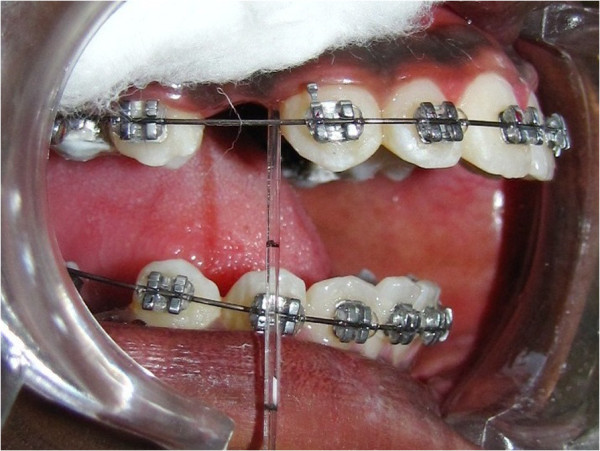
BACKGROUND: Pain is among the most cited negative effects of orthodontic treatment. Non-steroidal anti-inflammatory drugs seem to be an effective option for minimizing this but can have adverse effects on tooth movement owing to their ability to block prostaglandin synthesis. Acetaminophen has been suggested as the analgesic of choice during orthodontic treatment as it showed no effect on orthodontic tooth movement in previous animal studies. The purpose of this study was to compare the effects of ibuprofen and acetaminophen on the prostaglandin E2 (PGE2) levels of the gingival crevicular fluid (GCF) during orthodontic tooth movement in human subjects. METHODS: A total of 42 patients (mean age 18±4.5 years) were randomly divided into three equal groups: ibuprofen, acetaminophen, and control groups. Maxillary canines were distalized with 150 g of force delivered by NiTi coil springs. GCF samples were obtained before (baseline) and after spring activation at 24, 48, and 168 h. The PGE2 content of the GCF was determined using enzyme-linked immunosorbent assay. RESULTS: PGE2 levels in all groups increased significantly by 24 and 48 h of force application and decreased to baseline levels by 168 h. No significant difference was found between the acetaminophen and control groups at any time point. There was a significant decrease in PGE2 levels in the ibuprofen group at 24 and 48 h when compared to the other two groups. CONCLUSIONS: Acetaminophen showed no significant effect on prostaglandin synthesis and may be the safe choice compared to ibuprofen for relieving pain associated with orthodontic tooth movement.
Overview
The claims and statistics of this paper haven’t been checked yet.
Free: it reads the open-access text and checks the first 5 claims that cite a source we can check. Create a free account to check every claim.
Integrity signals
Registry
Cites
Statistics
Figures
Verification
Claims the paper makes
The claims and statistics of this paper haven’t been checked yet.
Free: it reads the open-access text and checks the first 5 claims that cite a source we can check. Create a free account to check every claim.
Claims other papers make about this one
Each is checked against this paper’s own text: does it say what the citing paper says it does?
The source backs part of the claim, not all of it — or backs it for a different population, condition or comparison.
In the citing paper
“In addition, the analgesic action of paracetamol was shown not to be linked to inhibition of prostaglandin synthesis in the periphery [21,23,27,28].”
From Paracetamol (acetaminophen): A familiar drug with an unexplained mechanism of action (2021) · cites this paper as [27]
Experimental — accuracy not yet measured
Self-check
Percentages, sums and reported differences re-computed from the paper’s own numbers.
The self-check needs the paper’s full text.
Citations
Cites
Cellular, molecular, and tissue-level reactions to orthodontic force
Krishnan, V., & Davidovitch, Z. (2006) · American Journal of Orthodontics and Dentofacial Orthopedics · doi:10.1016/j.ajodo.2005.10.007 · Cited by 1,061 · cited 1×
“Nowadays, this is commonly used as a biomarker assay to assess the level of various chemical mediators such as prostaglandins and indicators of root resorption such as dentin degradation products [9].”
BackgroundMechanism of Action of Paracetamol
Graham, G. G., & Scott, K. F. (2005) · American Journal of Therapeutics · doi:10.1097/00045391-200501000-00008 · Cited by 648 · cited 1×
“The explanation for this could also be that NSAIDs block COX-1 and/or COX-2, whereas paracetamol blocks a third isoform, COX-3, which is expressed only in the brain and spinal cord and therefore has minimal effects on prostaglandin synthesis [29-32].”
BackgroundOrthodontic pain: from causes to management--a review
Krishnan, V. (2007) · The European Journal of Orthodontics · doi:10.1093/ejo/cjl081 · Cited by 419 · cited 1×
“Non-steroidal anti-inflammatory drugs (NSAIDs), which inhibit cyclooxygenase activity thereby affecting the synthesis of prostaglandins, remain the most preferred method for pain control during orthodontics [10,11].”
MethodMechanism of Action of Acetaminophen: Is There a Cyclooxygenase 3?
Botting, R. M. (2000) · Clinical Infectious Diseases · doi:10.1086/317520 · Cited by 350
Clinical application of prostaglandin E1 (PGE1) upon orthodontic tooth movement
Yamasaki, K., Shibata, Y., Imai, S., Tani, Y., Shibasaki, Y., & Fukuhara, T. (1984) · American Journal of Orthodontics · doi:10.1016/0002-9416(84)90091-5 · Cited by 262 · cited 1×
“or in any medium, provided the original work is p tooth movement in both rats and humans [3-8].”
BackgroundThe rat as a model for orthodontic tooth movement--a critical review and a proposed solution
Ren, Y. (2004) · The European Journal of Orthodontics · doi:10.1093/ejo/26.5.483 · Cited by 248
Medication effects on the rate of orthodontic tooth movement: A systematic literature review
Bartzela, T., Türp, J. C., Motschall, E., & Maltha, J. C. (2009) · American Journal of Orthodontics and Dentofacial Orthopedics · doi:10.1016/j.ajodo.2008.08.016 · Cited by 244 · cited 1×
“The explanation for this could also be that NSAIDs block COX-1 and/or COX-2, whereas paracetamol blocks a third isoform, COX-3, which is expressed only in the brain and spinal cord and therefore has minimal effects on prostaglandin synthesis [29-32].”
BackgroundGrieve, W. G., Johnson, G. K., Moore, R. N., Reinhardt, R. A., & DuBois, L. M. (1994) · American Journal of Orthodontics and Dentofacial Orthopedics · doi:10.1016/s0889-5406(94)70131-8 · Cited by 236
Prostaglandin as a Mediator of Bone Resorption Induced by Experimental Tooth Movement in Rats
Yamasaki, K., Miura, F., & Suda, T. (1980) · Journal of Dental Research · doi:10.1177/00220345800590101301 · Cited by 227
Aspirin, acetaminophen, and ibuprofen: Their effects on orthodontic tooth movement
Arias, O. R., & Marquez-Orozco, M. C. (2006) · American Journal of Orthodontics and Dentofacial Orthopedics · doi:10.1016/j.ajodo.2004.12.027 · Cited by 194 · cited 1×
“Acetaminophen, a non-steroidal anti-inflammatory drug in the family of para-aminophenols, said to have a central analgesic effect, showed no effect on orthodontic tooth movement in previous animal studies [12-14].”
Result
Cited by
Paracetamol (acetaminophen): A familiar drug with an unexplained mechanism of action
Ayoub, S. S. (2021) · Temperature · doi:10.1080/23328940.2021.1886392 · Cited by 223
“In addition, the analgesic action of paracetamol was shown not to be linked to inhibition of prostaglandin synthesis in the periphery [21,23,27,28].”
BackgroundYamaguchi, M., & Fukasawa, S. (2021) · International Journal of Molecular Sciences · doi:10.3390/ijms22052388 · Cited by 174
“[24] reported that the PGE2 levels in the GCF increased during OTM.”
BackgroundKapoor, P., Kharbanda, O. P., Monga, N., Miglani, R., & Kapila, S. (2014) · Progress in Orthodontics · doi:10.1186/s40510-014-0065-6 · Cited by 183
“Search of pain killers having least effect on bone-resorbing mediator levels as a drug of choice may be a potential area of future research [78].”
BackgroundCurrent advances in orthodontic pain
Long, H., Wang, Y., Jian, F., Liao, L.-N., Yang, X., & Lai, W.-L. (2016) · International Journal of Oral Science · doi:10.1038/ijos.2016.24 · Cited by 161
Yang, B., Gao, X., Ren, Y., Wang, Y., & Zhang, Q. (2016) · Experimental and Therapeutic Medicine · doi:10.3892/etm.2016.3676 · Cited by 83
“Shetty et al (10) showed that, ibuprofen reduced the level of PGE 2 in gingival crevicular fluid, but acetaminophen had no significant effect on the level of PGE 2 .”
Hughes, J. M., McKinnon, C. J., Taylor, K. M., Kardouni, J. R., Bulathsinhala, L., Guerriere, K. I., Popp, K. L., Bouxsein, M., Proctor, S. P., & Matheny, R. W. (2018) · Journal of Bone and Mineral Research · doi:10.1002/jbmr.3616 · Cited by 50
“crevicular fluid in subjects undergoing orthodontic tooth movement treatment, whereas PGE2 levels were significantly reduced in subjects administered ibuprofen.((46))”
BackgroundAlmallah, M. M. E. (2016) · JOURNAL OF CLINICAL AND DIAGNOSTIC RESEARCH · doi:10.7860/jcdr/2016/22813.8804 · Cited by 44
Bone Response of Loaded Periodontal Ligament
Dutra, E. H., Nanda, R., & Yadav, S. (2016) · Current Osteoporosis Reports · doi:10.1007/s11914-016-0328-x · Cited by 36
Roofthooft, D. W. E., van Beynum, I. M., de Klerk, J. C. A., van Dijk, M., van den Anker, J. N., Reiss, I. K. M., Tibboel, D., & Simons, S. H. P. (2015) · European Journal of Pediatrics · doi:10.1007/s00431-015-2541-5 · Cited by 35
“As NSAIDs are more potent prostaglandin synthesis inhibitors than paracetamol [8], resulting in lower peripheral PGE2 levels as is shown in orthodontic studies [25], the a priori probability of success of paracetamol in this group of patients was already relatively low.”
BackgroundNajafi, H. Z., Oshagh, M., Salehi, P., Babanouri, N., & Torkan, S. (2015) · Progress in Orthodontics · doi:10.1186/s40510-015-0104-y · Cited by 33
Correa, A. S., de Almeida, V. L., Lopes, B. M. V., Franco, A., de Matos, F. R., Quintans‐Júnior, L. J., Rode, S. D. M., & Paranhos, L. R. (2017) · Anais da Academia Brasileira de Ciências · doi:10.1590/0001-3765201720160865 · Cited by 33
“Despite the delay of tooth movement caused by NSAIDs (Arias and Marques-Orozco 2006), paracetamol does not seem to interfere with the synthesis of prostaglandins and the course of orthodontic treatment (Shetty et al. 2013).”
InfluentialAlmallah, M. M. E., Hajeer, M. Y., Almahdi, W. H., Burhan, A. S., Latifeh, Y., & Madkhaneh, S. (2020) · Dental and Medical Problems · doi:10.17219/dmp/113332 · Cited by 31
Owayda, A. M., Hajeer, M. Y., Murad, R. M. T., & Al-Sabbagh, R. (2022) · Journal of the World Federation of Orthodontists · doi:10.1016/j.ejwf.2022.01.001 · Cited by 31
Lin, C., Yang, Y., Wang, Y., Jing, H., Bai, X., Hong, Z., Zhang, C., Gao, H., & Zhang, L. (2022) · Experimental Cell Research · doi:10.1016/j.yexcr.2022.113318 · Cited by 24
A Human Periodontal Ligament Fibroblast Cell Line as a New Model to Study Periodontal Stress
Weider, M., Schröder, A., Docheva, D., Rodrian, G., Enderle, I., Seidel, C. L., Andreev, D., Wegner, M., Bözec, A., Deschner, J., et al. (2020) · International Journal of Molecular Sciences · doi:10.3390/ijms21217961 · Cited by 21
“This is in line with previous in vitro findings using primary hPDLF [3,16,26] and with the discovery of increased PGE2 levels in gingival crevicular fluid of human patients in early phases (24 h and 48 h) of OTM [27,28].”
ResultColceriu-Șimon, I.-M., Festila, D. G., Emoke, H., Pancsur, A., Șimon, M. Ș., Olteanu, C. D., Păstrav, M., Bunta, O., & Ghergie, M. C. D. (2025) · Journal of Clinical Medicine · doi:10.3390/jcm14092920 · Cited by 19
“Clinical studies have shown that aspirin [31] and ketorolac [44] reduce OTM, ibuprofen may [32] or may not [7,43] affect OTM, while tenoxicam [60], nabumetone [49], etori-coxib [7], and rofecoxib [31] appear to have no significant influence on OTM (Tables 3 and A1).”
InfluentialItou, H., Toyota, R., & Takeda, M. (2022) · Molecular Pain · doi:10.1177/17448069221108971 · Cited by 20
“Since PGE2 has an important contribution to the function of osteoclast-related bone remodeling, NSAIDs produce negative effects in orthodontic patients, such as reduction of tooth displacement.(47,48) Recently, we have shown that chronic administration of the polyphenol, resveratrol, attenuates experimental tooth move…”
BackgroundAl-Shayea, E. I. (2020) · The Journal of Contemporary Dental Practice · doi:10.5005/jp-journals-10024-2804 · Cited by 22
Ibuprofen for acute postoperative pain in children
Pessano, S., Gloeck, N. R., Tancredi, L., Ringsten, M., Hohlfeld, A., Ebrahim, S., Albertella, M., Kredo, T., & Bruschettini, M. (2024) · Cochrane Database of Systematic Reviews · doi:10.1002/14651858.cd015432.pub2 · Cited by 19
Maan, A. S., & Patil, A. K. (2019) · Journal of Orthodontic Science · doi:10.4103/jos.jos_13_19 · Cited by 17
“[3,7] Shetty et al.[12] identified that certain drugs such as ibuprofen 6 Journal of Orthodontic Science | 2019 which is a commonly used drug for pain relief can significantly inhibit the production of PGE2 during the initial tooth movement.”
Self-citationAzizi, F., Zaseh, M. M. S., Golshah, A., Imani, M. M., & Safari‐Faramani, R. (2024) · Lasers in Medical Science · doi:10.1007/s10103-024-04186-w · Cited by 11
“Following the placement of separators, early orthodontic pain is initiated in the first 24 h following placement [ 12, 13 ], and reaches its peak after 24 to 48 h [ 8, 12 ].”
InfluentialKhoshbin, E., Salehi, R., Behroozi, R., Sadr, S., Zamani, A., Farhadian, M., & Karkehabadi, H. (2023) · BMC Oral Health · doi:10.1186/s12903-023-03243-0 · Cited by 11
Ubuzima, P., Nshimiyimana, E., Mukeshimana, C., Mazimpaka, P., Mugabo, E., Mbyayingabo, D., Mohamed, A. S., & Habumugisha, J. (2024) · Annals of Anatomy - Anatomischer Anzeiger · doi:10.1016/j.aanat.2024.152286 · Cited by 11
Okubo, N., Ishikawa, H., Sano, R., Shimazu, Y., & Takeda, M. (2020) · European Journal Of Oral Sciences · doi:10.1111/eos.12722 · Cited by 10
Basam, L. C., Singaraju, G. S., Obili, S., Keerthipati, T., Basam, R. C., & Prasad, M. (2022) · Journal of Dental Anesthesia and Pain Medicine · doi:10.17245/jdapm.2022.22.2.107 · Cited by 10
“The inhibition of prostaglandin synthesis by NSAIDs also have adverse effects on tooth movement [19].”
BackgroundAbdaljawwad, A. A. M., & Al-Groosh, D. H. (2022) · Journal of Baghdad College of Dentistry · doi:10.26477/jbcd.v34i2.3144 · Cited by 11
“2 (8-15)c Day 7 29 (10-60)b 20 (10-30)a 16 (10-20)b 2 (0-5)b 4.”
BackgroundInfluentialChen, Y., Mei, L., Qian, Y., Zhou, X., Zhao, Z., Zheng, W., & Li, Y. (2024) · Progress in Orthodontics · doi:10.1186/s40510-024-00536-0 · Cited by 9
“As pain is among the most cited negative effects of orthodontic treatment, a human study confirmed that acetaminophen showed no significant effect on PGE 2 synthesis and may be the safe choice compared to ibu-profen for relieving pain associated with OTM [37].”
BackgroundThe Effect of Drugs, Hormones, and Diet on Orthodontic Tooth Movement
Krishnan, V., Zahrowski, J. J., & Davidovitch, Z. (2021) · Wiley eBooks · doi:10.1002/9781119608912.ch14 · Cited by 9
Chewing gum for pain control following orthodontic separator placement
Azeem, M., Khan, D. I., Jamal, F., Ali, S., Fatima, M., Hayat, M. B., & Shakoor, M. U. (2018) · Journal of the World Federation of Orthodontists · doi:10.1016/j.ejwf.2018.07.002 · Cited by 9
Medication Effects on the Rate of Orthodontic Tooth Movement
Bartzela, T. N., & Maltha, J. C. (2016) · Springer eBooks · doi:10.1007/978-3-319-26609-1_6 · Cited by 9
Yajima, S., Sakata, R., Watanuki, Y., Sashide, Y., & Takeda, M. (2024) · Nutrients · doi:10.3390/nu16223895 · Cited by 8
“Due to the significant role of PGE 2 in osteoclast-related bone remodeling, NSAIDs are known to have detrimental effects on orthodontic patients, including decreased tooth movement [37,38].”
The reporting of blinding in orthodontic randomized controlled trials: where do we stand?
Abdulraheem, S., & Bondemark, L. (2018) · European Journal of Orthodontics · doi:10.1093/ejo/cjy021 · Cited by 10
Bud, A., Lazăr, L., Mârțu, M.-A., Dakó, T., Suciu, M., Vlasiu, A., & Lazăr, A. P. (2024) · Medicina · doi:10.3390/medicina60122004 · Cited by 9
Khalaf, K., & Mando, M. (2019) · The Open Dentistry Journal · doi:10.2174/1874210601913010022 · Cited by 7
Yin, F., Liu, Y., & Guo, H. (2022) · Journal of Healthcare Engineering · doi:10.1155/2022/1794258 · Cited by 7
“and his colleagues suggest that medical staff and parents should first use ibuprofen to treat children with fever and recommend using ibuprofen for hours [22].”
BackgroundRetractedAl-Shayea, E. I., Aldweesh, A. H., AlBalbeesi, H. O., & Aldosari, M. (2024) · The Saudi Dental Journal · doi:10.1016/j.sdentj.2024.04.010 · Cited by 6
“…methods have been recommended for controlling orthodontic pain, such as nonsteroidal anti-inflammatory drugs (NSAIDs) (Patel et al., 2011; Shetty et al., 2013), low-level laser therapy (LLLT), low-intensity pulsed ultrasonography (Alhanbali et al., 2024a; Almallah et al., 2020; Owayda et…”
Jindarojanakul, C., & Samruajbenjakun, B. (2022) · The Angle Orthodontist · doi:10.2319/021722-146.1 · Cited by 6
Influence of Pharmacological Agents on Orthodontic Tooth Movement: A Systematic Review
Giannini, L., Macrì, F., Inchingolo, A. M., Inchingolo, F., Dipalma, G., & Maspero, C. M. N. (2026) · Bioengineering · doi:10.3390/bioengineering13020224 · Cited by 7
Storniolo-Souza, J. M., Lima, L. M., Pinzan, A., Alvarez, F., Pereira, S. C. D. C., & Janson, G. (2020) · Orthodontic Waves · doi:10.1080/13440241.2020.1820800 · Cited by 5
Novaes, A. P. R., Desiderá, A. D. C., Nascimento, G. C., & Leite‐Panissi, C. R. A. (2014) · World Journal of Neuroscience · doi:10.4236/wjns.2014.42021 · Cited by 5
“The level of significance was set as P < 0.05.”
BackgroundInfluentialRecent advances in the management of orthodontic pain
Gaur, A., Maheshwari, S., & Verma, S. (2015) · Journal of Dental Research and Scientific Development · doi:10.4103/2348-3407.149622 · Cited by 4
“acetaminophen showed no significant effect on prostaglandin synthesis and may be a safe choice compared to ibuprofen for relieving pain associated with orthodontic tooth movement.[27]”
BackgroundInsight into orthodontic appliance induced pain: Mechanism, duration and management
Kartal, Y., & Polat‐Özsoy, Ö. (2016) · World Journal of Anesthesiology · doi:10.5313/wja.v5.i1.28 · Cited by 5
PGE2 regulates ferroptosis and osteogenesis of MC3T3-E1 cells via NOS2
Sun, M., Yang, Y., Pang, L., Yang, J., Li, Y., Lin, C., & Zhang, L. (2026) · Scientific Reports · doi:10.1038/s41598-026-43001-0 · Cited by 3
Jindarojanakul, C., Chanmanee, P., & Samruajbenjakun, B. (2022) · Dentistry Journal · doi:10.3390/dj10090170 · Cited by 3
“This was likely related to the pharmacological effect of ibuprofen by inhibiting PGE2 levels [12,13].”
BackgroundIs inflammatory pulpal pain a risk factor for amnesia
Amirkhosravi, L., Raoof, M., Raoof, R., Abbasnejad, M., Esmaeili‐Mahani, S., Ramezani, M., nejad, H. E., Amanpour, S., & Haghani, J. (2014) · The Iranian journal of veterinary science and technology · doi:10.22067/veterinary.v6i2.33591 · Cited by 4
“Surprisingly, ibuprofen can significantly decrease gingival crevicular fluid prostaglandin E2 levels during orthodontic tooth movement in human subjects (Shetty et al., 2013).”
BackgroundOrthodontics and the Periodontium: A Symbiotic Relationship
Thomas, B. S., & Alexander, M. (2021) · Dentistry · doi:10.5772/intechopen.100801 · Cited by 3
Paracetamol (N-acetyl-p-aminophenol, APAP) Threats: Therapeutic Clock
Prasad, T., Singh, S., Kumar, P., Rathi, R., Kumar, N., Anuj, Sharma, S., Nisha, N., Dhanajaybharati, Abhishek, A., et al. (2023) · International Journal of Pharma Professional’s Research (IJPPR) · doi:10.48165/ijppronline.2023.14203 · Cited by 4
Effects of pentagamavunon-0 (PGV-0) as alternative analgesics on orthodontic tooth movement in rats
Farmasyanti, C. A., Kuijpers‐Jagtman, A. M., Susilowati, H., & Meiyanto, E. (2019) · Padjadjaran Journal of Dentistry · doi:10.24198/pjd.vol31no3.20995 · Cited by 3
Chida, R., & Takeda, M. (2025) · Molecules · doi:10.3390/molecules30183664 · Cited by 2
“This is attributed to their inhibition of PGE 2 , a key mediator of osteoclast-mediated bone remodeling [47,48].”
Yamaguchi, S., & Takeda, M. (2025) · Molecules · doi:10.3390/molecules30183789 · Cited by 2
“Given the significant role of prostaglandin E2 (PGE2) in osteoclast-mediated bone remodeling, NSAIDs are known to have detrimental effects on orthodontic patients, such as decreased tooth movement [43,44].”
Manishaa, V., Senthil Murugan, P., Lakshmanan, S., Krishnan, M., Kumar, S., & Khuntia, S. (2023) · Cureus · doi:10.7759/cureus.47499 · Cited by 2
“Among the NSAIDs, diclofenac is a well-researched and commonly administered drug due to its anti-inflammatory, analgesic, and antipyretic properties [12].”
BackgroundImmunology of Tooth Movement and Root Resorption in Orthodontics
Hassan, W. N. W., & Waddington, R. J. (2023) · Wiley eBooks · doi:10.1002/9781119893035.ch10 · Cited by 3
Avaliação da influência do laser de baixa intensidade na movimentação ortodôntica e supressão da dor
de Souza, J. M. S. (2014) · Digital Library of Theses and Dissertations (Universidade de São Paulo) · doi:10.11606/t.25.2014.tde-11042015-102431 · Cited by 2
Alam, M. S., Hajeer, M. Y., Aljubab, H. M. H., Alruwaili, E. M., Al-Mashhri, J., & Alruwaili, R. A. (2026) · Journal of Pharmacy And Bioallied Sciences · doi:10.4103/jpbs.jpbs_1761_25 · Cited by 1
Pacheco-Quito, E.-M., Regalado, C. G. F., Lima-Illescas, M. V., Sarmiento-Ordóñez, J. M., & Cuenca-León, K. (2026) · Clinical Cosmetic and Investigational Dentistry · doi:10.2147/ccide.s595185 · Cited by 1
“2,6,8,11,32 Methodological heterogeneity further reduces the strength of the cumulative evidence.”
Frapier, L., & Massif, L. (2016) · Cited by 1
NON-STEROIDAL ANTI-INFLAMMATORY DRUGS; COMPARATIVE ANALYSIS
Zaidi, S. A., Turab, S. M., Qasim, A., & Jamali, S. N. (2016) · The Professional Medical Journal · doi:10.17957/tpmj/16.3251 · Cited by 1
Causes of Orthodontic Pain & its treatment: an overview
Naim, M., Hasan, M., Nahar, L., Nasrin, T., Naznin, S., & Ghosh, R. (2016) · Update Dental College Journal · doi:10.3329/updcj.v6i1.29220 · Cited by 1
Montaño, R. R., Ponce-Gómez, Y. I., Martínez, S. M. L., Sifuentes-Franco, S., Gutiérrez, A. D. C. R., González, R. A. B., Martínez‐Rodríguez, V. M. D. C., Meléndez-Ruíz, J. L., & Gómez-Sandoval, J. R. (2024) · Applied Sciences · doi:10.3390/app14041464 · Cited by 1
PAIN THERAPY ASSOCIATED WITH ORTHODONTIC TREATMENT
Grigore, R., Mihai, A.-M., Ciolan, F., Ionescu, E., Davila, C., & Romania, C. (2014)
Endogenous and Exogenous Substances Influencing the Orthodontic Tooth Movement
Cesur, M. G., & Beygirci, G. (2016) · Meandros Medical And Dental Journal · doi:10.4274/meandros.2381
Isales, C. M. (2019) · Faculty Opinions – Post-Publication Peer Review of the Biomedical Literature · doi:10.3410/f.734281983.793557754
The Role of biomarkers PGE2 and IL-1β in Orthodontic Tooth Movement – Review paper
Cana, A. (2019) · Makedonski stomatološki pregled · doi:10.55302/msp19424121c
Sağlık Bilimlerinde Akademik Analiz ve Tartışmalar
Çakılcıoğlu, U., & Gökçay, G. (2023) · Özgür Yayınları eBooks · doi:10.58830/ozgur.pub194
Bachtiar, B. M., Bachtiar, E. W., Jakubovics, N. S., Fath, T., Sumardi, S., Ismah, N., Haerani, N., Tadjoedin, F. M., & Radzi, Z. (2025) · Dentistry Journal · doi:10.3390/dj13090405 · Cited by 1
“Given the fact that some of our participants experienced mild discomfort during the research period, we expected that the biology process would involve an inflammatory response, local and systemic, during orthodontic treatment [33,34].”
Chen, Y., Mei, L., Qian, Y., Zhou, X., Zhao, Z., Zheng, W., & Li, Y. (2024) · Figshare · doi:10.6084/m9.figshare.27085918
Chen, Y., Mei, L., Qian, Y., Zhou, X., Zhao, Z., Zheng, W., & Li, Y. (2024) · Figshare · doi:10.6084/m9.figshare.27085906
Chen, Y., Mei, L., Qian, Y., Zhou, X., Zhao, Z., Zheng, W., & Li, Y. (2024) · Figshare · doi:10.6084/m9.figshare.27085912
Chen, Y., Mei, L., Qian, Y., Zhou, X., Zhao, Z., Zheng, W., & Li, Y. (2024) · Figshare · doi:10.6084/m9.figshare.27085921
Chen, Y., Mei, L., Qian, Y., Zhou, X., Zhao, Z., Zheng, W., & Li, Y. (2024) · Figshare · doi:10.6084/m9.figshare.27085909
Chen, Y., Mei, L., Qian, Y., Zhou, X., Zhao, Z., Zheng, W., & Li, Y. (2024) · Figshare · doi:10.6084/m9.figshare.27085915
Acupressure versus paracetamol for short-term orthodontic pain: A randomized clinical trial
Yassir, Y. A., Hussein, A. M., & Tuma, R. R. A. (2026) · Journal of Taibah University Medical Sciences · doi:10.1016/j.jtumed.2026.01.003
Neves, N. M., Rodrigues, Á. O. L. J., Bordin, G. M., Occhi‐Alexandre, I. G. P., Orsi, J. S. R., Gabardo, M. C. L., & Topolski, F. (2026) · The Korean Journal of Orthodontics · doi:10.4041/kjod25.273
Kiran Mehta, P. D. S. M. P. (2024) · Frontiers in Health Informatics
Paul, N. J., Sathyanarayana, H. P., & �Kailasam, V. (2026) · Journal of Orofacial Orthopedics / Fortschritte der Kieferorthopädie · doi:10.1007/s00056-026-00698-y
Metadata
- Authors
- Shetty, N., Patil, A. K., Ganeshkar, S. V., & Hegde, S.
- Affiliations
- Shri Dharmasthala Manjunatheshwara University (IN)
- Corresponding author
- Shetty, Niveditha
- ORCID
- Patil, Anand K
- Venue
- Progress in Orthodontics
- Published
- 2013-05-17
- Volume
- 14
- Issue
- 1
- Pages
- 6-6
- ISSN
- 1723-7785 (ISSN-L)
- 2196-1042
- PMC
- PMC3847847
- OpenAlex
- W2163191136
- Cited by
- 69
- References
- 35
- Citations by year
- 2026: 5 · 2025: 4 · 2024: 10 · 2023: 5 · 2022: 8 · 2021: 4 · 2020: 5 · 2019: 6 · 2018: 3 · 2017: 1 · 2016: 10 · 2015: 3 · 2014: 5
- FWCI
- 8.32
- Type
- journal article
- Language
- en
- Open access
- gold
- doi.org
- Licence
- cc-by
- creativecommons.org/licenses/by/2.0 (tdm)
- Locations
- Progress in Orthodontics (publishedVersion, cc-by)
- Europe PMC (PubMed Central) (publishedVersion, cc-by)
- PubMed Central (publishedVersion, cc-by)
- PubMed (publishedVersion)
- Topics
- Health Sciences › Dentistry › Orthodontics › Orthodontics and Dentofacial Orthopedics
- Health Sciences › Medicine › Pharmacology (medical) › Inflammatory mediators and NSAID effects
- Health Sciences › Dentistry › General Dentistry › Dental Trauma and Treatments
- Keywords
- ibuprofen, paracetamol, prostaglandin E2, gingival crevicular fluid, orthodontic tooth movement, nonsteroidal anti-inflammatory drugs, analgesia, orthodontic pain, prostaglandin synthesis, NiTi coil spring
- MeSH terms
- Acetaminophen, Adolescent, Anti-Inflammatory Agents, Non-Steroidal, Cuspid, Dental Alloys, Follow-Up Studies, Gingival Crevicular Fluid, Humans, Ibuprofen, Nickel, Orthodontic Wires, Stress, Mechanical, Titanium, Tooth Movement Techniques, Dinoprostone, Analgesics, Non-Narcotic, Orthodontic Anchorage Procedures
About these checks
Registry, retraction, Cites and statistics results are computed, not judged, with one exception: a printed reference that no index lists is read once by a model before it counts as a citation error. Claims are extracted by a model and kept only when their quote appears verbatim in the text; each cited source is then checked, with a model’s help, for whether it says what the claim relies on. Those verdicts can be wrong — read the claim’s quote and the cited source before relying on one.
Statistics and arithmetic are recomputed, not judged.
Confidence bands are shown only for fields calibrated on our annotated test set. None is calibrated yet, so no band is shown.
What counts as a claim ›How we measure confidence ›How we check this ›
Are you an author, or do you see a problem with this page? Request a review
Data sources
Bibliographic data: Semantic Scholar, OpenAlex, Crossref.
Contains information from the Semantic Scholar Academic Graph Datasets, made available under the ODC Attribution License (ODC-BY 1.0).
Semantic Scholar’s data is described in: Kinney, R., et al. (2023). The Semantic Scholar Open Data Platform. arXiv:2301.10140.
