

The DOI matches its Crossref record; 3 of the 3 references it cites were found in a registry or an index.
Deep learning-based classification model for GPR151 activator activity prediction
Open accessPublished version of a preprint
Abstract
Background: GPR151 is a kind of protein belonging to G protein-coupled receptor family that is closely associated with a variety of physiological and pathological processes.The potential use of GPR151 as a therapeutic target for the management of metabolic disorders has been demonstrated in several studies, highlighting the demand to explore its activators further. Activity prediction serves as a vital preliminary step in drug discovery, which is both costly and time-consuming. Thus, the development of reliable activity classification model has become an essential way in the process of drug discovery, aiming to enhance the efficiency of virtual screening. Results: We propose a learning-based method based on feature extractor and deep neural network to predict the activity of GPR151 activators. We first introduce a new molecular feature extraction algorithm which utilizes the idea of bag-of-words model in natural language to densify the sparse fingerprint vector. Mol2vec method is also used to extract diverse features. Then, we construct three classical feature selection algorithms and three types of deep learning model to enhance the representational capacity of molecules and predict activity label by five different classifiers. We conduct experiments using our own dataset of GPR151 activators. The results demonstrate high classification accuracy and stability, with the optimal model Mol2vec-CNN significantly improving performance across multiple classifiers. The svm classifier achieves the best accuracy of 0.92 and F1 score of 0.76 which indicates promising applications for our method in the field of activity prediction. Conclusion: The results suggest that the experimental design of this study is appropriate and well-conceived. The deep learning-based feature extraction algorithm established in this study outperforms traditional feature selection algorithm for activity prediction. The model developed can be effectively utilized in the pre-screening stage of drug virtual screening.
Overview
The claims and statistics of this paper haven’t been checked yet.
Run the check — free, no account needed. It reads the open-access text and checks the sources it cites.
Integrity signals
Registry
Cites
Statistics
Figures
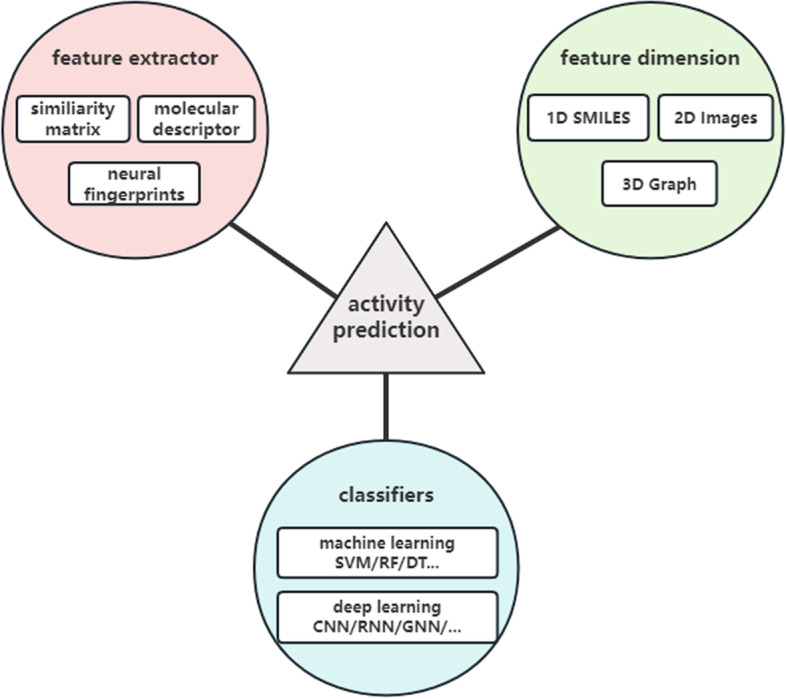
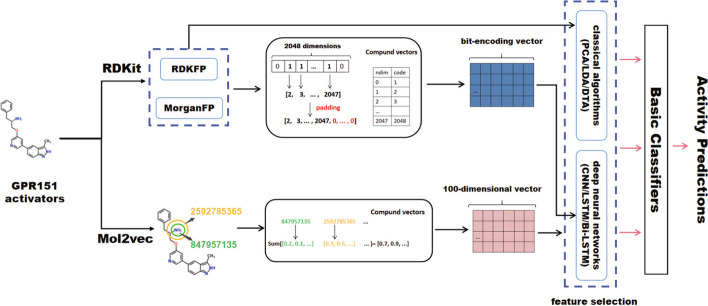
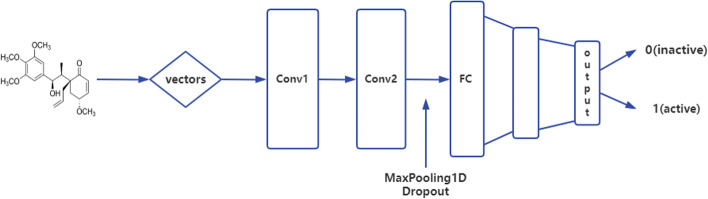
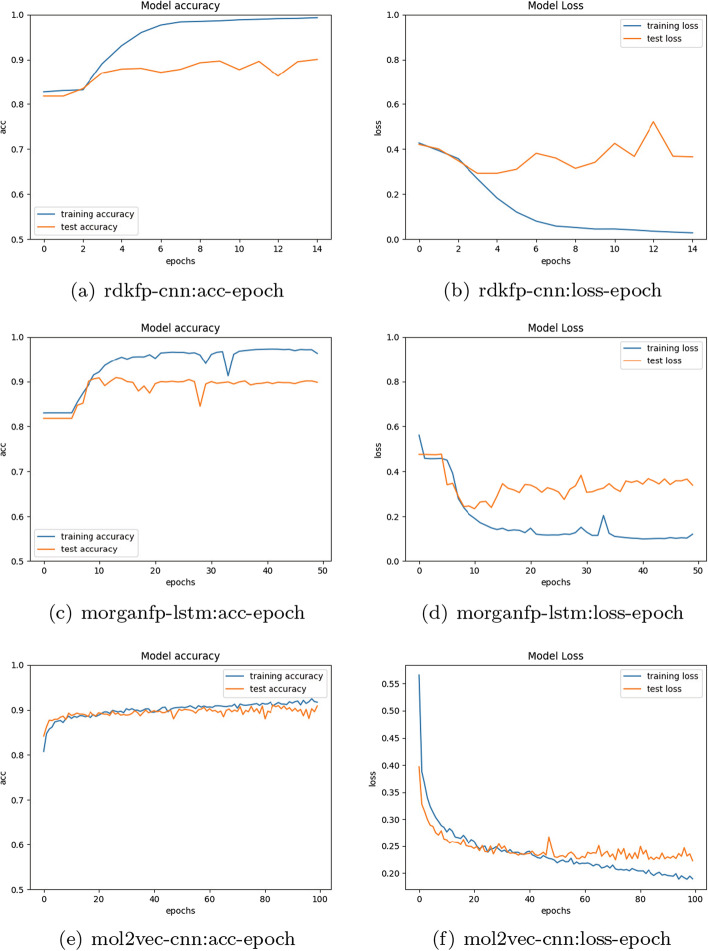
Verification
Claims the paper makes
The claims and statistics of this paper haven’t been checked yet.
Run the check — free, no account needed. It reads the open-access text and checks the sources it cites.
Self-check
Percentages, sums and reported differences re-computed from the paper’s own numbers.
The self-check needs the paper’s full text.
Citations
Cites
ImageNet classification with deep convolutional neural networks
Krizhevsky, A., Sutskever, I., & Hinton, G. E. (2017) · Communications of the ACM · doi:10.1145/3065386 · Cited by 112,155
Highly accurate protein structure prediction with AlphaFold
Jumper, J., Evans, R., Pritzel, A., Green, T., Figurnov, M., Ronneberger, O., Tunyasuvunakool, K., Bates, R., Žídek, A., Potapenko, A., et al. (2021) · Nature · doi:10.1038/s41586-021-03819-2 · Cited by 43,764
Review of deep learning: concepts, CNN architectures, challenges, applications, future directions
Alzubaidi, L., Zhang, J., Humaidi, A. J., Al-Dujaili, A., Duan, Y., Al-Shamma, O., Santamaría, J., Fadhel, M. A., Al-Amidie, M., & Farhan, L. (2021) · Journal of Big Data · doi:10.1186/s40537-021-00444-8 · Cited by 7,906
Research works printed but not linked: 34
- Xia L-P, Luo H, Ma Q, Xie Y-K, Li W, Hu H, Xu Z-Z. Gpr151 in nociceptors modulates neuropathic pain via regulating p2x3 function and microglial activation. Brain. 2021;144(11):3405–20. · DOI
- Jiang B-C, Zhang J, Wu B, Jiang M, Cao H, Wu H, Gao Y-J. G protein-coupled receptor gpr151 is involved in trigeminal neuropathic pain through the induction of g$$\beta$$$$\gamma$$/extracellular signal-regulated kinase-mediated neuroinflammation in the trigeminal ganglion. Pain. 2021;162(5):1434–48. · DOI
- Antolin-Fontes B, Li K, Ables JL, Riad MH, Görlich A, Williams M, Wang C, Lipford SM, Dao M, Liu J, et al. The habenular g-protein-coupled receptor 151 regulates synaptic plasticity and nicotine intake. Proc Natl Acad Sci. 2020;117(10):5502–9. · DOI
- Bielczyk-Maczynska E, Zhao M, Zushin P-JH, Schnurr TM, Kim H-J, Li J, Nallagatla P, Sangwung P, Park CY, Cornn C, et al. G protein-coupled receptor 151 regulates glucose metabolism and hepatic gluconeogenesis. Nat Commun. 2022;13(1):7408. · DOI
- Hessler G, Baringhaus K-H. Artificial intelligence in drug design. Molecules. 2018;23(10):2520. · DOI
- Butler KT, Davies DW, Cartwright H, Isayev O, Walsh A. Machine learning for molecular and materials science. Nature. 2018;559(7715):547–55. · DOI · Paper page
- Öztürk H, Ozkirimli E, Özgür A. A comparative study of smiles-based compound similarity functions for drug-target interaction prediction. BMC Bioinform. 2016;17(1):1–11. · DOI
- Goh GB, Siegel C, Vishnu A, Hodas NO, Baker N. Chemception: a deep neural network with minimal chemistry knowledge matches the performance of expert-developed QSAR/QSPR models; 2017. Preprint arXiv:1706.06689. · arXiv
- Wu Z, Pan S, Chen F, Long G, Zhang C, Philip SY. A comprehensive survey on graph neural networks. IEEE Trans Neural Netw Learn Syst. 2020;32(1):4–24. · DOI · Paper page
- Nguyen T, Le H, Quinn TP, Nguyen T, Le TD, Venkatesh S. Graphdta: predicting drug-target binding affinity with graph neural networks. Bioinformatics. 2021;37(8):1140–7. · DOI
- Dong J, Cao D-S, Miao H-Y, Liu S, Deng B-C, Yun Y-H, Wang N-N, Lu A-P, Zeng W-B, Chen AF. Chemdes: an integrated web-based platform for molecular descriptor and fingerprint computation. J Cheminform. 2015;7(1):1–10. · DOI
- Brown RD, Martin YC. The information content of 2d and 3d structural descriptors relevant to ligand-receptor binding. J Chem Inf Comput Sci. 1997;37(1):1–9. · DOI
- Rogers D, Hahn M. Extended-connectivity fingerprints. J Chem Inf Model. 2010;50(5):742–54. · DOI
- Butina D. Unsupervised data base clustering based on daylight’s fingerprint and tanimoto similarity: a fast and automated way to cluster small and large data sets. J Chem Inf Comput Sci. 1999;39(4):747–50. · DOI
- Merkwirth C, Lengauer T. Automatic generation of complementary descriptors with molecular graph networks. J Chem Inf Model. 2005;45(5):1159–68. · DOI
- Xiong Z, Wang D, Liu X, Zhong F, Wan X, Li X, Li Z, Luo X, Chen K, Jiang H, et al. Pushing the boundaries of molecular representation for drug discovery with the graph attention mechanism. J Med Chem. 2019;63(16):8749–60. · DOI
- Lee W-H, Millman S, Desai N, Srivatsa M, Liu C. Neuralfp: out-of-distribution detection using fingerprints of neural networks. In: 2020 25th international conference on pattern recognition (ICPR), IEEE; 2021. pp. 9561–9568. · DOI
- Cai H, Zhang H, Zhao D, Wu J, Wang L. FP-GNN: a versatile deep learning architecture for enhanced molecular property prediction. Brief Bioinform. 2022;23(6):408. · DOI
- Mahesh B. Machine learning algorithms-a review. Int J Sci Res. 2020;9:381–6.
- Sherstinsky A. Fundamentals of recurrent neural network (RNN) and long short-term memory (LSTM) network. Phys D Nonlinear Phenom. 2020;404:132306. · DOI · Paper page
- Goodfellow I, Pouget-Abadie J, Mirza M, Xu B, Warde-Farley D, Ozair S, Courville A, Bengio Y. Generative adversarial networks. Commun ACM. 2020;63(11):139–44. · DOI · Paper page
- Jaeger S, Fulle S, Turk S. Mol2vec: unsupervised machine learning approach with chemical intuition. J Chem Inf Model. 2018;58(1):27–35. · DOI
- Goldberg Y, Levy O. word2vec explained: deriving mikolov et al.’s negative-sampling word-embedding method; 2014. Preprint arXiv:1402.3722. · arXiv
- Maćkiewicz A, Ratajczak W. Principal components analysis (PCA). Comput Geosci. 1993;19(3):303–42. · DOI
- Xanthopoulos P, Pardalos PM, Trafalis TB, Xanthopoulos P, Pardalos PM, Trafalis TB. Linear discriminant analysis. Robust Data Min. 2013;27–33. · DOI
- Kotsiantis SB. Decision trees: a recent overview. Artif Intell Rev. 2013;39:261–83. · DOI
- Graves A, Fernández S, Schmidhuber J. Bidirectional LSTM networks for improved phoneme classification and recognition. In: Artificial neural networks: formal models and their applications–ICANN 2005: 15th international conference, Warsaw, Poland, 2005. Proceedings, Part II 15, Springer; 2005. pp. 799–804. · DOI · Paper page
- Bhunia SS, Saxena AK. Efficiency of homology modeling assisted molecular docking in g-protein coupled receptors. Curr Top Med Chem. 2021;21(4):269–94. · DOI
- Mashiko M, Kurosawa A, Tani Y, Tsuji T, Takeda S. Gpr31 and gpr151 are activated under acidic conditions. J Biochem. 2019;166(4):317–22. · DOI
- Abraham MJ, Murtola T, Schulz R, Páll S, Smith JC, Hess B, Lindahl E. Gromacs: high performance molecular simulations through multi-level parallelism from laptops to supercomputers. SoftwareX. 2015;1:19–25. · DOI · Paper page
- Trott O, Olson AJ. Autodock vina: improving the speed and accuracy of docking with a new scoring function, efficient optimization, and multithreading. J Comput Chem. 2010;31(2):455–61. · DOI · Paper page
- Santos-Martins D, Solis-Vasquez L, Tillack AF, Sanner MF, Koch A, Forli S. Accelerating autodock4 with GPUs and gradient-based local search. J Chem Theory Comput. 2021;17(2):1060–73. · DOI
- Morris GM, Goodsell DS, Halliday RS, Huey R, Hart WE, Belew RK, Olson AJ. Automated docking using a Lamarckian genetic algorithm and an empirical binding free energy function. J Comput Chem. 1998;19(14):1639–62. · DOI
- Irwin JJ, Tang KG, Young J, Dandarchuluun C, Wong BR, Khurelbaatar M, Moroz YS, Mayfield J, Sayle RA. Zinc20—a free ultralarge-scale chemical database for ligand discovery. J Chem Inf Model. 2020;60(12):6065–73. · DOI
Metadata
- Authors
- Xu, H., Zhang, B., & Liu, Q.
- Affiliations
- Chinese Academy of Sciences (CN)
- Corresponding author
- Liu, Qian
- Venue
- BMC Bioinformatics
- Published
- 2023-06-09
- Volume
- 24
- Issue
- 1
- Pages
- 245-245
- ISSN
- 1471-2105 (ISSN-L)
- PMC
- PMC10257328
- OpenAlex
- W4380085318
- Cited by
- 4
- References
- 3
- Citations by year
- 2025: 4
- FWCI
- 0.57
- Type
- journal article
- Language
- en
- Open access
- gold
- doi.org
- Locations
- BMC Bioinformatics (publishedVersion, cc-by)
- Research Square (acceptedVersion, cc-by)
- PubMed Central (publishedVersion, cc-by)
- PubMed (publishedVersion)
- DOAJ (DOAJ: Directory of Open Access Journals) (submittedVersion, cc-by-sa)
- Funders
- Informatization Plan of Chinese Academy of Sciences (CAS-WX2021SF-0103-02)
- Topics
- Life Sciences › Pharmacology, Toxicology and Pharmaceutics › Drug Discovery › Computational Drug Discovery Methods
- Life Sciences › Biochemistry, Genetics and Molecular Biology › Molecular Biology › Machine Learning in Bioinformatics
- Physical Sciences › Materials Science › Materials Chemistry › Machine Learning in Materials Science
- Keywords
- G protein-coupled receptors, feature selection, virtual screening, drug discovery, deep neural network, support vector machine
- MeSH terms
- Deep Learning, Algorithms, Drug Evaluation, Preclinical, Neural Networks, Computer, Drug Discovery
About these checks
Registry, retraction, Cites and statistics results are computed, not judged, with one exception: a printed reference that no index lists is read once by a model before it counts as a citation error. Claims are extracted by a model and kept only when their quote appears verbatim in the text; each cited source is then checked, with a model’s help, for whether it says what the claim relies on. Those verdicts can be wrong — read the claim’s quote and the cited source before relying on one.
Statistics and arithmetic are recomputed, not judged.
Confidence bands are shown only for fields calibrated on our annotated test set. None is calibrated yet, so no band is shown.
What counts as a claim ›How we measure confidence ›How we check this ›
Are you an author, or do you see a problem with this page? Request a review
