

Development of an integrative coding framework for evaluating context within implementation science
Open accessThe DOI matches its Crossref record; 70 of the 71 references it cites were found in a registry or an index.
Abstract
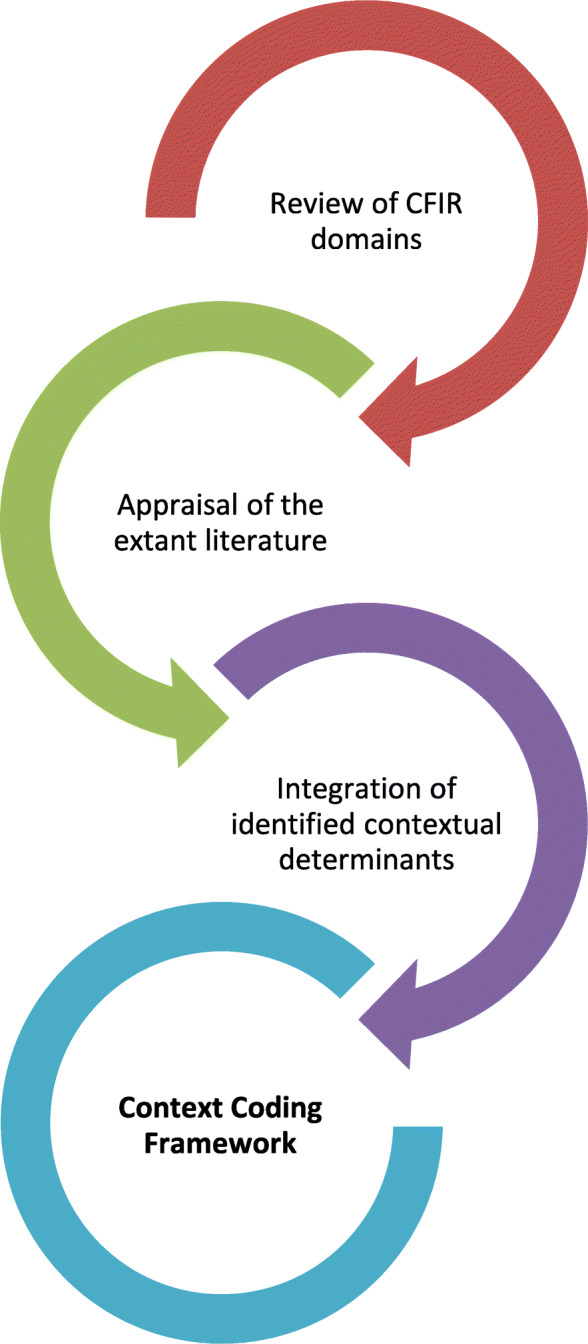
Background: This research aims to explore an identified gap in implementation science methodology, that is, how to assess context in implementation research. Context is among the strongest influences on implementation success but is a construct that is poorly understood and reported within the literature. Consequently, there is little guidance on how to research context. This study addresses this issue by developing a method to account for the active role of context during implementation research. Through use of a case study, this paper demonstrates the value of using our context coding framework. Methods: The developed context coding framework was guided by the sub-elements of the Consolidated Framework for Implementation Research (CFIR). Employing a constructivist approach, this framework builds on the CFIR and enables a deeper exploration of context at multiple levels of the health system. The coding framework enables the collation of various data sources such as organisational reports, culture audits, interview, survey, and observational data. It may be continuously updated as new data emerge and can be adapted by researchers as required. A pre-existing rating criterion has been integrated to the context coding framework to highlight the influence and relative strength of each contextual factor prior to and during implementation. Results: It is anticipated that the context coding framework will facilitate a standardised approach to assessing context. This will provide a deeper understanding of how to account for the influence of context, ultimately providing guidance that should increase the likelihood of implementation success. The coding framework enables implementation progress to be monitored, facilitating the identification of contextual changes and variations across settings at different levels of the healthcare system. It is expected this framework will inform the selection of appropriate implementation strategies and enable the monitoring of such strategies regarding their impact on local context. Conclusions: This research contributes to the extant literature by advancing methodologies for the consideration and assessment of context in implementation research. This context coding framework may be used in any setting to provide insight into the characteristics of particular contexts throughout implementation processes.
Overview
The claims and statistics of this paper haven’t been checked yet.
Free: it reads the open-access text and checks the first 5 claims that cite a source we can check. Create a free account to check every claim.
Integrity signals
Registry
Cites
Statistics
Figures
Verification
Claims the paper makes
The claims and statistics of this paper haven’t been checked yet.
Free: it reads the open-access text and checks the first 5 claims that cite a source we can check. Create a free account to check every claim.
Claims other papers make about this one
Each is checked against this paper’s own text: does it say what the citing paper says it does?
The check wasn’t confident either way, so it gives no verdict — never disputed.
In the citing paper
“All roles have been relocated to this new subdomain, and additional roles were added, including Implementation Team Members [60].”
From The updated consolidated framework for implementation research based on user feedback (2022) · cites this paper as [60]
Experimental — accuracy not yet measured
Self-check
Percentages, sums and reported differences re-computed from the paper’s own numbers.
The self-check needs the paper’s full text.
Citations
Cites
Using thematic analysis in psychology
Braun, V., & Clarke, V. (2006) · Qualitative Research in Psychology · doi:10.1191/1478088706qp063oa · Cited by 194,414 · cited 2×
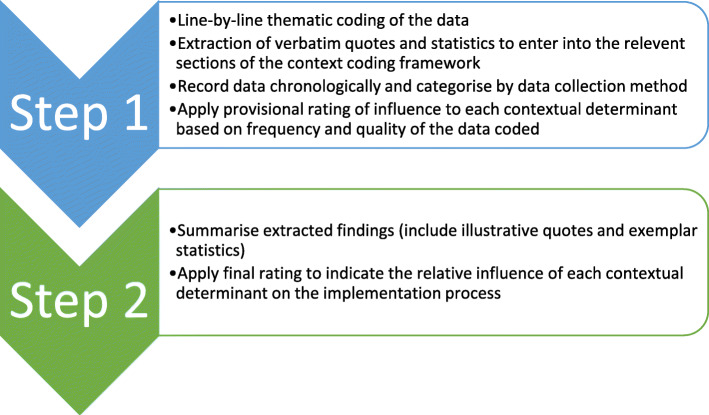
“Each data source was analysed by one researcher (LR) using line-by-line thematic coding as outlined by Braun and Clarke [44].”
Method(1984) · Cited by 81,983
Lincoln, Y. S., Guba, E. G., & Pilotta, J. J. (1985) · International Journal of Intercultural Relations · doi:10.1016/0147-1767(85)90062-8 · Cited by 45,787
Case Study Research: Design and Methods
Chaiklin, H. (1991) · The Journal of Nervous and Mental Disease · doi:10.1097/00005053-199102000-00025 · Cited by 39,535
Qualitative Data Analysis: A Methods Sourcebook
Miles, M. B., Huberman, A. M., & Saldaña, J. (1988) · Cited by 20,701
The Art of Case Study Research
Johnson, K. E., & Stake, R. E. (1996) · The Modern Language Journal · doi:10.2307/329758 · Cited by 15,826
Damschroder, L. J., Aron, D. C., Keith, R. E., Kirsh, S. R., Alexander, J. A., & Lowery, J. C. (2009) · Implementation Science · doi:10.1186/1748-5908-4-50 · Cited by 14,496 · cited 1×
“characteristics and the implementation process [29].”
Qualitative Data Analysis: A Sourcebook of New Methods
Lotto, L. S., Miles, M. B., & Huberman, A. M. (1986) · Educational Evaluation and Policy Analysis · doi:10.2307/1163741 · Cited by 10,315
Proctor, E., Silmere, H., Raghavan, R., Hovmand, P., Aarons, G., Bunger, A., Griffey, R., & Hensley, M. (2011) · Administration and Policy in Mental Health and Mental Health Services Research · doi:10.1007/s10488-010-0319-7 · Cited by 8,721 · cited 1×
“’s [62] implementation outcomes during the next phase of analysis to advance researcher knowledge”
BackgroundThe art of case study research
Savolainen, R. (1996) · Library & Information Science Research · doi:10.1016/s0740-8188(96)90053-5 · Cited by 8,190
Research works printed but not linked: 3
- (1) [cited 2018 Nov 7]. Available from: https://www.ncbi.nlm.nih.gov/pmc/articles/PMC4573926/.
- Nieuwenhuis J Qualitative research design and data gathering techniques First steps in research 2007 Pretoria Van Schaik
- (1) [cited 2018 Nov 28]. Available from: http://implementationscience.biomedcentral.com/articles/10.1186/s13012-017-0552-5. · DOI · Paper page
Cited by
The updated consolidated framework for implementation research based on user feedback
Damschroder, L. J., Reardon, C. M., Widerquist, M. A. O., & Lowery, J. (2022) · Implementation Science · doi:10.1186/s13012-022-01245-0 · Cited by 4,452
“Other Implementation Support Individuals who support the Implementation Leads and/or Implementation Team Members to implement the innovation H. Innovation Deliverers Individuals who are directly or indirectly delivering the innovation I. Innovation Recipients Individuals who are directly or indirectly receiving the in…”
BackgroundInfluentialWang, D. Y., Wong, E. L., Nilsén, P., Chung, V. C., Tian, Y., & Yeoh, E. (2023) · Implementation Science · doi:10.1186/s13012-023-01296-x · Cited by 175
“(e.g., Roger’s framework) [28] followed by 36 (25”
Rogers, L., Brún, A. D., Birken, S. A., Davies, C., & McAuliffe, É. (2020) · BMC Health Services Research · doi:10.1186/s12913-020-05905-z · Cited by 102
“the positive, neutral, or negative impact of contextual determinants on implementation), further analysis was required to understand the mechanisms through which context influenced implementation success [54].”
BackgroundMethodSelf-citationPavithra, A., Sunderland, N., Callen, J. L., & Westbrook, J. I. (2022) · BMC Health Services Research · doi:10.1186/s12913-022-07763-3 · Cited by 58
“As healthcare organisations implement these changes, there is a need for ongoing assessments of how staff experience unprofessional behaviour, its impacts and organisational factors that contribute to these experiences [37].”
BackgroundMethodMielke, J., Leppla, L., Valenta, S., Zullig, L. L., Zúñiga, F., Staudacher, S., Teynor, A., & Geest, S. D. (2022) · Implementation Science Communications · doi:10.1186/s43058-022-00354-7 · Cited by 56
Rogers, L., Brún, A. D., Birken, S. A., Davies, C., & McAuliffe, É. (2021) · Journal of Health Organization and Management · doi:10.1108/jhom-07-2020-0296 · Cited by 51
“Recently, methods have been advanced to support researchers, HCPs and policymakers in obtaining a deeper understanding of context (Rogers et al., 2020b).”
BackgroundMethodInfluentialSelf-citationMielke, J., Brunkert, T., Zúñiga, F., Simon, M., Zullig, L. L., & Geest, S. D. (2022) · BMC Medical Research Methodology · doi:10.1186/s12874-022-01772-w · Cited by 57
Schmitt, M. E., Hawkins, M. M., & Florsheim, P. (2025) · Implementation Science Communications · doi:10.1186/s43058-025-00712-1 · Cited by 41
“Researchers have identified a wide range of determinants operating at multiple levels (individual, organizational, and community level) that affect the implementation process, and in turn, implementation outcomes [2, 3].”
Alobo, G., Ochola, E., Bayo, P., Muhereza, A., Nahurira, V., & Byamugisha, J. (2021) · BMJ Open · doi:10.1136/bmjopen-2020-042909 · Cited by 20
Atkins, E., Birmpili, P., Glidewell, L., Li, Q., Johal, A. S., Waton, S., Boyle, J. R., Pherwani, A. D., Chetter, I. C., & Cromwell, D. A. (2023) · BMJ Open Quality · doi:10.1136/bmjoq-2022-002241 · Cited by 17
Implementation Strategies to Support Built Environment Approaches in Community Settings
Balis, L. E., & Vincent, J. (2022) · Health Promotion Practice · doi:10.1177/15248399221081835 · Cited by 16
“This led us to prioritize the participatory nature of the work, refine our methods in response to practical findings, and treat the preference for written responses as an important contextual factor (Rhodes et al., 1999; Rogers et al., 2020).”
MethodLarge-scale implementation of stroke early supported discharge: the WISE realist mixed-methods study
Fisher, R. J., Chouliara, N., Byrne, A., Cameron, T. M., Lewis, S., Langhorne, P., Robinson, T. G., Waring, J. J., Geue, C., Paley, L., et al. (2021) · Health Services and Delivery Research · doi:10.3310/hsdr09220 · Cited by 23
Piat, M., Wainwright, M., Cherkas, D., LeBlanc, S., Sofouli, E., Rivest, M.-P., Albert, H., Casey, R., O’Rourke, J. J., & Labonté, L. (2021) · Implementation Science Communications · doi:10.1186/s43058-021-00206-w · Cited by 16
“[35] propose the umbrella term “system-level determinants” to encompass social, political and economic environments.”
BackgroundA translational research framework for nurse practitioners
Ryder, M., & Jacob, E. R. (2021) · Journal of Nursing Management · doi:10.1111/jonm.13496 · Cited by 17
“Context is described as an important practical problem for complex interventions as there may be specific barriers and enablers for each different environment and situation (Rogers et al., 2020).”
BackgroundFisher, R. J., Russell, L., Riley-Bennett, F., Cameron, T. M., Walker, M. F., & Sackley, C. M. (2023) · BMJ Open · doi:10.1136/bmjopen-2022-071217 · Cited by 12
Krug, K., Bossert, J., Möllinger, S., Deis, N., Unsöld, L., Siegle, A., Villalobos, M., Hagelskamp, L., Jung, C., Thomas, M., et al. (2022) · BMC Palliative Care · doi:10.1186/s12904-022-00977-6 · Cited by 8
Riguzzi, M., Thaqi, Q., Lorch, A., Blum, D., Peng‐Keller, S., & Naef, R. (2024) · European Journal of Oncology Nursing · doi:10.1016/j.ejon.2024.102555 · Cited by 7
Grice-Jackson, T., Jaarsma, P., Friedrichsen, M., Wallin, M. I., de Graaf, E., Strömberg, A., & Jaarsma, T. (2025) · Current Heart Failure Reports · doi:10.1007/s11897-025-00715-y · Cited by 4
Balis, L. E., Adjei, K. K., Nyame, S., Opoku-Mensah, J., & Asante, K. P. (2021) · BMC Public Health · doi:10.1186/s12889-021-12250-1 · Cited by 4
“respond to contextual factors and prioritize the community-engaged essence of this work [38, 39].”
BackgroundBrún, A. D., & McAuliffe, É. (2021) · Journal of Health Organization and Management · doi:10.1108/jhom-08-2020-0335 · Cited by 4
“This indicator of commitment through dual roles creates opportunities to disseminate information and prepare appropriate implementation strategies through a more nuanced understanding of the organisational and research context (Rogers et al., 2020).”
BackgroundRycroft‐Malone, J., Rogers, L., & Burton, C. R. (2022) · International Journal of Health Policy and Management · doi:10.34172/ijhpm.2022.6900 · Cited by 5
Self-citationChouliara, N., Cameron, T. M., Byrne, A., & Fisher, R. J. (2024) · PLoS ONE · doi:10.1371/journal.pone.0298140 · Cited by 4
“The concept of “Cosmopolitanism” described in implementation frameworks [50, 51] is aligned with our observations of the services’ networking efforts through boundary spanning communication processes.”
BackgroundPractice change in community health centers: A qualitative study of leadership attributes
Tektiridis, J. H., Heredia, N. I., Morgan, R. O., Mikhail, O. I., Risendal, B., Kegler, M. C., & Fernández, M. E. (2022) · Frontiers in Health Services · doi:10.3389/frhs.2022.934688 · Cited by 4
Tennakoon, M., Chileshe, N., Rameezdeen, R., Ochoa, J. J., & Samaraweera, A. (2025) · International Journal of Construction Management · doi:10.1080/15623599.2025.2515493 · Cited by 4
“The role subdomain recognises the leaders, implementation team members, innovation deliv-erers and recipients (Rogers et al. 2020).”
InfluentialSperber, N. R., Cragun, D. L., Roberts, M. C., Bendz, L. M., Ince, P., Gonzales, S. E., Haga, S. B., Wu, R. R., Petry, N., Ramsey, L. B., et al. (2022) · Journal of Personalized Medicine · doi:10.3390/jpm12081313 · Cited by 1
“Rogers and colleagues (2020) conducted a systematic review to assess how studies of healthcare implementation defined and measured “context” and found that the majority of studies used only qualitative methods and those that used quantitative methods relied on cross-sectional surveys; generally, these studies generate…”
BackgroundRobinson, K., Logan, P., Gordon, A. L., Timmons, S., Masud, T., Rees, L., Kilby, A., Lawry, W., & Hallam-Bowles, F. (2025) · BMC Geriatrics · doi:10.1186/s12877-025-06127-w · Cited by 1
“Following these stages, themes under the CFIR constructs were mapped by one researcher (KR) to a context coding framework to aid interpretation of the data [19].”
Using implementation science methods in critical care nursing – Part 2: Contextual analysis
Köhler, M., Verweij, L., & Naef, R. (2026) · Intensive and Critical Care Nursing · doi:10.1016/j.iccn.2026.104454 · Cited by 1
Homsi, M. R., Underwood, C. R., Alonge, O., Caniza, M. A., & Davey-Rothwell, M. A. (2025) · Journal of Health Population and Nutrition · doi:10.1186/s41043-025-01205-6
“…CFIR is most often used retrospectively to diagnose the outcome of an intervention and implementation strategies, its prospective use can enable a better understanding of the situational landscape before investment in interventions and strategies that may not be ideally suited to the setting [18].”
Mielke, J., Brunkert, T., Zúñiga, F., Simon, M., Zullig, L. L., & De Geest, S. (2024) · Figshare · doi:10.6084/m9.figshare.26554382
Piat, M., Wainwright, M., Cherkas, D., LeBlanc, S., Sofouli, E., Rivest, M.-P., Albert, H., Casey, R., O’Rourke, J. J., & Labonté, L. (2021) · Figshare · doi:10.6084/m9.figshare.16625620
Mielke, J., Brunkert, T., Zúñiga, F., Simon, M., Zullig, L. L., & De Geest, S. (2024) · Figshare · doi:10.6084/m9.figshare.26554373
Mielke, J., Brunkert, T., Zúñiga, F., Simon, M., Zullig, L. L., & De Geest, S. (2024) · Figshare · doi:10.6084/m9.figshare.26554376
Piat, M., Wainwright, M., Cherkas, D., LeBlanc, S., Sofouli, E., Rivest, M.-P., Albert, H., Casey, R., O’Rourke, J. J., & Labonté, L. (2021) · Figshare · doi:10.6084/m9.figshare.16625623
Mielke, J., Leppla, L., Valenta, S., Zullig, L. L., Zúñiga, F., Staudacher, S., Teynor, A., & De Geest, S. (2022) · Figshare · doi:10.6084/m9.figshare.21258810
Mielke, J., Brunkert, T., Zúñiga, F., Simon, M., Zullig, L. L., & De Geest, S. (2024) · Figshare · doi:10.6084/m9.figshare.26554370
Piat, M., Wainwright, M., Cherkas, D., LeBlanc, S., Sofouli, E., Rivest, M.-P., Albert, H., Casey, R., O’Rourke, J. J., & Labonté, L. (2021) · Figshare · doi:10.6084/m9.figshare.16625617
Mielke, J., Brunkert, T., Zúñiga, F., Simon, M., Zullig, L. L., & De Geest, S. (2024) · Figshare · doi:10.6084/m9.figshare.26554379
Mielke, J., Leppla, L., Valenta, S., Zullig, L. L., Zúñiga, F., Staudacher, S., Teynor, A., & De Geest, S. (2022) · Figshare · doi:10.6084/m9.figshare.21258816
Mielke, J., Leppla, L., Valenta, S., Zullig, L. L., Zúñiga, F., Staudacher, S., Teynor, A., & De Geest, S. (2022) · Figshare · doi:10.6084/m9.figshare.21258813
Piat, M., Wainwright, M., Cherkas, D., LeBlanc, S., Sofouli, E., Rivest, M.-P., Albert, H., Casey, R., O’Rourke, J. J., & Labonté, L. (2021) · Figshare · doi:10.6084/m9.figshare.16625626
Mielke, J., Leppla, L., Valenta, S., Zullig, L. L., Zúñiga, F., Staudacher, S., Teynor, A., & De Geest, S. (2022) · Figshare · doi:10.6084/m9.figshare.21258807
Mielke, J., Brunkert, T., Zúñiga, F., Simon, M., Zullig, L. L., & De Geest, S. (2024) · Figshare · doi:10.6084/m9.figshare.26554367
Piat, M., Wainwright, M., Cherkas, D., LeBlanc, S., Sofouli, E., Rivest, M.-P., Albert, H., Casey, R., O’Rourke, J. J., & Labonté, L. (2021) · Figshare · doi:10.6084/m9.figshare.16625629
Mielke, J., Brunkert, T., Zúñiga, F., Simon, M., Zullig, L. L., & De Geest, S. (2024) · Figshare · doi:10.6084/m9.figshare.26554364
Darling, F. (2024) · City Research Online (City University London) · Cited by 3
Commercial Truck Drivers' Perceptions About the Influences of Safety Regulations on Retention
Arnett, A. (2024) · ScholarWorks (Walden University)
Walker, D. M., Aldrich, A. M., Chen, S., Jadovich, E., Goetz, M., Andrews-Higgins, S., Walley, A. Y., Knudsen, H. K., Huerta, T. R., Hunt, T., et al. (2026) · Implementation Science Communications · doi:10.1186/s43058-026-00952-9
“To this end, efforts have been undertaken to provide greater conceptual understanding of the elements of context [36], as well as methodological approaches to assessing and reporting context [37, 38].”
Carroll, Á. M., Barry, S., & O’Donnell, D. (2026) · Journal of Integrated Care · doi:10.1108/jica-11-2025-0112
Bernués-Caudillo, L., Drury, A., González‐María, E., & Moreno-Casbas, M. T. (2026) · Implementation Science Communications · doi:10.1186/s43058-026-01076-w
“Furthermore, the value of describing the process of developing coding frames for single research projects has been highlighted [13, 14].”
InfluentialTwimukye, A., Waitt, C. J., Gonza, P. K., & Olungah, C. O. (2026) · BMC Public Health · doi:10.1186/s12889-026-29779-8
Metadata
- Authors
- Rogers, L., De Brún, A., & McAuliffe, E.
- Affiliations
- University College Dublin (IE)
- Corresponding author
- Rogers, L.
- ORCID
- Rogers, L.
- Venue
- BMC Medical Research Methodology
- Published
- 2020-06-15
- Volume
- 20
- Issue
- 1
- Pages
- 158-158
- ISSN
- 1471-2288 (ISSN-L)
- PMC
- PMC7296653
- OpenAlex
- W3034587269
- Cited by
- 48
- References
- 71
- Citations by year
- 2026: 5 · 2025: 6 · 2024: 6 · 2023: 3 · 2022: 15 · 2021: 12 · 2020: 1
- FWCI
- 8.09
- Type
- journal article
- Language
- en
- Open access
- gold
- doi.org
- Licence
- cc-by
- creativecommons.org/licenses/by/4.0 (tdm)
- creativecommons.org/licenses/by/4.0 (vor)
- Locations
- BMC Medical Research Methodology (publishedVersion, cc-by)
- PubMed Central (publishedVersion, cc-by)
- PubMed (publishedVersion)
- Lenus, The Irish Health Repository (Dr Steevens Hospital Library) (submittedVersion, cc-by)
- DOAJ (DOAJ: Directory of Open Access Journals) (submittedVersion, cc-by-sa)
- Funders
- Irish Health Research Board (RL-2015-1588)
- Topics
- Health Sciences › Health Professions › General Health Professions › Health Policy Implementation Science
- Health Sciences › Health Professions › General Health Professions › Health Sciences Research and Education
- Health Sciences › Medicine › Public Health, Environmental and Occupational Health › Clinical practice guidelines implementation
- Keywords
- context assessment, Consolidated Framework for Implementation Research, implementation success, contextual factors, health system levels, implementation monitoring, implementation strategies, organizational culture
- MeSH terms
- Implementation Science, Delivery of Health Care, Humans
About these checks
Registry, retraction, Cites and statistics results are computed, not judged, with one exception: a printed reference that no index lists is read once by a model before it counts as a citation error. Claims are extracted by a model and kept only when their quote appears verbatim in the text; each cited source is then checked, with a model’s help, for whether it says what the claim relies on. Those verdicts can be wrong — read the claim’s quote and the cited source before relying on one.
Statistics and arithmetic are recomputed, not judged.
Confidence bands are shown only for fields calibrated on our annotated test set. None is calibrated yet, so no band is shown.
What counts as a claim ›How we measure confidence ›How we check this ›
Are you an author, or do you see a problem with this page? Request a review
Data sources
Bibliographic data: Semantic Scholar, OpenAlex, Crossref.
Contains information from the Semantic Scholar Academic Graph Datasets, made available under the ODC Attribution License (ODC-BY 1.0).
Semantic Scholar’s data is described in: Kinney, R., et al. (2023). The Semantic Scholar Open Data Platform. arXiv:2301.10140.
