

Managing overlap of primary study results across systematic reviews: practical considerations for authors of overviews of reviews
Open accessPublished version of a preprint
The DOI matches its Crossref record; 55 of the 55 references it cites were found in a registry or an index; 15 of the 68 sources its claims cite were checked for support.
Abstract
Background: Overviews often identify and synthesise a large number of systematic reviews on the same topic, which is likely to lead to overlap (i.e. duplication) in primary studies across the reviews. Using a primary study result multiple times in the same analysis overstates its sample size and number of events, falsely leading to greater precision in the analysis. This paper aims to: (a) describe types of overlapping data that arise from the same primary studies reported across multiple reviews, (b) describe methods to identify and explain overlap of primary study data, and (c) present six case studies illustrating different approaches to manage overlap. Methods: We first updated the search in PubMed for methods from the MOoR framework relating to overlap of primary studies. One author screened the studies titles and abstracts, and any full-text articles retrieved, extracted methods data relating to overlap of primary studies and mapped it to the overlap methods from the MOoR framework. We also describe six case studies as examples of overviews that use specific overlap methods across the steps in the conduct of an overview. For each case study, we discuss potential methodological implications in terms of limitations, efficiency, usability, and resource use. Results: Nine methods studies were found and mapped to the methods identified by the MOoR framework to address overlap. Overlap methods were mapped across four steps in the conduct of an overview – the eligibility criteria step, the data extraction step, the assessment of risk of bias step, and the synthesis step. Our overview case studies used multiple methods to reduce overlap at different steps in the conduct of an overview. Conclusions: Our study underlines that there is currently no standard methodological approach to deal with overlap in primary studies across reviews. The level of complexity when dealing with overlap can vary depending on the yield, trends and patterns of the included literature and the scope of the overview question. Choosing a method might be dependent on the number of included reviews and their primary studies. Gaps in evaluation of methods to address overlap were found and further investigation in this area is needed.
Overview
CoChat Summary
TL;DR
This paper maps methods for managing overlap of primary studies across systematic reviews in overviews and illustrates them with six case studies. It concludes that no standard methodological approach exists and that evaluation of overlap methods remains limited.
Key findings
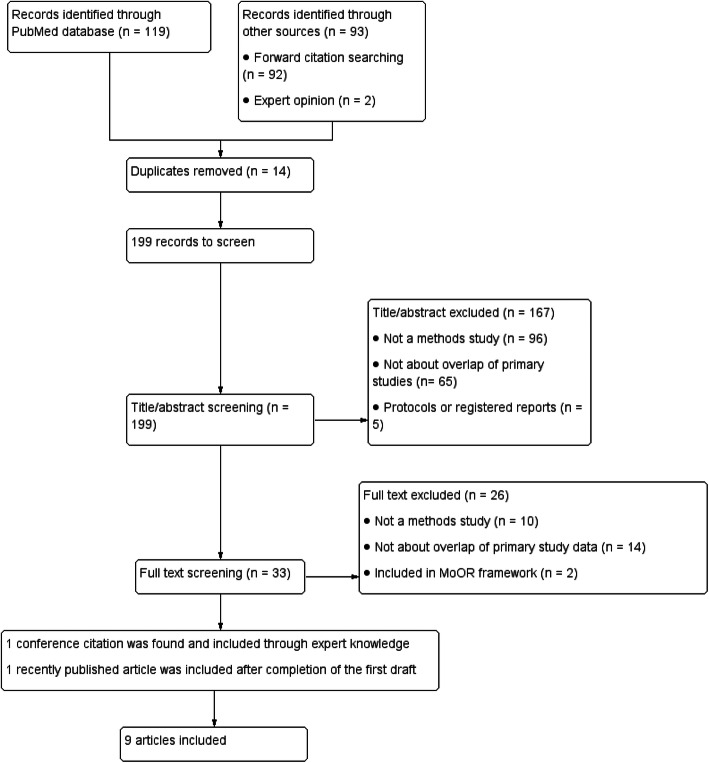
- Nine methods studies were identified and mapped to the MOoR framework; six were articles describing methods, two were guidance documents, and one was an empirical study.
- Overlap methods mapped across four steps in an overview: eligibility criteria, data extraction, risk of bias assessment, and synthesis/presentation/summary of findings; seven of nine studies addressed the eligibility criteria step.
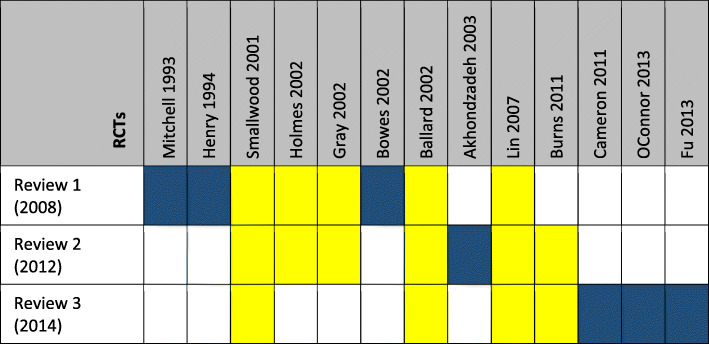
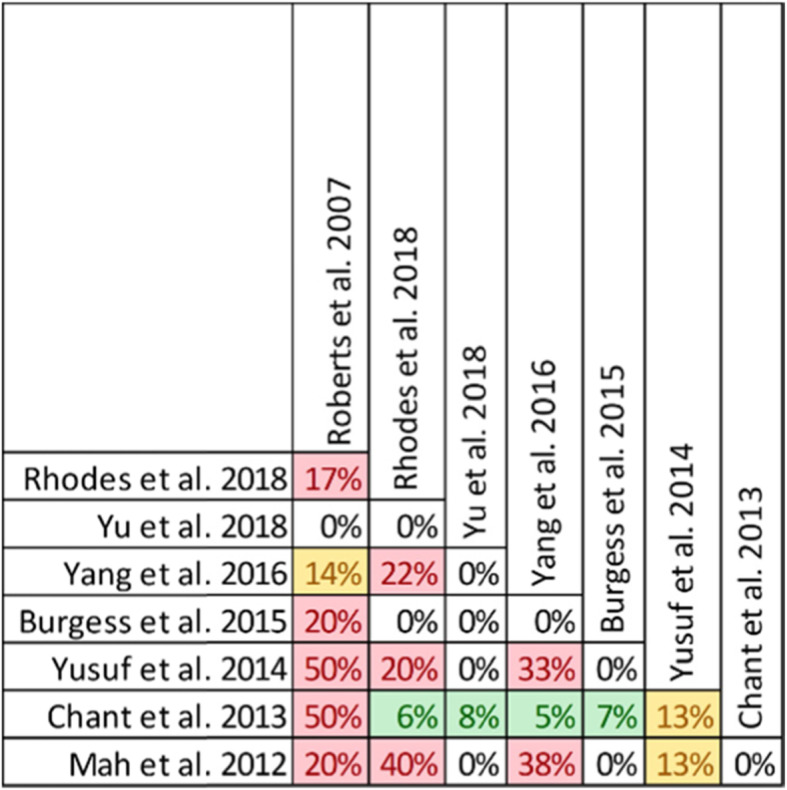
- Case studies used multiple methods: Bidonde counted 29 (48%) overlapping RCTs across 9 reviews and 31 (52%) unique RCTs; Murphy assessed 165 unique primary studies across 16 reviews and selected higher-quality reviews when overlap exceeded 70%; Prousali estimated overlap at 6.2% using CCA across 18 reviews and 44 unique primary studies; Thabet found moderate-to-high overlap across 21 reviews and 71 primary studies, with unique references ranging from 38% to 78%.
- The paper reports no standardised approach to visualise, quantify, and resolve overlap, and notes that only one identified study empirically evaluated inclusion decisions, finding that selecting a Cochrane review maximised outcome data included.
Methods
- The authors updated a PubMed search for methods from the MOoR framework relating to overlap of primary studies, using a search algorithm combining method/meta-epidemiology terms with an overview search filter; search dates were January 2016 to March 2020, plus forward citation searching on a key 2014 study via Google Scholar.
- One author screened titles/abstracts and full texts, extracted methods data, and mapped it to overlap methods from the MOoR framework; results are presented descriptively and in tables.
- Six case studies were selectively chosen to illustrate different approaches to managing overlap across overview steps, with commentary on methodological limitations, efficiency, usability, and resource use.
Limitations
- The paper states that, due to resource limitations, one author screened studies and extracted data, so relevant citations could have been missed and data errors could have been introduced; it also states that only one database was searched, though expert knowledge and forward citation searching were used to mitigate this.
- The paper states that there is a lack of empirical evidence testing overlap methods and that significant gaps exist in evaluation of methods used in most steps of overview conduct.
- Evident from the text: the six case studies were selectively chosen based on variety of approaches rather than systematically sampled, and the review of methods studies included only English-language articles and excluded network meta-analysis, protocols, and overviews of non-intervention review types.
Model-written summary. Check it against the paper before relying on it.
Integrity signals
Registry
Cites
Statistics
Figures
Verification
Claims the paper makes
10 Valid · 0 Not valid · 33 Not checked · 57 Own results and interpretations
The cited sources support only part of this claim — read each source’s verdict below.
In the paper
“The data extraction approaches outlined in the MOoR framework to manage discrepant data across systematic reviews involve retrieving either published or registry reports of the primary studies, or contacting systematic review or primary study authors, or both, for clarification regarding discrepancies [7, 16].”
§ Managing overlap of primary study results across systematic reviews: practical considerations for authors of overviews of reviews > Results > Methods studies identified and mapped to the MOoR framework
What the sources say
- Partly supportedcites [7] Lunny C Brennan SE McDonald S McKenzie JE Toward a comprehensive evidence map of overview of systematic review methods: paper 1-purpose, eligibility, search and data extraction Syst Rev 2017 6 1 231 10.1186/s13643-017-0617-1 29162130 PMC5698938 sourceExperimental — accuracy not yet measured
In Results, Stage I (Tables 6 and 7; page not provided), the framework lists primary studies and registry entries as data sources and identifies discrepant data across systematic reviews as an issue for data extraction. The passages available do not establish that contacting systematic-review or primary-study authors for clarification is one of the approaches to those discrepancies; the author contact described in Methods concerns study eligibility instead. (LLM, conf=0.78)
- Partly supportedcites [16] Lunny C Brennan SE McDonald S McKenzie JE Toward a comprehensive evidence map of overview of systematic review methods: paper 2-risk of bias assessment; synthesis, presentation and summary of the findings; and assessment of the certainty of the evidence Syst Rev 2018 7 1 159 10.1186/s13643-018-0784-8 30314530 PMC6186052 sourceExperimental — accuracy not yet measured
In Results, Stage I (page unavailable), the paper lists retrieving primary studies to reconcile discrepancies as an option, but discusses it specifically for discrepant risk-of-bias assessments. It does not specify published or registry reports or describe contacting systematic-review or primary-study authors for clarification; it directs readers to its first companion paper for data-extraction methods. (LLM, conf=0.85)
plain- Asserted: passes — The authors put it forward as true.
- Checkable: passes — It can be checked against evidence.
- Load-bearing: passes — The paper’s conclusions depend on it.
- Based: passes — The paper gives a reason why it holds.
- Partly supported
The cited sources support only part of this claim — read each source’s verdict below.
In the paper
“when low overlap was found between reviews with inconsistent and discordant findings, discrepancies were most often attributed to differences in scope or differences in dates of review publication.”
§ Managing overlap of primary study results across systematic reviews: practical considerations for authors of overviews of reviews > Results > Presentation of case studies
What the sources say
- Partly supportedcites [26] Thabet P Joshi A MacDonald E Hutton B Cheng W Stevens A Kanji S Clinical and pharmacokinetic/dynamic outcomes of prolonged infusions of beta-lactam antimicrobials: An overview of systematic reviews PLoS One 2021 16 1 e0244966 10.1371/journal.pone.0244966 33481817 PMC7822342 sourceExperimental — accuracy not yet measured
In Results > Findings, clinical cure and treatment failure (page unavailable), Thabet et al. say that several pairs of reviews with differing findings had slight or no overlap, explainable by differences in scope. They also note that four of six reviews finding no clinical-cure benefit were published in 2013 or earlier, but do not say publication dates most often explained the discrepancies. (LLM, conf=0.84)
plainstates a cause- Asserted: passes — The authors put it forward as true.
- Checkable: passes — It can be checked against evidence.
- Load-bearing: unclear — It is unclear whether the paper’s conclusions depend on it.
- Based: passes — The paper gives a reason why it holds.
- Partly supported
Every source the paper cites for this claim was checked and supports it.
In the paper
“an empirical study found that selecting a Cochrane systematic review, as opposed to the most recent or highest quality non-Cochrane systematic review, maximized the amount of outcome data included in an overview [19]”
§ Managing overlap of primary study results across systematic reviews: practical considerations for authors of overviews of reviews > Results > Presentation of case studies
What the sources say
- Supportedcites [19] Pollock M Fernandes RM Newton AS Scott SD Hartling L The impact of different inclusion decisions on the comprehensiveness and complexity of overviews of reviews of healthcare interventions Syst Rev 2019 8 1 18 10.1186/s13643-018-0914-3 30635048 PMC6329144 source
The Discussion states that, for groups of overlapping systematic reviews, selecting the Cochrane review rather than the most recent or highest-quality review maximized the outcome data included in an overview. It adds that this can hold even when a more recent or higher-quality non-Cochrane review is available. (LLM, conf=0.94)
plainstates a cause- Asserted: passes — The authors put it forward as true.
- Checkable: passes — It can be checked against evidence.
- Load-bearing: passes — The paper’s conclusions depend on it.
- Based: passes — The paper gives a reason why it holds.
- Supported
The cited sources support only part of this claim — read each source’s verdict below.
In the paper
“Murphy et al. used five methods, across the four steps in the conduct of an overview, to manage the overlap in 165 unique primary studies across the 16 included systematic reviews (Table 2).”
§ Managing overlap of primary study results across systematic reviews: practical considerations for authors of overviews of reviews > Results > Presentation of case studies
What the sources say
- Partly supportedcites [23] Murphy LA Harrington P Taylor SJC Teljeur C Smith SM Pinnock H Clinical-effectiveness of self-management interventions in chronic obstructive pulmonary disease: an overview of reviews Chron Respir Dis 2017 14 3 276 288 10.1177/1479972316687208 28774200 PMC5720233 sourceExperimental — accuracy not yet measured
The Results (Study detail; page unavailable) report 16 systematic reviews containing 165 unique RCTs. The Methods (Data extraction and quality assurance; page unavailable) describe assessing RCT crossover, selecting the better-quality review when crossover exceeded 70%, and using narrative synthesis because of crossover. Our copy does not identify these as five methods across four steps, so that specific count and framework are not verified. (LLM, conf=0.84)
plain- Asserted: passes — The authors put it forward as true.
- Checkable: passes — It can be checked against evidence.
- Load-bearing: unclear — It is unclear whether the paper’s conclusions depend on it.
- Based: passes — The paper gives a reason why it holds.
- Partly supported
A result the paper reports from its own data — it cites no other source for it, so there is none to check. The quote shows it is in the paper.
In the paper
“Overlap methods were mapped across four steps in the conduct of an overview – the eligibility criteria step, the data extraction step, the assessment of risk of bias step, and the synthesis step.”
- Also stated in: § Methods studies identified and mapped to the MOoR framework · plain
“Several methods map across four steps in the conduct of an overview – the eligibility criteria step, the data extraction step, the assessment of risk of bias step, and the synthesis step.”
§ Managing overlap of primary study results across systematic reviews: practical considerations for authors of overviews of reviews > Abstract > Results
plain- Asserted: passes — The authors put it forward as true.
- Checkable: passes — It can be checked against evidence.
- Load-bearing: passes — The paper’s conclusions depend on it.
- Based: passes — The paper gives a reason why it holds.
- Also stated in: § Methods studies identified and mapped to the MOoR framework · plain
33 more claims
Create a free account to see all 100 claims and to verify the 53 references still open.
- Probably not a substantial claim. 41
- It may state two separate claims as one. 39
- The quote only partly states this claim. 1
Claims other papers make about this one
Each is checked against this paper’s own text: does it say what the citing paper says it does?
The check wasn’t confident either way, so it gives no verdict — never disputed.
In the citing paper
“including only 22 (ref. 25 ), 19 (ref. 24 ), 36 (ref. 26 ), 5 (ref. 27 ), 12 (ref. 28 ) and 5 (ref. 29 ) studies”
From Suicide risk and mortality among patients with cancer (2022) · cites this paper as [28]
Experimental — accuracy not yet measuredIn the citing paper
“only few meta-analyses examined suicide risk among patients with cancer and those studies lacked a comprehensive literature search, generated incomplete findings regarding certain risk groups and/or analyzed only specific cancer entities, and/or presented only incidence rates without comparisons with the general population 24-29 .”
From Suicide risk and mortality among patients with cancer (2022) · cites this paper as [28]
In the citing paper
“An increased overall risk for suicide mortality in patients with cancer compared with the general population was consistently observed in those studies.”
From Suicide risk and mortality among patients with cancer (2022) · cites this paper as [28]
Self-check
Percentages, sums and reported differences re-computed from the paper’s own numbers.
Each contradiction between two passages listed here was confirmed by an independent check.
Rated minor: it would not touch a result — a value no result rests on, a p-value that stays on the same side of the significance level, or a conflict that is clerical, resolved elsewhere in the paper, or outside its own findings.
In the paper
§ Managing overlap of primary study results across systematic reviews: practical considerations for authors of overviews of reviews > Results > Methods studies identified and mapped to the MOoR framework
“Note: aCochrane reviews with approximately 50% or more of their studies already captured by Cochrane reviews were excluded”
§ Managing overlap of primary study results across systematic reviews: practical considerations for authors of overviews of reviews > Results > Presentation of case studies
“All Cochrane reviews meeting the overviews inclusions criteria were included, and non-Cochrane reviews were excluded if they had substantial duplication of content with Cochrane reviews and were of low quality.”
Rated minor: it would not touch a result — a value no result rests on, a p-value that stays on the same side of the significance level, or a conflict that is clerical, resolved elsewhere in the paper, or outside its own findings.
In the paper
§ Managing overlap of primary study results across systematic reviews: practical considerations for authors of overviews of reviews > Results > Presentation of case studies
“In the case of substantial overlap (over 70%), the higher quality review (using R-AMSTAR [45]) was selected if it was published the same year or more recently than the comparison reviews.”
§ Managing overlap of primary study results across systematic reviews: practical considerations for authors of overviews of reviews > Results > Presentation of case studies
“In selecting the highest quality review with under 70% overlap, Murphy et al. minimize the impact of duplicate primary studies in their overview.”
Rated minor: it would not touch a result — a value no result rests on, a p-value that stays on the same side of the significance level, or a conflict that is clerical, resolved elsewhere in the paper, or outside its own findings.
In the paper
§ Managing overlap of primary study results across systematic reviews: practical considerations for authors of overviews of reviews > Results > Presentation of case studies
“There are two major advantages to including only relevant Cochrane reviews in an overview.”
§ Managing overlap of primary study results across systematic reviews: practical considerations for authors of overviews of reviews > Results > Presentation of case studies
“Third, an empirical study found that selecting a Cochrane systematic review, as opposed to the most recent or highest quality non-Cochrane systematic review, maximized the amount of outcome data included in an overview [19], making that overview more relevant and useful for decision makers.”
Citations
Cites
GRADE: an emerging consensus on rating quality of evidence and strength of recommendations
Guyatt, G. H., Oxman, A. D., Vist, G. E., Kunz, R., Falck-Ytter, Y., Alonso-Coello, P., & Schünemann, H. J. (2008) · BMJ · doi:10.1136/bmj.39489.470347.ad · Cited by 23,305
Development of AMSTAR: A measurement tool to assess the methodological quality of systematic reviews
Shea, B. J., Grimshaw, J. M., Wells, G. A., Boers, M., Andersson, N., Hamel, C., Porter, A. C., Tugwell, P., Moher, D., & Bouter, L. M. (2007) · BMC Medical Research Methodology · doi:10.1186/1471-2288-7-10 · Cited by 4,374
ROBIS: A new tool to assess risk of bias in systematic reviews was developed
Whiting, P., Savović, J., Higgins, J. P. T., Caldwell, D. M., Reeves, B. C., Shea, B., Davies, P., Kleijnen, J., & Churchill, R. (2016) · Journal of Clinical Epidemiology · doi:10.1016/j.jclinepi.2015.06.005 · Cited by 2,272
Bornmann, L., & Mutz, R. (2015) · Journal of the Association for Information Science and Technology · doi:10.1002/asi.23329 · Cited by 1,576
The Mass Production of Redundant, Misleading, and Conflicted Systematic Reviews and Meta‐analyses
IOANNIDIS, J. P. A. (2016) · The Milbank Quarterly · doi:10.1111/1468-0009.12210 · Cited by 1,483
Systematic review finds overlapping reviews were not mentioned in every other overview
Pieper, D., Antoine, S.-L., Mathes, T., Neugebauer, E. A. M., & Eikermann, M. (2014) · Journal of Clinical Epidemiology · doi:10.1016/j.jclinepi.2013.11.007 · Cited by 1,318
Self-citationMethodology in conducting a systematic review of systematic reviews of healthcare interventions
Smith, V., Devane, D., Begley, C. M., & Clarke, M. (2011) · BMC Medical Research Methodology · doi:10.1186/1471-2288-11-15 · Cited by 1,227
Seventy-five trials and eleven systematic reviews a day: how will we ever keep up?
Bastian, H., Glasziou, P., & Chalmers, I. (2010) · PLoS Medicine · doi:10.1371/journal.pmed.1000326 · Cited by 1,188
Journal of the Association for Information Science and Technology
(2018) · Journal of the Association for Information Science and Technology · doi:10.1002/(issn)2330-1643 · Cited by 911
A guide to interpreting discordant systematic reviews.
Jadad, A., Cook, D. J., & Browman, G. P. (1997) · Europe PMC (PubMed Central) · Cited by 444
Research works printed but not linked: 4
- Australian Government Department of Health Review of the Australian Government Rebate on Natural Therapies for Private Health Insurance 2015 Canberra Communication Branch, Department of Health
- Pollock, M., Fernandez, R.M., Becker, L., Pieper, D., Hartling, L., Chapter V: Overviews of reviews, in Cochrane Handbook for Systematic Reviews of Interventions version 6.0 (updated July 2019), T.J. Higgins JPT, Chandler J, Cumpston M, Li T, Page MJ, Welch VA (editors), Editor. 2019, Cochrane. Available from www.training.cochrane.org/handbook.
- NHMRC Guideline for guidelines: Assessing certainty of the evidence: How valid and reliable are your conclusions? 2019, National Health and Medical Research Council, Australia Government 2019
- Database of Abstracts of Reviews of Effects (DARE) Quality-assessed Reviews 1995
Cited by
Recommendations for the Extraction, Analysis, and Presentation of Results in Scoping Reviews
Pollock, D., Peters, M. D. J., Khalil, H., McInerney, P., Alexander, L., Tricco, A. C., Evans, C., de Moraes, É. B., Godfrey, C. M., Pieper, D., et al. (2023) · JBI Evidence Synthesis · doi:10.11124/jbies-22-00123 · Cited by 1,975
Self-citationGraphical Representation of Overlap for OVErviews: GROOVE tool
Bracchiglione, J., Meza, N., Bangdiwala, S. I., Niño de Guzmán, E., Urrútia, G., Bonfill, X., & Madrid, E. (2022) · Research Synthesis Methods · doi:10.1002/jrsm.1557 · Cited by 299
Barriers and Facilitators to Substance Use Disorder Treatment: An Overview of Systematic Reviews
Farhoudian, A., Razaghi, E., Hooshyari, Z., Noroozi, A., Pilevari, A., Mokri, A., Mohammadi, M. R., & Malekinejad, M. (2022) · Substance Abuse: Research and Treatment · doi:10.1177/11782218221118462 · Cited by 158
Suicide risk and mortality among patients with cancer
Heinrich, M., Hofmann, L., Baurecht, H., Kreuzer, P. M., Knüttel, H., Leitzmann, M. F., & Seliger, C. (2022) · Nature Medicine · doi:10.1038/s41591-022-01745-y · Cited by 136
Hult, M., Terkamo‐Moisio, A., Kaakinen, P., Karki, S., Nurmeksela, A., Palonen, M., Peltonen, L., & Häggman‐Laitila, A. (2023) · Nursing Open · doi:10.1002/nop2.1876 · Cited by 225
“We assessed the overlap of the included reviews to avoid the risk of including overlapping data from multiple reviews (Lunny et al., 2021; Pollock et al., 2017).”
MethodEnvironmental Risk Factors for Childhood Acute Lymphoblastic Leukemia: An Umbrella Review
Onyije, F. M., Olsson, A. C., Baaken, D., Erdmann, F., Stanulla, M., Wollschläger, D., & Schüz, J. (2022) · Cancers · doi:10.3390/cancers14020382 · Cited by 109
“Weaknesses include the overlap of original studies across systematic reviews and pooled analyses which could lead to “overlapping risk of bias” [115].”
BackgroundAutoimmune diseases and adverse pregnancy outcomes: an umbrella review
Singh, M., Wambua, S., Lee, S. I., Okoth, K., Wang, Z., Fayaz, F. F. A., Eastwood, K.-A., Nelson-Piercy, C., Reynolds, J. A., Nirantharakumar, K., et al. (2024) · BMC Medicine · doi:10.1186/s12916-024-03309-y · Cited by 71
“Details of how the citation matrix was created and the CCA calculated are given in Additional file 1: Text S1 [29, 30, 33–35, 38, 41, 45, 48, 53, 55, 63, 66, 78, 88, 96, 97, 103, 106, 108, 110–113, 115– 117, 119, 120, 122–125, 127–130, 132–142] and Additional file 1: Tables S7 and S8.”
MethodMancin, S., Sguanci, M. E., Andreoli, D., Soekeland, F., Anastasi, G., Piredda, M., & Marinis, M. G. D. (2023) · MethodsX · doi:10.1016/j.mex.2023.102532 · Cited by 107
“They analyze and synthesize the results of multiple systematic reviews on a similar topic, to provide a more comprehensive and exhaustive picture [16] .”
BackgroundUmbrella reviews: a methodological guide
Fernandez, R. S., Sharifnia, A. M., & Khalil, H. (2025) · European Journal of Cardiovascular Nursing · doi:10.1093/eurjcn/zvaf012 · Cited by 103
ccaR: A package for assessing primary study overlap across systematic reviews in overviews
Bougioukas, K., Diakonidis, T., Mavromanoli, A., & Haidich, A. (2022) · Research Synthesis Methods · doi:10.1002/jrsm.1610 · Cited by 52
CURRIER, B. S., D’SOUZA, A. C., SINGH, M. A. F., LOWISZ, C. V., RAWSON, E. S., SCHOENFELD, B. J., SMITH-RYAN, A. E., STEEN, J. P., THOMAS, G. A., TRIPLETT, N. T., et al. (2026) · Medicine & Science in Sports & Exercise · doi:10.1249/mss.0000000000003897 · Cited by 105
“An issue with overviews of reviews is the possibility of “double counting” (or more) papers that are included in more than one review (25).”
Maqbali, M. A. H. A., Alsayed, A. R., Hughes, C., Hacker, E. D., & Dickens, G. L. (2024) · PLoS ONE · doi:10.1371/journal.pone.0302597 · Cited by 75
Umbrella review: Newly graduated nurses' experiences of providing direct care in hospital settings
Kaldal, M. H., Conroy, T., Feo, R., Grønkjær, M., & Voldbjerg, S. L. (2022) · Journal of Advanced Nursing · doi:10.1111/jan.15434 · Cited by 66
Clinical Effectiveness of Dry Needling in Patients with Musculoskeletal Pain—An Umbrella Review
Chys, M., Meulemeester, K. D., Greef, I. D., Murillo, C., Kindt, W., Kouzouz, Y., Lescroart, B., & Cagnie, B. J. (2023) · Journal of Clinical Medicine · doi:10.3390/jcm12031205 · Cited by 79
“The degree of overlap in primary studies in the included SRs was calculated using the corrected covered area (CCA) and generating a citation matrix [19,20].”
MethodLake, B., Damery, S. L., & Jolly, K. B. (2022) · BMJ Open · doi:10.1136/bmjopen-2022-062288 · Cited by 55
Raya, R. P., Kamila, A., Alqahtani, J. S., Hjazi, A. M., Li, A., & Oyelade, T. (2022) · Tropical Medicine and Infectious Disease · doi:10.3390/tropicalmed7020022 · Cited by 52
“In addition, overlapping data are generally a major limitation in systematic reviews and meta-analyses, which may also limit the interpretation of this study’s results [92].”
BackgroundWittich, L., Tsatsaronis, C., Kuklinski, D., Schöner, L., Steinbeck, V., Busse, R., & Rombey, T. (2024) · Value in Health · doi:10.1016/j.jval.2024.05.013 · Cited by 54
Chmielowska, M., Zisman‐Ilani, Y., Saunders, R., & Pilling, S. (2023) · International Journal of Social Psychiatry · doi:10.1177/00207640221140291 · Cited by 58
“Umbrella reviews often identify and synthesize systematic reviews on the same topic, which is likely to lead to overlap (i.e. duplication) in primary studies across the reviews (Lunny et al., 2021).”
BackgroundLai, T.-J., Roxburgh, C. S. D., Boyd, K., & Bouttell, J. (2024) · BMJ Open · doi:10.1136/bmjopen-2023-076750 · Cited by 61
“22 23 Details for CCA are provided as online supplemental file 3.”
Positive Impacts of Adolescent Involvement in Health Research: An Umbrella Review
Warraitch, A., Wacker, C., Biju, S., Lee, M., Bruce, D., Curran, P., Khraisha, Q., & Hadfield, K. (2024) · Journal of Adolescent Health · doi:10.1016/j.jadohealth.2024.02.029 · Cited by 59
Pain neuroscience education in patients with chronic musculoskeletal pain: an umbrella review
Cuenca‐Martínez, F., Suso‐Martí, L., Calatayud, J., Ferrer‐Sargues, F. J., Muñoz-Alarcos, V., Alba-Quesada, P., & Biviá-Roig, G. (2023) · Frontiers in Neuroscience · doi:10.3389/fnins.2023.1272068 · Cited by 56
Risk factors for running-related injuries: An umbrella systematic review
Correia, C. K., Machado, J. M., Dominski, F. H., de Castro, M. P., Fontana, H. D. B., & Ruschel, C. (2024) · Journal of sport and health science/Journal of Sport and Health Science · doi:10.1016/j.jshs.2024.04.011 · Cited by 95
Antiplatelet therapy in aneurysmal subarachnoid hemorrhage: an updated meta-analysis
Lee, K. S., Lee, C., Dhillon, P. S., Kirollos, R. W., Nga, V. D. W., Yeo, T. T., Henkes, H. H., Arthur, A. S., Yeo, L. L. L., & Bhogal, P. (2023) · Neurosurgical Review · doi:10.1007/s10143-023-02120-2 · Cited by 40
“This was to avoid multiple counting which overstates sample size, leading to an artificially exaggerated precision in the pooled estimate [17].”
BackgroundHussein, H., Nevill, C. R., Meffen, A., Abrams, K. R., Bujkiewicz, S., Sutton, A. J., & Gray, L. J. (2022) · BMC Public Health · doi:10.1186/s12889-022-14213-6 · Cited by 49
Lee, K. S., Borbas, B., Plaha, P., Ashkan, K., Jenkinson, M. D., & Price, S. J. (2024) · World Neurosurgery · doi:10.1016/j.wneu.2024.02.133 · Cited by 47
Incidence of cardiac complications following COVID-19 infection: An umbrella meta-analysis study
Jafari‐Oori, M., Moradian, S. T., Ebadi, A., Jafari, M., & Dehi, M. (2022) · Heart & Lung · doi:10.1016/j.hrtlng.2022.01.001 · Cited by 42
“We also evaluated the primary studies for overlapping or duplicate data, as recommended.(39) The primary studies in the included metaanalysis studies were reviewed for duplicate data, then any existing overlapping data concerning estimated incidence rates was excluded.”
Lee, K. S., Chari, A., Motiwala, M., Khan, N. R., Arthur, A. S., & Lawton, M. T. (2024) · World Neurosurgery · doi:10.1016/j.wneu.2024.01.062 · Cited by 40
Sáenz-Ravello, G., Ossandón-Zúñiga, B., Muñoz-Meza, V., Mora-Ferraro, D., Baeza, M., Fan, S., Sagheb, K., Schiegnitz, E., & Díaz, L. (2023) · International Journal of Implant Dentistry · doi:10.1186/s40729-023-00476-0 · Cited by 46
“Data collection process One of the limitations reported regarding UR is the overlapping of primary studies [18], which decreases the precision obtained in the performed synthesis.”
BackgroundTelerehabilitation and Its Impact Following Stroke: An Umbrella Review of Systematic Reviews
Alwadai, B., Lazem, H., Almoajil, H., Hall, A., Mansoubi, M., & Dawes, H. (2024) · Journal of Clinical Medicine · doi:10.3390/jcm14010050 · Cited by 52
Effectiveness of smoking cessation interventions among adults: an overview of systematic reviews
Hersi, M., Beck, A., Hamel, C., Esmaeilisaraji, L., Pussegoda, K., Austin, B., Ahmadzai, N., Pratt, M., Thuku, M., Yazdi, F., et al. (2024) · Systematic Reviews · doi:10.1186/s13643-024-02570-9 · Cited by 52
Rafn, B. S., Bodilsen, A., von Heymann, A., Lindberg, M. J., Byllov, S., Andreasen, T. G., Johansen, C., Christiansen, P., & Zachariae, R. H. (2023) · EClinicalMedicine · doi:10.1016/j.eclinm.2023.102397 · Cited by 34
Arribas-Pascual, M., Hernández, S. H., Jiménez-Arranz, C., Grande‐Alonso, M., Angulo, S., Touche, R. L., & Paris‐Alemany, A. (2023) · Journal of Clinical Medicine · doi:10.3390/jcm12030788 · Cited by 44
Singh, A. K., Khanal, N., Acharya, N., Hasan, M. R., & Saito, T. (2022) · Healthcare · doi:10.3390/healthcare10050835 · Cited by 31
“The overlap of primary studies was analyzed using a citation matrix where the rows represent the primary studies and columns represent the reviews [36,37].”
MethodAssociation between allergic diseases and mental health conditions: An umbrella review
Xu, X., Li, S., Chen, Y., Deng, X., Li, J., Xiong, D., & Xie, H. (2024) · Journal of Allergy and Clinical Immunology · doi:10.1016/j.jaci.2024.10.030 · Cited by 42
Eost‐Telling, C., Yang, Y., Norman, G., Hall, A., Hanratty, B., Knapp, M. R. J., Robinson, L. A., & Todd, C. J. (2023) · Age and Ageing · doi:10.1093/ageing/afad238 · Cited by 39
“To assess overlap between included systematic reviews we used the overall corrected covered area measure (CCA) [51], visually represented as a matrix [52, 53].”
MethodSalle, G. D., Tumminello, L., Laino, M. E., Shalaby, S. Y., Aghakhanyan, G., Fanni, S. C., Febi, M., Shortrede, J. E., Miccoli, M., Faggioni, L., et al. (2023) · Radiology Artificial Intelligence · doi:10.1148/ryai.220257 · Cited by 38
“The isoform of IDH tested for mutation was specified in 19 studies (73%): both IDH1 and IDH2 in three studies (11.5% [three of 26]) and only IDH1 in 16 studies (61.5% [16 of 26]).”
BackgroundMethodInfluentialHall, P., Lawrence, M., Blake, C. M., & Lennon, O. C. (2023) · Cerebrovascular Diseases · doi:10.1159/000531138 · Cited by 42
“Overlap of this nature can present dif fi culty in ascertaining the successful working components [50].”
BackgroundPromoting sexual health in older adults: Findings from two rapid reviews
Stowell, M., Hall, A., Warwick, S., Richmond, C., Eastaugh, C., Hanratty, B., McDermott, J., Craig, D., & Spiers, G. (2023) · Maturitas · doi:10.1016/j.maturitas.2023.107795 · Cited by 39
Systematic reviews and meta-analyses in neurosurgery Part II: a guide to designing the protocol
Lee, K. S., & Prevedello, D. M. (2024) · Neurosurgical Review · doi:10.1007/s10143-024-02555-1 · Cited by 25
“For example, in the same SRMA of revascularization for pediatric moyamoya, the authors found that this methodological flaw overstated sample size and number of events, leading to an artificially exaggerated precision in previous summary estimates [ 16, 18 ].”
Lee, K. S., Zhang, J. J. Y., Bhate, S., et al. (2023) · Child s Nervous System · doi:10.1007/s00381-023-05868-6 · Cited by 23
“This methodological flaw overstates sample size and number of events, leading to an artificially exaggerated precision in their pooled estimate [12].”
BackgroundShrestha, T., Chi, C. V. Y., Cassarino, M., Foley, S., & Blasi, Z. D. (2025) · Environment International · doi:10.1016/j.envint.2024.109217 · Cited by 40
Effect of reducing saturated fat intake on cardiovascular disease in adults: an umbrella review
Aramburú, A., Dolores-Maldonado, G. K., Curi-Quinto, K., Rodríguez, K. C., Alvarado‐Gamarra, G., Alcalá-Marcos, K., Celis, C. R., & Lanata, C. F. (2024) · Frontiers in Public Health · doi:10.3389/fpubh.2024.1396576 · Cited by 28
“CCA >5% was considered as significant overlap (32).”
BackgroundEvidence-based literature review: De-duplication a cornerstone for quality
Hammer, B., Virgili, E., & Bilotta, F. (2023) · World Journal of Methodology · doi:10.5662/wjm.v13.i5.390 · Cited by 34
Chew, H. S. J., Heng, F. K. X., Tien, S. A., Thian, J. Y., Chou, H. S., Loong, S. S. E., Ang, W. H. D., Chew, N., & Lo, K. K.-H. (2023) · Nutrients · doi:10.3390/nu15102331 · Cited by 24
“A vegan diet was also found to reduce body weight significantly and lower the risk of all-cause mortality, but the meta-analysis results were pooled without accounting for the potential overlaps in primary study findings, therefore potentially overestimating the sample and effect sizes [16].”
ResultJohnson, C. F. A., Maxwell, M., Williams, B., Dougall, N. J., & MacGillivray, S. A. (2022) · BMJ Medicine · doi:10.1136/bmjmed-2021-000017 · Cited by 35
“D o w n l oaded f r o m reviews might be considered a limitation, and while no clear guidelines exist on how best to resolve it, 51 the analysis of reviews at low risk of bias indicated a high to very high overlap.”
BackgroundWarraitch, A., Bruce, D., Lee, M., Curran, P., Khraisha, Q., & Hadfield, K. (2023) · BMJ Open · doi:10.1136/bmjopen-2022-069695 · Cited by 23
Bracchiglione, J., Meza, N., Pérez-Carrasco, I., Vergara‐Merino, L., Madrid, E., Urrútia, G., & Bonfill, X. (2023) · Journal of Clinical Epidemiology · doi:10.1016/j.jclinepi.2023.05.006 · Cited by 24
Grillich, L., Titscher, V., Klingenstein, P., Kostial, E., Emprechtinger, R., Klerings, I., Sommer, I., Nikitin, J., & Laireiter, A. (2023) · European Journal of Public Health · doi:10.1093/eurpub/ckad006 · Cited by 24
Little, M. T., Butchart, A., Massetti, G. M., Hermosilla, S., Wittesaele, C., Pearson, I., Jochim, J., Swingler, S., Schupp, C., Böhret, I., et al. (2025) · The Lancet Child & Adolescent Health · doi:10.1016/s2352-4642(25)00214-7 · Cited by 28
“36 An intervention category could not be rated higher in the evidence–decision matrix than the recommendation based on this highest-quality, most-representative review alone.”
Torres‐Castro, R., Caicedo-Trujillo, S., Gimeno‐Santos, E., Gutiérrez-Arias, R. E., Alsina‐Restoy, X., Vasconcello‐Castillo, L., Serón, P., Spruit, M. A., Blanco, I., & Vilaró, J. (2025) · Frontiers in Sports and Active Living · doi:10.3389/fspor.2025.1549652 · Cited by 28
“Due to the possible existence of redundant SRs, strategies were applied to visualise (24), calculate (25), and manage the overlap (26).”
Alemu, B. K., Wu, L., Gedefaw, G. A., Lau, S. L., Wang, Y., & Wang, C. C. (2024) · Journal of Global Health · doi:10.7189/jogh.14.04177 · Cited by 26
“After thematisation, a citation matrix (graphical cross-tabulation) of the overlapping systematic reviews (in columns) and the included primary studies (in rows) was generated for reviews found to have overlapping associations (Tables S4–12 in the Online Supplementary Document ) [56].”
MethodCaldwell, H. A. T., Yusuf, J., Carrea, C., Conrad, P., Embrett, M. G., Fierlbeck, K. A., Hajizadeh, M., Kirk, S., Rothfus, M. A., Sampalli, T., et al. (2024) · JBI Evidence Synthesis · doi:10.11124/jbies-23-00051 · Cited by 29
Adverse Events Associated with Immune Checkpoint Inhibitors: Overview of Systematic Reviews
Kanji, S., Morin, S., Agtarap, K., Purkayastha, D., Thabet, P., Bossé, D., Wang, X., Lunny, C., & Hutton, B. (2022) · Drugs · doi:10.1007/s40265-022-01707-1 · Cited by 18
“Using primary study results multiple times in the same analysis overstates its sample size and number of events, falsely leading to greater precision in the analysis [18].”
BackgroundSelf-citationArzani, S., Karimi, A., Iranmanesh, P., Yazdi, M., Sabeti, M. A., Nekoofar, M. H., Kolahi, J., Bang, H., & Dummer, P. M. H. (2025) · PLoS ONE · doi:10.1371/journal.pone.0329986 · Cited by 34
“Overlapping studies within the included reviews were handled by creation of a citation matrix and calculation of corrected covered area (CCA) using the ccaR package of R software (R Foundation for Statistical Computing, Vienna, Austria) [18].”
de Queiroz, M. J., de Castro, C. T., Albuquerque, F. C., Brandão, C. C., Gerlack, L. F., Pereira, D. C. R., Barros, S. C., Andrade, W. W., Bastos, E. D. A., Azevedo, J. D. N. B., et al. (2022) · Frontiers in Pharmacology · doi:10.3389/fphar.2022.928471 · Cited by 18
“Overlap is a problem of precision related to sampling, so overlapping cohorts in systematic reviews may overstate sample size and the number of events, falsely leading to greater precision in the analysis (Lunny et al., 2021).”
BackgroundA step-by-step guide for conducting an umbrella review
Abdellatif, M., Dadam, M. N., Vu, N. T., Nam, N. H., Nguyen, Q. H., Taoube, Z., Tran, P., & Huy, N. T. (2025) · Tropical Medicine and Health · doi:10.1186/s41182-025-00764-y · Cited by 26
“Managing overlapping systematic reviews is crucial in an umbrella review [22], as they can share some or all of the same primary studies, leading to double counting and inflated findings [23].”
Lin, J. Y.-Y., Liu, J., O’Fee, A., Pandey, C., Benna-Doyle, S., Maunder, A., Rao, V. S., Alesi, S., Ng, B. C. K., & Ee, C. (2024) · Frontiers in Medicine · doi:10.3389/fmed.2024.1357914 · Cited by 21
Spadaccio, C., Salsano, A., Altarabsheh, S. E., et al. (2025) · The Journal of Heart and Lung Transplantation · doi:10.1016/j.healun.2024.12.010 · Cited by 14
Costa, G. P. A., Nunes, J. C., Heringer, D. L., Anand, A., & Aquino, J. P. D. (2024) · The American Journal of Drug and Alcohol Abuse · doi:10.1080/00952990.2023.2287406 · Cited by 17
“If the overlap was significant, exceeding 10% of the sample population, we excluded one of the studies to ensure the integrity of our data (31).”
BackgroundSuicide Mortality Risk among Patients with Lung Cancer—A Systematic Review and Meta-Analysis
Hofmann, L., Heinrich, M., Baurecht, H., Langguth, B., Kreuzer, P. M., Knüttel, H., Leitzmann, M. F., & Seliger, C. (2023) · International Journal of Environmental Research and Public Health · doi:10.3390/ijerph20054146 · Cited by 19
“However, facing the risk of potential patient overlap due to studies from the same cancer registries with overlapping recruiting time periods [23], in an additional analysis we excluded 11 studies, prioritizing studies with larger amounts of different subgroup stratifications and arrived at 12 studies for the meta-ana…”
ResultCarral, J. M. C., Vázquez, O. C., Ledesma, S. N., & Pruimboom, L. (2025) · Annals of Physical and Rehabilitation Medicine · doi:10.1016/j.rehab.2025.102020 · Cited by 21
Adjuvant Radiotherapy for Upper Tract Urothelial Carcinoma: Systematic Review and Meta-Analysis
Zalay, O. C., Yan, M., Sigurdson, S. S., et al. (2022) · Current Oncology · doi:10.3390/curroncol30010002 · Cited by 13
“There is also the likelihood of some degree of overlap between patient populations between studies, in particular the SEER studies; however, although overlap could lead to overestimation of the sampling precision, it is in and of itself not a bias [59].”
ResultTannou, T., Lihoreau, T., Gagnon‐Roy, M., Grondin, M., & Bier, N. (2022) · BMJ Open · doi:10.1136/bmjopen-2021-054235 · Cited by 16
Johnston, S., Waite, P., Laing, J., Rashid, L., Wilkins, A., Hooper, C., Hindhaugh, E., & Wild, J. (2025) · International Journal of Environmental Research and Public Health · doi:10.3390/ijerph22040629 · Cited by 30
Wu, S., Wang, J., Guo, Q., Lan, H., Zhang, J., Wang, L., Janne, E., Luo, X., Wang, Q., Song, Y., et al. (2021) · Intelligent Medicine · doi:10.1016/j.imed.2021.12.001 · Cited by 20
Umbrella Reviews: Concepts, Methodological Frameworks, and Step‐by‐Step Implementation
Liu, C., Zhou, D., Xu, W., Pan, H., Wang, X., Peng, J., Ji, X., Huang, J. H., & Zhu, Z. (2025) · Journal of Evidence-Based Medicine · doi:10.1111/jebm.70092 · Cited by 24
Nursing practice environment influences on retention and turnover intention: An umbrella review
Figueiredo, A. R., Baixinho, C. L., & Lucas, P. R. M. B. (2025) · Collegian Journal of the Royal College of Nursing Australia · doi:10.1016/j.colegn.2025.09.008 · Cited by 30
Gittus, M., O’Cathain, A., Miller, K., Oklopcic, A., Ong, A. C. M., & Fotheringham, J. (2025) · BMC Medicine · doi:10.1186/s12916-025-04194-9 · Cited by 14
“The corrected covered area metric, ranging from 0 (no overlap) to 1 (complete overlap), was used [38].”
Vitamin D in Multiple Sclerosis: A Comprehensive Umbrella Review
Abbasi, H., Khoshdooz, S., Alem, E., Bakhshimoghaddam, F., Doaei, S., & Goodarzi, M. O. (2024) · Journal of Nutrition · doi:10.1016/j.tjnut.2024.10.004 · Cited by 12
Photobiomodulation therapy on chemo- and radiotherapy induced oral conditions: an umbrella review
Rodrigues, I., Machado, V., Lopes, L. B., Trancoso, P., Azul, A. M., Mendes, J. J., Zagalo, C., & Botelho, J. (2024) · BMC Oral Health · doi:10.1186/s12903-024-04793-7 · Cited by 14
“A pairwise CCA grid was built in Microsoft Excel to identify which combinations of paired reviews had the highest overlap [21].”
BackgroundMethodInfluentialWang, H., Song, J., Lin, Y., Dai, W., Gao, Y., Qin, L., Chen, Y., Tam, W., Wu, X., & Chung, V. C. (2022) · BMC Medical Research Methodology · doi:10.1186/s12874-022-01650-5 · Cited by 14
Music intervention as a strategy to reduce preoperative anxiety: an umbrella review
Yang, K.-L., Detroyer, E., Niu, M.-M., Hoogma, D. F., Tian, J.-H., Rex, S., & Milisen, K. (2025) · BMC Anesthesiology · doi:10.1186/s12871-025-03120-z · Cited by 14
“Compared to other methodological approaches dealing with overlap in primary studies across SRs, it is more resource intensive and may not always be feasible [85].”
Trauma and eating disorders: an integrated umbrella and scoping review
Moroshko, I., Raspovic, A., Liu, J., & Brennan, L. (2025) · Clinical Psychology Review · doi:10.1016/j.cpr.2025.102592 · Cited by 15
Models of Care for Older People: A Scoping Review
Dadich, A., Lan, A., Shanmugarajan, S., Childs, S., Alford, J. A., & Chróinín, D. N. (2025) · Journal of the American Geriatrics Society · doi:10.1111/jgs.19371 · Cited by 15
Berthelsen, C. B., & Hansen, C. A. (2024) · Journal of Clinical Nursing · doi:10.1111/jocn.17494 · Cited by 19
“A limitation of the umbrella design can be produced if an overlap of primary studies within the included reviews is not considered and leads to results being presented multiple times (Lunny et al. 2021).”
Screening and Prophylaxis for Venous Thromboembolism in Pediatric Surgery: A Systematic Review
Kelley‐Quon, L. I., Acker, S. N., Peter, S. S., et al. (2024) · Journal of Pediatric Surgery · doi:10.1016/j.jpedsurg.2024.05.015 · Cited by 10
van der Pol, C. B., Costa, A. F., Lam, E. W. ‐., Dawit, H., Bashir, M. R., & McInnes, M. D. F. (2023) · Journal of Magnetic Resonance Imaging · doi:10.1002/jmri.29049 · Cited by 11
“53 Most LI-RADS studies do not provide direct access to raw study data, however this could be made available as supplemental material or in an appendix when publishing primary studies.”
BackgroundSilverwood, V., Bullock, L., Jordan, J. L., Turner, K. M., Chew-Graham, C. A., Kingstone, T., & Dawson, S. (2023) · BJGP Open · doi:10.3399/bjgpo.2023.0022 · Cited by 19
“57 Overlap has the potential to introduce bias in meta-analyses where data from individual studies are double-counted.”
BackgroundPilic, A., Reda, S. A., Jo, C. L., Burchett, H., Bastías, M., Campbell, P., Gamage, D., Henaff, L., Kagina, B. M. N., Külper‐Schiek, W., et al. (2023) · Vaccine · doi:10.1016/j.vaccine.2023.02.027 · Cited by 11
Self-citationFiroozi, P., Falci, S. G. M., Kim, S., & Assael, L. A. (2022) · Pain Research and Management · doi:10.1155/2022/1816748 · Cited by 9
“Utilizing the corrected covered area (CCA) [17], the overlap was measured quantitatively at the review level [18].”
BackgroundSocioeconomic Inequalities and Vaccine Uptake: An Umbrella Review Protocol
Sacre, A., Bambra, C. L., Wildman, J. M., Thomson, K. H., Sowden, S. L., & Todd, A. (2022) · International Journal of Environmental Research and Public Health · doi:10.3390/ijerph191811172 · Cited by 14
“There are several ways of addressing issues of overlap, but the chosen method must be decided based on the nature of the overlap [61], such as reporting the corrected coverage area (CCA).”
BackgroundMethodThabet, P., Kanji, S., Pieper, D., & Lunny, C. (2022) · Research Synthesis Methods · doi:10.1002/jrsm.1586 · Cited by 7
Self-citationBauer, B. S., Azcoaga-Lorenzo, A., Agrawal, U., Fagbamigbe, A. F., & McCowan, C. (2022) · PLoS ONE · doi:10.1371/journal.pone.0268070 · Cited by 16
“Any subsequent synthesis of more than one of these primary reviews would result in ’double-counting’ and biased findings because the contribution of a subset of the data would have been multiplied by some factor [30, 31].”
BackgroundMethodYu, L., Yuan, J. T., Meng, M., Pan, H., Ge, L., Wang, L., & Li, X. (2025) · Metabolism · doi:10.1016/j.metabol.2025.156461 · Cited by 8
Effectiveness of suicide means restriction: an overview of systematic reviews
Steeg, S., Ledden, S., Marzano, L., Dutta, R., Quinlivan, L. M., Kapur, N., John, A. M., & Webb, R. T. (2025) · BMJ Mental Health · doi:10.1136/bmjment-2025-302069 · Cited by 15
Liang, L., Wang, X., Zhang, X., et al. (2025) · Energy Reports · doi:10.1016/j.egyr.2025.08.031 · Cited by 7
Are interventions for environmentally sustainable dietary behaviours effective? A review
Ran, Y., Persson, U. M., Lindahl, T., Jonell, M., Brons, A., Macura, B., Candel, J., Hatab, A. A., & Röös, E. (2025) · Environmental Research Food Systems · doi:10.1088/2976-601x/adda4e · Cited by 14
Tiani, K. A., Arenaz, C. M., Spill, M. K., Foster, M., Davis, J. S., Bailey, R. L., Field, M. S., Stover, P. J., & MacFarlane, A. J. (2024) · Advances in Nutrition · doi:10.1016/j.advnut.2024.100308 · Cited by 22
“[68,69].”
Gutierrez-Arias, R., Pieper, D., Lunny, C., Torres-Castro, R., Aguilera-Eguía, R., & Seron, P. (2023) · BMJ Open · doi:10.1136/bmjopen-2022-069906 · Cited by 7
Self-citationHe, Z., Guo, Q., Ling, Y., Hong, C., Liu, Y., Jin, X., Thanaporn, P., Zhao, D., Wang, L., Liu, L., et al. (2022) · Systematic Reviews · doi:10.1186/s13643-022-02050-y · Cited by 9
“For meta-analyses that include similar primary studies but focus on different features/aspects/subgroup analyses and others, we would still include them to ensure there is a sufficient number of meta-analyses to conduct the umbrella review on each of those different features/aspects/subgroup analyses [61].”
Background(2022) · doi:10.1101/2022.10.26.22281577 · Cited by 7
Schleimer, T., Teichert, F., Henriksen, M., Döding, R., Innocenti, T., Brisby, H., Klotz, M. C. M., Korinth, M., Owen, P. J., Pieper, D., et al. (2026) · RMD Open · doi:10.1136/rmdopen-2025-006275 · Cited by 11
Self-citationIs testicular microlithiasis associated with decreased semen parameters? a systematic review
Wilson, H. G., Birch, B. R., & Rees, R. W. (2024) · Basic and Clinical Andrology · doi:10.1186/s12610-024-00238-x · Cited by 6
Mellick, L. B., Walsh, P. F., Clanton, C., Kalra, S., & McKinney, S. M. (2024) · Pediatric Pulmonology · doi:10.1002/ppul.27391 · Cited by 8
Malandris, K., Arampidis, D., Mainou, M., Papadopoulos, N., Karagiannis, T., Nayfeh, T., Liakos, A., Sinakos, E., Τσάπας, Α., & Bekiari, E. (2024) · Journal of Gastroenterology and Hepatology · doi:10.1111/jgh.16770 · Cited by 8
Gutiérrez-Arias, R. E., Pieper, D., Lunny, C., Torres‐Castro, R., Aguilera-Eguía, R. A., Oliveros, M. J., & Serón, P. (2024) · Journal of Clinical Epidemiology · doi:10.1016/j.jclinepi.2024.111328 · Cited by 9
Self-citation“Over-reviewing” of research? An analysis of orthodontic reviews
Millett, D. T., Benson, P. E., Cunningham, S. J., McIntyre, G. T., Tsichlaki, A., Naini, F. B., Laide, C., & Fleming, P. S. (2023) · American Journal of Orthodontics and Dentofacial Orthopedics · doi:10.1016/j.ajodo.2023.10.013 · Cited by 7
Pamporis, K., Bougioukas, K. I., Karakasis, P., Papageorgiou, D., Zarifis, I., & Haidich, A. (2023) · Journal of Clinical Epidemiology · doi:10.1016/j.jclinepi.2023.05.018 · Cited by 6
Intimate partner violence and mental disorders among women: an umbrella review
Anbesu, E. W., Moloro, A. H., Kase, B. F., Shibeshi, A. H., Asebe, H. A., Hussen, N. M., Mehari, M. G., Seid, A. A., Arge, K. G., Hasen, A. A., et al. (2025) · BMC Psychiatry · doi:10.1186/s12888-025-07654-x · Cited by 10
“Overlap occurs when systematic reviews on the same topic include identical primary studies [54, 55].”
Gorce, P., & Jacquier-Bret, J. (2025) · Theoretical and Applied Ergonomics · doi:10.3390/tae1010007 · Cited by 6
“The presence of a primary study several times in the same analysis overstates its sample size and falsely leads to greater precision in the analysis [42].”
Metadata
- Authors
- Lunny, C., Pieper, D., Thabet, P., & Kanji, S.
- Affiliations
- University of British Columbia (CA)
- Witten/Herdecke University (DE)
- Montfort Hospital (CA)
- Ottawa Hospital (CA)
- Corresponding author
- Pieper, Dawid
- Venue
- BMC Medical Research Methodology
- Published
- 2021-07-07
- Volume
- 21
- Issue
- 1
- Pages
- 140-140
- ISSN
- 1471-2288 (ISSN-L)
- PMC
- PMC8265144
- OpenAlex
- W3121736026
- Semantic Scholar
- 282d419758d269ca61aba562515962c1b35356ff
- Cited by
- 252
- References
- 52
- Citations by year
- 2026: 55 · 2025: 55 · 2024: 59 · 2023: 39 · 2022: 43 · 2021: 1
- FWCI
- 1.48
- Type
- journal article
- Language
- en
- Open access
- gold
- doi.org
- Licence
- cc-by
- creativecommons.org/licenses/by/4.0 (tdm)
- creativecommons.org/licenses/by/4.0 (vor)
- Locations
- BMC Medical Research Methodology (publishedVersion, cc-by)
- Research Square (acceptedVersion, cc-by)
- PubMed Central (publishedVersion, cc-by)
- PubMed (publishedVersion)
- uO Research (University of Ottawa) (submittedVersion, public-domain)
- cIRcle (University of British Columbia) (submittedVersion, cc-by)
- DOAJ (DOAJ: Directory of Open Access Journals) (submittedVersion, cc-by-sa)
- Topics
- Social Sciences › Decision Sciences › Statistics, Probability and Uncertainty › Meta-analysis and systematic reviews
- Social Sciences › Sociology and Political Science › Delphi Technique in Research
- Social Sciences › Library and Information Sciences › scientometrics and bibliometrics research
- Keywords
- overviews of reviews, data extraction, risk of bias assessment, eligibility criteria
- MeSH terms
- Systematic Reviews as Topic, Delivery of Health Care, Humans, Publications, Research Design, Bias
About these checks
Registry, retraction, Cites and statistics results are computed, not judged, with one exception: a printed reference that no index lists is read once by a model before it counts as a citation error. Claims are extracted by a model and kept only when their quote appears verbatim in the text; each cited source is then checked, with a model’s help, for whether it says what the claim relies on. Those verdicts can be wrong — read the claim’s quote and the cited source before relying on one.
The claim verdicts this report counts are experimental: their accuracy is not yet measured.
A language model drew the claims from the paper on 2026-10-04, under version 3 of the claim definition (model deepseek-v4.1-flash, prompt extract-v3).
A second model labelled each claim on 2026-10-04 (model jev-1.13-20260917, definition revision gold-guideline-v0.2).
Cited sources are checked with a language model’s help (gpt-6-sol).
Statistics and arithmetic are recomputed, not judged.
Confidence bands are shown only for fields calibrated on our annotated test set. None is calibrated yet, so no band is shown.
What counts as a claim ›How we measure confidence ›How we check this ›
Are you an author, or do you see a problem with this page? Request a review
Data sources
Bibliographic data: Semantic Scholar, OpenAlex, Crossref.
Contains information from the Semantic Scholar Academic Graph Datasets, made available under the ODC Attribution License (ODC-BY 1.0).
Semantic Scholar’s data is described in: Kinney, R., et al. (2023). The Semantic Scholar Open Data Platform. arXiv:2301.10140.
