

The differential diagnosis of tiredness: a systematic review
Open accessThe DOI matches its Crossref record; 50 of the 54 references it cites were found in a registry or an index; 9 of the 48 sources its claims cite were checked for support.
Abstract
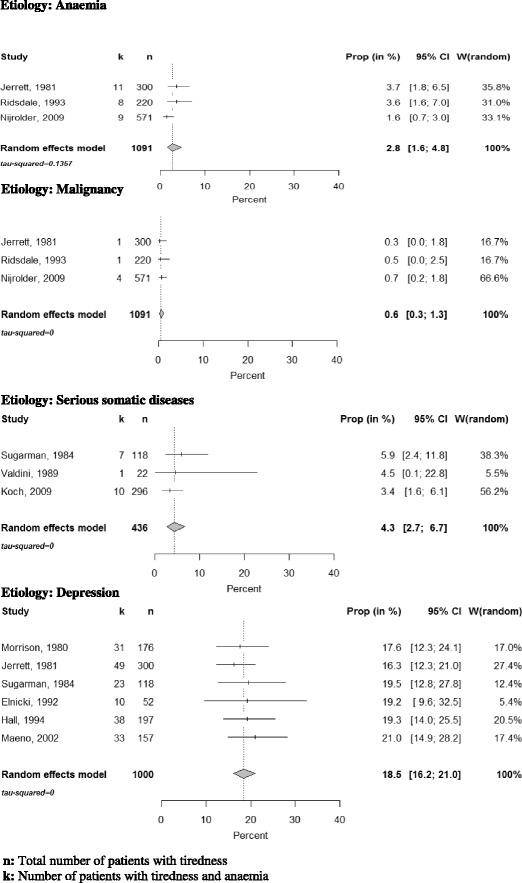
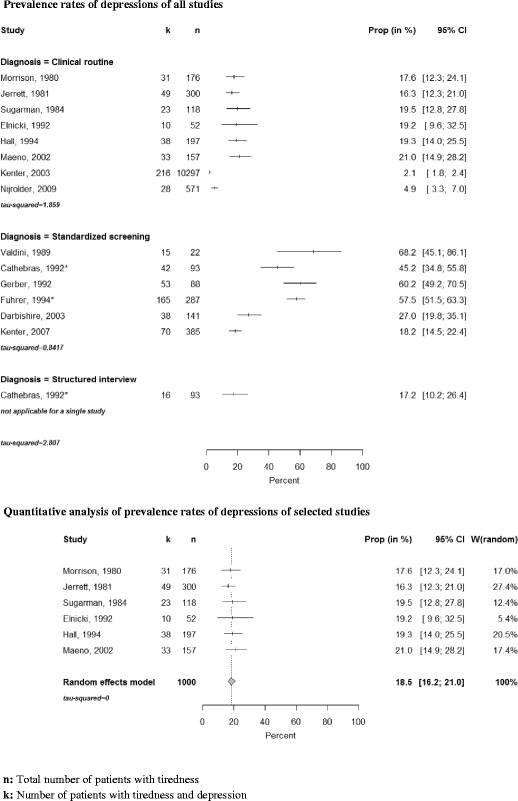
BACKGROUND: Tiredness is one of the most frequent complaints in primary care. Although often self-limiting and frequently associated with psychosocial stress, patients but also their physicians are often uncertain regarding a serious cause and appropriate diagnostic work-up. We conducted a systematic review and meta-analysis of studies reporting on differential diagnosis of fatigue in primary care. METHODS: MEDLINE, EMBASE and conference abstracts were searched for primary care based studies of patients presenting with tiredness. Twenty-six studies were included. We report on anaemia, malignancy, serious organic disease, depression and the chronic fatigue syndrome (CFS) as causes of tiredness as presenting complaint. RESULTS: We found considerable heterogeneity of estimates which was reduced by limiting our analysis to high quality studies. Prevalences were as follows-anaemia: 2.8 % (CI (confidence interval) 1.6-4.8 %); malignancy: 0.6 % (CI 0.3-1.3 %); serious somatic disease: 4.3 % (CI 2.7-6.7 %); depression 18.5 % (CI 16.2-21.0 %). Pooling was not appropriate for CFS. In studies with control groups of patients without the symptom of tiredness, prevalence of somatic disease was identical to those complaining of tiredness. Depression, however, was more frequent among those with tiredness. CONCLUSIONS: Serious somatic disease is rare in patients complaining of tiredness. Since prevalence is similar in patients without tiredness, the association may not be causal. Extensive investigations are only warranted in case of specific findings from the history or clinical examination. Instead, attention should focus on depression and psychosocial problems.
Overview
CoChat Summary
TL;DR
This systematic review and meta-analysis of 26 primary care studies found that serious somatic disease is rare among patients presenting with tiredness, while depression is common. Because somatic disease prevalence was similar in patients with and without tiredness, the authors question causality and advise against extensive investigation in the absence of specific history or examination findings.
Key findings
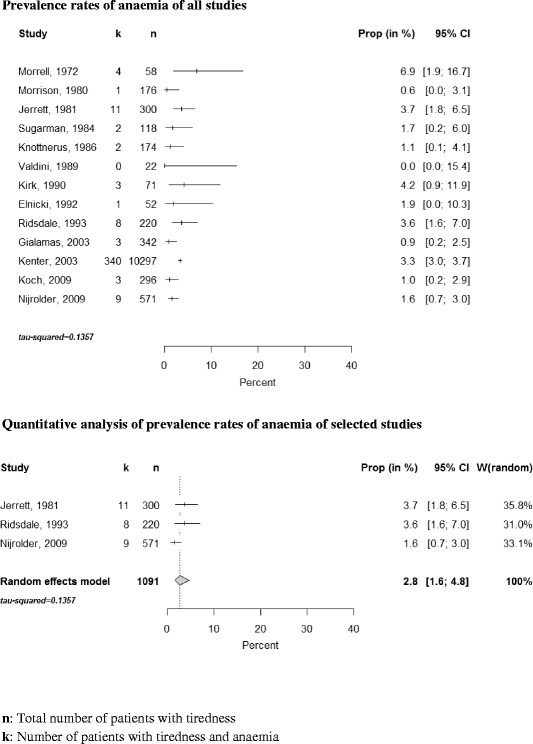
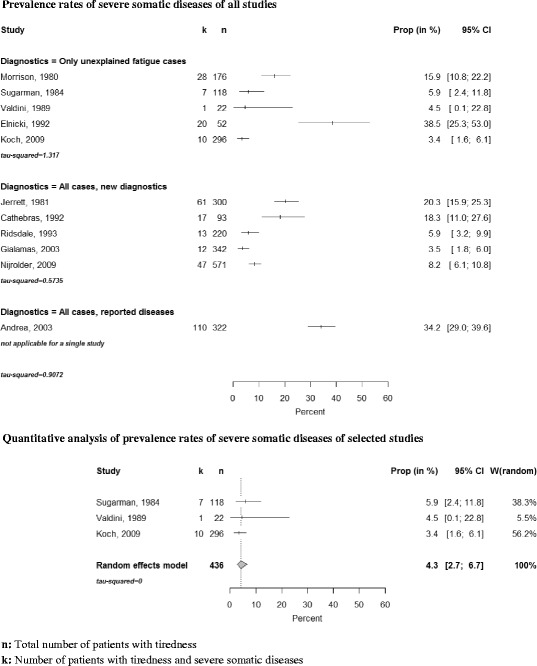
- Pooled prevalences among primary care patients presenting with tiredness were anaemia 2.8% (95% CI 1.6–4.8%), malignancy 0.6% (95% CI 0.3–1.3%), serious somatic disease 4.3% (95% CI 2.7–6.7%) in the abstract/results, and depression 18.5% (95% CI 16.2–21.0%); the Discussion summary reports serious somatic disease as 3.1% (CI 2.7–6.7%).
- In studies with control groups of patients without tiredness, the prevalence of somatic disease was identical to those complaining of tiredness, whereas depression was more frequent among those with tiredness.
- CFS estimates were not pooled: two studies reported low rates of 1.9% (CI 0.0–10.3%) and 0.7% (CI 0.2–1.8%), while Darbishire et al. reported 31.2% (CI 23.7–39.5%) using the CDC definition and a selected sample.
- The authors conclude that about every fifth patient complaining of tiredness to the GP suffers from a depressive disorder, and that extensive investigations are not indicated if tiredness occurs as an isolated symptom without additional findings.
Methods
- Systematic review and meta-analysis; searched PubMed and EMBASE, congress abstracts of the European General Practice Research Network and North American Primary Care Research Group, and references of included articles; search carried out in October 2010.
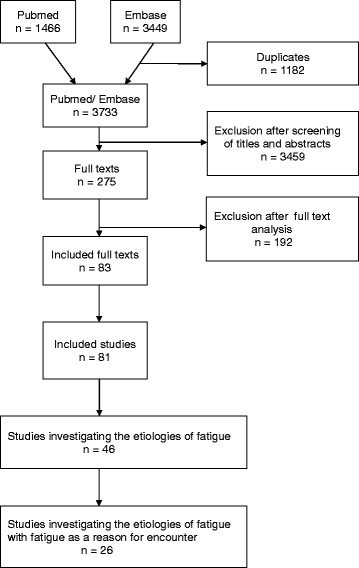
- Included 26 studies investigating tiredness in primary care where tiredness was a primary or second-mentioned complaint; excluded secondary/tertiary care studies, qualitative studies, surveys systematically asking about tiredness, and studies recruiting only patients with a certain illness or increased probability of illness.
- Quality was assessed with 10 criteria; heterogeneity was quantified using tau2 and 95% prediction intervals, and pooling used a random-effects model only for studies with precisely defined diagnostic criteria and appropriate diagnostic work-up; analyses used R 2.14.0 and the R package ‘meta’.
Limitations
- The paper states that internal validity of some studies was limited due to incomplete recruitment and lack of a control group, and that studies differed in clinical characteristics and methodology; these differences were addressed by analysing heterogeneity and forming subgroups.
- The paper states that pooling was not appropriate for CFS because of the small number of studies, and notes outlier studies with high anaemia prevalence due to small sample size, no systematic reference procedure, or multiple possible causes.
- Evident from the text: the search was conducted in October 2010, so later studies were not included; the text also contains an inconsistency between the abstract/results (serious somatic disease 4.3%) and the Discussion summary (3.1%).
Model-written summary. Check it against the paper before relying on it.
Integrity signals
Registry
Cites
Statistics
Figures
Verification
Claims the paper makes
7 Valid · 2 Not valid · 20 Not checked · 34 Own results and interpretations
The cited sources that could be checked couldn’t confirm or dispute this claim.
In the paper
“Knottnerus et al. [12] reported the prevalence of anaemia in a control group and, interestingly, found no significant difference between tired patients and those consulting for other reasons.”
§ The differential diagnosis of tiredness: a systematic review > Results > Tiredness in primary care: underlying diseases
What the sources say
- Could not verifycites [12] Kenter EG Okkes IM Oskam SK Lamberts H Once tired, always tired? Limitations in function over time of tired patients in Dutch general practice Eur J Gen Pract 2007 13 2 67 74 10.1080/13814780701379030 17534742 sourceExperimental — accuracy not yet measured
The Results compare tired patients with controls on functional limitations, health and mood, but do not report anaemia prevalence. Searches for anaemia and Knottnerus found no passage addressing the claimed comparison; no page numbers were available in our copy. (LLM, conf=0.75)
plain- Asserted: passes — The authors put it forward as true.
- Checkable: passes — It can be checked against evidence.
- Load-bearing: unclear — It is unclear whether the paper’s conclusions depend on it.
- Based: passes — The paper gives a reason why it holds.
- Could not verify
The cited sources support only part of this claim — read each source’s verdict below.
In the paper
“Six studies used standardized instruments (HADS (Hospital Anxiety and Depression Scale) [11, 12], SCL-90 (Symptom Check List) [13, 14], CES-D (Center for Epidemiological Studies Depression Scale) [2, 5]). These latter studies found that up to 68.2 % of the fatigued study population scored positive.”
§ The differential diagnosis of tiredness: a systematic review > Results > Tiredness in primary care: underlying diseases
What the sources say
- Not checked — no full text of the sourcecites [11] Darbishire L Ridsdale L Seed PT Distinguishing patients with chronic fatigue from those with chronic fatigue syndrome: a diagnostic study in UK primary care Br J Gen Pract 2003 53 491 441 445 12939888 PMC1314617
- Partly supportedcites [12] Kenter EG Okkes IM Oskam SK Lamberts H Once tired, always tired? Limitations in function over time of tired patients in Dutch general practice Eur J Gen Pract 2007 13 2 67 74 10.1080/13814780701379030 17534742 sourceExperimental — accuracy not yet measured
The Questionnaire section confirms that this study used the standardized HAD Scale to assess depression in patients presenting with tiredness. The results table reproduced in the Discussion reports positive depression scores for 31.7% of cases at one cutoff and 18.4% at the stricter cutoff; this paper does not establish the six-study total or the 68.2% maximum. (LLM, conf=0.86)
- Not checked — no full text of the sourcecites [13] Valdini A Steinhardt S Feldman E Usefulness of a standard battery of laboratory tests in investigating chronic fatigue in adults Fam Pract 1989 6 4 286 291 10.1093/fampra/6.4.286 2632306 source
- Not checked — no full text of the sourcecites [14] Gerber PD Barrett JE Barrett JA Oxman TE Manheimer E Smith R The relationship of presenting physical complaints to depressive symptoms in primary care patients J Gen Intern Med 1992 7 2 170 173 10.1007/BF02598007 1487765 source
- Not checked — no full text of the sourcecites [2] Cathebras PJ Robbins JM Kirmayer LJ Hayton BC Fatigue in primary care: prevalence, psychiatric comorbidity, illness behavior, and outcome J Gen Intern Med 1992 7 3 276 286 10.1007/BF02598083 1613608 source
- Not matchedcites [5] Fuhrer R Epidemiology of fatigue in general practice Encéphale 1994 20 3 603 609 7843057
Its entry has no title and year that we can search by.
plain- Asserted: passes — The authors put it forward as true.
- Checkable: passes — It can be checked against evidence.
- Load-bearing: unclear — It is unclear whether the paper’s conclusions depend on it.
- Based: passes — The paper gives a reason why it holds.
The cited sources support only part of this claim — read each source’s verdict below.
In the paper
“Population- and tertiary care based studies have also not found evidence for higher frequencies of anaemia among fatigued patients [25–28].”
§ The differential diagnosis of tiredness: a systematic review > Discussion > Strengths and limitations
What the sources say
- Not checked — no full text of the sourcecites [25] Lennartsson J Bengtsson C Hallberg L Tibblin E Characteristics of anaemic women. The population study of women in Goteborg 1968–1969 Scand J Haematol 1979 22 1 17 24 10.1111/j.1600-0609.1979.tb00395.x 424695 source
- Supportedcites [26] Wood MM Elwood PC Symptoms of iron deficiency anaemia. A community survey Br J Prev Soc Med 1966 20 3 117 121 5967959 PMC1059038 source
This is a population-based survey, and its Results report no association between symptoms, including fatigue, and haemoglobin concentration in the general population. The Conclusion says the findings do not generally support a relationship for people who are not severely anaemic, while noting that the evidence for severe anaemia is limited. This paper supports the population-based portion of the citing sentence; it is not a tertiary-care study. (LLM, conf=0.86)
- Not checked — no full text of the sourcecites [27] Elwood PC Waters WE Greene WJ Sweetnam P Wood MM Symptoms and circulating haemoglobin level J Chronic Dis 1969 21 9 615 628 10.1016/0021-9681(69)90034-4 5770429 source
- Partly supportedcites [28] Dawson AA Ogston D An evaluation of the diagnostic significance of some symptoms and physical signs in chronic iron-deficiency anaemia Proc Nutr Soc 1969 28 2 59A 60A 5353346 sourceExperimental — accuracy not yet measured
In the section on diagnostic significance (page unavailable), the study lists fatigue among symptoms assessed and reports that only recent-onset pallor increased as haemoglobin fell. That offers limited support for a lack of association between fatigue and anaemia severity within its 46 anaemic patients. It does not establish whether anaemia was more frequent among fatigued patients: symptoms were not compared with those of the 111 non-anaemic hospital patients, and no population-based comparison is reported. (LLM, conf=0.78)
plain- Asserted: passes — The authors put it forward as true.
- Checkable: passes — It can be checked against evidence.
- Load-bearing: passes — The paper’s conclusions depend on it.
- Based: passes — The paper gives a reason why it holds.
Every source the paper cites for this claim was checked and supports it.
In the paper
“A British study [40] with a large primary care sample of 143,000 patients found a prevalence rate of 0.2 %.”
§ The differential diagnosis of tiredness: a systematic review > Discussion > Strengths and limitations
What the sources say
- Supportedcites [40] Nacul LC Lacerda EM Pheby D Campion P Molokhia M Fayyaz S Prevalence of myalgic encephalomyelitis/chronic fatigue syndrome (ME/CFS) in three regions of England: a repeated cross-sectional study in primary care BMC Med 2011 9 91 10.1186/1741-7015-9-91 21794183 PMC3170215 source
Table 4 in Results > Prevalence estimates lists 143,153 patients aged 18–64 across the English GP practices and an overall response-adjusted ME/CFS prevalence of 0.20%. The claim rounds the sample size and accurately reports that estimate. (LLM, conf=0.94)
plain- Asserted: passes — The authors put it forward as true.
- Checkable: passes — It can be checked against evidence.
- Load-bearing: unclear — It is unclear whether the paper’s conclusions depend on it.
- Based: passes — The paper gives a reason why it holds.
- Supported
The sources with a verdict support this claim; the rest weren’t checked yet, have no full text we could read, or their verdicts aren’t rated yet.
In the paper
“Three studies, which were not included in the meta-analysis for methodological reasons, found a significantly higher prevalence of depression in fatigued compared to non-fatigued patients [2, 5, 12].”
§ The differential diagnosis of tiredness: a systematic review > Results > Tiredness in primary care: underlying diseases
What the sources say
- Not checked — no full text of the sourcecites [2] Cathebras PJ Robbins JM Kirmayer LJ Hayton BC Fatigue in primary care: prevalence, psychiatric comorbidity, illness behavior, and outcome J Gen Intern Med 1992 7 3 276 286 10.1007/BF02598083 1613608 source
- Not matchedcites [5] Fuhrer R Epidemiology of fatigue in general practice Encéphale 1994 20 3 603 609 7843057
Its entry has no title and year that we can search by.
- Supportedcites [12] Kenter EG Okkes IM Oskam SK Lamberts H Once tired, always tired? Limitations in function over time of tired patients in Dutch general practice Eur J Gen Pract 2007 13 2 67 74 10.1080/13814780701379030 17534742 source
The paper’s results table (rendered in our copy under Discussion; page unavailable) reports a HAD Scale depression score above the stated cutoff in 18.4% of tiredness cases versus 8.3% of controls, with p = 0.000. The claim about exclusion from the citing authors’ meta-analysis is their framing, not a finding attributed to this individual study. (LLM, conf=0.92)
plainstates an association- Asserted: passes — The authors put it forward as true.
- Checkable: passes — It can be checked against evidence.
- Load-bearing: unclear — It is unclear whether the paper’s conclusions depend on it.
- Based: passes — The paper gives a reason why it holds.
35 more claims
Create a free account to see all 63 claims and to verify the 2 references still open.
- Probably not a substantial claim. 15
- It may state two separate claims as one. 11
- The quote only partly states this claim. 1
Self-check
Percentages, sums and reported differences re-computed from the paper’s own numbers.
Each contradiction between two passages listed here was confirmed by an independent check.
Rated minor: it would not touch a result — a value no result rests on, a p-value that stays on the same side of the significance level, or a conflict that is clerical, resolved elsewhere in the paper, or outside its own findings.
In the paper
§ The differential diagnosis of tiredness: a systematic review > Results > Included studies
“| Valdini, 1989 [3] | USA | 22 | Since at least 1 year, cause unknown | X | | X | X | |”
§ The differential diagnosis of tiredness: a systematic review > References
“3. Ingham JG Miller PM Symptom prevalence and severity in a general practice population J Epidemiol Community Health 1979 33 3 191 198 10.1136/jech.33.3.191 508998 PMC1051953”
Rated minor: it would not touch a result — a value no result rests on, a p-value that stays on the same side of the significance level, or a conflict that is clerical, resolved elsewhere in the paper, or outside its own findings.
In the paper
§ The differential diagnosis of tiredness: a systematic review > Results > Tiredness in primary care: underlying diseases
“Knottnerus et al. [12] reported the prevalence of anaemia in a control group”
§ The differential diagnosis of tiredness: a systematic review > References
“12. Kenter EG Okkes IM Oskam SK Lamberts H Once tired, always tired? Limitations in function over time of tired patients in Dutch general practice Eur J Gen Pract 2007 13 2 67 74 10.1080/13814780701379030 17534742”
Rated minor: it would not touch a result — a value no result rests on, a p-value that stays on the same side of the significance level, or a conflict that is clerical, resolved elsewhere in the paper, or outside its own findings.
In the paper
§ The differential diagnosis of tiredness: a systematic review > Discussion > Summary
“Serious somatic diseases occurred rarely (3.1 % (CI 2.7–6.7 %)).”
§ The differential diagnosis of tiredness: a systematic review > Results > Tiredness in primary care: underlying diseases
“The prevalence rate of serious somatic diseases was 4.3 % (CI 2.7–6.7 %) (see Fig. 3).”
Rated minor: it would not touch a result — a value no result rests on, a p-value that stays on the same side of the significance level, or a conflict that is clerical, resolved elsewhere in the paper, or outside its own findings.
In the paper
§ The differential diagnosis of tiredness: a systematic review > Results > Included studies
“The number of included patients ranged from 22 to 10,279.”
§ The differential diagnosis of tiredness: a systematic review > Results > Included studies
“| Kenter, 2003 [21] | NL | 10.297 | Episodes of care with tiredness as the reason for encounter | X | | | X | |”
Citations
Cites
Cochrane Handbook for Systematic Reviews of Interventions: Cochrane Book Series
(2008) · doi:10.1002/9780470712184 · Cited by 25,048
Borenstein, M., Hedges, L. V., Higgins, J. P. T., & Rothstein, H. R. (2009) · doi:10.1002/9780470743386 · Cited by 14,225
Borenstein, M., Hedges, L. V., Higgins, J. P. T., & Rothstein, H. R. (2021) · doi:10.1002/9781119558378 · Cited by 9,799
Prins, J. B., van der Meer, J. W., & Bleijenberg, G. (2006) · The Lancet · doi:10.1016/s0140-6736(06)68073-2 · Cited by 974
Common symptoms in ambulatory care: incidence, evaluation, therapy, and outcome
Kroenke, K., & Mangelsdorff, A. D. (1989) · The American Journal of Medicine · doi:10.1016/0002-9343(89)90293-3 · Cited by 947 · cited 1×
“Kroenke, 1989 [46] USA 82 3-year incidence of the symptom of 1000 randomly selected patient files”
Chronic Fatigue and its Syndromes
Wessely, P. S., Hotopf, D. M., & Sharpe, D. M. (1998) · doi:10.1093/oso/9780192621818.001.0001 · Cited by 407
The Prevalence of Symptoms in Medical Outpatients and the Adequacy of Therapy
Arrington, M. E. (1990) · Archives of Internal Medicine · doi:10.1001/archinte.1990.00040031685016 · Cited by 367 · cited 1×
“; [4] was the study design multicen-tered?”
Smets, E., Garssen, B., Schuster-Uitterhoeve, A., & de Haes, J. (1993) · British Journal of Cancer · doi:10.1038/bjc.1993.319 · Cited by 346 · cited 1×
“%) of patients suffering from a malignancy complain about tiredness [31].”
(2020) · Nursing Management · doi:10.1097/01.numa.0000719220.85627.ef · Cited by 276
Prevalence of Symptoms and Risk of Sleep Apnea in Primary Care
Netzer, N. C., Hoegel, J. J., Loube, D., Netzer, C. M., Hay, B., Alvarez-Sala, R., & Strohl, K. P. (2003) · Chest · doi:10.1378/chest.124.4.1406 · Cited by 273 · cited 2×
“; [6] were the diagnostic categories well-defined?”
Research works printed but not linked: 1
- Knottnerus JA Knipschild PG van Wersch JW Sijstermanns AH Unexplained fatigue and hemoglobin level; a study of family practice patients Ned Tijdschr Geneeskd 1986 130 9 402 5 3960187
Cited by
The Asia-Pacific Clinical Practice Guidelines for the Management of Frailty
Dent, E., Lien, C., Lim, W. S., Wong, W. C., Wong, C. H., Ng, T. P., Woo, J., Dong, B., de la Vega, S., Hua Poi, P. J., et al. (2017) · Journal of the American Medical Directors Association · doi:10.1016/j.jamda.2017.04.018 · Cited by 631
A Convolutional Neural Network ensemble model for Pneumonia Detection using chest X-ray images
Bhatt, H., & Shah, M. U. (2023) · Healthcare Analytics · doi:10.1016/j.health.2023.100176 · Cited by 142
Fatigue and the prediction of negative health outcomes: A systematic review with meta-analysis
Knoop, V., Cloots, B., Costenoble, A., Debain, A., Azzopardi, R. V., Vermeiren, S., Jansen, B., Scafoglieri, A., Bautmans, I., Bautmans, I., et al. (2021) · Ageing Research Reviews · doi:10.1016/j.arr.2021.101261 · Cited by 98
Chronic fatigue syndrome: progress and possibilities
Sandler, C. X., & Lloyd, A. R. (2020) · The Medical Journal of Australia · doi:10.5694/mja2.50553 · Cited by 82
A comprehensive review of approaches to detect fatigue using machine learning techniques
Hooda, R., Joshi, V. S., & Shah, M. (2022) · Chronic Diseases and Translational Medicine · doi:10.1016/j.cdtm.2021.07.002 · Cited by 102
“29,30 Another study from Canada shows that 30,31 13.6% of patients consulted a physician for treatment of fatigue.”
BackgroundInfluentialFatigue as the Chief Complaint
Maisel, P., Baum, E., & Donner‐Banzhoff, N. (2021) · Deutsches Ärzteblatt international · doi:10.3238/arztebl.m2021.0192 · Cited by 123
Self-citationPheby, D., Arāja, D., Berķis, U., Brenna, E., Cullinan, J., de Korwin, J.-D., Gitto, L., Hughes, D. A., Hunter, R. M., Trépel, D., et al. (2020) · Medicina · doi:10.3390/medicina57010007 · Cited by 65
“The consequences of under-ascertainment, and the lack of services to treat ME/CFS, contributes to patient stress and depression, which is frequently associated with fatigue [55].”
BackgroundTokumasu, K., Honda, H., Sunada, N., Sakurada, Y., Matsuda, Y., Yamamoto, K., Nakano, Y., Hasegawa, T., Yamamoto, Y., Otsuka, Y., et al. (2022) · Medicina · doi:10.3390/medicina58070850 · Cited by 61
Bergmann, M., Haasenritter, J., Beidatsch, D., Schwarm, S., Hörner, K., Bösner, S., Grevenrath, P., Schmidt, L., Viniol, A., Donner‐Banzhoff, N., et al. (2021) · BMC Pediatrics · doi:10.1186/s12887-021-02739-4 · Cited by 44
Self-citationIndividualised requirements for optimum treatment of hypothyroidism: complex needs, limited options
Hoermann, R., Midgley, J. E. M., Larisch, R., & Dietrich, J. W. (2019) · Drugs in Context · doi:10.7573/dic.212597 · Cited by 41
The operationalization of fatigue in frailty scales: a systematic review
Knoop, V., Costenoble, A., Azzopardi, R. V., Vermeiren, S., Debain, A., Jansen, B., Scafoglieri, A., Bautmans, I., Bautmans, I., Verté, D., et al. (2019) · Ageing Research Reviews · doi:10.1016/j.arr.2019.100911 · Cited by 46
Weckmann, G., Kiel, S., Chenot, J., & Angelow, A. (2023) · Journal of Clinical Medicine · doi:10.3390/jcm12030921 · Cited by 66
Time for a reassessment of the treatment of hypothyroidism
Midgley, J. E. M., Toft, A. D., Larisch, R., Dietrich, J. W., & Hoermann, R. (2019) · BMC Endocrine Disorders · doi:10.1186/s12902-019-0365-4 · Cited by 36
Bergmann, M., Haasenritter, J., Beidatsch, D., Schwarm, S., Hörner, K., Bösner, S., Grevenrath, P., Schmidt, L., Viniol, A., Donner‐Banzhoff, N., et al. (2021) · BMC Family Practice · doi:10.1186/s12875-021-01501-0 · Cited by 40
Self-citationMondal, A., Bhat, C. R., Costey, M. C., Bhat, A. C., Webb, T., Magassy, T. B., Pendyala, R. M., & Lam, W. H. K. (2020) · International Journal of Sustainable Transportation · doi:10.1080/15568318.2020.1754535 · Cited by 32
Dukes, J., Chakan, M., Mills, A., & Marcaurd, M. (2020) · Medical Clinics of North America · doi:10.1016/j.mcna.2020.09.007 · Cited by 30
Cudris–Torres, L., Vinaccia, S., Barrios–Núñez, Á., Arrieta, N. G., Gutiérrez, J. M., Barranco, L. A., Rios-Carlys, G., Cuenca-Calderón, S. E., Bermúdez, V., Hernández-Lalinde, J., et al. (2023) · Frontiers in Psychology · doi:10.3389/fpsyg.2023.1106563 · Cited by 27
“These data are consistent with the existing literature, which suggests a significant relationship between the feeling of fatigue often experienced by people diagnosed with a chronic disease and a lower presence of caregiving behaviors (Stadje et al., 2016; Son, 2019).”
ResultXu, J., Zheng, Q., Jiang, X., Zhuo, Q., Nian, J., & Wang, J.-T. (2023) · BMC Nursing · doi:10.1186/s12912-023-01518-z · Cited by 33
“Fatigue is strongly associated with physical and psychiatric disorders, especially, under continuous fatigue is easy to lead to the occurrence of disease [53].”
BackgroundWhite, B., Rafiq, M., González-Izquierdo, A., Hamilton, W. T., Price, S., & Lyratzopoulos, G. (2022) · British Journal of Cancer · doi:10.1038/s41416-022-01733-6 · Cited by 21
Not what it seems to be: Depression versus periodic limb movement disorder
Gupta, R. M., Kundu, K., Khayyam, K., et al. (2020) · Indian Journal of Psychiatry · doi:10.4103/psychiatry.indianjpsychiatry_450_19 · Cited by 17
“, depression, somatoform disorders, and sleep disorders.[1] Patients having depression with somatic symptoms rarely report classical symptoms of depression.”
BackgroundValidation study of the Parkinson’s Fatigue Scale in advanced Parkinson’s disease
Martínez‐Martín, P., Wetmore, J. B., Arbelo, J. M., Catalán, M. J., Valldeoriola, F., & Rodríguez‐Blázquez, C. (2019) · Patient Related Outcome Measures · doi:10.2147/prom.s196042 · Cited by 18
Health-related quality of life in young women starting hormonal contraception: a pilot study
Kristjánsdóttir, J., Sundelin, C., & Naessén, T. (2018) · The European Journal of Contraception & Reproductive Health Care · doi:10.1080/13625187.2018.1455179 · Cited by 19
“In a recent review of patients in primary care complaining of tiredness, it was reported that about every fifth patient had a depressive disorder [41].”
BackgroundHughes, A., & Kumari, M. (2017) · Psychological Medicine · doi:10.1017/s0033291717002872 · Cited by 18
“However, in studies of primary care patients presenting with fatigue, diagnoses of relevant underlying illness are subsequently made only in a minority of cases (Nijrolder et al. 2009) and only slightly more than for controls (Stadje et al. 2016).”
BackgroundAllik, A., Pilt, K., Viigimäe, M., Fridolin, I., & Jervan, G. (2022) · Sensors · doi:10.3390/s22041680 · Cited by 14
“Fatigue may also have several confounding factors such as medication, psychological and cognitive conditions, and deconditioning [6,7].”
BackgroundComparing comorbidity measures and fatigue post myocardial infarction
Horne, C. E., Johnson, S., & Crane, P. B. (2018) · Applied Nursing Research · doi:10.1016/j.apnr.2018.11.004 · Cited by 15
Short-term cognitive fatigue effect on auditory temporal order judgments
Simon, J., Takács, E., Orosz, G., Berki, B., & Winkler, I. (2020) · Experimental Brain Research · doi:10.1007/s00221-019-05712-x · Cited by 19
Asthenic disorders as a manifestation of chronic fatigue syndrome
Putilina, M. V. (2021) · S S Korsakov Journal of Neurology and Psychiatry · doi:10.17116/jnevro2021121081125 · Cited by 13
White, B., Renzi, C., Barclay, M., & Lyratzopoulos, G. (2022) · British Journal of General Practice · doi:10.3399/bjgp.2022.0371 · Cited by 15
“19 10, 20 When new-onset fatigue accompanies an More detailed evidence is needed to support such decision making.”
Fatiga: historia, neuroanatomía y caracteristicas psicopatológicas. Una revisión de la Literatura.
Petrozzi, B. P. (2018) · Revista de Neuro-Psiquiatría · doi:10.20453/rnp.v81i3.3385 · Cited by 38
Wang, S., Tang, Q., Lv, Y., Tao, Y., Liu, X., Zhang, L., & Liu, G. (2023) · Behavioral Sciences · doi:10.3390/bs13060472 · Cited by 22
Artificial Intelligence-Assisted Case Management in Social Work Services: A Systematic Review
Li, L., Wang, M., & Jian, M. (2025) · Research on Social Work Practice · doi:10.1177/10497315251329531 · Cited by 25
“In healthcare, machine learning (ML) and deep learning (DL) techniques have evolved substantially, yielding bene fi cial results (Das et al., 2022; Shah et al., 2019; Stadje et al., 2016).”
Using Unannounced Standardized Patients to Explore Variation in Care for Patients With Depression
Zabar, S. R., Hanley, K., Watsula-Morley, A., Goldstein, J. D., Altshuler, L. A., Dumorne, H., Wallach, A. B., Porter, B. L., Kalet, A. L., & Gillespie, C. C. (2018) · Journal of Graduate Medical Education · doi:10.4300/jgme-d-17-00736.1 · Cited by 10
Self-Reported Physical Activity and Mental Health Among Asylum Seekers in a Refugee Camp
Filippou, K., Knappe, F., Hatzigeorgiadis, A., Morres, I. D., Tzormpatzakis, E., Havas, E., Pühse, U., Theodorakis, Y., & Gerber, M. (2024) · Journal of Physical Activity and Health · doi:10.1123/jpah.2023-0325 · Cited by 17
Fatigue bei chronisch körperlichen Erkrankungen
Weis, J. (2024) · Bundesgesundheitsblatt - Gesundheitsforschung - Gesundheitsschutz · doi:10.1007/s00103-024-03951-0 · Cited by 10
Fatigue chronique : quelles investigations ? Dans quels objectifs ?
Gramont, B., Goutte, J., Féasson, L., Millet, G. Y., Hupin, D., & Cathébras, P. J. (2023) · La Revue de Médecine Interne · doi:10.1016/j.revmed.2023.05.007 · Cited by 9
Halsizlik ve Yorgunluğa Klinik Yaklaşım
ÇAYAKAR, A. (2019) · Ege Tıp Bilimleri Dergisi · doi:10.33713/egetbd.568526 · Cited by 13
Larisch, R., Midgley, J. E. M., Dietrich, J. W., & Hoermann, R. (2024) · Nuklearmedizin - NuclearMedicine · doi:10.1055/a-2240-8087 · Cited by 5
Tonini, E., Crouse, J. J., Shin, M., Carpenter, J. S., Lloyd, A. R., Hindmarsh, G., McKenna, S., Nichles, A., Zmicerevska, N., Scott, J. L., et al. (2025) · Journal of Psychosomatic Research · doi:10.1016/j.jpsychores.2025.112141 · Cited by 3
Babiloni, A. H., Alonso, B. F., Martel, M. O., Boggero, I. A., Lavigne, G. J., Goode, A. P., & Kapos, F. P. (2025) · Journal of Pain · doi:10.1016/j.jpain.2025.105541 · Cited by 6
Levothyroxine Monotherapy: What Works Better for the Individual With Hypothyroidism?
Hennessey, J. V. (2023) · Endocrine Practice · doi:10.1016/j.eprac.2022.12.013 · Cited by 4
Pharmacodynamic and Therapeutic Actions of Levothyroxine
Hennessey, J. V. (2021) · 70 Years of Levothyroxine · doi:10.1007/978-3-030-63277-9_3 · Cited by 4
Underlying disease risk among patients with fatigue: a population-based cohort study in primary care
White, B., Zakkak, N., Renzi, C., Rafiq, M., González-Izquierdo, A., Denaxas, S., Nicholson, B. D., Lyratzopoulos, G., & Barclay, M. (2024) · British Journal of General Practice · doi:10.3399/bjgp.2024.0093 · Cited by 6
“…and non-UK based) best practice guidance for fatigue that were reviewed by the current authors, 4,28–33 nor primary studies into fatigue, 1–3, 25, 27, As discussed in Supplementary Information S2 and Supplementary Figure S4, diseases with excess risk in patients who present with fatigue may not…”
Fatigue and tiredness in diabetes
Hillson, R. (2020) · Practical Diabetes · doi:10.1002/pdi.2261 · Cited by 4
Konsultationsanlass Müdigkeit: Empfehlungen für die hausärztliche Praxis
Baum, E., Kornder, N., Lindner, N., & Maisel, P. (2023) · Allgemeinmedizin up2date · doi:10.1055/a-1767-7695 · Cited by 2
“Bisher noch nicht diagnostizierte Ursachen einer primär ungeklärten Müdigkeit sind [4]: ▪ Depression (ca.”
Self-citationVincent Gnanaraj, T., Chenni Kumaran., J., Bhavani, R., & Mohan, A. (2024) · International Conference on Smart Technologies for Sustainable Development Goals (ICSTSDG) · doi:10.1109/icstsdg61998.2024.11026205 · Cited by 2
“…say it as “Gaanda Iruku ” , which means that he is not in normal mood or good mood) referring to Tensed or Irritated mood of a person[1], It starts due to consistency in negativity, it involves multiple factors like stress[2], boredom[3], laziness[4], failures[5], tiredness[6], and health[7].”
Sapra, A., & Bhandari, P. (2021) · StatPearls · Cited by 27
Tiredness in Acute and Chronic Depression Treated with Transcranial Magnetic Stimulation
Pridmore, S., Erger, S., Rybak, M., & May, T. (2019) · American Journal of Medical Research · doi:10.22381/ajmr6220191 · Cited by 2
“A systematic review of studies of people presenting to general practice complaining of tiredness (Stadje et al., 2016) found serious somatic disease was rare and the most the common diagnosis was depression (18%).”
BackgroundHensley, C. P., & Kavchak, A. J. E. (2018) · Physical Therapy · doi:10.1093/ptj/pzy011 · Cited by 3
A episteme médica e as incertezas do diagnóstico de Covid longa: um ensaio antropológico
Ferreira, J. T., & da Nóbrega, G. A. D. L. (2024) · Horizontes Antropológicos · doi:10.1590/1806-9983e690407 · Cited by 2
The fatigue perception and its role in patient management
Yurtsever, C., Set, T., & Ateş, E. (2018) · Dicle Medical Journal / Dicle Tip Dergisi · doi:10.5798/dicletip.407248 · Cited by 1
van Marwijk, H., & Scott‐Smith, W. (2018) · Family Practice · doi:10.1093/fampra/cmy041 · Cited by 1
Narkolepsie und andere «zentrale Hypersomnolenzen»
Mathis, J. (2018) · Praxis · doi:10.1024/1661-8157/a003107 · Cited by 1
Sievert, L. L., Gómez, L. H., Campos, D. C., & Brown, D. E. (2019) · Springer eBooks · doi:10.1007/978-3-030-27001-8_10 · Cited by 1
de Vries, H., & Thijs, A. (2021) · Bohn Stafleu van Loghum eBooks · doi:10.1007/978-90-368-2620-4_4 · Cited by 1
Bergmann, M., Haasenritter, J., Beidatsch, D., Schwarm, S., Bartsch, K., Bösner, S., Grevenrath, P., Schmidt, L., Viniol, A., Donner‐Banzhoff, N., et al. (2021) · Research Square · doi:10.21203/rs.3.rs-154884/v1 · Cited by 1
Self-citationMukherjee, S. (2019) · Journal of Medical Science And clinical Research · doi:10.18535/jmscr/v7i9.01
“was graded as none (0), mild (1-3), moderate (4-6) and severe (7-10).”
BackgroundStanley, T. L. (2020) · Springer eBooks · doi:10.1007/978-3-030-52215-5_21
Baum, E. (2021) · Elsevier eBooks · doi:10.1016/b978-3-437-15280-1.00045-x
Self-citationPapan, C., & Weber, L. T. (2019) · Springer eBooks · doi:10.1007/978-3-662-56790-6_23
Zimmermann, V., Waeber, G., & Harpe, R. D. L. (2023) · Swiss Medical Forum ‒ Schweizerisches Medizin-Forum · doi:10.4414/smf.2023.09135
AWMF-Leitlinie Müdigkeit: Einordnung des Symptoms „Tagesmüdigkeit/Fatigue“
Baum, E., Lindner, N., Kornder, N., & Maisel, P. (2023) · PiD - Psychotherapie im Dialog · doi:10.1055/a-1935-6887
“[4] Stadje R, Dornieden K, Baum E, et al.”
BackgroundInfluentialSelf-citationLindner, N., & Baum, E. (2024) · Elsevier eBooks · doi:10.1016/b978-3-437-21029-7.00046-2
Self-citationEndocrine and Multisystem Symptoms
Frain, J. (2025) · Wiley eBooks · doi:10.1002/9781394218844.ch6
Was steckt hinter der Müdigkeit?
Zink, N. (2025) · MMW - Fortschritte der Medizin · doi:10.1007/s15006-024-4570-3
Handjiev, S., Nobes, J. H., & Murphy, M. J. (2025) · Annals of Clinical Biochemistry International Journal of Laboratory Medicine · doi:10.1177/00045632251329175
When to suspect ME/CFS or Long Covid
Spickett, G. (2025) · doi:10.1093/med/9780198962137.003.0002
Bednarczuk, T., Sugier, A., Attanasio, R., Nagy, E. V., Negro, R., Papini, E., Žarković, M., Akarsu, E., Alevizaki, M. K., Ayvaz, G., et al. (2025) · Frontiers in Endocrinology · doi:10.3389/fendo.2025.1713814 · Cited by 1
Computertomographie von Thorax und Abdomen bei unspezifischen Symptomen
Gehrke-Beck, S. (2026) · Zeitschrift für Allgemeinmedizin · doi:10.1007/s44266-026-00511-4
Höfel, L., Lampert, B., & Haas, J.-P. (2026) · Der Schmerz · doi:10.1007/s00482-026-00937-6
Hordijk, P. M., Thijs, A., & de Vries, H. (2026) · doi:10.1007/978-90-368-3158-1_4
Reeve, S., Sheaves, B., Loe, B. S., & Freeman, D. H. (2026) · SLEEP Advances · doi:10.1093/sleepadvances/zpag072
Care of the Patient with Fatigue
Maisel, P., Lindner, N., & Baum, E. (2026) · Springer eBooks · doi:10.1007/978-1-4939-0779-3_62-3
Self-citationEndometriose-assoziierte chronische Erschöpfung (EMa-CF)
Werner, F., & Mechsner, S. (2026) · Geburtshilfe und Frauenheilkunde · doi:10.1055/a-2909-6657
Tiredness and the Capacity to Decide: The Example of Maternity Care
Brunning, L. (2026) · Bioethics · doi:10.1111/bioe.70199
Metadata
- Authors
- Stadje, R., Dornieden, K., Baum, E., Becker, A., Biroga, T., Bösner, S., Haasenritter, J., Keunecke, C., Viniol, A., & Donner-Banzhoff, N.
- Affiliations
- Philipps University of Marburg (DE)
- Corresponding author
- Stadje, Rebekka
- Venue
- BMC Family Practice
- Published
- 2016-10-20
- Volume
- 17
- Issue
- 1
- Pages
- 147-147
- ISSN
- 1471-2296 (ISSN-L)
- PMC
- PMC5072300
- OpenAlex
- W2532703469
- Semantic Scholar
- 663849f73f26a31c7131332daca3776e6103dbce
- Cited by
- 83
- References
- 54
- Citations by year
- 2026: 7 · 2025: 8 · 2024: 7 · 2023: 10 · 2022: 4 · 2021: 20 · 2020: 8 · 2019: 9 · 2018: 8 · 2017: 2
- FWCI
- 0.90
- Type
- journal article
- Language
- en
- Open access
- gold
- doi.org
- Licence
- cc-by
- Locations
- BMC Family Practice (publishedVersion, cc-by)
- PubMed Central (publishedVersion, cc-by)
- PubMed (publishedVersion)
- Topics
- Health Sciences › Medicine › Psychiatry and Mental health › Fibromyalgia and Chronic Fatigue Syndrome Research
- Health Sciences › Medicine › Hematology › Hematological disorders and diagnostics
- Health Sciences › Medicine › Family Practice › Primary Care and Health Outcomes
- Keywords
- fatigue, differential diagnosis, anemia, cancer, depression, chronic fatigue syndrome, prevalence, primary care, psychosocial stress
- MeSH terms
- Anemia, Depression, Diagnosis, Differential, Fatigue, Humans, Neoplasms, Fatigue Syndrome, Chronic
About these checks
Registry, retraction, Cites and statistics results are computed, not judged, with one exception: a printed reference that no index lists is read once by a model before it counts as a citation error. Claims are extracted by a model and kept only when their quote appears verbatim in the text; each cited source is then checked, with a model’s help, for whether it says what the claim relies on. Those verdicts can be wrong — read the claim’s quote and the cited source before relying on one.
The claim verdicts this report counts are experimental: their accuracy is not yet measured.
A language model drew the claims from the paper on 2026-10-02, under version 3 of the claim definition (model deepseek-v4.1-flash, prompt extract-v3).
A second model labelled each claim on 2026-10-02 (model jev-1.13-20260917, definition revision gold-guideline-v0.2).
Cited sources are checked with a language model’s help (gpt-6-sol).
Statistics and arithmetic are recomputed, not judged.
Confidence bands are shown only for fields calibrated on our annotated test set. None is calibrated yet, so no band is shown.
What counts as a claim ›How we measure confidence ›How we check this ›
Are you an author, or do you see a problem with this page? Request a review
Data sources
Bibliographic data: Semantic Scholar, OpenAlex, Crossref.
Contains information from the Semantic Scholar Academic Graph Datasets, made available under the ODC Attribution License (ODC-BY 1.0).
Semantic Scholar’s data is described in: Kinney, R., et al. (2023). The Semantic Scholar Open Data Platform. arXiv:2301.10140.
