

Effects of alternate-day fasting on body weight and dyslipidaemia in patients with non-alcoholic fatty liver disease: a randomised controlled trial
Open accessPublished version of a preprint
The DOI matches its Crossref record; 31 of the 31 references it cites were found in a registry or an index.
Abstract
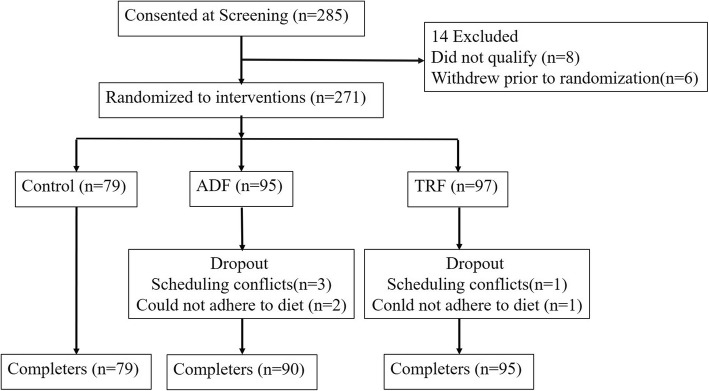
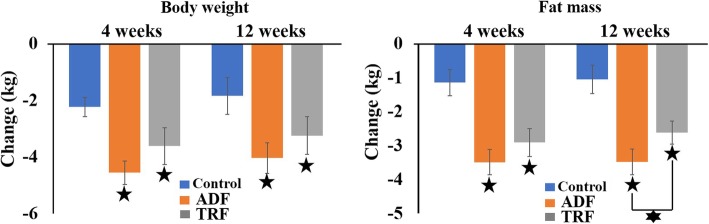
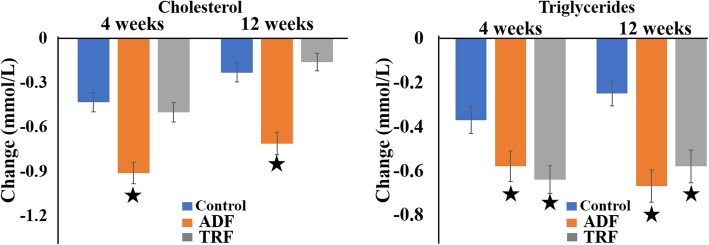
Background: Alternate-day fasting (ADF) is a novel diet therapy that may achieve reduction in body weight and improvement of dyslipidaemia, but the impact of this diet on patients with non-alcoholic fatty liver disease (NAFLD) remains unknown. The aim of this study was to evaluate the effects of ADF on the body weight and lipid profile of individuals with NAFLD. Methods: NAFLD patients ( n = 271) were randomised to the ADF group, time-restricted feeding (TRF) group, or the control group and subjected to the respective diet for 12 weeks. Anthropometric measurements (body weight, fat mass/fat-free mass) were performed, and plasma lipids were analysed enzymatically. Results: Within 4 weeks, the body weight decreased significantly ( P < 0.001) in the ADF group by 4.56 ± 0.41 kg (6.1 ± 0.5%) and the TRF group by 3.62 ± 0.65 kg (4.83 ± 0.9%) compared to the control group, and it decreased even more after 12 weeks in both groups (ADF: − 4.04 ± 0.54 kg, 5.4 ± 0.7%; TRF: − 3.25 ± 0.67 kg, 4.3 ± 0.9%). Fat mass was significantly reduced by ADF (− 3.49 ± 0.37 kg; 11 ± 1.2%) and TRF (− 2.91 ± 0.41 kg; 9.6 ± 1.3%), with ADF leading to a further reduction in fat mass after 12 weeks (− 3.48 ± 0.38 kg; 11 ± 1.2%). Total cholesterol was significantly decreased at both time points in the ADF group (− 0.91 ± 0.07 mmol/L; 18.5 ± 1.5%) compared to the control and TRF groups. Both ADF (− 0.64 ± 0.06 mmol/L; 25 ± 1.9%) and TRF (0.58 ± 0.07 mmol/L; 20 ± 1.7%) achieved a significant reduction in serum triglycerides ( P < 0.001) after 12 weeks. Changes in fat free mass, HDL, LDL, fasting insulin, glucose, liver stiffness, and systolic or diastolic blood pressure did not differ between the groups. Conclusions: ADF appears to be an effective diet therapy for individuals with NAFLD that can achieve weight loss and improvement of dyslipidaemia within a relatively short period of time (4 to 12 weeks). Potential preventive effects of ADF on cardiovascular disease need to be confirmed by future investigations. Trial registration: ChiCTR1900024411 , this trial was retrospectively registered on July 10, 2019.
Overview
The claims and statistics of this paper haven’t been checked yet.
Free: it reads the open-access text and checks the first 5 claims that cite a source we can check. Create a free account to check every claim.
Integrity signals
Registry
Cites
Statistics
Figures
Verification
Claims the paper makes
The claims and statistics of this paper haven’t been checked yet.
Free: it reads the open-access text and checks the first 5 claims that cite a source we can check. Create a free account to check every claim.
Claims other papers make about this one
Each is checked against this paper’s own text: does it say what the citing paper says it does?
The source backs part of the claim, not all of it — or backs it for a different population, condition or comparison.
In the citing paper
“Recent human trials on TRE have highlighted numerous beneficial metabolic effects of TRE, e.g., improved mean daily glucose levels (107, 108), fasting glucose levels (108–110), insulin resistance (108, 110, 111) or insulin sensitivity (112, 113), triglyceride levels (107, 109, 114, 115), total cholesterol (115, 116), and LDL cholesterol levels (116).”
From Meal timing and its role in obesity and associated diseases (2024) · cites this paper as [114]
Experimental — accuracy not yet measuredThe source backs part of the claim, not all of it — or backs it for a different population, condition or comparison.
In the citing paper
“Seven trials found no significant between-group differences in energy intake during the intervention (21, 24, 25), in change from baseline (16, 18, 25), or in post-intervention energy intake (20, 22), whereas two studies reported lower caloric intake in the IF groups than in the CER groups (23, 24).”
From Intermittent fasting versus continuous energy restriction in MASLD: a systematic review and meta-analysis (2026) · cites this paper as [22]
Experimental — accuracy not yet measuredThe cited source says what the claim attributes to it.
In the citing paper
“Among them, four trials [34, 35, 57, 73] documented no adverse events throughout the intervention period.”
From Comparing caloric restriction regimens for effective weight management in adults: a systematic review and network meta-analysis (2024) · cites this paper as [34]
The cited source says what the claim attributes to it.
In the citing paper
“Eight trials employed a parallel-group design (16, 18–24), and one utilized a crossover design (25).”
From Intermittent fasting versus continuous energy restriction in MASLD: a systematic review and meta-analysis (2026) · cites this paper as [22]
Self-check
Percentages, sums and reported differences re-computed from the paper’s own numbers.
The self-check needs the paper’s full text.
Citations
Cites
Flint, A., Raben, A., Blundell, J., & Astrup, A. (2000) · International Journal of Obesity · doi:10.1038/sj.ijo.0801083 · Cited by 2,238
Hatori, M., Vollmers, C., Zarrinpar, A., DiTacchio, L., Bushong, E. A., Gill, S., Leblanc, M., Chaix, A., Joens, M., Fitzpatrick, J. A. J., et al. (2012) · Cell Metabolism · doi:10.1016/j.cmet.2012.04.019 · Cited by 1,986
Impact of intermittent fasting on health and disease processes
Mattson, M. P., Longo, V. D., & Harvie, M. (2017) · Ageing Research Reviews · doi:10.1016/j.arr.2016.10.005 · Cited by 1,187
Fasting, Circadian Rhythms, and Time-Restricted Feeding in Healthy Lifespan
Longo, V. D., & Panda, S. (2016) · Cell Metabolism · doi:10.1016/j.cmet.2016.06.001 · Cited by 1,013
International Journal on Biological Sciences
(2022) · International Journal on Biological Sciences · doi:10.53390/ijbs · Cited by 875
Metabolic Effects of Intermittent Fasting
Patterson, R. E., & Sears, D. D. (2017) · Annual Review of Nutrition · doi:10.1146/annurev-nutr-071816-064634 · Cited by 810
Moro, T., Tinsley, G., Bianco, A., Marcolin, G., Pacelli, Q. F., Battaglia, G., Palma, A., Gentil, P., Neri, M., & Paoli, A. (2016) · Journal of Translational Medicine · doi:10.1186/s12967-016-1044-0 · Cited by 732
Trepanowski, J. F., Kroeger, C. M., Barnosky, A., Klempel, M. C., Bhutani, S., Hoddy, K. K., Gabel, K., Freels, S., Rigdon, J., Rood, J., et al. (2017) · JAMA Internal Medicine · doi:10.1001/jamainternmed.2017.0936 · Cited by 645
Gabel, K., Hoddy, K. K., Haggerty, N., Song, J., Kroeger, C. M., Trepanowski, J. F., Panda, S., & Varady, K. A. (2018) · Nutrition and Healthy Aging · doi:10.3233/nha-170036 · Cited by 626
Diabetes, Metabolic Syndrome and Obesity: Targets and Therapy
(2011) · Diabetes Metabolic Syndrome and Obesity · doi:10.2147/dmsott · Cited by 471
Cited by
Cusi, K., Isaacs, S., Barb, D., Basu, R., Caprio, S., Garvey, W. T., Kashyap, S., Mechanick, J. I., Mouzaki, M., Nadolsky, K., et al. (2022) · Endocrine Practice · doi:10.1016/j.eprac.2022.03.010 · Cited by 1,021
Calorie restriction with or without time-restricted eating in weight loss
Liu, D., Huang, Y., Huang, C., Yang, S., Wei, X., Zhang, P., Guo, D., Lin, J., Xu, B., Li, C., et al. (2022) · New England Journal of Medicine · doi:10.1056/nejmoa2114833 · Cited by 516
Current treatment paradigms and emerging therapies for NAFLD/NASH
Raza, S. (2021) · Frontiers in Bioscience · doi:10.2741/4892 · Cited by 310
Patikorn, C., Roubal, K., Veettil, S. K., Chandran, V., Pham, T., Lee, Y. Y., Giovannucci, E. L., Varady, K. A., & Chaiyakunapruk, N. (2021) · JAMA Network Open · doi:10.1001/jamanetworkopen.2021.39558 · Cited by 298
Jamshed, H., Steger, F. L., Bryan, D. R., Richman, J. S., Warriner, A. H., Hanick, C. J., Martin, C. K., Salvy, S.-J., & Peterson, C. M. (2022) · JAMA Internal Medicine · doi:10.1001/jamainternmed.2022.3050 · Cited by 280
Moon, S., Kang, J., Kim, S. H., Chung, H. S., Kim, Y. J., Yu, J. M., Cho, S. T., Oh, C.-M., & Kim, T. (2020) · Nutrients · doi:10.3390/nu12051267 · Cited by 231
“Among two studies including metabolic abnormality, one [33] showed significant effect of TRE on fat mass reduction.”
BackgroundMethodResultInfluentialHolmer, M., Lindqvist, C., Petersson, S., Moshtaghi-Svensson, J., Tillander, V., Brismar, T. B., Hagström, H., & Stål, P. (2021) · JHEP Reports · doi:10.1016/j.jhepr.2021.100256 · Cited by 224
“16 Here, we present the results from a 12-week randomised controlled trial comparing treatment for NAFLD with LCHF and 5:2 diets administered by a dietitian, and standard of care (SoC) recommendations given by a physician.”
Sharpton, S. R., Schnabl, B., Knight, R., & Loomba, R. (2021) · Cell Metabolism · doi:10.1016/j.cmet.2020.11.010 · Cited by 194
“Intermittent fasting interventions had acceptable adherence and lead to weight loss and improvement in a number of metabolic parameters in several recent randomized trials of modest sample sizes.(Cai et al., 2019; Cienfuegos et al., 2020; Johari et al., 2019)”
BackgroundDiet and exercise in NAFLD/NASH: Beyond the obvious
Semmler, G., Datz, C., Reiberger, T., & Trauner, M. (2021) · Liver International · doi:10.1111/liv.15024 · Cited by 179
Ezpeleta, M., Gabel, K., Cienfuegos, S., Kalam, F., Lin, S., Pavlou, V., Song, Z., Haus, J. M., Koppe, S., Alexandria, S. J., et al. (2023) · Cell Metabolism · doi:10.1016/j.cmet.2022.12.001 · Cited by 181
Wei, X., Lin, B., Huang, Y., Yang, S., Huang, C., Shi, L., Liu, D., Zhang, P., Lin, J., Xu, B., et al. (2023) · JAMA Network Open · doi:10.1001/jamanetworkopen.2023.3513 · Cited by 149
Hmgcs2-mediated ketogenesis modulates high-fat diet-induced hepatosteatosis
Asif, S., Kim, R. Y., Fatica, T., Sim, J., Zhao, X., Oh, Y., Denoncourt, A. M., Cheung, A., Downey, M., Mulvihill, E. E., et al. (2022) · Molecular Metabolism · doi:10.1016/j.molmet.2022.101494 · Cited by 143
“Moreover, our findings suggest a possible mechanism underlying the protective effects of dietary interventions against NAFLD, as a ketogenic diet [23] and intermittent fasting [39,79,80] are known to activate ketogenesis.”
BackgroundFernández, T., Viñuela, M., Vidal, C., & Barrera, F. (2022) · PLoS ONE · doi:10.1371/journal.pone.0263931 · Cited by 117
Semnani‐Azad, Z., Khan, T. A., Chiavaroli, L., Chen, V., Bhatt, H. A., Chen, A., Chiang, N., Oguntala, J. O., Kabisch, S., Lau, D. C. W., et al. (2025) · BMJ · doi:10.1136/bmj-2024-082007 · Cited by 121
“39 52 102 Thirdly, we acknowledge that adjustments for multiple comparisons were not applied, as they are generally not recommended for prespecified outcomes in meta-analyses.”
Complex physiology and clinical implications of time-restricted eating
Petersen, M. C., Gallop, M. R., Ramos, S. F., Zarrinpar, A., Broussard, J. L., Chondronikola, M., Chaix, A., & Klein, S. (2022) · Physiological Reviews · doi:10.1152/physrev.00006.2022 · Cited by 102
Time restricted eating: A dietary strategy to prevent and treat metabolic disturbances
Schuppelius, B., Peters, B., Ottawa, A., & Pivovarova-Ramich, O. (2021) · Frontiers in Endocrinology · doi:10.3389/fendo.2021.683140 · Cited by 93
Park, J., Seo, Y.-G., Paek, Y.-J., Song, H. J., Park, K. H., & Noh, H.-M. (2020) · Metabolism · doi:10.1016/j.metabol.2020.154336 · Cited by 93
Marjot, T., Tomlinson, J. W., Hodson, L., & Ray, D. W. (2023) · Gut · doi:10.1136/gutjnl-2023-329998 · Cited by 83
“131 Notably, no trials of IF (or TRE) have been performed in overweight patients with cirrhosis.”
BackgroundHydes, T., Ravi, S., Loomba, R. S., & Gray, M. E. (2020) · Clinical and Molecular Hepatology · doi:10.3350/cmh.2020.0067 · Cited by 94
“A larger trial comparing alternate-day and time-restricted feeding with a control group for 12 weeks revealed that both diets led to significant short-term reductions in weight and improvements in dyslipidaemia, although no changes were seen for fasting levels of insulin or liver stiffness.(29)”
BackgroundZhao, Y., Jia, M., Chen, W., & Liu, Z. (2022) · Free Radical Biology and Medicine · doi:10.1016/j.freeradbiomed.2022.02.021 · Cited by 89
Liu, L., Chen, W., Wu, D., & Hu, F. (2022) · The Journal of Clinical Endocrinology & Metabolism · doi:10.1210/clinem/dgac570 · Cited by 79
Kord Varkaneh, H., Salehi sahlabadi, A., Găman, M.-A., Rajabnia, M., Sedanur Macit-Çelebi, M., Santos, H. O., & Hekmatdoost, A. (2022) · Frontiers in Nutrition · doi:10.3389/fnut.2022.948655 · Cited by 75
Gu, L., Fu, R., Hong, J., Ni, H., Yu, K., & Lou, H. (2022) · Frontiers in Nutrition · doi:10.3389/fnut.2022.871682 · Cited by 60
Chrononutrition—When We Eat Is of the Essence in Tackling Obesity
Ahluwalia, M. K. (2022) · Nutrients · doi:10.3390/nu14235080 · Cited by 64
Yin, C., Li, Z., Xiang, Y., Peng, H., Yang, P., Yuan, S., Zhang, X., Wu, Y., Huang, M., & Li, J. (2021) · Frontiers in Nutrition · doi:10.3389/fnut.2021.709683 · Cited by 74
Perspective: Time-Restricted Eating—Integrating the What with the When
Parr, E. B., Devlin, B. L., & Hawley, J. A. (2022) · Advances in Nutrition · doi:10.1093/advances/nmac015 · Cited by 63
“Most studies that report reductions in body weight had a concomitant decrease in total EI (14, 16, 40, 41), but many provided little or no dietary analysis (18, 35, 37–39).”
Fasting: From Physiology to Pathology
Tang, D., Tang, Q., Huang, W., Zhang, Y., Tian, Y., & Fu, X. (2023) · Advanced Science · doi:10.1002/advs.202204487 · Cited by 87
Is there an ‘ideal’ diet for patients with NAFLD?
Pugliese, N., Plaz Torres, M. C., Petta, S., Valenti, L., Giannini, E. G., & Aghemo, A. (2022) · European Journal of Clinical Investigation · doi:10.1111/eci.13659 · Cited by 64
Meal timing and its role in obesity and associated diseases
Peters, B., Vahlhaus, J., & Pivovarova-Ramich, O. (2024) · Frontiers in Endocrinology · doi:10.3389/fendo.2024.1359772 · Cited by 72
Tsitsou, S., Zacharodimos, N., Poulia, K., Karatzi, K., Dimitriadis, G., & Papakonstantinou, E. (2022) · Nutrients · doi:10.3390/nu14224778 · Cited by 75
“Fat mass loss differed significantly between the two groups only after the first 4 intervention weeks, while there was no difference in FFM [39].”
BackgroundMethodInfluentialZhang, Y., Wang, X., Lin, J., Liu, J., Wang, K., Nie, Q., Ye, C., Sun, L., Ma, Y., Qu, R., et al. (2024) · Cell Metabolism · doi:10.1016/j.cmet.2024.07.004 · Cited by 68
Parra-Vargas, M., Rodriguez‐Echevarría, R., & Jiménez‐Chillarón, J. C. (2020) · Nutrients · doi:10.3390/nu12123860 · Cited by 67
“However, no changes were observed in insulin resistance and liver stiffness among other parameters [89].”
BackgroundZhang, H., Zhang, W., Yun, D., Li, L., Zhao, W., Li, Y., Liu, X., & Liu, Z. (2020) · The Journal of Nutritional Biochemistry · doi:10.1016/j.jnutbio.2020.108403 · Cited by 59
Hepatic Lipid Catabolism via PPARα-Lysosomal Crosstalk
Sinha, R. A., Rajak, S., Singh, B. K., & Yen, P. M. (2020) · International Journal of Molecular Sciences · doi:10.3390/ijms21072391 · Cited by 60
“Already, caloric restriction, time-restricted feeding [87], and exercise which are known autophagic stimuli, at least in part, underlie some of their beneficial consequences in liver dysfunction and steatosis [88,89].”
The Coexistence of Nonalcoholic Fatty Liver Disease and Type 2 Diabetes Mellitus
Kosmalski, M., Ziółkowska, S., Czarny, P. L., Szemraj, J., & Pietras, T. (2022) · Journal of Clinical Medicine · doi:10.3390/jcm11051375 · Cited by 62
“TRF significantly reduced weight in NAFLD patients [163] and the severity of hepatic steatosis and hyperinsulinemia in mice [164].”
BackgroundYang, F., Liu, C., Liu, X., Pan, X., Li, X., Tian, L., Sun, J., Yang, S., Zhao, R., An, N., et al. (2021) · Frontiers in Nutrition · doi:10.3389/fnut.2021.669325 · Cited by 52
Rovira‐Llopis, S., Luna-Marco, C., Perea‐Galera, L., Bañuls, C., Morillas, C., & Víctor, V. M. (2023) · Reviews in Endocrine and Metabolic Disorders · doi:10.1007/s11154-023-09853-x · Cited by 54
Chai, X.-N., Zhou, B.-Q., Ning, N., Pan, T., Xu, F., He, S.-H., Chen, N.-N., & Sun, M. (2023) · Frontiers in Endocrinology · doi:10.3389/fendo.2023.1081096 · Cited by 52
Lavallee, C. M., Bruno, A., Ma, C., & Raman, M. (2022) · Nutrients · doi:10.3390/nu14214655 · Cited by 60
“In a 12-week RCT, 271 adult patients with NAFLD were randomly assigned to an ADF, a TRF, or a control group [87].”
MethodChan, W., Tan, S., Chan, S., Lee, Y., Tee, H., Mahadeva, S., Goh, K., Ramli, A. S., Mustapha, F., Kosai, N. R., et al. (2022) · Journal of Gastroenterology and Hepatology · doi:10.1111/jgh.15787 · Cited by 46
Lange, M., Nadkarni, D., Martin, L., Newberry, C., Kumar, S., & Kushner, T. (2023) · Hepatology Communications · doi:10.1097/hc9.0000000000000212 · Cited by 49
“One study evaluated both MADF and TRF.[29] Within those that conducted the 5:2 diet, 2 studies implemented a 5:2 diet where participants spent 2 nonconsecutive days per week of fasting, consuming roughly 500 kcal/day.”
MethodOne size does not fit all; practical, personal tailoring of the diet to NAFLD patients
Zelber‐Sagi, S., Grinshpan, L. S., Ivancovsky‐Wajcman, D., Goldenshluger, A., & Gepner, Y. (2022) · Liver International · doi:10.1111/liv.15335 · Cited by 49
Sun, J.-C., Tan, Z.-T., He, C., Hu, H., Zhai, C., & Qian, G. (2023) · European Journal of Clinical Nutrition · doi:10.1038/s41430-023-01311-w · Cited by 53
Li, X., Chen, W., Jia, Z., Xiao, Y., Shi, A., & Ma, X. (2025) · International Journal of Molecular Sciences · doi:10.3390/ijms26094256 · Cited by 63
“Time-restricted feeding (TRF) constitutes a circadian rhythm synchronized diet in which access to food is restricted to a specific time window (8–16 h) [113].”
Attinà, A., Leggeri, C., Paroni, R., Pivari, F., Dei Cas, M., Mingione, A., Dri, M., Marchetti, M., & Di Renzo, L. (2021) · Nutrients · doi:10.3390/nu13051570 · Cited by 47
“ADF diet performed on non-alcoholic fatty liver disease (NAFLD) patients appeared to achieve a reduction in body weight and improvement of dyslipidemia within a relatively short period (4 to 12 weeks) [87].”
BackgroundJames, D. L., Hawley, N. A., Mohr, A. E., Hermer, J., Ofori, E., Yu, F., & Sears, D. D. (2024) · Nutrients · doi:10.3390/nu16020316 · Cited by 51
“Overall, 8 studies combined and/or compared IF with CR (Table 4) [38,41,44–48, 50] and investigated cardiometabolic Of these studies, two assessed various forms of CR (i.e., ADF) in patients with non-alcoholic fatty liver disease, reporting improvements in liver steatosis and fibrosis [47] and body…”
BackgroundResultInfluentialSmith, N. K., Zerillo, J., Kim, S. J., Efune, G. E., Wang, C., Pai, S., Chadha, R., Kor, T. M., Wetzel, D. R., Hall, M. A., et al. (2020) · Anesthesia & Analgesia · doi:10.1213/ane.0000000000004734 · Cited by 46
Eating, diet, and nutrition for the treatment of non-alcoholic fatty liver disease
Semmler, G., Datz, C., & Trauner, M. (2022) · Clinical and Molecular Hepatology · doi:10.3350/cmh.2022.0364 · Cited by 46
“Another study showed a decrease in BMI and triglyceride levels following 12 weeks of ADF or time-restricted feeding (energy intake only during an 8 hours-window each day) despite no changes in LSM.(148) Holmer et al.”
BackgroundTorres-Peña, J. D., Larriva, A. P. A.-D., Alcala-Diaz, J. F., López‐Miranda, J., & Delgado‐Lista, J. (2023) · Nutrients · doi:10.3390/nu15061483 · Cited by 48
“Two relevant trials [71,72] evaluated alternated-day fasting and established an association of these intermitted fasting methods with a reduction in liver fat and fibrosis score.”
BackgroundMethodDietary patterns in non-alcoholic fatty liver disease (NAFLD): Stay on the straight and narrow path!
Katsiki, N., Stoian, A. P., & Rizzo, M. (2022) · Clínica e Investigación en Arteriosclerosis · doi:10.1016/j.arteri.2021.10.001 · Cited by 42
Tsitsou, S., Bali, T., Adamantou, M., Saridaki, A., Poulia, K., Karagiannakis, D. S., Papakonstantinou, E., & Cholongitas, Ε. (2025) · Alimentary Pharmacology & Therapeutics · doi:10.1111/apt.70044 · Cited by 46
“In contrast, only a few randomised controlled trials (RCTs) have examined the effects of TRF (with or without caloric restriction) on health parameters in patients with MASLD [18–22] and none of the RCTs compared TRF with the gold-standard MD in this population.”
InfluentialOrgan Restoration With Normothermic Machine Perfusion and Immune Reaction
Parente, A., Osei‐Bordom, D., Ronca, V., Perera, M. T. P. R., & Mirza, D. F. (2020) · Frontiers in Immunology · doi:10.3389/fimmu.2020.565616 · Cited by 42
Hadefi, A., Arvanitakis, M., Trépo, E., & Zelber‐Sagi, S. (2023) · United European Gastroenterology Journal · doi:10.1002/ueg2.12443 · Cited by 44
“The effect of an ADF regimen in NAFLD patients has been compared to TRF (16 h of fasting) and a control group where patients consumed 80% of their daily energy requirement.(57) After 12 weeks, both ADF and TRF were associated with a reduction in weight, fat mass, and serum triglycerides.”
MethodAli, H., Shahzil, M., Moond, V., Shahzad, M., Thandavaram, A., Sehar, A., Waseem, H., Siddiqui, T. A., Dahiya, D. S., Patel, P., et al. (2024) · Journal of Personalized Medicine · doi:10.3390/jpm14010061 · Cited by 48
“Importantly, a low carbohydrate intake correlates with higher dietary fats.”
BackgroundChrononutrition in the Prevention and Management of Metabolic Disorders: A Literature Review
Mentzelou, M., Papadopoulou, S. Κ., Psara, E., Voulgaridou, G., Pavlidou, E., Androutsos, O., & Giaginis, C. (2024) · Nutrients · doi:10.3390/nu16050722 · Cited by 48
“Another clinical study investigated the potential effects of TRE in individuals diagnosed with metabolic syndrome [28].”
BackgroundInfluentialChen, Y.-E., Tsai, H.-L., Tu, Y., & Chen, L. (2024) · BMC Medicine · doi:10.1186/s12916-024-03716-1 · Cited by 44
Pinto, F., Silva, A. A. M., & de Souza, S. L. (2022) · Nutrition Reviews · doi:10.1093/nutrit/nuab108 · Cited by 40
Jurek, J. M., Zabłocka-Słowińska, K. A., Clavero-Mestres, H., Gutiérrez, L. R., Camaron, J., & Auguet, T. (2025) · Nutrients · doi:10.3390/nu17071257 · Cited by 44
“± ± The IF-based strategies included alternate-day fasting (ADF) [20] (one study) and time-restricted feeding (TRF), including TRF with protocol 16/8 [16,20] (two studies).”
InfluentialTermannsen, A., Varming, A. R., van Elst, C., Bjerre, N., Nørgaard, O., Hempler, N. F., Færch, K., & Quist, J. S. (2023) · Obesity · doi:10.1002/oby.23743 · Cited by 38
“In two of these studies, participants were allowed to chew sugarfree gum outside the eating window (Table 3) [25, 48].”
BackgroundInfluentialHerz, D., Karl, S., Weiß, J., Zimmermann, P., Haupt, S., Zimmer, R. T., Schierbauer, J., Wachsmuth, N. B., Erlmann, M. P., Niedrist, T., et al. (2024) · Nutrients · doi:10.3390/nu16081114 · Cited by 37
“Written informed consent was obtained from the participating individuals to publish this paper.”
At the Crossroads of Health and Disease: Consequences of Fat in the Liver
Dukewich, M., Yuan, L., & Terrault, N. A. (2025) · Annual Review of Physiology · doi:10.1146/annurev-physiol-022724-105515 · Cited by 39
The Effect of Intermittent Fasting on Appetite: A Systematic Review and Meta-Analysis
Elsworth, R. L., Monge, A. M., Perry, R. E., Hinton, E. C., Flynn, A. N., Whitmarsh, A., Hamilton-Shield, J. P., Lawrence, N., & Brunstrom, J. M. (2023) · Nutrients · doi:10.3390/nu15112604 · Cited by 36
“Comorbidities included non-alcoholic fatty liver disease (NAFLD) [49], autosomal dominant polycystic kidney disease [40], and excess body fat [42], while another RCT included participants with a family history of breast cancer [41].”
BackgroundMethodInfluentialWang, Y., Zhou, J., Yang, Q., Li, X., Qiu, Y., Zhang, Y., Liu, M., & Zhu, A. J. (2024) · Journal of Lipid Research · doi:10.1016/j.jlr.2024.100635 · Cited by 35
Azemi, A. K., Siti-Sarah, A. R., Mokhtar, S. S., & Rasool, A. H. G. (2022) · Veterinary Sciences · doi:10.3390/vetsci9050217 · Cited by 37
Alternate-Day Fasting Combined with Exercise: Effect on Sleep in Adults with Obesity and NAFLD
Ezpeleta, M., Gabel, K., Cienfuegos, S., Kalam, F., Lin, S., Pavlou, V., & Varady, K. A. (2023) · Nutrients · doi:10.3390/nu15061398 · Cited by 34
“intake “feast day”) is effective for reducing liver steatosis score, circulating levels of alanine transaminase (ALT), and body weight in patients with NAFLD [8,9].”
BackgroundObesity, Chronic Stress, and Stress Reduction
Goens, D., Virzi, N. E., Jung, S. E., Rutledge, T. R., & Zarrinpar, A. (2023) · Gastroenterology Clinics of North America · doi:10.1016/j.gtc.2023.03.009 · Cited by 38
Intermittent fasting—the future treatment in NASH patients?
Minciună, I., Gallage, S., Heikenwälder, M. F., Zelber‐Sagi, S., & Dufour, J. (2023) · Hepatology · doi:10.1097/hep.0000000000000330 · Cited by 37
Maroofi, M., & Nasrollahzadeh, J. (2020) · Lipids in Health and Disease · doi:10.1186/s12944-020-01399-0 · Cited by 25
Sripongpun, P., Churuangsuk, C., & Bunchorntavakul, C. (2022) · Journal of Clinical and Translational Hepatology · doi:10.14218/jcth.2021.00494 · Cited by 33
Sun, X., Li, F., Yan, H., Chang, X., Yao, X., Yang, X., Wu, S., Suo, Y., Zhu, X., Wang, C., et al. (2025) · The American Journal of Clinical Nutrition · doi:10.1016/j.ajcnut.2024.10.012 · Cited by 30
Giannakogeorgou, A., & Roden, M. (2024) · Alimentary Pharmacology & Therapeutics · doi:10.1111/apt.17848 · Cited by 30
“51 While intermittent fasting induces weight loss in obesity, T2D 76 and MASLD, 77 also improving serum lipids and liver stiffness, 43,51,78-85 its efficacy on weight loss is not superior to continuous energy restriction.”
BackgroundSaleh, S. A. K., Santos, H. O., Găman, M., Cerqueira, H. S. C., Zaher, E. A., Alromaih, W. R., Arafat, N. S., Adi, A. R., Adly, H. M., Alyoubi, R. A., et al. (2023) · Clinical Nutrition ESPEN · doi:10.1016/j.clnesp.2023.11.009 · Cited by 32
Crosstalk between dietary patterns, obesity and nonalcoholic fatty liver disease
Ristić-Medić, D., Bajerska, J., & Vučić, V. (2022) · World Journal of Gastroenterology · doi:10.3748/wjg.v28.i27.3314 · Cited by 31
Wang, Y.-Y., Tian, F., Qian, X.-L., Ying, H.-M., & Zhou, Z.-F. (2024) · Frontiers in Nutrition · doi:10.3389/fnut.2024.1439473 · Cited by 28
The impact of dietary interventions on cardiometabolic health
Gjermeni, E., Fiebiger, R., Bundalian, L., Garten, A., Schöneberg, T., Duc, D. L., & Blüher, M. (2025) · Cardiovascular Diabetology · doi:10.1186/s12933-025-02766-w · Cited by 29
“Other smaller studies found that IF can lead to modest weight loss without significant CR [176–178].”
Liebig, S., Stöckmann, N., Geier, A., Rau, M., Schattenberg, J. M., Bahr, M. J., Manns, M. P., Jaeckel, E., Schulze‐Osthoff, K., & Bantel, H. (2019) · Clinical and Translational Gastroenterology · doi:10.14309/ctg.0000000000000066 · Cited by 30
Henderson, C. G., Turner, D., & Swoap, S. J. (2021) · Frontiers in Physiology · doi:10.3389/fphys.2021.641532 · Cited by 27
“Hepatic fat content is a critical contributor to non-alcoholic fatty liver disease (NAFLD) and studies have shown that ADF can be an effective diet therapy for NAFLD in both obese humans (Cai et al., 2019; Johari et al., 2019) and animals (Yang et al.”
BackgroundRóżański, G., Pheby, D., Newton, J. L., Murovska, M., Zalewski, P., & Słomko, J. (2021) · Nutrients · doi:10.3390/nu14010091 · Cited by 31
“[18] also observed a statistically significant decrease in body weight compared to the control group after both 4 weeks (75.”
BackgroundMethodInfluentialIntermittent Fasting as a Treatment for Nonalcoholic Fatty Liver Disease: What Is the Evidence?
Memel, Z. N., Wang, J. Y., & Corey, K. E. (2022) · Clinical Liver Disease · doi:10.1002/cld.1172 · Cited by 27
Ceylani, T., Teker, H. T., Samgane, G., & Gurbanov, R. (2022) · Analytical Biochemistry · doi:10.1016/j.ab.2022.114825 · Cited by 30
“It is observed that the rate of fat in the liver begins to decline rapidly after metabolism enters the fat-burning mode during IF [12,13].”
Suthutvoravut, U., Anothaisintawee, T., Boonmanunt, S. W., Pramyothin, S., Siriyothin, S., Attia, J. R., McKay, G. J., Reutrakul, S., & Thakkinstian, A. (2023) · Nutrients · doi:10.3390/nu15194233 · Cited by 27
Huang, J., Li, Y., Chen, M., Cai, Z., Cai, Z., & Jiang, Z. (2024) · International Journal of Behavioral Nutrition and Physical Activity · doi:10.1186/s12966-024-01657-9 · Cited by 25
“Sixteen studies reported adverse events [34, 35, 38, 39, 46, 47, 55, 57, 61, 62, 66, 68, 70, 73, 75, 76].”
BackgroundLiu, X., Zhang, Y., Ma, C., Lin, J., & Du, J. (2022) · Molecular Biology Reports · doi:10.1007/s11033-022-07142-5 · Cited by 26
“In addition, multiple clinical trials have demonstrated that ADF may effectively reduce body weight and visceral fat mass and ameliorate dyslipidemia in patients with NAFLD [9, 10].”
BackgroundMao, T., Sun, Y., Xu, X., & He, K. (2023) · Hepatology Communications · doi:10.1097/hc9.0000000000000234 · Cited by 27
“Cai et al[172] RCT 12 wk N = 271 NAFLD patients ADF vs.”
BackgroundBouzalmate-Hajjaj, A., Massó Guijarro, P., Khan, K. S., Bueno‐Cavanillas, A., & Ibáñez, N. C. (2022) · Scientific Reports · doi:10.1038/s41598-022-15770-x · Cited by 26
Peters, B., Schwarz, J., Schuppelius, B., Ottawa, A., Koppold, D. A., Weber, D., Steckhan, N., Mai, K., Grune, T., Pfeiffer, A. F. H., et al. (2025) · Science Translational Medicine · doi:10.1126/scitranslmed.adv6787 · Cited by 25
Deng, Y., Liu, X., Sun, Y., Zhou, L., Li, Q., Lei, Z., Yang, F., Chen, L., Zhang, C., Tan, W., et al. (2024) · Obesity · doi:10.1002/oby.23965 · Cited by 25
“The results were similar to the findings of a 12-week TRE intervention [16], although inconsistent with the findings of a 12-month TRE intervention [17].”
BackgroundResultDietary patterns in non-alcoholic fatty liver disease (NAFLD): Stay on the straight and narrow path!
Katsiki, N., Stoian, A. P., & Rizzo, M. (2022) · Clínica e Investigación en Arteriosclerosis (English Edition) · doi:10.1016/j.artere.2022.07.002 · Cited by 22
Zhang, W., Wang, J., Wang, L., Shi, R., Chu, C., Shi, Z., Liu, P., Li, Y., Liu, X., & Liu, Z. (2022) · The Journal of Nutritional Biochemistry · doi:10.1016/j.jnutbio.2022.109146 · Cited by 23
Self-citationNon-alcoholic fatty liver disease: Dietary and nutraceutical approaches
Cogorno, L., Formisano, E., Vignati, A., Prigione, A., Tramacere, A., Borgarelli, C., Sukkar, S. G., & Pisciotta, L. (2023) · Liver Research · doi:10.1016/j.livres.2023.08.005 · Cited by 22
“64 randomized 271 patients affected by NAFLD to ADF, TRF, or standard diet for 12 weeks to evaluate the diets ’ effects on BWand lipid pro fi le, showing a decrease in BMI and TG levels in the ADF group.”
Abuelazm, M. T., Mohamed, I., Naeem, A., Khlidj, Y., Tanashat, M., Katamesh, B. E., Abusuilik, H., Altobaishat, O., Abdelnabi, M., & Abdelazeem, B. (2024) · European Journal of Gastroenterology & Hepatology · doi:10.1097/meg.0000000000002715 · Cited by 21
Precision nutrition for targeting pathophysiology of cardiometabolic phenotypes
Shannon, C. E., Chathail, M. B. N., Mullin, S. M., Meehan, A., McGillicuddy, F. C., & Roche, H. M. (2023) · Reviews in Endocrine and Metabolic Disorders · doi:10.1007/s11154-023-09821-5 · Cited by 22
“ADF therefore appeared to be superior for management of NAFLD-associated dyslipidemia in a short time-frame [118].”
BackgroundMirrazavi, Z. S., & Behrouz, V. (2024) · Clinical Nutrition · doi:10.1016/j.clnu.2024.01.005 · Cited by 22
Peters, B., Koppold-Liebscher, D. A., Schuppelius, B., Steckhan, N., Pfeiffer, A. F. H., Kramer, A., Michalsen, A., & Pivovarova-Ramich, O. (2021) · Frontiers in Nutrition · doi:10.3389/fnut.2021.765543 · Cited by 20
Machado, M. V. (2024) · Nutrients · doi:10.3390/nu16244294 · Cited by 21
El ayuno intermitente y sus efectos en la salud metabólica en humanos
de Carvajal, V. M., Marín, A., Gihardo, D., Maluenda, F., Carrasco, F., & Chamorro, R. (2023) · Revista médica de Chile · doi:10.4067/s0034-98872023000100081 · Cited by 23
Cheung, K., Chan, V. W.-K., Chan, S., Wong, M. M. H., Chung, G. K.-K., Cheng, W., Lo, K. K.-H., & Zeng, F. (2024) · Nutrients · doi:10.3390/nu16030357 · Cited by 20
“Sensitivity analysis was performed for each outcome. the statistical significance and heterogeneity For most of the study outcomes, the statistical significance and heterogeneity remained similar regardless of the study being excluded. remained similar regardless of the excluded.”
BackgroundInfluentialPanagiotou, K., Stefanou, G., Kourlaba, G., Athanasopoulos, D., Kassari, P., & Charmandari, E. (2024) · Nutrients · doi:10.3390/nu16213700 · Cited by 21
“…Blood Pressure systolic blood pressure showed no significant change after TRE intervention 212 mmHg (95% CI: − 2.721 to 2.298, p = 0.869), with high heterogeneity among 71.8%, p No. of Studies [Reference] 0.941) p < 0.0001 96.1% p < 0.0001 − 0.650) p < 0.0001 82% p < 0.0001 0.530) p < 0.0001…”
BackgroundInfluentialNilghaz, M., Sadeghi, A., Koochakpoor, G., Poustchi, H., Khodadadi, N., Narimani, B., Ghods, M., Shafiee, M., Shahparvari, M. R., & Hekmatdoost, A. (2025) · Scientific Reports · doi:10.1038/s41598-025-88393-7 · Cited by 20
“However, Cai et al.‘s study reported that adherence to the TRF regime with ad libitum intake on feeding day did not improve liver stiffness in 176 patients with MAFLD 38 .”
Shafiee, M., Sadeghi, A., Ghafouri-Taleghani, F., Nilghaz, M., Ghods, M., Narimani, B., Hekmatdoost, A., & Saidpour, A. (2025) · Scientific Reports · doi:10.1038/s41598-025-88773-z · Cited by 20
Metadata
- Authors
- Cai, H., Qin, Y.-L., Shi, Z.-Y., Chen, J.-H., Zeng, M.-J., Zhou, W., Chen, R.-Q., & Chen, Z.-Y.
- Affiliations
- Hunan Provincial People's Hospital (CN)
- Venue
- BMC Gastroenterology
- Published
- 2019-12
- Volume
- 19
- Issue
- 1
- Pages
- 219-219
- ISSN
- 1471-230X (ISSN-L)
- PMC
- PMC6921505
- OpenAlex
- W2994761268
- Cited by
- 205
- References
- 31
- Citations by year
- 2026: 11 · 2025: 31 · 2024: 43 · 2023: 38 · 2022: 40 · 2021: 23 · 2020: 16 · 2019: 1
- FWCI
- 13.72
- Type
- journal article
- Language
- en
- Open access
- gold
- doi.org
- Licence
- cc-by
- creativecommons.org/licenses/by/4.0/ (tdm)
- creativecommons.org/licenses/by/4.0/ (vor, 17 d)
- Locations
- BMC Gastroenterology (publishedVersion, cc-by)
- Research Square (acceptedVersion, cc-by)
- PubMed Central (publishedVersion, cc-by)
- PubMed (publishedVersion)
- DOAJ (DOAJ: Directory of Open Access Journals) (submittedVersion)
- Topics
- Health Sciences › Medicine › Physiology (medical) › Dietary Effects on Health
- Health Sciences › Medicine › Hepatology › Liver Disease Diagnosis and Treatment
- Health Sciences › Medicine › Physiology (medical) › Diet and metabolism studies
- Keywords
- alternate-day fasting, non-alcoholic fatty liver disease, time-restricted feeding, weight loss, fat mass, dyslipidemia, plasma lipids, triglycerides, total cholesterol, LDL cholesterol, HDL cholesterol, dietary intervention, obesity, fat-free mass index, alanine aminotransferase, aspartate aminotransferase, gamma-glutamyl transferase
- MeSH terms
- Adult, Body Composition, Body Weight, Energy Intake, Cholesterol, Fasting, Feeding Behavior, Female, Humans, Hunger, Male, Metabolic Diseases, Risk Factors, Time Factors, Triglycerides, Weight Loss, Outcome Assessment, Health Care, Adiposity, Dyslipidemias, Non-alcoholic Fatty Liver Disease
About these checks
Registry, retraction, Cites and statistics results are computed, not judged, with one exception: a printed reference that no index lists is read once by a model before it counts as a citation error. Claims are extracted by a model and kept only when their quote appears verbatim in the text; each cited source is then checked, with a model’s help, for whether it says what the claim relies on. Those verdicts can be wrong — read the claim’s quote and the cited source before relying on one.
Statistics and arithmetic are recomputed, not judged.
Confidence bands are shown only for fields calibrated on our annotated test set. None is calibrated yet, so no band is shown.
What counts as a claim ›How we measure confidence ›How we check this ›
Are you an author, or do you see a problem with this page? Request a review
Data sources
Bibliographic data: Semantic Scholar, OpenAlex, Crossref.
Contains information from the Semantic Scholar Academic Graph Datasets, made available under the ODC Attribution License (ODC-BY 1.0).
Semantic Scholar’s data is described in: Kinney, R., et al. (2023). The Semantic Scholar Open Data Platform. arXiv:2301.10140.
