

Whole-tumour evaluation with MRI and radiomics features to predict the efficacy of S-1 for adjuvant chemotherapy in postoperative pancreatic cancer patients: a pilot study
Open accessThe DOI matches its Crossref record; 43 of the 44 references it cites were found in a registry or an index.
Abstract
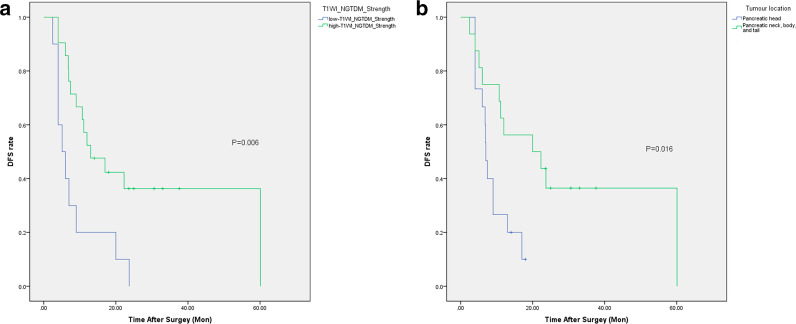
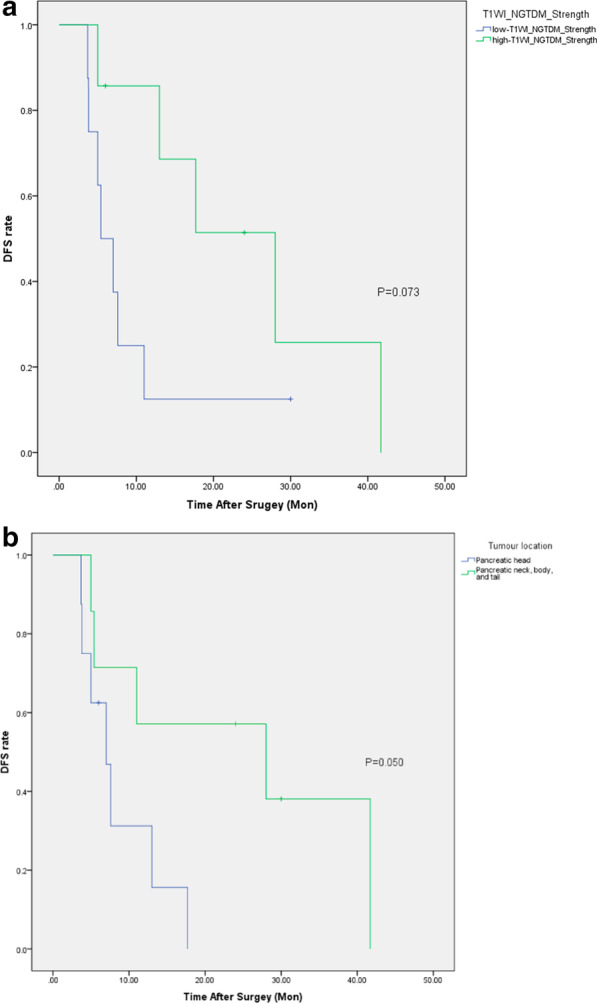
Background: Multiple guidelines for pancreatic ductal adenocarcinoma (PDAC) suggest that all stages of patients need to receive postoperative adjuvant chemotherapy. S-1 is a recently emerged oral antitumour agent recommended by the guidelines. However, which population would benefit from S-1 needs to be determined, and predictors of chemotherapy response are needed for personalized precision medicine. This pilot study aimed to initially identify whether whole-tumour evaluation with MRI and radiomics features could be used for predicting the efficacy of S-1 and to find potential predictors of the efficacy of S-1 as evidence to assist personalized precision treatment. Methods: Forty-six patients with PDAC (31 in the primary cohort and 15 in the validation cohort) who underwent curative resection and subsequently adjuvant chemotherapy with S-1 were included. Pre-operative abdominal contrast-enhanced MRI was performed, and radiomics features of the whole PDAC were extracted from the primary cohort. After univariable analysis and radiomics features selection, a multivariable Cox regression model for survival analysis was subsequently used to select statistically significant factors associated with postoperative disease-free survival (DFS). Predictive capacities of the factors were tested on the validation cohort by using Kaplan–Meier method. Results: Multivariable Cox regression analysis identified the probability of T 1 WI_NGTDM_Strength and tumour location as independent predictors of the efficacy of S-1 for adjuvant chemotherapy of PDAC (p = 0.005 and 0.013) in the primary cohort, with hazard ratios (HRs) of 0.289 and 0.293, respectively. Further survival analysis showed that patients in the low-T 1 WI_NGTDM_Strength group had shorter DFS (median = 5.1 m) than those in the high-T 1 WI_NGTDM_Strength group (median = 13.0 m) (p = 0.006), and patients with PDAC on the pancreatic head exhibited shorter DFS (median = 7.0 m) than patients with tumours in other locations (median = 20.0 m) (p = 0.016). In the validation cohort, the difference in DFS between patients with low-T 1 WI_NGTDM_Strength and high-T 1 WI_NGTDM_Strength and the difference between patients with PDAC on the pancreatic head and that in other locations were approved, with marginally significant (p = 0.073 and 0.050), respectively. Conclusions: Whole-tumour radiomics feature of T 1 WI_NGTDM_Strength and tumour location were potential predictors of the efficacy of S-1 and for the precision selection of S-1 as adjuvant chemotherapy regimen for PDAC.
Overview
The claims and statistics of this paper haven’t been checked yet.
Free: it reads the open-access text and checks the first 5 claims that cite a source we can check. Create a free account to check every claim.
Integrity signals
Registry
Cites
Statistics
Figures
Verification
Claims the paper makes
The claims and statistics of this paper haven’t been checked yet.
Free: it reads the open-access text and checks the first 5 claims that cite a source we can check. Create a free account to check every claim.
Self-check
Percentages, sums and reported differences re-computed from the paper’s own numbers.
The self-check needs the paper’s full text.
Citations
Cites
Bray, F., Ferlay, J., Soerjomataram, I., Siegel, R. L., Torre, L. A., & Jemal, A. (2018) · CA: A Cancer Journal for Clinicians · doi:10.3322/caac.21492 · Cited by 84,109 · cited 1×
“Background Pancreatic cancer is one of the most important causes of death in cancer patients [1], and pancreatic ductal adenocarcinoma (PDAC) is the most common pathological type of pancreatic cancer.”
BackgroundRadiomics: Images Are More than Pictures, They Are Data
Gillies, R. J., Kinahan, P. E., & Hricak, H. (2016) · Radiology · doi:10.1148/radiol.2015151169 · Cited by 8,421 · cited 1×
“From the results of our study, NGTDM_Strength from T1WI was independently related to the therapy response of PDAC, supporting that radiomics features could potentially reflect the biological information of tumours, including the intratumoural heterogeneity associated with the response to treatment and survival [14, 34…”
ResultIntratumor Heterogeneity and Branched Evolution Revealed by Multiregion Sequencing
Gerlinger, M., Rowan, A. J., Horswell, S., Larkin, J., Endesfelder, D., Gronroos, E., Martinez, P., Matthews, N., Stewart, A., Tarpey, P., et al. (2012) · New England Journal of Medicine · doi:10.1056/nejmoa1113205 · Cited by 7,774 · cited 1×
“From the results of our study, NGTDM_Strength from T1WI was independently related to the therapy response of PDAC, supporting that radiomics features could potentially reflect the biological information of tumours, including the intratumoural heterogeneity associated with the response to treatment and survival [14, 34…”
ResultComputational Radiomics System to Decode the Radiographic Phenotype
(2017) · doi:10.1158/0008-5472.can-17-0339 · Cited by 6,593 · cited 1×
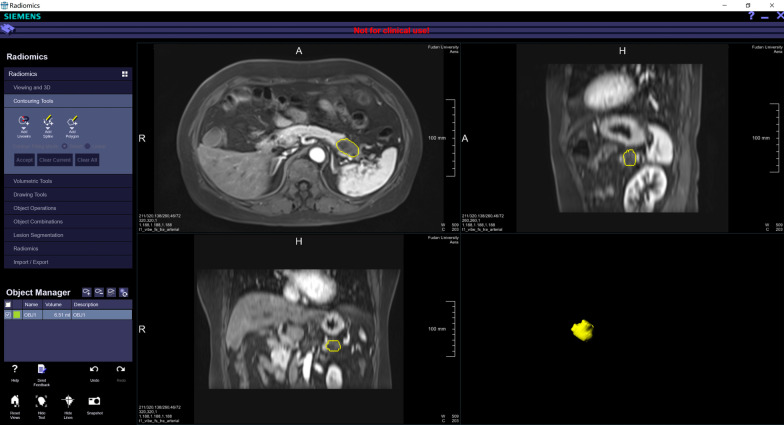
“Extraction of radiomics features All the segmentation data were subjected to radiomics feature extraction using the same prototype software interfacing with the Pyradiomics library [19].”
MethodOettle, H., Post, S., Neuhaus, P., Gellert, K., Langrehr, J., Ridwelski, K., Schramm, H., Fahlke, J., Zuelke, C., Burkart, C., et al. (2007) · JAMA · doi:10.1001/jama.297.3.267 · Cited by 2,419
Applications and limitations of radiomics
Yip, S. S. F., & Aerts, H. J. W. L. (2016) · Physics in Medicine and Biology · doi:10.1088/0031-9155/61/13/r150 · Cited by 1,210 · cited 1×
“Radiomics features can uncover tumour characteristics that may fail to be appreciated by the naked eye [33].”
BackgroundUesaka, K., Boku, N., Fukutomi, A., Okamura, Y., Konishi, M., Matsumoto, I., Kaneoka, Y., Shimizu, Y., Nakamori, S., Sakamoto, H., et al. (2016) · The Lancet · doi:10.1016/s0140-6736(16)30583-9 · Cited by 1,115
Pancreatic Adenocarcinoma, Version 2.2017, NCCN Clinical Practice Guidelines in Oncology
Tempero, M. A., Malafa, M. P., Al-Hawary, M., Asbun, H., Bain, A., Behrman, S. W., Benson, A. B., Binder, E., Cardin, D. B., Cha, C., et al. (2017) · Journal of the National Comprehensive Cancer Network · doi:10.6004/jnccn.2017.0131 · Cited by 1,020
Shirasaka, T., Shimamato, Y., Ohshimo, H., Yamaguchi, M., Kato, T., Yonekura, K., & Fukushima, M. (1996) · Anti-Cancer Drugs · doi:10.1097/00001813-199607000-00010 · Cited by 820 · cited 1×
“Tegafur is transformed into 5-FU in the liver after oral administration [7].”
BackgroundCT Texture Analysis: Definitions, Applications, Biologic Correlates, and Challenges
Lubner, M. G., Smith, A. D., Sandrasegaran, K., Sahani, D. V., & Pickhardt, P. J. (2017) · RadioGraphics · doi:10.1148/rg.2017170056 · Cited by 773
Regine, W. F., Winter, K. A., Abrams, R. A., Safran, H., Hoffman, J. P., Konski, A., Benson, A. B., Macdonald, J. S., Kudrimoti, M. R., Fromm, M. L., et al. (2008) · JAMA · doi:10.1001/jama.299.9.1019 · Cited by 755 · cited 1×
“Interestingly, another study found that gemcitabine improved overall survival in a subgroup of postoperative patients with pancreatic head tumours compared to 5-FU [30, 31].”
BackgroundUeno, H., Ioka, T., Ikeda, M., Ohkawa, S., Yanagimoto, H., Boku, N., Fukutomi, A., Sugimori, K., Baba, H., Yamao, K., et al. (2013) · Journal of Clinical Oncology · doi:10.1200/jco.2012.43.3680 · Cited by 628 · cited 2×
“It has been reported that monotherapy with S-1 demonstrates noninferiority to commonly used gemcitabine in overall survival for locally advanced and metastatic pancreatic cancer [8].”
BackgroundPancreatic Ductal Adenocarcinoma: Current and Evolving Therapies
Adamska, A., Domenichini, A., & Falasca, M. (2017) · International Journal of Molecular Sciences · doi:10.3390/ijms18071338 · Cited by 610 · cited 1×
“How can a suitable postoperative regimen be personalized from a variety of chemotherapy regimens listed in the PDAC guidelines? Because adverse reactions are common and the proportion of patients benefiting from chemotherapy is not high [10, 11], it is urgent to determine how to identify patients who are more likely t…”
BackgroundNg, F., Kozarski, R., Ganeshan, B., & Goh, V. (2013) · European Journal of Radiology · doi:10.1016/j.ejrad.2012.10.023 · Cited by 362
Regine, W. F., Winter, K. A., Abrams, R., Safran, H., Hoffman, J. P., Konski, A., Benson, A. B., Macdonald, J. S., Rich, T. A., & Willett, C. G. (2011) · Annals of Surgical Oncology · doi:10.1245/s10434-011-1630-6 · Cited by 311 · cited 1×
“Interestingly, another study found that gemcitabine improved overall survival in a subgroup of postoperative patients with pancreatic head tumours compared to 5-FU [30, 31].”
BackgroundChemotherapy for pancreatic cancer
Springfeld, C., Jäger, D., Büchler, M. W., Strobel, O., Hackert, T., Palmer, D. H., & Neoptolemos, J. P. (2019) · La Presse Médicale · doi:10.1016/j.lpm.2019.02.025 · Cited by 281 · cited 1×
“How can a suitable postoperative regimen be personalized from a variety of chemotherapy regimens listed in the PDAC guidelines? Because adverse reactions are common and the proportion of patients benefiting from chemotherapy is not high [10, 11], it is urgent to determine how to identify patients who are more likely t…”
BackgroundYip, C., Landau, D., Kozarski, R., Ganeshan, B., Thomas, R., Michaelidou, A., & Goh, V. (2014) · Radiology · doi:10.1148/radiol.13122869 · Cited by 204 · cited 1×
“From the results of our study, NGTDM_Strength from T1WI was independently related to the therapy response of PDAC, supporting that radiomics features could potentially reflect the biological information of tumours, including the intratumoural heterogeneity associated with the response to treatment and survival [14, 34…”
ResultLau, M. K., Davila, J. A., & Shaib, Y. H. (2010) · Pancreas · doi:10.1097/mpa.0b013e3181bd6489 · Cited by 174 · cited 1×
“Previous studies also indicated that pancreatic head cancers and pancreatic body/tail cancers had different overall survival rates and tumour-free survival [26, 27].”
ResultClinical Practice Guidelines for Pancreatic Cancer 2019 From the Japan Pancreas Society: A Synopsis
Okusaka, T., Nakamura, M., Yoshida, M., Kitano, M., Uesaka, K., Ito, Y., Furuse, J., Hanada, K., & Okazaki, K. (2020) · Pancreas · doi:10.1097/mpa.0000000000001513 · Cited by 165
The Rise of Radiomics and Implications for Oncologic Management
Verma, V., Simone, C. B., Krishnan, S., Lin, S. H., Yang, J., & Hahn, S. M. (2017) · JNCI: Journal of the National Cancer Institute · doi:10.1093/jnci/djx055 · Cited by 135
CT texture analysis of pancreatic cancer
Sandrasegaran, K., Lin, Y., Asare-Sawiri, M., Taiyini, T., & Tann, M. A. (2018) · European Radiology · doi:10.1007/s00330-018-5662-1 · Cited by 133 · cited 1×
“Compared with the largest cross-sectional area analysis that was performed in several previous studies [17, 39], wholetumour analysis is more representative of intratumoural biological characteristics and could avoid selection bias.”
MethodEilaghi, A., Baig, S., Zhang, Y., Zhang, J., Karanicolas, P., Gallinger, S., Khalvati, F., & Haider, M. A. (2017) · BMC Medical Imaging · doi:10.1186/s12880-017-0209-5 · Cited by 127
Attiyeh, M. A., Chakraborty, J., Doussot, A., Langdon-Embry, L., Mainarich, S., Gönen, M., Balachandran, V. P., D’Angelica, M. I., DeMatteo, R. P., Jarnagin, W. R., et al. (2018) · Annals of Surgical Oncology · doi:10.1245/s10434-017-6323-3 · Cited by 119
Yun, G., Kim, Y. H., Lee, Y. J., Kim, B., Hwang, J.-H., & Choi, D. J. (2018) · Scientific Reports · doi:10.1038/s41598-018-25627-x · Cited by 104 · cited 1×
“Compared with the largest cross-sectional area analysis that was performed in several previous studies [17, 39], wholetumour analysis is more representative of intratumoural biological characteristics and could avoid selection bias.”
MethodPrimary Rectal Cancer: Repeatability of Global and Local-Regional MR Imaging Texture Features
Gourtsoyiannis, N., Doumou, G., Prezzi, D., Taylor, B. P., Stirling, J., Taylor, N. J., Siddique, M. M., Cook, G., Glynne‐Jones, R., & Goh, V. (2017) · Radiology · doi:10.1148/radiol.2017161375 · Cited by 94 · cited 2×
“As high-order statistical parameters, NGTDM examines the signal intensity and spatial interrelationship between neighbouring voxels between adjacent image planes, which describe the dynamic range of intensities at a local level and better quantify the heterogeneity within the tumour [32].”
BackgroundKaissis, G., Ziegelmayer, S., Lohöfer, F., Steiger, K., Algül, H., Muckenhuber, A., Yen, H.-Y., Rummeny, E., Friess, H., Schmid, R., et al. (2019) · PLOS ONE · doi:10.1371/journal.pone.0218642 · Cited by 76 · cited 1×
“In another diffusion-weightedMRI-derived radiomics study, 13 radiomics features were found to be important for predicting the gemcitabinebased chemotherapy response of PDAC [36].”
BackgroundPrognostic value of FDG-PET radiomics with machine learning in pancreatic cancer
Toyama, Y., Hotta, M., Motoi, F., Takanami, K., Minamimoto, R., & Takase, K. (2020) · Scientific Reports · doi:10.1038/s41598-020-73237-3 · Cited by 75 · cited 2×
“Another study that first evaluated the prognostic value of FDG-PET radiomics in pancreatic cancer found that feature of GLZLM GLNU was the most relevant factor for predicting 1-year survival [38].”
BackgroundCT and MRI of pancreatic tumors: an update in the era of radiomics
Bartoli, M., Barat, M., Dohan, A. J. J., Gaujoux, S., Coriat, R., Hoeffel, C. C., Cassinotto, C., Chassagnon, G., & Soyer, P. A. (2020) · Japanese Journal of Radiology · doi:10.1007/s11604-020-01057-6 · Cited by 61 · cited 1×
“However, performances have not yet been compared among CT, MRI, and PET/CT [41, 42].”
BackgroundThe diversity between pancreatic head and body/tail cancers: clinical parameters and in vitro models
Ling, Q., Xu, X., Zheng, S., & Kalthoff, H. (2013) · Hepatobiliary & pancreatic diseases international · doi:10.1016/s1499-3872(13)60076-4 · Cited by 54
General purpose radiomics for multi-modal clinical research
Wels, M., Lades, F., Mühlberg, A., & Suehling, M. (2019) · SPIE Medical Imaging: Computer-Aided Diagnosis · doi:10.1117/12.2511856 · Cited by 49 · cited 1×
“A prototype software (Radiomics, Siemens Healthineers, Germany, not for commercial use) using a generic automatic segmentation algorithm based on a 3D domain in the workflow [18] was used for the segmentation.”
MethodLing, Q., Xu, X., Ye, P., Xie, H., Gao, F., Hu, Q., Liu, Z., Wei, X., Röder, C., Trauzold, A., et al. (2017) · Oncotarget · doi:10.18632/oncotarget.14768 · Cited by 42 · cited 2×
“Their biological characteristics, such as the concentration of cell-of-origin and microRNA expression, were also different [27].”
BackgroundResultMasokano, I. B., Liu, W., Xie, S., Marcellin, D. F. H., Pei, Y., & Li, W. (2020) · Cancer Imaging · doi:10.1186/s40644-020-00341-y · Cited by 41 · cited 2×
“MRI-based radiomics analysis may likely be more predictive of tumour heterogeneity but might be more susceptible to variations in imaging parameters compared to CT [41].”
BackgroundQiu, W., Duan, N., Chen, X., Ren, S., Zhang, Y., Wang, Z., & Chen, R. (2019) · Cancer Management and Research · doi:10.2147/cmar.s218414 · Cited by 39
Shimoda, M., Kubota, K., Shimizu, T., & Katoh, M. (2015) · British journal of surgery · doi:10.1002/bjs.9775 · Cited by 34
Evolution of the Management of Resectable Pancreatic Cancer
Tsai, S., Erickson, B. A., Dua, K. S., Ritch, P. S., Tolat, P. P., & Evans, D. B. (2016) · Journal of Oncology Practice · doi:10.1200/jop.2016.015818 · Cited by 32 · cited 1×
“Due to high-grade malignancy, even if the tumour is detected early and curative resection is performed, as many as 60% of patients experience recurrence and metastasis within a short period of time after the operation [2, 3].”
BackgroundKondo, N., Murakami, Y., Uemura, K., Sudo, T., Hashimoto, Y., Nakashima, A., Ohge, H., & Sueda, T. (2011) · Journal of Surgical Oncology · doi:10.1002/jso.21955 · Cited by 17
Salinas-Miranda, E., Khalvati, F., Namdar, K., Deniffel, D., Dong, X., Abbas, E., Wilson, J. M., O'Kane, G. M., Knox, J. J., Gallinger, S., et al. (2020) · Canadian Association of Radiologists Journal · doi:10.1177/0846537120968782 · Cited by 12 · cited 2×
“One study showed that not only for resectable PDAC but also for locally advanced and/or metastatic PDAC, specific CT radiomics feature was a significant prognostic factor [37].”
BackgroundCombined Analyses of hENT1, TS, and DPD Predict Outcomes of Borderline-resectable Pancreatic Cancer
Yabushita, Y., Mori, R., Taniguchi, K., Matsuyama, R., Kumamoto, T., Sakamaki, K., Kubota, K., & Endo, I. (2017) · Anticancer Research · doi:10.21873/anticanres.11587 · Cited by 10
Oba, A., Ban, D., Kirimura, S., Akahoshi, K., Mitsunori, Y., Matsumura, S., Ochiai, T., Kudo, A., Tanaka, S., & Tanabe, M. (2016) · Journal of Hepato-Biliary-Pancreatic Sciences · doi:10.1002/jhbp.366 · Cited by 8 · cited 1×
“proposed that the intratumoural expression levels of DPD and thymidylate synthase (TS) might be related to therapeutic outcomes in PDAC patients receiving S-1 chemotherapy [21–23], but the conclusion remains controversial; some studies even had contradictory results [24, 25].”
ResultMurakawa, M., Aoyama, T., Miyagi, Y., Atsumi, Y., Kazama, K., Yamaoku, K., Kanazawa, A., Shiozawa, M., Kobayashi, S., Ueno, M., et al. (2017) · Oncology Letters · doi:10.3892/ol.2017.6295 · Cited by 8 · cited 1×
“proposed that the intratumoural expression levels of DPD and thymidylate synthase (TS) might be related to therapeutic outcomes in PDAC patients receiving S-1 chemotherapy [21–23], but the conclusion remains controversial; some studies even had contradictory results [24, 25].”
ResultLiang, L., Luo, R., Ding, Y., Liu, K., Shen, L., Zeng, H., Ge, Y., & Zeng, M. (2020) · Abdominal Radiology · doi:10.1007/s00261-020-02676-3 · Cited by 7 · cited 2×
“Whole-tumour quantitative evaluation including the tumour size, ADC value of the whole tumour, enhancement rates of the whole tumour on AP, PVP and DP, as well as enhancement rate differences of the whole tumour between different dynamic contrast-enhanced phases [20] was performed by using data obtained from radiomics…”
MethodSelf-citationAdjuvant Treatment in Potentially Curable Pancreatic Cancer
Mukhija, D., Sohal, D. P. S., & Khorana, A. A. (2018) · Pancreas · doi:10.1097/mpa.0000000000001125 · Cited by 4
Cited by
Preuss, K., Thach, N., Liang, X., Baine, M., Chen, J., Zhang, C., Du, H., Yu, H., Lin, C., Hollingsworth, M. A., et al. (2022) · Cancers · doi:10.3390/cancers14071654 · Cited by 69
“[119] MRI Pyradiomics Efficacy of S-1 (oral antitumor agent) Semiautomatic (2, a generic automatic segmentation algorithm based on a 3D domain using a prototype software, Radiomics, Siemens) 31 + 15 110 T1WI_NGTDM_Strength and tumor location are independent predictors of the efficacy of S-1 in the training cohort (p =…”
MethodJiang, J., Chao, W.-L., Culp, S., & Krishna, S. G. (2023) · Cancers · doi:10.3390/cancers15092410 · Cited by 38
“response to a new oral therapy (S-1) as an adjuvant chemotherapy and postoperative disease-free survival [95].”
BackgroundMethodApplication of Artificial Intelligence in the Management of Pancreatic Cystic Lesions
Rangwani, S. M., Ardeshna, D. R., Rodgers, B., Melnychuk, J., Turner, R. C., Culp, S., Chao, W., & Krishna, S. G. (2022) · Biomimetics · doi:10.3390/biomimetics7020079 · Cited by 21
“One example is the identification of isoattenuating lesions, which, for example, can represent up to 10% of pancreatic ductal adenocarcinomas (PDACs) [59].”
MethodInfluentialMalagi, A., Shivaji, S., Kandasamy, D., Sharma, R., Garg, P. K., Gupta, S. D., Gamanagatti, S. R., & Mehndiratta, A. (2023) · Bioengineering · doi:10.3390/bioengineering10010083 · Cited by 16
Chen, Y., Qi, Y., Li, T., Lin, A., Ni, Y., Pu, R., & Sun, B. (2024) · Frontiers in Aging Neuroscience · doi:10.3389/fnagi.2024.1393841 · Cited by 17
Metadata
- Authors
- Liang, L., Ding, Y., Yu, Y., Liu, K., Rao, S., Ge, Y., & Zeng, M.
- Affiliations
- Shanghai Medical College of Fudan University (CN)
- Corresponding author
- Zeng, Mengsu
- Venue
- BMC Medical Imaging
- Published
- 2021-04-26
- Volume
- 21
- Issue
- 1
- Pages
- 75-75
- ISSN
- 1471-2342 (ISSN-L)
- PMC
- PMC8077911
- OpenAlex
- W3158457961
- Cited by
- 13
- References
- 44
- Citations by year
- 2025: 2 · 2024: 2 · 2023: 5 · 2022: 3
- FWCI
- 1.32
- Type
- journal article
- Language
- en
- Open access
- gold
- doi.org
- Licence
- cc-by
- creativecommons.org/licenses/by/4.0/ (tdm)
- creativecommons.org/licenses/by/4.0/ (vor)
- Locations
- BMC Medical Imaging (publishedVersion, cc-by)
- PubMed Central (publishedVersion, cc-by)
- PubMed (publishedVersion)
- DOAJ (DOAJ: Directory of Open Access Journals) (submittedVersion, cc-by-sa)
- Funders
- Special Program of Clinical Research in Health Industry, Shanghai Municipal Health Commission (201840343)
- Topics
- Health Sciences › Medicine › Radiology, Nuclear Medicine and Imaging › Radiomics and Machine Learning in Medical Imaging
- Health Sciences › Medicine › Oncology › Pancreatic and Hepatic Oncology Research
- Health Sciences › Medicine › Radiology, Nuclear Medicine and Imaging › MRI in cancer diagnosis
- Keywords
- pancreatic ductal adenocarcinoma, S-1, adjuvant chemotherapy, radiomics, treatment response prediction, disease-free survival, T1-weighted imaging, tumor location, pancreatic head, precision medicine, prognostic factors, curative resection, contrast-enhanced MRI, tumor heterogeneity
- MeSH terms
- Analysis of Variance, Antimetabolites, Antineoplastic, Contrast Media, Drug Administration Schedule, Drug Combinations, Female, Tegafur, Humans, Magnetic Resonance Imaging, Male, Middle Aged, Oxonic Acid, Pancreatic Neoplasms, Pilot Projects, Postoperative Care, Retrospective Studies, Survival Analysis, Treatment Outcome, Chemotherapy, Adjuvant, Disease-Free Survival, Carcinoma, Pancreatic Ductal, Precision Medicine
About these checks
Registry, retraction, Cites and statistics results are computed, not judged, with one exception: a printed reference that no index lists is read once by a model before it counts as a citation error. Claims are extracted by a model and kept only when their quote appears verbatim in the text; each cited source is then checked, with a model’s help, for whether it says what the claim relies on. Those verdicts can be wrong — read the claim’s quote and the cited source before relying on one.
Statistics and arithmetic are recomputed, not judged.
Confidence bands are shown only for fields calibrated on our annotated test set. None is calibrated yet, so no band is shown.
What counts as a claim ›How we measure confidence ›How we check this ›
Are you an author, or do you see a problem with this page? Request a review
Data sources
Bibliographic data: Semantic Scholar, OpenAlex, Crossref.
Contains information from the Semantic Scholar Academic Graph Datasets, made available under the ODC Attribution License (ODC-BY 1.0).
Semantic Scholar’s data is described in: Kinney, R., et al. (2023). The Semantic Scholar Open Data Platform. arXiv:2301.10140.
